Showing posts with label world cinema. Show all posts

22 February 2021

An India viewed through French eyes

My Mumbai Mirror column:

For screenwriter Jean-Claude Carrière, who died on February 8, adapting the Mahabharata was both a way to enter Indian culture -- and to look at it from the outside.

"Writing for film is filming," Jean-Claude Carrière used to tell his screenwriting students. "You have to know that what you write, is not written to be published. It is written to be forgotten and to be transformed into something else. Into another kind of matter. [That is] absolutely essential."

The legendary French screenwriter, who died on February 8 at 89, exemplified the art of collaboration so necessary when writing for cinema. Over a wide-ranging career, he worked with some of the finest directors of the 20th century, from the masterfully comic Jacques Tati (who originally hired Carrière to novelise his films), to the surrealist Luis Buñuel (with whom he wrote six memorable films, including Belle De Jour and The Discreet Charm of the Bourgeoisie), Louis Malle and Jacques Deray, the master of thrillers (their La Piscine was recently remade by Luca Guadagnino as A Bigger Splash). His ability to think with - sometimes within – other minds gave him a rare talent for reworking the literary greats: He adapted Günter Grass and Marcel Proust for Volker Schlöndorff, Dostoevsky for Andrezj Wajda, Edmond Rostand's Cyrano De Bergerac for Jean-Paul Rappeneau and Milan Kundera for Philip Kaufman.

But he was most famous, certainly in India, for having adapted the Mahabharata.

Even by Carrière's standards, the epic may have provided him with his most ambitious project. An idea that grew out of a chance conversation with the maverick British theatre guru Peter Brook, turning the twelve-volume Sanskrit poem into a nine-hour-long French play became, for Carrière, much more than a job. I've never seen Brook's play, first staged in Paris in the 1980s, and I confess that the 3.5-hour English film version felt impossible to enter when it was shown to me as a young student. It is on YouTube now, and it remains hard to get past the odd mishmash of 'Indianness' sought to be evoked by Rabindra Sangeet, cave-like temples lit with diyas and a comically masked Ganesha - or the international actors speaking in English. But whatever one might think of the aesthetics and politics of the thing, its makers clearly took it seriously. 

None more so than Carrière, it became clear to me this week, when I finally read his Big Bhishma in Madras: In Search of the Mahabharata with Peter Brook. First published in French in 1997, it is a stunning little book about his journey into India and the epic. Part-travelogue, part-diary, and illustrated with Carrière's quirky sketches, it was delightfully translated into English in 2001 by Aruna Vasudev (herself an iconic Delhi figure who edited the Asian film magazine of my youth, Cinemaya, and founded the film festival that became Osians' Cinefan).

If you've grown up in India, you know the Mahabharata. Or you think you do, when all you likely know are the barest bones of the most capacious story ever told. Something similar is true of India: We live in our own little corners of it, hemmed in by walls of class, caste, language and religion, and imagine that what we're clutching in the dark is the whole elephant. Sometimes it takes an outsider to cast fresh light on a thing - and Carrière is that outsider.  

Like an ignorant but sharp child, he sees things an insider would ignore – and paints them with the lightest touch. Cows seen in the darkness of Delhi's avenues are "like pale ghosts"; a Calcutta hotel is "a British masquerade". He observes our turns of phrase, our ways of being. Meeting Rukmini Arundale, he talks of how in India the word "beautiful" seems reserved for women over 50, "a quality that is acquired". In Purulia, the actors return from the fields and are made up for Chhau, and as "the peasant becomes a god," his co-villagers treat him more respectfully.

Of course his references are Western, often Orientalist, the modern European's view of the past: The Meenakshi temple "possesses and swallows up the city...it is Babylon dreamt up by Cecil B. De Mille and directed by an Indian"; a Kerala meal served to them by an army of servants, supervised by a white-haired man in a lungi "could easily be a patrician home in ancient Rome".

But Carrière's vision is vivid and free. His glimpses of our dance, music and theatre, while preliminary, often catch something essential. At a dhrupad rendition at the Dagar brothers' home, "among all the instruments of music, the human voice reigns supreme. And one understands why". Bharatanatyam dancers seem to him to return over and over to the earth - which he perceives as the opposite of ballet, whose movements seem always poised for flight. 

There is also that rare thing, especially in the Westerner in India: Self-reflexiveness. And with that comes clarity. "Tradition here is very strong, with an energy that is constantly renewed...We cannot hope for anything to equal it. In the West we will, on the contrary, present an unknown story. Therein lies the danger of exoticism, of picturesqueness...".

Whether Carrière successfully avoided that danger, I don't know. But he manages, as always, to ask the sharp question. "On the other hand, in India, this all-powerful and omnipresent tradition must have a paralysing effect on contemporary expression. And even beyond that: To continue a tradition does it not mean, in a way, that the order of things is good as it is, that the caste system is excellent and nothing must be touched?" As he says quietly, "It is at least worth thinking about." 

Published in Mumbai Mirror, 21 Feb 2021.

16 January 2021

A Reel Holiday

My Mirror column:

The grand tradition of the holiday movie, from Eric Rohmer to Luca Guadagnino, spins wisdom out of sun-kissed beach breaks
.


There used to be many ways to take a year-end vacation. But with sightseeing, parties and travel all deemed dangerous post-pandemic, more and more people have had to be content with a movie-watching staycation. And when you can't escape dreary city life in reality, there is much pleasure to be derived from movies about other people's holidays.

So my vicarious vacation was centred on the late French director Eric Rohmer, who was a kind of patron saint of the holiday film. As central to the French New Wave as more flamboyant members like Truffaut and Godard, Rohmer was a film critic first. He edited the pioneering journal Cahiers du Cinema for years, before making his feature debut with The Sign of Leo in 1959. By the time of his death at 89, on January 11, 2010, he had over 50 films to his credit. One of cinema's gentlest, most perspicacious commentators on the vagaries of courtship and romance, Rohmer often placed his characters, usually young to middle-aged, and bourgeois, in a classic French summer vacation locale where connections and cross-connections could unfold at leisure. A quiet beachside country house is the setting for several of Rohmer's finest films in this vein: La Collectionneuse (1967), Pauline at the Beach (1983) and The Green Ray (1986), all beautifully photographed by Nestor Almendros and all currently streaming on a well-known online platform.

In La Collectionneuse, Adrien (Patrick Bauchau) decides to spend a month alone after his girlfriend (Brigitte Bardot's sister Mijanou, to whom Bauchau was married in real life) leaves for London. Arriving at a friend's cottage, he vows to rise early every day, go for a swim, spend his time without any conscious purpose other than to enjoy his leisure. He is intent upon doing nothing, and doing it well.

But his plans of what we would call ‘me-time’ are easily disrupted, primarily by lustful thoughts of the charming younger woman with whom he happens to be sharing the summer house. The more studiously Adrien declares his lack of interest, calling Haydée ugly or ordinary or common, the more apparent it becomes that she's on his mind. In the wonderful tradition of Rohmer romances, our attention is directed as much to what happens as what does not, with Adrien's actions coinciding less and less with the claims of his self-examinatory voice-over. As an article in the French Review put in 1993, “Rohmer's prideful heroes charge into the summer with dreams of lush beauty and luxurious freedoms, only to be chastened by the heat, the boredom, and, above all, the aimlessness and acute self-preoccupation that are the dubious rewards of those who gain as much freedom as they desire.”

It isn't just Rohmer's heroes whose attempted holiday resets only reveal their confused mental states. In Pauline at the Beach Rohmer cast the delicately blonde Ariella Dombasle as the soon-to-be-divorced Marion, who is spending her vacation with her fifteen-year-old niece Pauline. On paper, Marion is the adult, and she does try to think of Pauline's needs -- as she imagines them. But as with Adrien, so with Marion. The more we hear about her romantic hopes for herself and her cousin, the more apparent it is that she has no idea what she's doing. Extricating herself from her mistake of a marriage, she is now so in love with le grand amour that she imagines it with the first man who seems vaguely interested – blissfully blind to the fact that he's only in it for sex with a pretty girl.

There are other echoes between the two films, like the way this form of vacationing throws together people of different backgrounds and ages, allowing for conversations that wouldn't happen in everyday life. And in both, the younger people emerge as the less confused ones. Both Haydee and Pauline, who volunteer their views a lot less than the others in their respective settings, seem much more clear-eyed about who is and who isn't a good match. While Marion throws herself at her pretentious older lover and tries to matchmake Pauline similarly (with Marion's own ex-boyfriend!), Pauline finds herself a more age-appropriate summer fling. Both she and Haydée in La Collectionneuse also emerge as perfectly capable of handling the unwanted attentions of dodgy older men.

Other filmmakers have followed Rohmer in depicting the vacation as a time to establish a new kind of routine, even discipline. In the British indie filmmaker Joanna Hoggs' meditative 2007 debut Unrelated, Anna (Kathryn Worth) joins an old friend's family on their Italian vacation, giving herself a break not just from work but also from a faltering marriage. Luca Guadagnino's A Bigger Splash (2015) has its rockstar heroine (Tilda Swinton) fully silent on her Italian vacation, to help her voice recuperate after an operation. Hoggs' camera lingers tenderly as an often distraught Anna jogs virtuously up and down a local hillock, and teeters on the brink of an affair with her friend's much younger son (Tom Hiddleston). Guadagnino's tone is even less Rohmeresque than Hoggs' melancholia, with his characters going straight for the jugular rather than circling gently around their issues. But there's something that these very different films all share: the realisation that holidays never achieve what we hope they will.

Published in Mumbai Mirror, 10 Jan 2021.

10 November 2020

Dharamshala International Film Festival 2020: From Pearl of the Desert to Yalda, five must-watch picks

Late to put this piece I wrote for Firstpost up on the blog, this year's online edition of DIFF is over. But these five films are totally worth looking out for.

Dharamshala International Film Festival 2020: From Pearl of the Desert to Yalda, five must-watch picks
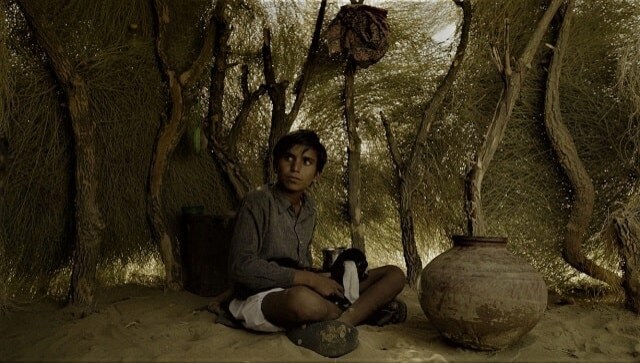
Still from Pushpendra Singh's wonderful film Pearl of the Desert, 2019, about a Manganiar boy musician called Moti

The Dharamshala International Film Festival went online this year, making its thoughtfully curated mix of features, documentaries and short films available to anyone in India with a screen and an internet connection, offering both season tickets and a daily Binge pass. Sunday, 8 November, is the last day of this year's festival. I've picked out five unusual films worth the price of admission:

Pearl of the Desert, 2019

Documentary | Rajasthani | 1 hour 22 mins

A boy is walking home with a group of other boys, all wearing that familiar dull blue shirt that is the uniform of countless government schools across India. Suddenly he falls behind, telling the rest to go ahead. “You do this every day!” complains another boy in the group. But they carry on, and the boy settles himself on a crooked tree trunk and begins to sing. As the rich, rugged notes emerge from his throat, the desert seems to spring to life. In case the sound doesn't thrill you, the filmmaker catches a black buck leaping up at the sound of Moti's voice. Then another. Animals seem to respond to the beauty of Moti's music, evoking mythical depictions of cattle gathering to listen to the flute-playing Krishna.

It is the sort of coded, powerfully cinematic image that makes Pushpendra Singh's hybrid documentary on the Manganiars such a layered, resonant piece of filmmaking. Time and again the film reminds us, without a word, that we live in a country of remarkable admixture: a country in which Muslim musicians have for centuries been the appointed bards to the upper caste Hindus of the Thar Desert.

It is something to listen to these men singing the praises of their Hindu patrons: enumerating the heroic exploits of their ancestors, laying out their genealogies, mourning the departure of their daughters — all in words profoundly redolent of the desert. If one song describes the carriage of the camel, another pays tribute to the dusky beauty of the lover in the courtyard, while one particularly stunning verse asks the stubborn lover to come back home, saying, “I have written you a carnival, at least now return”.

Whether the occasion is a birth or a marriage or any other celebration, the Manganiars are always called upon. They sing songs to the goddesses their patrons worship, and they also sing songs to the pirs of the Thar desert. The film closes with a group of Manganiar men harvesting cluster beans, singing in joyful unison a song that invokes Allah. In one of the film's reenacted scenes, Moti's grandfather is asked to relate the community's history — he connects them with Parashuram, with stories about asking for necklaces (maangan, haar), and their name to the Sanskrit word “mangal”, meaning auspicious.

Whenever the increasingly misguided votaries of Hinduism insist that their vengeful politics of purity is the only defense of Indian tradition, it is worthwhile bringing up the Manganiars — for this, too, is our tradition. One we must now fight to keep alive.

Dharamshala International Film Festival 2020 From Pearl of the Desert to Yalda five mustwatch picks
Still from the delightful Gaza Mon Amour, 2020

Gaza Mon Amour, 2020

Fiction Feature | Arabic | 1 hour 27 mins

Set in the small, densely populated Palestinian territory of Gaza, this film about an ageing fisherman who decides he has had enough of singledom is a quiet delight just for the stellar performances by Salim Daw as the externally crotchety but secretly romantic Issa and Hiam Abbas as the serious-faced widowed seamstress whom Issa finally gathers the courage to court after a naked ancient statue lands in his fishing net — that feels like a sign. Atmospherics are provided by the rundown location, where checkpoints, power cuts and bombings are the norm — as is the fact that many of the younger people want to escape to Europe even via the dangerous illegal route. Directed by Tarzan Nasser and Arab Nasser, this gently comic romance comes to DIFF after a premiere at this year's Venice Film Festival and the NETPAC award for best Asian film at Toronto.

Dharamshala International Film Festival 2020 From Pearl of the Desert to Yalda five mustwatch picks
Still from the documentary Influence, 2020, a film about the dangerous directions in which advertising and PR have taken us

Influence, 2020

Documentary | English | 1 hour 45 mins

Tim Bell was a British advertising man who went from being part of the founding team of Saatchi & Saatchi to Margaret Thatcher's campaign manager, his “Labour's Not Working” hoardings held responsible, among other things, for the decimation of the British Labour Party in that election. Diana Neille and Richard Polak's ambitious documentary portrait of Bell unpacks the rise and fall of a morally dubious man who created and ran the world's most influential political consultancy for decades. Bell Pottinger's clients ranged from the Chilean dictator Pinochet to South African Presidents FW De Klerk and Jacob Zuma. He was hired by the Pentagon to create a flood of propaganda videos in post-Saddam Iraq and by the Gupta Brothers to stir up racial violence in South Africa using hired bots to tweet and post on #whitemonopolycapital.

The film's watchability is aided by its incorporation of an interview with an aged Bell, who died in the summer of 2019 — perhaps precisely because Bell gives away so little, even as he has supposedly decided to tell his story. But its true impact lies in using Bell's life to trace the transformation that characterises our era perhaps more than any other: the dangerous transformation of advertising and marketing from an “art form into a science — and in many respects, into a workable weapon”. Those words belong to Nigel Oakes, an ex-Saatchi & Saatchi man now infamous as the founder of the SCL group, the parent company for Cambridge Analytica. The untrammelled rise of “strategic communication”, alongside social media, is the story of our times, altering political outcomes across the globe for several decades, and now scarily part of our present in India. In Oakes' words, what was once “just democracy” is now a “controlled democracy, maybe available to the highest bidder.”

Dharamshala International Film Festival 2020 From Pearl of the Desert to Yalda five mustwatch picks
Still from the gripping Yalda, 2019: Iranian realities filtered through the drama of a reality TV show

Yalda, 2019

Fiction Feature | Farsi | 1 hour 39 mins

Winner of the World Cinema Grand Jury Prize (Dramatic) at the Sundance Film Festival this February, Massoud Bakhshi's film Yalda, A Night for Forgiveness is a gripping drama that manages to reveal a great deal about the contradictions and hypocrisies of present-day Iran. The film unfolds on the set of a TV show called 'Joy of Forgiveness', during which a woman convicted for killing her husband might receive a pardon from her husband's daughter — and thus be saved from the death penalty.

Bakhshi based his fictitious show on a real show called Mah-e-Asal that aired daily on Iranian television during the month of Ramadan from 2007 to 2018, and does wonders by alternating between the scripted reality we see on TV and the real drama taking place off-camera. The story of why the 20-something Maryam Komijani married her late father's 65-year-old employer and became pregnant with his child brings into view not how skewed Iranian law is against women — the permissibility of 'temporary marriage', the greater claims of sons over family property — but also the deep fault lines of class in Iranian society. Dominant social morality and the law may see Maryam a certain way, but it is hard to look away from the alternative picture the film shows us.

Ghar Ka Pata, 2020

Documentary | Hindi, Kashmiri, English | 1 hour 7 mins

The filmmaker's search for the home she left at six is the basis of a personal essay about a very political place. Madhulika Jalali's family home was a traditional house in the neighbourhood of Rainawari in Srinagar, among the areas in the city that was home to the Kashmiri Pandit community. Like thousands of other Pandit families, Jalali's Hindu parents found themselves forced to leave the valley by the events of the early 1990s, when militancy in Kashmir took a dangerously communal turn. Like the others, they were never to return. The film makes this tragic political-communal context visible through a very personal keyhole. As if to compensate for her own lack of memory, Jalali tries to find an image of the house she can't see in her mind. When her own family albums are exhausted, the search leads her to cousins and relatives — and eventually to Srinagar.

Dharamshala International Film Festival 2020 From Pearl of the Desert to Yalda five mustwatch picks
Poster for Madhulika Jalali's moving personal documentary Ghar Ka Pata, 2020

The film splices these journeys with Jalali's two elder sisters reminiscing, about the house but also about the traumatic nights leading up to their departure, when proclamations of violence made from the neighbourhood mosques made their father dig out his hunting rifle — but eventually take his close Muslim friend's advice to leave.

Her parents, like most adults Jalali speaks to, remain reticent. But those who were younger then, seem happy to speak. Jalai's sisters talk about how happy and peaceful their childhoods had been in the Srinagar of the1980s: the fruit trees in their garden, the snow they used to try to make into ice cream, the neighbourhood shop from which they bought dahi, the walking route they'd try to take home to get their hands on any festive meetha chaawal being distributed. But even within this gently nostalgic past, one can see the inevitable seeds of the future. In one remarkable anecdote, one of the sisters recalls how in those months that Doordarshan telecast Ramanand Sagar's version of the Ramayana, Hindu and Muslim children alike used to come out onto the streets of their neighbourhood with homemade bows and arrows, taking aim with a "Jai Shree Ram".

Jalali doesn't dwell on it, or on anything really. Her film has a lightness that sometimes feels surprising. Is sorrow filtered through time and distance and forgetting still sorrow? Perhaps the answer is, sometimes.

Published on Firstpost, 8 Nov 2020.

25 October 2020

Taking the festivities online

With the pandemic raging on, film festival organisers are making the most of the digital space.


Gaza Mon Amour, above, is part of the line-up for DIFF 2020. Passes to this year's online film festival: www.online.diff.co.in

Among the many communities barred from assembling by the coronavirus is that of devout Indian film buffs. Movie theatres have been shut for eight months, and even the very occasional new film ‘dropping’ on an OTT platform makes for sad, solitary viewing. Theatres cautiously reopened on October 15, but it might be a while before audiences, and thus filmmakers, risk a Friday release in the cinema. Even worse is the fate of that critical mass of film buffs who eagerly await the annual Indian film festival season, held from October to January, with big and small festivals taking place across the country. Given the new social distancing and hygiene norms, organisers have had to grapple with whether to go digital, cancel, or postpone and hope for the pandemic to reduce in intensity. The bigger festivals, which attract larger crowds and members of an international film fraternity, have almost all chosen the latter two options.

The Jio MAMI Mumbai Film Festival was the first to cancel its 2020 edition, rescheduling to October 2021. Two other highly-awaited festivals, the International Film Festival of India (IFFI) and the International Film Festival of Kerala (IFFK), have postponed. IFFI, organised by the Directorate of Film Festivals and the Entertainment Society of Goa, has been pushed from November to January 16-24, 2021, and IFFK from December to February 12-19, 2021.

The start of the lockdown saw an explosion of energy online with many film archives and commercial sites making selected films free to stream, like Criterion expressing its support for the Black Lives Matter movement by removing its paywall on classic black cinema. In June, when 21 festivals including Berlin, Locarno and Cannes, collaborated on We Are One, a free 10-day digital festival, MAMI contributed three films. Festivals like KASHISH, the Mumbai International Queer Festival and the International Documentary and Short Film Festival of Kerala held successful online editions. The Dharamshala International Film Festival (DIFF) ran an online Viewing Room for months, screening critically-acclaimed Indian and world cinema previously shown at DIFF.

“At that time, many said [the virtual] was the new normal. Online screenings got huge audiences as people were starved,” says Bina Paul, artistic director, IFFK. “But we are busier now, and the distractions are many. It is harder to take time out for an online festival.” There are also piracy concerns, especially for new films, since India has a particularly well-developed network of hackers. “Most crucially, people are realising that films are only part of the festival experience,” adds Paul. “That sense of community is not there online. For filmmakers, the feeling of the film finding its audience cannot come from a scattered, anonymous viewership.” Subasri Krishnan, curator of the Urban Lens festival (Delhi and Bengaluru) for the Indian Institute of Human Settlements (IIHS), agrees that a festival is a space of validation for independent and documentary filmmakers, and 100 people gathering in a dark room is integral to that. But IIHS is moving Urban Lens 2020 online, to be held over six days in December. “One cannot substitute for the other,” says Krishnan, but adds, “Real spaces can sometimes be exclusionary; an online festival may find new audiences. Also, geography becomes irrelevant.”

For DIFF co-founders Ritu Sarin and Tenzing Sonam, too, the prospect of attracting new viewers across South Asia makes their upcoming digital version exciting. “We love the warmth of the physical festival, but we realised that both for indie filmmakers ready with new films this year, and for viewers, there aren’t many options,” says Sarin. DIFF 2020, which will run online from October 29 to November 4 at Online.diff.co.in, is larger than the previous eight editions, with over 100 films screening over a week. Acclaimed international films include Babyteeth (2019), Air Conditioner (2020) and the Wuhan-set documentary 76 Days (2020). There’s an exciting new section of Indian documentaries and an extended programme of shorts, including Ashmita Guha Neogi’s CatDog, the only Indian film selected for Cannes this year. “Without the logistical constraints of time or venue size, we could accommodate more films. And we’re starting an Audience Award for Best First Film, which seems easier to achieve online,” says Sarin. “Next year’s festival may well be a hybrid of online and off.”

For smaller independent or crowd-funded film festivals, going digital can open up exciting possibilities, says Nitya Vasudevan, co-organiser of the Bangalore Queer Film Festival (BQFF). “There’s the prospect of inviting international filmmakers that we would find impossible non-virtually, while freeing up time and money spent on venue hire, brochures and tech. But as a queer festival, the roles it plays are many,” says Vasudevan of BQFF. But she may speak for all film festival regulars when she says, “People look forward to attending because it’s a space of intimacy: you can dress a certain way, have certain conversations you can’t have outside.”In true community spirit, BQFF is currently contemplating an audience poll of the festival’s regulars to decide on whether the festival should be held online in February-March, or wait until it can be held safely offline. Of course, the poll itself would be online.

Published in India Today magazine, 23 Oct 2020.

28 April 2020

Home viewing in times of quarantine

My Mirror column:

Everything I watch these days seems to be speaking to the current moment. One theme that jumps out at me, film upon film, is our relationship to the idea of home


It’s the third week of lockdown in India, and quarantine is having an odd effect on my film viewing. I don't know if it’s me, or the universe conspiring in some strange serendipity, but almost everything I watch these days seems to be speaking to the current moment. One theme that jumps out at me, film upon film, is our relationship to the idea of home. Home is a place where you feel safe – until you don’t. The other day, on a popular streaming platform, I stumbled upon Darren Aronofsky’s much-discussed (and frequently dissed) Mother! (stylised as mother!), a film I had missed when it came out in 2017. In the talky aftermath of the film’s release, Aronofsky went to some lengths to ‘explain’ his spooky, eventually grisly film as a Biblical allegory for the rape and torment of ‘Mother Earth’ by ‘God’, while other characters stand in for Adam, Eve, Cain and Abel.

I have to confess that the Judaeo-Christian analyses baffled me, because I found Mother! entirely intelligible (all right, not entirely!) as a film about domesticity and its dangers. Javier Bardem and Jennifer Lawrence play a couple living in a large and glorious old house. He spends all his time as writers often do, failing to write, while she cooks and cleans and continues the laborious process of restoring the unfinished house. Lawrence is an unbelievable combination of picture-perfect and extremely hands-on: her flowing hair piled into an artfully messy bun as she mixes new shades of wall paint, or conjures up meals that her husband pronounces “perfect” while making polite noises about how she didn’t have to make so many things. The dynamic between them is strained; her obsession with a private paradise is clearly not sparking his creativity. The more she tries to create the perfect space in which the two of them can live happily ever after, the more avidly he tries to invite the outside world in.

The first to arrive is a man who claims to be a great fan of the man’s previous book. Then his wife, his squabbling sons, and then more and more strangers arrive, until the house is overrun. As the ‘guests’ go from admiring and raucous to irresponsible and downright dangerous, the film walks a brilliant tightrope between possible ways in which we might see this. Is the woman overly anxious, closed off and selfish and the man generous, open, free-flowing? Or is he the selfish one, and she the victim? A pandemic that has us all panicking at the idea of strangers in our homes seemed to me to throw Mother! into a whole new light.


Then the night before last, on another streaming platform, I watched a Japanese film called Domains, directed by Natsuka Kusano. The 2019 film is a marvellous formal experiment that likely isn’t for everyone. A mild-mannered policeman reads out the confession of a woman called Aki who has drowned her old friend’s little daughter. From there, we move on to a series of scenes in which three actors – playing the woman, her friend and her friend’s husband – repeatedly rehearse the lines for what might be the film. Except, of course, this is the film.

For some two and a half hours, we almost never leave the bare room in which the actors sit. When we do, what we see is a near-empty city: roads almost free of traffic, a strangely quiet metro.

A more uncanny resonance with our time comes from the characters’ preoccupation with creating a space in which they feel safe. “Nodoka seemed stifled to maintain the comfort of the house. Naoto, on the other hand, treasured his home so much that he seemed to be keeping everyone out except his family,” remembers Aki. The ‘domain' created by the couple and their daughter is, for Aki, a rival to the one she shared with Nodoka in childhood, a magical “kingdom of chairs and sheets” that only the two of them could enter.

The husband, Naoto, on the other hand, feels visibly threatened by Aki’s being so at home with his wife. When he tells Aki to stop coming over because his daughter has caught a fever in her excitement, Aki responds angrily: “So you think I'm some kind of virus, don’t you?”

Naoto regulates everything, from his wife’s smoking to the humidity and temperature of the house. “I do want to feel safe. I need to protect my family,” he says peevishly. And yet, safe is exactly what they are not in the end. Control can backfire, just as much as openness.

Published in Mumbai Mirror, 12 Apr 2020

2 December 2019

Mothering desires

My Mirror column:

At this year’s International Film Festival of India (IFFI), the desire for children emerged as a preoccupying theme for directors from China to Turkey


 In Kantemir Balagov’s memorable second feature Beanpole (2019), which won the Un Certain Regard Best Director Award and the FIPRESCI Prize for Best Film in the Un Certain Regard section at Cannes, a young woman called Iya undertakes motherhood as a favour for her friend. It is the half-starved world of post-war Leningrad, and the friend, Masha, has had and lost a child. She has also had so many abortions that she can no longer get pregnant.

For a while, Masha seems unable to grasp this fact, leading her to seek out sex in the vain hope that a man might yet successfully impregnate her. “I want to have another human being inside me,” she tells Iya. Finally, giving up on that possibility, she persuades Iya to subject herself to sex with a man and carry the child to full term on her behalf.

The man that Iya requests to be her biological aid in this pursuit wants to know why she so badly wants to have a baby. “I want to be the master of her,” says Iya, talking of Masha. Having a baby may seem purely functional here, not something that Iya is invested in, except as a route to preserving her relationship with another woman. Yet, when she discovers she is not actually pregnant, the words Iya uses have an all-encompassing devastation. She is “empty”, she tells the doctor. Later she tells Masha that she feels “meaningless inside”. “There is no one inside me,” she continues.

The expressions I quote are the English subtitles, translated from the film’s original Russian dialogue. But that feeling of emptiness, the gnawing desire for a child, the all-consuming aspiration of motherhood, spanned across several films at this year’s edition of IFFI, which ended last Friday in Goa.

In Anthony Chen’s Singapore-set Wet Season, his much-awaited second feature after 2013’s Camera D'Or winner Ilo Ilo, a middle-aged teacher of middle school Mandarin is quietly distraught because she hasn’t conceived a child despite eight years of trying. Chen’s gentle, melancholy film is full of sharply observed moments that make her husband’s absentee status clear: her solo attempts to keep up with his side of the family and her increasingly lonely visits to the fertility clinic, where the extent of his potential contribution is frozen sperm – a perfect metaphor. When a newborn she is holding bursts into tears, a callous female relative is quick on the draw: “Why would she know? She hasn’t had one.” Between these draining medical and familial contexts, childlessness seems to have become the only relevant thing about her.

If Balagov took it into the past, director Gabriel Mascaro projects the desperation for a child into an imagined dystopic future, where a state-sponsored evangelical religiosity has made itself at home not just within the family, but within the sexual bond of coupledom. Divine Love is Mascaro’s vision of Brazil in 2027, where scanners on all public buildings reveal women’s pregnant status as they walk through the doors. Mascaro’s narrative centres on a bureaucrat called Joana, who deeply enjoys her work as the first port of call for potentially divorcing couples, but whose own marital life is under great stress from her inability to conceive. When she does, the husband – whose first reaction to the pregnancy news is to yell “I did it!” – is devastated to find out that he might not actually be the child’s biological father.

That almost total preoccupation with the biological role emerges, in the Turkish slow-burn thriller Chronology, as a primary symptom of male insecurity and self-absorption. In the very first scene, a woman tells her husband that the doctor has finally said they can’t have a child. She seems terribly weighed down. But the husband’s only question is: “On whose account is it not working?” He can only express sympathy or consolation with his partner once he has established that the situation is somehow her fault. As the film progresses, we see that that is a pattern. Paternity, it seems, is only something to be displayed as proof of one’s masculinity – and the needle of suspicion can easily pierce right through a marriage.

Perhaps the saddest film about the loss of and desire for a child at this year’s IFFI was the magisterial Chinese film So Long, My Son, in which the lives of a childless couple are revealed as inextricably entwined with the history of the country. Wang Xiaoshuai’s three-hour drama uses a long-range view of one family to impugn the one-child policy, while telling a compelling story.

In all these films, across time and space, pregnancy emerges as a tragic contest at which people either win or lose. The less control we have over our circumstances, it seems, the more we are willing and able to blame ourselves.

23 December 2018

The work of home


My Mirror column:

Alfonso Cuaron’s exquisite portrait of 1970s Mexico places a maid at its centre, producing a film that is as stately as it is intimate, as harrowing as it is tender.


Not too far into Alfonso Cuaron’s Roma, which released on Netflix on December 15, a man gets a much younger, slighter woman to carry his bags. It is only after the 20-year-old Cleo has, with some difficulty, dragged the heavy luggage out and lifted it into the car boot that the man of the house walks up, making an ineffectual offer of ‘help’. It’s as if it’s her luggage, not his.

What the scene really reveals, though, is how both master and servant see it as her job, not his.

It is a minor scene, but one that typifies the magisterial new work from the director of films as various as Y Tu Mama Tambien, Gravity and Harry Potter and the Prisoner of Azkaban: unobtrusively shot, exquisitely performed, and relentless in laying out the unquestioned social hierarchies that underpin our lives. Set in the early 1970s, in the Mexico City of Cuaron’s childhood, Roma takes us through a year or so in the life of an upper middle class family— but from the perspective of the household’s maid, who also doubles up as nanny to the four children.

It is a large and boisterous household, and Cleo and the other maid Adele are constantly on their feet: cleaning up after the dog, attending to the children, cooking the meals, washing and ironing and sweeping and scrubbing. In one of the film’s loveliest moments, one of the children lies down in the back courtyard, pretending to be dead. Cleo leaves the clothes she is scrubbing for a minute and joins him, the washed clothes on the line dripping gently onto them. “Hey, I like being dead,” says Cleo. For her, such a moment of quiet nothingness is exceptionally rare, and Cuaron marks that fact –without emphasis. There is no emphasis laid, either, on another moment that reveals the strangely mixed circumstances produced by domestic labour.


The whole family is on a sofa watching TV. Cleo hovers on the edges, serving, adjusting, half-watching. She is drawn into the circle by one of the children stretching an affectionate arm around her, but even as she seats herself tentatively on a floor cushion beside the sofa, the moment of pause is immediately interrupted by the mistress asking the maid to bring the master a tea.


But the mistress can also hug her departing husband with terrifying desperation in front of the maid; Cleo is to her as much of a harmless intimate as her own watching child. This is not a film that makes the mistake of treating people as good or bad, ugly or beautiful. Cleo must work non-stop, and she has little choice about anything —but as Cuaron shows consummately, this is simply the nature of things. The stratification is assumed, but it does not preclude affection.

Roma joins a growing body of films about the complexity of the relationship between domestic workers and bourgeois employers, especially children. Played with exceptional grace and gravity by Yalitza Aparicio, a non- professional actor whose own mother has worked in domestic service, the character of Cleo is based on Cuaron’s own childhood nanny Libo (to whom the film is dedicated).

Watching the scenes where Cleo lovingly wakes up each child individually reminded me of another great filmmaker’s recreation of his childhood— Ingmar Bergman’s Fanny and Alexander, in which the maid Maj tells the child Alexander that he can’t sleep in her bed tonight, “but you know you’re my sweetheart”. The effervescent Maj is, like Cleo, a mother-surrogate, as is Regina Case’s older, slightly frumpier Val in Anna Muylaert’s Sao Paulo-set The Second Mother (2015), Deanie Ip’s Ah-Tao in Ann Hui’s Hong Kong-set A Simple Life (2012), or Angeli Bayani’s Filipino nanny Teresa in Anthony Chen’s Singapore-based drama Ilo Ilo (2013).

All these films depict the hapless worker who enables the smooth functioning of her employer’s household, while spending years of her life forcibly away from her own. The nanny/housekeeper/cook is often beloved within the bourgeois household – but that home will never be really hers. And outside these homes, too, these women’s status is forever compromised. Across the world, the irreplaceable work they do seems tragically to make them ineligible for their own private lives. In Ann Hui’s superb film, the only time Ah Tao loses her equanimity is when an occupant of her old-age home says snarkily on being introduced to her, “That sounds like a servant’s name”. And in one of Roma’s most distressing scenes, Cleo’s feckless martial-arts-practicing boyfriend responds to her tentatively voiced claims on him by hurling at her the worst insult he can apparently imagine: “Fucking servant!”


Cuaron’s empathy does not stop with Cleo. We weep with the children’s grandmother as she nears a nervous breakdown in trying to get Cleo to hospital on a day of street riots. We feel the shared bond between Cleo and her mistress, both abandoned by cowardly men (this has shades of the ’80s Hindi films like Kamla and Arth).


But the film ends on a note of absolute clarity. The staircase Cleo must climb at the end of the film, at the end of each day, takes her very far away from the home she supposedly inhabits. It is a bridge to nowhere.

Published in Mumbai Mirror, 23 Dec 2018.

19 December 2018

Life in the shadow of death

My Mirror column:
Thinking about how AIDS has been represented on the screen, from the USA to France to India, throws up a set of tragic tropes, with one exhilarating exception


The award-winning actor Nahuel Perez Biscaryat in Robin Campillo’s 120 Beats Per Minute 

In May this year, a Tamil film called 
Sila Samayangalil 
(Sometimes) was released on Netflix. Directed by Priyadarshan, the film is set in the waiting room of a medical clinic. It gets certain things right, deftly establishing situations and characters.


A salwar-kameez-clad receptionist (Sriya Reddy) arrives insensitively late, given that people have been queuing since 6.30 am, and proceeds to talk on her cellphone. The depersonalised waiting room is typically unwelcoming, with its immovable rows of uncomfortable chairs, its notices about rules and timings, and the annoying automated voice-over in which counter token numbers are announced.


As is so often the case in India, however, that sanitised veneer of bureaucratic efficiency stops short of ensuring a functioning water dispenser, or preventing bribery. Despite a tendency to over-dramatise his actors' responses, Priyadarshan produces a sense of how this shared experience (the lack of drinking water, the collective irritation at the receptionist) shapes this rather motley crew into a community – especially as the seven people who’re waiting realise they’re all here for the results of the same thing: an HIV test.


There are six men and one woman, each with different reasons why they think they might have contracted the virus. Ashok Selvan’s relatively calm Balamurugan volunteers his story first, then Prakash Raj’s petrified Krishnamurthy, and so on – until we, the audience, have been given a whole range of possible ways in which AIDS might spread. By making the talkative Bala a pharmacist, the film takes the easy route to information dissemination, telling rather than showing.


I was struck by how wary Priyadarshan seems to be of his viewers’ moral judgement, how little he trusts them to sympathise or forgive anything that might depart from the monogamous heterosexual norm. Some of the male characters – though by no means all – are allowed a single ‘mistake’, but even so, they judge themselves very harshly.


Others have tragic stories about blood transfusions and saving accident victims. As for the sole woman character, she is visualised as being infected in the most non-agentive way possible – as a victim of anonymous sexual violence.


There is, of course, nothing ‘wrong’ with any of these narratives. All of them gesture to real possibilities where a person might get HIV without having, as the film’s characters repeatedly say, “done anything wrong”. But it is worth noting how studiously a film released two months before the Indian Supreme Court decriminalised consensual gay sex by scrapping the relevant parts of Section 377 avoids the slightest mention of men having sex with men.


I came upon Sometimes last week, when thinking about World AIDS Day, which was instituted in 1988 by the World Health Organisation, and thus celebrated its thirtieth year on December 1. And I couldn’t help but think about how far we are from making a film like 120 BPM – Beats Per Minute, Robin Campillo’s award-winning 2017 film about ACT UP activists and the battle against AIDS in 1980s Paris.

120 BPM
, among whose many richly-deserved awards is the Golden Peacock at last year’s IFFI, is both a pulsating account of a political movement and a profoundly affecting personal narrative. Campillo moves with consummate fluency between brilliantly detailed scenes of political agitation and intensely intimate scenes that take in love and sex, friendship and family. And yes, death. For death is what hovers over all the AIDS films that have ever been made, right from the originary 1993 moment of 
Philadelphia. Its early Hindi ‘adaptation’, Phir Milenge (2004), in which Ron Nyswaner’s protagonist, played by Tom Hanks, was split into two characters, played by Shilpa Shetty and Salman Khan, and Salman died. As did Sanjay Suri in My Brother Nikhil (2005), an early AIDS drama in which Onir managed to give Hindi cinema an openly gay and yet sympathy-worthy protagonist, even if it had to be wrapped up inside Juhi Chawla’s saccharine-sweet sister act for public consumption. At this year’s IFFI, I also watched Yen Tan’s painful 2018 drama, 1985, in which a young Texan man goes home for Christmas but cannot bring himself to tell his family that he is gay, let alone what he really needs to, that he has AIDS.


1985
and My Brother Nikhil have many tropes in common: the ultra-masculine unsympathetic father, the clueless childhood girlfriend who can’t understand why the protagonist won’t reciprocate her love, the devoted monogamous partner – and the close sibling who will be the one to remember the hero after he’s gone.


Young people living under the shadow of death: that is what unites these disparate films. In Sometimes, too, it is the possible death of innocents that the film plays on. The AIDS film repeatedly shows how love in these situations comes with the terrible condition of illness: taking care of the one you love is a literal responsibility.


120 BPM
, too, is tragic, with perhaps the most excruciating and moving depiction of slow death by disease that I have seen on film. And yet, somehow, what the film leaves one with is a remembered energy, a sense of endlessly articulate debate and endlessly flamboyant action, stretching from past to future.


In one of 120 BPM’s many stunning moments between the protagonists Nathan and Sean, Nathan describes being 19 and driving from Aix to Marseilles with an older man he has just met. The highway is jam-packed with cars, and Nathan imagines dying there, in a car accident, and their blackened bodies being discovered, and people wondering what they were to each other. It is a strange, dark vision, and yet acutely appropriate to the AIDS film – a vision in which desire and death, anonymity and intimacy, past and future are forever, and tragically, intertwined.

Published in Mumbai Mirror, 19 Dec 2018.

10 December 2018

How the other half sees

My Mirror column:

Women filmmakers were a quiet revelation at this year’s International Film Festival of India, offering an alternative view of the world: the second of a two-part column.


Ioana Uricaru’s taut debut feature Lemonade stars Malina Manovici as Mara, a Romanian woman trying to move to the USA with her son

The work of women directors, I wrote last Sunday, seemed particularly strong at this year’s IFFI. The Bollywood based programming at the festival showed some cognizance of this, too, featuring a conversation with three women who have directed Hindi films: Meghna Gulzar (Talvar, Raazi), Gauri Shinde (English VinglishDear Zindagi), and Leena Yadav (Parched, Shabd). The festival also screened Raazi, among the most fascinating films to come out of Mumbai in 2018. Reema Kagti’s hockey historical Gold was part of the open-air screenings of recent sports films in Hindi, while the 1993 classic Rudaali was shown as a tribute to its director Kalpana Lajmi, who passed away this year.


But it was women filmmakers from the rest of the world that I decided to focus on. Having begun the festival with Nico, 1988, Susanna Nicchiarelli's acute reimagining of the last two years of the life of the late singer Christa Päffgen, it seemed appropriate to catch the festival’s other biopic of a female performer: Emily Atef’s Three Days in Quiberon. Although also set in the 1980s, and similarly structured, focusing on three days in the life of German actress Romy Schneider a year before her death, Atef’s approach could not be more different from Nicchiarelli’s.


Three Days is a polite, measured affair that uses black and white cinematography to achieve an even greater distance from its characters. And yet the predicaments of both women being portrayed are strikingly similar, almost to the point of cliché. Both shot to fame early, with their looks and private lives garnering more media attention than their talent, as happens so tragically often with young women. We see them both in later life, chafing against the milieu that has made them who they are – but also trapped them in a kind of freeze-frame. If Päffgen is frustrated with journalists ignoring her current music, refusing to see her beyond the three songs she sang with the Velvet Underground, Schneider is distressed at still being seen, at 42, through the lens of a 15-year-old character she once played.


Both women feel imprisoned by their beauty. But while Päffgen has finally escaped that particular cage with the almost deliberate use of heroin, Schneider’s drinking problem (throughout the film, she is at a detox retreat whose no-alcohol rule she breaks hungrily) has not yet led to the loss of her looks – a fact that may help explain why Atef shows us a woman desperately unhappy, trapped forever in the flattering, invasive gaze of the camera.


The most bizarre thing in common between Päffgen and Schneider is the French actor Alain Delon, who had affairs with both women, and was the father of Päffgen's son Ari. Which brings us to a more significant fact: both women were single mothers, torn between their unstable, overly public lives and their dreams of mundane, stable domesticity.


In fact, the depiction of women bringing up children by themselves is what unites several of the female-helmed films at IFFI. Men are absent from these domestic worlds for reasons as disparate as the films. In Beatriz Seigner’s affecting Los Silencios (which I wrote about last week and which has since won a Special Mention award at IFFI), the protagonist Amparo has lost her husband to the Colombian civil war. We watch her having to stretch herself across the gender divide: the only job she finds is as a loader of fish at the harbour; at home she must offer her little son enough company to prevent him from seeking out unsuitable male role models.


Another kind of migration lies at the core of Ioana Uricaru’s excellent and harrowing debut, Lemonade, about a Romanian single mother trying to stay in the United States on the strength of a nursing degree and marriage to an American man who was until recently her patient. Here the demands placed on the woman are not about transcending her gender, but reducing her to it. No matter what she does, her personhood is irrevocably tied to her sex.


From Iceland comes another fine film featuring border-crossing and single mothers: Ísold Uggadóttir's And Breathe Normally. Uggadóttir makes the child the bridge between mutually suspicious adults – and then the border guard from Iceland and the illegal immigrant from Guinea Bissau turn out to have more in common than they realise.


In other films, the father is the one who travels while the mother is left behind with the kids. Thrown back upon their limited resources, these mother-child relationships are less well-adjusted. In Shireen Seno’s dreamily evocative if self-indulgent memorialising of a solitary 80s childhood, Nervous Translation, the absent Filipino husband works in the Gulf, and the wife guards her privacy fiercely enough to become annoyed when the child listens to her father’s recorded cassette-letters. Camilla Strøm Henriksen's somewhat overwrought Norwegian debut Phoenix also maps a fraught mother-daughter relationship, drawing an affecting performance from Ylva Thedin Bjørkaas as a teenager who wrongly imagines her absent musician father will rescue her. “I travel the world and I play music,” he tells his girlfriend. “Steady relationships aren’t my thing,” he tells his daughter.


“Have you never had a man who’s said, ‘Quit the show business’?” the surprised journalist asks Romy Schneider in Three Days in Quiberon. “No, I’ve never had a man like that,” she responds. Perhaps the lesson from these films is a different one: the women waiting for men to return, resolve, or rescue them will wait forever.
We must make our own worlds.

Published in Mumbai Mirror, 2 Dec 2018.

16 October 2018

Unfortunately, Him Too.

My Mirror column:

Watching the 1960 classic Shoot the Piano Player in the age of #MeToo makes one realise that most men’s views on women haven’t changed much in 58 years.


Sriram Raghavan might be the biggest film nerd we have among current Hindi film directors, and in his most recent release, the savagely funny Andhadhun, he’s on a roll. The film’s starting premise as a thriller-—what happens when a blind pianist ends up being the only witness to a crime?—is swiftly buried under an avalanche of twists, making it impossible to write about without spoilers.

Watching Andhadhun felt like a rare reprieve in a harrowing week when #MeToo testimonies from media and Bollywood began to make a long overdue dent in Indian patriarchy. So I particularly didn’t want to ruin it for anyone who hasn’t yet had the chance to catch it. Instead, I thought, I’d follow up on one of Raghavan’s references by watching Shoot the Piano Player: Francois Truffaut’s 1960 cult classic from the French New Wave which, like Andhadhun, features a piano player embroiled in a crime.


Imagine my surprise, then, when this sparkling Truffaut film actually turned out to be about men and women: what men think of women, how they behave as a consequence and what women think they must do in response. In other words, things we are still grappling with 58 years later—and doing so badly at that we desperately need #MeToo.

The first scene has a man running in the dark, a car hot on his heels. He careens down an ill-lit pavement and gets knocked out by a lamppost. It feels like film noir. So when another man appears and slaps the fallen man’s face, one doesn’t know whether he is friend or foe. But then the stranger helps him up and says, “I’ve gotta run. She still waits up for me,”—and with that, Truffaut has engineered the first of the nonstop changes of tone that mark this film, from thriller to droll humour.


“I wish I were married, too,” says the first man. The ensuing dialogue tracks the emotional turnarounds of coupledom with a remarkable throwaway honesty: he went with her for a year before developing feelings and buying a ring. Still, the marriage didn’t start well: “I’d watch her over breakfast, wondering how to get rid of her.” “A question of freedom, maybe?” inquires the first man. The second shrugs. When his wife first gave birth, he says, he fell in love with her.


In one of those bits of non-linearity that mark this as a New Wave film, the married man disappears, and the injured man dashes off to a bar to appeal for help to his brother Charlie, the film’s pianist hero (played by French singing legend Charles Aznavour, who in a strange coincidence, passed away at 94 two weeks ago). Jean Cocteau once said, “Before Aznavour, despair was unpopular.” Here he plays Charlie as a shy man with sad eyes, a half-smile turning down the corners of his mouth. And yet, he is apparently a fount of wisdom on women. “Don’t be afraid of women,” he tells the bar owner Plyne. “They’re not poisonous.” “You don’t really believe that,” responds Plyne.


What’s remarkable is that this exchange takes place after a sequence featuring men doing the following: (1) singing a song complaining about a bargirl who wouldn’t “hand out” anything but beer; (2) drunkenly proposing marriage to a woman just met—and when told she isn’t single, leaning in for a kiss so that she has to flee claiming work; (3) dancing with such a laser-like focus on his dance partner’s breasts that she is moved to ask scathingly, “Is my chest that fascinating?” (Yes, says the man, I’m a doctor.)


None of these interactions are ‘serious’, and I too might have glossed over them if we hadn’t been in the historical moment we’re in. But it is hard not to see that this ‘humour’ lies at the root of our problem with consent: as Laurie Penny put it in a stellar 2017 essay, the assumption that men want sex—and women are sex. The nonstop infringement of women’s boundaries is completely normalised: this, we are told, is what men will do if women let them. It thus becomes women’s job to keep men from harassing them.


In another comic sequence, a hood who’s abducted Charlie and his girlfriend Lena says he has an “eye for a moment”: “when the wind’s going to lift a skirt, or some nice legs gonna board a bus”. “I tell you. No matter what women say, they all want it,” agrees Hood No. 2. Why else do they all dress up, why do they wear stockings when they could wear socks like us? The exchange is not criticised, though Truffaut punctures its ludicrousness when Hood No. 2 says immediately, ah yes, women would look great in knee-length socks.

In another revealing scene, a besotted Plyne pleads with Lena to “feel his muscles”, saying “I’m not just anybody”. She mocks him, and a minute later, he is declaring that “She’s a slut! She’s not a girl, she’s not a woman. A woman is pure, delicate, fragile. To me, women have always been supreme.”


The film sets Charlie up in contrast to these men. He is the supposedly sensitive man that women fall in love with. When Lena gets together with him, she says it’s because he doesn’t play the ladies’ man or the tough guy. “You’re shy, you respect women.” And yet the tenor of Charlie’s relationships is tragic for the women concerned: his waitress wife Theresa sleeps with a customer to get Charlie his break as a concert pianist, and like Lena later, ends up dead because of him.


Charlie’s father used to say about women, “If you’ve seen one, you’ve seen them all.” Perhaps, just perhaps, that might be what Truffaut is really saying about men.

Published in Mumbai Mirror, 14 Oct 2018.