Showing posts with label Caravan. Show all posts

1 October 2016

Singular and Plural: Krishna Sobti’s unique picture of a less divided India

My long overdue longform profile of the extraordinary writer Krishna Sobti was published in The Caravan in September.
Images from Sobti's personal album

"Krishna Sobti watched the television screen
 intently, from her usual place on the worn brown sofa in her compact east Delhi apartment. As each new talking head appeared, she either bid me to listen carefully, or else gently resumed our conversation until the next section she deemed important. The scratchy DVD was something the doyenne of Hindi literature knows inside out: a Doordarshan programme about her, from the mid 1990s. We watched as the male interviewer and a series of male interviewees gave way to footage of Sobti delivering a literary speech: “Bhasha ki jo oorja hai woh maatra lekhak ke antar mein sthit nahi hai”—the energy that a language has is not located only in the interiority of the writer. “Chup reh!”—shut up!” said the old lady on the sofa to her younger self on screen. “Main iska bada mazaak udaati hoon”—I make fun of this one a lot—she added, turning down the volume.
Sobti laughs a lot. Even when she is the butt of her own jokes, it’s nearly impossible to stop yourself from laughing with her. She is 91, and finds it difficult to walk unassisted, even from the bedroom to the living room. But once comfortably ensconced on her sofa, she can talk for hours, reminiscing about all sorts of things and people, only stopping when she gets anxious about having forgotten a name. Her stories may ramble, but her capacity for writerly labour seems undimmed, as does her political sharpness. On my three visits to her house, between March and June this year, I learnt that she is in the process of readying not one but two manuscripts for publication: an autobiographical novel called Gujrat Pakistan Se Gujarat Hindustan Tak, and an illustrated edition of poems by the pioneering modernist poet Gajanan Madhav Muktibodh, selected and annotated by Sobti. On one occasion, she handed me two recently published pamphlets: one on the writer’s relationship to power and citizenship, and the second an impassioned criticism of the recent human-resource development ministry injunction that Urdu writers must certify that texts they have submitted for awards or grants do not contain anything against the government or the country.
Over the hours we spent together, Sobti received phone calls from publishers, illustrators, magazine editors, writer friends and admirers, who often wanted to make appointments to visit her in Mayur Vihar. In May, as the long-awaited English translation of her magnum opus, Zindaginama, was finally published, interview requests from English-language journalists increased. One evening, after the phone rang two or three times in quick succession, with her housekeeper-cum-cook-cum-assistant, Vimlesh, having to juggle her various appointments for the week, Sobti turned to me, raising her eyebrows in a gesture of happy disbelief: “Main inactive hoon!” (And they say I’m inactive!).
Sobti has never been one to mince words. The author of eight novels, two novellas, one collection of short stories, two works of non-fiction and three volumes of literary sketches, she has a long-standing reputation as one of Hindi’s most outspoken writers, unafraid to court controversy both on and off the page. Yet, she has also often been sidelined and attacked for her unconventional characters, and for her language, which many have perceived as unliterary. Today, Sobti’s work is worth reading not only for the pungent originality of her Hindi, but also for how she cultivates that language in order to envision the unity of, rather than the fissures between, South Asian communities."
To read the whole piece, please go here

14 August 2016

Gurvinder Singh Interview: "Writing and cinema are completely different"

An edited version of this interview was published in Vantage, the web section of The Caravan on 11 August 2016.
Gurvinder Singh, who trained at the Film and Television Institute of India, is best known for his two feature films. Anhe Ghore Da Daan (Alms for the Blind Horse, 2011) and Chauthi Koot (The Fourth Direction, 2015). Anhe Ghore Da Daan premiered at the Venice International Film Festival and won the special jury award at Abu Dhabi. It also received the National Awards for best direction, cinematography, and best Punjabi film. Singh’s second film has won awards at festivals in Belgrade, Singapore and Mumbai, as well as the National Award for best Punjabi film. A powerfully atmospheric portrait of Punjab in 1984, Chauthi Koot is an adaptation of the short stories ‘Chauthi Koot’ and ‘Main Hun Thik Thak Haan’ by Punjabi writer Waryam Singh Sandhu from his short story collection Chauthi Koot. The film released in cinemas across India last Friday, with English subtitles.
On 5 August 2016, the writer and critic Trisha Gupta met Singh at his parents’ home in Noida. During the conversation, they discussed his interest in Punjab, adapting literature into film, and learning from the late avant garde filmmaker Mani Kaul, the face of parallel cinema in India.
Trisha Gupta: Did you always want to make films set in Punjab? Is that where you grew up?
Gurvinder Singh: When I went to FTII, Punjab was nowhere in the picture for me, though I knew the [spoken] language well. The Punjab I had heard about was the Punjab of Partition. My [paternal] grandfather used to be the manager of a rice mill near Rawalpindi, but he had moved his family to Amritsar. They happened to live in a largely Muslim neighbourhood, and when the riots broke out in 1947, my grandmother escaped with my father—he was two, and took shelter in the Golden Temple. My grandfather returned from Rawalpindi and found the house burnt. Finally he went to the Golden Temple and found his family. There was nothing left, so they kept moving. His brother was in Shimla, so they went there. Then Gwalior, Ganganagar, Assam—wherever, for a job. For five years or so after Partition, they were very unsettled. Finally they came to Delhi and managed to set up a business here.

My maternal grandmother was from Kasur, she used to go to Bulla Shah’s mazaar every day. And my maternal grandfather was from Patti. Kasur and Patti are like Lahore and Amritsar, across the border. Luckily he got a job in Delhi before the Partition, and moved here.

I was born in Rajouri Garden, a gadh of migrant Punjabis. Everybody’s stories were of pre-Partition Punjab. They never lived in East Punjab. We never visited Punjab. I could not even read Punjabi. My reading until FTII had been in English, and literature translated into English from other languages. But then I thought ki film banana hai toh Hindi mein banana hai—If I have to make a film, it has to be in Hindi--and so I should read in Hindi. I had some friends from a Hindi literature background. I started with [the writer] Mohan Rakesh, then a lot of [Saadat Hasan] Manto, Krishna Baldev Vaid, Vinod Kumar Shukla, Agyeya, [Gajanan Madhav] Muktibodh.
Then in the library I came across the name Gurdial Singh, and [his book] Anhey Ghore Da DaanPunjabi toh mujhe aati nahi thhi [laughs]—I didn’t know Punjabi. I read five-six books of his in Hindi. Gurdial Singh is the most translated Punjabi writer. Suddenly, I thought, this nobody has touched. I have not seen this side of Punjab at all. This kind of character, this kind of issue, this kind of rural Punjab. His descriptions were very Chekhovian: the atmosphere, the mood, the landscape—with great feeling. Anhe Ghore stayed at the back of my mind. I thought if there is one book I want to make a film of, it is this… and I’d never been to Punjab!
TG: Do you think the book’s Punjabi-ness was what struck a chord?
GS: Of course, there was that desire to connect with Punjab—where your roots are, but you’ve never lived. When I met Gurdial Singh, he told me he was teaching in a college in Bhatinda in the [19]70s. And he basically wrote about what he was observing at that time: the thermal power plant was being built, the railway lines, the canals—they had just come up. It was the end of the Nehruvian era of infrastructure.
My other connection to Punjab was music.
TG: Are you a musician as well?

GS:
No, no. But music took me to Punjab. As a child I had heard artistes like Asha Singh Mastana, Surinder Kaur (she even sang in Bollywood) who sang jugni, jindwa and heer. The texts are folk, but they were popular radio artistes. They used newer instruments like the harmonium.


Soon after I graduated from FTII, somebody had brought some cassettes from Pakistan, of qissa. And I found a book by Alka Pande on Punjabi folk instruments. After reading it, and doing some more research, I realized there were qissa singers in Indian Punjab, too. So I applied to the India Foundation for the Arts, for a two-year grant to travel with these singers, and document their work.


I followed these dhadis [singers]. When my money ran out, I asked the IFA, and they gave me some more money, so I actually travelled for over four or five years. I was living in Delhi. I was shooting myself. I would just pick up a sound recordist and take my car and go. Sometimes we would go to a mela, or a dargah, or a wedding—they would start at sunset and then go on till sunrise. They take breaks in between, they have tea, they drink also.

One arrangement is of three or four people: the lead singer is the Agu, he always has a
tumba or the smaller tumbi; the accompanying singer is the Pichhu; one person on the drum, the dhad; and sometimes one on the algoza


TG: The algoza! I've only heard the Manganiyars use it.

GS: Yes. The one these dhadis use is somewhat different. Another arrangement is of sarangi and dhad.
Sufi dhadis are Muslim, and they either tell tales of the Sufi saints, or things like Heer, which are part of the Sufi tradition. Sikh dhadis were also [originally] Muslim, but they converted and now sing about the Sikh warriors.


All the people I was connecting with were from the lower castes. All the qissa walas were Balmikis, Mazhabis. Listeners were mostly peasantry, mostly Sikhs. You know, after the Partition, all the dargahs of Punjab have been managed and kept alive by Hindus and Sikhs.   


TG: So did you make the documentary?


GS:
The material was so much that I really didn't know how to compile it. [Laughs] So I decided to focus on one person I was really fond of, with whom I'd spent the most time. His name was Pala, so that's what I called the film.


This is how I discovered Punjab. Suddenly the characters from Anhe Ghore Da Daan started coming alive for me: their anxiety, their relation to caste status.


TG: Caste is the thing that jumps out at you watching the film. We're supposed to think of Punjab as casteless.


GS: Yes, I was also brought face-to- face with caste: the distinction was so strong. The fact that the lower castes have their houses on the periphery of the village and live in dirty conditions, whereas the upper castes live in big mansions... And then the gurdwaras, which one thought were these casteless places— but most villages, had two. The lower castes were technically not prevented from coming into the upper caste gurdwara, but they were second-hand worshippers there. They had no power there. So, they would make a gurdwara of their own.


I read the novel [Anhey Ghore Da Daan] in 1999. And in 2009, I wrote the script. I explored other options in between, but in the end I knew it was this. Although I knew it would be very difficult to find a commercial financier for it: this subject, and that too in Punjabi.


TG: Did you ever think of making it in Hindi?

GS: No. You've seen the film. Can you make those people talk in Hindi!
Eventually it was financed by the NFDC [National Film Development Corporation]. They also partially funded my second film.

TG: What was the reaction to Anhe Ghore Da Daan in Punjab?


GS: I got very diverse reactions: one person saying “I had heard so much about it, but I didn't understand anything; what are you trying to say.” And another person saying, “It is so beautiful, I have seen it five times.” I think the young have been more open to it. Especially for those who want to make films, it has become a learning text. I have received a hundred requests from young aspiring filmmakers in Punjab to assist me. And they are making things inspired by the film. Sometimes copying something from it. Just on their own... some of them are very young, not even out of school yet. 


TG: Are there any film schools in Punjab?


GS:
No! Not one. 


TG: Are you in conversation with other filmmakers in Punjab?


GS:
No.


TG: Where does the commercial Punjabi film industry operate out of?


GS:
Chandigarh and Toronto. And Vancouver. They have approached me now, to 
fund my films. I might consider, so long as there is no interference.


TG: Your entry into Punjab was music. And that's also part of the Bollywood version of Punjab. Do you think Punjab still has that vibrant culture of music and performance?


GS: The kind of people I was documenting have passed away. It was an oral tradition, and their children did not carry it on. Who wants to learn a qissa by heart to perform for twelve hours? Now the only songs are about daaru and guns.


Earlier the upper castes were not the performers—they were the listeners. But after independence, the industry has been dominated by Jatts: Gurdas Mann, Harbhaja Mann, Babbu Mann, Amarinder Gill, now Diljeet Dosanjh, who is actually very talented. There are one or two exceptions to this Jatt domination, like one singer called Miss Pooja. She is very popular, but little known outside Punjab -- you wouldn't have heard of her. 


Also now, the only way to enter the Punjabi film industry is to establish yourself as a singer.


TG: That is unique, true. Talking of Diljit Dosanjh, did you watch Udta Punjab?


GS: No, not yet. I will take my time and watch it. (grins)


TG: Anhe Ghore dealt with caste, and Chauthi Koot also has a political subject, the Sikh militancy. 


GS: I did not ever want the subject to weigh heavy on the cinematic form. For me the first thing when I was travelling was a childlike desire, that these faces will speak for themselves. I had not heard the kind of Punjabi they spoke, not personally, and not in cinema. It's different – it's more rustic, more rough. There are a lot of puns. Anhe Ghore is set in the south, the cotton growing belt, near Bhatinda.


TG: Malwa.


GS: Yes. Malwa stretches right from Ferozepur to Patiala, it touches Rajasthan. And Chauthi Koot is set on the border, the Manjha, down till Ferozepur and up till Gurdaspur. My Punjabi is more close to the Manjha.

TG: How did you come to make Chauthi Koot?


GS:
I knew I wanted to make a film about the insurgency. I had earlier thought of 
another story of Waryam Singh Sandhu's. It was called 'Bhajjian Baahein' (Broken Arms). It was also very beautiful, about a Hindu grain trader family, and how one member is gunned down by a terrorist. I had taken his permission to make that, in fact. But then he said, I have written more about that period. So, I went and purchased this book [of his stories] from Sahitya Akademi, and immediately I was bowled over by these two stories.


TG: How did you bring the two -- ‘Chauthi Koot’ and ‘Main Hun Thik Thak Haan -- together? That is the most striking thing, structurally.


GS: First I thought ki ek hi ka banana hai—just make one. And there was

something very modern about the train story: it was almost like a thriller. You don't know where they are going, who they are.


TG: That is the dominant feel of that section of the film. Was that true of the text as well?


GS: In the text, they are schoolteachers who have been assigned some duty in a 
school near Amritsar. I felt there was no need to say that. Writing and cinema are completely different—giving information that way in cinema will work against the film.


Anyway, this would have been a half-an- hour film. Then, I thought I would make the story of Joginder and the dog [A character from 'Chauthi Koot' who is told by militants to forcibly silence his dog lest it draw attention to them]. But then it struck me, why not both? Once it came to me, to enclose the Joginder story in the train story, I was thrilled. Because the device also breaks linearity. Anhe Ghore is also non-linear, moving between the city and village. Here, I constructed the connection between the two stories: the man in the train, remembering himself and the woman walking in the dark, and arriving at Joginder's house.


TG: Why did you move away from making documentaries? What is at stake for you in making fiction?


GS: I was not making films about big political issues, which is what documentary is in popular perception. It can be done in documentary, but somehow I felt that in fiction I could foreground the form better. The way the story is being told is an equal knowledge-giver, an equal source of entertainment as what is being told. In documentary, I felt I was painting over a given surface. Fiction allowed me the feeling of an empty canvas.


TG: The fact that you're adapting from literature doesn't limit you?


GS: No. I had complete freedom to remove and add things. For example, in the story, there was no storm. Joginder is taken away by the police, the villagers gather to protest: I had that in the script. But while shooting, the storm happened, and I immediately knew I wanted to use it. The producer asked me, “You really don't want to shoot that section?” I said, “No, I have an alternative, which is more poetic, more cinematic.”  


TG: I had actually put that down as a question about Chauthi Koot: "Was the coming of the monsoon part of the original story?"! Changing something like this while shooting, that takes courage.


GS: Yes, these are bold decisions.


TG: What are your thoughts on the independent cinema movement in India?


GS: It is still in a very nascent stage. I like parts of Court, I like Ship of Theseus. But we have to create a community. Anand Gandhi [who made Ship of Theseus and has founded his own production company] is trying, through his own company, inviting people to make films. He says he wants to change the ecosystem of this industry. It's great that somebody is thinking big. Because others are just struggling. It's not easy to do the second film, even after the first. And I don't even live in Bombay.


TG: I believe you live in Bir, in Himachal.


GS: Yes, a year and a half now. I lived in Bombay for three years, when Mani Kaul was there.  


TG:  What would you say is the most important thing you learnt from him?


GS: Image ka bhoot unhone mere dimaag se nikaal diya—He got me to stop being possessed by the image. Cinema is not a visual medium, he insisted, it is a temporal medium. It is like music, it is time. It may unfold in space, but it is time.The normal way of editing is that as soon as the information is grasped, you cut. But if you make people look at things longer, make them reflect on things after they have grasped the information, they suddenly become aware of the passing time. It works in reverse, too—if you cut before the information has been fully absorbed, then also people become conscious of time: ki dekhne nahi diya poora, samajh mein nahi aaya kya hua—we weren’t able to watch it completely, we didn’t understand what happened. He altered my way of looking through the camera.


And then, sound. The source of the sound image need not be on the screen. You have to create the world beyond the edges of the frame. Anhe Ghore was a complete exercise in that. Now, when I write the script, I think more about the sounds that will layer each shot: from a distance, close by, or something disturbing. Because you can have only one image on screen at a time, but you can have a hundred tracks of sound.

29 February 2016

Cover to Cover

A 'Perspectives' piece for The Caravan, about books in Hindi cinema. 


"People in Hindi movies don’t read many books. When you do see a character with a book, it’s often just another accessory: as meaningless as the brand of sunglasses they’re wearing, or the kind of sofa in their living room. Sometimes the book in a person’s hand seems incongruous—think of Nushrat Bharucha’s Chiku, the spoilt, screechy caricature of an upper-class young woman in Pyaar Ka Punchnama 2, holding a copy of Marjane Satrapi’s plucky graphic novel Persepolis. Sometimes, though, book-spotting can be more fun, when the choice of title is meant to function as shorthand for a character’s personality, or as a sideways comment on a situation.
In the 1965 hit Jab Jab Phool Khile, for instance, when we meet the protagonist Raja, a poor Kashmiri boatman played by Shashi Kapoor, he proudly displays a shelf of classics in his houseboat to a guest, Rita, played by Nanda: “Ismein Tagore hai, Shakispeer … aur Munshi Premchand hai. Bahut accha log hai ismein, memsaab!” But the memsahib merely rolls her eyes. A little later, we see Rita—her high-heeled feet on a divan and a string of pearls around her neck—absorbed in Vladimir Nabokov’s Lolita, a 1950s American novel about a man’s sexual obsession with a young girl. The besotted boatman, slate in hand, cajoles her into giving him Hindi lessons, and the two later begin an unlikely romance. But once you’ve seen that book in Rita’s hands, you know that this modern woman will soon find herself struggling to deal with this traditional Indian man.
A more recent instance of book-as-comment occurs in Imtiaz Ali’s Tamasha, when Tara (Deepika Padukone) picks up a half-read copy of Joseph Heller’s classic Catch-22 from the floor where Ved (Ranbir Kapoor) left it the previous night. Strangers in Corsica, they have embarked on a fling on conditions of impermanence and anonymity. Her quick, knowing smile on reading the book’s title suggests an internal dialogue, an unspoken note to herself on their predicament. She checks the flyleaf for a name. (If there had been one, their agreement would have fallen through—as would have half the film’s plot.) But all she finds is a stamp from Social, a fashionable “urban hangout” with branches in Delhi, Mumbai and Bengaluru. Years later, that remembered stamp becomes Tara’s clue to finding Ved.
It is a sign of the times that the book now functions merely as a form of product placement—and not for its publishers, but for a café and bar chain. But perhaps the real thing to note about the book in Tamasha is how little it matters. In a film that’s all about celebrating the power of stories, the printed word is barely a blip. It is the oral tradition of Urdu storytelling, dastangoi, as practised by Piyush Mishra’s character, that leaves an impact on our hero. And even that crabby old man tells his stories for money.
Books were not always so inconsequential in Hindi films..."
Read the whole essay on the Caravan site.

8 September 2015

The Mahatta Studio Archives And The India That Could Afford To Document Itself

This piece on India's longest surviving photo studio was published in Vantage, the Caravan magazine's web-only section


An aerial view of Jantar Mantar in Delhi. This photograph was taken from the top of the New Delhi Municipal Corporation building in 1983.
In the second decade of the twentieth century, an unlettered young man from a small town in Gurdaspur district of undivided Punjab fled his landed, farming family because of a murderous feud among his relatives. Having reached his nanihaal—the home of his maternal grandparents—in the colonial hill station of Dalhousie in Himachal Pradesh, the young Amar Nath Mehta learnt how to wield a camera from foreign army personnel. When his brother-in-law Sohan Lall Chopra was posted to Srinagar, he realised that the trade that would barely make Amar Nath a living in Dalhousie could prove profitable in the more touristic environs of Kashmir. Amar Nath, who thought of himself as a self-taught photographer, decided he could also be a self-taught businessman. He moved to Srinagar with his younger brother Ram Nath—and so began the saga of one of India's longest-surviving photographic studios that has now completed a century.
 “When Amar Nath Mehta started Mahatta & Co. in 1915 on a houseboat on the Jhelum in Srinagar, photography had already made its mark on the subcontinent,” begins the introduction to the book Picturing a Century: Mahatta Studio and the History of Indian Photography, 1915-2015 (2015), written by Pavan Mehta, Amar Nath's grandson, who now runs the company with his brother Pankaj. This commemorative volume has been published alongside an exhibition of photographs from the Mahatta archive, also called “Picturing a Century,” currently on show at the Indira Gandhi National Centre for the Arts (IGNCA) in Delhi. The exhibition is generally more selective than the book, though it opens with some images tracking the progress of a construction site in Lutyens' Delhi which, upon closer inspection, turns out to be the IGNCA itself.
The Mahatta show doubles up as family archive and an archive of the nation-state. Early images document the rapid spread of the business, from the remarkable 1918 assemblage on the houseboat under the sign “Mahatta Art Studio” to full-fledged shops in Srinagar, on the Bund, where a branch of the family still runs the 1915 store; a shop in Pahalgam, Gulmarg, which was burnt down in a market fire in the 1930s; branches of the studio in Rawalpindi and Murree that were both abandoned at the time of Partition; and finally one in Delhi, where Mahatta still functions from the studio Amar Nath set up in 1951. Several pictures are from the Mehta family album. Some are stated as being so, such as the one of Sohan Lall Chopra with his wife Lajwanti (née Mehta) who looks terribly young despite her stern spectacles, making it hard to believe that the two children in the centre are hers. Others are undeclared, such as the unnamed studio portrait of a young woman with sparkling eyes and two plaits. This picture, Pankaj informed me as we walked around the show, is of his mother Usha, who married Amar Nath's only son Madan in 1958.
Madan Mehta, who died in 2014 at the age of 82, not only made Mahatta a household name, but was also one of India's most unusual photographers. Mehta is best known for his images of Delhi's modernist architecture that were last seen in the 2012 show Delhi Modern and are also on display at the exhibition now. However, “Picturing a Century” allows us to see Mehta as far more varied in his interests. He did wonderful studio portraits, such as an undated one of Indian model and actress Persis Khambatta in a polka-dot bikini, and another of the Kathak dancer Birju Maharaj in 1980, the intensity of his gaze matched by his tightly clasped hands. Mehta also had a flair for candid portraits: it is visible in his picture of the Dalai Lama at the funeral of India’s second prime minister, Lal Bahadur Shastri, looking leaner and meaner than we can imagine him; or former prime minister Indira Gandhi looking none too happy at having to accompany Jackie Kennedy—the wife of John F Kennedy, who was then the president of the USA—to the Cottage Industries Emporium in 1962. He wasn't averse to the newsy image: on 29 May 1964, Madan climbed atop India Gate for an unmatched view of the crowds surrounding Nehru's funeral cortège.
Young Madan was as comfortable in front of a camera as behind it. Apart from candid shots of him as a child and young man, we see the photographer posing at work: arranging a subject, looking through the viewfinder, or simply surveying his own images. The young heir to a photography business was gifted his first Kodak Brownie at eight, and later sent to the Guildford School of Arts and Crafts in Surrey. As he was finishing up his degree in 1953, the school introduced colour photography, and Madan stayed an extra year to pick it up. When he came back to Delhi and joined the business in 1954, Mahatta studio reportedly became the first to introduce colour negatives in India. 
Allied to Madan's interest in the architectural modern was his documentation of industry, and in this field, full-blown colour was often useful. The mounds of yellow powder in  a picture of “Sulphur loading at Vizag port,”, and the vivid red hill terraces of Bailadila's iron ore mines—both taken in 1991—are striking examples. Sometimes, colour also serves as crucial evidence to convince us of the documentary quality of what we are seeing: as it does in the image labelled “First car manufactured by Maruti,” that features an almost unrecognisable box on wheels, with an HRC 6082 numberplate—but of course, bright red.
The majority of Madan’s images, however, continued to be in black and white. Of these, the ones that speak most powerfully to me are invariably of Delhi. The geometrical grandeur and concrete bulk of Raj Rewal's Hall of Nations at Pragati Maidan, JK Chowdhury's Indian Institute of Technology (IIT) and Kuldip Singh's New Delhi Municipal Council headquarters capture how the Nehruvian vision of technological modernity shaped the monuments of post-independence Delhi. An older monumental Delhi gets some spectacular aerial views—in photographs such as one taken in 1972 of the Qutb complex, in which people still crowd the balcony halfway up the Minar while empty scrub land stretches away towards what is now Vasant Kunj. Pankaj recalled the giddy childhood excitement of going up on a glider with his father and a family friend to take these photographs. “The Gliding Club in Safdarjung, it was a very popular hobby,” he said. “The plane you can see in some of the aerial pictures? It's a tug plane, pulling the glider on which my father is.”
My favourite Delhi image is “South Block,” taken in 1955, in which a young man clad in a kurta-pyjama looks out upon the grand vista of Herbert Baker's still-new Secretariat buildings, framed by an arc of clouds. This picture delivers perfectly on what the theorist Roland Barthes called the studium: a general, enthusiastic commitment to “the ‘details’ which constitute the very raw material of ethnological knowledge.” I recognise the image as Delhi, 'this “me” which likes knowledge, as Barthes put it. I consider its streets then, lengths of dark tarmac interrupted only by white turbans and bicycles; bicycles that are almost non-objects, outlines through which you can still see the world. But this picture also contains a punctum, that element which disturbs the studium, “that accident which pricks me.” It is the cheap metal tiffin-box suspended from the man's left hand, its simple three-tier design echoing the stepped platform on which he stands—but falling far short of its sandstone grandeur.
But to discuss this exhibition in terms of Madan Mehta's personal projects—remarkable as they were—would be to see only half the picture. This is a century of work from what is, after all, a commercial studio. The studio’s oeuvre also offers a sharp insight into who could afford to commission photographs, and what they chose to showcase in them.

There is a clear geographical division between Kashmir and Delhi. The Delhi work is studio-centric, with marriage at its core. It consists of matrimonial photographs of young women, couples seeking to immortalise their union and family portraits. Beyond the studio, one society wedding yields an unforgettable portrait of the celebrated actor-director Raj Kapoor, playing the dholak while chomping on a cigar. Even when the studio’s work extended to institutions, its commissions seem to have been mostly private. These images include one of the Escorts tractor factory in 1979 and a motorcycle assembly line in 1976.
Actor-director Raj Kapoor at a wedding
The Kashmir work is much more bound up with the state. The ex-Maharaja Hari Singh sought Mahatta Studio out for warm, almost domestic portraits of the royal family, as well as to document the palace durbar. Hari Singh’s son and senior Congress leader, Karan Singh, who inaugurated the exhibition at IGNCA, features as a one-year-old in his mother’s arms, in a picture from 1931. The royals—and their British guests—also wished to place their shikar scores on record. No matter how many moth-eaten stag-heads you've seen on the walls of colonial clubs in India's hill stations, it is still a shock to encounter these images from the 1930s and 1940s. Sahibs, memsahibs, military men and maharanis, not a bead of sweat on their brows, standing impassive behind what could turn out to be 240 dead quails, or a dozen wild boars lined up in perfect symmetry.
Maharaja Hari Singh of Kashmir after a partridge hunt. This picture was taken in 1945.
The Maharajas, at least, only wanted to document their slaughter of animals. The modern nation-state was a different beast. Mahatta Studio's earliest assignments included photographing British colonial troops stationed in Srinagar, with Amar Nath serving as an early embedded photographer. (The book informs us that army circles called him “chacha”). In 1947, “given access” during the India-Pakistan conflict, the studio created some disconcerting images of war. A fighter plane flies across a deep valley, a parachute opening below it in mid-air. A bridge across a river disappears halfway through. Buildings turn to rubble in Baramulla.
Not all the Kashmir images are brutal. Another Baramulla image, almost bucolic by contrast, is of a caravan of bullocks that have sat down on a mountain road, the thatched roofs atop their carts creating a temporary village. There are some rather remarkable pictures of Gandhi in 1947, thronged by ordinary Kashmiris. There is a picture of Jawaharlal Nehru's famous speech in November 1946 from Palladium Cinema at Lal Chowk, where he stood alongside Sheikh Abdullah, the first prime minister of Kashmir, and declared that “The fate of Kashmir will ultimately be decided by the people.” Other images from the 1930s show a lovely, quieter Srinagar. A whole series of hand-tinted photographs cater to the tourist imagination—lakes and shikaras and village belles herding sheep that are adorned with fake, painted-on colour. But here, too, is Nehru, a colour smile tacked on to the black and white. There is no escaping the state.
PS: If you like the piece, you may want to look up the Mahatta Studio book.

7 January 2015

The Art of Seeing: BN Goswamy and The Spirit of Indian Painting

I met the art historian BN Goswamy and reviewed his marvellous new book, The Spirit of Indian Painting. Reading BNG made me think afresh about art, tradition and creativity and what they actually mean. (The link to the full essay on the Caravan website is here.)

A painting by the masterly Nainsukh of Guler.
AS AN UNDERGRADUATE AT DELHI UNIVERSITY, I once found myself at a conference on the Padshahnama. The average history student’s exposure to Mughal art and architecture was relegated to a hurried lecture at the end of the second year and, suffice it to say, when I entered the air-conditioned darkness of the British Council auditorium, I knew nothing at all about Abdul Hamid Lahori’s gloriously illustrated history of Shah Jahan’s reign. Nor did I recognise the dignified gentleman with a trim white moustache who stood behind the podium, illuminating each jewel-like folio. But as he pointed out how the spatial divisions within each painting mirrored the hierarchy of the Mughal court circa 1635, or how the styles of the courtiers’ turbans and patkas—sashes, worn around the waist—marked differences of region and status, I remember being spellbound. It was only later that I realised how lucky I had been: I could have received no finer introduction to what art history is capable of than through BN Goswamy.

Goswamy, now eighty-one years old and a professor emeritus of art history at Panjab University, has over a dozen books on premodern Indian painting to his credit. These range from works of synthesis, such as his book on Indian manuscripts, to works of close observation, such as his study of the Mughal patka, which draws on the textile collection of Ahmedabad’s Calico Museum. In 2010, he published his first book for younger readers, Ranga Roopa, pulling poetry and familiar religious iconography together into an affordable introduction to art. But it is Goswamy’s most recent book, The Spirit of Indian Painting: Close Encounters with 101 Great Works, 1100-1900, that is likely to perform the long-overdue task of introducing him to a non-specialist Indian readership.

Like Goswamy, this book wears its scholarship lightly. Its commissioning editor at Penguin, Nandini Mehta, had heard him lecture, and her brief to him was to “write the way you speak.” “It was a compliment, but also a challenge,” Goswamy told me last November, his eyes twinkling behind his wire-rimmed glasses. I had come to meet him at his home: a neat red-brick bungalow in Chandigarh’s Sector 19A. I was ushered first into a living room spread with chatai mats, but Goswamy seemed worried that we would be disturbed there. He led me out through a patch of back garden into a small, all-white, soundproof home theatre. I must have looked surprised, because Goswamy quickly said his son had built it.

Over coffee and gujiyas, he told me he didn’t want the book to be a dull, straightforward history. He decided to devote the bulk of it to 101 paintings, arranged not in chronological order but under four thematic rubrics: Visions, Observation, Passion and Contemplation. Some works may speak to particular readers more than others, but each is brought to life by Goswamy’s individual annotations. A 122-page introductory essay touches upon several pertinent topics—rasa theory, time and space in Indian painting, why the distinction between Rajput and Mughal painting is not as stark as was once supposed—but clearly the most important thing is to convey the pleasure of looking. His aim, Goswamy told me, is to become “an instrument, so that people can learn to see.”

WHAT MAKES GOSWAMY’S WRITING so rare is that he combines the sand-sifting of the historian’s trade with the keen imagination of a poet. In a note on an informal sketch that is arguably the most arresting image we have of the Mughal emperor Akbar, he writes, “Was this portrait commissioned? Did the emperor sit for it, if he truly sat for any portrait of his at all? It is most unlikely ... Almost certainly, the painter of this affecting portrait must have seen the emperor several times, but here he is recollecting, not constructing an image.” Goswamy’s willingness to speculate gives his writing a tantalising whiff of the unknown. For instance, struck by the stylistic similarity between a tiny Pala palm-leaf Bodhisattva from 1118 CE and the great murals of the much older Ajanta and Bagh caves, he writes: “It is as if the two were sahodara—‘born of the same womb’—even if their scale is so different and so many centuries set them apart. But then who knows how things happened in those distant times-—how movements took place, how images moved about, what channels existed.”

It is particularly rare for a historian to have thus freed himself from an insistence on facticity and to have grasped the power of suggestion. But perhaps Goswamy’s style is a cultivated response to the vast blank spaces in the canvas with which the Indian art historian must work. As he writes, “there are no connected accounts, no biographies, no detailed chronicles” that deal directly—or at any length—with painting in the subcontinent. Another stumbling block is the fact that artists in India have traditionally been anonymous, so identifying even master painters has always been an exercise in detective work. Only very occasionally are there references to them in memoirs and other textual sources—the most well-known example being Abu’l Fazl’s brief description of court painting in the time of Akbar in his Ain-e-Akbari, which has a rare, entire list of painters’ names. On the whole, Goswamy writes, “one has ... to fall back upon one’s own resources: the patience to piece things together, the willingness to construct a narrative, the imagination to flesh it out.”

These, surely, are fictive arts.

No surprise, then, that the professor does not scoff at the stories told to him by the descendants of chiteras, or painters, whom he calls “inheritors of old traditions.” Instead, he offers these tales to us with all the delicacy of attention they deserve. One such story, included in the book, is that of a painter who was asked by his patron, a raja, to paint the rani. Since the rani was in purdah, the portrait was to be an idealised one. The painter endowed the queen with eyes like a doe’s, a nose like a parrot’s beak, lips like a bimba fruit, ample hips, a narrow waist, and so on. But, just as he was finishing, a tiny black dot of paint fell onto the rani’s thigh, on the exact spot where she had a real mole. When the raja saw it, he was convinced that the painter had had a liaison with his wife, and he threw him in prison. Later, the Devi appeared to the raja, and explained that it was she, sitting on the tip of the painter’s brush, “who had made that little black dot fall on the rani’s body for the portrait to gain a closeness to reality.” Repentant, the raja freed the painter and loaded him with honours.

The story distils the essence of a lost world—the world within which these paintings made sense, and in the absence of which they can only really be curiosities. Variations of this tale have circulated for years, emerging from and feeding back into a web of long-held Indian beliefs about art: its relationship with reality on the one hand, and with the supernatural on the other. Goswamy notes elsewhere that an early Jain text has a version of it. And a remarkably similar anecdote appears in Shamsur Rahman Faruqi’s richly digressive 2013 novel The Mirror of Beauty. In a village in Rajputana, Faruqi tells us, a miniature painter called Mian Makhsusullah once painted an imaginary woman called Bani Thani. The visiting Maharawal, ruler of the kingdom, happened to see the portrait and was startled by its likeness to his daughter. Faruqi’s version ends more violently than Goswamy’s—the Maharawal murders his daughter, and banishes the villagers. Makhsusullah travels to Kashmir, and settles down there as a carpet weaver.

The narrative sets off several trains of thought. Did Faruqi hear it from a painter’s descendant? Is it meant as a genealogical narrative, to explain why a family of painters from Kishangarh moved to Kashmir? One might also remark upon Makhsusullah’s apparently seamless transition from painting, which we in our post-Renaissance mindset consider art, to carpet-weaving, which in that same modern hierarchy is considered a craft. An important set of questions arises: how did the miniature painter in precolonial India see himself? How was he seen by others: as an artist or an artisan? Did those categories even exist?

To answer, we must first rethink our modern dichotomy—between the supposedly creative and individual artist, and the artisan who is thought to be indistinguishable from other members of his community. This binary suggests that the artist is somehow sui generis, while the artisan is born into, and stuck in, some imaginary rut that we call “tradition.” Yet all creative work must engage with what has come before. As the paintings in The Spirit of Indian Painting show, working within a tradition does not prevent an artist from giving his work a unique personal stamp.

It is true, of course, that the painter of miniatures had to exhibit his creativity within the palette of the artistic conventions that were the norm in his region or court or family. Each tradition also entailed a community of viewers who shared a narrative context. As the art historian Michael Baxandall has argued in the context of fifteenth-century Italian painting, the painter may have been the “professional visualizer of the holy stories,” but “each of his pious public was liable to be an amateur in the same line.”

The premodern Indian painter, too, whether he was illustrating religious texts such as the Bhagavata Purana or the Ramayana, or literary compositions such as Jayadeva’s Gita Govinda or the Hamzanama, could not let his imagination travel too far from what Baxandall calls the “interior visualizations” of an intended viewership. (Though, unlike the many Renaissance paintings on display in public buildings such as churches, Indian miniatures were meant for very few eyes.)

Cultural context could also determine what a portrait looked like, as in the tale of the rani in purdah. Like most premodern biographers, painters often endowed their ruler-patrons with desirable characteristics. Goswamy points out, for instance, how even the painters who depicted the strikingly built Raja Sidh Sen of Mandi resorted to the use of lakshanas—“iconic formulae ... embedded in their subconscious.” But equally, an ideal type—a particular sort of female face, say—could become an identifiable stamp of a particular painter.

Flights of fancy were often curtailed by the hierarchical structure of the painters’ workshops, where the ustad, or master artist, held sway. The work was time-consuming and laborious, beginning with the preparation of colours and going through several stages: drawing, applying different pigments, burnishing, outlining, shading, finishing with gold, and so on. Some of these responsibilities could be delegated. Goswamy writes: “Tasks like the preparation of waslis, the grinding of pigments, the filling in of minor but routine details—adding blossoms to a creeper, making patterns on a carpet, decorating a border with an oft-used motif, and the like—were given to young boys and women of the household in ‘family workshops’, and to paid assistants in atelier situations.”

A manuscript required the work of several specialists: the warraq (page maker), the jadwalkash (line drawer), the hashiya-kash (margin maker), the katib or khushnawis (scribe or calligrapher), the musavvir (painter), the mudhahhib (illustrator) and the mujallad (binder). A single painting could also be the collaborative product of several artists. Different parts of the process even had different names in the Mughal tradition: tarah meant drawing, ’amal meant the application of colours, chehra meant the putting in of faces, and on some occasions there was a separate chehra-i naami, the most important face. “Thus, in an Akbar-period painting, the inscription at the bottom of a page might read: tarah-i-Basawan’amal-i-Mansur, meaning the drawing in this work was by Basawan and the colouring was Mansur’s work,” Goswamy tells us.

So the collaborative nature of the enterprise did not preclude the acknowledgement of individual talent. Certainly, in respect of recognising individuals, Mughal painting long seemed to have an edge over what Ananda Kentish Coomaraswamy, the early-twentieth-century pioneer of Indian art history, called “Rajput painting” (he included Pahari painting, from India’s hill kingdoms, within this). As Coomaraswamy pointed out in 1927, “names of at least a hundred Mughal painters were known from their signatures, while of Rajput painters it would be hard to mention the names of half a dozen.” Since Coomaraswamy’s time, several art historians have contributed to the slow, painstaking process of gathering information about painters, and we now recognise many more of them from outside the Mughal court. Within the study of Pahari painting, it is arguably Goswamy’s own research that has brought about the most dramatic shifts in this regard.

BRIJENDRA NATH GOSWAMY’S career has not lacked for drama. Having joined the prestigious Indian Administrative Service in 1956, he left it in 1958 to start work on a PhD. “I had an interest in art and literature,” Goswamy told me, “and I realised I could not do both things. On my way to Patna for the IAS training, I had read an introduction to Kangra painting written by MS Randhawa.” Inspired partly by Randhawa, a senior Punjabi civil servant who collected and studied Pahari painting, and who later became a mentor to him, Goswamy decided to study art history.

At the time, there wasn’t a single dedicated art history department in India. Professor Hari Ram Gupta, a historian at Panjab University in Chandigarh, told Goswamy that while he knew nothing about art, he was willing to act as his supervisor if the young man could convince external examiners of his project’s worth. Goswamy’s proposal was duly sent to two scholars in the United Kingdom—WG Archer, an ex-Indian Civil Service officer who was the Keeper of the Indian section at the Victoria & Albert Museum, and AL Basham, a professor at the School of Oriental and African Studies and the author of The Wonder That Was India—and Karl Khandalavala in Bombay, all doyens in the then still largely colonial field of Indian art history. Two years later, they approved Goswamy’s dissertation: ‘The Social Background of Kangra Valley Painting.’

Goswamy’s dissertation already indicated a shift in emphasis from the interpretive analysis of paintings towards an understanding of the painter and his social context. But it was a casual remark of Archer’s—“I wish we knew some more about the artists”—that set Goswamy off on what was to be a life-changing research expedition. “I remembered that I had been to Haridwar as a child. My father had taken us,” he told me. Goswamy realised that pandas, or priests, at centres of pilgrimage kept genealogical records of all visitors—“I had signed my name in English, and misspelled it”—and that Pahari painters may well have once been pilgrims.

“For three years, I was like a man possessed, tracing these records in Martand, Haridwar, Banaras and many other places,” Goswamy said. It was slow and difficult work. He had first to allay the suspicions of the pandas, and then to read pages and pages of handwritten records in different handwritings, in the hope of stumbling upon a chitera family tree—or, even better, the name of a painter he already knew. The other unusual sources Goswamy began to tap were land settlement records, compiled by the colonial state in the mid-nineteenth century. Painters were usually paid in one of three ways: daily rations while attending court; special prizes, or inam; and allotments of land. The land records, in conjunction with the pilgrimage records, began to bring to light a range of Pahari painters from different artist families.

Archer, Khandalavala and Randhawa had begun the process of identifying particular Pahari painters. But almost all the writing about Pahari painting still understood style as being tied to certain regions and their courts—Kangra, Guler, Basohli, Chamba and so on—rather than to specific painterly families within a region. Goswamy mentioned this to the acclaimed writer Mulk Raj Anand, then a colleague of his at Panjab University and the editor of the journal Marg. “Mulk said, ‘Likho iske baare mein,’” he recalled—write about this.

In 1968, Marg published Goswamy’s ‘Pahari Painting: The family as the basis of style,’ a long essay which argues that stylistic differences in Pahari painting can be better understood if connected to artists’ families rather than only to princely patrons. Each family of painters, he suggests, “had its own kalam ... much as a gharana of musicians had its own style in music.”

Goswamy’s path-breaking essay offers a way out of the impasse of seeing the supposed sameness of traditional Indian paintings through supercilious modern eyes. “This is not to say,” he writes, “that the kalam remained static or that successive members of the family produced dead repetitions of an old formula from generation to generation: the styles were living things, dynamic and capable of change, depending on both the ability and inclination of individual artists ... and yet there remained the lowest common denominator, a commonness of feeling, which marked the work of the family over several generations.”

The Spirit of Indian Painting does not focus on Pahari images. But from the few paintings in it by members of the family Goswamy has most successfully studied—which includes Nainsukh (on whom he published a book in 1997) and his brother Manaku (on whom his book is expected later this year)—it is clear that his argument more than holds up.

FOR THOSE WHO WANT THEM, the book provides many clues to aid in the classification of paintings by region, kalam or artist. It also captures moments of cultural confluence: a “Jainesque” Sultanate Shahnama, its Persian characters painted in a distinctive western Indian style; a Kutchi landscape school inspired by Italian engravings; Mughal paintings of the Virgin Mary and of Neptune, the Roman god of the sea, but in miniature. 

Goswamy’s observations are fine-grained, and he misses nothing. Commenting on Abu’l Hasan’s European-style Neptune, circa 1600, he notes amusedly that the clouds in the painting look like biceps. Reflecting on an image of Rama in exile, he highlights the incongruously gorgeous tile work in what is ostensibly a forest dwelling. Writing on a Muslim painter’s portrayal of Saraswati, he underlines the artist’s seeming discomfort in rendering the goddess’s multiple limbs. But in every case he displays a generosity of spirit that guides the reader—the viewer—into a space more appreciative than critical.

Most of the paintings in this book can no longer be viewed as they were meant to be. The different parts of a single series are often scattered across the world. If we manage to arrive at their locations, we must view them standing up, behind a layer of glass, in the dim light of a museum. Often, we cannot read and do not know the texts that the paintings were intended to partner. So precious, so perishable are they, that we cannot conceive being allowed to sit with them at a table, or even just hold them in our hands.
Goswamy is well aware of this lost tactility, and from his position as a privileged scholar-devotee, who can sidestep the restrictions imposed upon the general public, he occasionally allows us to imagine what it would be like to have more intimate access to these works. At the end of his note on Manaku’s 1740 rendition of the Hiranyagarbha, the “Cosmic Egg,” the source of all creation in Vedic philosophy, he writes: “when one sees the painting laid flat, the egg appears a bit dark, almost dominated by browns. It is when you hold the painting in your hand, as it was meant to be, and move it ever so lightly, that it reveals itself: the great egg begins to glisten, an ovoid form of the purest gold; true hiranya, to use the Sanskrit term for the precious metal.”

Goswamy’s book contains a similar sense of revelation.

Published in The Caravan, January 2015.

27 November 2014

Book Review: Only Ordinary Men

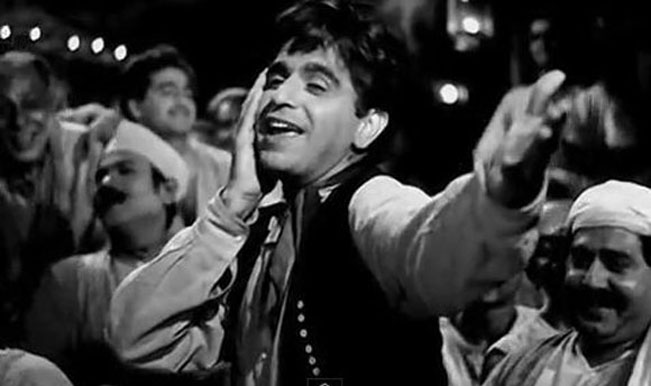
In The Caravan: a parallel review of the memoirs of two of Indian cinema's most interesting actors, Dilip Kumar and Naseeruddin Shah:


1929, an American publisher offered Sigmund Freud a five-thousand-dollar advance to write his life story. He had already published An Autobiographical Study, outlining his professional career. But as for a tell-all memoir, Freud’s response was outright dismissal.

A psychologically complete and honest confession of life ... would require so much indiscretion (on my part as well as on that of others) about family, friends, and enemies, most of them still alive, that it is out of the question. What makes all autobiographies worthless, after all, is their mendacity.

Whatever one thinks of the more far-fetched applications of his theories, most people would concede that Freud knew something about the inner life. Yet, in the near-century since Freud levelled his charges against autobiography, our appetite for the genre has only grown, spilling far beyond the boundaries of the book, into the everyday flows of the virtual world. The unreliable narrator is no longer the preserve of fiction. Accusations of narcissism and opportunism may dog its footsteps, as Daniel Mendelsohn argued some years ago in the New Yorker, but the confessional memoir feels like the genre of our times.

Add this to the Indian reader’s inexhaustible interest in the film world, and you have a winning combination. It is no surprise that an increasing number of volumes in the Indian cinema section of bookstores are biographies and memoirs. In just the last three years, there has been Khagesh Dev Burman’s book on SD Burman (originally in Bengali), Yasmin Khalid Rafi’s book on her father-in-law Mohammed Rafi (originally in Hindi),Anirudha Bhattacharjee and Vittal Balaji’s RD Burman—The Man, the Music, Akshay Manwani’s biography of the lyricist Sahir Ludhianvi, two books on Rajesh Khanna, and a re-issue of Vinod Mehta’s Meena Kumari biography from 1972. Among autobiographies, a distinctly popular new subgenre is the interview-based book, often titled “Conversations with ...”. Gulzar, AR Rahman and Waheeda Rehman have recently been thus enshrined by the prolific British film writer Nasreen Munni Kabir, and Mani Ratnam by the film critic Baradwaj Rangan. But the full-fledged autobiography still has an advantage: it may be an inherently self-indulgent form, but witnessing the narrator going off on tangents, uninterrupted by a questioner trying to keep them on track, is what makes it so pleasurable.

Dilip Kumar and Naseeruddin Shah’s have been the most-talked about film autobiographies of 2014. Both are illustrious actors, known for their deep commitment to their craft. Yet there, it would seem, any similarity ends. Dilip Kumar, 91, made his debut in the 1944 Bombay Talkies film Jwar Bhata, and went on to become one of popular Hindi cinema’s best-loved heroes for three decades. Even more striking was his return, after five fallow years in the 1970s, for a memorable second innings, with meaty roles appropriate to his age in films such as Kranti (1981), Shakti (1982), Vidhaata (1982), Mashaal (1984) and Saudagar (1991). Naseeruddin Shah (who is either 64 or 65, depending on whether you trust his school certificate or the slightly muddled parental memory), made his debut in Shyam Benegal’s second feature Nishant (1975) and swiftly gained a reputation for his stellar performances in the cinema of what came to be called the Indian New Wave. He also did several popular Hindi films, most of them (he says) for the money, thus making no bones about his distaste for that world and its demand for a larger-than-life persona...

This review continues. Go here to read the whole thing.