Showing posts with label bar dancers. Show all posts

8 August 2016

Picture This -- In the Eyes of the Beholder

My BL Ink column:

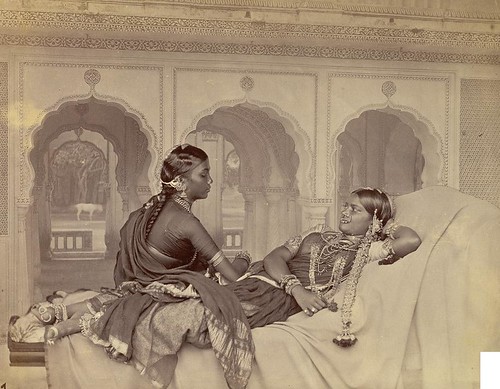
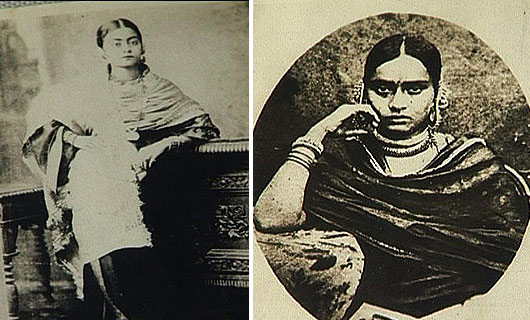
The idea of dance as “not respectable” has a long history in the Indian subcontinent, as Mira Nair’s India Cabaret shows us.


Aapke pair dekhe, bahut haseen hain. Inhen zameen pe mat utaariyega, maile ho jayenge. (I saw your feet. They’re very beautiful. Don’t lower them to the ground, they’ll get dirty),” goes Raaj Kumar’s note to Meena Kumari in Pakeezah. Those words are usually considered among Hindi cinema’s most legendary romantic dialogues, the epitome of poetic delicacy. But think about the line again in the moral universe of Kamal Amrohi’s film, and you realise that it encodes a specific message for the tawaif to whom it is addressed: Sahibjan, the dancing girl, is being told that dancing defiles her.
The idea of dance as “not respectable” has a long history in the Indian subcontinent, tied to entrenched patriarchal and caste-based ideas of inequality. India’s performing artistes have traditionally had a lower social status than their audiences: in terms of gender and often also caste. Any woman who appeared in front of men — whether the performance was erotic or not — was seen as sexually available. Patriarchy thus divided women into those who were marriageable and those who could perform in public.
The nationalist and social reformist agenda that rescued the classical arts from this ‘taint’ unfortunately pushed most other performers into an even more illicit zone. The scholar Anna Morcom has argued in a recent book that for the vast majority of hereditary female performers from communities such as Nats, Kanjars and Deredars, where performing arts had ceased to be a livelihood since Independence, “dancing in bars had been a form of rehabilitation from sex work”.
I found myself thinking about these things as I watched Mira Nair’s affecting documentary India Cabaret recently. Made in 1985, it is a precursor to more recent films about the twilit worlds of performing women: Saba Dewan’s trilogy — The Other Song, followed by Delhi Mumbai Delhi and Naach — perhaps also Shyamal Karmakar’s I Am The Very Beautiful. Nair’s atmospheric hour-long film deals with the world of cabaret dancers in what was then Bombay, weaving its way in and out of seedy, dimly-lit bars and homes, talking to women who dance for a living, and some of the men who come to watch them.
The visual contrasts are striking, and often depressing. When the women are at work, they must look a certain way. They wear make-up and glittering clothes, and twist and turn and writhe on the floor as they slowly remove articles of clothing. Though neither they nor the spaces they dance in look anything like the glamorous Hindi film version immortalised by Helen or Bindu or Padma Khanna, the effort they put in is apparent. Meanwhile the watching men sprawl, as they might in their own living rooms, their ungainly paunches spilling out of gradually unbuttoning shirts.
But as you move from the ghostly green tinge of these interiors to the drab light of day, and watch the same young women waking up, automatically reaching out for cigarettes and a newspaper, your heart leaps up. Sleeping on mats on the floor, their meagre lives in rented rooms may be nothing to write home about — but there is something free about the moment; a freedom from enforced domesticity that is usually only granted to men.
Nair’s film is deeply invested in the freedom these women have earned. Her conversations with the cabaret dancers touch on their jobs and their negotiating skills, their comfort in their bodies and their pride in making a living for themselves and their families. What emerges clearly is the dancers’ own recognition that unlike other women, their bodies are not owned by husbands or lovers.
The contrast is established particularly sharply when Nair follows one Gujarati client to his home, where his wife says she waits every day for his return. She is aware that he goes from his office to the cabaret. She may not like it, but she is resigned. The madonna is as much a slave to patriarchy as the so-called whore.
But the film does not shy away from the sadder aspects of the bar dancers’ lives: the pervasive addiction to cheap liquor, the tenuousness of a career in which age subtracts from value, the deliberate public shaming by neighbours and strangers, and the lack of respect even from family. We watch as one dancer, Rosy, travels back to her village near Hyderabad to get her sister married. Her family is content to use Rosy’s money, but they shun her otherwise.
For the most part, though, the women stay sharp-tongued and cynical. One of them tells a joke which has a series of ‘sati-savitris’ arrive in the other world alongside a cabaret dancer. Yamraj, the god of death, duly recognises the virtue of those women, and gives them the keys to the silver door. The cabaret dancer gets the keys to Yamraj’s own door.
“Do you feel any shame?” asks Nair at one point. “When I go out at night, sometimes a customer sees me and says, ‘Look, there goes that naked dancing girl, that whore.’ I say, ‘Motherf****r, you enjoyed me on stage, and now you say this?’ That’s when I feel shame,” says one dancer. “If somebody said that to me, I’d say, ‘Here’s my address. Come see me tonight.’ If we speak of shame, then how would we work? And if we don’t work, how would we make money? That’s why, in such a place, shame does not exist,” says the second dancer. “If the viewer does not feel shame, why should the viewed?”
Published in the Hindu Business Line, 5th Aug 2016.

4 November 2014

To a Different Drum

Last Sunday's Mumbai Mirror column:

The figure of the dancer has been the object of hypocritical censure, both in Indian society and Hindi cinema, for much too long. Surely, dance deserves something better?


When a self-taught dancer and choreographer makes a film about dance, surely one is justified in expecting some insight, or at least some feeling for dance? It is likely that Farah Khan is too preoccupied with ringing cash registers to listen to less celebratory noises coming from people like me - and anyway, as the fans/trolls never tire of telling us critics, I should have "left my brain at the door." But every film, especially one watched by as many people as Happy New Year, is a window to the way we think. By putting a bar dancer and a dance competition in the same movie, HNY held out the tantalizing hope of a bridge between two worlds that are usually kept far apart - the legitimate middle class dream nurtured by Nach Baliye and Dance India Dance, and the shadowy, subaltern domain of the 'ladies bar'. But then it went to reinforce the existing divide, even more starkly.

Perhaps I should back up a little. Dance is as much a child of Hindi cinema as music - but it has always received stepmotherly treatment. As a society, we nurture a deep-rooted set of moral judgements about dance. In the traditional framework of South Asian life, a woman who performed in front of men - whether her actual performance was erotic or not - was seen as sexually available. Patriarchy thus divided women into those who were marriageable - and those who could perform in public.

Through the 19th and 20th centuries, nationalist reform attempted to 'cleanse' our classical performing arts, hunting down the tawaifs and devadasis who had been its most professional and talented practitioners, and bringing in middle class women to rid dance and music of its earlier taintedness. But as the ethnomusicologist Anna Morcom has argued in her recent book Courtesans, Bar Girls and Dancing Boys, the taint did not disappear. All that happened was that a sanitised sphere of classical performance emerged, populated by middle class people, while traditional performing communities were pushed into a more illicit zone.

More recently, as part of the packaging of Bollywood as a global cultural export, Bollywood dance has also achieved a new social legitimacy. Middle class women, diasporic and resident Indians, take classes in Bollywood dance. Weddings (even among communities that would have baulked at the idea two decades ago) now include a revamped version of the traditional North Indian 'sangeet': where typically, the young women perform specially choreographed items, but 'everyone' dances -- often even the bride. There are discomfiting moments in which here too, women feel compelled to put their bodies on display -- but on the whole, there is certainly something wonderful about this unprecedented freeing up of physical expression.

And yet, some 75,000 women performing the same kind of dances, clad in similar blingy saris and lehngas, in Mumbai's dance bars, were deprived of a livelihood for nearly a decade by a state heady with moral outrage. The ban was eventually lifted last year after the Supreme Court ruled against it, but the pro-ban lobby tapped into what was clearly a popular form of hypocrisy, distinguishing between different kinds of dancing women. Popular Hindi films don't just reflect that hypocrisy; they fuel it.

A complicated version of the patriarchal divide about dance has always been in play in cinema. At one level, especially in the early years, acting was itself a disreputable profession, considered wrong for girls from 'good families'. Then there was the question of image. While film audiences (like reallife audiences) wanted to watch women dance, the heroine's virginal image couldn't be compromised. She was, for the longest time, only allowed to skip around a bit, and invariably only with the man she was going to marry: the hero. Barring the rare (though crucial) tragic courtesan roles: Pakeezah, Chandramukhi, Umrao Jaan, the heroine wasn't usually a professional dancer. She couldn't be a tawaif, or a cabaret dancer. An early way around this hurdle was the filmy trope of 'cultural programme' -- where the heroine's dancerly talent could be showcased in the safe, civilised confines of an auditorium.

The bourgeois acceptance of dance went alongside the rise of classically trained dancers like Waheeda Rehman, Vyjanthimala, and later Hema Malini, Jaya Prada and Meenakshi Sheshadri. More recently, the focus is on a dance contest: Dil Toh Paagal Hai, Rab Ne Bana Di Jodi, and now films like ABCD and Mad About Dance embrace more physically strenuous, professional practice. But films featuring bar dancers - and there have been many, from Madhur Bhandarkar's Chandni Bar to Benny Aur Bablu to Hansal Mehta's recent CityLights - do not dare suggest that they might actually enjoy their work. Or that it might involve any skill at all. This makes Mohini a radical departure. For her, dance is a passion: "Eajy lagta hai Mohini ka dance? Eajy nahi hai. Dance ek pooja hai. Art hai, art."

But then the film undercuts the pride she takes in her dance, by labelling her as a "saleable woman" and never apologising. It insists on a sob story that 'drove her' to this work -- denying, like most media coverage, the fact that most bar dancers were Bhantus, from North Indian communities where women have traditionally danced for a living, and where lack of patronage had begun driving them to sex work. It reinforces the idea that she only deserves respect if she dances for the country. And even when she does get what she wants -- a dance school where little children touch her feet -- it makes that seem cloying and ridiculous. The wait for a braver cinema carries on.

10 August 2014

Nanda: Not So Simple

Today's Mumbai Mirror column:

The late actress Nanda is usually remembered for her girlish innocence. But that wasn't all there was to her.


Nanda's death in March this year was mourned by the industry. But as in life, so in death: she didn't really get the critical attention she deserved. 

Nanda was that rare actress whom the usually inflexible Hindi film industry allowed to graduate from one slot to another, embracing her first as a child artiste (in films like Mandir [1948], Angaarey, Jaggu [1952] and Jagriti, then as the younger sister (in V. Shantaram's Toofan Aur Diya [1956], Bhabhi [1957], Dulhan [1958], Chhoti Behen [1959] and Kala Bazaar [1960]) and finally as a romantic heroine (after Dev Anand kept a promise made during Kala Bazaar and cast her as his heroine in Hum Dono [1961]).

Despite this, there is a Nanda stereotype. We think of her as the achchhi ladki, the simple girl who could be coyly romantic but not sensual. The childlike innocence that had worked for Baby Nanda segued seamlessly into chhoti behen roles (younger sisters have always been infantilised by Hindi cinema) and seemingly clung to her even as she transitioned into playing romantic leads. Her good girl image was also a result of the sharply moral heroine-vamp divide that characterised the era. The heroine had to exemplify 'Indianness'; the vamp was 'Western', if not racially then culturally. The heroine's non-threatening sexuality meant being virginal, and putting her charms on display only for the hero. This was in stark contrast to the vamp's open display of desire (invariably unfulfilled), which in conjunction with her other sins -- smoking, drinking and alcohol – had, of course, to be punished.

One of my favourite Nanda appearances is in an unusually sophisticated version of the good girl-bad girl narrative: Teen Devian [1965]. Nanda plays the wholesome middle class girl, literally the girl next door, but her rivals are not cabaret dancers – a category the audience knows can never succeed with a hero -- but liberated memsahibs. Both Simi the well-connected socialite and Kalpana the famous actress flirt outrageously with our music-shop-salesman-turned-poet. Whereas with Nanda, it is Dev who flirts and Nanda who coyly accepts his overtures. Though perhaps this is not quite true either. In an adorable and surprising early scene, on their first coffee date, Dev asks to see Nanda's hardworking secretarial fingers. “Is this just an excuse to hold my hand?” asks Nanda. “Aur agar kahoon haan?” says the unflappable Dev. “Then I will oblige you,” says Nanda in English.

In the more mainstream Gumnaam (1965) and The Train (1970), Nanda's good girl Indianness is produced at least partially by being pitted against our most memorable vamp: Helen. Usually the heroine and the vamp never share the same space, it being a given that the vamp's netherworld of lowlit restaurants and hotel bars is not one in which a respectable Indian woman would ever find herself.

But both Gumnaam and The Train are slightly unusual in this respect. In Gumnaam (a pretty awful cannibalising of Agatha Christie's And Then There Were None), Nanda and Helen, bearing the religiously-marked names Miss Asha and Miss Kitty, appear in the same frame quite early on. They are both on the fateful plane ride that will seal the fate of its ten passengers. Of course, Nanda wears white, and Helen red. Then, though both swiftly acquire boyfriends among the men they're marooned with, they keep their distance from each other. The bad girl spends most of her time with a drunken Pran, the good girl with a constipated-looking Manoj Kumar. But having put this effort into keeping them apart, the filmmakers decided some frisson would arise from having them bond. So we get Helen, who has spent many scenes before this refusing to drink with Pran, deciding to get drunk -- with Nanda! And they have a blast, until Nanda is violently shaken back to reality by Manoj Kumar, who being Mr. Bharat cannot be expected to enjoy himself. What I thought was fascinating was MK's sarcastic heroine-shaming dialogue, uttered in full hearing range of the vamp: “Ab bhi tum mein aur Kitty mein thoda sa fark baaki hai”.

In The Train [1970], which like Gumnaam was a murder mystery, cabaret dancer Helen (Lily) is the rotten apple, and Nanda (Nita) the misjudged goody-goody one. So Helen gets to throatily proposition Rajesh Khanna, while Nanda only gets to lie with his head in her lap. But then Nita gets a job as a hotel receptionist, letting her into the same space as Lily. And then the film does something truly unexpected: it gives us a glimpse of the 'bad' Nanda. Instead of the saree-clad version with a long choti, we suddenly see a 'Westernised' Nanda with a stylish haircut, the hushed voice and swaying derriere now those of a seductress in a murderous plot.

It seems to me that Nanda's overt innocence was precisely what enabled directors to use her to play on this “fark” between the heroine and vamp -- clearly thrilling male audiences but being careful to eventually re-establish moral order so as not to alarm them.

But remarkably, Nanda didn't stop there. In order to see where this fascinating trajectory took her, watch Yash Chopra's Ittefaq. The vamp-virgin divide is hopefully gone forever, but Nanda needs to be given some posthumous credit for having crossed the line when she did.

Published in the Mumbai Mirror.

1 June 2014

Haunted by Homelessness


When it comes to city housing, Hindi films have often painted a bleak picture, and CityLights is as dark as they come. But now even our fantasies only promise homes for the rich.

Hansal Mehta's CityLights returns us to what used to be a persistent theme of Bombay cinema: the search for a home in the city. An authorised adaptation of last year's British-Filipino film Metro ManilaCityLights brings its protagonists - Deepak (Rajkummar Rao), his wife Rakhi (Patralekha) and their daughter Mahi - from a Rajasthan village to big, bad Mumbai. (In what is one of the first signs of the hoariness of the plot, Deepak is escaping the clutches of a moneylender.) Within hours of arrival in the metropolis, they have been tricked out of their savings by the promise of a home. 

The enormity of that first betrayal is depicted in an early scene that is bleak, and powerful. Rakhi has already started cleaning the empty flat as her own when the construction workers return. There is an unspoken, brutal marshalling of class here: seeing a woman squatting on the floor with a jhadoo, the city workers assume she is a hired cleaning woman. Because of course no-one who looks like a bai can possibly be at home in this relatively comfortable space. Bai, tum ghar jao, they say to the baffled Rakhi, who continues to sweep at first. Then, as realization dawns on her (and them), she roots herself to the floor. It is a harrowing moment of cinema: the frail young woman clinging literally and metaphorically to the ground beneath her feet, as the men try their best to drag her out of the flat.


Rakhi is removed, of course, and when we next see the family, it has floated into that vast amorphous population of the urban homeless. They move from pavement to pavement for a few days, until a bar dancer helps arrange temporary shelter in a half-constructed multi-storeyed building. "When this flat is ready, it'll go for three crores!" declares the tout with that strange pride in something he will never own. Then he pockets a hundred rupees a night to let the family sleep on the bare floor, amid the exposed bricks and beams and dangerous open parapets.


The shadowy spaces of the half-constructed building are a favourite locale for Bombay cinema: most often as the site of action sequences, or a villain's den. CityLights is perhaps the first film to use the space as ironic shelter for the homeless, the city view spread out below less grandly picturesque than cruelly anonymous.


Watching CityLights reminded me of Gharonda (The Nest, 1977), about another young couple's ill-fated striving for a home. Though of course that unusual Gulzar screenplay -- directed by Bhimsain -- was about middle class office-goers: people who did not have ready cash, but could conceivably save up for it. And Gharonda's protagonists do try, working overtime at odd jobs. Sudeep (Amol Palekar) puts up film posters at night, Chhaya (Zarina Wahab) takes on a modelling assignment. But the Rs. 5000 down payment they need to book an LIG flat -- via a munshi known to Sudeep's roommate - is too large to generate so quickly. Sudeep's monthly salary is only 600. So they borrow money to pay the munshi, and in the lovely song 'Do Deewane Sheher Mein', fill the half-done building with their dreams of domestic bliss.


But a house in Bombay is no place for dreaming. It is a matter of life and death. The munshi disappears with the money; Sudeep's roommate commits suicide; Sudeep himself, broken by the turn of events, turns bitter and desperate. And as in CityLights nearly four decades later, acts of desperation only drag you further into the quagmire. Sudeep ends Gharonda as a ghost of his former self - walking away into the horizon, dwarfed by the tall buildings of Bombay.


Amol Palekar as Sudeep in Gharonda
Abandoned buildings were also the scene of a very different sort of film about homelessness and injustice, earlier this summer. All across Mumbai, according to the Amitabh-Bachchan-starrer Bhootnath Returns, are apartment buildings on whom work has stopped because they are haunted. They are haunted by the ghosts of those whose lives were lost in their construction - from engineers who fell to their deaths to displaced jhuggi dwellers. The good ghost Bhootnath (Bachchan) combines forces with a little boy from Dharavi (Partho) to get these hapless souls justice, so that they go peacefully into the next world and our ghostbusters can get paid by the building mafia.

Once upon a time, mainstream Bombay cinema sold a dream - the dream of the poor boy who would grow up to be Amitabh Bachchan, and buy the building for which his mother had once broken stones as a labourer. Sometimes that dream was a mass one, as in the marvellous scene in Coolie when Bachchan smashes the villain's chandelier as he says, to give every coolie's house a light like that one. The middle class film in the same period - even a film as sensitive as Gharonda - simply did not encompass the labouring classes in its imagination. The one time that manual labourers appear in Gharonda, they pause their work obligingly to turn into a gigglingly indulgent audience for the middle class couple's song of home ownership. (It is another matter that the song's desires remain unfulfilled).


In 2014, Bollywood has offered us two visions. On the one hand, the darkly cynical denouement of CityLights, in which we learn that there is no such thing as a free gift - or a free home. On the other, a feel-good tale in which Bachchan -- now a ghost of his former self -- gives corrupt officials lessons in citizenry. But to what end? So that the work of building houses for the rich can continue. For the rest, a home in the city is no longer even held out as fantasy.

Published in Mumbai Mirror.

21 November 2009

Bring On The Dancing Girls

An essay published in Tehelka magazine in November 2009.

The figure of the tawaif continues to haunt popular culture, but what sent the real ones into obscurity?


From Umrao Jaan to Pakeezah to Chandramukhi, the figure of the tawaif has been a figure of fascination in the popular South Asian imagination: the bejewelled, sensuous dancing girl with a golden voice – and almost always, a golden heart. To our Hindi-film-overloaded eyes, therefore, it may seem strange for an instant to look upon the black and white images of women who populate The Other Song, Saba Dewan’s film about tawaifs, looking out of the frame at us with a gravitas we do not expect.

But the gravitas is ephemeral. In one revealing moment, the camera pans an old album, with the moving finger on screen stopping at a pleasantly plump face. The grainy voice of an old sarangi player says, “Yeh Rasoolan Bai hain.” The filmmaker asks, “Kya yeh hamesha itne saade kapde pehentin thi? (Did she always wear such plain clothes?)” The reply is brusque and quietly ironic: “Mujra naach toh karna nahi tha. (Well, she wasn’t going to dance the mujra.)”

Rasoolan Bai gave up the mujra – the expressive, sometimes suggestive kathak-based dance that accompanied the tawaif ’s music – in 1948. At the same time that she moved out of her kotha and into a gali ka makaan in Banaras, the woman whose aching songs were perhaps India’s most famous renditions of the thumri stopped performing in her own city. The timing is remarkable. As India and Pakistan entered independent nationhood, the thumri was taken out of the kotha. A musical genre whose very form — intimate, expressive, always sung in a first-person female voice — had emerged from the courtesan’s salon, had, in order to survive in the bright light of modernity, to move into the concert hall, the radio station, the cinema. And in order to be heard in this new world, the tawaif herself had to become a ganewali or – in even more Sanskritised form – a gayika.

The most famous of such successful metamorphoses is that of Akhtari Bai Faizabadi into Begum Akhtar. The courtesan who had achieved fame in her teens became a respectably married lady, even giving up her singing career for years, “only to emerge into the public domain transformed into a national symbol iconic of the courtly musical culture which had shaped her,” writes scholar Regula Qureshi. But the nation exacted its toll. In order to be the voice of a new India, Akhtari Bai had to live a double life – her newfound respectable status was dependent on dissociating herself from every shred of her past, while the power she had over her audience, what independent scholar and historian Saleem Kidwai calls “chemistry”, derived in large measure from that very past.


Saba Dewan’s fascinating film, The Other Song, derives its name from a similar instance of doubling, of a repressed erotic self. Told by a respected Banarasi musician called Shivkumar Shastri that Rasoolan Bai had once recorded a different version of her famous Bhairavi thumri “Lagat karejwa mein chot (My heart is wounded)”, Dewan set out in search of the lesser-known variation. As she asks musician after musician (and later, tawaif after tawaif) if they’ve ever heard the version that goes, “Lagat jobanwa mein chot (My breasts are wounded)”, without success, we begin to see glimpses of a hidden world, a world whose frank sexuality and often joyful bawdiness were pushed deep below the surface, often by its own practitioners. Song after song turns out to have had its lyrics altered to suit ‘respectable’ tastes – from soibe (sleep) to jaibe (go), choli (blouse) to odhni (veil).

The tawaifs of North India (like South India’s devadasis) came from hereditary performing communities. According to historian Katherine Butler Brown, the term tawaif was first used to describe communities of female singers and dancers in Dargah Quli Khan’s Muraqqa’-i-Dehli (1739-41). But it was not until the early 19th century that it became a catch-all term. Even then, Brown argues, before 1857 there was always a distinction made “between elite tawaifs who were highly cultured, highly refined, models of etiquette and masters of performance genres, who might only have had a single sexual patron in their lifetime; and tawaifs who were less talented, less well trained, and thus more dependent on sex work”

BUT AFTER 1857, when British Crown Law came into effect throughout India, all tawaifs were criminalised alongside common prostitutes, with court judgements stating that singing and dancing were ‘vestigial’ activities while their real income came from prostitution. Meanwhile, the rising middle class, “influenced by Victorian values and empowered by colonial law, increasingly dismissed the tawaif as immoral and decadent, and began various moves to ‘rescue’ Hindustani music from them,” says Brown. The campaign for a national music — cleansed of its associations with tawaifs and Muslim musicians — aimed to make it appropriate for middle class women. In a stunning double move, the very processes that enabled ‘respectable’ women to come out of purdah worked to invisibilise the highly skilled, often highly educated, women who had been ‘in public’ all along: the tawaif.

With the decline of the feudal patronage that had sustained the kotha and its arts, many tawaifs explored other options. All India Radio (AIR) in its early days was almost entirely dependent on the ganewalis, as were recording companies: it was tawaifs like Gauhar Jan who were the first gramophone superstars. But in the early 2000s, a skilled singer like Saira Begum (one of the women from tawaif backgrounds that Dewan shot with) gets a recording slot at AIR in Banaras because of a zealous Italian pupil, only to be humiliated with a ‘musical theory’ examination she cannot possibly pass.

As the new guardians of music locked it up and shut the door, women from tawaif backgrounds entered first the theatre company, and later, the movies. “Cinema becomes a part of tawaif history, documenting tawaifi arts we’d never get to see – and also providing a way for the tawaif to reinvent herself,” says Kidwai. “And this reinvention was both on screen and off it. If Hema Malini in Sharafat wears plumes and a tiara to do a mujra, one can’t complain of inauthenticity: many real tawaifs like Siddheshwari learnt to sing in English – even if it was Twinkle Twinkle Little Star!” The tawaif’s remaking of self, as Kidwai points out, could take more radical forms: such as in the case of Nargis, whose mother Jaddan Bai prepared her for a cinematic career by teaching her everything except how to sing. The stardom of Nargis – the ganewali’s daughter divorced from the gana – demonstrated one route by which the tawaif could make it in the modern world. (It is tempting to conclude that this was the necessary obverse of the rise of the playback singer – the disembodied female voice who retained respectability by never being seen on screen.)

Cinema, though, isn’t an accessible career for most women. The two other films in Saba Dewan’s trilogy address more subterranean worlds of female performance. Delhi-Mumbai-Delhi (D-M-D) centres on Riya, who dances in a bar in Mumbai but is from Delhi, while Naach is about girls who dance to Bollywood numbers on massive, rickety stages in the town of Sonpur, between Muzaffarpur and Patna, during the annual cattle fair. For Dewan, the differences between these categories of women outweigh any similarities. Her D-M-D protagonist Riya, from an ordinary working class background, may have gained confidence and decision-making power within her family, but she remains wage labour. “The tawaif was much more her own mistress: the owner of the space, the person who paid the accompanists,” says Dewan.

Whether we like it or not, though, the tawaif remains the imagined reference point. “There is an attempt to recreate the mujra past, mediated via Hindi films,” acknowledges Dewan. “In Bombay bars, the girls wear so-called Indian costume – ghaghra choli, partly because it’s easier to get license for ‘Indian dance’, but also because it fits the audience’s appetite. The man there wants to imagine Rekha dancing for him, at least.” Even the filmic bar dancer draws on the pure tawaif of the 1970s Hindi movie: Tabu in Chandni Bar must remain chaste while working in a bar, just like Asha Parekh in the kotha of Main Tulsi Tere Aangan Ki.

But the relationship between bar dancers and tawaifs runs deeper. Ethnomusicologist Anna Morcom estimates that 80-90 percent of Mumbai bar dancers, “by informal accounts”, are hereditary professional performers from tribes like the Deredar, Nat, Bedia and Kanjar. They have also been the target of a moral campaign eerily similar to the Anti-Nautch campaigns of a century ago. In 2005, a ban on dancing in Mumbai bars made 75,000 such women redundant. It is still in force.

In early 20th century India, it was dance that seemed to lie at the root of moral opprobrium. The tawaif gave up the mujra to acquire respectability as a concert singer or actress. But in a newly-globalised India where ‘Bollywood dance’ is now a legitimitised ‘cool’ activity for the urban middle classes – think NRI/urban weddings, Shiamak Davar classes, TV shows like Boogie Woogie and Nach Baliye, feeding back into films like Dilli-6 or Rab Ne Bana Di Jodi – how does dance re-acquire its immoral connotations when performed by women in bars? That is a new double standard that will take longer to resolve.

From Tehelka Magazine, Vol 6, Issue 44, Dated November 07, 2009