Showing posts with label hill stations. Show all posts

14 May 2024

Raam Reddy: ‘Film itself is a character’

My interview with the filmmaker Raam Reddy, as published in Mint Lounge on 3 Mar 2024.

Raam Reddy on his second feature, ‘The Fable’, and why the setting always comes early in his outline and feeds into everything.

Raam Reddy was 26 when his directorial debut Thithi (Funeral) premiered at the 2015 Locarno Film Festival, winning several awards on the international film festival circuit and the national award for Best Kannada Film in 2016. A marvellously deadpan tragicomedy about three generations of men responding to the death of a patriarch, Thithi was set in co-writer Ere Gowda’s village of Nodekopplu in Karnataka’s Mandya district.

Now 34, Reddy has made a second feature strikingly different in terms of cast, language, setting and tone. The Fable features Mumbai-based actors like Manoj Bajpayee, Deepak Dobriyal and Tilottama Shome, has dialogues in English and Hindi, is shot on 16mm, and unfolds in the shadowy glades of a fruit orchard in Uttarakhand. Set in 1989, it’s about an English-speaking business family not dissimilar to Reddy’s own—except that the man of the house (Bajpayee) spends a lot of time surveying his surroundings, wearing a pair of wings. The Fable substitutes Thithi’s gentle philosophical realism with the surreal and mysterious, exploring the family’s transformation after fires begin to break out on their estate. 

Lounge spoke with Reddy at the recently concluded 74th Berlin International Film Festival, where The Fable had its world premiere. Edited excerpts:


The settings of both your films are very different: a chaotically busy Karnataka village and a vast, quiet Himalayan estate. What role does place play in inspiring your work?
A huge role. Place always comes early in my outline and feeds into absolutely everything. My novel It’s Raining In Maya (2011) is set in a fictitious town inspired by my years in Delhi University’s North Campus. I lived in Malkaganj. For Thithi, it was the village. Here it’s the mountains, because they have an inherent magic in the air.

In ‘Thithi’, there was a real village. But in ‘The Fable’...
It’s fictional.

So, was the germ of this film the setting?
Actually, it was genre. The magical elements I have experienced in very moving ways in literature, I wanted to translate them into cinema. Then the setting: I spent three months in the mountains. The narrative structure comes from what story the place wants me to tell. Thithi was very... humorous? This time I was excited by the challenge of holding attention through mystery.

‘The Fable’ combines a real world with the surreal. How did you decide what those magical elements would be?
I would love to clap on a pair of wings and fly. Or be able to communicate without words. I always wanted to be part of that heightened reality. It gets a little indulgent, but I wanted to abide a little in these dreams, in a very pure way.

Do your scripts start as novels?
My novels look more like films scripts: I think in cuts. But yes, this screenplay was quite literary. I used language to create moods that had to be executed in the audiovisual domain. Quite hard to do if you have a lot of specifics.

Talking of specifics: why fires?
When I was in the mountains for the first time, I went to fight a forest fire. And I like allowing life to guide my storytelling hand.


You mean, it’s like magic: the fire happening while you were there.
Exactly. Fire was also exciting at the narrative level: it’s the perfect crime (there’s no way to know where a spark fell in a pine forest) as well as the perfect capsule to see how an unknown accident affects a social ecosystem. Fire also signifies many things, like regeneration. Destruction is not always negative. It also brings forth the new.

You have two songs, which seem crucial to the mood.
Not just mood, but meaning. The lyrics move me to tears each time, even in the edit room. Shivoham says you are not your body, or your mind: you are pure consciousness. This is the deepest part of our philosophy and I connect with it deeply. As does the family. It takes them into a spontaneous meditation. The purity of that space, from which the song comes, is why the family were worthy of this story. Naiharwa is about reaching the land of the enlightened. Both have been sung by my sister-in-law (Hindola Aguvaveedi). She would sing these to us after she married my brother.

How much does the film draw on your own life?
I have spent time in a coffee estate, I have seen those relationships as a child and I wanted to question them. So the soul of the film is personal, it’s my voice as an artist. But the body—the north Indian setting, the narrative elements, those are my craft as a filmmaker. I almost don’t want to be over-familiar with the place. Like in Thithi—it wasn’t my village.

In ‘Thithi’ you worked largely with non-actors. Here you have well-known actors.
Unlike in Thithi, where we wrote roles based on real-life characters, here I wanted to write and then find actors who could inhabit those key roles, who could transform. But there are many non-actors: the villagers, the army men, the gardener, the maid. They served different purposes within this tapestry.


Was the combining of actors and non-actors ever a challenge?
These are the challenges I love. That dynamic was exciting to me: having a veteran like Manoj-ji do scenes with Ravi Bisht, who is a Pahadi villager, is talented but never acted before. Or Tilottama (Shome) going into the non-actor world and playing a villager. But mostly we had an actor schedule and a non-actor schedule.
I tried with this film to bring opposites together. So it is realistic but also magical; it is 16mm, 1980s in look and feel, but it’s also VFX-heavy. (The fires, but also a lot of the nature is VFX.)


Why did you want to shoot on film?
Multiple reasons. One, it was the medium in use in 1989. Making it look like it was shot then, that authenticity was exciting. I also believe in a kind of transference of consciousness in art; I think film carries our emotions in a tactile way, more potently than the digital medium. Film itself is a character, the grain dances from frame to frame. I do still photography on film, so that was the entry point.

Creating this visual world was a beautiful collaboration with debut cinematographer Sunil Borkar, and debut production designer Juhi Agarwal. I love working with first timers in key roles—it’s not like I am so far away from being one—because their visions are so uncoloured, coming straight from the hearts.

Would you speak a little about the film’s politics, and class in it?

First of course there’s the colonial hangover. And class has always fascinated me. It is a cross-sectional analysis of a plantation society. There is the family at the core. Then the manager who is loyal to the family but is a local himself, so he mediates between worlds. Then there are the villagers whose livelihoods are based on the estate by choice, or at least within the choices available to them. There is a loving relationship between Dev (Bajpayee) and his workers, but there is an obvious disparity. There is a shot in the film where the workers are walking home, under suspicion—and you cut to the family at a dinner party.That’s just how much of India is. And then there are the nomads: they surrender to nature, they don’t speak.


The nomads seem to represent a different sensibility from your real-world concern with class. They seem almost fictitious.
Totally, almost like elves. They had to stand apart. They are part of the questioning of our rights. Can we inhabit nature, filled with trees and creatures, without being persecuted?


Your shooting schedule was disrupted for two successive summers by the pandemic. What do you do as a filmmaker when something stops a creative process like that?
You stop, internally as well. I make one film at a time. But I am a compulsive creator. I’m into photography, music, philosophy, poetry, songs—not for an audience, yet.


Do you think of ‘The Fable’ as political allegory? 
It is part of the layers, but you can decide what you think is the core. As an artist, that’s exciting to me—to leave room for my art to be inhabited.

Trisha Gupta is a Delhi-based writer and critic, and professor of practice at the Jindal School of Journalism and Communication.

7 May 2019

The sense of an ending

My Mirror column:

In honour of Satyajit Ray's 98
th birthday last week, here's a look back at one of his least-watched but loveliest films: Kanchenjungha (1962).


Born on May 2, 1921, Satyajit Ray burst upon the scene with Pather Panchali in 1955. But his first original screenplay was for Kanchenjungha (1962). Apparently written by Ray in ten days at Darjeeling's Windamere Hotel, Kanchenjungha is a glancing, elliptical sort of film. I remember first watching it as a pre-teen and coming away unsure of what had just unfolded. Like the elusive snow-capped Himalayan peak for which it is named, Kanchenjungha does not reveal itself at first glance.

What action there is in it is hedged around with conversation. Quite often, conversation is the action. And yet this is simultaneously a film full of moments of quiet, of letting the visual speak.

A lot of that visuality comes from the setting: the still-colonial hill station of Darjeeling, where a well-off Bengali family is on the last day of their vacation. We learn from the suited, cigar-smoking patriarch Indranath that they have been there seventeen days — a time that speaks both of the length of holidays in the 1960s, and of the leisure this family enjoys. 

But the mood is not leisurely. What there is instead is a sense of expectation, of things preparing to come to a head. The ornithologist uncle is searching for an as-yet-unseen bird; a suitor has hunted down a particular flower; the patriarch is eager for an unobstructed glimpse of the peak to round off the holiday properly. The sole grandchild, too, wants to wrench what she can from her last day in the hills. “I'm going to take many, many rounds [on the pony],” she announces. Even the little girl, otherwise oblivious of adult business, senses that time is running out. A highly eligible bachelor called Mr Banerjee is expected that day to propose to the family's younger daughter, Monisha. (It is part of Ray's brilliant detailing that no-one ever refers to Banerjee by his first name. N Viswanathan's character remains, despite all his sophistication, a hazy, distant outline – while his intended bride is so identified with her nickname, Moni, that another character in the film has to imagine her full name.)

Nineteen-year-old Moni is still at university, but her father Indranath has approved Banerjee, and since no one ever challenges Indranath, everyone assumes that the marriage will be fixed by day's end. Ray uses this prospect of wedding bells to cast into relief the lives of the other two couples: Monisha's parents Indranath and Labonyo, and her elder sister and brother-in-law Anima and Sankar. The older couple's relationship is a case of male obliviousness, even in the face of clear disquiet. Indranath asks his wife for her opinion, but it is clear that her only possible role is to support his decision. Labonyo (played by Karuna Banerjee, famously cast by Ray as Apu and Durga's mother Sarbajaya) has lived long enough with her husband to know when silence is the only option. With a man who is used to getting even smiles on demand, perhaps her best one. She sings her heart out, but cannot speak it.

At one level, this is a film about the hidden costs of arranged marriages – most often paid by women, but often also by men. Sankar is the example that the film offers of this: a man who feels that fate has dealt him an unlucky hand, a wife who doesn't love him. One of the earliest lines spoken in the film is Sankar's unsolicited advice to Moni: to not marry without love, and the film keeps us, till the end, on that path of possibility.
And yet, this is still Ray: he will not reject the social contract wholesale, even as he holds it up for us to peruse, gently suggesting that there might be some holes in the fabric. “Are you suggesting that all marital partnerships must be based on an exact match of qualities and interests between a man and a woman?” asks Banerjee pedantically. “No, that would be absurd,” snaps Moni, using the English word.

At a more profound level, though, Kanchenjungha is about being true to the self even when it seems foolhardy, about courage and independence of spirit pitted against the pragmatic and secure option. And that courage, interestingly, enters the narrative from a most unlikely source: an impoverished young man who has been introduced to Indranath and who almost snags a job offer from him before his self-esteem gets in the way. “Aren't you unemployed?” demands the haughtily insensitive big man. “No,” Ashok finds himself saying. “What do you do?” “I give tuitions.” “How much does that fetch you?” “Fifty rupees a month.” “Don't you need more than that? “I do.” “And how do you propose to get it?” “By my own efforts,” says Ashok, and turns away from the stumped older man.

One of the film’s most memorable moments comes just a little later, when Ashok, having come upon Monisha on a winding hill path, marvels at his refusal of her father’s patronage. Perhaps it is these misty mountains, these amazing tall trees, the grandness of all this, which made me feel like a giant, he muses. “As if I was special. As if I could do anything at all... If it had been in Calcutta, I wouldn’t have had the courage.” 

There could be no greater tribute to the Bengali’s love of the mountains.

Published in Mumbai Mirror, 5 May 2019.

22 October 2017

Interview: Dharamshala International Film Festival 2017

An interview I did for Firstpost:

DIFF founders Ritu Sarin and Tenzing Sonam on the festival's sixth edition, and what sets it apart.


The Dharamshala International Film Festival (DIFF) turns six in November 2017. Ritu Sarin and Tenzing Sonam, the filmmaker couple who founded it in 2012, spoke with us about running a film festival, staying local while welcoming the world, and what makes DIFF different.

You've both lived in many places, across continents. Tell us about your connection with Dharamshala. What were the reasons you chose to settle down there?

Ritu:
Tenzing and I had been living in London for many years when we decided to move back to India. We had two young kids and we were keen that they grew up in an environment where they would be part of both their Indian and Tibetan communities. Dharamshala was the perfect place for many reasons. My own family were originally from here. It is the home of the Dalai Lama and the centre of the exile Tibetan community, and a lot of our work is focused on issues around Tibet. And of course, it is a beautiful place!

How and when did the idea of DIFF first come to you? Why a film festival? And what were the necessary steps in bringing that idea to fruition?

Tenzing: We had lived in Dharamshala for a number of years when we began to feel the need for a contemporary cultural event that would bring together the town’s diverse communities. Although quite cosmopolitan in many ways, there were surprisingly few activities or cultural spaces in which Tibetans and Indians could jointly participate. As filmmakers, we had been to many film festivals around the world, so that was the most obvious thing we felt we could do.

Ritu: We were also interested in promoting an alternative cinema culture and encouraging filmmaking in a region that has very little access to contemporary cinema or art. Initially, the idea was to show a few films that Tenzing and I really liked and try and bring some filmmakers over.

In this era of torrents and Netflix, is there something about film festivals that still attracts people? What's been your experience over five years of running DIFF?

Ritu: Definitely! Firstly, watching a film in a theatre with an audience that shares your love of films is still a magical experience. In a festival, you also get to listen to the filmmakers and interact with them – that makes it even more special. Like-minded people come together for a few days for the pure pleasure of living, breathing and talking cinema.

Tenzing: When we started DIFF, like I said, our priority was to create a contemporary cultural event locally. But apparently, we had stumbled on an idea that was just waiting to be realised in India – the establishment of a personalised, cutting-edge, independent film festival, in a beautiful location away from the metros. The number of attendees has grown from 2000 people in 2012 to just under 6000 in 2016. Our volunteer force alone represents pretty much every corner of the country!

DIFF definitely feels rooted in Dharamshala. But given it's in such a tourist-friendly place, how do you maintain a balance between local participation and outside visitors?

Ritu: Yes, we underestimated the attraction an indie film festival in Dharamshala would have for a much wider audience. Now we're very aware of DIFF’s potential to enhance the town’s reputation as a cultural destination, and we do our best to cater to visitors from outside. We have a DIFF information-cum-registration booth in the main square at McLeod Ganj. We also run a shuttle service that ferries audiences from McLeod Ganj to our venue at the Tibetan Children’s Village and back. Through the DIFF website, we provide information on travel and accommodation and respond directly to queries relating to attending DIFF. At the venue, we set up a range of food and craft stalls in collaboration with community partners and ensure that our guests have plenty to do besides watching films. Also, our 80 volunteers are on hand to help visitors in every way.
But this does not really impact the way we run DIFF. By our reckoning around 50 percent of our audience comes from outside the Dharamshala area. I don’t have the figures for the split between delegate pass and student pass buyers at hand, but it’s probably half and half, and that’s because we give a lot of complimentary passes for local students to attend specific screenings.

Our priorities are still the same: to show quality independent films and to bring as many filmmakers as our limited resources allow; and to target local communities, especially through a series of outreach programmes. Through September and October this year, for instance, DIFF partnered with Jagori Rural Charitable Trust and the National Film Development Corporation of India to arrange a series of screenings in local schools, colleges, villages and at Dharamshala District Jail — all of which were tailored to meet the communities’ interests and concerns. Our Schools Film Appreciation Competition introduced around 45 students from six schools to the concept of active and critical engagement with cinema. At DIFF 2017, students from ten local schools will attend the Children's Programme, while another 10 local colleges will send students to watch Turup and Newton.

Do the same visitors come back every year? And if you're adding more new people every year, how do you ensure the small-scale indie spirit of the festival will survive? When something is successful, isn't there pressure to go bigger?

Tenzing: Yes, we get many returning film lovers who specifically plan their holidays around the festival. We’ve had loyal fans from as faraway as Hyderabad and Mumbai returning to the festival year after year. Many younger attendees have also returned as volunteers.

Ritu: Maintaining the personalised and intimate nature of DIFF is a huge priority for us. We believe that it is this quality that differentiates DIFF from other festivals. If we lose that, it will eventually become like any other large corporate-sponsored event. Having said that, even to maintain the festival at this level, it is a never-ending struggle to find funding. There are moments when one throws up one’s hands and wonders why we're doing this in the first place!

What has been the most unexpected part of running DIFF? 

Ritu: We never imagined the extent to which DIFF would attract audiences and filmmakers from all over India. It's become a platform for Indian indie filmmakers to showcase and discuss their work. In the past five years, we’ve welcomed most of the films and filmmakers who've made a mark on the Indian indie scene. 

Of course, with this success has also come much greater responsibility! We find ourselves in the strange and unpleasant position of having to turn down films — often not because they don’t deserve to be shown but because there simply is no space to accommodate every good film that we see. As filmmakers, we’ve been on the receiving end of this equation and know how disappointing it is when one’s film is not selected for a festival, which makes this part of the job even harder.

You're both longtime documentary filmmakers who have also made fiction. DIFF, too, makes space for epic fiction – say, Rajeev Ravi's Malayalam gangster film Kammatipadam last year — alongside shorts, children's films and searingly honest, intimate non-fiction, like Sean MacAllister's A Syrian Love Story. Do your audiences respond differently to fiction and non-fiction? Is there a hierarchy in people's minds?

Tenzing: Although we are primarily documentary filmmakers, we’ve been avid cinephiles since our college days. We love all kinds of films – docs, fiction, experimental – and we were clear that we would not have any specific criteria; we would simply show films that we loved and felt were important to share. This accounts for the eclectic nature of the films that screen at DIFF.

Ritu: As far as we’ve noticed, there isn’t an obvious separation in the way audiences approach the different kinds of films we screen. We’ve had full houses for films as diverse as Sonita, a documentary, and A Korean in Paris, a dramatic feature, with audiences overlapping both.

How do you choose films for the festival?

Ritu: We follow international film festivals and if we read about a film that sounds interesting to us, we contact the sales agent and get a screener. At the same time, we reach out to a network of filmmakers and film festival programmers from around the world to send us recommendations. And of course, we watch films ourselves at film festivals that we attend. In this way, we build up a long-list of films, which we then start watching. We have an informal group of friends who help us in this process. The final shortlist also depends on various other factors, some of which are beyond our control: e.g. the screening fee may be too expensive for us to afford, or the film might not be available on Blu-ray or as a digital file (we don’t have facilities to screen from DCPs). As far as possible, we also try and select films where the filmmakers can attend.

What are the films you're most excited about this year?

Tenzing: It’s always difficult to single out films as each film is there for a particular reason. However, this year, we’re particularly proud to be having the South Asian premieres of three experimental films: Amar Kanwar’s Such a Morning, Naeem Mohaiemen’s Tripoli Cancelled, and Tan Pin Pin’s In Time To Come.

You mentioned that your volunteers come from all over India. I can vouch for the fact that they really make DIFF what it is. How do you find them, or they you?

Ritu: Yes, our volunteers are the lifeblood of the festival. We've even had some from abroad! We put out a volunteer call on social media and a word-of-mouth network seems to do an amazing job of alerting people. Before we know it, we are inundated with applications. We also get many repeat volunteers, and friends of past volunteers. The enthusiasm of the volunteers is all the more remarkable considering the fact that they have to make their own way to Dharamshala and take care of their own accommodation. We only provide food and transport during the festival. One perk that the volunteers get is that they work in shifts and get to watch films for free during their off times.

Last question — what would you say to someone who dreams of running a film festival?

Ritu: Be prepared for a lot of very hard work, including spending a lot of time pursuing the thankless task of fund-raising! But if you stick with it, the sense of satisfaction and fulfilment you get at the end is enormous.

Published in Firstpost.

30 December 2013

Spirit of Place: a grand old hotel rises from the ashes

The refurbished Hotel Savoy offers an atmospheric window into Mussoorie. My article for Outlook Traveller magazine.

The Savoy at night. Photo: Puneet Paliwal.

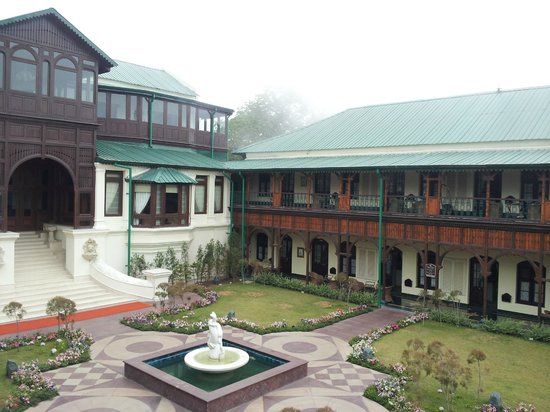
I had been to Mussoorie twice before. But this time, instead of coming to an end at Library Chowk, the Mall seemed to lead further up the hill, into the mist. A steep driveway curved into the massive grounds of what could well have been a castle. The taxi driver looked a bit sceptical when Puneet, the photographer, and I said this was indeed our hotel. One couldn’t really blame him. With the Savoy’s fairy-tale turrets as backdrop, we looked even scruffier than we were.

It remained a slight concern throughout the trip, this business of living up to the Savoy. Even freshly bathed (under a superbly luxurious shower), I never quite felt I could match up to what these corridors have been used to. After all, this isn’t just any old hotel. From 1902, when a Lucknow-based barrister called Cecil D. Lincoln decided to pull down the old Mussoorie School and build a massive English Gothic structure in its place, the Savoy has been the hotel of choice for a succession of Indian and international grandees. The Princess of Wales, later Queen Mary, attended a garden party in the Savoy grounds in 1906. Later, the hotel played host to several other royals: Haile Selassie, emperor of Ethiopia and Prince Norodom Sihanouk of Cambodia. The Gaekwads of Baroda and the Wodeyars of Mysore were known to take over entire blocks for the summer (the Gaekwad ladies were ardent tennis players, apparently, and would insist on the block adjoining the courts).

The grande dame of Urdu writing, Qurratulain Hyder, spent a lot of her childhood in Mussoorie, seeing the British hill station through what was probably its biggest historical transition—Indian independence. “Throughout the day English sahibs, memsahibs, and their baba log cross the bridge on mules and horses or riding in rickshaws and dandis. In the evening, the same bridge becomes the site of milling crowds of Indians,” begins Hyder’s story ‘Beyond the Fog’. Of course, the Savoy remained preserved from any milling crowds until much later. Its Indian guests were either maharajas and maharanis, or taluqdars, or Anglophiles of the Nehru-Gandhi variety. Like his father Motilal, Jawaharlal Nehru stayed here, as did Indira Gandhi and, later, Rajiv Gandhi.

And yet, the Savoy isn’t quite the daunting place you think it might be. That might have much to do with Mussoorie itself. Unlike a Shimla, where the official presence of colonial government meant that Appearances had to be Maintained, Mussoorie-Landour was always an unstuffy place. Reputed as a place for romantic assignations, Mussoorie was all about being British without the stiff upper lip. And the Savoy was at the centre of the party. Travel writer Lowell Thomas, in 
India: Land of the Black Pagoda (1930), described the Savoy’s (in)famous Separation Bell: “There is a hotel in Mussoorie where they ring a bell just before dawn so that the pious may say their prayers and the impious get back to their own beds.” As Hyder’s short story has it: “In the ballroom of the Savoy the Anglo-Indian crooner and his band will soon start ‘Enjoy yourself, it’s later than you think.’”


Senior journalist Saeed Naqvi recently reminisced about having gone to Mussoorie as a schoolboy, in a gang of four that included Vinod Mehta. The young men from Lucknow saved up money to stay in a cheap hotel so that they could wear their ill-fitting suits and “peep into the grandest dining hall in the Empire.” But the Savoy’s glory days ended at least thirty years ago. Looking at the sheer scale of the property, it is easy to imagine how a place like this could have gone to seed. In fact, one doesn’t need to imagine it. One can see it.

On our second morning, Puneet and I took our post-breakfast coffee out into an open area adjoining the Grand Dining Room (it is now officially called that, while the hotel is officially called ‘Fortune The Savoy’). We’d spent a few minutes pleasurably looking out over the small-town business of Mussoorie far down below when we both realised that to our left was a wall, and behind that wall was a half broken-down building—with a turret exactly like the ones above us. “There’s another wing!” said Puneet. 

After lunch, a member of the invariably friendly Savoy staff took us round to the unrestored wing. Piles of old furniture lie around: a lovely large dresser, a nice little table (missing a leg), several broken chairs, even an old post box. The buildings are in absolute disrepair, seemingly without electricity. It was day, but as we climbed up the creaky wooden stairs, we could barely see where our feet were going. It felt a little like a re-run of R.L. Stevenson’s famous scene in Kidnapped: the next step, I was sure, was going to be into thin air. Thankfully, that didn’t happen. Stepping out into a kind of gallery, we found we were above the old ballroom. One of the oldest photographs of the Savoy still in circulation is of an after-party image of this very same room filled with people in masquerade, the women’s ‘fancy dress’ costumes for New Year’s Eve unable to quite disguise their 20s flapper aesthetic. The grand old wooden floor still exists, but apart from that there is little sign of the room’s original avatar. A mammoth Santa Claus sprawls lopsidedly over one wall, from a children’s Christmas party before the property last changed hands. A badminton net is strung across the centre of the room: the staff currently use it to entertain themselves on a free afternoon.

Standing in the overhanging gallery, I first ask about the Savoy ghosts. Like Mussoorie itself, the hotel has long had a reputation for haunters. The most famous of these is Lady Frances Garnett-Orme, a 49-year-old spiritualist who was found dead in her room at the Savoy in 1910. The cause of death was poisoning, but the poisoner was never caught. But the technique—adding bromides to the lady’s own bottle of medicine to cause the strychnine already in it to sink to the bottom, where it was consumed by the victim herself in one single lethal dose—was so convolutedly foolproof that Rudyard Kipling apparently wrote to Arthur Conan Doyle, suggesting that he incorporate it in a story. He didn’t, but Agatha Christie did. In The Mysterious Affair at Styles, Christie had her English country-house murder of one Lady Inglethorpe achieved by the same method, to be solved by Hercule Poirot in his first-ever fictional appearance.

Lady Garnett-Orme, according to media sources as varied as Aaj Tak and NatGeo Traveller, still wanders the corridors, sometimes offering a blank stare, and sometimes singing softly. The Savoy staffer I asked said he hadn’t seen her. But he had once spied a couple of ghostly children. On the other hand, none of the spooks had made an appearance of late, he said, and anyway the management had forbidden all talk of ghosts. “There are no spirits,” was the hotel’s official policy.

Later, wandering through the premises, abutting the main wing, I found what looked like a little Sufi shrine, complete with a green silk chadar. “Who is buried here? Is it a saint?” I asked a passing kitchen helper. “No, no, it’s for Sai Baba. And he’s not buried here. This is to stave off the spirits.”

                                                                          ***

Photo: Puneet Paliwal
Much of Mussoorie’s early British spirit is to be found in its graveyards. Landour, where most of these “villages of silence” are, is less than half an hour up from Mussoorie: but the trees feel mossier, the mist thicker. The cemetery on Camel’s Back Road is locked and deserted, and the other cemetery on Landour’s Upper Mall is guarded by a chowkidar and his host of dogs. But the Savoy’s Siddharth Nautiyal, who has driven us there, grew up in Mussoorie and has a friend on literally every street corner. The chowkidar is slowly but surely wooed; he even lets in Puneet and his camera. By the time we return after seeing the graves of the Alters—Tom and Stephen Alter’s father and uncle—Siddharth and the chowkidar have found a village connection. Next up is the Mussoorie Library, where again we only manage entry because of a special request made to Mussoorie chronicler Ganesh Saili. The library is a massive, many-roomed structure that occupies pride of place at the Gandhi Bazaar end of the Mall, off-limits to everyone except its seventy members, and there’s a Mussoorie residence requirement for membership ever since an “Angrez” flew out with some ten precious books. The deep red doors lead into a musty high-ceilinged space, where the old glass-fronted bookshelves reveal carefully arranged collections of history and literature dominated by titles from at least fifty years ago: Nelson’s History of the War (in 25 volumes), The Rise of Rail Power in War and Conquest 1833-1914 by E.A. Pratt. The Nobel laureate Pearl S. Buck, who once stayed at the Savoy and is listed on a plaque at the hotel’s wood-panelled Writers’ Bar, is represented by her China books, of course—but also by East Wind: West Wind, which appears to be a royal Rajasthani romance.

We returned to the hotel, exhausted. After choosing Col. Skinner’s Fish and Chips (over the Bycullah Club Koftah Curry) in the admirably restored Grand Dining Room, I retired for a nap in my rather stately Suite, all blue and white and gold. When I woke up, it was around a quarter to five, and the Mussoorie mist had come calling. Wispy fingers of cottonwool had wrapped themselves round the green turrets, and were slowly descending to stretch across my balcony, forming themselves into a woolly white canopy. In the paved courtyard below, the fountain began to play. As I watched, the misty twilight dissolved into slate-gray night. Down in the Beer Garden, still slushy from the rain, two ancient mossy deodars stood mute witness to the proceedings, as they have done for the last hundred years or more. The spirit of the Svoy does live on. Enjoy yourself, it’s later than you think.


***
                                                                             

The information

Getting there
Mussoorie is around 32km from Dehradun Railway Station and 55km from Jolly Grant Airport. The best overnight train is the New Delhi-Dehradun AC Express, which leaves New Delhi at midnight and reaches Dehradun at 5.40am the next day. The Dehradun Shatabdi is another option.

The Savoy
The Savoy (+91-135-2637000, is located at the Library end of the Mall Road. It has 50 rooms available in three categories: Savoy Chambers, Fortune Exclusive Rooms and Fortune Suites. All rooms open out onto the large front balcony, but the small individual wooden sit-outs at the back have better views. Weekday packages range from Rs 8,499 to Rs 14,999 per night (plus taxes). Weekend packages range from Rs 10,499 to Rs 16,4999 per night (plus taxes). Breakfast is complimentary. The Savoy Christmas package (2 nights, 3 days) starts at Rs 26,555. The New Year’s Eve package (2 nights, 3 days) starts at Rs 41,999.

What to see & do
The walk from Library Bazaar up to the Savoy is short but steep, and goes past the Savoy Post Office—this is probably the only hotel in the world to have its own post office. Mussoorie is very much a walking town. You can amble down the Mall, eating momos, buying woollen socks at streetside stalls and stopping off at the Aquarium. You can also take a long and pleasant walk down the Camel’s Back Road: look out for the point from which you can see the rock shaped like a camel’s hump that gives the road its name.

Mussoorie’s two other old colonial hotels still exist, but barely: the Hakman’s Grand Hotel on the Mall has gone to seed, while the Charleville Hotel in Happy Valley has become the Lal Bahadur Shastri National Academy, where Indian civil servants are trained. In Landour, inspect St Paul’s Church, where Jim Corbett’s parents were married, and the cemeteries. Look out for the houses of Landour’s famous residents: the writer Ruskin Bond, the actor Victor Banerjee, Tom Alter and Vishal Bhardwaj. It is traditional to buy jam from Prakash Brothers at Sisters Bazaar, and stop for waffles at Char Dukaan. For great Tibetan food in cheery surroundings, try Doma’s Inn (Ivy Cottage Landour Cantt, 0135-2634873). For a posher (very good) meal, stop by the restored Rokeby Manor hotel.

18 October 2010

Hotel Review: Amber Vermont Estate, Mussoorie

Check Out

Sleepy Hollow

Nestle-up in the Himalayan mountains in the beautifully serene rooms of the Amber Vermont Estate.

Neither bustling Dehra Dun, where we arrive by train from Delhi, nor the winding drive up through Mussoorie town, chock-a-block with hotels, leads us to expect the startling peace of the Amber, Vermont Estate. Barely 10 minutes’ drive up from the Mall, we find ourselves walking down a pebbled outer courtyard, the only sound that of stones crunching underfoot.

The hotel’s sloping green roofs sit serenely atop three separate blocks of rooms, all with glorious views of the Happy Valley. The older block, with three deluxe rooms and a luxurious suite that opens out into the flower-filled back garden, also houses a poolroom, a TV room, a private dining room and a chic but comfortable lobby. This block, we are told, retains much of the original structure, with the wooden panelled walls and some of the lovelier old pieces of furniture restored to perfection, but the rooms (apart from the suite) are usually reserved for the owner’s special guests. We are given a first floor room in the new block, a contemporary stone-and-wood structure built on the site of the old servants’ quarters. Fortified by a luxurious hot shower and a hearty breakfast of aloo and paneer paranthas with pickle and dahi, we deliberate the prospect of a walk, but are defeated by the combination of approaching rain and an irresistibly cosy room: wooden floors, a warm bed and a glass-walled balcony through which you can see the mountains whenever they choose to reappear through the fog.

Every room at the Vermont gets its own balcony, which is priceless. But the high point of the five-acre property is undeniably the Deck: an open area adjoining the lobby where guests are welcome to dine, read or just gaze into the distance, watching the mist slowly wrap itself around the mountains, or listening to the langurs chatter in the trees. There is a dining table for four, a space for low seating, as well as two reclining chairs.

A post-breakfast siesta is followed by lunch on the Deck, after which we are driven down to Mussoorie town (the hotel provides a very welcome shuttle service to and from Library Chowk). We walk first along the picturesque Camel’s Back Road, and then along the length of the Mall, stopping to look at the wrought iron bus stops, the tired ponies lined up for potential tourists to ride. It is off-season, though, and no hordes of cantering children appear. Business is slow in general, whether for ponies or cable cars, or the many photographers offering to capture couples at ‘Bunty-Babli Point’ — which turns out to be outside the Continental Hotel, where Abhishek Bachchan and Rani Mukherjee are shown conning a hotel owner in the 2005 film.

We return to the hotel, where off-season manages to seem like a quiet state of readiness rather than despair or desperation. Yes, the spa is still being built, the regular chauffeur is unavailable and the continental chef has decided to take a holiday, but things seem entirely under control. The brisk and cheerful general manager doubles up to drive guests to town and the waiters volunteer desi alternatives to the western-style snacks we ask for (wonderfully crisp paneer pakoras). The service is slightly slow, but always courteous and mostly thoughtful — though someone needs to take care of the little things, like remembering to provide a strainer on the tea tray, and a tea cosy to ensure that the tea doesn’t get cold by the time it’s found its way up to the guests. The food itself is good: carefully prepared, non-greasy and spiced mildly enough to cater to the most sensitive palate. I recommend the tandoori platter, as well as the Kashmiri rogan josh with home-style tawa rotis. (Oh, and the gulab jamuns.) There isn’t any alcohol available, though the manager suggested he would arrange to have some bought in town if we wanted.

When it isn’t pouring, you can drive up to atmospheric Cloud’s End, among the oldest estates in the area, which seems less like a functioning hotel and more like a museum to Mussoorie past, with its tiger skins and sepia-toned pictures of the Mall and Kulri Bazaar. You could also spend a day in nearby Landour, visiting the old St Paul’s Church, the cemetery or, if you’re lucky, Ruskin Bond’s house. But if you end up at the Vermont in the middle of the monsoon, as we did, there are going to be long stretches of rain during which you can do not much except eat, drink, read, sleep — or watch TV. I watched more TV in two-and-a-half days than I have in a whole year. I also read half a biography of Samuel Pepys, feeling a strange link to foggy London as I sat in my cloud-sheathed balcony, watching the rain come down in sheets. And yet, life seemed to move much faster in 17th-century London than it did at the Vermont. How often does a contemporary holiday offer you such stillness?

The Information
* Location Hathi Paon Road, Mussoorie
* Accommodation 12 deluxe double rooms and one deluxe suite
* Tariff Rs 6,500 (rooms), Rs 13,000 (suite). Includes breakfast and dinner. Valid till last weekend of September. High-season tariff: Rs 8,500 (rooms), Rs 15,000 (suite)
* Contact 0135-2630202; www.theamber.in

High Table: Food in Manali

'Tourist Food' takes on many wonderful avatars in Old Manali.

(Click on the link above to see this piece with Sanjoy Ghosh's delicious pictures)

What cuisine did they have here? In Manali? Oh, nothing!” Mr Sud waves his right hand dismissively. “They were uncivilised, jaahil people. And anyway it was too cold for anything to grow here. Isn’t that so?” He looks for confirmation at his headwaiter, who nods gravely. Neither Mr Sud or his headwaiter—both of Mayur Restaurant on Old Mission Road—are from Kullu, the mountainous district of which Manali is part. The two men from Kangra confer briefly over whether there’s such a thing as local Manali food. A long description of something called phamra follows, in which an elderly British woman sitting at the next table actively joins. It’s a breakfast dish, apparently, involving a small-grained local dal called baat, a red millet called sil, and a leafy vegetable called sukhi saag, which grows in sub-zero temperatures, all simmered together for several hours. Just when we’re beginning to get our hopes up, though, he brings the topic unceremoniously to a close. “But nowadays you won’t find it anywhere. Not in town, anyway. The locals think that’s peasant food.” The old restaurant owner quakes with silent laughter. “They all eat tourist food now.”

Tourist food. It’s a term that one might think conveys nothing at all, but in fact it’s surprisingly descriptive. In India, at least, it conjures up a vision of pasta in white sauce (usually stodgy), chocolate banana pancakes (definitely stodgier) and mango lassi (often stodgiest) in an uninterrupted chain all the way from Kovalam to Pushkar.

Don’t get me wrong—I’m as fond of chocolate banana pancakes as the next Indian-tourist-adventurously-following-firang-backpacker-trail, and when I last passed through Manali on my way to Spiti in July 2006, I ate more than my fair share. Four years later, though, I’m back in town to find out if having a food-centric holiday in Manali is possible without entirely clogging one’s intestines with maida.

So, of course, the first thing I order is pancakes.

We’ve driven into Manali on a sunny April morning, ravenous after a 13-hour drive whose high points have not been culinary (though insanely sweet dhaba chai at 4am can assume an epic quality when you’ve finally found the right road to Ropar). An hour after Kullu, our nostrils are reluctantly letting go of the fragrant damp smell of pine forest when New Manali begins to sprawl around us, its uniformly squat ugliness relieved only by an explosion of signage: ‘Gujarati Thali, Marwari Thali.’ ‘Shere Punjab.’ ‘Kalinga Restaurant.’ ‘Madras Hotel.’ ‘Delhi Chaat Bhandaar.’ ‘Annapurna Bengali Restaurant.’ As the road curves up to Old Manali, the national diversity display of the honeymoon hill-station gives way to an exhibition of bohemian tourist fashion, interspersed with budget hotels in all shapes and sizes.

The sunny first floor balcony that serves as the outdoor café of Drifters’ Inn (10am-midnight; 98050-33127) looks out over the Old Manali bazaar. You can also look up, up and away for a glorious view of sky and snow-capped peaks. Once the food arrives, though, there’s no looking anywhere else. The chicken stroganoff (Rs 220) is a bit heavy, though the creamy sauce with bell peppers and mushrooms will please those with a taste for Raj-style comfort food.

Our other main course is even more directly Raj: a whole Manali trout served with boiled vegetables and plain white rice (Rs 280). British anglers introduced brown and rainbow trout into the Beas in the early 1900s. A cousin of salmon, trout thrives in icy cold mountain streams. An abundance of wild trout still draws anglers to Manali, but the government is keen to up commercial cultivation. In 2009, there were 81 trout farms in Himachal Pradesh, with production slated to cross 100 tonnes by the end of the year.

The trout is grilled to garlicky perfection, but it’s the buttermilk pancakes (Rs 90) that steal the show: two perfect golden discs generously smeared with butter and maple syrup. The 32-year-old Nishant Singh, who runs Drifters’, tells me he has only recently switched to thick American-style pancakes. As I gratefully put away my second pancake, satisfyingly solid and gloriously fluffy at the same time, I ask why. “Because my menu is for a cosmopolitan crowd,” says Nishant. “Not the typical hippie tourist.” It’s a revealing answer. A Mumbai-based brand manager with Vodafone who decided that what he really wanted was to run a hotel in the hills, Nishant is equal parts dreamer and businessman.

He’s also part of an ongoing process: as Old Manali becomes more popular with North Americans, Europeans and upper middle class Indians, it has less of the doped-out hippie haven about it. Israelis, while still the largest single nationality among Manali tourists, have reduced in absolute numbers and as a proportion of the tourist population. Correspondingly, Israeli food, ubiquitous until two or three years ago, is less so now. You can still find it easily enough, at older budget places like Dragon Restaurant (7.30am-midnight; 01902-252790), where among others, there’s an ‘Israeli breakfast’ of pita, hummus, chips and salad (Rs 80), shakshuka (a spicy fried egg sandwich, Rs 90) and herbed zatar bread listed as ‘jatar naan’. The decent hummus (Rs 80) comes with a plate of fluffy pita that’s a lot like naan (“naan-like pita, pita-like naan,” agrees the genial waiter).

But newer establishments are making a statement by having sophisticated, highly selective menus rather than catch-all lists—and not including Israeli items. Other than Drifters’, there’s the Lazy Dog Lounge (10am-11pm; 254277), set up in 2008 by the spiky-haired Gopal, a chatty 30-something Delhi boy who abandoned a 15-year career as a television producer to do this. If it’s a cold evening, the cosy wood-panelled interior is the place to try their classic rosemary grilled chicken (Rs 170) or the more quixotic pineapple fried rice (Rs 170). But if the sun is out, get a table in the rocky outcrop of a garden out back and watch the Beas roar spectacularly past below you. The bibimkuksoo (Rs 130)—chilled noodles, thinly sliced vegetables and boiled egg, with a Korean hot sauce on the side—is served with ice cubes to keep the noodles cold and is fabulously refreshing on a warm afternoon.

The other hot-weather speciality here is the Vietnamese fresh spring roll (Rs 120)—a delicate rice flour parcel packed with chicken and slivers of carrot and cabbage, with a Thai sweet-chilli sauce. The veggie version (Rs 100) is almost as good.

The transformation of Manali’s culinary experience from generic ‘tourist food’ to a variety of specialised cuisines owes a great deal to the non-local who settles in Manali and decides to make a living selling his or her kind of food. Gopal’s Korean partner has much to do with the Southeast Asia-inflected menu at Lazy Dog.

That night, we follow the Korean food trail to Yun Café, a lovely old Himachali wooden house run as a restaurant by a local man and his Korean wife. There is traditional low seating all along the creaky wooden balcony, but it’s cold outside so we decide to move inside and warm ourselves, first with some splendidly potent soju (Rs 250 for 200ml) and then miyeokguk baekban (Rs 130), a flavourful soup full of dark green seaweed, which comes with white rice and four side dishes (the fried zucchini is superb). The tangy bibimbap (Rs 150) is a satisfying one-dish meal, as is the dongas (Rs 180), a fried pork cutlet in a sweetish sauce that’s a lot like the Japanese katsu-don. If it’s the trout trail you want to follow, try the maeuntang (Rs 250), a spicy Korean fish soup given a local twist with Manali trout.

The oldest and best-known of these establishments owned by non-locals is the Italian restaurant and pizzeria Il Forno (12.30pm-10.30pm; 9816922481). Located on a picturesque bit of hillside on the way up to the Hadimba Temple, Il Forno, too, runs out of an old wooden Himachali house. Paolo, a small man with wispy hair and a nervous energy that makes him seem a little like the White Rabbit, started it in 1995 with his wife Roberta, when the USP was (as it still is on the card) ‘Imported Ingredients Italian Chef’. Today, much of what they use is local, and the acting chef is a Nepali who’s trained with them for 15 years.

The saffron mushroom risotto (Rs 210, but you can’t order less than two plates) is fragrant and flavourful and creamy without being too dense. The chicken escalope with lime and brandy sauce (Rs 240) is succulent and perfectly marinated, though one finds oneself wishing it were veal. The wood fire-oven-baked pizzas are, without exception, superb, though my pick is the ham and mushroom pizza (Rs 230). Do not leave without dessert—the tiramisu (Rs 90) is moist and lovely, but for sheer decadence you can’t beat the fiametta (Rs 50): a large disc of biscuit, with a huge dollop of dense chocolate mousse atop it.

Of course, the authenticity of a restaurant’s food doesn’t always depend on the owners being born into the cuisine. Il Forno and its Nepali chef are paralleled by Pizza Olive and its Tibetan owners/cooks. An atmospheric little place in a garden set back from the road, Pizza Olive (9am-11pm; 9816191541) serves high quality pastas and pizzas. Then there’s People Café (10.30am-11pm; no phone), a family-run Russian establishment whose Russian items can be terrible—give the fish salad a wide berth. The food is otherwise unremarkable, but the ambience is cheerful and welcoming, with guests given crayons and invited to draw something for the wall collage.

My search for ‘local food’ has gone nowhere since my lunchtime conversation with Mr Sud at Mayur (8am-11pm; 252316). His restaurant’s perfectly executed aloo palda (Rs 70), potatoes in a light but somehow creamy yoghurt gravy, and the excellent sepu bada (Rs 80), dumplings made from a combination of soaked chane ki dal and mah ki dal and cooked in spinach with fennel and garam masala, are adapted from Mr Sud’s family recipes—which means that they are from further south in Himachal.

The sleepy and bureaucratic staff at the Kunzum Hotel (253197) say the Himachali food on their menu would need to be pre-ordered a day in advance. I say, fine. They look a little alarmed at my persistence, and now say it would need to be paid for in advance as well. I laugh, but don’t call them.

My final meal is at the magnificently laid-out Johnson’s Café (8am-11pm; 253764). Touted as Manali’s first trout speciality restaurant, it certainly has the largest range of trout dishes in town—from tandoori trout with kachumber and apple chutney (Rs 300) to wood oven-baked trout fillet with sage and butter sauce (Rs 350), not to mention Jimmy’s crispy fried trout with green apple salad and chutney (Rs 300). The eclectic menu displays a mix of culinary influences, but with a focus on fresh ingredients and an inventive use of local produce, like trout—and also Himachali apples. Try, for example, the rucola, apple and parmesan salad (Rs 160), with the rich, mellow flavour of the parmesan beautifully set off by the crisp tartness of the apple.

Just when we’re about to leave, we discover the Manali local trout curry thali (Rs 350)—a stellar meal of red rice called ukhara chawal, a lovely local green called madara palak, paneer ki sabzi and a large bowl of flavourful trout in a wonderfully full-bodied haldi-mirch-dhania gravy. As I mop up the last of the famed local lingri fern pickle with a superb fermented local flatbread called bhaturu, I think to myself, if this is tourist food, I’m glad to be a tourist.l

And there was more

Dylan’s Roasted and Toasted Started in 2006 by Rajan Nalwa with two friends (who went back to Israel the next year), this relaxed outdoorsy space serves a variety of well-made coffees (Turkish, Rs 40; French Press, Rs 60), melt-in-the-mouth chocolate chip cookies (Rs 20 each) and perfectly good snacks (cheese and olive toast, Rs 70). Dylan’s rapid cult following got them an invite to run the café at Israeli House in North Goa in 2007. There is now a branch in Arambol. It’s a true travellers’ café, with even the signature Bob Dylan mural attributed to the collective efforts of tourists down the years — when we went, there were two English girls adding their own touch. 8am-11pm; 9816054041

English Bakery and German Bakery Several different shops that attempt to distinguish their wares from each other along imagined national lines, but sell more or less the same cakes and pastries. Try the gloriously decadent bhagsu cake (Rs 30): a layer of pure, buttery chocolate set atop a biscuity base and chilled.

Shesh Besh
This ageing hangout advertises itself as a “Fresh and Funky Restaurant”. The outdoor seating area is lit with low, hanging lamps by night and has a relaxed vibe that makes it popular with all kinds of visitors. The owners have a bit of a Mickey Mouse fixation: there’s a large Mickey Mouse illustration on a board propped up at the back, and every bill comes with a painstakingly drawn Mickey Mouse face with the words, “Keep Smiling, Stay Happy”. 9am till late; 9882337320

Open Hand Café A newly-opened outlet of the sophisticated café chain that opened in Varanasi and also has two branches in Delhi (in Paharganj and at the American School). Run by a South African partnership, which decided that selling Indian-made home furnishings to tourists would be made easier if they had their own cafés-cum-display showrooms. They sell high quality coffee, cakes and sandwiches, with a few carefully chosen South African dishes like bobotie (spiced minced meat baked with egg topping, Rs 180) and sosatie (grilled marinated meat with apricots, Rs 220). 8.30am till late; 9871909777, www.openhandonline.com

NEW MANALI
New Manali is generally filled with eateries that cater to middle class Indian tourists who’re used to their own kind of food and might wish to avoid culinary adventures. Often the owner is local, someone who used to serve standard North Indian restaurant fare until he realised that there was a niche market for Gujarati food, or Bengali food, or whatever. The Himachali owner of Himalayan Dhaba (9am-11pm; 9418719313) reels off his eatery’s Bengali options (rui maachh thali, Rs 70) at top speed and with accurate pronunciation, then reveals he has had a Bengali chef for 10 years. Aashiana Family Restaurant (7.30am-11pm; 252232) serves a Gujarati thali (arhar dal, aloo tamatar, seasonal vegetable, rice and two tawa rotis for Rs 99). The addition of khichdi, karhi, papad and a gulab jamun makes it a special thali (Rs 150).

There are also such long-serving standards as Chopsticks, an extremely popular Tibetan-Chinese restaurant, known for its superb momos and large portions (The Mall; 11am-11pm, 252639) and Khyber (The Mall; 11am-11pm), which does a good job with North Indian non-vegetarian staples and serves Himachali fruit wines as well.

Published in Outlook Traveller magazine, May 2010.