Showing posts with label social media. Show all posts

10 November 2020

Dharamshala International Film Festival 2020: From Pearl of the Desert to Yalda, five must-watch picks

Late to put this piece I wrote for Firstpost up on the blog, this year's online edition of DIFF is over. But these five films are totally worth looking out for.
Dharamshala International Film Festival 2020: From Pearl of the Desert to Yalda, five must-watch picks
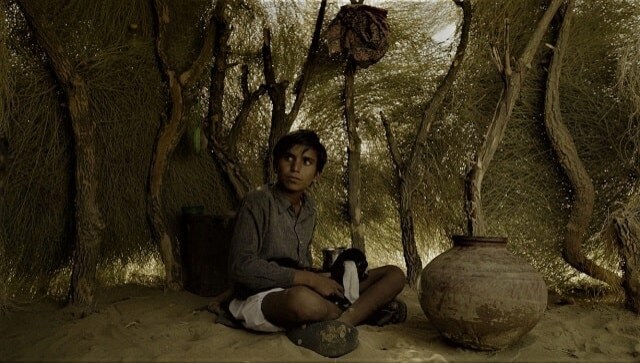
Still from Pushpendra Singh's wonderful film Pearl of the Desert, 2019, about a Manganiar boy musician called Moti

The Dharamshala International Film Festival went online this year, making its thoughtfully curated mix of features, documentaries and short films available to anyone in India with a screen and an internet connection, offering both season tickets and a daily Binge pass. Sunday, 8 November, is the last day of this year's festival. I've picked out five unusual films worth the price of admission:

Pearl of the Desert, 2019

Documentary | Rajasthani | 1 hour 22 mins

A boy is walking home with a group of other boys, all wearing that familiar dull blue shirt that is the uniform of countless government schools across India. Suddenly he falls behind, telling the rest to go ahead. “You do this every day!” complains another boy in the group. But they carry on, and the boy settles himself on a crooked tree trunk and begins to sing. As the rich, rugged notes emerge from his throat, the desert seems to spring to life. In case the sound doesn't thrill you, the filmmaker catches a black buck leaping up at the sound of Moti's voice. Then another. Animals seem to respond to the beauty of Moti's music, evoking mythical depictions of cattle gathering to listen to the flute-playing Krishna.

It is the sort of coded, powerfully cinematic image that makes Pushpendra Singh's hybrid documentary on the Manganiars such a layered, resonant piece of filmmaking. Time and again the film reminds us, without a word, that we live in a country of remarkable admixture: a country in which Muslim musicians have for centuries been the appointed bards to the upper caste Hindus of the Thar Desert.

It is something to listen to these men singing the praises of their Hindu patrons: enumerating the heroic exploits of their ancestors, laying out their genealogies, mourning the departure of their daughters — all in words profoundly redolent of the desert. If one song describes the carriage of the camel, another pays tribute to the dusky beauty of the lover in the courtyard, while one particularly stunning verse asks the stubborn lover to come back home, saying, “I have written you a carnival, at least now return”.

Whether the occasion is a birth or a marriage or any other celebration, the Manganiars are always called upon. They sing songs to the goddesses their patrons worship, and they also sing songs to the pirs of the Thar desert. The film closes with a group of Manganiar men harvesting cluster beans, singing in joyful unison a song that invokes Allah. In one of the film's reenacted scenes, Moti's grandfather is asked to relate the community's history — he connects them with Parashuram, with stories about asking for necklaces (maangan, haar), and their name to the Sanskrit word “mangal”, meaning auspicious.

Whenever the increasingly misguided votaries of Hinduism insist that their vengeful politics of purity is the only defense of Indian tradition, it is worthwhile bringing up the Manganiars — for this, too, is our tradition. One we must now fight to keep alive.

Dharamshala International Film Festival 2020 From Pearl of the Desert to Yalda five mustwatch picks
Still from the delightful Gaza Mon Amour, 2020

Gaza Mon Amour, 2020

Fiction Feature | Arabic | 1 hour 27 mins

Set in the small, densely populated Palestinian territory of Gaza, this film about an ageing fisherman who decides he has had enough of singledom is a quiet delight just for the stellar performances by Salim Daw as the externally crotchety but secretly romantic Issa and Hiam Abbas as the serious-faced widowed seamstress whom Issa finally gathers the courage to court after a naked ancient statue lands in his fishing net — that feels like a sign. Atmospherics are provided by the rundown location, where checkpoints, power cuts and bombings are the norm — as is the fact that many of the younger people want to escape to Europe even via the dangerous illegal route. Directed by Tarzan Nasser and Arab Nasser, this gently comic romance comes to DIFF after a premiere at this year's Venice Film Festival and the NETPAC award for best Asian film at Toronto.

Dharamshala International Film Festival 2020 From Pearl of the Desert to Yalda five mustwatch picks
Still from the documentary Influence, 2020, a film about the dangerous directions in which advertising and PR have taken us

Influence, 2020

Documentary | English | 1 hour 45 mins

Tim Bell was a British advertising man who went from being part of the founding team of Saatchi & Saatchi to Margaret Thatcher's campaign manager, his “Labour's Not Working” hoardings held responsible, among other things, for the decimation of the British Labour Party in that election. Diana Neille and Richard Polak's ambitious documentary portrait of Bell unpacks the rise and fall of a morally dubious man who created and ran the world's most influential political consultancy for decades. Bell Pottinger's clients ranged from the Chilean dictator Pinochet to South African Presidents FW De Klerk and Jacob Zuma. He was hired by the Pentagon to create a flood of propaganda videos in post-Saddam Iraq and by the Gupta Brothers to stir up racial violence in South Africa using hired bots to tweet and post on #whitemonopolycapital.

The film's watchability is aided by its incorporation of an interview with an aged Bell, who died in the summer of 2019 — perhaps precisely because Bell gives away so little, even as he has supposedly decided to tell his story. But its true impact lies in using Bell's life to trace the transformation that characterises our era perhaps more than any other: the dangerous transformation of advertising and marketing from an “art form into a science — and in many respects, into a workable weapon”. Those words belong to Nigel Oakes, an ex-Saatchi & Saatchi man now infamous as the founder of the SCL group, the parent company for Cambridge Analytica. The untrammelled rise of “strategic communication”, alongside social media, is the story of our times, altering political outcomes across the globe for several decades, and now scarily part of our present in India. In Oakes' words, what was once “just democracy” is now a “controlled democracy, maybe available to the highest bidder.”

Dharamshala International Film Festival 2020 From Pearl of the Desert to Yalda five mustwatch picks
Still from the gripping Yalda, 2019: Iranian realities filtered through the drama of a reality TV show

Yalda, 2019

Fiction Feature | Farsi | 1 hour 39 mins

Winner of the World Cinema Grand Jury Prize (Dramatic) at the Sundance Film Festival this February, Massoud Bakhshi's film Yalda, A Night for Forgiveness is a gripping drama that manages to reveal a great deal about the contradictions and hypocrisies of present-day Iran. The film unfolds on the set of a TV show called 'Joy of Forgiveness', during which a woman convicted for killing her husband might receive a pardon from her husband's daughter — and thus be saved from the death penalty.

Bakhshi based his fictitious show on a real show called Mah-e-Asal that aired daily on Iranian television during the month of Ramadan from 2007 to 2018, and does wonders by alternating between the scripted reality we see on TV and the real drama taking place off-camera. The story of why the 20-something Maryam Komijani married her late father's 65-year-old employer and became pregnant with his child brings into view not how skewed Iranian law is against women — the permissibility of 'temporary marriage', the greater claims of sons over family property — but also the deep fault lines of class in Iranian society. Dominant social morality and the law may see Maryam a certain way, but it is hard to look away from the alternative picture the film shows us.

Ghar Ka Pata, 2020

Documentary | Hindi, Kashmiri, English | 1 hour 7 mins

The filmmaker's search for the home she left at six is the basis of a personal essay about a very political place. Madhulika Jalali's family home was a traditional house in the neighbourhood of Rainawari in Srinagar, among the areas in the city that was home to the Kashmiri Pandit community. Like thousands of other Pandit families, Jalali's Hindu parents found themselves forced to leave the valley by the events of the early 1990s, when militancy in Kashmir took a dangerously communal turn. Like the others, they were never to return. The film makes this tragic political-communal context visible through a very personal keyhole. As if to compensate for her own lack of memory, Jalali tries to find an image of the house she can't see in her mind. When her own family albums are exhausted, the search leads her to cousins and relatives — and eventually to Srinagar.

Dharamshala International Film Festival 2020 From Pearl of the Desert to Yalda five mustwatch picks
Poster for Madhulika Jalali's moving personal documentary Ghar Ka Pata, 2020

The film splices these journeys with Jalali's two elder sisters reminiscing, about the house but also about the traumatic nights leading up to their departure, when proclamations of violence made from the neighbourhood mosques made their father dig out his hunting rifle — but eventually take his close Muslim friend's advice to leave.

Her parents, like most adults Jalali speaks to, remain reticent. But those who were younger then, seem happy to speak. Jalai's sisters talk about how happy and peaceful their childhoods had been in the Srinagar of the1980s: the fruit trees in their garden, the snow they used to try to make into ice cream, the neighbourhood shop from which they bought dahi, the walking route they'd try to take home to get their hands on any festive meetha chaawal being distributed. But even within this gently nostalgic past, one can see the inevitable seeds of the future. In one remarkable anecdote, one of the sisters recalls how in those months that Doordarshan telecast Ramanand Sagar's version of the Ramayana, Hindu and Muslim children alike used to come out onto the streets of their neighbourhood with homemade bows and arrows, taking aim with a "Jai Shree Ram".

Jalali doesn't dwell on it, or on anything really. Her film has a lightness that sometimes feels surprising. Is sorrow filtered through time and distance and forgetting still sorrow? Perhaps the answer is, sometimes.

Published on Firstpost, 8 Nov 2020.

15 September 2020

The context of power, the power of context

My Mumbai Mirror column:

The brilliant web series I May Destroy You opens up all the conversations we need to have on sexual assault, and its commitment to context illuminates a great deal about the contemporary moment


In a world where writing is unironically referred to as ‘content’, like some pre-flavoured filling for your social media sandwich, Michaela Coel’s I May Destroy You (IMDY) feels not just rare but exceptional. The 12-episode series is actively genre-repellent. The awe-inspiring Coel, who is the show’s writer, co-director and lead actor, takes us on a semi-autobiographical journey through a Black millennial London world akin to her own, filling each riveting episode with enough emotional and intellectual energy for a whole show.

Coel plays Arabella Essiedu, a young British woman of Ghanaian heritage whose sharp Twitter voice made for a hit first book. But when we meet Bella, she has just spent a publisher-sponsored writing retreat in the arms of a dreamy-eyed Italian drug dealing lover. While pulling an all-nighter to produce a draft for her deadline, she takes a break to meet friends at a bar. The next morning, having delivered up a manuscript she can barely remember writing, she finds herself with a bleeding cut on her forehead and the choppy memory of a white man’s face.

IMDY has been described as a show about a woman processing the deeply disorienting effects of a sexual assault that she doesn't really remember. And it is very much that, with Bella's tale of slow recollection, relapse, recognition and eventual recovery offering us one of the most fine-grained accounts of what it's really like to live through something like this.

But it is also a show about a lot of other things: things not often seen on screen, things that have certainly never been treated with the sort of multiple POV complexity that Coel's writing achieves here. IMDY is such a powerful intervention because it embeds what others might have seen as an isolated sexual assault in a brilliantly thick description of its context. That context is illuminated by a nuanced politics of race, class, gender and sexuality, and yet the sociological irradiates without overdetermining, always allowing another possible reading, acknowledging the reasons for suspicion while pushing us to dislodge our fixities.

For instance, Bella is black, and all she really remembers of the man who raped her is that he's white. The show doesn't flag this, or at least not obviously – but IMDY is a powerful engagement with the politics of race in an ostensibly egalitarian society. There is, for instance, the flashback depiction of how white teachers in a mixed-race school instantly respond to a white girl charging a black male classmate with rape: “White girl tears have great currency,” says a younger version of Bella's friend Terry. Now, in adulthood, Bella's circle of friends is almost all Black and non-posh: an exclusivity that could be self-defence. That fear of white or brown or upper-middle class often turns out to be at least partially justified: the white girl who brings Bella into a vegan NGO turns out to have earned a commission on her Blackness, the Cambridge-educated South Asian boy gaslights his way out of an act no less horrific for being supremely common: stealthing (removing a condom secretly during sex).

For the non-Black viewer, watching the show often has the quality of being invited into a closely-guarded circle, offering much-needed perspective on what it's like to be Black in a society where white people still have cultural hegemony. Yet, and this is crucial: there is none of the ridiculous unidimensionality that plagues so much politically correct writing in our times. Being a Black person in IMDY is no more a guarantor of moral certitude than it is in real life. So within these twelve episodes, a Black man cheats on his Black wife with a secret girlfriend – also Black; another Black man forcibly humps his Grindr date – also Black; a publisher that Bella imagines solidarity with because of her being Black, proves just how instrumental the use of racial identity politics can be.

I've used the racial lens until now because it is one Coel foregrounds, her character's most strongly felt identity from which she must partially break in order to forge a sense of unity with other women. But the sharpness of IMDY is its ability to see that all solidarities are partial, often only extended until it suits someone to extend them. Coel's characterisation and subplots indict the gaslighters and victim-shamers – the Italian lover who blames Bella for carelessness when her drink is spiked, or the Black policeman who can't quite see beyond his heterosexual judgement of Grindr sex. But what makes the show so unusual and compelling is Coel's insistence on letting no-one rest in perpetual victimhood, to constantly show how the wheels turn, depending on context. So for instance, someone who is in a racial or sexual minority might still be able to have a certain gendered power over someone else – like Bella's best friend Kwame not telling a woman he sleeps with as an experiment that he is actually gay.

Equally significantly, IMDY unpacks the disturbing effects of call-out culture in real life: the addictive high of social media validation; the exhibitionism and distraction that allows people to not focus on the work they really need to do on themselves; and most of all, the unreflective high moral ground that can sometimes make the wokest people the most insensitive, because black and white allows for no forgiveness.
 
In the India of 2020, where we all seem terrifyingly keen to tag people as either victims or exploiters; where the display of fake victimhood has become the toxic malaise that defines our society, from our topmost political leadership to publishing to Bollywood; where even the best-intentioned wokeness often seems to merely insert itself into our centuries-old culture of hypocrisy, in effect overturning nothing – in this world, I May Destroy You might be the best thing you can watch to challenge your preconceptions.

 Published in Mumbai Mirror, 6 Sep 2020.

1 October 2018

Book Review: Jasmine Days

With his new novel ‘Jasmine Days’, Benyamin once again skilfully presents fiction as fact.

The Malayalam author’s new novel is told in the voice of a young Pakistani woman in an unnamed Middle Eastern country.

Juggernaut Books, 2018. 280pp.

Benyamin is a reader’s writer. His fiction aims to make the reader believe that it is fact; to believe that the narrator was “really there”. His style is a particularly good example of what the critic James Wood in his book How Fiction Works calls “Flaubertian realism”, in which the voice of the narrator is writerly in terms of how much she notices, but simultaneously not writerly “because he is not expending any labour to put it down on the page”.
In at least two of Benyamin’s novels that have so far been translated from Malayalam to English, this is achieved by effacing anything that might be described as literary style – by creating a non-literary narrator. So Goat Days is told in the voice of a poor Malayali Muslim man who arrives in Saudi Arabia to earn money, but ends up becoming a slave for a goat farmer somewhere in the desert. Jasmine Days is told in the remarkably forthright voice of Sameera, a young Pakistani woman who works as a radio jockey in an unnamed Middle Eastern country.
The truth-claim made by both novels is amplified by presenting themselves as autobiographical narratives, personal histories that have fallen into the author’s lap. So Goat Days has an “Author’s Note” that begins: “One day, my friend Sunil told me a story about a person called Najeeb. I thought it to be one of the typical sob-stories from the Gulf.” Upon meeting Najeeb, however, Benyamin explains, he grew deeply affected by the recounting of his experience, and “couldn’t fight the urge to write about it”.
In the case of Jasmine Days, Benyamin goes a step further to establish authenticity in the eyes of his readers. His name appears as author on the front cover, but inside, we are told that the book we’re holding is Benyamin’s translation of Sameera Parvin’s A Spring Without Fragrance, originally written in Arabic. In a “Translator’s Note” appended to the main narrative, Benyamin says it is “by accident that this book ended up in [his] hands”, and that he only gained the rights to “translate” this manuscript into Malayalam when he agreed to “ghostwrite” another novel for another writer: Al Arabian Novel Factory (this is the actual name of Benyamin’s next novel). For those of us reading the book in English, of course, there is another layer of meaning created by the fact that what we have here really is a translation: Shahnaz Habib’s translation into English from Benyamin’s Malayalam.
The book’s ability to persuade us of its authenticity beyond language also feeds into – and emerges out of – the multivocality of its milieu. This is a Malayalam novel in which neither the locale nor the main characters are Malayali. Benyamin does not name the country, but it is well-known that he lived and worked in Bahrain for many years before moving back to Kerala. He chooses to introduce his Malayali readership to the Middle Eastern migrant life through the eyes of a Pakistani young woman. Right from the start, when Malayalis do appear in the book, Benyamin’s reversal of the gaze forces his readers into self-reflexivity. For instance, Sameera’s use of the term “Malayalam Mafia” for her colleagues who are “experts in speaking exclusively in Malayalam, without using even a single word from Hindi or English, so that the rest of us might not even guess what they were saying” is Benyamin holding up a mirror gently to his countrymen, showing them quite how insular they can seem to others.
As the book proceeds, one begins to realise that this is very much part of Benyamin’s project: his fiction pushes his readers to enter worlds they might close off in real life; to meet people they might live cheek by jowl with, but never befriend. Sameera’s daily life unfolds in two primary locales: home and work. Her conservative joint family setup is headed by her father’s eldest brother, known to her as Taya and the larger Pakistani community in the city as Ashraf Sahib. “A job for someone, a job dispute back in the village, suspicion about a wife....”: favour-seekers come to Taya Ghar with all kinds of problems, and “[l]ike a zamindar, Taya would sit in a chair in the middle and listen.” Taya Ghar represents all the good and the bad things about feudal patriarchy: there is place here for everyone with a need, but how that need is dealt with is determined by ever-present hierarchies of age, caste and gender: visitors like Baluchi Barber and Chamar Chacha have one status, Sameera’s father has another, her Sippy Aunty and her Aisha Bhupoma yet another.

The many characters in Taya Ghar allow Benyamin another kind of multivocality. One of Sameera’s favourite visitors, Kareem Chacha, declares that love makes women angels, and that they should therefore be allowed to choose their own husbands. But meanwhile, the women of Taya Ghar have all had arranged marriages: they are expected never to go anywhere alone, even to the souk. Facebook is off-limits as well: “The men of the house called it the ticket booth for the train to hell. But apparently those tickets only took women to hell.”
But generational change is afoot: the youngest female member of the household, the school-going Farhana, is conducting a secret life on her mobile phone. Sameera, too, negotiates for her independence within the family and community context, but her style is more upfront than Farhana’s:
“By the age of twelve I had learnt to return ma’s fierce glances and respond with twelve words for every word she spoke. By the time I was in college, I had learned to ignore her scolding and retreat into my room with my cellphone. Remember how you guys used to call me, secretly and not-so-secretly, a harami chhokri? That was me, not just outside but also inside the house. I did not waste too much obedience on my dada and dadi, or chachas, mamus and mamis. I can even say proudly that my family grudgingly learnt to respect me for expressing my opinions to anyone’s face, for charming my way into getting what I wanted.”
As her adopted country plunges into political turmoil, an ill-informed Sameera walks both real and virtual paths to educate herself on the issues at stake: the ills of the monarchy, the historical conflict between Sunnis and Shias, debates over censorship and the freedom of the press, battles over ideological purity when the state tries to wean its citizens away from protest by offering subsidies. Her friendship with a male, Shia, Arabic-speaking colleague, forged over a secret music group and virtual visits to each other’s homes in a Facebook game called City Villa, becomes increasingly fraught with controversy. As the political temperature rises, she finds herself torn between her family’s (and community’s) pragmatic establishmentarian loyalties – and her growing empathy with the Arab protestors.
The immersive quality of Goat Days was based on our identification with a solitary protagonist, a single, hellish locale, and the struggle to escape it. Jasmine Days has more locales, many more characters and a much more complex political landscape. But what Benyamin pulls off again is Sameera’s voice: the almost spoken-word simplicity with which this landscape is rendered makes it hard not to listen.
Published in Scroll, 8 Sep 2018.

*A longish piece I wrote in 2015 about how being published in English translation is changing things for literature in other Indian languages is here. (One of the writers I interviewed for that piece was Benyamin.)

9 August 2017

Thin Grey Line

An essay I wrote for the Taj Magazine.

Is photography a science or an art? And how does a photo change if it is posed or embellished? Is image manipulation part of a larger artistic progression? Trisha Gupta maps the long history of the Indian photograph. 

Waswo X. Waswo, Night Prowl, 2008, Black and white pigment print hand-coloured by Rajesh Soni. Courtesy: Tasveer
Photography is a strange art. After the camera was developed in the mid-19th century, photographs began to replace paintings, especially in portraiture. But unlike the other visual arts (drawing, painting, engraving ), the photograph has always been understood as giving us direct access to the real. As Susan Sontag wrote in her classic book On Photography: “A photograph is not only an image (as a painting is an image ), an interpretation of the real; it is also a trace, something directly stencilled off the real, like a footprint or a death mask”.

The strangeness of photography as an art, then, stems from its parallel status as a science: the idea that the camera is a transparent medium, and that photographs actually capture experience –rather than producing an artistic response to it. The history of Indian photography, as the Bangalore-based gallery Tasveer’s recently concluded exhibition in New York showed, is particularly shaped by this split identity–suspended between artifice and reality, embellishment and documentation, theatre and truth.

Photography arrived in India in 1840, only a few months after its European beginnings, and was “taken up with alacrity by amateurs, aspirant professionals, individuals with ‘scientific’ agendas and within two decades, by the apparatus of the colonial state,” writes the anthropologist Christopher Pinney in his 1997 book Camera Indica. The Indian context was particularly ripe for photography’s arrival, as Pinney’s archival sources reveal. British colonisers, confronted with India’s insurmountable otherness and near-infinite anthropological variety, had long been anxious about the accuracy of native reproductions – whether written or drawn or engraved – as a way of transmitting knowledge. Photographs – with the ‘stern fidelity’ evoked by the Reverend Joseph Mullins in his 1857 address to the Photographic Society of Bengal – seemed just the solution. Mid-19th century manuals of medical jurisprudence and criminal investigation alike had already begun to recommend photography as an evidentiary tool that was, like fingerprinting and cranial measurements, “almost absolutely free from the personal equation of the observer”. Photography for identificatory purposes was already understood as a measure of control: “No measure would... impress more vividly, even upon the minds of the ignorant and superstitious common people, a conviction of the difficulty of eluding our vigilance,” wrote Dr. Norman Chevers, Principal of the Calcutta Medical College, in 1856. A century and a half later, by imposing Aadhaar’s non-voluntary photographic and biometric identification upon its citizens, the Indian government is bringing that surveillance state to final fruition.

Yet alongside this history, in which the photograph was held up as the very embodiment of truth, ran another Indian history of photography as art – and this was, more so than in the rest of the world, a history of photographic manipulation. The hundreds of photo studios that had come into being across India by the 1880s often advertised themselves as “Artists and Photographers” – some of them actually put images of paintbrushes and palette on their cabinet cards, like the EOS Photographic Company, or the Vanguard Studio, Bombay. The artistry of these Indian images involved not just studio backdrops and carefully arranged props, but also the application of paint. European photographers also used paint to retouch negatives and enhance colour on the final print, writes Pinney, but painted photographs in India were a whole different order of business. Studios produced numerous images in which paint overlaid and obscured the photograph – rather than merely supplementing it. Given the tremendous popularity of the painted photograph it comes as no surprise that Judith Gutman’s study, Through Indian Eyes, documents some studios as having up to twenty-nine painters “to do outlining, background scenery, retouching and oil painting”. The Indian photographic studio was a successor to the miniature painter’s karkhana.

The new show put on display many such painted photographs – mostly Indian princes and princelings posing for what Andrew Wilton has appropriately called the “swagger portrait”: a style that “puts public display before the values of personality and domesticity.” Dressed in their finest clothes and richest jewels, the princes in these images allowed studio artists to glory in their skilled reproduction of detail – whether it be the carpet under their subject’s feet, the patterned curtain behind him, or the feathered, bejewelled headdresses that propelled their attire from being merely clothes to costume. A princeling in a posed studio photograph had already been inserted into a coded fiction of rulership – the embellishment provided by the painter made that fiction even more elaborate.

D. Nusserwanji Studio Bombay, Rajasthani merchant with his son, 1940, Overpainted silver gelatin print. Courtesy: Tasveer

WaswoXWaswo. Zakir and Tarif Smoking. (2008), Black and white pigment print, hand-coloured by Rajesh Soni, 20 × 13 in. Courtesy: Tasveer

But those images, embellished though they were, involved rulers (or rulers-to-be) posing in finery they actually owned, signalling the social and political status they wished to lay claim to. The painted photograph was theatre in whose truth we were meant to believe. In WaswoXWaswo’s playful reimagining of the painted studio portrait, his subjects appear much more clearly to have ‘dressed up’. Whether it is the archly half-turning Chandra “with a Shell Headdress”, or the bearded ascetic in ‘Another Follower of Shiva’ who holds up a trident – painted in tiger stripes, presumably after the photograph was taken – and a bunch of peacock feathers, we are now clearly in a conscious realm of make-believe.

WaswoXWaswo’s images are a homage to the painted photographs of the 19th century Indian studio, and in fact they are the product of collaboration with Rajesh Soni, an artist who handpaints digital photographs. He is the grandson of Prabhu Lal Soni (Verma). who was also a renowned hand colourist of photographs - once court photographer to the Maharana Bhopal Singh of Mewar. Soni and WaswoXWaswo’s images are fantastic in the proper etymological sense of that word: dreamlike, phantasms that take in all possible Orientalist signifiers of Indianness: tigers, peacocks, jungles, tribals, ascetics, maharajas, rural belles. But part of the effectiveness of these images as dreams derives from containing within themselves a pinprick that brings you back to reality. So the peacock feathers which seem to vie with the backdrop for tropical lushness are held aloft by a suspicious looking travelling salesman with a cycle and a Vimal shopping bag – signs of unposh urbanity that quickly unravel the forested dream the image has partially built up. In ‘Zakir and Tarif Smoking’, the subversion is much more in-your-face – the two sombre young men framed against a red velvet curtain and a richly patterned carpet could have played at being princelings, but instead they sit there in plain white kurta-pyjamas, a cigarette dangling from each of their mouths with careful casualness. ‘Tribal Dreams’ and ‘Night Prowl’ escort us into the jungle more mysteriously. In the first image, the subject’s face is hidden – we see only his body, illuminated with golden dots. In the second, too, the body is painted, this time with yellow stripes, to evoke a tiger. The figure is on all fours, staring out at the viewer through the eyeholes of a tiger mask. Masks, of course, are metaphors for many things – most commonly, theatre. The Tasveer show contained another young boy with a mask – in the memorable image shot by the Ahmedabad-based photographer Jyoti Bhatt, the young tribal boy seems dwarfed by the huge earthen mask he holds. The 1934-born Bhatt spent several decades from the mid-1960s onwards photographing folk and indigenous art forms in rural India, and his work is a marvellous glimpse of that archive.

Jyoti Bhatt. 'Three Oriya women in front of their house with a wall painted.' Courtesy: Tasveer
Bhatt’s photographs are the opposite of theatrical. But as he places his shy, mostly reluctant subjects – women and children half-covering their faces, or looking studiously away from the camera, a cow that seems to be trying to curl itself into nothingness – against walls of the homes and barns in which they live, one’s attention is drawn constantly to the traditional artistic practices of embellishment that turn those walls into such arresting backdrops for everyday life.

The work of Dutch artist Bas Meeuws invokes a different Indian artistic history – Mughal floral motifs as they appear in inlay work on monuments, and in the borders of paintings and manuscripts. Meeuws’ digitally manipulated ‘still lifes’ of these individually photographed flowers – poppies, carnations, cornflowers, canna lilies – have a strangely hypnotic quality: petals rich and glossy against a pitch black backdrop, leaves glowing a preturnatural green. The Tasveer show gestures to complex Indian histories of embellishment: either carried out before the picture was taken, or involving the manipulation of the photographic image. The images here declare their created-ness, but we live in a world in which fake images proliferate. Every photographic documentation must compete against the manipulated fictions floating up as fact in the nebulous sea of WhatsApp forwards.

© Bas Meeuws, Mughal Botanical (#03),2015, C-print on dibond behind acrylic. Courtesy: Tasveer
In this post-factual world, the line between fact and fiction can sometime seem a blurred matter of artistic license. Recently, an award-winning photojournalist called Souvid Datta admitted to Time magazine that he had “foolishly doctored images” in 2013-15, infringing on the work of well-known photographers including Mary Ellen Mark. Asked why he had done it, the 1999-born Datta replied: “In part, I was also discovering the technology of Photoshop... and the creation of something new excited me. It felt like a very basic artistic achievement. There are other images... not intended as journalistic work, which have also been altered using post-production techniques... I didn’t understand what a photojournalist was for a long time, let alone the weight of trying to assume that title.” Photography is indeed a strange art. Because it is so often also called upon to be a science -- and the burden of being both is too much to bear.

Published in the Taj Magazine, June 2017 issue.

15 May 2017

Relative Value: Irreverently Speaking

Humour and ‘uncensoredness’ are traits journalist Vinod Dua shares with his daughter, internet star Mallika.


Vinod Dua has the proverbial elephant’s memory. Asked about his Delhi childhood, the veteran Hindi journalist begins with the address of his Jangpura home (R-10, Shiv Market), informs me that his first and sixth birthdays were celebrated there (1955 and 1961 respectively), and ends with the perfect historical anecdote. After a fire at the local Eros Cinema, Dua’s elder brother, then about 12, salvaged some burnt Mughal-e-Azam ticket books. “Unko ghar laake bahut khush ho rahe thhe bhaisaab (Bhaisaab was pleased to have brought them home),” Dua says. Then he turns to his daughter Mallika and says: “Yaad hai? (Remember?)”

Mallika groans on cue. Vinod’s deadpan humour — casually asking his 1989-born daughter if she remembers an incident from 1960 — is clearly integral to their equation. And though Mallika might find herself on the receiving end here, in her public comedienne avatar she gives as good as she gets. After all, calling people out, puncturing pomposity, and generally being irreverent is a Dua family tradition. “We make fun of everything at home. Hum toh god ko bhi nahi chhodte (Even god is not spared),” says Mallika.

“This uncensored way of addressing people” is something she’s got from her father. The Instagram/Snapchat generation may be more familiar with Mallika’s madly popular dubsmashes, populated by an ever-growing tribe of hilarious characters with pitch-perfect accents — the always-wounded Make-Up Didi; the insufferably sunny Shagun (who calls her fans ‘Shaggers’); the aggressive Komal didi egging on the mournful Khushboo. But those who’ve grown up on Vinod’s astute political analysis are familiar with his trademark dry humour. From Aap ke Liye and Janvani in the 1980s, through Parakh, Pratidin and Vinod Dua Live in the 1990s, right down to the superb Jan Gan Man ki Baat internet videos he currently does for the Hindi edition of a news website, he has always taken on the issues of the day with acerbic wit and a file of facts by his side. If he refers to the PM — with gleeful accuracy — as our ‘Pradhaan Sevak’ (Chief Service Provider), he does not shy away from mocking Congress leaders by name for the cushioned comfort in which they live, or attacking the ineffectualness of the Left. One imagines this is the same tenor in which Vinod told Mallika and her sister stories of “bhagwaan ji” when they were kids: “basically cutting him down to human level.”

A self-declared proud and secular liberal, Vinod may now inhabit a stereotypical Lutyens’ Delhi universe, with an office on Prithviraj Road, membership of the India International Centre, and a predilection for Khan Market. But he grew up as the son of a bank clerk and a homemaker, living in post-Partition refugee colonies in North Delhi such as Hakikat Nagar, Derawal Nagar and Ashok Vihar before moving to Delhi University hostels. His transition from a Hindi-medium education gained in government schools (and a private DAV-affiliated school in Roop Nagar) to a BA in English makes for a great story. As Vinod tells it, “I scored 48.7 per cent marks in Higher Secondary and got admission in BA Pass Course Hindi Medium in Hansraj College, where, according to Mani Shankar Aiyar, they don’t teach you how to pronounce the word dichotomous correctly.” He then managed to top an intra-class English test, defeating what he calls “the pehelwans of Sports Quota” who dominated his class. “Immediately I wrote an application to transfer to BA Hons English Medium. The moment [it was accepted], I knew that I had crossed the class barrier: I will make something of my life now.”

But while determined to improve his spoken English (by reading the classics on his syllabus, watching Doordarshan News and practicing on his supportive English-speaking friends) Vinod remained aware that it was spoken Hindi that was his metier. Actively involved in street theatre and in Delhi University student politics, he applied to anchor a youth programme for Doordarshan while still in college in 1974. “When they asked me why I thought I could anchor, I said, your anchors look like jilted lovers,” he guffaws. “They were not used to this sort of speech. Because they were used to Hindiwallahs — ki “Didi main idhar se nikal raha thha, socha aap se milta chaloon” (Didi, I was passing by and thought I’d pay my respects).

Vinod has made a career of defying that culture of obsequiousness. Whether on-screen or off it, he is that rare public figure who still calls a spade a spade: “In the initial phase of news channels, we really experienced freedom. Until three years ago, most channels were editor-driven. Now they are owner-driven. Because we are living in an era of undeclared emergency, most channels have become sarkaari. Now that media freedom is being attacked, there is a larger role for political satire. Earlier we didn’t need it.”

In her ‘uncensoredness’, as well as in the comfortable bilinguality that makes her mimicry so acute, Mallika is a chip off the old block. Unlike the comedy collective AIB, her humour is more zany than political (“The news depresses me, that’s my excuse for ignorance”). But her instincts are sharp, and her bullshit radar sound, especially when it comes to the nuances of relationships, gender and social stereotypes. A Delhi girl used to her car and driver, she is unapologetic about wanting to live the good life — but be unsparingly funny while at it. After majoring in theatre at Franklin and Marshall College in the USA, she took an advertising job in Delhi for three years “because I didn’t want to sit around waiting for roles and anyway theatre doesn’t make money”. 


After her dubsmashes started to go viral, she ditched the job for influencer marketing gigs, and Delhi for Bombay last August. She’s signed up to act in three web series to be made this year. She may be producing content for our most impatient generation yet, but Mallika Dua wants to be the proverbial tortoise who wins the race. “I want to do films also. But the calls I get are ‘Alia Bhatt ki friend hai, thodi chubby si’ and I’m like ‘Don’t even bother’. If Tina Fey can have shows made around her, why can’t we? I’m not in a hurry. I’ll wait.”

Published in Mumbai Mirror, 14 May 2017.

27 April 2017

Journalism Blues


Noor’s fluffy portrait of a thoughtless journalist made this columnist think about other films that have dealt with the media’s murkiness.

Sonakshi Sinha's portrait of a journalist in Noor (2017)

Last week, I wrote in these pages about the 1986 film New Delhi Times, in which Shashi Kapoor’s ethical Delhi news editor finds himself pushed to the edge by political pressure and physical threats. Rakesh Sharma’s under-watched film traced the beginnings of a threatening climate for honest journalism. So it felt strangely serendipitous this week to be watching a film which might be said to bring Hindi cinema’s portrait of the crisis in journalism up to date.

Noor Roy Chowdhury, the titular protagonist of this week’s release, Noor, works as a journalist at something called The Buzz. We’re told she wants to be the next Barkha Dutt, but director Sunhil Sippy’s targeted vibe for her is more desi Bridget Jones. Noor trips clumsily on her way into her office, cribs constantly over her maid not getting the geyser fixed, obsesses loudly over her weight (which – this being Bollywood – seems totally under control), and makes louder faux pas as she waits for the hot boyfriend and big story of her dreams.


Our heroine’s blissful obliviousness about most things – journalistic and otherwise – is put to the test when a real scandal falls into her lap, pretty much alongside the much-desired hot boyfriend. Goggle-eyed with excitement at the thought of catching a big fish, Noor pushes hastily forward with the story – only to have to repent at leisure.

It’s interesting that something very similar happens to Shashi Kapoor’s character Vikas Pande in New Delhi Times – although unlike Sonakshi Sinha’s Noor, Vikas is both seasoned and conscientious, and his failing is not thoughtlessness but an inability to see that he is being used – until it is too late. Although thirty years apart, and hugely different in intent and tone, both films focus on journalists so caught up in what they thought was the big picture that they sacrifice the individuals at the centre of their story.


In the same period as New Delhi Times, Jagmohan Mundhra’s Kamla – based on a script by the legendary playwright Vijay Tendulkar – also tells an acerbic tale about a journalist intoxicated on his own power. In Mundhra’s film, Marc Zuber plays a star reporter called Jaisingh Jadhav who decides to ‘buy’ a young woman from a tribal area in Madhya Pradesh and bring her back to Delhi. His reason, he says, is “Desh ka aam aadmi jo bhayaanak nashe mein jee raha hai, usse jhatka deke jagaana hai.” Which is all very well. But right from letting Kamla believe that he’s ‘bought’ her, to cruelly forcing her to wear her ragged saree to a press conference that ends up as a sexist free-for-all, Jadhav’s insensitivity to the bewildered, childlike Kamla belies all his high-minded statements. If it is the tragic state of humanity he is out to expose, one begins to feel, he should perhaps have started with himself.


Kamla’s depiction of Delhi’s journalistic world is bleak. The film’s Press Club scenes have journalists either sitting around playing cards, or talking trash. Once a female journalist is seen retouching her lipstick before her supposed meeting with a minister – who is ‘Suresh Darling’ to her. Later, in the drunken, orgy-esque ‘press conference’ (which contains no sex but the pervasive suggestion of it being on people’s minds), far from offering the poor tribal woman a buffer against a horde of camera-wielding men, the same woman emerges as the flag-bearer of the press’s urban middle class hypocrisy, making crude remarks about Kamla’s adivasi way of wearing her sari as her ease with ‘displaying her body’. 

Meanwhile, Jadhav’s penchant for sensational exposes is juxtaposed with the old-school journalism of his wife’s uncle Kakasahab (AK Hangal), who makes a caustic remark that rings truer now that it probably did then: “Haan bhai, nowadays a man is as successful as the number of phone calls he receives”. Later he makes the point that journalism cannot only be about showing us ‘how’ and ‘what’ is happening – it must also try to say ‘why’.

Cinematic censure against journalism, of course, reached its peak in Madhur Bhandarkar’s 2005 hit drama Page 3, in which Konkona Sen Sharma’s Madhavi tries her best to move from covering high society to exposing its grimmest underbelly – which turns out to be child prostitution: it was a Madhur Bhandarkar film, after all. Naturally, her big story is nipped in the bud. Over a decade later, Sonakshi Sinha in Noor is struggling to make a similar leap, and after a difficult interlude that is actually much more difficult for her informant than herself, she triumphs – with the aid of social media.

Page 3
, Kamla and New Delhi Times may feel dated, but in their clear-eyed pessimism, they seem much more in tune with the journalistic present than Noor is.


Published in Mumbai Mirror, 23 Apr 2017.

26 April 2017

New Testament

A short profile of the madly popular romance writer Nikita Singh, for Elle.

An advertisement for a Nikita Singh book tour, in the supplement Bhubaneshwar Buzz
Bestselling author Nikita Singh’s millennial-friendly fiction is easy, glossy and still profoundly truthful.

Nikita Singh seems deceptively like any other smart, with-it 25-year-old. She’s fresh out of an MFA in Creative Writing at the New School in New York, USA, works as a fashion stylist and spends a fair bit of time on the Internet: on Twitter, Instagram, Snapchat— and a little grudgingly, even Facebook. But she’s also the bestselling author of nine books.

“Someone asked me, how do you break it to people you meet in New York? I said I don’t. They’ll add me on Facebook and then be like, ‘Oh, you have a book?’” laughs Singh. Her relatively anonymous Manhattan life is a world away from Delhi, where, on a recent visit, she “wore a cap all of the first day, but still got recognised twice”.

Born in Patna and raised in Indore, Singh grew up in a family of book enthusiasts. Her mum read Jhumpa Lahiri and Chandrakanta, her brother “comics and superhero stuff”, and she herself Roald Dahl and JK Rowling, when she wasn’t raiding her dad’s shelf for thrillers and romances. She was pursuing a Bachelor’s in pharmacy and had never written anything when a “really bad book” someone gave her made her think she could do better. Her first novel, Love@Facebook (Pustak Mahal, April 2011), about a 19-year-old who falls in love with a VJ she meets on the social networking site, came out when Singh was 19. “I had nothing to lose, nobody to disappoint. It did well, so I wrote a sequel: Accidentally In Love (Grapevine, September 2011). By the time I graduated, I had written three books.”

Her latest, Every Time It Rains (Harper Collins, February 2017), is also a sequel, starring Maahi and Laila, the Delhi-based best friends, who set up their own bakery in Like A Love Song (Harper Collins, March 2016). With app-developing start-ups and cupcakes, Tinder dates and Shahpur Jat cafés, Singh consciously serves up the romantic possibilities of an aspirational post-liberalisation milieu.

But her bright and shiny protagonists don’t always get bright and shiny lives: she’s had characters deal with HIV, domestic violence and marital rape. Being in the commercial space hasn’t stopped the New York-based author from delivering believable relationship trauma and some solid advice for her female readers. “It comes naturally to me,” Singh says. “I am not about chasing people. You have to know your own value first. Women need to know that.”

Published in Elle India, April 2017.

4 April 2017

The Sense of an Ending


Regal, one of Delhi’s iconic single-screen theatres, closed down this week. But what exactly is ending with its closure?


Regal Theatre downed its shutters on Thursday. Born in 1932, as the New Delhi Premier Theatre, the hall was the first to come up outside of Shahjahanbad, giving New Delhi a sahabi theatre to match its status as the newly-created capital of British India. Regal came up on property belonging to Sir Sobha Singh, the civil contractor and builder hired to construct much of the new city. Sobha Singh was commercially perspicacious enough to buy up large tracts of land within the emerging capital city, becoming known as “Addha Dilli da maalik”. He was clearly also a man of vision.

Among a host of other buildings, Sir Sobha gave bungalow-lined New Delhi its first apartment complex, naming it Sujan Singh Park after his civil contractor father (and his son, the writer and journalist, Khushwant Singh lived in one of the apartments there until his death in March 2014). The Regal building, with its arched porch, vaulted half-domes and pietra dura mosaic work, was designed by the British architect Walter Sykes George, who also designed Sujan Singh Park and St Stephen's College, among other iconic Delhi buildings.


George and Singh conceptualised the Regal complex as a sort of protomall, containing not just the theatre, but also a panoply of restaurants and shops. It is not a coincidence that the memories of watching films at Regal – of which there has been a veritable flood in the media and on social media – are almost as much about the eating and drinking that accompanied it. People in their fifties, sixties and seventies remember their Regal outings alongside the chhole-bhature at Kwality (the also-iconic restaurant in the same corner block of Connaught Place), or continental fare at Davico's on the top floor of the building. (Davico's was later replaced by Standard Restaurant, where even I have eaten my share of perfect mutton cutlets, up until the late 1990s.) In more recent years, there was the Softy stall, tucked into a sort of alcove next to the cinema.

The multiplex era began in Delhi in 1997, when Anupam Cinema in Saket was bought by Ajay Bijli's PVR group and a new four-screen building built in its stead, creating what we now know as PVR Anupam. Over the last two decades, several of Delhi's best-loved single-screen cinemas – Alankar in Lajpat Nagar, Eros in Jangpura Extension, Savitri in Greater Kailash II, not to mention Odeon, Rivoli and Plaza in Connaught Place – have been converted into multiplexes. Others, like Chanakya or Paras or Kamal, have not survived at all.


Regal was one of the last single-screen theatres that continued to function. This grand old edifice, which started out showing Prithviraj Kapoor plays and Russian ballet to British officers and diplomats, and to which the posher Indian families and postcolonial grandees like Nehru and Radhakrishnan came as a matter of course, seemed like a connection to a more genteel world. So the last day, last show at Regal – like the closure of Chanakya in 2007 – feels like the end of a civilised age. And if you go by everything I've just told you, it certainly is.


But what did Regal signify in the last two or three decades? And to whom? Even as its Connaught Place cohort of halls reinvented themselves as multiplexes and wooed a post-liberalisation elite, Regal started to play desperately lowbrow fare, like Chhupa Rustam in 2001 and Raam Gopal Verma Ki Aag in 2007. My own last memory of Regal is a near-traumatic one from 2003: I cannot quite remember why, but I subjected myself to Guddu Dhanoa's sex-horror film called Hawa, in which Tabu is raped more than once by “the wind” — which has, of course, taken on the ghostly shape of a man.


A cinema is, after all, a business — and films like Hawa were clearly Regal's frank attempt to put bums on seats. The management was quite cognizant that the theatre's technical quality and comfort levels were no longer good enough to attract the class of people who used to come to it until the 1970s, making successes of such films as Shyam Benegal's Nishant and Ankur, Basu Chatterjee's Rajnigandha, or melancholy Amitabh-Jaya romances like Abhimaan or Mili. Those people had better alternatives. The people who came to Regal were those who couldn't afford the 200 and 300 and 400 rupee tickets that multiplexes charge – and that Regal will no doubt charge in its new avatar.


But those who filled up Regal's seats in recent years, keeping it afloat for two or more decades, are not the ones being spoken to. The Delhi Times is filled with upper middle class people who have returned to be present at Regal's grand farewell party, and are happy to pay Rs. 300 in black to let their mothers watch Raj Kapoor's Sangam and reminisce about their youth. There is no mention of the hundreds, perhaps thousands of viewers who could, until yesterday, afford to watch a film in a Connaught Place theatre, and who have been quietly been added to the vast masses that will now no longer be able to go to the cinema.


Published in Mumbai Mirror, 2 April 2017.

29 October 2015

Koffee with Karan writ large: thoughts on Shaandaar

My Mirror column last Sunday:

Shaandaar strains to be a madcap comedy, but ends up as an overlong, demented Bollywood home video.


Sushma Seth as the grandmother in Shaandaar
Once upon a time, people made home movies. Over the last century, anyone privileged enough to own the appropriate recording device - a slide projector, a still camera, a video camera, whatever - has been carefully preserving their Kashmiri honeymoons and their family picnics, their children's childhood and then their grown-up children's weddings.

These holiday slide-shows and wedding albums, however, were thrust upon you as entertainment only if you were part of the family, or at least knew some of the people in question. In the new version of life-that-is-Facebook, you're accosted on a daily basis by the gorgeous vacations and perfectly choreographed weddings and cutesy-pie children of pretty much anyone you've ever met at a party, even if the party was six years ago.

But Bollywood, as always, can do better than life. So Bollywood now makes its own home videos. And we buy tickets to watch.

Starring Shahid Kapoor as uber-charming wedding planner Jagjinder Joginder (JJ), Shahid's sister Sanah Kapoor as the plump bride-to-be (BTB) Isha and their father Pankaj Kapoor as the father of the bride (FTB), Vikas Bahl's Shaandaar feels very much like a new filmi family announcing itself. Under the veneer of their new names (and new acronyms laid on by the film's shaandaar humour), these people are all pretty much playing themselves.

Also part of the khandaan is Alia Bhatt, playing her usual funky-little-girl self, speaking truth to power (meaning evil family members) and swimming in waterfalls at midnight when she isn't initiating her lovers into childish joys, like peeling Fevicol off their fingers. The film begins with a long fairy tale animation sequence that suggests our heroine is a little witch (so firang-inspired is this script that this is indicated by her love of owls and frogs, and not sleeping at night.)

She even gets to keep her own name, a fact which seems deliberately intended to mess with our minds by having Alia be Alia in every way, except also being a trivia-nerd. An Alia "interested in everything", churning out factoids about everything from motorcycle engines to how you can tell male frogs from female ones, is clearly meant to kill the abiding joke about her not being able to name the President of India on an infamous episode of Koffee With Karan.

That Koffee with Karan backstory is not just an aside, because in what is possibly the film's most pointless sequence, Karan Johar actually appears. Like everyone else I've just mentioned, he too is playing himself: the film's 'Mehndi with Karan' has him conducting his famous hamper-wala faux-quiz for the BTB and her six-pack Sindhi groom, where for some reason he hands out all the marks to Isha for her doormat-like adoration of a nasty male chauvinist.

Hopefully it is apparent why Shaandaar feels like a particularly long, overindulgent home video. It also comes complete with a crazed family matriarch (Sushma Seth, who proves that at least somebody's enjoying herself, even as she's killed off halfway through the proceedings), a hyper-grand Angrez castle ("just like K3G", and we must give full credit to Johar for letting his past be the butt of humour), and several grandly choreographed songs appropriate to a film that's advertised as "India's first destination wedding movie".

But all this grandeur, to give the filmmakers their due, isn't meant to be taken seriously. We know this because: 1) the perfectly-turned-out wedding party don't just eat Eggs Benedict as they might have done in a film like Aisha, they attend an operatic performance about it; 2) the Mafioso-style Sindhi samdhi is called Fundwani, and comes with a gold (not golden) gun; 3) the serious matter of not eating non-veg on Tuesdays turns into an extended gag/ song involving magic mushrooms - which leads to the plot's only 'important' revelation, which, it turns out, isn't going to be treated as important, because what we're all really here to do is to send up everything that Hindi movies have ever considered important.

So the revelation about our heroine being an illegitimate child is followed by Alia musing out loud about how cool that is: "Main naajayaz hoon! Yeh toh adoption se bhi better hai." And in the deliberately ridiculous climactic scene, after Shahid Kapoor has announced to the villainous samdhis that "Police ne tumhe chaaron taraf se gher liya hai," he waves aside their bafflement by saying, "Dialogue, dialogue." Alia then comes up alongside and says she wants a dialogue, too - and since she is the heroine, she gets to make giggly delivery, apropos of nothing, of: "Ek chutki sindoor ki keemat tum kya samjhoge, Ramesh Babu".

The giggles, unfortunately, are all up there on screen. Episodes of Koffee with Karan have long had this quality - the feeling that these jokes might indeed seem funny if we, like everyone on the show, had grown up in the extended Bollywood family.

But given that we haven't, Shaandaar feels instead like an endless parade of juvenilia, and worse. These are the hip grandchildren of Hindi cinema, taking their poor old dadi's trip. And yet, despite all the coolth they claim to bring to the table, is there nothing more substantial they can do than make fun of old Hindi movies? Dadi is dead, long live dadi.

Published in Mumbai Mirror, 25 Oct 2105.

2 December 2014

Facebook, or Gender Trouble

The man I had not introduced myself to
at the literature festival
Said I should post fewer pictures on Facebook.
“Sir, I don’t post photos,” I said.
“There are no photos of mine that you could possibly have seen.”
“I’m not the person you’re thinking of.”
But my amusement only made his conviction grow stronger.
He thumped the table, drunkenly,
to make me stay.
And even as others guided me
protectively
from the scene,
I could see
he was offended
primarily
by the fact
that I refused
to be who he said I was.
(The gentleman in question is
Currently travelling the country
To find out
If there is something
‘Bharatiya’
About our gender troubles.)

(Yes, this is a poem. I wrote it. And it appeared in the wonderful new space of AntiSerious.)

14 August 2013

Post Facto - Life in pictures: Tales from photo albums old and new

My Sunday Guardian column for this fortnight:


Lately I've been looking at photographs a lot. Some of them are old, and many are new. The old ones are pictures from my grandparents' house in Calcutta, most of them in black and white. You know those large hard-bound albums made up of sheets of thick, dull-black chartpaper, into which the photos are pasted using those stiff gummed triangles referred to a long time ago as photo-corners? Well, anyway, the photos I've been looking at are the ones that somehow escaped being pasted into one of those albums. Or perhaps they're the ones that have, over the last few years, been picked out of many different such albums by my aunt (my grandmother died in 1998; the house is now my aunt's). In any case, they're a mixed-up bunch of pictures, spilling out of some four different envelopes that are beginning to tear at the edges, but more or less ensconced in the large brown folder my aunt has chosen for them.

I spent my first hour with the folder thumbing through the pictures slowly, absorbing the faded edges of the one, the ageing blacks of another. I looked at my aunts and uncles and parents and cousins as they were 30-odd-years ago, versions of them that I had grown up with but blotted out slowly, replacing them with inevitable older ones. I discovered moments in the lives of my grandparents that I had heard about in family stories, but didn't know there were pictures of. And of course, each photograph is a story.

There is the first trip to Kashmir in 1946, my nana and nani framed for the first time as a couple — he looking young and slightly bemused, wearing a sleeveless sweater a little too tight for him, ending at his waist to reveal loose pleated trousers; she attempting a tentative smile, in a collared woollen coat tightly buttoned over her sari. There is nothing in the background that might establish the locale — an electric switchboard, and the fragment of an arch. Only the warm clothes indicate where they might be — my grandparents were married in mid-April, and even if they went a week or a month later, the weather in Kashmir must still have been cool. Nani's too-warm coat speaks of the first-time traveller expecting the worst, but her happily windswept hair and the huge bunches of wildflowers reveal a young Calcuttan gladly surprised by spring in Sonamarg.
At the bottom of this picture, staring frankly out at us is a little boy. My mama: the seven-year-old child of my grandfather's late first wife. My nana was a widower and a nationalist reformer who had vowed that if he married again, it would be a widow: he practiced the widow remarriage he campaigned for so avidly. My nani was a child widow who had managed to return to her parents' home and thence to school. When they married, my uncle was brought back from his grandparental home in Jaipur to live with them. It is a photograph that captures the gauche, idealistic beginning of a life experiment together.

There are other pictures of my grandparents: another one taken in Kashmir looks like it is a few years later, with my nana now gravely filling out a black sherwani. My nani no longer looks young and dishevelled, caught unawares: her new smile is quietly confident, and her sari pallu emerges out of a new coat, draping itself lightly over her head like a scarf. There are freshly-cut flowers in this picture, too, but a tidier, smaller bunch, held dignifiedly at waist-level. Seen alongside the previous picture, everything here signals a transition into mature domesticity.

The pictures in the folder feel like signposts, marking points along my grandparents' journey together, as well as moments of individual achievement for both — a trip to the Acropolis, a meeting with Nehru, a political speech, a commemorative function, a family reunion.
Looking at them got me thinking about how clearly photographs once demarcated experience. The camera was still rare enough that using it involved choosing in advance which moments out of the flow of everyday life were deemed worthy of stillness, of capturing in perpetuity. Of course, that process of decision-making also edited out many things: the serious and the important were usually chosen over the playful, the normal.

Now the camera is so ubiquitous that we take photographs of everything all the time: not just marriages and meetings, children and pets and ourselves on holiday, but restaurant food and meals cooked oneself, shop signs, new flowers in the garden. And then we put them on Facebook.

But no matter how much the context has changed, that desire to reflect experience back onto ourselves is left over from the old idea of photographs as signposts. It's as if the more photos we take, the more eventful our lives will themselves become. But of course, the opposite happens. Pictures lose their value as signposts. They cease to mark eventfulness. Italo Calvino cottoned onto the profound, disturbing irony of it all as far back as 1958. "The line between the reality that is photographed because it seems beautiful to us and the reality that seems beautiful because it has been photographed is very narrow."

Now, as I look through another folder — this time a virtual one — of my own photographs from a summer in Kashmir, I think about Calvino and try to decide which is which. As I bring my many hundreds of images down to a shareable fifty, I arrive at the terrible truth: earlier we edited our lives to take pictures. Now we edit pictures to create our lives.