My Mirror column:
Continuing my short history of the Indian film magazine in English: editor Burjor K Karanjia and his many publications.

Continuing my short history of the Indian film magazine in English: editor Burjor K Karanjia and his many publications.

In last week's column ("Stars,
Scandals and Fandom", Jun 21, 2015), I began a short history of
the English-language Hindi film magazine. Starting in the 1930s, I
brought the story down to the 1970s, when a series of new magazines
altered the tone and texture of Indian film journalism in English.
But in 1970, the highest-circulating
English magazine about Hindi cinema was Filmfare. It was edited
by the late Burjor K Karanjia, whose politeness, erudition and
general gentlemanliness were legendary. Karanjia was an unlikely film
journalist: a Parsi from Quetta, Karanjia qualified for the
much-prized Indian Civil Service in 1943, but got quickly bored and
decided to abandon a potential bureaucratic career to explore other
options.
In his memoir, Counting My
Blessings (Penguin, 2005), he describes how his fascination with
cinema, first kindled in his Wilson College years by a chance
witnessing of Franz Osten directing the lovely Devika Rani on the
sets of his film Always Tell Your Wife, grew into a serious
interest in film journalism. Being from a moneyed family, the
27-year-old Burjor decided to enter the field by launching a
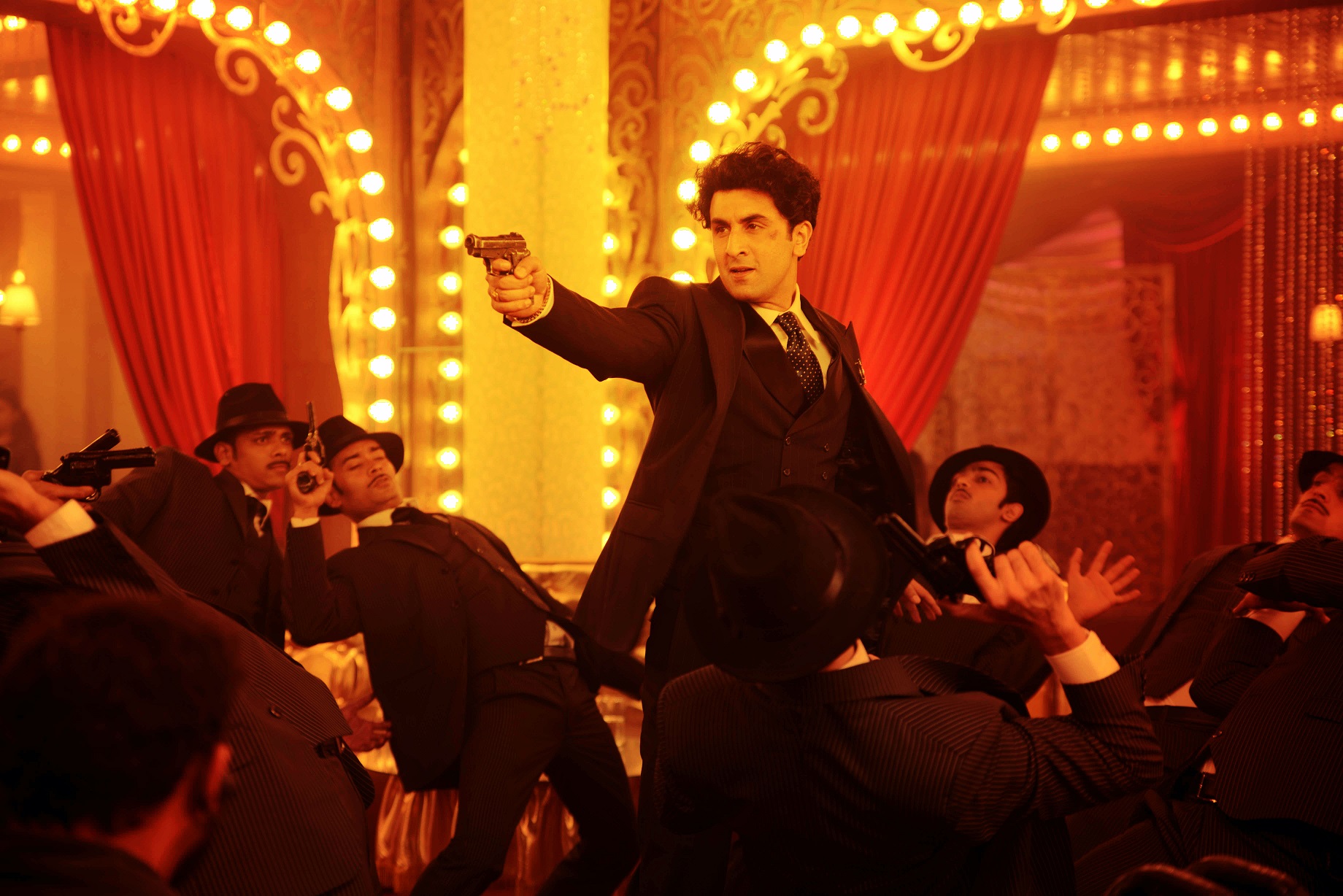
magazine. (Burjor's brother Russi Karanjia had already founded the
investigative news tabloid Blitz, to which Anurag Kashyap's Bombay
Velvet recently paid fictional homage.)
Cinevoice, launched on June 7, 1947 at
the Taj Mahal Hotel, in a glittering ceremony attended by many film
grandees, was meant to "represent the industry's point of view"
and fight its battles, while also being, in Karanjia's own words, "a
journal that was clean, that was constructive and that had a
conscience". Among the 'battles' waged in the pages
of Cinevoice was a campaign "to plead for social
recognition of the film community". It may seem difficult to
imagine in our Bollywood-besotted era, but in those days, writes
Karanjia, "film stars found it difficult to secure flats in
decent localities in the city. No club, moreover, would admit film
stars as members." Motilal, and later David Abraham, were the
first actors to be admitted to the Cricket Club of
India. Cinevoice also tried to gain film folk
respectability by marshalling them into national political
participation. He credits his colleague Ram Aurangabadkar with the
idea of getting three contemporary actresses -- Nargis, Snehprabha
Pradhan and Veera -- to attend the first All India Congress Committee
(AICC) session held after Independence, and report on it
for Cinevoice.
Karanjia is also credited with
instituting a system of film awards as early as 1949 - the Cinevoice
Indian Motion Picture Awards (CIMPA) - and for programming a live
charity show to raise money for "Kashmir Relief and Troop
Comforts", called "A Nite with the Stars." Neither of
these ventures quite took off independently, but both live shows with
the stars, and film awards (which Karanjia managed to run with
greater success as Filmfare editor), have proliferated to
such a degree that our cinematic culture is unimaginable without
either. Cinevoice did not last long, and neither did
Karanjia's other self-funded journalistic venture, Movie Times.
But with the editorship of Filmfare
came a certain stability. The magazine was a commercial publication
that gladly put Hema Malini or Rajesh Khanna or a bikini-clad
Sharmila Tagore on the cover, but also allowed Karanjia the space to
do what he had set out to in Cinevoice: represent the voice of the
film industry.
In the February 13, 1970 issue, while
applauding the liberal attitude taken towards film censorship by the
Khosla Committee Report, Karanjia's editorial called it out for
equating commercial considerations with dishonesty, and wrote that
the charge "betrays an ignorance of the many complex factors
that have made film-making in India an adventure and a gamble, and
that have attracted to it the wrong type of finance and the wrong
type of filmmaker."
Karanjia also combined in his person
roles that today might seem impossibly divergent: he edited Filmfare
for 18 years (and Screen for ten), while being Chairman of the Film
Finance Corporation (FFC, later to become NFDC). The same February
13, 1970 issue of Filmfare, for instance, reported a press conference
at which film director Basu Chatterjee discussed the film he had just
finished shooting, with a loan from the FFC: Sara Akash. Chatterjee,
the report noted, was a well-known Blitz cartoonist who had
adapted Rajendra Yadav's Hindi novel into a film with an all-new cast
and "a determination to steer away from songs, dances and other
cliches of the Hindi cinema".
The magazine quoted its own editor as
having stated at the press conference that "Audiences, I think,
are ready... The question no longer should be where these films will
be screened, but what sort of films should now be made." The
report went on: "The Corporation, he revealed, has already sent
a proposal to the government for securing a network of theatres based
not on opulence, but utility."
As editor, he was credited with almost
doubling Filmfare's circulation, and making a genuine effort to
return the Filmfare Awards to their early prestige. He went on to
write even sharper editorials for Screen.
Karanjia resigned from his position as
FFC Chairman during VC Shukla's unsavoury reign as Minister for
Information and Broadcasting during the Emergency, in January 1976
(though he did later become NFDC Chairman). But what distinguished
BKK was a rare combination of traits: an enthusiasm for helping
finance a new kind of cinema, but never being disdainful of commerce.
Published in Mumbai Mirror, 29 Jun 2015.
Published in Mumbai Mirror, 29 Jun 2015.