My Mumbai Mirror column, 28 Dec 2014.
Hindi cinema this year gave its female actors a chance to spread out. Some punched, while others pulled no punches. What matters is that as the audience, we agreed to clap for both.
The Hindi film industry has been hero-dominated for so many decades now that it's hard to believe that its earliest decades were all about the heroines: Sulochana, Fearless Nadia, Devika Rani. But 2014 might go down in history as the year that Bombay cinema came back round to the idea that there could be hits without heroes.
This was made possible, in some measure, by the return of Hindi cinema's last generation of big-ticket heroines. It's fabulous that at least some of these utterly deserving divas are landing age-appropriate roles in films designed to showcase their particular charms. 2012 already saw Sridevi bring a lump to every throat in the room as the guileless housewife on a journey of self-discovery in English Vinglish. 2014 marked the glorious comeback of Madhuri Dixit, who played the poetically-minded Begum Para with the perfect air of seductive mystery in January's Dedh Ishqiya, and later in the year, played off her once arch-competitor Juhi Chawla (with Chawla playing against type) in the somewhat anti-climactic Gulab Gang.
This year also saw a more recent returnee - Rani Mukherjee came back from a longish sabbatical with the immensely watchable, cheer-eliciting Mardaani. Priyanka Chopra had her own no-heroes movie: Mary Kom. The two films couldn't be more dissimilar in theme - a punchy cop drama set in Mumbai and Delhi, and a biopic of the stocky Manipuri woman who is India's most famous boxer - but in very different ways, these were films in which female audiences derived much pleasure from watching the woman on screen emerge victorious from physical battles. Mary Kom's initial attraction to boxing is linked to beating up badly behaved boys; Shivani Roy loves shocking male rowdies with some rowdyisms of her own, and plays gleefully to the gallery as she does so.
Interestingly, though, both films felt the need to play up their protagonists' nurturing side - a part-explanatory, part-compensatory move to balance out all that unfeminine punching we see them do. Mukherjee's character in Mardaani, a no-bullshit female cop with the ringing name of Shivani Shivaji Roy, is given no children of her own. But she and her doctor husband play adoptive parents to a young niece, and she is moved to eradicate a ring of child traffickers because they've abducted an orphaned girl with whom she has a quasi-maternal relationship.
Motherhood was also played up in the movie version of MC Mary Kom's life, with Mary shown risking her coach's disfavour when she decides to get married and then have children, all at the peak of her hard-won boxing career. Produced by Sanjay Leela Bhansali, Omung Kumar's film devotes an inordinate amount of screen-time to showing Mary being a hands-on mom: singing her twins to sleep, nursing them to health, and so on - one can't avoid the sneaking feeling that it's all in aid of preventing audiences judging her when she does decide to return to her career, while the kids still very young. (It was lovely, though, to see a man on the Hindi film screen play a hands-on dad as competently and believably as Darshan Kumar did as Onler Kom.)
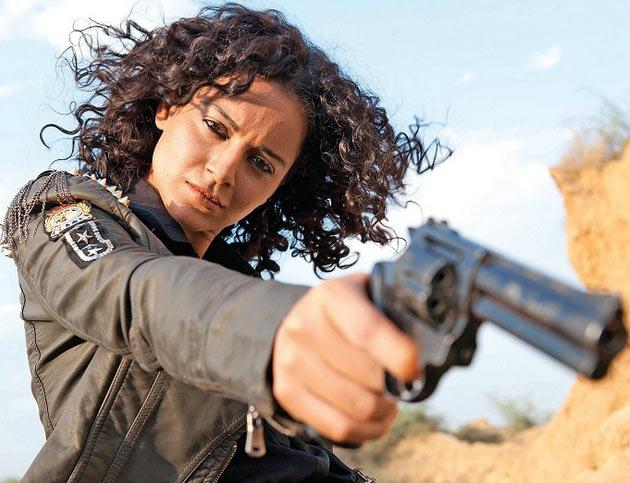
The parade of rough-talking women continued with Kangana Ranaut's strange and over-the-top outing in and as Revolver Rani (RR). A Tarantino-inspired take on a female Chambal dacoit some two decades after Phoolan Devi and Bandit Queen, RR could have been great but was tragically uneven in tone. Later in the year, we got Richa Chadda in the depressingly awful Tamanchey: another trigger-happy female gangster, like Ranaut in RR, ready to junk it all for marriage and motherhood.
But Ranaut's film of the year -- and everyone's favourite 'woman-centric' movie -- was Queen. Vikas Bahl's surprise hit had Ranaut deliver a terrific stream-of-consciousness performance as sheltered Delhi girl Rani who, jilted at the mandap, makes the wonderful transition from panic-stricken to determined to carefree.
The foreign trip as transformatory ritual isn't new (think Zindagi Na Milegi Dobara), and Rani is perhaps a younger version of Sridevi in English Vinglish—but the film wins points for a host of other things, from giggly female friendship to joyful drunken spree to first exploratory kiss with a stranger, and most importantly, Rani's non-vengeful but firm rejection of her baffled groom. Queen opened up the universe a little more.
Two other films delivered freedom to their female protagonists in surprising guises: Alia Bhatt as the poor little rich girl who finds liberation via abduction in Highway, and Parineeti Chopra as the oddball science geek who runs away from home -- to China! -- in the under-appreciated and charming Hasee Toh Phasee.
My pick for independent woman character of the year, though, is probably Vidya Balan's Hyderabadi detective in the comic mystery caper Bobby Jasoos. Perhaps because there's nothing grand or heroic about her loose-plait-and-dupatta persona. She loves her family, but will risk their ire to fulfill her dream of her own detective agency. Since she's not in the realm of myth, she neither beats up any men nor has to prove her femininity. But when personable young men open car doors for her, they encounter a brisk dismissal: "Mereko aata hai gaadi ka darwaza kholna." For me, that's more than enough.
Hindi cinema this year gave its female actors a chance to spread out. Some punched, while others pulled no punches. What matters is that as the audience, we agreed to clap for both.
 |
| Madhuri Dixit in Dedh Ishqiya (2014) |
This was made possible, in some measure, by the return of Hindi cinema's last generation of big-ticket heroines. It's fabulous that at least some of these utterly deserving divas are landing age-appropriate roles in films designed to showcase their particular charms. 2012 already saw Sridevi bring a lump to every throat in the room as the guileless housewife on a journey of self-discovery in English Vinglish. 2014 marked the glorious comeback of Madhuri Dixit, who played the poetically-minded Begum Para with the perfect air of seductive mystery in January's Dedh Ishqiya, and later in the year, played off her once arch-competitor Juhi Chawla (with Chawla playing against type) in the somewhat anti-climactic Gulab Gang.
This year also saw a more recent returnee - Rani Mukherjee came back from a longish sabbatical with the immensely watchable, cheer-eliciting Mardaani. Priyanka Chopra had her own no-heroes movie: Mary Kom. The two films couldn't be more dissimilar in theme - a punchy cop drama set in Mumbai and Delhi, and a biopic of the stocky Manipuri woman who is India's most famous boxer - but in very different ways, these were films in which female audiences derived much pleasure from watching the woman on screen emerge victorious from physical battles. Mary Kom's initial attraction to boxing is linked to beating up badly behaved boys; Shivani Roy loves shocking male rowdies with some rowdyisms of her own, and plays gleefully to the gallery as she does so.
 |
| Rani Mukherjee in Mardaani, 2014. |
Motherhood was also played up in the movie version of MC Mary Kom's life, with Mary shown risking her coach's disfavour when she decides to get married and then have children, all at the peak of her hard-won boxing career. Produced by Sanjay Leela Bhansali, Omung Kumar's film devotes an inordinate amount of screen-time to showing Mary being a hands-on mom: singing her twins to sleep, nursing them to health, and so on - one can't avoid the sneaking feeling that it's all in aid of preventing audiences judging her when she does decide to return to her career, while the kids still very young. (It was lovely, though, to see a man on the Hindi film screen play a hands-on dad as competently and believably as Darshan Kumar did as Onler Kom.)
The parade of rough-talking women continued with Kangana Ranaut's strange and over-the-top outing in and as Revolver Rani (RR). A Tarantino-inspired take on a female Chambal dacoit some two decades after Phoolan Devi and Bandit Queen, RR could have been great but was tragically uneven in tone. Later in the year, we got Richa Chadda in the depressingly awful Tamanchey: another trigger-happy female gangster, like Ranaut in RR, ready to junk it all for marriage and motherhood.
But Ranaut's film of the year -- and everyone's favourite 'woman-centric' movie -- was Queen. Vikas Bahl's surprise hit had Ranaut deliver a terrific stream-of-consciousness performance as sheltered Delhi girl Rani who, jilted at the mandap, makes the wonderful transition from panic-stricken to determined to carefree.
 |
| Kangana Ranaut (right) in Queen, 2014 |
The foreign trip as transformatory ritual isn't new (think Zindagi Na Milegi Dobara), and Rani is perhaps a younger version of Sridevi in English Vinglish—but the film wins points for a host of other things, from giggly female friendship to joyful drunken spree to first exploratory kiss with a stranger, and most importantly, Rani's non-vengeful but firm rejection of her baffled groom. Queen opened up the universe a little more.
Two other films delivered freedom to their female protagonists in surprising guises: Alia Bhatt as the poor little rich girl who finds liberation via abduction in Highway, and Parineeti Chopra as the oddball science geek who runs away from home -- to China! -- in the under-appreciated and charming Hasee Toh Phasee.
 |
| Vidya Balan in Bobby Jasoos, 2014 |