Showing posts with label money. Show all posts

8 February 2021

What sells in the media hasn’t changed in 40 years

My Mumbai Mirror column:

In Mrinal Sen’s 1982 film Chaalchitra, the filmmaker turns his astute gaze upon the smokescreen that is the business of news in a capitalist world.

In 1982, Jyoti Basu, who was then the chief minister of West Bengal, watched Mrinal Sen's newly-completed film Kharij (‘The Case is Closed’), about a middle class family's attempts to pass the buck when their under-aged servant boy dies of carbon monoxide poisoning. 


“The film is excellent, but it is too grim to be popular,” Basu had apparently said.

Sen didn't make only grim films, but he knew perfectly well what Jyoti babu meant. In 1981, a year before this incident, the great actor Utpal Dutt had played a newspaper editor in Sen's film Chaalchitra (‘The Kaleidoscope’). In a crucial establishing sequence, the pipe-smoking Dutt tells an idealistic young job seeker Dipu (Anjan Dutta) to come back in two days with an “intimate study” of his “middle class milieu”. His only instruction is to keep the tone light, because the piece must sell.


The big boss testing the potential employee is also the man-of-the-world lecturing the ingenue. Already, 40 years ago, in Sen's sharp-eyed vision, we see the media being clearly understood (by those who run it) in terms of the political limits placed on it by those who buy it – ie, the middle class.


When Dipu walks into the editor's grand office, he is hoping to escape a dull job elsewhere and clearly has a positive, perhaps even idealistic, image of the media. Asked to name an article he enjoyed reading in the paper in the recent past, Dipu enthusiastically mentions a feature about rickshaw wallahs. The editor is unmoved. “Yes, that piece gained some popularity,” he replies. “People are eating it up.”


“See, we've got to feed the public,” he says matter-of-factly to the young man who is his son's classmate. “Some sell potatoes, some bananas, some sell words. And we, we sell news. The whole goddamn world is one big shopping centre. And we're all pedlars.”


Chaalchitra didn't sell well, either in the commercial Bengali cinema market or in the film festival universe where Sen's films often found their niche. But it is an interesting film, not least for the historical reason that it is the only one of Sen's 25-odd films as a director, to be written by him. Dipankar Mukhopadhyay, in his biography of Sen, describes how the idea of it took shape. The incident Mukhopadhyaya describes as a creative trigger is oddly tangential to the film at hand. An old man arrived at Sen's doorstep one day, claiming to be his school friend from the village. Sen, who had come to Calcutta in 1940, couldn't remember the man's face or their acquaintance. But seeing that he had brought children with him, Sen finally feigned recognition. Still, when the family departed after having spent some time with Sen, he felt irritation that they had wasted his evening.


What the incident seems to have evoked for Sen is the distance he had travelled away from his roots. Two years before Chaalchitra, the filmmaker had acquired a car and moved to a posher locality. Chaalchitra was perhaps his last engagement with the lower middle class milieu he had left behind – and it is discomfiting in its honesty about the protagonist's decision to cut that cord.


Dipu spends the film searching for a 'story' amid the mundane details of his everyday life, a story that will get him the job. But although tensions erupt often, people seem keener to resolve them than to make them flare up further. The occupants of his chawl-like building in Shyambazar squabble over their dirty, mossy courtyard, but also get together to scrub it clean in a fit of anger. When one of the poorer old women in the building steals coal from Dipu's mother's bin, Dipu's mother takes care to safeguard it – but without a hue and cry about the theft. Even a fake astrologer that Dipu first thinks might make for an expose seems, upon reflection, a poor man in need of an income. Everything he observes has a flip side, a legitimate reason.

When he comes up with a story about the inescapable smoke from coal ovens in the city, the editor is excited – but wants to remove the flip side. Rather than question why the country's lower middle class still cooks with such fuel (the fact that gas ovens were -- and are-- too expensive), the editor believes what will sell with the middle class 'public' is a story about polluted air; the poison that they are forced to breathe. Does Dipu want to be a communist, or does he want the salary?


Earlier, in a remarkably edited sequence, Sen reveals how the same city that seemed so harsh when you're a poor man trying to hail a taxi in an emergency, turns into a tableaux of pleasures, seen from the back seat of a car.


The film ends with the arrival of the gas cylinder. It is only for Dipu's family, though -- leaving the rest of the building, the city, the country to continue in its haze of smoke. It's much thicker now.


Published in Mumbai Mirror, 7 Feb 2021.

1 November 2020

A Portrait of the Doctor as an Angry Young Man

My Mirror column: the seventh in my series on Indian films about doctors.

What drives doctors to frustration in our cinema, and has that changed from Dr. Kotnis to Kabir Singh?

Amitabh Bachchan (right) as the dhoti-clad Dr. Bhaskar Banerjee
with Rajesh Khanna (left) as his patient and friend Anand Sehgal in Hrishikesh Mukherjee's
Anand (1971)

Over the last six weeks, this column has looked at Indian films with doctor protagonists, beginning with Dr. Kotnis Ki Amar Kahani (1946), which V Shantaram based on Dr. Dwarkanath Kotnis, India's real-life medical missionary to China. In the last 75 years, we've travelled some distance from that uncomplicated patriotic doctor who chose duty to profession and country, over even duty to parents.

There have been, speaking rather broadly, two directions in which Indian cinema has taken doctors. In films like Ganashatru and Ek Doctor Ki Maut, made outside the industry framework, the good doctor remains a professional and patriot of the highest order. In these films, it is Indian society that no longer honours that selfless commitment to medical science. This chronological change is true as well of middle-of-the-road cinema. In Hrishikesh Mukherjee's Anuradha (1960), Balraj Sahni's rural doctor slaving away over his research could be imagined stumbling upon some good fortune by film's end. A decade later, none of the rural doctors in Vijay Anand's Tere Mere Sapne (1971) receive recognition or support. Even Dev Anand's 'original research' on a herbal cure for tuberculosis gets him fame only when an American university (Johns Hopkins, correctly) gives him a degree (a much darker version of this international vs national arc appears in Ek Doctor Ki Maut). Even as recently as an Udta Panjab, the good doctor's goodness is wasted on the world around her – ending in tragedy.

There is another cinematic trajectory (sometimes overlapping with the first), where the focus is on the frailties of doctors. Tere Mere Sapne, for instance, offered up one doctor in denial of his own illness, one alcoholic depressive doctor, and one doctor making money off rich patients to take vengeance on an unjust world. Bemisaal a decade later is much darker: the doctor now feels entitled to the good life – and the stakes of 'making money' are his patients' lives.

But some of the most interesting depictions are those that recognise that doctors, just like the rest of us, can have frailties -- even when they are more or less good. In 1971, the same year as Tere Mere Sapne, came Hrishikesh Mukherjee's most famous doctor movie: Anand. If his Anuradha had been routed through the doctor's perfect wife, Anand was routed through the perfect patient. Rajesh Khanna played Anand Sehgal, the sunny patient no-one wants to see die.

The film's narrative as usually understood as Anand's chatty warmth breaking through the hard, serious exterior of Dr. Bhaskar Banerjee (a rather wonderful Amitabh Bachchan). That isn't untrue. But watching the film again, I realised that Anand expands on something I suggested in last week's column: the burden of stoicness placed upon doctors. When we meet Bachchan's Bhaskar, he is a man dispirited by his work: exhausted by having to practice in a country where many doctors are willing to treat the imaginary ailments of the rich for a fee, while mere medicine cannot cure what really ails so many patients – poverty. Bhaskar's exhaustion is often expressed as anger – a sneering contempt for the hypochondriac rich, and a helpless snappish rage in the face of the dying poor. What Anand does first is to recognise that rage as the doctor's anger at himself. But what he does next is to jolt Bhaskar out of that overwhelmed state, to frame the doctor's depressiveness and cynicism as self-indulgent – and insist that he live on the side of life, even while constantly having to look death in the eye.

In mid-2019, Indian cinema gave us another film about an angry doctor. Several films, actually – Sandeep Vanga's Telugu superhit Arjun Reddy was remade in several languages, all retaining the same essential plot, about a doctor who becomes a raging alcoholic – literally -- after his college girlfriend is forced by her family to marry another man. I saw the Hindi version, Kabir Singh, and like several reviewers, was struck by the hero's disturbing sense of ownership over his largely passive girlfriend, who seems only too happy to be owned.

Shahid Kapur as the titular protagonist Kabir Singh in the 2016 film about an alcoholic surgeon with anger issues
 

But what is relevant here is that Arjun/Kabir is portrayed as a brilliant doctor -- a surgeon, no less. The film might be seen to suggest, as incoherently as its hero's rages, that the external world its rules of caste, gender and class, as well as institutional seniority – is a stifling hierarchy against which our hero 'rebels'. Kabir's uncontrolled anger, even when it hurts or endangers his friends, lovers, strangers or even patients, is greeted with awe much more often than censure. His rule-breaking is applauded, his depressive alcoholism is 'understood', even by women and men he treats badly. Anger is feted as self-expression, flaws are forgiven. Where, oh where, is an Anand to cut this Doctor Saab down to size?

Published in Mumbai Mirror, 1 Nov 2020

25 October 2020

The doctor as sufferer

My Mirror column, sixth in my series on films about doctors:

Based on AJ Cronin’s famous 1937 novel The Citadel, Vijay Anand’s medical melodrama Tere Mere Sapne (1971) casts doctors as the ailing ones

Like several of the films I've written about in recent weeks, Vijay Anand’s Tere Mere Sapne (1971) had as its protagonist not a doctor, but the medical profession itself. And thus, perhaps necessarily, several doctors. The director's brother Dev Anand may have supplied the film's star quotient (as the rather unimaginatively named hero Dr Anand), but within the film's opening ten minutes we meet three other doctors. These are the characters that actually give us the lay of the land

First up is Dr Anand's medical batchmate, who delivers the first line of dialogue in the film: “Jise tum aadarsh kehte ho, usse main paagalpan kehta hoon [What you call principle, I call madness].” He suggests establishing a moneymaking practice in the city together, but the idealistic Anand mocks him for being a businessman instead of a doctor - and leaves for a remote mining village. The second doctor we meet is the ageing Dr Prasad (the marvellous Mahesh Kaul), employed by the mining company for 35 years, but now so ill that he hires younger doctors as ‘assistants’ to work in his stead - while his paranoid wife attempts to keep his illness a secret. The third doctor is also interesting: Dr Prasad’s other assistant, one Dr Jagannath Kothari, played by Vijay Anand himself. A gynaecologist with a fancy degree from London, Jagan now spends most of his waking hours drinking himself into a stupor.

What is common to these very different characters – and what eventually comes to drive our hero as well – is money, or the lack of it. The idealists are led by the old Dr Prasad, who has spent a lifetime in the service of poor mine workers, but without being able to realise his dream of improving the medical facilities in the area. The unruly-haired Dr Jagan, meanwhile, is only on his way to middle age, but already embittered by the bureaucratic and other restrictions that kept a young doctor from rising in a socialist India [these are complaints about the system that continued to appear in later films I’ve written about, like Bemisaal (1981) and Ek Doctor Ki Maut (1989)]. Our hero arrives in the village full of reformist zeal, initially even managing to rouse Jagan out of his alcoholic self-pity - but his honesty and hard work are of no avail either in his career, or when he finds himself up in court against a powerful rich man.

Thus the corruption of the system – and we’re talking 50 years ago – is blamed for Dr Anand’s moral decline. Which is how the film leads us back to the first doctor it showed us, the one who has no compunctions about using his qualifications as a way to mint money. In the second half, it is his network of fashionable city doctors catering to the rich and famous that an angry Dev Anand becomes part of. “Aaj tak mere aadarsh hi meri daulat thhe, lekin aaj se daulat hi mera aadarsh ban jayegi [Till today my principles were my wealth, from now on wealth will be my principle],” he announces to his increasingly distressed wife Nisha (Mumtaz).

There are many things that relegate this film to its time: the paternalistic take on mine workers as easily misguided/corrupted; the dismissal of the village midwife as necessarily knowing less about delivering a baby than any doctor – even one not trained in gynaecology; the portrayal of Dr Prasad as the generous, open-hearted idealist at the mercy of a small-minded, penny-pinching wife.

But despite these, within its melodramatic dialogue-baazi, something still rings true. And again, as in Anuradha, which I wrote about last week, it is only a doctor who can manage to get through to another doctor. This is true of the pre-climactic scenes, featuring Dr Anand’s restoration to the milk of human kindness. But Tere Mere Sapne’s most moving scene might be between the ailing Dr Prasad and Jagan, his black sheep doctor employee. “Does such a capable doctor not recognise his own symptoms?” asks Jagan. And when the old man says he does, but has decided to wait for death, Jagan’s response is: “Yeh ek mareez baat kar raha hai, doctor nahi. [This is a patient speaking, not a doctor.]” This exhorting of the doctor to a special status recurs through the film, as for instance when a famous actress (Hema Malini in a fetching part) tells Dev Anand to cheer up because “if a doctor speaks like this, what will the patient do?”

The doctor in Hindi cinema, it seems, must not only carry the god-like mantle of giver of life, but hide his own emotional travails. The mantle is a veil.

Published in Mumbai Mirror, 25 Oct 2020.

17 February 2020

An influential girlhood

My Mirror column:

A capacious new film version of Louisa May Alcott’s classic coming-of-age tale will make you identify with the Little Women of the 19th century

Beth, Jo, Megan and Amy in a still from the new Little Women, directed by Greta Gerwig.
In Greta Gerwig’s deliciously satisfying film adaptation of Little Women, the heroine Jo March starts to write a novel about herself and her sisters because she is no longer happy working on her more marketable stories of duels and dungeons. Her sister Beth likes it best of all her writings, but the publisher, a “Mr Dashwood”, is only persuaded to publish the book by the excited curiosity of his daughters.
In real life, though, it was a publisher called Thomas Niles who asked Louisa May Alcott to consider taking a break from producing such sensational thrillers as The Abbot’s Ghost, or Maurice Treherne’s Temptation, and write a “girls’ story”. Alcott’s initial response – perhaps unsurprising for someone whose fictional alter ego was the simultaneously bookish and tomboyish Jo – was an irritable entry in her diary: “Never liked girls, or knew many, except my sisters.” But Louisa May Alcott was a professional writer, practically the sole earning member of a family that had always been cash-strapped. She obliged the publisher, and Little Women was born.
And so we have the remarkable historical fact that a girl who had spent her entire girlhood liking “boys’ games and work and manners” (“I can't get over my disappointment in not being a boy,” Jo March tells her prettier, more feminine elder sister Meg early in the book) became the most widely-read chronicler of female adolescence in the modern English-speaking world. Little Women, first published in 1868, became a literary sensation, and its central figure Jo March became an inspiration to generations of young women – especially young women with artistic aspirations.

“I am sure she has influenced many girls, for she is not like most ‘real’ authors, either dead or inaccessibly famous; nor, like many artists in books, is she set apart by sensitivity or suffering or general superlativity; nor is she, like most authors in novels, male,” pointed out the great writer Ursula Le Guin, calling Jo “as close as a sister and common as grass”.

Gerwig’s screen version, with Saoirse Ronan’s achingly acute Jo at its centre, is powerfully concerned with how the girl who scribbled all night in the attic of her mid-19th century Massachusetts family home became the writer crafting stories for a living in the attic of a Manhattan boarding house. As with all adaptations, Gerwig's reveals her own preoccupations – her previous directorial effort Ladybird, a coming-of-age tale about awakening ambition and desire set in early 21st century California, also starred Ronan as a young woman caught between wanting to be someone and just wanting. “I'm so sorry I wanted more,” Ronan's Ladybird bursts out at her mother in one angry emotional scene. In Little Women, the relationship between Jo and her mother (Laura Dern, somewhat unconvincing as the too-good-to-be-true 'Marmie') is less fraught, but her frustration has a similar ring to it. “I'm so sick of people saying that love is all a woman is fit for!” Ronan's Jo exclaims, asking Dern why the world won't give women's souls and minds their due, rather than just their hearts.

Little Women
 is brilliant at delineating the travails of the single woman trying to make her own path, in a world in which few women have yet done so. Many of the reasons for Jo's false starts as a writer – the mistaking of the market's approval for success, the lack of clarity about what her talents might be good for – are about not having creative models.

But where Gerwig scores is in giving late 21st century viewers a sense of what it was like to be a not-wealthy woman in a 19th century society. Her superlative cast fleshes out all the possible paths: the feisty, opinionated woman who could perhaps live by her wits (but under a male pseudonym); the quiet one with musical talent but not enough confidence to play for anyone but family; the one pretty enough to get to a ball but weak enough to let richer girls give her pet names; the realist who knows that her talents won't be enough to get her the life she wants. Between the drily unpredictable Aunt March (Meryl Streep channelling her inner Maggi Smith marvellously) and the pugnacious Amy (Florence Pugh making it hard to dismiss a character I grew up annoyed with), the film proffers a hard-headed economic context for the age-old romantic fictions written by men. No matter what their talents and abilities, women in Alcott's era were socially barred from improving their finances by almost any means other than marriage. Consequently, marriage may have been a romantic proposition for men, as the brutally frank Amy says to Laurie, but it was an economic decision for women.

Marriage was an economic decision in fiction, too. Alcott never married herself, and her intention was to have Jo stay single (remember, this is the same Jo who proposed that Meg run away from her own wedding). “[B]ut so many enthusiastic young ladies wrote to me clamorously demanding that she should marry Laurie, or somebody, that I didn’t dare refuse & out of perversity went & made a funny match for her,” Alcott wrote to a friend. Alcott paired Jo off with a stout, 40-year-old German professor called Friedrich Bhaer. The new film version has Friedrich stay accented and slightly awkward – but makes him young and handsome. I guess Gerwig decided Jo wanted more – and now she could have it.

Published in Mumbai Mirror, 16 February 2020.

16 February 2020

Life after death

My Mirror column:

A range of recent narratives, including the quietly brilliant 2019 film Aise Hee (Just Like That), offer a perspective on the unexpectedly liberating possibilities of widowhood.


During a recent stint in a hospital room, I put on the television at low volume, hoping to distract the slowly recuperating 70+ patient. I searched fruitlessly for the things I knew he might enjoy – first for live cricket, then the news in English, old Hollywood films, or perhaps a soothing nature channel. But none of these seemed to be part of the already prohibitive ‘package’. A hospital staff member walked in and said, as if solving a non-existent problem: “Uncle ke liye? Arre bahut saare dhaarmik channel hain.”

How breezily we decide what the old ought to like. I was reminded immediately of the astute, delightful 2019 film Aise Hee, in which an old lady’s desire for the simplest of things – a stroll by the riverside, an ice cream, or just interesting company – raise eyebrows and then hackles across not just her family but the neighbourhood and then the city. Written and directed by debutant , the film received a Special Mention at Busan Film Festival and the Film Critics Guild award at MAMI, while Mohini Sharma won MAMI’s Special Jury Mention for Best Actor (Female) for her wonderful performance as an Allahabad-based woman who rediscovers a taste for life after her husband of 52 years suddenly dies.

For all our post-liberalisation embrace of consumerism, for the vast majority of Indians choice remains an illusion. The lives of old people, in particular, are regulated by a rack of rigid social expectations that offer very little room for individual expression. Of course, it's worse if you’re a woman. And if you’re a widow, your last link to life’s everyday pleasures is deemed to have automatically snapped when your husband dies – even in 21st century India. Some of this is simply an unthinking re-inscribing of deprivations ritually visited upon caste Hindu widows for centuries – in a brutal early scene in Aise Hee, a posse of younger female relatives matter-of-factly divide up Mrs Sharma’s wardrobe of saris without even asking her. It is simply assumed that she must exchange her suhaagan colours for vidhwa whites, or at least dull greys and beiges.

The widespread assumption is that as a widow, she will continue the socially approved life she lived with her husband – going for paatth, religious recitation, and attending the yoga circle in the neighbourhood park. But she is simultaneously expected to curtail her existence, literally reduce the space she takes up in the world. Her son, who lives on the ground floor of the family house with his wife and children, takes it for granted that unlike his father, his mother can be squeezed into one of the downstairs rooms while the upper floor is rented out for some extra income. When his mother resists, gently but firmly, in the direction of a quiet financial independence, even dealing with bank passbooks herself, there is shock. When she actually buys an air-conditioner for her own bedroom, there is outrage.

What makes Aise Hee a joy to watch, though, are Mrs Sharma’s new friendships – with an old neighbourhood tailor whom she persuades to teach her embroidery, and later with a 20-something single woman she meets on the ghat. And what Kislay’s subtle telling makes unmistakeably apparent is the extent to which contemporary Indian society frowns on such one-on-one connections: cutting across religion, gender and class in one instance (the tailor is Muslim), and across age and class in the other (Sugandhi works in a beauty parlour and isn’t a ‘respectable’ companion for an elderly widow).

Aise Hee
 reminded me of a short story called Compassionate Grounds by Tanuj Solanki, part of his collection Diwali in Muzaffarnagar, in which an ageing housewife whose husband has died worriedly contemplates the possibility of taking up a compensatory job in his government office. “I’ve only read Grihshobha and Kadambini after my BA. Not even the newspapers. The last time I dealt seriously with books was when I could still help with you with homework,” she tells her 26-year-old daughter. The documentary About Love, which I wrote about last week in another context, also featured a woman bemusedly describing how living with a dominant husband seems to have stunted her brain. When I’m with him, says the filmmaker’s fifty-something mother, I just do what he says.


Another powerful recent portrait of a spirited old woman suffering the stultifying effects of marriage – and the unexpected liberation afforded by widowhood – is Heena D’Souza’s short film Adi Sonal, which was the best part of last year’s anthology film Shuruaat Ka Twist. Neena Gupta is simply marvellous as a traditional, ritual-bound Sindhi housewife who understands marriage as being about serving her husband – and clearly expects her daughters-in-law to do the same. Until she doesn’t.

In an odd coincidence, in both Adi Sonal and Aise Hee, there is a younger woman played by the same actor, the wonderful Trimala Adhikari. In fact in all these narratives, we see the lives of the old partly through the eyes of the young, which is perhaps a good way for young audiences to empathise with the protagonists. But what we also see are the lives of the young through the eyes of the old. And in those older eyes, there is bafflement, curiosity, and sometimes envy.

Published in Mumbai Mirror, 26 Jan 2020.

18 August 2019

Literary Heroines and Necklaces of Tears

The second instalment of my TVOF column Shelf Life, in which I look at literature through the prism of clothing.
From coveted possession to unfulfilled desire, jewellery has had a starring role in fictional women’s lives.
There is something brilliantly non-functional about jewellery. Clothes, no matter how attractive, always also serve to protect our bodies from heat and cold, rain and sun. Jewellery, in contrast, is so wholly useless that that fact has been enshrined in the English language: it is, by its very nature, ornamental.     
Or is it?
Humans have a way of imbuing the things we make with meaning, and jewellery seems right at the top of the symbolic value heap. We will never know exactly what the 46,000-year-old kangaroo bone nose ornament found in Australia in 2016 meant to its prehistoric wearers, or what powers were attributed to the 75,000-year-old shell beads discovered in South Africa's Blombos Caves in 2004. What we do know is that we've travelled some distance from those likely gender-neutral beginnings. 
As societies grew more complex, jewellery increasingly became something women wore. That gendered cultural history runs alongside a socio-economic one, in which women are pushed increasingly out of the public sphere into the domestic, private sphere of unpaid labour. In a world in which upper- and middle-class women didn’t have their own money (and were not allowed to earn it), jewellery was often the only financially valuable item a woman possessed—something that could be exchanged for money, provide a woman security when the patriarchal family did not. 
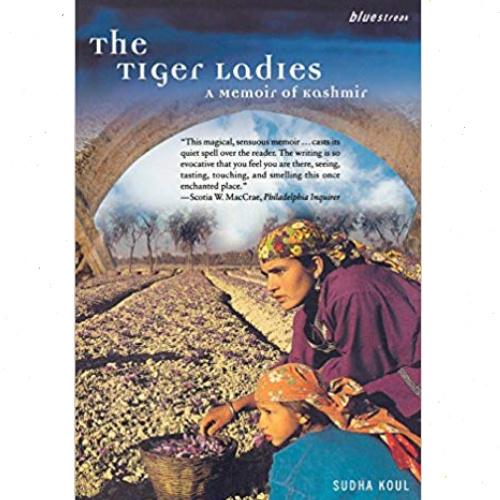
Sudha Koul’s The Tiger Ladies, an elegiac memoir of growing up in Kashmir, describes how Kashmiri Pandit weddings involved fathers giving their daughters solid gold ear ornaments called dejahor, so long that they hung “all the way down to their nipples”. Appalled at her as-yet-unpierced upper earlobes, Koul’s grandmother (Dhanna) hopes she might yet restore her modern grandchild to the way of tradition by explaining the socio-economic purpose of jewellery: “When women needed money, or when their daughters got married, they would cut off one dejahor, sell it, and make two of the other one. The size was the same, but it was hollow inside and no one would know that they had troubles.”

The Tiger Ladies by Sudha Koul

Dhanna’s ear ornaments remained solid till the end; it was her husband's Lahore University gold medal that was melted down to make ornaments for their daughters (“The fact that he stood first was enough—they knew it and everyone else knew it”). But few marriages are as well-adjusted, few households as equitable. And where there is familial strife, jewellery is frequently at its centre. Late 19th to mid-20th century Bengali literature is filled with women (especially widowed old aunts) guarding their jewellery from rapacious relatives: from Leela Majumdar’s children’s classic Padi Pishir Barmi Baksho (Aunt Padi’s Burmese Box, also a 1972 film by Arundhati Devi) to Shirshendu Mukhopadhyay’s Goynar Baksho (made into a 2013 film by Aparna Sen). 

Hearts Made of Stone
The woman obsessed with protecting her jewels appeared in a much darker register in Rabindranath Tagore’s 1898 story Manihara, translated as The Lost Jewels. The horrific vision that ends Tagore’s tale—and Satyajit Ray’s film version, since it forms part of Ray’s 1961 triptych Teen Kanya—is the wife as a ghostly skeleton, whose “bones glistened with gold and diamond ornaments”. 
The female ghost who preys on unsuspecting men is an old folktale trope from Kashmir to Japan. But Tagore is no simplistic misogynist. The narrator of Tagore’s tale pours scorn on Phani Bhushan for belonging to a “new race of men”, so without “a trace of masculine barbarity” that he “was quite incapable of saying bluntly to his wife, “Dear, I’m in need of money, bring out your jewels.” But he has also told us how things came to this pass: because the misguided Phani Bhushan demanded nothing from Mani Malika—he only gave, and “imagined that by giving, he would receive”. “The wife had no particular fault, yet the husband was not happy. And so he went on pouring diamond and pearl jewellery into the cavity of her heart, thereby filling her iron safe but leaving her heart as empty as ever.”
A still from the film adaptation of Tagore's story Manihara, which is part of Satyajit Ray’s 1961 triptych Teen Kanya


Not Quite a Girl’s Best Friend

In two famous European stories, jewels are used to pillory women's desires for other lives, other loves. If The Earrings of Madame De is about its married heroine's fickleness, Guy de Maupassant’s famous 1884 story, The Necklace is a brutal tale of comeuppance for a pretty woman who wallows in self-pity because she has “no dresses, no jewels, nothing; and these were the only things she loved.” The necklace she borrows for one grand party becomes a lifelong noose around her neck—and her loving husband's.  
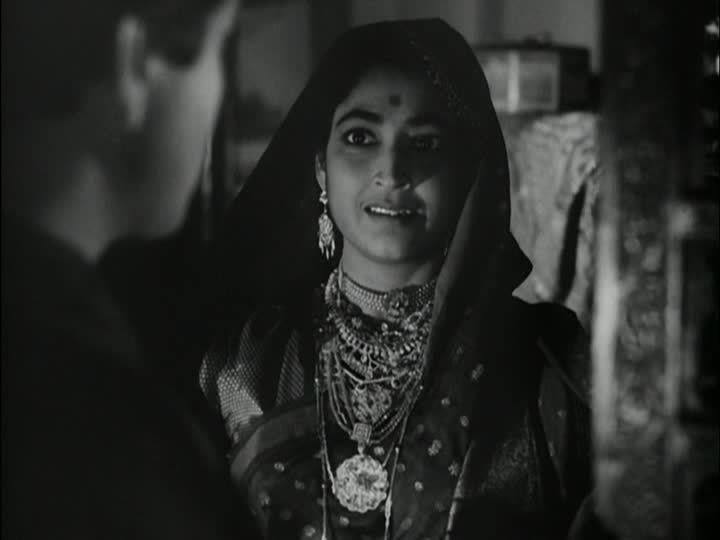
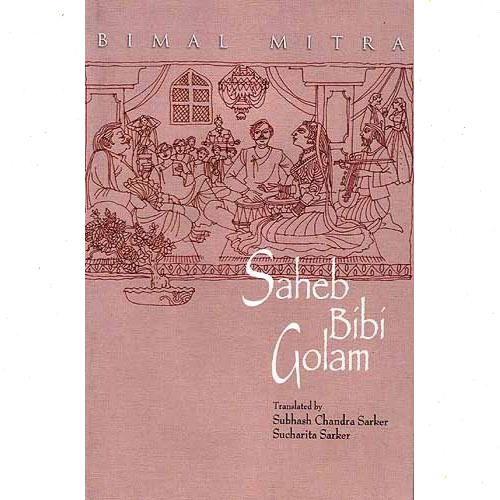
Indian fiction seems to have been more forgiving of the unhappy wife, perhaps because it contains few loving husbands. To end on a classic example, think of the tragically neglected Choto Ma of Bimal Mitra’s Saheb Bibi Golam, who became Meena Kumari’s Chhoti Bahu in Guru Dutt’s classic 1962 film. Half-mad with loneliness, she accosts her dissolute zamindar husband, asking what she should do while he is entertained by his tawaif mistress. His response cruelly suggests the dispensability of both her jewels and her feelings. “Gehne banwao, gehne tudwao,” he sneers. “Get jewellery melted, get new jewellery made.” 
An English translation of Bimal Mitra's Bangla classic, Saheb Bibi Golam
Perhaps, in the end, that is what makes jewellery such a powerful fictional symbol. It stands in for money, and somehow that means people keep trying to make it stand in for love.

Published in The Voice of Fashion,  6 Aug 2019.

22 July 2019

Hairy Situations

My Mirror column:

A new film casts Jennifer Aniston as a New York City hairdresser caught up in a very European murder, making our columnist think about another fictional hairdresser embroiled in another murder


Jennifer Aniston as a hairdresser in the recent film Murder Mystery

Kyle Newacheck’s Murder Mystery (on Netflix) is an affectionate takedown of the genre, mixing comedy with thrills – and caricatures with characters – in a way that feels surprisingly satisfying. An ordinary New York couple called Nick and Audrey Spitz (Adam Sandler and Jennifer Aniston) land in the midst of a European murder that’s equal parts hamming and high intrigue.

The setting, a high-volume homage to all those Agatha Christie plots with a cast of suspects stuck on a train or in a country house, is a yacht in the middle of the Mediterranean Sea, with the first murder taking place while all the guests are literally present in the same room. There’s a charming viscount with a perfect jawline; there’s his sultry young Japanese ex-girlfriend who’s recently dumped him for his ancient uncle; there's the uncle himself, a millionaire with a mane of white hair that doesn't make up for his shrivelledness. There’s the obligatory colonel, updated from the moustachioed white man with a past in India to a black man who once lost an eye saving the millionaire’s life. There’s the colonel’s bodyguard, Sergei, a hulk made more forbidding by his refusal to make conversation. There’s a preening actress, a racing car driver, and the millionaire’s unhappy unsatisfactory son. Just as soon as we’ve met everyone, the millionaire announces his intention to disinherit everyone present in favour of his new bride – and is promptly murdered. Enter the other necessary stock character: a detective with a French accent and a high opinion of himself, a la Hercule Poirot.

Screenwriter James Vanderbilt (of Zodiac fame) keeps things zippy and droll, making Nick and Audrey prime suspects for a murder we know they haven't committed – and that they now need to solve in order to save themselves. The film is good fun at this level. But alongside the US-Europe jokes – the NYPD cop converting from dollars as he tips a caricaturish butler, or wearing shorts to the banquet on board yacht – I enjoyed the film for the oddly believable married couple at the centre, with their totally believable US-style quarrels over brands of allergy medication and anniversary gifts. Sandler, as a cop who's failed the detective test three times and taken to keeping that fact from his wife, surprised me with a sense of unspoken vulnerability. But Aniston, as his frustrated hairdresser wife waiting for the European honeymoon he promised her 15 years ago, surprised me more.

We first meet Audrey in the salon where she works, bonding with female clients over the unromanticness of men. As the film moves along, Vanderbilt gives Aniston a more sharply defined sense of unfulfilled aspirations. While her husband snores beside her, Audrey is the one who sneaks into business class and befriends a flirtatious viscount. When he invites the couple to his uncle's yacht in lieu of their tour bus, Nick flies off the handle, thinking it's an Indecent Proposal moment. And yet Nick is supposedly the practical one, the 'real cop' to Audrey's naive murder mystery fiend. The more earnestly his wife throws herself into her honeymoon-turned-adventure, the more he undercuts her: “This is what I do for a living, sweetheart – you're a goddam hairdresser!” Nick apologises quickly after, but the barb sticks. “Look who figured it out, the hairdresser!” Audrey taunts him later.

Kirsten Dunst as the hairdresser Peggy Blomquist in the crime series Fargo (2015)
Watching Audrey reminded me of another hairdresser in another sort of narrative: Kirsten Dunst's fabulous 2015 performance as Peggy Blomquist in the second season of the magisterial crime drama Fargo. Peggy, too, is a woman in a marriage and a life that doesn't quite live up to her desires. Her husband's only dream is to own the butcher shop in their small town. Peggy, meanwhile, thinks she has great style, hoards fashion magazines and is increasingly obsessed with a self-discovery workshop recommended by her beauty salon boss. Like Audrey and Nick, Peggy and her husband find themselves caught up in an increasingly surreal murder case. Fargo's iteration of this is of course chilling, not funny. Peggy's response, which is to start to imagine that expensive course as the bridge to an all-new life, is chilling, too. Murder Mystery makes Audrey's aspirationalness much more familiar, as in a hilarious scene when her budget fashionista self is mocked: “Your shoes still have a sticker from Marshalls,” sneers the Japanese heiress holding them at gunpoint. “They have name brands now,” says Nick defensively, even as Audrey scrambles to take the sticker off.

Is there something about hairdressers that makes them such evocative carriers of the unfulfilled American dream? We don't, in either Murder Mystery or Fargo, see very much of Audrey or Peggy at work, but it is as if they carry deep within themselves the desire for the makeover. The transformative hairdos they give other women are a gift they would love to receive themselves.

Published in Mumbai Mirror, 

25 March 2019

Dreamy pictures, earthly selves

My Mirror column:

Made in Heaven fails in the Delhi authenticity department, but there's some promise in its protagonists' struggles to embrace themselves. 

(The second of a two-part column. The first part is here.)


Last week, I suggested that Made in Heaven is a posh update on Band Baaja Baaraat, with a nostalgic dollop of Monsoon Wedding (MW) feels. MIH's creators actually rejig certain specifics from Mira Nair's 2001 film: MW's child-molesting uncle is transformed into a teen-molesting father-in-law, and at least two actors re-appear. There is the tragically underused Kamini Khanna, making the most of her minutes as a memorable aunty in 2001 and in 2019, and in a much larger part, Vijay Raaz: then playing a hangdog tentwala besotted with the pretty family maid, now appearing as the wry, edge-of-dangerous Johari, a plumber with a plan.

More than any of these things, though, what's common to MW and MIH is the use of English as the primary language. By which I mean it is the language in which this world is imagined, and the language primarily spoken by most characters, sometimes even when a character's social background can't carry it off: witness Vinay Pathak talking of unscented soap. Conversely characters who speak in Hindi or Punjabi often sound excessive: witness Tara hissing at her sister at the opening of her husband Adil's new factory: “Naali ki kutti ki tarah baat mat karo”.

Band Baaja Baaraat knew the Delhis into which it shepherded us. MIH doesn't. So wedding after wedding feels like a PR video seen from the objectifying distance of Bombay – a tastefully well-off older couple get an old haveli setting, an organic-seeking IAS groom gets a trip to Dastkar Haat, a poor Muslim bride gets a rooftop sangeet. A character like Jassi/Jazz is interesting in theory – the Dwarka girl doing South Delhi – and she gets a couple of great moments, like when she shows up in a blingy dress for Kabir's ultra-dressed-down house party. But most of the time MIH can't pull off Jassi's in-between-ness – her clandestine liaisons with a motor mechanic are even more unconvincing than her desire for Kabir. The dialogue verbalises things in a way no-one living it ever would. For example, no Delhi person, no matter how rich, would use the word “vernac”.

So is MIH still worth watching? I'd say yes, for the riskiness of its central characters. MIH is rare in this regard – and not only because Karan is gay and Tara is married. When we first meet Tara (Sobhita Dhulipala), we're primed to empathise with her, perhaps because she's trying to make it as a businesswoman, and her rich industrialist in-laws don't seem to trust her or her acumen. Ditto for Karan (Arjun Mathur), who seems to have a domineering father and not-so-nice friends who bring up his all-too-real money troubles at inopportune moments.

But as the series progresses, we learn new things about both. Karan's backstory focuses on his sexuality. He is a gay man who's out to his friends and colleagues, but still straight at the family dinner table. His dating life, which seems to frequently begin at The Piano Man and end in bed at his rather nice barsati apartment, must be conducted away from the prying eyes of landlords and policemen alike. But if the forced secrecy of Karan's life presents him to us as a victim, MIH also successfully complicates our perspective by showing us someone Karan once victimised. (This happens with other characters, too – turning their victimhood or villainy upside down – and it might be the best thing about the way the show is written.)


Tara's backstory is even more interesting. On the surface, it's about class – she's the good-looking girl who managed to marry the boss. But it is also, quite vividly, about her sexuality. If sex is Karan's Achilles' heel, it is Tara's secret weapon. The flashbacks that trace Tara's relationship with Adil (a very sexy Jim Sarbh) are among MIH's most interestingly crafted sections, with Dhulipala turning in a fascinating performance as a woman aware that her sexiness is her most monetisable asset – but also realising that it isn't a stable one.

Karan and Tara's problems don't seem comparable at all. And yet, as the series progresses, for both the question of selfhood emerges as the crux. Karan has hidden his inner self so long that he doesn't quite know what life outside the closet might entail. Tara has polished her exterior so successfully that she fears she may have rubbed herself out.

Some of the show's most ambitious arcs involve a central character recognising themselves in another. Example: Tara is a lot like the first bride we meet in MIH – a journalist marrying a business scion she'd first met to interview. At another level, Tara is a successful version of Jassi: she's successfully transitioned out of her old class. Sometimes a situation allows for unspoken resonance: when an older character I won't name sees himself in Karan, or when Karan seems to identify, unwillingly, with the young girl who thinks a monetary compromise is a better deal than a public battle. 

Sometimes we only see ourselves in the mirror of other people.

25 March 2018

Book Review: Resentment and Responsibility -- Tanuj Solanki's Diwali in Muzaffarnagar

A short story collection I reviewed for India Today magazine:

Diwali in Muzaffarnagar
By Tanuj Solanki.
HarperCollins, 2018. Rs. 299. 232 pages.
Tanuj Solanki’s new collection of stories, Diwali in Muzaffarnagar, moves easily from Mumbai to Delhi to Diu – but it’s the Uttar Pradesh town of the title that forms its throbbing centre.

The book is an impressive follow-up to his 2016 debut novel Neon Noon, which was set in Pattaya, Thailand. Stories like the masterfully executed formal experiment “Reasonable Limits”, or “B's First Solo Trip”, which turns a laser-like gaze on the race, sex and class dynamics of a backpacker vacation, establish Solanki as an astute new voice. 

But it's the three stories set in Muzaffarnagar that are most memorable, enabling it to emerge as more than a name in the news-cycle. It's not that Solanki is uninterested in the specific geography of what one character, with the jaded chutzpah of youth, describes as his “Riot-prone-piece-of-shit town”. In fact, the book could serve as an unerring guide for first-timers: teaching us to recognise how not just neighbourhoods but institutions (schools, malls, hospitals) filter people out by category; to watch how social borders become visible when crossed. 

Yet Solanki's Muzaffarnagar is more than the sum of its warring parts. This is the small town in its remembered boredom and its stultifying predictability, but also the power of its self-containedness.

In it the Indian middle class family comes to pitch-perfect life, in descriptions so clear-eyed as to startle. The normalised sexlessness of parental marriages, the slow drip of filial duty, the terrifying truth that bonds are as much about resentment as responsibility: these form the matrix of Solanki's fiction.

Parents stuck in the matrix hope their children might yet be released from its clutches, if only they pay obeisance to the right gods. But that dream of an anxiety-free future creates an ever-receding present, in which attendance and board exam anxieties segue into talk of take-home packages, then savings, then insurance. Deaths, marriages, even honeymoons become inevitably about money. Those outside this world can look undeservedly lucky: “Mahesh's money allowed him a calmness that could even be construed as having spiritual origins.”
It is particularly remarkable, then, to watch Solanki's characters move beyond knee-jerk sharpness and dreams of escape, coming to view their surroundings and themselves with acceptance and yes, love.

Solanki's prose is crisp and unornamented, but at times it descends into clunkiness: “Her eyes were swollen, darkness beneath them, and her face carried a pained expression.” Or “Katy is laughing! As if his travails with choking and drowning are a flimsy drama he is playing to evoke some seaside mirth... He emerges a bit from under the ocean, and as flushes of relief come to him, he scampers faster.” Still, these instances do not rupture one's sense that Solanki is a writer worth reading.

An edited version of this review was published in India Today, 23 Mar 2018.