Showing posts with label subtitles. Show all posts

6 February 2017

Best of 2016: Part II

My Mirror column:

The second part of my year-end list of my favourite Indian films from 2016.


Carrying on from last week's column: here are six more films that I particularly enjoyed last year.

In no particular order, they are:


6. Waiting – In Anu Menon's affecting hospital drama, two unlikely people are brought together by the shared frustration of having a loved one beyond their reach. Naseeruddin Shah is reliably good as Shiv, an ageing professor who is the epitome of softspoken rationality — except when he's not. But it is Kalki Koechlin as Tara who surprises. As a sharp young woman suddenly faced with the potential loss of the man she has just married, Tara's yo-yoing between anger, vulnerability and sassiness is at the film's heart. Shot in an upscale Kochi hospital that somehow lends itself to cinematographer Neha Parti Matiyani's clean lines and bright close-ups, Waiting serves up grief and angst without letting go of humour. (I particularly enjoyed the mild comic relief served up by Rajeev Ravindranathan as the too-helpful colleague).


7. Sairat – Among the frequenters of film festivals, there are still many who cannot but view the slow-mo set pieces and addictive songs of Nagraj Manjule's hugely successful film as somehow a betrayal of the hopes he sparked with his 2014 debut Fandry. But if Fandry's placing of its dreamy-eyed child hero in an unremittingly realist cinematic milieu earned it critical acclaim, Sairat's astute, sparkly retelling of the same tale —a cross-caste romance in a rural Maharashtra educational setting — won not just fame for its actors, huge profits and massive audiences, but an unimaginable level of exposure for both Marathi cinema and the film's difficult subject. Manjule gloriously subverts India's grim social reality with our love for filmi romance — and vice versa. A film not to be missed.


8. Chauthi Koot – Gurvinder Singh's arresting adaptation of two short stories by 
Waryam Singh Sandhu offers us a tense, sometimes sinister Punjab that's almost unrecognizable as the one regularly celebrated in Bollywood's song-filled sarson-da-sagas. But though the stories he adapts are set during the 1980s militancy and their central themes — gun-toting men intent on silencing a harmless dog, or train conductors unwilling to take people of a certain community on board — are certainly 'political', Singh's rendering of them is anything but heavy-handed. Trained under the late experimental filmmaker Mani Kaul, Singh is much less invested in plot or narrative resolution than he is in the atmospheric, painstaking exploration of a place and people — and of cinema itself. A film which will reward the attentive viewer.
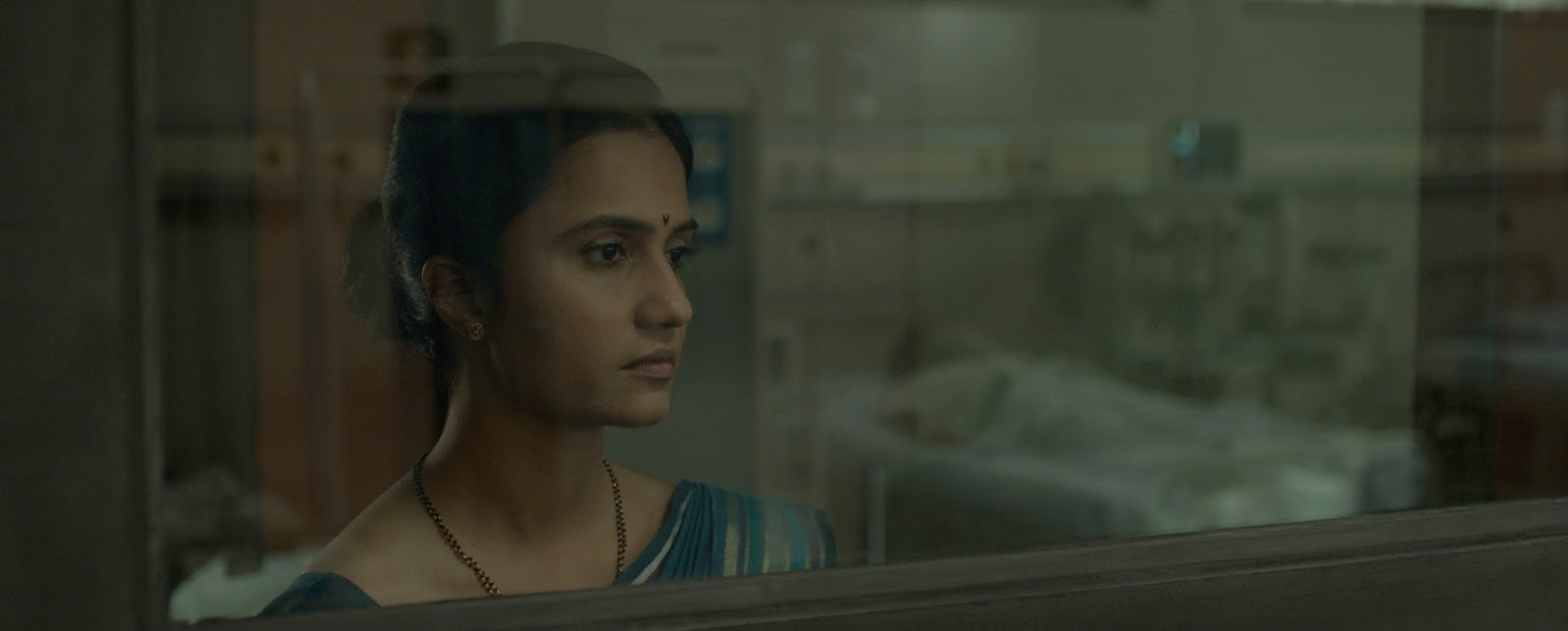

9. Island City – A tonally ambitious film which pitches itself somewhere between sly humour and a pessimistic take on late capitalism, debut director Ruchika Oberoi's triptych of tales about people and machines can feel quite trippy at times. Each segment is anchored in a fine performance. In the first, Vinay Pathak puts in an eerily convincing turn as the obedient corporate slave sent unwittingly on a dangerous path. The second has Amruta Subhash walking a thin line between relief and guilt as a housewife whose oppressive husband's hospitalisation finally frees her to live her own life — and sublimate her desires in a fictional ideal man. The imagined ideal man reappears in the third segment, this time not via the television, but through letters received by Tannishtha Chatterjee's lonely worker. An occasional sliver of abruptness notwithstanding, Oberoi crafts a darkly acerbic comment on our increasingly alienated lives that's well worth watching.


10. Kapoor and Sons: The dysfunctional family is practically an indie staple in the West, but in Indian cinema it is still a rare enough occurrence to make Shakun Batra's film seem remarkable. While nowhere near as devastating as say, Kanu Behl's Titli (2015), Kapoor and Sons manages to take more risks with what it serves up as family foibles than similar recent films like Dil Dhadakne DoShandaar and Khoobsurat. Batra's ability to juggle the buried resentments and the goofy jokes is further buoyed by a truly superb ensemble cast: Rajat Kapoor and Ratna Pathak Shah outstripping the youngsters (Sidharth Malhotra, Fawad Khan and Alia Bhatt), and themselves being a little bit overtaken by the infectiously cheerful Rishi Kapoor as the family's indefatigable raunchy patriarch.


11. Thithi: A great deal of worldwide acclaim has come the way of this remarkable film, and all of it is justified. Set and shot in the very particular landscape of rural Karnataka, Raam Reddy and screenwriter Ere Gowda's delightful debut combines an observational documentary style with a fairly large involved set of characters (who are almost all played by non-actors from the region). Things may appear to be unfolding with all the natural ease of everyday life — but make no mistake, this is a carefully thought-through portrait of family and community, age and youth, freedom and responsibility, death and life. Don't let some imagined notion of rural Karnataka or a reluctance to engage with subtitles put you off it.


Published in Mumbai Mirror, 22 Jan 2017.

6 June 2015

Picture This: Up Close and Real

My BL Ink column this month:
Kaakka Muttai and Kuttram Kadithal, two award-winning films releasing this month, show how fissures in Tamil society are amplified by the media.
A still from M. Manikandan's Kaakka Muttai (The Crow's Egg)
A still from Bramma G.'s Kuttram Kadithal (The Punishment)
Summer is film festival season in Delhi. When the city showers award-winning Indian cinema on you, it’s possible to forget that the skies are raining fire outside. The International Film Festival of India may have jilted us for milder climes, and Osian’s Cinefan left us to our own devices after whetting our appetite for Asian and Arab cinema. But the National Film Festival, organised every summer, screens all the previous year’s national award-winning films at Siri Fort, and the Habitat Centre’s annual film festival, which just completed a decade under the indefatigable U Radhakrishnan, offers the pick of recent regional cinema as well as a retrospective. And the entry is free.
This May, it was Tamil films I found really interesting. One of my favourites was Kaakka Muttai (The Crow’s Egg), written and directed by M Manikandan, and produced by two of Tamil cinema’s current big names: Dhanush, the actor and Vetrimaaran, the critically-acclaimed director of Aadukalam. It is billed as a children’s film and won the national award in that category, as well as earned its two child stars, Ramesh and Vignesh, a thoroughly deserved National Award for Best Child Artiste. But Kaakka Muttai, which released in theatres yesterday, is by no means a film only for children. Yes, it is an uncomplicated story, sensitively told, and not boring for a minute; so children will enjoy it. But the simplicity is deceptive. The premise — that of two little boys from a Chennai slum becoming fascinated by the idea of tasting a pizza — is the basis for a subtle, affecting film about the inequalities we’ve come to take for granted.
Manikandan’s achievement is to show up the grotesqueness of the world we’ve built without ever saying it in words. The pizza parlour that opens across the road from the children’s home, serves pretty ordinary mass-produced pizza. But to the children who’ve never eaten it, the stringy melted cheese surface studded with unfamiliar vegetables looks as exotic as the moon’s. And though they have no idea what a pizza tastes like, the whole world seems to conspire to make it seem they’re missing out on something marvellous. The actor who inaugurates the restaurant and is filmed eating the first slice, the advertisement that makes the cheese look more melty, the astounding price tag of ₹300 — all intend to suggest that pizza must be truly scrumptious. We laugh as the children are taken in by these things. But, in fact, we are also laughing at ourselves, because we are taken in too: the nexus of consumption, advertising and media has us in its grip much more than these children.
The film’s turning point comes when the boys, having finally saved up enough money, arrive proudly to get their pizza. But the manager emerges and gives one of them a resounding slap, knocking him to the ground. Defeated, the boys pick themselves up and go home. But it so happens that another slum child has recorded the whole thing on his phone, setting off a media circus in which politicians and businessmen and local toughs are all vying to mould the narrative to their purpose. The media is inescapable in this arc, but perhaps it comes out looking a little better than in the first half — without the media’s amplification, there would have been no event at all.
A few days later, I watched another Tamil film. Fascinatingly, Kuttram Kadithal (The Punishment), which won the National Award for Best Tamil Film and releases on June 19, also centres on a slum child being slapped. A young female teacher called Merlin, taken aback by a bratty pre-adolescent boy who says he’d kiss her if it were her birthday, slaps him. By some quirk of fate, the boy has a pre-existing medical condition; he falls unconscious, and then into a coma. Sure enough, the media gets involved. However, this time we see its impact not just on the one slapped but also the one who did the slapping.
This is Kaakka Muttai seen from the other side: the middle-class person who slaps the child in Kuttram Kadithal is a frazzled young woman doling out what she thinks is necessary discipline. The film claims to show everyone’s point of view, but Bramma G’s direction tilts us clearly away from the slum child’s uncle, a street thug who walks around with the aura of the power he can marshal.
Kuttram Kadithal is exceptionally well-cast, and the actors bring each and every character to life: from the teacher in favour of sex education to the principal’s wife. The slum child’s mother, who drives an auto, is much more convincing as a working-class person than Kaakka Muttai’s too-urbane mother (Iyshwarya Rajesh). But a loud, distracting background score and a series of soppy songs turn a potentially taut slice-of-life narrative into an indulgent, high-pitched drama.
I preferred the understated neorealism of Kaakka Muttai. But both films offer a startlingly similar view of contemporary Tamil Nadu, as a society so fractured by class (and caste) that it takes only a tiny media spark to start a full-fledged fire.
Published in the Hindu Business Line.

5 May 2015

Speaking in Tongues

My Mirror column for 3 May, 2015: 

Why are we so resistant to subtitled films, instead of pouring our efforts into improving their quality and reach?


Mani Ratnam's film, O Kadhal Kanmani, was released in Delhi with subtitles.
Most people, when asked if they read translated books, are likely to say no. Yet, anyone who grew up reading in English has probably read Hans Christian Andersen (originally Danish) and the Brothers Grimm (originally German). They're quite likely to know Heidi and The Swiss Family Robinson - both Swiss-German classics, one from 1880, the other 1812 - not to mention Alexandre Dumas's The Three Musketeers (serialised 1844), and Antoine de Saint-Exupery's The Little Prince (1943), both from French. And The Adventures of Pinocchio, first published in Italian in 1883. And those who grew up in 1980s India are certain to have encountered books from the USSR (hands up, everyone who knows Dunno and his friends, or Baba Yaga the witch and Vasilisa the Beautiful!). 

And these are just the most obvious examples. Given how much of what we read as children was translated, how have we managed, as adults, to nurse a grudge against translated books? Who came up with the depressing notion that they're somehow "good for us" (read: no fun)? It's not an easy question, and there could be many answers. Maybe children are, despite appearances, more open to the unfamiliar than adults? Maybe children's books have less dense description, or simply less text, so translations are easier? 


Whatever the reason for most people's reluctance, it carries over to movies. Most people greet with utter shock the idea of watching a film in a language they don't speak. Or at least think of it as enormously hard work (repeat: no fun). Last month, two perfectly sensible, widely-read people responded to my recommendation of Court with a dubious "But it's in Marathi, no? Accha, it's subtitled?" Also last month, a Tamil gentleman seated next to us during a screening of O Kadhal Kanmani practically fell out of his chair upon learning that we did not speak Tamil. But that was precisely why I was so glad when Mani Ratnam's latest film, which my Twitter and Facebook couldn't seem to stop discussing, released in Delhi with subtitles: how often I've missed a big Tamil release because Delhi theatres ran an unsubtitled version. 


So yes, I don't watch a film if I have no way of knowing what the characters say. In that sense, I totally disagree with someone like Rakeysh Omprakash Mehra, who once dismissed my question about the impact of English on the making of Hindi cinema by declaring that cinema "transcends language". I think language matters in cinema, just as it does in life. But just as in life, while you might not want to live forever in a place where you don't know the language, surely you can't let that stop you from travelling to new places? I've always been an anti-dubber (I hate the weird sense of cultural overlay: the invariably overdone intonations, the mismatched accents - perhaps this is how some people think of translation). But I'm a subtitled film fan. 


I see subtitles as giving me access to a world I wouldn't otherwise enter - but like a polite, well-spoken guide, providing commentary unobtrusively, not drowning out the voices of the locals. If you know the original language, of course, subtitles will always be unsatisfying: like my Tamil-speaking friend who spent the interval telling me how OKK's subtitles were doing no justice to the romantic banter. And because subtitling is often done on a tight budget, many films eat up their characters' words, like that lazy interpreter who speaks one sentence to the speaker's four. (Even the otherwise exemplarily subtitled Court labelled some perfectly intelligible policewomen talking in Hindi as "Indistinct Chatter".) 


The writer and filmmaker Nasreen Munni Kabir, veteran subtitler of some 600 Hindi films (into English and French), is one of the few who've managed to not just specialise in subtitling but be credited for it. She told me that BBC's Channel Four, with which she works, re-subtitles every Hindi film it screens, because the existing ones are usually so dreadful. Another sort of creative response to bad subtitles is that of Bollywood blogger Beth Watkins, who runs a joyously crowdsourced tumblr called "Paagal Subtitles": recent prizewinning entries include "According to the post-modem report" (Holiday, 2014) and "I am surrounded by duckheads" (Mardaani, 2014). 


Watch enough subtitled films and you will swiftly acquire the art of reading while also taking in the image. The only time I'm distracted by subtitles is when I don't need them, or they're in a language I don't know. But there can be unexpected pay-offs: two episodes' worth of House of Cards with French subtitles taught me more conversational French than a semester at Alliance Francaise. 


Of course, as with anything language-related in India, there's the usual elephant in the room: subtitles are only ever provided in English. I have never seen subtitles in any other Indian language -- whether it be for regional language cinema on Doordarshan (or more recently, on Lok Sabha TV), any film festival screening from Kolkata to Trivandrum, or the rare commercial release with subtitles, like OKK or Court, or the much-discussed subtitling of the "Urdu-heavy" Dedh Ishqiya in cities like Bangalore. Although I've long been pleasantly surprised by the varied audience at the International Film Festival of Kerala (and was appalled at Adoor Gopalakrishnan's desire to screen IFFK registrants for knowledge of English), Kerala's level of English-literateness does not extend to most of India. I cannot but agree with film critic Mihir Pandya's long standing suggestion that the government should fund the subtitling of all National Award-winning films each year, into all major languages. That would be a start. How else, really, will we ever listen to each other, outside the tiny echo-chamber of English?

5 March 2012

A Report on the 14th Bharat Rang Mahotsav

A still from Insha ka Intezaar, a Pakistani adaptation of Waiting for Godot
This year’s festival of theatre at the National School of Drama (NSD), the 14th Bharat Rang Mahotsav, staged 88 plays in total, including 14 productions that commemorated Tagore’s 150th birth anniversary. Within India, while English, Hindi, Bengali and Marathi were as usual better represented than other languages, there were productions to be seen in Tamil, Malayalam, Manipuri, Kannada, Kashmiri, Mizo and Tulu, as well as several non-verbal performances. The international round-up included plays from South Africa (Inkosazana, a lively collaboration between the University of Cape Town and fellowship students from the NSD), Nepal (a solo performance of Sara Kane’s 4.48 Psychosis), Afghanistan (an adaptation of The Little Prince in Dari) China (Peking Opera), the United Kingdom (Roland Schimmelpfennig’s The Golden Dragon) and three productions from Poland (among them Pawel Demirski’s In the Name of Jakub S., Marta Gornicka’s Chorus of Women).

Given the enormous number of plays staged (often clashing with each other), it is impossible to watch more than a small fraction of what is on offer. Of necessity, therefore, what follows is a fairly committed theatregoer’s idiosyncratic report on the plays she did manage to watch (and found interesting).

Among the highlights of this year’s plays was the marvellously energetic Nain Nachaiya, an adaptation of Tirumalnath Aiyulnath’s Sanskrit play Prahasan Kuhuna Bhaikshav directed by Farid Bazmi and performed by Rang Vidushak, Bhopal. Founded in 1984 by the legendary Bansi Kaul, Rang Vidushak describes itself as a “laboratory for clown-theatre”, a space from which to explore the power of laughter. Nain Nachaiya is a classic comedy of mistaken identities and temporary amnesia: the central narrative involves one Bedhang Prasad, who has lost his memory and wanders the kingdom as a faux-yogi called Baba Ghotalu, is eventually restored to his wife, the redoubtable Sawaniya. But as befits a theatre troupe whose work is based on “principles taken from the performing and non-performing art-forms, on indigenous sports, childhood games, rhymes and riddles, the lilt of dialects, the ballads of minstrels, the toughness of akhadebaazi and the flexibility of natgiri”, Nain Nachaiya manages to take an ancient Sanskrit text and make of it something brilliantly entertaining, embedded in the here-and-now by the sharpness of its wit. 

From the self-obsessed king who is himself no less than a vidushak (played brilliantly by Harsh Daand in a style that reminded me of Ray’s Goopy Gyne Bagha Byne) to the aphorism-coining Baba Ghotalu (a superb Uday Shahane, who delivers such wondrous lines as “Khone aur paane mein kitna sookshm antar hai” or “Nrityam Sharanam Gacchaami” with the enjoyment they deserve), the actors anchor the play’s easy laughter in something deeper. Bansi Kaul’s vibrant set and costumes make the production glorious to look at, and the spectacular set pieces are all performed with aplomb: the jester on stilts, king’s men who do acrobatic stunts with lathis, and my favourite scene: a giant humanoid parrot hovering behind pillars to announce at key moments in a conversation, “Jhooth hai!”.

Like Nain Nachaiya in terms of drawing on folk traditions of performance and storytelling was Molagaapodi (Chilli Powder), a Tamil production based on a novel called Karukku (1992) by the magisterial Dalit writer Bama and directed by debutante director Srijith Sundaram. The women, men and transgender actors who make up the group, Kattiyyakkari (Storyteller) see theatre as an artistic tool to speak up against oppressive structures. The tale of the war between the poor labourer Pachiamma and the rich and stingy Gangamma is enacted with a raw, often bawdy physicality that thrives on exaggerated thrusts and fake beatings. 

It is a young group, and the production is nowhere near as well-appointed or perfectly-tuned as Rang Vidushak’s, but they do a brilliant job with minimal sets, like a sheet with a square cut out of it to create an image of Gangamma at her mansion window. There is true tragedy here, poverty and prejudice and violence as it is lived every minute of every day by so many desperate people in this country. But the play, thankfully, steers clear of the maudlin. Instead, it uses mime and chanting and dance to create a vivid portrait of anger leavened with laughter. The actors’ delivery of dialogues needs work, but there is an irrepressible energy, an innate sense of rhythm that makes up for the moments it goes off-key.

A still from the Tamil play Molagaapodi
The reason I could understand as much I did of Molagaapodi, despite knowing no Tamil, is that the festival now provides an English translation of the dialogue of all plays not in Hindi or English. The translated dialogue runs as supertitles on a screen placed either above the stage (as in Kamani Auditorium), or to the side (as in LTG or Shriram Centre). While the supertitles may not catch matters of dialect or accent or register, it is a wonderful thing to be able to have plays in Polish or Kannada or Mizo attract a substantial audience of non-native speakers.

Emboldened by the supertitles, I watched two Marathi plays this year. They couldn’t have been more different. The first was Gajab Kahani, based on Jose Saramago’s posthumously published novel The Elephant’s Journey. The story is set in 1553. Solomon the elephant, a gift to King Dom Joao III from one of his colonies in India, has been languishing in Lisbon for two years, along with his mahout Subhro, when the Portuguese king decides to dispatch Solomon to Vienna as a gift for the Habsburg ruler. Solomon and Subhro proceed through unfamiliar landscapes, with people everywhere projecting their own agendas and desires onto this previously unseen creature. Beautifully designed and directed by Mohit Takalkar, Gajab Kahani unfolds at the thoughtful, deliberate pace required of Saramago’s wise and tender tale. Aasakta Kalamanch’s actors are very good, especially Geetanjali Kulkarni, who manages the remarkable feat of transforming herself into Solomon, body and soul.

Oddly, the other Marathi production I saw also had actors playing animals. Originally written in Hindi several years ago, Sai Paranjpye’s recently revived Jaswandi is a “cat’s eye of humans”. A hugely popular play with 100 runs to its credit, it tells the rather cliched tale of a neglected housewife who finds herself getting involved with a man ten years her junior. There are some good performances: Swati Bowalekar as the maid Rangabai and Rajesh Kamble as the scheming driver Tanpure.But what saves the play from dreary predictability are the ‘cats’: two mangy strays adopted by Sonia. As in Gajab Kahani, the play uses the imagined perspective of animals as a way to comment on the foibles of humans.

Among the other interesting Indian plays was Lal Baksho (The Red Box), a production created through a workshop by Sohag Sen. The play unfolds as a series of episodes, each revolving around the presence of a red box – in a park, by the roadside, in a train, on a TV serial set. Each playlet is beautifully conceived and the actors are uniformly excellent, perfectly evoking the different characters and their variously splintered relationships within the necessarily brief time they have on stage. But the play doesn’t quite come together, because the notion of terror – ostensibly the theme that unites the various episodes – does not emerge clearly enough. It is only in the episode on the train (where the passengers reveal their deep-seated prejudices when confronted with a need for someone to blame) that the play engages with the dangers of the popular discourse on terror. The rest of the time, the presence of the red box merely draws out the tensions already inherent within a group or in a relationship (and in the last two episodes, it doesn’t even really do that). I think the play would have been better served by not being forced under the ‘terror’ rubric, setting it free to explore the breakdown of relationships and even civility, not as the byproduct of terror but as a subject in itself.

A very different – absurdist – take on contemporary politics came from the Tehreek-i-Niswan production Insha ka Intezar, which managed to adapt Beckett’s Waiting for Godot into a play sharply located in the Pakistani milieu, making two of its integral characters women and turning Pozzo of the original play into a mock-military figure called Mansha, a self-important man in a khaki vardi who is thrilled with the sound of his own voice. He speaks constantly, yet never answers a question that is put to him. Like a Pakistani dictator, Mansha refuses to sit down without being invited to. The world of Insha ka Intezar, in which people see a dried-up tree and think, “Chalo, ise toh nijad mil gayi”, in which people have been waiting for so long that no-one can remember what they were waiting for, is a scathing comment on contemporary Pakistan.

Among other productions from abroad, Ramin Gray’s production of Roland Schimmelpfennig’s play The Golden Dragon was an extremely unusual one, where a group of six actors switched mannerisms, gaits, and very occasionally, costumes, to create a theatrical fable about migration, set in and around a Chinese takeaway somewhere in Britain. The production is memorable because it forces us to confront its own fictitiousness at every moment. The actors provide spoken introductions to their own characters, interrupting the smooth flow of the narrative and highlighting the construction of the theatrical in true Brechtian fashion.
A still from Chorus of Women
The Chorus of Women, a modern-day tragic chorus of women from Poland, was another innovative and arresting experience. Formed through an open casting call in 2009, the chorus contains 28 women of all ages and experiences and all variety of acting backgrounds. They speak in unison and yet in a multitude of voices, alternately happy, hungry, sad, angry, sexy, tired, argumentative. They give voice to forgotten songs, they work with advertising slogans to produce witty routines (“Grate, chop, squeeze” rising to a crescendo), they retell fairy stories. Sung, shouted, whispered or chanted, the gift of the women’s chorus is to bring a million fragments together in a reimagining of the collective voice. The least conventionally theatrical performance of all – no costumes, no sets, no characters, certainly no plot – was in many ways a necessary reminder that theatre is not constituted by any of these things. All it needs is for us to see and hear. And be moved to think.

(Written for the Feb 2012 issue of Avantika, a Kolkata-based magazine of the performing arts.)