Showing posts with label Kapoor and Sons. Show all posts

6 February 2017

Best of 2016: Part II

My Mirror column:

The second part of my year-end list of my favourite Indian films from 2016.


Carrying on from last week's column: here are six more films that I particularly enjoyed last year.

In no particular order, they are:


6. Waiting – In Anu Menon's affecting hospital drama, two unlikely people are brought together by the shared frustration of having a loved one beyond their reach. Naseeruddin Shah is reliably good as Shiv, an ageing professor who is the epitome of softspoken rationality — except when he's not. But it is Kalki Koechlin as Tara who surprises. As a sharp young woman suddenly faced with the potential loss of the man she has just married, Tara's yo-yoing between anger, vulnerability and sassiness is at the film's heart. Shot in an upscale Kochi hospital that somehow lends itself to cinematographer Neha Parti Matiyani's clean lines and bright close-ups, Waiting serves up grief and angst without letting go of humour. (I particularly enjoyed the mild comic relief served up by Rajeev Ravindranathan as the too-helpful colleague).


7. Sairat – Among the frequenters of film festivals, there are still many who cannot but view the slow-mo set pieces and addictive songs of Nagraj Manjule's hugely successful film as somehow a betrayal of the hopes he sparked with his 2014 debut Fandry. But if Fandry's placing of its dreamy-eyed child hero in an unremittingly realist cinematic milieu earned it critical acclaim, Sairat's astute, sparkly retelling of the same tale —a cross-caste romance in a rural Maharashtra educational setting — won not just fame for its actors, huge profits and massive audiences, but an unimaginable level of exposure for both Marathi cinema and the film's difficult subject. Manjule gloriously subverts India's grim social reality with our love for filmi romance — and vice versa. A film not to be missed.


8. Chauthi Koot – Gurvinder Singh's arresting adaptation of two short stories by 
Waryam Singh Sandhu offers us a tense, sometimes sinister Punjab that's almost unrecognizable as the one regularly celebrated in Bollywood's song-filled sarson-da-sagas. But though the stories he adapts are set during the 1980s militancy and their central themes — gun-toting men intent on silencing a harmless dog, or train conductors unwilling to take people of a certain community on board — are certainly 'political', Singh's rendering of them is anything but heavy-handed. Trained under the late experimental filmmaker Mani Kaul, Singh is much less invested in plot or narrative resolution than he is in the atmospheric, painstaking exploration of a place and people — and of cinema itself. A film which will reward the attentive viewer.
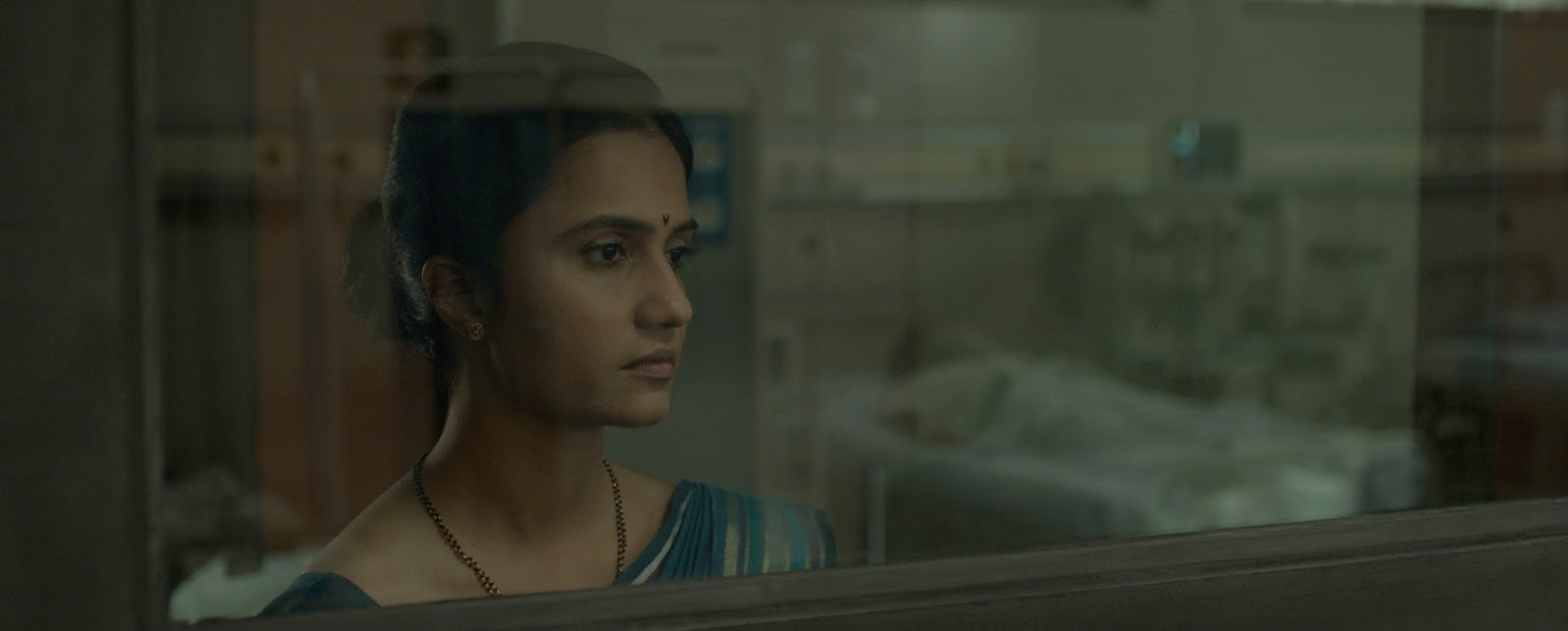

9. Island City – A tonally ambitious film which pitches itself somewhere between sly humour and a pessimistic take on late capitalism, debut director Ruchika Oberoi's triptych of tales about people and machines can feel quite trippy at times. Each segment is anchored in a fine performance. In the first, Vinay Pathak puts in an eerily convincing turn as the obedient corporate slave sent unwittingly on a dangerous path. The second has Amruta Subhash walking a thin line between relief and guilt as a housewife whose oppressive husband's hospitalisation finally frees her to live her own life — and sublimate her desires in a fictional ideal man. The imagined ideal man reappears in the third segment, this time not via the television, but through letters received by Tannishtha Chatterjee's lonely worker. An occasional sliver of abruptness notwithstanding, Oberoi crafts a darkly acerbic comment on our increasingly alienated lives that's well worth watching.


10. Kapoor and Sons: The dysfunctional family is practically an indie staple in the West, but in Indian cinema it is still a rare enough occurrence to make Shakun Batra's film seem remarkable. While nowhere near as devastating as say, Kanu Behl's Titli (2015), Kapoor and Sons manages to take more risks with what it serves up as family foibles than similar recent films like Dil Dhadakne DoShandaar and Khoobsurat. Batra's ability to juggle the buried resentments and the goofy jokes is further buoyed by a truly superb ensemble cast: Rajat Kapoor and Ratna Pathak Shah outstripping the youngsters (Sidharth Malhotra, Fawad Khan and Alia Bhatt), and themselves being a little bit overtaken by the infectiously cheerful Rishi Kapoor as the family's indefatigable raunchy patriarch.


11. Thithi: A great deal of worldwide acclaim has come the way of this remarkable film, and all of it is justified. Set and shot in the very particular landscape of rural Karnataka, Raam Reddy and screenwriter Ere Gowda's delightful debut combines an observational documentary style with a fairly large involved set of characters (who are almost all played by non-actors from the region). Things may appear to be unfolding with all the natural ease of everyday life — but make no mistake, this is a carefully thought-through portrait of family and community, age and youth, freedom and responsibility, death and life. Don't let some imagined notion of rural Karnataka or a reluctance to engage with subtitles put you off it.


Published in Mumbai Mirror, 22 Jan 2017.

1 August 2016

Everything is Illuminated

This week's Mirror column:

Are there more stoners on the Hindi film screen? A short history of filmi drugs, from old-fashioned to uber-cool  

Nawazuddin Siddiqui's Faisal in GoW is one of Anurag Kashyap's many pot-smoking protagonists
Earlier this year, we had much brouhaha about showing drug use on screen, in the context of Abhishek Chaubey's Udta Punjab. Producer Anurag Kashyap came out swinging against the CBFC, and when Udta Punjab finally released (with just one cut), many people, including myself, noted that its tragic portrait of drug-addled youth and a corrupt state couldn't possibly be seen as encouraging drugs.

The week after Udta, Kashyap released another film, this one directed by himself. Raman Raghav 2.0 was publicised as a portrait of a serial killer. Which it is. But it is equally a portrait of a killer cop, played by Masaan actor Vicky Kaushal. And drugs are crucial to Raghav's character: driving his violence, while also providing a crutch that helps him live with its effects. The introductory nightclub sequence, cut to Varun Grover's marvelous lyrical wordplay about qatl-e-aam, has a psychedelic quality that could rival any of Udta's blazingly coked-up scenes. And unlike in Udta, these scenes in RR2.0 aren't swaddled in a thick layer of anti-drugs messaging. But no-one batted an eyelid.

Not that I wanted them to. Kaushal's coke-fuelled murderous cop can't possibly be perceived a dangerous role model. But there is no doubt that this is a different sort of character from the sort that Hindi movies used to allow in the drug-consuming department.

Through the '70s and '80s,
drugs were what the villain's evil empire was built on, along with illicit daru and adulterated dawai. An occasional hero might take on a drug cartel, sometimes for a personal reason: Charas (1976) had Dharmendra falling for Hema Malini's hapless drug mule; Janbaaz (1986) had Feroz Khan avenging the drugged death of his girlfriend (Sridevi); the sparky Jalwa (1987) had Naseeruddin Shah as a cop fighting brown sugar traffickers after his younger brother died injecting it.

Very few Hindi films had protagonists who used drugs. If they did, you knew they had to die for their sins: the
hippie Janice/Jasbir of Hare Rama Hare Krishna (1971), icon of cool though Zeenat Aman and 'Dum Maro Dum' made her, had to commit suicide for shame. That strand of moral comeuppance is still around: think of Madhur Bhandarkar's Fashion (2008), in which Kangana Ranaut's reigning supermodel Shonali loses her job and later her life to her addiction, although heroine Meghna (Priyanka Chopra) is allowed to reform herself. And as late as 2011, we had a film like Dum Maro Dum rejigging the old Hindi film villain, with Aditya Pancholi as the white-suited Lorsa Biscuita, whose benevolent industrialist is a front for secret druglord.
Abhay Deol in Kashyap's Dev D (2009) drowns his sorrows in drink and drugs
More recently, though, marijuana-smokers have begun to appear on the Hindi film screen. Anurag Kashyap might have heralded the change, with dopehead heroes as dissimilar as Abhay Deol's Dev D and Nawazuddin Siddiqui's Faisal (in Gangs of Wasseypur 2). He also possibly gave us Hindi cinema's first female smoker-up: Jesse Randhawa's sari-wearing college lecturer in Gulaal, who lights up while laughing about her “bahut buri aadat”.


The new comfort-level with stoners has opened up space for a film like Go Goa Gone, a silly but funny comedy in which a Goa rave produces an outbreak of zombies. Even in a film as harrowing as Udta, the relaxing effect of drugs is allowed a moment: a syringe planted in Diljit Dosanjh's neck brings down his guard enough to voice his feelings to Kareena Kapoor. But the good-drug vs bad-drug line remains zealously guarded. Kashyap himself seems to recognize more serious drug use as part of a dark, dystopic inner world: in his unreleased first film Paanch (2003), for instance, to which the teenage-gang-gone-wrong in Bejoy Nambiar's Shaitan (2011) paid homage. Even last week's shallow and annoying M Cream, which centres on four rich Delhi brats setting out for the hills in search of a legendary hash—and ostensibly finding themselves, crafts its single moment of drama around Imaad Shah's charsi hero Figaro preventing his silly friend Maggie from shooting up.

The idea of marijuana as harmless and happy-making is making its way into the cool new family film: Shandaar turns not eating meat on Tuesdays into an extended gag involving magic mushrooms, while Kapoor and Sons has a grandfather (Rishi Kapoor) sharing a joint with his warring grandsons.
Jesse Randhawa as Anuja in Gulaal (2009) may have been Hindi cinema's first female pot-smoker
But any conversation about drug consumption in Hindi films should really include the narcotic that Indian civilization has sanctioned since time immemorial: bhang. Unlike cannabis rolled into cigarettes, whose popularity comes via a firang route, bhang is made by grinding cannabis leaves into paste and eaten (see Shrilal Shukla's classic novel Raag Darbaari for a paean to the process). Sometimes mixed into sweets (or milky thandai on Holi), bhang is not just socially licensed but ritually encouraged. And while they may be new to dope-smoking, our films have always treated bhang as a gentle inducement to hilarity. think of Rajesh Khanna and Mumtaz singing Jai Jai Shiv Shankar as they careen down temple steps, or Amitabh Bachchan breaking into the rambunctious Khaike Paan Banaraswala in Don, or my all-time favourite: the bhang pakodas in Angoor which make Aruna Irani amorously giggly and Deven Verma imagine a toad to accompany his rendition of Preetam Aan Milo.


Unfortunately, barring 2012's charming Luv Shuv Tey Chicken Khurana (in which the family in question isn't exactly 'cool', but the script's use of cannabis undeniably is), bhang seems to have exited the Hindi film universe. Maybe the cool people think it's too old-fashoned. Around the 2011 release of Don 2, Shah Rukh Khan was asked if he enjoys bhang on Holi. “Apart from smoking,” said SRK, “aur koi buri aadat abhi tak nahi hai mujh mein.” As someone who is a fan of its entirely legal (and smokeless) joys, I must confess to being devastated. 


17 April 2016

Mining the Mother Lode

My Mirror column today:

Is there a new kind of Hindi film mother? Or have they become so complicated that they transcend the category?

In Vishal Bhardwaj's film Haider, Tabu plays Ghazala, the mother of Haider (Shahid Kapoor) 
We recently watched in shock and awe as Swaroop Sampat -- playing Kareena Kapoor's mother in Ki Aur Ka -- responded to her on-screen daughter Kia's declaration that she's found the man she wants to marry with the teasing remark, “Sex ho gaya na? Important before commitment.” 

Hindi cinema, it would seem, has truly arrived in the age of the New Movie Mother. Even the lower middle class mother these days – think of the winsome Dum Laga Ke Haisha (2015) – can be shown being cheerfully forthright about her progeny's sexual well-being. We have clearly left far behind us those anxious matajis who wept or threatened their way through their offsprings' romantic adventures. Nowadays, like Sampat in Ki Aur Ka, they might just be embarking on one of their own.

So is the filmi mother – that all-too-familiar weepy figure who sacrificed herself for her children (mostly her son, the hero) and thus was seen to almost deserve her quota of emotional blackmail – gone for ever? Not counting Tanvi Azmi's nasty Radhabai in Bajirao Mastani (since despite all appearances to the contrary, it was meant to represent an 18th century family), it seems to me that the last really bitchy, clingy mother we saw on the Hindi film screen might have been Amrita Singh in 2 States – that was two whole years ago, and Singh's Kavita was so loud, shallow and son-obsessed that we were clearly meant to have no sympathy with her. In any case, even in that film, the mantle of new Indian motherhood was redeemed by Revathy, playing the frosty but civilized (read TamBrahm) foil to Amrita Singh's gross North Indian stereotype.

It's not that our films have stopped having martinets and manipulators. But their aims – and their modus operandi – are different from those of a previous generation of on-screen mothers. In just the last year and a bit, we've had Ratna Pathak Shah rejig (her real-life mother) Dina Pathak's unusual role as the disciplinarian matriarch in the Disney remake of Hrishikesh Mukherjee's classic Khubsoorat, while the bizarre Shandaar gave us a particularly evil Mummyji duo, in the shape of Sushma Seth and her horrible daughter Nikki Aneja Walia. 

In less of a caricature mode, Shakun Batra's 2012 directorial debut Ek Main Aur Ekk Tucast Pathak Shah as the mother of the hapless Imran Khan, who needs all the courage he can muster to get out of the straitjacketed life she has planned for him. More recently, Zoya Akhtar's Dil Dhadakne Do depicted a whole generation of the Delhi business elite as heartless creatures for whom their sons and daughters as nothing but pawns in their financial gameplans. These are mothers trying their hardest to keep their children under their thumb – but they seem cold and controlling rather than needy and scheming. And the driving force of their actions is the maintenance of money.

A most interesting repertoire of recent maternal roles has been Dimple Kapadia's. In Luck By Chance (2009), she was fantastic as the over-the-hill star Neena Walia, who now lives to launch her debutante daughter Nikki (Isha Shervani). In Dabangg (2010), she was the classic Hindi film mother, the most important thing in her son's emotional life – but with a twist: she had married a man other than his father. Imtiaz Ali's Cocktail (2012) gave her a more caricatureish role – the Lajpat Nagar mummyji transplanted to her son's cool London milieu, who misreads his love life completely – but Kapadia made her desire for a bahu seem deeply felt. Recently, she added much-needed spark to Homi Adajania's distressingly dull Finding Fanny (2014). As the well-endowed, easily flattered Rosie, who lives almost peaceably with her widowed daughter-in-law (Deepika Padukone), Kapadia created an engaging mother who spends years preserving her dead son's secrets and her own – but manages finally to shed these burdens and get on with her own life.

This new kind of maternal figure is one whose love of her children does not preclude a new, palpable sense of herself. She might be a working, independent, single mother like Sampat, for whom the template is probably Ratna Pathak Shah's feisty Savitri Rathore in the 2008 comic hit Jaane Tu... Ya Ja Jaane Na, trying her best to raise her son as a thoughtful feminist, away from the shadow of his patrilineal family. 

Or she might be a much more tragic, romantic character, like the intensely sexual mothers brought luminously to life by Tabu -- in Haider and then Fitoor. These characters, of course, come to us from Western literature: Haider's Ghazala is a gloriously realised version of Shakespeare's Queen Gertrude -- profoundly attached to her son Haider/Hamlet, but unable (and unwilling?) to let motherhood subsume her sexual identity, while Fitoor's Begum is a heavily sensual version of Dickens' Miss Havisham – a woman who pours her life-long bitterness into a poisonous brew that warps the young people around her. 

Deepti Naval plays a frightening version of this warped maternal figure in the powerfulNH10 (2015) a woman who fully embodies the patriarchal system that has produced her, to the extent that she can sacrifice her children to it.

We may have (thankfully) moved away from the self-sacrificing mother. But the dangerously non-maternal version remains an extreme case. What is more likely to come to populate our screens is a figure like Pathak Shah in Kapoor And Sons: loving but also chafing at her burdens, trying but failing to keep her fears and frustrations in check, letting her deepest emotions create havoc between her own children. This is the flawed mother we know well, and it is nice, finally, to be able to meet her on screen.

Published in Mumbai Mirror.

21 March 2016

Fixing the Family Album

My Mirror column yesterday

Like a memorable family gathering, Kapoor and Sons serves up a mix of merriment and tears.


At the core of Shakun Batra's new film is an abiding affection for family gatherings. You know, the good ones—the ones in which secret crushes are confessed to cousins, vast quantities of food consumed, endless rounds of Antakshari played, and the cockles of every heart so warmed by the general bonhomie that long-held grudges can be—at least momentarily —forgotten. 

But of course, as we all know, family gatherings can often be the opposite of heartwarming. Herding the parivaar together into a concentrated space—and loudly insisting that they get along—can have the distressing effect of rekindling not good feelings, but bad ones. We've all been there, watching with bated breath as buried resentments bubble their way up to the surface and threaten to burst into flames; knowing full well that once someone lights the match, there's going to be no dousing the fire. 

What makes Kapoor and Sons rare, at least in the Hindi movie universe, is that its joyful arrival at the feast of the Great Indian Family does not preclude a full-blooded dissection of whatever is then served up at table. And despite the fact that this film comes to us from the Karan Johar kitchen, what's served up isn't always pretty. 

Sure, by having his stormy unravellings take place against the perfect mists of Coonoor, where his characters get to fight it out in the sort of gracious, tasteful old wooden bungalow you've always dreamt of, Batra makes sure there's no dearth of pretty things to look at. And he gives us three young leads who're delightfully easy on the eye: Fawad Khan as the sober, successful elder brother, Sidharth Malhotra as the younger one still struggling to find his feet, and Alia Bhatt as the poor little rich girl: an orphaned princess with a big old house and no family to put in it. 

But to the credit of both director Batra and cinematographer Jeffery F. Bierman, the film doesn't dwell on the good-looking-ness of anyone or anything. Instead, it looks at Coonoor with the same wryly affectionate eye as it does the family's foibles, and presents it with the same light touch. Batra might display a glimmer of nostalgia for what's unchanged about the hill station—the oldschool photo studio, for instance—but it sits happily alongside an enthusiastic embrace of the new - like a corny Mr. Ooty contest, deathly serious to its muscular participants but faintly ridiculous to everyone else. 

That ability to keep the goofy side of things going, to try and prevent the terribly serious stuff from overwhelming everyone and everything, is one of the film's strengths. And suitably, that sensibility is embodied in the film's likely most memorable character: the raunchy nonagenarian grandfather who refuses to let a mere heart attack and hospitalisation keep him from ceaseless potty humour or sneaky porn-watching sessions on the miraculous new instrument he calls the Papad. Played with an infectious air of mischief under layers of prosthetic make-up by the marvellous Rishi Kapoor, Dadu is a character far less hammy and far more believable than Amitabh Bachchan's similar recent turn as Bhaskor Banerjee in Piku(2015). 

But while punctuating the film with reasons to giggle, Batra and Ayesha Devitre's script doesn't shy away from the grown-up stuff. On the one hand is bada bhai (Fawad Khan, named Rahul Kapoor, which is also what Batra named his hero Imran Khan in his first feature Ekk Main Aur Ekk Tu), having to stand tall while secretly collapsing under the weight of being his mother's "perfect bachcha". On the other, there's the chhota bhai Arjun (Sidharth Malhotra), who feels like he's been running all his life: running from the family's expectations, running to catch up with his elder brother—but always remaining stuck, as he puts it, as "runner-up". 

Perhaps even more powerful than the brothers' own festering misunderstandings are the ones created by their parents. Batra offers a cruelly unforgiving view of parents as those people we rely on to be measured and judicious and 'adult' - and whose deeply-held prejudices can therefore, in their unthinking moments, really prove to be the undoing of families. Rajat Kapoor and Ratna Pathak Shah are very good indeed as the harried older couple caught in an entrenched pattern of marital mistrust, their taunts and counter-taunts bouncing off each other like a volley in some horrible tennis match. But unlike the fairy-tale version of the unhappy older couple in Shandaar and Khubsoorat, or the practically irredeemable relationship between Anil Kapoor and Shefali Shah that was the most powerful thing in Dil Dhadakne Do, these are characters whose frailties make them seem flawed and vulnerable, but not unloveable. And so one feels all the more deeply for them, for the things they are forced to leave unsaid. 

Kapoor and Sons, like Rishi Kapoor's old Dadu, is fixated on the happy family photo - as if capturing his warring clan in the same frame will magically erase the real distances between them. One of the film's most hopeful moments comes out of the collective viewing of old pictures: visual proof that they once were happy. At one pre-climactic moment, Ratna Pathak Shah's character, wounded by a recent revelation about her husband, stalks off in disgust before the camera can memorialise the assembled company. A 'Happy Family' image now would be fake, she says, and she has a point. But the relationship between life and our memorialising of it may be closer to what Dadu believes: make the picture, and you make the memory. Sometimes what it takes to be happier is to make-believe that we can.


Published in Mirror.