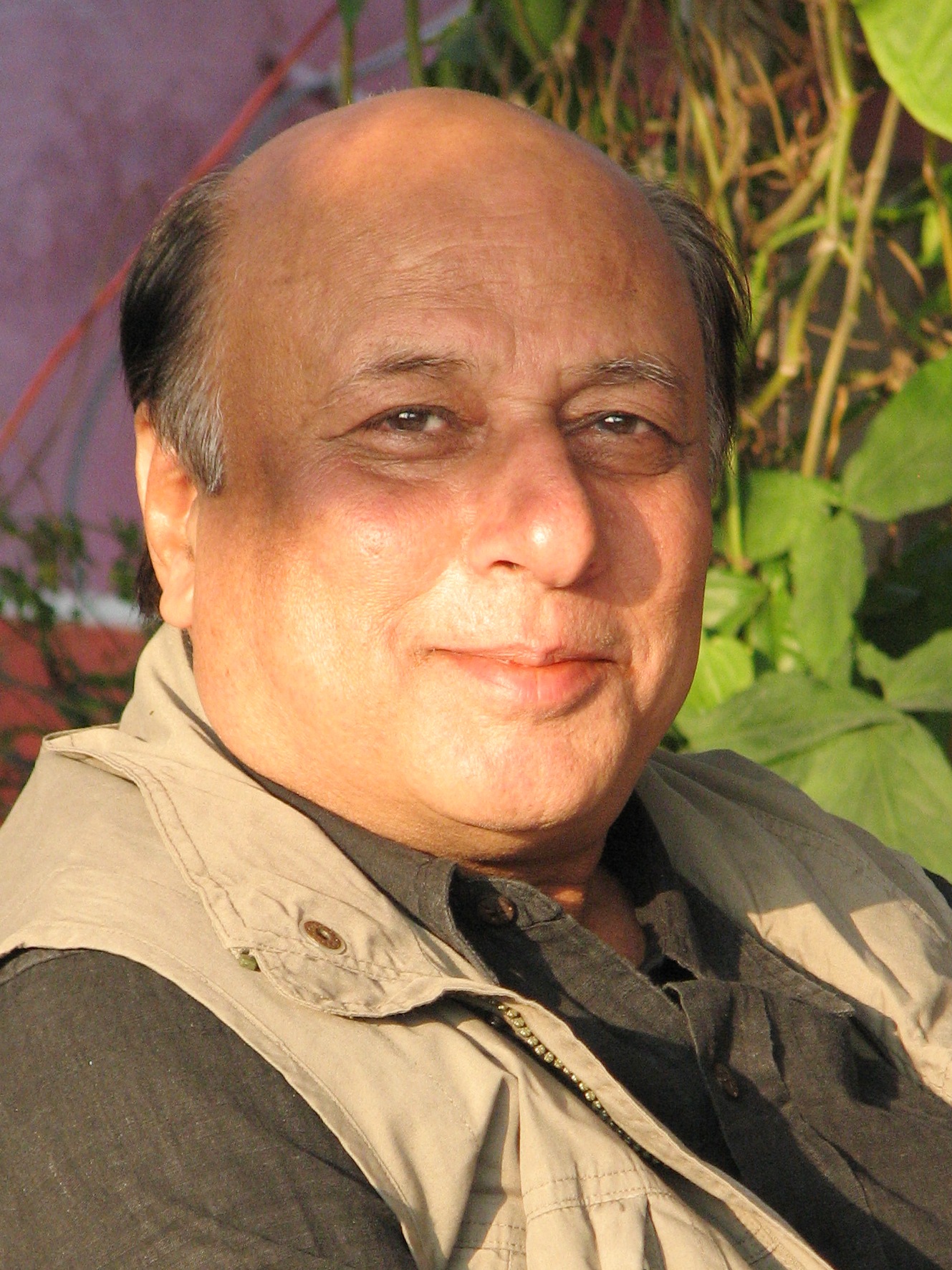
The explosive Malayali writer KR Meera talks on the need to preserve regional languages in literature and the value of translation.

KR Meera is among Kerala's most celebrated contemporary writers. Born in 1970, she worked as a journalist for many years, writing short stories on the side. In 2006, she gave up her job to write fiction full-time – which, as her prolific output reveals, she really does.
The provocative and disturbing tale of a young Bengali woman appointed state executioner, Aaraachaar was originally serialised in Madhyamam Weekly and published as a book by DC Books in 2012. It has now sold nearly 50,000 copies in Malayalam. In 2013, it was published in J. Devika's vivid English translation as Hangwoman, and placed KR Meera firmly in the national literary spotlight. Meera speaks about her place in the Malayalam literary sphere, the strange but powerful impact of English translation, and why we must preserve languages to preserve our Indianness.
You've been publishing fiction since 2002, and been a full-time writer since 2006. Your output – five collections of short stories, two novellas, five novels and two children's books – is extraordinary. When would you say your books started to get attention among Malayali readers?
Actually, there is one more book, Trisha, a collection of essays. Also, the number of novels will soon be six, as the one which is currently being serialised will be published in book form.
When did my books start getting attention among Malayali readers? Well, that is a difficult question. As we Malayali writers start by publishing stories and serialising novels in periodicals, by the time the books are in the market, we would already be noticed by the discerning readers. For example, I had published only three short stories in different periodicals when DC Books contacted me and offered to bring out my first short story collection, one among 10 books by debut writers. There were 1,000 copies in the first impression. The next book got released along with the second impression of the first book.
In those years, even if the copies were sold out, we (the then-young writers) had to wait for months before the reprints came. By 2005, I think I had earned a strong base of sincere readers who patiently waited for my works. They were not many in the beginning, but each year the number kept growing. I was writing with both hands those days – columns, articles, novels, serial scripts and even film scripts (which unfortunately didn't develop into films due to several reasons).
I realised that readers do pay attention to what I write, when people started coming up to me in public places and started quoting lines from my stories. By the time Aaraachaar ( the Malayalam original of Hangwoman) came out, I was getting calls from readers almost daily.
How much of that attention, and the actual copies of your books sold, do you think was a result of reviews, media coverage, awards?
When the first book came out, I was not sure whether readers took my stories seriously. But by the time my short story Moha Manja (translated as Yellow is the Colour Of Longing) and Ekanthathayude Noor Varshangal (translated as Noor: Light Years of Solitude) appeared in the periodicals, there were signs of acceptance. Though the very first book was selected for about four awards, it didn't have overwhelming sales at that time. In those days, critics in Malayalam were yet to take our generation seriously. So there were not many reviews. But we were sought after by periodicals for stories for their special issues. A photo along with the story was all the media coverage we were assured.
In my case, it was with Aaraachaar that the readers’ love was converted into sales. When DC books proposed printing 5,000 copies with five different covers for the first edition, I was worried, visualising bundles of unsold copies. But the first edition got sold out in four months. From then onwards, there are reprints every two months, sometimes every month. When it was selected for the coveted Vayalar Award and the Odakuzhal Award followed by the Kerala Sahitya Akademi award, the sales increased further. And there was a steep increase in demand for my other books, too.
Generally speaking, my observation is that awards and media coverage do help in directing the spotlight on a book for a while. But if the book fails to touch the heart of the reader, it would just fade away. On the other hand, if the book is good, the sales figures will grow slowly but steadily.
An example is my novel Nethronmeelanam (literally the eye-opening ritual of the idol), written in 2006. While writing it, I was sure that the book would be well-received as the craft and the theme were not expected from a young woman writer. But somehow, it went unnoticed, in the sense that there were no awards or reviews. There was not much publicity either. But Thrissur Current Books, the publishers, were ready to reprint it, as there was demand from those readers who went in search of my other books after chancing upon one or two stories in periodicals.
Slowly, I started getting feedback from very serious readers that the book is brilliant. And after Aaraachaar, Nethronmeelanam also got renewed attention and now more and more readers tell me that the book is equally haunting, though the theme, craft and narration have a sea of a difference.
When were you first translated into English?
My first story to be translated was Ormayude Njaramapu, as The Vein of Memory , by Dr Jayasree Ramakrishnan Nair. It was published in the journal Samyukta.
It was in 2004 that Dr J. Devika, whom I knew only through her articles, called me and asked whether she could translate my story Moha Manja. I consented, though I didn't expect the translation to be successful, as the rhythm of my language is difficult to capture in English. But when she mailed me the translation, my ego crashed. That was the closest translation I could ever imagine.
Later Devika translated 15 pieces of my short fiction and Penguin brought out the collection in 2011 as Yellow is the Colour of Longing, and then Aaraachaar as Hangwoman. She has also translated Aa Maratheyum Marannu Marannu Njan (as And Slowly Forgetting That Tree)and Karineela (working title: Poison Blue) for Oxford University Press. Another short novel, Gospel of Judas, has been translated by Rajesh Rajamohan.
Could you give me a rough sense of the number of copies sold in Malayalam, versus the number of copies sold in English, of Moha Manja/Yellow is the Colour of Longing and of Aaraachaar/Hangwoman?
Moha Manja as a single book is nearing 10,000 copies in sales. The book was out of print for a long time, after the publisher (Thrissur Current Books) published the story as part of a collection of stories from three books. Aaraachaar is nearing 50,000 copies and the book remains the top Malayalam seller for the past two years, ever since its release.
Yellow is the Colour of Longing was long-listed for Frank O'Connor prize and short-listed for the Crossword award, but it was not converted into sales. There were 2,000 copies in the first edition. There is no reprint yet. Hangwoman was brought out in hardback, with 2,000 copies as the first imprint. R. Sivapriya, until recently Commissioning Editor at Penguin, had informed me that they are shortly bringing out a paperback reprint.
How was the media reception to the English editions of your books different from the media reception you experienced from the Malayalam press?
Of course, the space allotted in the English media for literature is much greater than that in the Malayalam press. But in the case of Aaraachaar, I have no reason to complain as there were many in-depth studies and interviews in almost all media. Thankfully, the English press has extended very good coverage to Hangwoman, with rave reviews and prominently displayed interviews.
You've received the Kerala Sahitya Akademi award, and a host of other awards, for Malayalam literature. Do these awards create the same kind of buzz in Malayalam publishing that literary awards seem to create in the English-speaking world in India? Also, are there literary festivals for Malayalam writers?
Malayalam is a small language in terms of the number of speakers compared to the English-speaking world. So how can we expect the same kind of buzz, if we define 'buzz' in terms of numbers, or the amount of money involved? But considering the highest literacy rate and the vibrant publishing scenario, I feel that there are many reasons for the Malayalam writers to feel proud of their language and people.
Still, it is very difficult to make writing a means of living in Malayalam. I have heard that there are attempts to conduct Malayalam literature festivals, but I am yet to participate in one.
As someone already well-established and acclaimed in your own language, was being translated into English still necessary for you to be “discovered” at the national level? What has been your experience?
Seven years ago, when I attended a women writers’ colloquium in Delhi, I felt like a government school kid attending an international school day. Nobody knew me or noticed me. Last year, Penguin sent me to the Jaipur Litfest. That was a marvellous occasion where I could see all the who’s who of India around me. There also, nobody other than Malayalis recognised me.
That was in January 2014. Hangwoman got released in July. In October, I participated in the Goa Writers and Readers Festival. I didn't expect anybody to notice me there, too. But soon after the inaugural session, a young man came to me and asked whether I am not KR Meera. I was surprised. Then he said he came to that festival only to meet me! He was Vivek Tejuja, critic and writer. My day was made.
And then at the Chandigarh Litfest in November, more surprises were in store for me. Writers like Anjum Hasan and Suresh Menon recognised me. While I was a journalist, I had read Bitter Chocolate and become an ardent admirer of Pinki Virani’s. At Chandigarh, she came to me and told that she attended the festival only to see me! This was repeated in the Odisha Fest also. Hangwoman was released by Arundhati Roy.
When she talked highly of the book, I thought I was dreaming. Then one day, Anita Nair surprised me by reviewing the book in Outlook. In Jaipur, hers was one session I attended religiously. But for Devika’s translation, I don't think this would have happened.
On being discovered at the national level, I feel proud of reminding the world that top class literature is produced in regional languages, too. It is very exciting as a writer to be opened to another world, where there are a new group of readers with a new set of evaluation tools subjecting your work to the tests of literary significance and universality.
Any other thoughts on being translated into English – for instance, the fact that Bengalis were suddenly able to read Hangwoman, which is set in Calcutta?
While writing Aaraachaar, that it would be read by non-Malayalis was not in my wildest dreams. So when it was translated, I was waiting for the response from Shatarupa Ghoshal, the editor of the book at Penguin who is a Bengali. Till she okayed it I remained nervous. Then after the book came out, one of the first calls I received was from Kadambari, a famous Odissi dancer and actress, originally from Kolkata but settled in Mumbai. When she talked fervently about the book and about Chetana, I felt like crying with joy.
Recently, when I went to Muscat to receive an award, a friend told me that someone from Bengal is eager to meet me. She came to the friend's place to meet me. I was really surprised to meet her. She was Toolika Chaudhari, daughter of the renowned Salil Chaudhari, who has composed many hit songs in Malayalam also. I can never thank Devika enough.
Now I wait for the day when it will be translated into Bengali.
What would be your response to Bhalchandra Nemade's recent comments on Indian writing in English?
When my daughter was a kid, I used to force her to read Malayalam stories and learn Malayalam poems by heart, which she would resist vehemently. But when she came home after her 11th grade exams, she surprised me. She said that she wanted to learn more Malayalam poems, as she has realised that when she reads Malayalam, she feels stronger in English too. I was so glad that she arrived at the discovery so early, all by herself.
It is so sad that writers like Salman Rushdie do not appreciate the wisdom of Nemadeji (I am not sure whether he was politically motivated; I am not for BJP at all), nor realise how important and integral regional languages are to Indian English writing. What would be the role of Indian English writers in the ocean of English literature if we subtract the diversity of Indian life, nature, flora and fauna?
But for the actuality of Indianness, do Indian English writers have any identity or relevance in the global scene? And if the Indianness is to be preserved, how can we do that without strengthening the regional languages?
Language is a tool for communication, but it is also a record of various forms of life and information regarding the complex relationships evolved between humans and humans and between humans and nature over centuries. If an Asian or African regional language dies, along with it die a number of words which would denote the indigenous culture, environment and time-tested knowhow of the people who spoke that language, too. Global English has never been successful in bringing out the myriad nuances of these languages.
It is meaningless to compare writers with one another, because each one has his or her own importance and role in the literary ecosystem. I am sure that Nemade’s work will be read and appreciated even after a hundred years, but I am not sure that many of our celebrated Indian English books will survive their authors. I think that Indian English writers (who are rich, powerful and influential compared to the regional language writers) should be sensible enough to come forward to revive and revere regional languages, for their own sake.
The provocative and disturbing tale of a young Bengali woman appointed state executioner, Aaraachaar was originally serialised in Madhyamam Weekly and published as a book by DC Books in 2012. It has now sold nearly 50,000 copies in Malayalam. In 2013, it was published in J. Devika's vivid English translation as Hangwoman, and placed KR Meera firmly in the national literary spotlight. Meera speaks about her place in the Malayalam literary sphere, the strange but powerful impact of English translation, and why we must preserve languages to preserve our Indianness.
You've been publishing fiction since 2002, and been a full-time writer since 2006. Your output – five collections of short stories, two novellas, five novels and two children's books – is extraordinary. When would you say your books started to get attention among Malayali readers?
Actually, there is one more book, Trisha, a collection of essays. Also, the number of novels will soon be six, as the one which is currently being serialised will be published in book form.
When did my books start getting attention among Malayali readers? Well, that is a difficult question. As we Malayali writers start by publishing stories and serialising novels in periodicals, by the time the books are in the market, we would already be noticed by the discerning readers. For example, I had published only three short stories in different periodicals when DC Books contacted me and offered to bring out my first short story collection, one among 10 books by debut writers. There were 1,000 copies in the first impression. The next book got released along with the second impression of the first book.
In those years, even if the copies were sold out, we (the then-young writers) had to wait for months before the reprints came. By 2005, I think I had earned a strong base of sincere readers who patiently waited for my works. They were not many in the beginning, but each year the number kept growing. I was writing with both hands those days – columns, articles, novels, serial scripts and even film scripts (which unfortunately didn't develop into films due to several reasons).
I realised that readers do pay attention to what I write, when people started coming up to me in public places and started quoting lines from my stories. By the time Aaraachaar ( the Malayalam original of Hangwoman) came out, I was getting calls from readers almost daily.
How much of that attention, and the actual copies of your books sold, do you think was a result of reviews, media coverage, awards?
When the first book came out, I was not sure whether readers took my stories seriously. But by the time my short story Moha Manja (translated as Yellow is the Colour Of Longing) and Ekanthathayude Noor Varshangal (translated as Noor: Light Years of Solitude) appeared in the periodicals, there were signs of acceptance. Though the very first book was selected for about four awards, it didn't have overwhelming sales at that time. In those days, critics in Malayalam were yet to take our generation seriously. So there were not many reviews. But we were sought after by periodicals for stories for their special issues. A photo along with the story was all the media coverage we were assured.
In my case, it was with Aaraachaar that the readers’ love was converted into sales. When DC books proposed printing 5,000 copies with five different covers for the first edition, I was worried, visualising bundles of unsold copies. But the first edition got sold out in four months. From then onwards, there are reprints every two months, sometimes every month. When it was selected for the coveted Vayalar Award and the Odakuzhal Award followed by the Kerala Sahitya Akademi award, the sales increased further. And there was a steep increase in demand for my other books, too.
Generally speaking, my observation is that awards and media coverage do help in directing the spotlight on a book for a while. But if the book fails to touch the heart of the reader, it would just fade away. On the other hand, if the book is good, the sales figures will grow slowly but steadily.
An example is my novel Nethronmeelanam (literally the eye-opening ritual of the idol), written in 2006. While writing it, I was sure that the book would be well-received as the craft and the theme were not expected from a young woman writer. But somehow, it went unnoticed, in the sense that there were no awards or reviews. There was not much publicity either. But Thrissur Current Books, the publishers, were ready to reprint it, as there was demand from those readers who went in search of my other books after chancing upon one or two stories in periodicals.
Slowly, I started getting feedback from very serious readers that the book is brilliant. And after Aaraachaar, Nethronmeelanam also got renewed attention and now more and more readers tell me that the book is equally haunting, though the theme, craft and narration have a sea of a difference.
When were you first translated into English?
My first story to be translated was Ormayude Njaramapu, as The Vein of Memory , by Dr Jayasree Ramakrishnan Nair. It was published in the journal Samyukta.
It was in 2004 that Dr J. Devika, whom I knew only through her articles, called me and asked whether she could translate my story Moha Manja. I consented, though I didn't expect the translation to be successful, as the rhythm of my language is difficult to capture in English. But when she mailed me the translation, my ego crashed. That was the closest translation I could ever imagine.
Later Devika translated 15 pieces of my short fiction and Penguin brought out the collection in 2011 as Yellow is the Colour of Longing, and then Aaraachaar as Hangwoman. She has also translated Aa Maratheyum Marannu Marannu Njan (as And Slowly Forgetting That Tree)and Karineela (working title: Poison Blue) for Oxford University Press. Another short novel, Gospel of Judas, has been translated by Rajesh Rajamohan.
Could you give me a rough sense of the number of copies sold in Malayalam, versus the number of copies sold in English, of Moha Manja/Yellow is the Colour of Longing and of Aaraachaar/Hangwoman?
Moha Manja as a single book is nearing 10,000 copies in sales. The book was out of print for a long time, after the publisher (Thrissur Current Books) published the story as part of a collection of stories from three books. Aaraachaar is nearing 50,000 copies and the book remains the top Malayalam seller for the past two years, ever since its release.
Yellow is the Colour of Longing was long-listed for Frank O'Connor prize and short-listed for the Crossword award, but it was not converted into sales. There were 2,000 copies in the first edition. There is no reprint yet. Hangwoman was brought out in hardback, with 2,000 copies as the first imprint. R. Sivapriya, until recently Commissioning Editor at Penguin, had informed me that they are shortly bringing out a paperback reprint.
How was the media reception to the English editions of your books different from the media reception you experienced from the Malayalam press?
Of course, the space allotted in the English media for literature is much greater than that in the Malayalam press. But in the case of Aaraachaar, I have no reason to complain as there were many in-depth studies and interviews in almost all media. Thankfully, the English press has extended very good coverage to Hangwoman, with rave reviews and prominently displayed interviews.
You've received the Kerala Sahitya Akademi award, and a host of other awards, for Malayalam literature. Do these awards create the same kind of buzz in Malayalam publishing that literary awards seem to create in the English-speaking world in India? Also, are there literary festivals for Malayalam writers?
Malayalam is a small language in terms of the number of speakers compared to the English-speaking world. So how can we expect the same kind of buzz, if we define 'buzz' in terms of numbers, or the amount of money involved? But considering the highest literacy rate and the vibrant publishing scenario, I feel that there are many reasons for the Malayalam writers to feel proud of their language and people.
Still, it is very difficult to make writing a means of living in Malayalam. I have heard that there are attempts to conduct Malayalam literature festivals, but I am yet to participate in one.
As someone already well-established and acclaimed in your own language, was being translated into English still necessary for you to be “discovered” at the national level? What has been your experience?
Seven years ago, when I attended a women writers’ colloquium in Delhi, I felt like a government school kid attending an international school day. Nobody knew me or noticed me. Last year, Penguin sent me to the Jaipur Litfest. That was a marvellous occasion where I could see all the who’s who of India around me. There also, nobody other than Malayalis recognised me.
That was in January 2014. Hangwoman got released in July. In October, I participated in the Goa Writers and Readers Festival. I didn't expect anybody to notice me there, too. But soon after the inaugural session, a young man came to me and asked whether I am not KR Meera. I was surprised. Then he said he came to that festival only to meet me! He was Vivek Tejuja, critic and writer. My day was made.
And then at the Chandigarh Litfest in November, more surprises were in store for me. Writers like Anjum Hasan and Suresh Menon recognised me. While I was a journalist, I had read Bitter Chocolate and become an ardent admirer of Pinki Virani’s. At Chandigarh, she came to me and told that she attended the festival only to see me! This was repeated in the Odisha Fest also. Hangwoman was released by Arundhati Roy.
When she talked highly of the book, I thought I was dreaming. Then one day, Anita Nair surprised me by reviewing the book in Outlook. In Jaipur, hers was one session I attended religiously. But for Devika’s translation, I don't think this would have happened.
On being discovered at the national level, I feel proud of reminding the world that top class literature is produced in regional languages, too. It is very exciting as a writer to be opened to another world, where there are a new group of readers with a new set of evaluation tools subjecting your work to the tests of literary significance and universality.
Any other thoughts on being translated into English – for instance, the fact that Bengalis were suddenly able to read Hangwoman, which is set in Calcutta?
While writing Aaraachaar, that it would be read by non-Malayalis was not in my wildest dreams. So when it was translated, I was waiting for the response from Shatarupa Ghoshal, the editor of the book at Penguin who is a Bengali. Till she okayed it I remained nervous. Then after the book came out, one of the first calls I received was from Kadambari, a famous Odissi dancer and actress, originally from Kolkata but settled in Mumbai. When she talked fervently about the book and about Chetana, I felt like crying with joy.
Recently, when I went to Muscat to receive an award, a friend told me that someone from Bengal is eager to meet me. She came to the friend's place to meet me. I was really surprised to meet her. She was Toolika Chaudhari, daughter of the renowned Salil Chaudhari, who has composed many hit songs in Malayalam also. I can never thank Devika enough.
Now I wait for the day when it will be translated into Bengali.
What would be your response to Bhalchandra Nemade's recent comments on Indian writing in English?
When my daughter was a kid, I used to force her to read Malayalam stories and learn Malayalam poems by heart, which she would resist vehemently. But when she came home after her 11th grade exams, she surprised me. She said that she wanted to learn more Malayalam poems, as she has realised that when she reads Malayalam, she feels stronger in English too. I was so glad that she arrived at the discovery so early, all by herself.
It is so sad that writers like Salman Rushdie do not appreciate the wisdom of Nemadeji (I am not sure whether he was politically motivated; I am not for BJP at all), nor realise how important and integral regional languages are to Indian English writing. What would be the role of Indian English writers in the ocean of English literature if we subtract the diversity of Indian life, nature, flora and fauna?
But for the actuality of Indianness, do Indian English writers have any identity or relevance in the global scene? And if the Indianness is to be preserved, how can we do that without strengthening the regional languages?
Language is a tool for communication, but it is also a record of various forms of life and information regarding the complex relationships evolved between humans and humans and between humans and nature over centuries. If an Asian or African regional language dies, along with it die a number of words which would denote the indigenous culture, environment and time-tested knowhow of the people who spoke that language, too. Global English has never been successful in bringing out the myriad nuances of these languages.
It is meaningless to compare writers with one another, because each one has his or her own importance and role in the literary ecosystem. I am sure that Nemade’s work will be read and appreciated even after a hundred years, but I am not sure that many of our celebrated Indian English books will survive their authors. I think that Indian English writers (who are rich, powerful and influential compared to the regional language writers) should be sensible enough to come forward to revive and revere regional languages, for their own sake.
Published in Scroll, 4 July 2015.