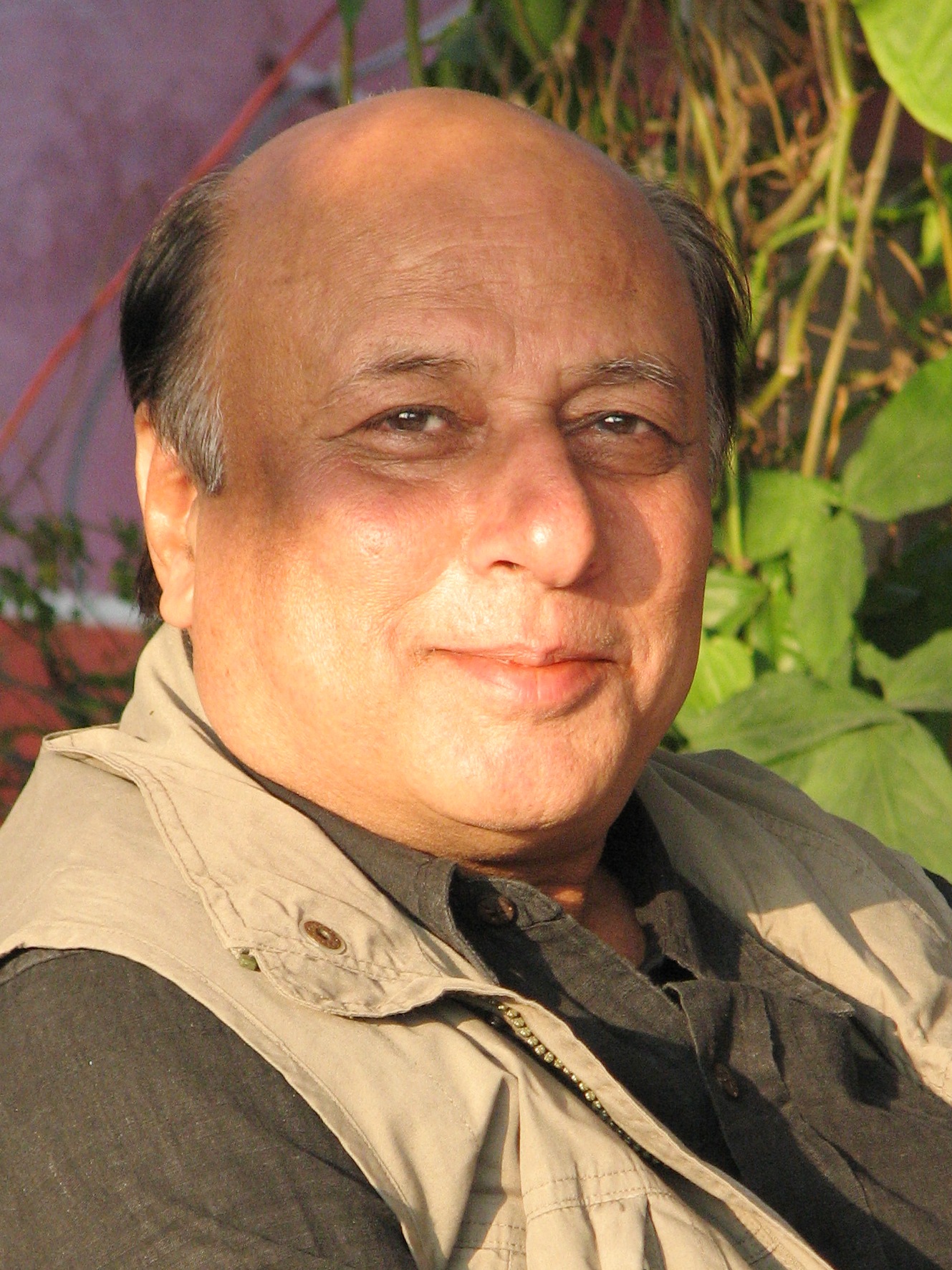
Showing posts with label Geetanjali Shree. Show all posts

31 May 2015

English has given me some new access but it is Hindi which has got me fame: Geetanjali Shree

An interview published in Scroll.

The Hindi novelist and short-story writer speaks on why being translated is wonderful, but it is not nearly enough.


Geetanjali Shree is the author of four critically acclaimed novels – MaiTirohit, Hamara Shahar Us Baras, and Khali Jagah – and six collections of short stories, in Hindi. She has also published an intellectual biography of Premchand, in English. Often described as a lyrical and uninhibited writer, she has received the Krishna Baldev Vaid Sammaan, Hindi Akademi Sahityakar Sammaan, Dwijdev Sammaan and Indu Sharma Katha Sammaan for her contribution to Hindi letters.

Shree’s fiction has travelled far and wide in translation, with versions published in English as well as German, French, Serbian, Czech, Japanese, Bangla, Urdu, Malayalam, Oriya and Gujarati. The Empty Space, Nivedita Menon's English translation of Khali Jagah, which unfolds against the backdrop of a bomb explosion, was longlisted for the 2013 DSC Prize for South Asian Literature. In 2002, Nita Kumar's translation of Mai won the Sahitya Akademi award for English translation, and was also shortlisted for the Hutchinson-Crossword Translation Award. Hamara Shahar Us Baras (1998), which traces the slow communalisation of an imaginary city, was staged as a play by the National School of Drama Repertory in 2011-2012. Most recently, Tirohit (2001) has been translated into English by Rahul Soni as The Roof Beneath Their Feet (2013).

The writer speaks on her beginnings as a Hindi writer, the experience of being translated into English and other languages, and how the Hindi literary milieu differs from the Indian English one. Excerpts from an interview:

You've been publishing fiction since the 1980s. When and how did your writing start to be appreciated by Hindi readers?I was lucky to have a good start. The leading Hindi publishing house, Rajkamal, then in the hands of one of the most dynamic entrepreneurial figures, Sheela Sandhu, immediately took to my writing and agreed to publish me. That was straightaway an acknowledgement of the quality of my work. Then the senior writer Rajendra Yadav did something similar – he brought out three of my stories in succession in his very popular journal Hans, as a special introduction to a new writer. These two events were a great launch for me and I got noticed quickly.

How much of that attention, and the actual copies of your books sold, do you think, was a result of book reviews, media coverage and/or literary awards in Hindi?Book reviews, media coverage, awards have an uneven importance. Who has spoken up for you is more determining. And in the final analysis, a wider readership, with or without the above, plays a role.

When were you first translated into English?
My first novel Mai was published in English by the publishing house then called Kali for Women. Nita Kumar, a well-known scholar, cared for the book for its “feminist” potential, apart from other merits, and took the initiative to translate it. Urvashi Butalia approached me just at that time for the possibility to publish my work. The two fitted together quite providentially.

Has the Indian readership for English translations from Indian languages grown larger and more interested in recent years? If so, is it because the quality of translations has improved, or for some other reasons?
I think it comes in a package. Publishing itself has increased in all languages, and book launches, promotions, book-talk have grown phenomenally. So too translations. The attempt is to capture the market as widely as possible. But, no, it hasn't led necessarily to better translations. Sometimes it is only quicker translations! A readership is forming for translations, but it is still haphazard and abysmal compared to English originals.

How was the media reception to the English editions of your books different from that in the Hindi Press? How would you compare the two experiences in terms of the texture and insight of conversations and coverage?
The reception is on different platforms. English took my books to new spaces, including English centres located in other regions and languages. English enjoys a prominence in today’s world which comes across as greater visibility and coverage. I was a little seduced by that initially.

But – and I want to underscore this – while English gave me some access to an English market and readership, mostly within the country, the lag between the interest in English in translation and English in original showed up clearly as I went along. And my Hindi books have sold better than English translations, for sure!

This has nothing to do with the worth of a book, but more to do with the atmosphere available for its reception. There are attempts to create this, but a large part of the hegemonic and powerful world continues to be Anglophile!

Each language has its own world and centre, some better than others, Hindi being one of them. And while everyone has begun to care for being translated in the more “powerful” languages far and near, it is from within their own world teeming with activity and exchange. Not, I wish to make plain, a case of sitting in neglected corners and looking hankeringly at the world (English!) out there!

How would you evaluate the Hindi literary sphere, in contrast to the Indian English one?
English has come in later – new confidence, new ways of the market, and has moved into it aggressively and efficiently. The Hindi literary universe is older. But there are Hindi events and there are enough Hindi speakers too, even if they sometimes lack some of the glamour and glitter of the English world.

Would you agree that it was the translation of Mai into English that brought you nation-wide fame? What is your take on that experience?
English has given me some new access but so far it is Hindi which has got me fame. A notable contrast was the interest other languages across the world, such as German, French, Russian, Korean, Italian, Polish etc. have shown in my work. And mind you – again I wish to underscore this – they have reached me through Hindi, not English! I have been taught in some of these languages and translated too, in and from the Hindi, not English. My writing continues to be routed through Hindi.

Were there miscommunications, misreadings when people read your work but didn't understand the context in which it was written?
Different contexts? Yes and no. We belong to the same opened-up world and many of us are evolving our languages, whether Hindi or another, in this new context. It is not like one language belongs to an archaic world and another to a current one!

Would you say that being translated into English led your work to be seen as part of a national conversation in a way that it wasn't before? Also, has the English version of your book brought you interesting and different reactions than the responses you have received from the Hindi-reading world?
Becoming accessible in any language brings another world to one, but why talk as though that happens only through English?! We are a polyphonic country and world and conversations keep flowing in a very creative “cacophony”!

Is being translated into English different in impact from being translated into any other language? What have been the pros and cons of being translated into English for you?
English can give one entry into many more markets because of its spread in the world. But these things don't happen automatically. It is wrong to presume that a good book comes and is straightaway seen. There were good English writers before Rushdie and those who followed, but they never got the stage these later writers got.
Some combination of factors which “prepares” the market for the new “cuisine”, as it were, is the condition for its success. It is great to be available in other languages, including English. But the showcasing has to be worked on for its real success. That has to be done by publishers, readers/reviewers, writers, sellers, et al.

As someone who writes in Hindi, and has also been translated into English, what is your response to the recent comments of Bhalchandra Nemade on Indian writing in English, and the use of English in general in India?
It is as stupid and “illiterate” as the one made by Salman Rushdie years ago! (Interviewer: “The true Indian literature of the first postcolonial half century has been made in the language the British left behind,” Rushdie wrote infamously in 1997.) What also tells a tale, though, is the furore Nemade's rubbish created and not Rushdie’s. Think of the “prejudice-rubbish” too that many of us thereby reveal.

9 May 2015

Why English Matters

How translation from Indian languages to English is giving regional literature a dedicated new readership, turning linguistic rivals into potential allies

“Tamil was a major factor for my fame within Tamil Nadu; but it was only after the translation in English that Salma rose to different heights,” says the Tamil poet and novelist Salma, whose Irandam Jamangalin Kathai, about the world of women in a Tamil Muslim community, was published in Lakshmi Holmström’s translation as The Hour Past Midnight. The novel was longlisted for the DSC Prize in 2011, and sold over 3,000 copies (roughly 5,000 in Tamil, says her publisher, Kannan Sundaram of Kalachuvadu). Shamsur Rahman Faruqi may have long been the brightest star of the Urdu literary world, but to the Indian reader in English, he really only appeared on the horizon with the publication of The Mirror of Beauty(2013), his own translation of his magnum opus Kai Chand Thay Sar- e-Aasmaan (2006). KR Meera’s Aarachar might have won coveted Malayalam honours like the Vayalar, Odakkuzhal and Kerala Sahitya Akademi awards, and sold close to 50,000 copies—but it was only with its translation into English as Hangwoman (2014), that the book entered literary conversation outside of Kerala, applauded for its startlingly ambitious take on life, death, sex and the media through the eyes of a young Kolkata woman appointed executioner, and for J Devika’s effervescent translation. And so it goes.

Many regional language writers have only received national recognition late in their lives, because of translation into English. “Before the award, I was known as ‘a leading writer from Kerala’... When I won the Crossword Book Award in 1999, the press qualified me as ‘a leading Indian writer’,” says M Mukundan (Crossword website), whose Kesavan’s Lamentations won in the translation category in 2006. This is, of course, testament to an unfair linguistic landscape where English has an easier claim on the national. But it warrants greater scrutiny. If, as Marathi writer Bhalchandra Nemade and Indian English novelist Aatish Taseer would have it, English has squeezed the life out of Indian languages —“English is encroaching upon the innocence of children,” Nemade said, in an interview on Scroll; ‘How English Ruined Indian Literature’ is the title of Taseer’s New York Times opinion piece—why does English publishing seem more enthusiastic than ever in directing the many streams of that literature towards us, in translation? If this were a pessimistic critical theory paper, one might argue that the very impulse towards translation is preservationist, and things can only be preserved when they’re dead. But however seductive this idea of embalming might be, literature in the other Indian languages seems anything but corpse-like. And yet, being translated into English seems to afford writers in even the most thriving of these literary languages—Bangla, Malayalam, Hindi, Urdu, Marathi—a new lease of life.

Writer KR Meera, whose Malayalam novel Aarachar was translated to great success as Hangwoman
Because those of us who live in India but read only in English have grown dead to these languages; translation is the jadui kathi, the magic wand through which we might awake to their pleasures. English has turned us into Sleeping Beauties, and now only English can rouse us. And because whatever Nemade might wish for, neither our history nor the market allow for a clean separation between English and regional language cultures. A dedicated and growing community of Indian readers in English—while not exactly huge yet—is keen to read regional language literature (and read about it), while Indian language readers are often influenced by the ‘buzz’ English can create around authors.

Translation lists at HarperCollins India and Penguin Books India have certainly increased both in number and variety over the last five years. Penguin brought out 22 translations in 2013, 20 in 2014, and has 23 on the 2015 publication schedule. “We now publish an average of 20 titles in translation: five contemporary fiction titles and 15 classics (a mix of fiction, drama, poetry, memoir),” says Penguin’s managing editor R Sivapriya, who heads its translations list. “The numbers must have been half that in 2012.” Minakshi Thakur, who heads the same list at Harper, concurs: “We used to do five to six titles, this year onwards we’ll have 10 to 12. Earlier most publishers would only do classics, but we want to work with writers who are working now; [build] a list of future classics.” Penguin’s recent successes include a book as contemporary as Sachin Kundalkar’s 2006 Marathi novel Cobalt Blue, which sold over 2,000 copies in Jerry Pinto’s 2013 translation, and one as grand and dastan-like as The Mirror of Beauty, which sold 5,000 copies in 1,000-page hardback.

At the more academic end of the spectrum, too, the translation list at Oxford University Press has seen 10 percent annual growth since 2009. It now stands at 125 titles from 18 languages, including less-represented literatures like Dogri (Shailender Singh’s Hashiye Par (For a Tree to Grow) and Tamil Dalit writing like Cho. Dharman’s Koogai: The Owl (translated by Vasantha Surya). But this is still a niche readership, and the slow rate of growth makes publishing solely translations unsustainable. The independent Katha Books, which pioneered translations from the Indian languages, has shifted its focus to translations of children’s books.

                                                   +++

In a country as multilingual as India, translation has often been the only medium for a Malayalee reader to read the work of a Bengali writer, or an Oriya reader to discover a Kashmiri poet. Most readers in each of these linguistic communities have historically read translations in their mother tongue. Perhaps literary flows, even then, were somewhat unidirectional: I can’t keep track of the Biharis and Malayalees I know whose literarily-inclined parents grew up reading Sarat Chandra Chatterjee and Tagore in Hindi and Malayalam translations respectively, but I would be hard put to name any Bengali readers who read Hindi or Malayalam writers (they did read Russian and English classics in Bangla). But as the Indian upper middle classes have grown more monolingual, reading almost entirely in English, it is mainstream English publishers who must take on the task of bringing a multifarious Indian literature to these readers. In SR Faruqi’s words, the rising readership for English translations is attributable to “the growth, in geometrical proportions, of Indians who... sadly enough, have no real claim to any other language”.
Sankar, author of the Bangla bestseller Chowringhee, which has also done extremely well in English translation.
Sometimes an older translation in another language still serves as a route to English. Khushwant Singh and Vikram Seth had both read Sankar’s Bangla bestseller Chowringhee in a Hindi translation, and their admiration for this chronicle of life at a 50s Calcutta hotel was partially responsible for Penguin’s agreeing to publish Arunava Sinha’s English translation, according to both Sankar and Sinha. Today, while Hindi remains an important link language between readers in North India and writers elsewhere, at least some Hindi publishers’ decisions about translations may be routed through English. Aditi Maheshwari, translations head at the Hindi publishing house Vani Prakashan, stresses Vani’s commitment to translating directly from the original language, whether it be Herta Müller’s German or KS Sethumadhavan’s Malayalam. But it is hard to deny the role of English (publishing and media) in foregrounding a potentially translatable writer, such as Tamil’s Perumal Murugan.

Many Indian language writers cannot but recognise the unfortunately disproportional power English wields, knowing the only way to deal with it is to make it work for them, as much as possible. But writers from languages with a strong critical culture and a large literary readership can often experience a gulf between that vibrancy of exchange and their reception in English.
Chandrakanta, whose acclaimed Hindi novel Ailan Gali Zinda Hai was
shortlisted for the 2012 DSC Prize in translation, as A Street in Srinagar


“Within Hindi, there’s a rich conversation my work and I are part of, though not without its politics and prejudices,” says Hindi writer Geetanjali Shree. “English took me to other forums [but I soon saw the] lag between the interest in English in translation and English in original.” Her 2001 novel Tirohit appears in Rahul Soni’s attentive translation as The Roof Beneath Their Feet (HarperCollins, 2013). “Some 60 people have done research on my books [before any translation], colleges have held discussions. For Katha Satisar (2005), I got ten Hindi literary prizes, including the Vyas Samman and Mahatma Gandhi Samman,” agrees the Hindi writer Chandrakanta, author of this acclaimed historical take on Kashmiri Hindus, which Zubaan publishes later this year as A Saga of Satisar. Her intimate account of life in a Srinagar neighbourhood, Ailan Galli Zinda Hai (1986), was shortlisted for the 2012 DSC Prize as Zubaan’s translation, A Street in Srinagar, but has not even sold 2,000 copies. “How is it possible that a novel that has been recognised, does not sell? Perhaps Satisar will do better.”
While Hindi’s literary universe, for example, was (and is) perfectly able to provide a launching pad for a serious writer such as herself, Shree concedes that its “being older” means it “has still to update its training in events, awards, markets”. Yet vastly more copies are sold of a successful book in most Indian languages than in English. Benyamin’s novel Aadujeevitham, a spare, arresting account of one man’s brutal experience as a labourer in the Gulf, sold over one lakh copies across a hundred editions in Malayalam, according to its author. Translated lucidly into English by Joseph Koippally as Goat Days, the book is also one of Penguin’s greatest successes— but with 10,000 copies. Even Chowringhee, with over 30,000 copies sold in English, barely compares with the 100,000 copies its author ascribes to Bengali sales (not counting the huge pirated edition sales in Bangladesh, as he reminds me). And while Hangwoman gave Aarachar and its author a new visibility, only 2,000 hardback English copies have sold till date. Of course, any comparison of sales figures must acknowledge that English books are priced much higher.

“I hope we help the writers with their ambitions, I think we do, but not as much as they deserve,” says Sivapriya. “It requires enormous effort to train the gaze of the English reader on them.” Thakur agrees, admitting, “It is still a struggle to sell out 3,000 copies of most titles”, but adding, “That’s the case with most original English [literary] fiction too.” Bhima: Lone Warrior, Gita Krishnankutty’s 2013 translation of Randamoozham, Malayalam giant MT Vasudevan Nair’s classic telling of the Mahabharata from Bhima’s perspective, has sold 6,000 copies, she says. “The epic still sells, retellings do well in our market. Translate anything [to do with] Satyajit Ray and it’ll do very well. [Take] our 14 Stories project, stories by various writers that Ray made into films—that’s the kind of book which goes on to backlist well.”

Controversy of any kind works wonders for sales, in any language. Taslima Nasreen’s Lajja, banned in Bangladesh and inciting death threats, is one of Penguin’s highest selling translations, with 30,000 copies sold till date. And in a bitter irony, Murugan’s novel One Part Woman, which became the focus of a moral censorship campaign that forced the author to give up writing, has sold nearly 10,000 copies. The independent publisher Zubaan Books sold almost 7,000 copies of Urvashi Butalia’s translation of Baby Halder’s candid memoir of life as a domestic servant, A Life Less Ordinary. Penguin’s other successes from before 2012 are all 20th century classics in their original languages: Shrilal Shukla’s Raag Darbari, Manto’s Bitter Fruit, Tagore’s stories and poems, Bhisham Sahni’s Tamas.

                                                   +++

Often, however, English’s ripple effect bears little connection to sales. Meera’s Yellow is the Colour of Longing (2011) was long-listed for the Frank O’Connor prize and short-listed for the Crossword award, but did not sell beyond the first print run of 2,000. Being translated, however, brought Meera national exposure, with glowing reviews across the English media and speaking engagements at literature festivals, from Jaipur to Chandigarh, Odisha to Goa, held on a scale that most regional literatures cannot yet muster funds for. The publicity that an English translation receives sometimes triggers fresh interest in the original linguistic community. “If a book is awarded nationally or internationally, it gets more attention [from local readers],” says Benyamin.

Meera and Benyamin both believe the English media covers literature more than Malayalam, and Benyamin, like Sankar, thinks reviews in English are fairer. “A Malayalee reader would believe a bookshop owner more than a critic,” says Benyamin. “English reviews were well-researched and positive, maybe because my book was already famous.”

“Through English, I rediscovered my Bengali readers,” agrees Sankar, long dismissed as middlebrow by Bengali critics. “I never had any good reviews [in Bangla. But] some Bengali readers think, if it’s translated by Penguin, and getting rave reviews in London, maybe they should read it.”

For writer Uday Prakash, English translation has helped lift his work out of what he sees as Hindi’s insular, non-risk- taking, institutionally corrupt world, and made it part of ‘world literature’. “When I wrote Peeli Chattri Wali Ladki, I was attacked and abused in the Hindi world. But Jason Grunebaum’s English translation, The Girl with the Golden Parasol, got me to Penguin and then to Yale University Press.”

Hindi writer Uday Prakash, whose provocative books
have had many different translators over the years,
from Jai Ratan to Jason Grunebaum
Yet English translation is no panacea. Much depends on quality, the publisher’s interest and distribution channels. “Older translations of my work, like Jai Ratan’s [one of India’s most prolific translators], were targeted at an Indian English reader, and could not travel abroad. Jason is young, and a fiction writer himself; his translation reflects how language in America has changed,” Prakash adds.

English translation does not guarantee exposure. Although she gained an Indian English readership as early as 2000, after academic Nita Kumar translated her 1997 novel Mai into English for Kali For Women, Geetanjali Shree insists that her writing continues to be routed through Hindi. “Serious readers of my works, such as Annie Montaut, Alessandra Consolaro, Vasudha Dalmia and Francesca Orsini are advanced scholars keen to promote Hindi literature in the West. I am known in Russia and Poland because of Hindi!”

Certainly, Euro-American academic networks have been crucial in spreading regional Indian literature, providing the focused language training and university presses needed to support high-quality literary translation. Hindi departments in the USA, for instance, have produced such wonderful translators as Grunebaum and Daisy Rockwell, who has translated the late Hindi writer Upendranath Ashk.

But how far have translations to English travelled? Over the five years that the DSC Prize has been awarded at the Jaipur Literature Festival, only six out of the 29 shortlisted titles have been translations (UR Ananthamurthy’s Bharathipura and A Street in Srinagar in 2011, Uday Prakash’s The Walls of Delhi in 2013, Anand’s Book of Destruction and Goat Days in 2014 andThe Mirror of Beauty in 2015). None has won yet.

All of this is not to ignore that several regional language cultures inhabit positions of superiority with regard to some others: think of Hindi with regard to Urdu, or at a very different angle, to Bhojpuri. English may not be able to speak to this (though it has brought Dalit writers like P Sivakami, Urmila Pawar and Ajay Navaria some welcome attention). But it seems to me difficult to stand either with Nemade, denying that this collective landscape has been forever altered by a flood called English, or with Taseer—taking a position higher and safer than everyone else, and then bemoaning the flood. Bilinguality—reading in at least one Indian language besides English—is one way to withstand the waters. But translation, even in English, if we do more of it and better—while acknowledging that the ground is not level—can let the monolingual reader into several languages. For many of us, it might be the most feasible way to grow some roots.


(Published in Open magazine this week, under another title.)