Showing posts with label Kashmir. Show all posts

20 February 2021

Book Review: A Bit of Everything

A fine new novel I reviewed for Scroll, about Kashmir and much else:

 In ‘A Bit of Everything’, author Sandeep Raina travels with questions of memories and victimhood.

This novel self-reflexively explores how a Kashmiri Pandit crafts the narrative of his life and loss

About ten pages into Sandeep Raina’s novel, the Kashmiri Pandit protagonist is asked if he would like to watch a film about the history of the concentration camp he is visiting. Rahul Razdan has just arrived in Europe after six despairing years in Delhi, and walking around Dachau has already filled his mind with thoughts of his homeland. Something about the Austrian stranger’s innocuous question jolts the usually subdued young professor out of melancholia into sudden rage. “I have seen it all, I have felt it, I have been the film. Why would I want to see it all again?” he snaps.

A Bit of Everything is punctuated by incandescent moments like this one, where the light – and heat – from a still-smouldering bit of memory suddenly illuminates the drab, papered-over present, sometimes threatening to set it on fire. But such sparks are rare, because they are dangerous. Most people, most of the time, prefer to view the past nostalgically, and Rahul is no different. In the nostalgic mode, too, the mental analogy is with a film – but a film one watches over and over because one yearns to inhabit it again. 

“The past could be recalled easily, it could be comforting. He could rely on it. He could replay his fondest memories. Sitting here in a cold lounge on a cold leather sofa, he could recall a summer garden, a breezy afternoon, a book aglow under a winter candle, the smell of a wooden bukhari, warm toes in woollen socks, the scent of apples in straw boxes, pine-needle charcoal smoking in a kangri, Doora’s fluttering sari. The past could be relived as he wanted. The problem was with the present.”

A Bit of Everything, Sandeep Raina, Context.

A Bit of Everything, by Sandeep Raina. Westland, 2020.


A slow souring

Raina understands the workings of memory from the inside out. His book is a self-reflexive take on how we craft the narratives of our lives: as individuals, as families, as communities, as nations. It is no coincidence that Raina’s fictional narrator, the mild-mannered Rahul, has the rare ability to accept himself – his bafflement, his grief, his anger – without denying others his empathy. That empathetic quality is particularly valuable in a paean to a lost Kashmiri Pandit homeland, because the granular personal memory of that loss is too often dissolved into a politically expedient history of collective Hindu victimhood.

After they were forced to leave the increasingly communalised valley in the early 1990s, the Pandits’ painful and legitimate grievances have been sucked more and more into a narrative not of their making. The community is now a crucial pawn in the Sangh Parivar’s game of whataboutery, a game which politicians benefit from keeping alive.

We live with Rahul and the others the wrenching violence of the Pandit experience, of having been uprooted from the only home they had ever known, with little notice and few avenues for return. But their fear and hurt and befuddlement is not marshalled into some easy post-facto rationalisation. Raina’s protagonists refuse to play the static parts assigned to them in that never-ending majoritarian game: Pandits are not perpetually wounded victims, Muslims are not perpetually ungrateful traitors. (Even those from the “forces’ families” are allowed complicated inner lives by Raina – though he makes it clear that India’s defence establishment is its own social category in Kashmir.)

Instead, Raina’s narrative burden is the slow souring of once-warm relationships – and like his professorial narrator, he takes it seriously. If he revels in the sights and smells and sounds of his beloved house and garden, painting a often-idyllic picture of the sleepy small town of Varmull (I had to google to realise it’s the Baramulla of news reports), Rahul is equally punctilious about recording the fault-lines beneath the surface. The cross-community connections of Tashkent Street are real, but they contain within them the seeds of discord.

On Tashkent Street

So, for instance, we learn that Rahul and Doora build their “Haseen House” on a spur of the fields belonging to Doora’s family. It’s a detail, but one that helps understand how historical resentments brew: Pandits own all the arable land for miles, while it is poorer Muslims like Firoz and his brother who know how to cultivate it.

Rahul’s relationship to Firoze lies at the core of the novel: their bonding over the garden; Rahul’s awkward silence when Firoze takes the blame for a theft that his brother may or may not have committed; his attempt to compensate by teaching Firoze English literature for free. The inequality once tempered by neighbourly attachment becomes unbridgeable as social distrust deepens.

Then there’s the story of Kris, originally Krishna, who lives in one of the derelict houses on Jadeed Street where most of Varmull’s Dalits lived, “no one knew since when”. After his father dies cleaning a gutter, he comes to work in Rahul and Doora’s house at 13, hoping to acquire some education alongside his domestic duties. But Doora catches him pilfering and sends him away, launching him on a series of adventures in religion. First disallowed into the temple on Gosain Hill, then offered a new name and a Koran but barred from the mosque as “napaak” (impure), the Dalit boy finally becomes a Christian at 14.

Tashkent Street enables unlikely connections, but also watches them with suspicion. If the relationship between Kris and the poor Pandit girl Ragnee raises eyebrows, so does the fact of Firoze’s and Asha Dhar’s mother becoming friends over their daughters’ weddings – and the Ramayan. “I can’t understand the trittam-krittam, trit-pit Hindi they speak in the show, and no one at home tells me anything,” says Firoze’s mother to her son to explain why she goes to Asha Dhar’s house to watch the Hindu epic on Doordarshan every Sunday. 

“Mother, focus on your Pashto, not your Hindi,” laughs Firoze, while telling Rahul privately that it’s the Dhars’ cooking she can’t stay away from. Asha Dhar’s husband Pt Dhar, too, is unhappy with the friendship, which brings the Khan family – including their younger son Manzoor – into unnecessary proximity with his teenaged daughters.

Coming home

Over and over, Raina catches cultural and linguistic undercurrents that are the waves of the future: Iqbal Bano playing at a Pandit wedding before being turned off for its Pakistani-ness; Arun Dhar averting his eyes when asked about his friend Manzoor, or Pt Dhar dropping his voice to a whisper when he talks about his son-in-law’s “Shankhi” leanings so that the shopkeeper can’t hear him, or telling Rahul that he should say “poshte” because Muslims say “mubarakh”.

Raina’s radar may be stronger in Varmull, but it is alert to signals of contradiction even in Delhi and London – the intra-Muslim divide between Pashto-speakers and others; his Babri-destroying cousin Chaman who assures Doora that Rahul won’t fall into bad habits abroad, while winking at him and talking about marrying a mem; the Trinidadian Hindus who toast “Raoul” with beef doner kababs and whiskey while enlisting his services as a pandit for their planned Sanatan temple in Tooting.

Rahul’s final return – to India and to Kashmir – is the only unconvincing part of the book, perhaps because Raina’s attempt to unravel all the knots of the past at once feels more like wish-fulfilment than reality. But this is still a book to be read for its closely observed, deeply felt sense of Kashmir: a world seen from the inside, and then sadly, painfully, from afar. 

In this, A Bit of Everything is the complementary opposite of Madhuri Vijay’s award-winning 2019 novel The Far Field, in which we travel into Kashmir alongside a privileged young woman for whom the place is just a name. It is her slow and revelatory transition, from clueless to tragically embroiled, that helps forge ours.

Unlike Shalini, whose understanding grows as she embeds herself in Kashmir, Rahul begins to understand many things as he is removed from them, once he is no longer a “god of education” in Varmull. Distance and time help recalibrate the familiar.

The British section of the book is powerfully evocative, offering a rare glimpse of the South Asian immigrant experience in all its trials and excitements. As someone who studied in England at an age and time close to the fictional Rahul, I found much that felt deeply recognisable: the insufferable white academic who generously “simplifies” his name for the brown person (while not even thinking to ask how to pronounce yours), the sad, desperate search for ingredients to cook your own food, and the unexpected intimacies with other brown people.

Sometimes these connections with strangers feel stronger than with one’s known people, like Rahul and the man who sells Kashmiri noon chai on a London street. In a world governed by whiteness, brown skin can stretch to cover the bones of class and caste, religion and nation. The differences magnified in the sameness of Varmull can shrink to nothingness in London. That, too, is a revelation.

Published in Scroll, 30 Jan 2021.

26 October 2020

The Lives of Others

Watching Rear Window, Alfred Hitchcock's 1954 murder mystery, in a post-COVID world 


“The movies make us into voyeurs. We sit in the dark, watching other people's lives. It is the bargain the cinema strikes with us, although most films are too well-behaved to mention it,” wrote the hugely popular film critic Roger Ebert in his 1999 review of the film Peeping Tom. Michael Powell's film caused great outrage upon its release in 1960, and Ebert speculated — nearly 40 years later — that it was because it broke that unspoken contract between the audience and the filmmaker. By making its protagonist a serial killer who liked to film his victims in the throes of death, Peeping Tom forced viewers to contend with the violence of our own scopophilia, the pleasure we derive from looking.

Six years before Peeping Tom, another British director had made a film about the pleasure of looking, featuring a news photographer instead of a film studio focus-puller. But Alfred Hitchcock was too clever to make his audiences too uncomfortable. The kernel of Rear Window (1954) lay in a 1942 Cornell Woolrich short story called 'It Had To Be Murder', where the temporarily laid-up narrator's view of the windows across from his own leads him to suspect a murder. “I could have constructed a timetable of [my neighbours'] comings and goings, their daily habits and activities. Sure, I suppose it was a little bit like prying, could even have been mistaken for the fevered concentration of a Peeping Tom,” concedes Woolrich's narrator, before quickly denying any intentional voyeurism. “That wasn’t my fault, that wasn’t the idea.”

Hitchcock's hero doesn't get let off so easily. Within the film's first few minutes, his no-nonsense nurse Stella berates him as a 'window shopper' who spends his days looking at newly married couples and “bikini bombshells”. Stella has no doubt that spying on other people is a modern-day evil: “We've become a race of Peeping Toms. They used to poke your eyes out for that sort of thing, with a red-hot poker...” . But Hitchcock, along with his superb screenwriter John Michael Hayes', transforms the original story to make his hero a professional viewer of the world — and his film all about looking.

The Lives of Others Watching Rear Window Alfred Hitchcocks 1954 murder mystery in a postCOVID world

LB Jefferies, better known as Jeff (James Stewart) is a globe-trotting photographer who's fractured his leg on a particularly adventurous shoot. When the film opens, he has been holed up in his New York apartment for five weeks, with nothing better to do than look out of his rear window. While he converts these telling glimpses of his neighbours into stories — and in Hitchcock's unspoken self-referential extension, into cinematic fictions complete with a plot — Jeff himself is never seen. Or at least, he tries his best to ensure that he isn't: wheeling his chair back, keeping his lights off, even hiding at opportune moments. Not really the usual style of a cinematic hero.

There is all sorts of genius in this Hitchcock treatment, starting with the fact that Jeff thinks of himself as being of generally superior intellect to others in his locality. He does have an interest in the outside world, but usually it is reserved for distant places that impinge on his consciousness only in some headline-making way — when his editor calls to propose a trip to Kashmir because the “place is about to go up in flames”, Jeff's excited response is “Didn't I tell you that's the next place to watch?”. His immediate vicinity he thinks of as dull, lulling us into that assumption — and also making us feel a little guilty about the voyeuristic gaze that seeks excitement.

Dullness appears to be a problem both for those outside relationships and those in them. One single female neighbour — Jeff calls her Miss Lonelyheart — often drinks herself to sleep. But her efforts to date are ill-fated, too: we watch one much-awaited young man thrust himself on her as soon as the front door is closed. Another single woman — Stella's 'bikini bombshell', named 'Miss Torso' by our hero — has no shortage of male admirers, but none of them looks worth having. A single male songwriter above Miss Torso seems equally starved for love.

Meanwhile the couples lead lives of sweetly boring domesticity, or else bitter conflict — the sort that can lead to murder. Our hero himself has a girlfriend most men would have killed for, Grace Kelly as a model called Lisa Fremont who appears on the covers of magazines, but he isn't happy either. He thinks she isn't cut out for marriage to someone like him, who spends weeks on the road in rough places. “If she was only ordinary,” Jeff whines to Stella. We're meant to see that Lisa's Park Avenue perfection and high fashionista status is dull as ditchwater to Jeff: once he even asks what her cocktail companion was wearing, only to ruthlessly mock her reply.

Alfred Hitchcock lets Jeff tell many an uncle joke about nagging wives and the sad fate of husbands. But Rear Window can also be seen as undercutting Jeff's rather comfortable narrative: the rough-and-ready adventurer remains tied to his chair till film's end, while the exquisitely-turned-out Lisa does all the mystery-solving legwork, even putting herself at risk. Lisa's physical fearlessness is what finally impresses Jeff — he seems to think he's kindled her sense of adventure. And of course, Jeff's fracture literally bars him from legwork. Even so, his reliance entirely on visual tricks is fascinating: even when the murderer walks into his room, all Jeff can think of as a weapon is a battery-operated flashlight to blind him temporarily. And it's definitely possible to read Rear Window in a way that sees Jeff's immobility as emasculation, and emasculation as marriage — Hitchcock's hero ends the film with both legs in a cast and firmly embedded in traditional coupledom.

Rear Window is a ridiculously apposite watch for a post-COVID world, where travel for travel's sake seems to have gone, well, out the window. For one, Lisa's attitude turns the perfect side-eye upon Jeff's grandstanding travel stories. Other aspects of the film ring even truer in an era in which rising authoritarianism and the ubiquity of social media, combined with pandemic-enforced isolation, is pushing us more and more into the once socially dubious roles of the lurker, the invisible spectator in the dark. On our screens and off them, stalking and surveillance have greater currency than ever before. Stella's “homespun wisdom” — from a 1939 Reader's Digest — seems almost poetic in its appropriateness: “What people ought to do is get outside their own houses and look in for a change.”

Published in Firstpost, 25 Oct 2020

8 September 2019

A love for all seasons

Continuing my tribute to RK Films, a look back at the banner’s first success, Barsaat (1949). What was its place in Raj Kapoor’s life and career, and in Hindi cinema?

A moment between Raj Kapoor and Nargis from Barsaat (1949) -- Raj Kapoor's first hit as a filmmaker -- became first the poster (left) and then the RK Films logo (right)
Raj Kapoor’s second film as a producer-director was Barsaat (1949). His father Prithiviraj had been the hero of all the Prithvi Theatre plays he directed over 16 years. Raj Kapoor, too, cast himself as his own protagonist from his directorial debut Aag (1948) until Mera Naam Joker (1970). That penchant for playing the hero may have been connected to the semi-autobiographical quality he brought to his cinema.

The central tension of Barsaat is between the philosophical worldviews of two friends, Pran (Kapoor) and Gopal (Prem Nath). They are educated young men of the same class background, both babus from the city who end up romancing naive girls from the mountains. Kashmir is never named, but the clothes, the women’s jewellery and the shikara rowed by Reshma (Nargis) establish Barsaat as part of a long history of Hindi films in which the unhappy state has figured as a beautiful playground for mainland heroes, “pardesis” who love and leave. The metaphorical weight of that cinematic history is undeniable, especially as we watch it in August 2019, when what seemed an innocuous theme 70 years ago has come home to roost as an Indian ‘national’ claim on Kashmiri territory and women.

But to return to the film’s more frontal concerns: the two men stand for very different things. Pran is a sensitive violin-playing poet, waiting for his one true love, while the pragmatic Gopal has a girl in every port – taking his pleasure where he can and never looking back. As one of the film’s multiple brilliant songs went, “Main chanchal madmast pavan hoon, ghoom-ghoom har kali ko choomoon”. If wind was one metaphor for moving unapologetically on, a flowing river was the other: in the words of scriptwriter Ramanand Sagar, later of Doordarshan Ramayan fame, Gopal describes himself thus: “Bas dariya ke lehron ki tarah guzar gaya, laut ke phir us ghaat ka khayaal tak nahi aaya.”

Prem Nath had already played foil to Raj Kapoor in Aag, where Kapoor’s character Kewal describes Prem Nath’s artist Rajan as a worshipper of the body rather than a seeker of the soul. In Barsaat, too, Nath’s Gopal is a man of lusty appetites while Kapoor plays a true romantic, who believes love must contain pain as much as pleasure: “Jismein ansoo nahi hote, woh saccha pyaar nahi hota”. Barsaat cemented the persona Raj Kapoor had already begun to create with Aag: that of a man in love with love.

But while he constantly berates Gopal for saying that love is only lust by another name, Kapoor's romantic hero is not quite the pure disembodied lover he wishes to be. Raj Kapoor had placed that quandary about loving ‘inner beauty’ versus physical attractiveness upfront in Aag, with the hero saying his life might have been different if he hadn’t been so attracted to beautiful girls. There, Kewal went to the extreme of disfiguring his face as a test of real love. Here, in Barsaat a year later, Kapoor seems more at ease with his own vanity, letting his on-screen lover Reshma (played by his off-screen lover Nargis) refer to the depths of his blue eyes (she talks of them in Aag, too, but there her attraction is punished).

These were themes that lasted through Raj Kapoor’s life: vanity, physical beauty, lust versus love, body versus soul. A man of average height in a family of tall Pathans, he was always insecure about height: he once said he knew when Nargis was going to leave him because she came to see him wearing heels. His pride in his blue eyes was also legend: Madhu Jain’s book on the Kapoors tells of how he finally scheduled a long-needed eye surgery because the surgeon also had light eyes. Only a man who knew the value of those eyes personally would safeguard them from harm. Jain also mentions that Kapoor wanted to make a film called Soorat Aur Seeratstarring Lata Mangeshkar as a disfigured heroine with a magic voice. Many years later, he came back to it in Satyam Shivam Sundaram.

Perhaps these are irresolvable questions. Barsaat came down emphatically on the side of one true love, the film’s Nargis-Raj Kapoor track suggesting the almost miraculous power of loyalty and longevity. It also made the Nargis-Raj Kapoor jodi the stuff of legend, their undeniable passion enshrined forever in the film’s posters, and later even more permanently and publicly, in the RK Films logo. The man who holds his woman and his violin in the same passionate embrace, suggesting that his art and his love were inextricably linked, may have been an accurate depiction of Raj Kapoor’s relationship with Nargis. And yet Barsaat was also the work of a man who had married his wife Krishna in 1946, a woman who sold her jewellery to help him make Barsaat. He met Nargis four months after, and had entanglements with other creative muses after her – Padmini, Vyjayanthimala and Lata Mangeshkar among them – but he never left his wife.

No connection home

(This was my Mirror column on 11 August 2019, six days after the Indian government announced the abrogation of Article 370, stripped Jammu and Kashmir of statehood, and bifurcated the region into two Union Territories -- while simultaneously plunging it into a total communications shutdown that continues indefinitely.)


The innocent Kashmiri child saved from a vengeful, violent future may still work for a Hindi film audience. But is it a delusional hope?

In Aijaaz Khan's Hamid, a CRPF soldier finds himself in an ongoing conversation with a little Kashmiri boy. One day, Hamid calls from outside when Abhay is on his way to disperse an ongoing protest. “I hope you're not with the stone-pelters! Go home!” Abhay yells into the phone. “I don't throw stones,” says Hamid. “Abbu used to say, you throw stones, they will shoot. And stones can't compete with bullets.” “Your Abbu made perfect sense,” the soldier agrees approvingly. “And Abbu also said, only Allah has the right to take away life, no one else,” the child patters on. “Tell me, have you ever taken a life?” The soldier's pleased expression crumbles.

Hamid, which won the National Award for Best Urdu Film last week (and can be streamed online), is built on a one-line premise: when the seven-year-old Hamid connects to Abhay, he thinks he's on the phone with Allah. Why does Hamid so badly want to speak to Allah? To urge him to send back his father, who disappeared a year ago -- and who he has been told is now with Allah.

The film uses the cuteness of its child protagonist in manipulative ways, draws out its one-line premise to excess, and often feels stilted in its performances. But in scenes like the one I described above, it opens up the possibility of conversation. The innocence of the child asking the question forces the adult to take a moment to confront his guilt – instead of responding, as Abhay does the rest of the time, with a torrent of thoughtless anger. In a time when all questions asked by Kashmiris seem only to elicit taunting counter-questions, when both grief and grievance is sought to be angrily bulldozed into compliance, such a cinematic moment is of great value.

The child protagonist is not a new device through which to view a conflict zone, and the effects do not need to be childish or cloying. Think of the marvellous clear-eyedness of Andrei Tarkovsky 1962 classic Ivan's Childhood, of Ziad Doueiri's atmospheric debut West Beirut (1999), Kurdish director Bahman Ghobadi's moving Turtles Can Fly (2004) or Yosef Baraki's underwatched Kabul-set film Mina Walking (2015). But Indian cinema hasn't really got there yet, certainly not with regard to Kashmir.

The best we seem to manage is the child poised on the precipice of losing his innocence – which in the case of Kashmir, seems to invariably involve losing him to a violent movement for Azadi. In 2008, Santhosh Sivan directed a film called Tahaan, also named for its child protagonist, and when I went back to watch it this week (it is also available online), I was amazed by how much it shared with Hamid. Sivan's film, like Khan's, centres on a young boy with a missing father, and a grieving mother who hasn't yet given up, but whose finances and hopes are fast dwindling. Unlike in Hamid, the object of Tahaan's cinematic quest isn't directly his father, the 8-year-old spends the film trying to get back his donkey from a merchant (played, interestingly, by Anupam Kher). But like HamidTahaan contains scenes in which the protagonist's mother makes a harrowing journey to identify what might be her husband's corpse, and later, joins a silent assembly of the Association of Parents of Disappeared Persons (the APDP is a real UN-backed human rights organisation founded by Praveena Ahangar).


Sivan's English title for Tahaan was The Child With a Grenade, and his child actor spends a lot of the film being roped into transporting -- and almost throwing -- a bomb. There was a deep disingenuousness to that film, especially the way it staves off the threat of violence to produce an immediate, miraculous justice. Tahaan's delusional ending made it a political travesty in the name of a fable.

Ten years later, Hamid and his mother have given up hope of his father's return. But the film's depiction of their calm acceptance of this terrible injustice may be another sort of delusion.

Talha Arshad Reshi, who plays Hamid, has won the National Award for Best Child Artiste (along with three others). But the total communication shutdown since Monday's announcement of revocation of Article 370 and bifurcation of J&K has meant that Aijaz Khan has been unable to share the news of the awards with Reshi.

In July 2016, during one of the worst shutdowns (after Burhan Wani's death), a ScoopWhoop reporter asked six children in Kashmir what they thought of when they thought of India. 

“India is police who beats boys. I hate India,” said one. “India is a cunning country. They oppress us. If it would have been our own country they wouldn’t have killed so many people. We don’t like to be with India,” said another. “India is tyrant. India kills people and disappears them. I want free Kashmir. I don’t want to be with India or with Pakistan. I am afraid to go out. Policemen can do anything to me. I can’t trust them. They can kill me. I rarely study. And I can’t play outside. Who should I play with? The Indian army men on the street?” said a third.

No Hamid is likely to talk to Abhay. Even if his phone connects again.

18 August 2019

Literary Heroines and Necklaces of Tears

The second instalment of my TVOF column Shelf Life, in which I look at literature through the prism of clothing.
From coveted possession to unfulfilled desire, jewellery has had a starring role in fictional women’s lives.
There is something brilliantly non-functional about jewellery. Clothes, no matter how attractive, always also serve to protect our bodies from heat and cold, rain and sun. Jewellery, in contrast, is so wholly useless that that fact has been enshrined in the English language: it is, by its very nature, ornamental.     
Or is it?
Humans have a way of imbuing the things we make with meaning, and jewellery seems right at the top of the symbolic value heap. We will never know exactly what the 46,000-year-old kangaroo bone nose ornament found in Australia in 2016 meant to its prehistoric wearers, or what powers were attributed to the 75,000-year-old shell beads discovered in South Africa's Blombos Caves in 2004. What we do know is that we've travelled some distance from those likely gender-neutral beginnings. 
As societies grew more complex, jewellery increasingly became something women wore. That gendered cultural history runs alongside a socio-economic one, in which women are pushed increasingly out of the public sphere into the domestic, private sphere of unpaid labour. In a world in which upper- and middle-class women didn’t have their own money (and were not allowed to earn it), jewellery was often the only financially valuable item a woman possessed—something that could be exchanged for money, provide a woman security when the patriarchal family did not. 
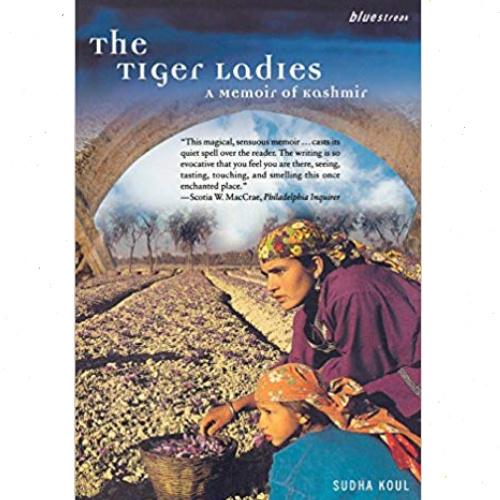
Sudha Koul’s The Tiger Ladies, an elegiac memoir of growing up in Kashmir, describes how Kashmiri Pandit weddings involved fathers giving their daughters solid gold ear ornaments called dejahor, so long that they hung “all the way down to their nipples”. Appalled at her as-yet-unpierced upper earlobes, Koul’s grandmother (Dhanna) hopes she might yet restore her modern grandchild to the way of tradition by explaining the socio-economic purpose of jewellery: “When women needed money, or when their daughters got married, they would cut off one dejahor, sell it, and make two of the other one. The size was the same, but it was hollow inside and no one would know that they had troubles.”

The Tiger Ladies by Sudha Koul

Dhanna’s ear ornaments remained solid till the end; it was her husband's Lahore University gold medal that was melted down to make ornaments for their daughters (“The fact that he stood first was enough—they knew it and everyone else knew it”). But few marriages are as well-adjusted, few households as equitable. And where there is familial strife, jewellery is frequently at its centre. Late 19th to mid-20th century Bengali literature is filled with women (especially widowed old aunts) guarding their jewellery from rapacious relatives: from Leela Majumdar’s children’s classic Padi Pishir Barmi Baksho (Aunt Padi’s Burmese Box, also a 1972 film by Arundhati Devi) to Shirshendu Mukhopadhyay’s Goynar Baksho (made into a 2013 film by Aparna Sen). 

Hearts Made of Stone
The woman obsessed with protecting her jewels appeared in a much darker register in Rabindranath Tagore’s 1898 story Manihara, translated as The Lost Jewels. The horrific vision that ends Tagore’s tale—and Satyajit Ray’s film version, since it forms part of Ray’s 1961 triptych Teen Kanya—is the wife as a ghostly skeleton, whose “bones glistened with gold and diamond ornaments”. 
The female ghost who preys on unsuspecting men is an old folktale trope from Kashmir to Japan. But Tagore is no simplistic misogynist. The narrator of Tagore’s tale pours scorn on Phani Bhushan for belonging to a “new race of men”, so without “a trace of masculine barbarity” that he “was quite incapable of saying bluntly to his wife, “Dear, I’m in need of money, bring out your jewels.” But he has also told us how things came to this pass: because the misguided Phani Bhushan demanded nothing from Mani Malika—he only gave, and “imagined that by giving, he would receive”. “The wife had no particular fault, yet the husband was not happy. And so he went on pouring diamond and pearl jewellery into the cavity of her heart, thereby filling her iron safe but leaving her heart as empty as ever.”
A still from the film adaptation of Tagore's story Manihara, which is part of Satyajit Ray’s 1961 triptych Teen Kanya


Not Quite a Girl’s Best Friend

In two famous European stories, jewels are used to pillory women's desires for other lives, other loves. If The Earrings of Madame De is about its married heroine's fickleness, Guy de Maupassant’s famous 1884 story, The Necklace is a brutal tale of comeuppance for a pretty woman who wallows in self-pity because she has “no dresses, no jewels, nothing; and these were the only things she loved.” The necklace she borrows for one grand party becomes a lifelong noose around her neck—and her loving husband's.  
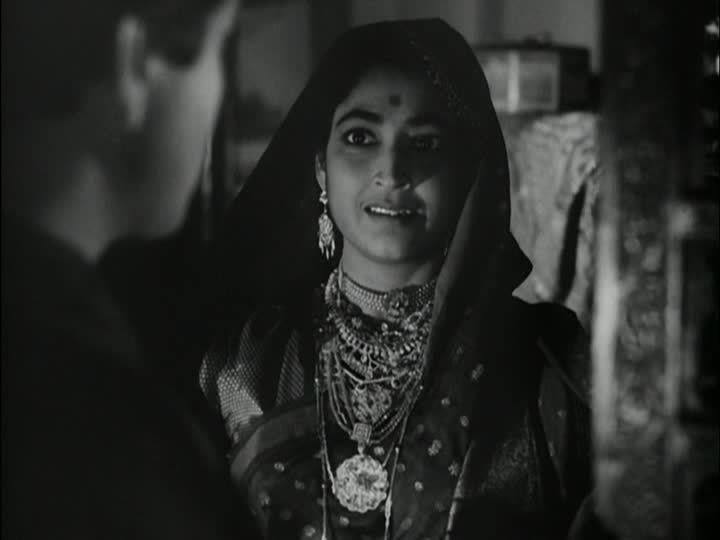
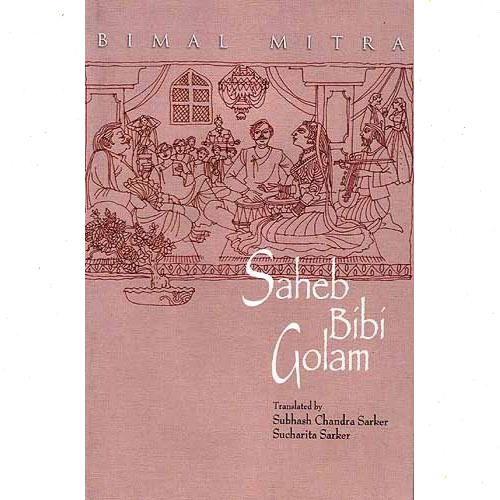
Indian fiction seems to have been more forgiving of the unhappy wife, perhaps because it contains few loving husbands. To end on a classic example, think of the tragically neglected Choto Ma of Bimal Mitra’s Saheb Bibi Golam, who became Meena Kumari’s Chhoti Bahu in Guru Dutt’s classic 1962 film. Half-mad with loneliness, she accosts her dissolute zamindar husband, asking what she should do while he is entertained by his tawaif mistress. His response cruelly suggests the dispensability of both her jewels and her feelings. “Gehne banwao, gehne tudwao,” he sneers. “Get jewellery melted, get new jewellery made.” 
An English translation of Bimal Mitra's Bangla classic, Saheb Bibi Golam
Perhaps, in the end, that is what makes jewellery such a powerful fictional symbol. It stands in for money, and somehow that means people keep trying to make it stand in for love.

Published in The Voice of Fashion,  6 Aug 2019.

16 November 2018

In the Family Way

My Mirror column:

Films about parental figures — real and imagined — made revealing viewing at the Dharamshala International Film Festival.


Actor Manoj Bajpayee occupies the front row at the 2018 edition of DIFF, which took place in November at the Tibetan Children's Village school in McLeodganj

The seventh edition of the Dharamshala International Film Festival (DIFF), which ran from November 1 to 4, was full of films about parent-child relationships. It wasn’t a consciously chosen theme. “As in previous editions, a pattern emerged organically from the choices we made,” wrote DIFF’s directors Ritu Sarin and Tenzing Sonam in their festival brochure.


Deliberate or not, even just the names of the films on this year’s schedule made for a recurring motif. In many conversations at the fest, the multi-generational, multi-linear Taiwanese drama
Father to Son was mistaken for Of Fathers and Sons, a documentary based on exiled Syrian filmmaker Talal Derki’s two years shooting with a radical Islamist family in a north Syrian village. The Sri Lankan debut feature House of My Fathers added to the confusion.


Beyond the films whose titles declared themselves, however, there was Ee.Ma.Yau, Lijo Pellissery’s brilliant satirical drama about a Malayali Catholic man trying to arrange the grand funeral he promised his fisherman father, and the spare, rather too studied The Red Phallus, Tashi Gyeltshen’s symbolic unpacking of patriarchy in rural Bhutan through the tale of an atsara (a traditional clown) and his unhappy teenaged daughter. Dominic Sangma’s debut feature Ma.Ama, which I didn’t get to watch, ‘resurrects’ the filmmaker’s late mother (and casts his real-life father as the 85-year-old Philip Sangma, who has waited 30 years to be reunited with his dead wife).

The non-fiction films, too, gravitated towards this filial theme: Avni Rai’s documentary about her father, 
Raghu Rai: An Unframed Portrait, is as much about his photography as their relationship, while the fascinating, blackly funny The Beksinskis: A Sound and Picture Album (2017) reconstructs the complicated relationship between a famous Polish painter Zdzislaw and his radio journalist son Tomek, drawing on 300 hours of private video footage that extends from the period before Tomek’s birth till after his death. (The Beksinskis were also the subject of a more traditional biopic in 2016: Jan P Matuszynski’s feature The Last Family, which I saw at IFFI last year, didn’t have the advantage of ironic self-examination made for more harrowing viewing.)


Stills from Namdev Bhau: In Search of Silence & Hamid, respectively the opening and closing films at DIFF 2018.

What was uncanny to me, though, was something else: the fact that in so many of the other films, child protagonists created a cross-generational bond with an older adult — often in lieu of a parent. In the Ukrainian filmmaker Dar Gai’s road movie 
Namdev Bhau: In Search of Silence, the festival’s opening film, a Mumbai chauffeur frustrated with the cacophony of the city sets out a solo trip to Ladakh’s Silent Valley, only to find himself in the insistent company of a twelve-year-old boy travelling mysteriously alone in Ladakh. The boy’s ceaseless confident chatter contrasts starkly with the silences of Devashish Makhija’s Bhonsle, in which a retired Marathi constable takes a fearful Bihari child under his wing.


Makhija’s Mumbai, all shadowy corridors and low-lit, barely-furnished rooms, couldn’t be more different from Dar Gai’s picture-postcard mountain vistas. Even when the locale is comparable, the effects are far apart. Namdev Bhau’s chawl always looks bright, the sunlight as inescapable as the chatter of Namdev’s family and neighbours, while Manoj Bajpayee’s Bhonsle occupies what must be the most silent chawl ever seen on the Hindi film screen: a place where even make-or-break fights about chauvinistic community claims on the city don’t spill over beyond the few carefully chosen protagonists. Stagey as that often felt, and despite the predictable turning of its sole female character into fodder for competing masculinities, I was far more moved by the connection between Virat Vaibhav’s petrified Lalu and the taciturn but fair Bhonsle than by Dar Gai’s too-neat, emotionally manipulative conclusion.

Child actor Virat Vaibhav in a still from Devashish Makhija's disturbing Bhonsle (2018)

Emotional manipulation and tidy coincidences also reigned in DIFF’s closing film, Aijaz Khan’s drama
Hamid, set in Kashmir. An eight-year-old boy whose father has joined the state’s growing list of ‘‘disappeared persons” tries to phone Allah to send his father back, and ends up calling a Central Reserve Police Force (CRPF) man called Abhay stationed in Kashmir. Abhay’s initial dismissal of it a prank is jettisoned by Hamid’s touching faith. The angry, aggressive Abhay is quite far from being God. But, as the film cloyingly suggests, the goodness of adults might be a function of children’s faith in them.


A still from the sassy, satisfying 'children's film' Cross My Heart (2017, dir. Luc Picard). 
I was more wholehearted charmed by the Canadian film Cross My Heart, in which a girl threatened with the prospect of herself and her beloved little brother being split up into different foster homes abducts an old lady. Director Luc Picard cleverly makes twelve-year-old Manon’s act unfold against the 1970 October crisis, when political kidnappings by the Quebec Liberation Front had won some victories for Quebecois autonomy. But what makes the film moving is the imminent breakdown of the family and Manon’s heartfelt, if childish, desire to create a replacement for it — complete with a surrogate grandmother. What the children require of their baffled abductee is to read aloud bedtime stories — and make them a Mickey Mouse costume.

Fictive kinship, in most of these films, serves as a bridge across social and political barriers: the 
Bhaiyya-Marathi divide in Mumbai, the Kashmiris and the Indian state, and the English-French division in Canada. Perhaps the family — even in the imagination — does still have the power to summon our best selves.

Published in Mumbai Mirror, 11 Nov 2018.

7 June 2018

State secrets, secret states

My Mirror column:

Raazi successfully inserts itself into existing Bollywood narratives — on Indo-Pak ties, Muslims, nationalism and womanhood — and makes subtle departures from them.


Bollywood’s fascination with the Indo-Pak relationship has tended to produce two kinds of cross-border narratives. The first is the nationalist we-will-go-across-and-kill-the-terrorists plot, the standard elements of which are intelligence agencies, secret identities, and wish-fulfilment — and given that we’re talking of India and Pakistan, increasingly coded in the Hindi film universe as Hindu and Muslim, that wish-fulfilment can involve both revenge and romance. I’m talking here of films like Ek Tha Tiger, Agent Vinod, Baby and Phantom. The second type of Indo-Pak film builds on the baseline assumption that individual citizens of both countries are capable of forging a warm human connection, despite all the obstacles placed in their way by politics, religion and highly-policed state borders.

As I noted in these pages in 2016, this second kind of Indo-Pak film has frequently involved a very specific plot device: in which a primary character is stuck on the wrong side of the border, and must be rescued or helped to return to the right side. Veer-Zaara might be the epic romantic version of this (though we must acknowledge the complicating presence here of Gadar: Ek Prem Katha). In recent years, the romantic cross-border rescue plot has been replaced by other comic variants: Nitin Kakkar’s 2014 film Filmistaan centres on a goofy Indian abductee with a Hindi cinema obsession; in 2015’s Bajrangi Bhaijaan, it is a mute Pakistani child who is mistakenly left on the Indian side; in 2016’s Happy Bhag Jayegi, Diana Penty’s runaway bride from the Indian side of Punjab finds herself in the hands of a genteel bunch of Pakistanis.


Meghna Gulzar’s Raazi — a spy thriller set against the backdrop of the 1971 Indo-Pak war — ticks many boxes that would seem to place it in the first category. What makes the film hard to classify purely as a nationalist wishfulfilment narrative is that it is based on Calling Sehmat, Harinder Sikka’s retelling of the real-life story of a Kashmiri woman who married a Pakistani army officer with the express purpose of gathering classified information for Indian intelligence agencies.

What makes the film even more interesting is that elements of the second Indo-Pak narrative are mixed in with the first kind — the human connection, as well as the eventual cross-border rescue. The plot is as follows: a Kashmiri man (Rajit Kapur), who has earned the trust of aPakistani brigadier by supplying him with nearly-true but harmless Indian information, decides that winning the Bangladesh war requires an Indian secret agent working out of Pakistan. He would do the job himself, but he is dying of a “tumour” (the use of this unspecific term for a terminal illness may seem odd now but propels the film correctly into a ’70s universe). So, he decides to send his college-going daughter, Sehmat, instead, after arranging for her to receive a crash course as an Indian secret agent.

The marriage of Sehmat (a wonderfully well-cast Alia Bhatt) to the Pakistani brigadier’s son (Vicky Kaushal in a small but effective role) is one of the film’s core set pieces, both visually and symbolically. The heroine’s innate, almost unquestioning devotion to her father is both an entirely believable South Asian emotion and an unspoken stand-in for her loyalty to the nation. The marriage works as metaphor at another level, too: the beti leaving her babul’s home for her sasural here is also leaving her country for the enemy nation. And if one might be allowed the privilege of a gender-related speculation here, the deep otherness of Sehmat’s new home can be read as a subversive coded comment on the otherness of all sasurals for all new bahus.

The bahu-as-spy is a perfect set-up in terms of the film’s action, too. The doll-like figure of Alia Bhatt, with her porcelain beauty, works perfectly as the unsuspected mole planted into the most intimate inner circle of the Pakistani military establishment. Her lessons in surveillance, signalling, code language, shooting are, of course, essential to her success as a secret agent, and to watch the soft-hearted young woman, who would once risk her life to save a squirrel and couldn’t stand the sight of blood, transform into a ruthless creature with nerves of steel gives Raazi some of its most thrilling moments. But what stayed with me long after the film is the image of the sweetly-smiling dulhan at her father-in-law’s breakfast table, eavesdropping on conversations he has with his army officer sons, or gaining access to senior army officers’ homes through their wives and children to gather intelligence. The female spy is so fetishised precisely because the seductive and nurturing aspects of femininity are placed secretly in the service of cold strategy — and yet in the end, that larger cause is to be understood as an undeniable good.

The most significant ways in which Raazi subverts the Hindutva zeitgeist are also the simplest. In a cinematic milieu in which the burkha-clad female silhouette has either been a source of comic disguise (for heroes and heroines alike) or a symbol of oppressed Muslim womanhood who needs to be liberated, there is something quietly radical about a heroine in a mauve burkha. This is a burkha-clad figure who needs no saving, and her stealth and determination are harnessed to a nationalist cause. That this is a Kashmiri girl is, of course, no accident — from Kajol in Fanaa (2006) to the child in Bajrangi Bhaijaan to Haider, Bollywood returns repeatedly to Kashmiri femininity as the test site for nationalism. Sehmat passes the India test, with flying colours, but the film’s coda allows for something like love across enemy nations — based on a respect for each other’s nationalism. It is a fascinating new spin on the idea that we are essentially alike.


Published in Mumbai Mirror, 3 June 2018.

16 March 2017

Framing Kashmir

My piece on Witness, in Mint Lounge:

A magnificent new photography book offers a fine-grained, harrowing engagement with Kashmir's last 30 years.


Witness: Kashmir 1986-2016 / Nine Photographers (Yaarbal, 440 pages, Rs. 3,400)
In a recent interview, Donald R. Winslow, a veteran US photojournalist and former editor of News Photographer magazine, rued what he called the “philosophical devaluation” of photojournalism. “It used to be about the vision of the photographer you were sending...,” Winslow told The New York Times. “Now, we’re willing to accept whatever we can afford to buy from somebody who’s already there. It’s not about the caliber of the journalism or photography.”
The question of location is certainly fundamental—just not necessarily in the way Winslow presumes in his classic view from the metropole. The 200 photographs that make up the magnificent new photo book Witness: Kashmir 1986-2016/Nine Photographers were all taken in Kashmir, shot by “somebody who’s already there”. Barring one, the nine photographers grew up in Kashmir, and continue to live there or at least visit frequently. Their work, then, is precisely the opposite of the outsider who jets into the conflict zone to get a great picture: It is a fine-grained, long-time engagement with the world around them, a turbulent world of which they are themselves part.
In a world where “photographers, their subjects and spectators all share the recognition that what they are witnessing is intolerable”, as film-maker and writer Sanjay Kak suggests in his introduction, photography becomes the exercise of a civic skill. The stunning archive of images in Witness is, thus, an excavation of Kashmiri public memory, of the sort that almost never gets seen outside the state. Along with Kak’s detailed, thoughtful profiles of the photographers, these photographs leave us in no doubt about what it is like to live and work in Kashmir—what it has been like for 30 years. As the pot of memories is stirred, the photographers’ own experiences of violence rise to the surface: a schoolmate found dead one morning, a teenaged brother lost to a cause, frightening encounters with the army or police.

For many of the photographers, the camera was a personal response to the harrowing times they grew up in. “In those days, when you left in the morning, you didn’t know if you would come home in the evening. I thought if I get a press card, it might save my life,” Javed Dar said at the book’s Delhi launch in February. Dar smiled broadly, but it was no joke. And what began as a strategic tactic— the press card as a way to stand out from the crowd in a landscape strewn with army and police barriers—transformed into something more deeply felt. “Pictures gave me something. When I go out with my camera I still do feel strong and powerful, like a soldier with a gun,” photographer Dar Yasin told Kak.
Of course, the life of the Kashmiri press photographer is inextricably entwined with the threat of violence. Meraj Uddin, the most senior photographer in the book, speaks of the death of a photojournalist (in a bomb attack ) in whose honour Srinagar’s Press Colony was renamed Mushtaq Ali Enclave. “Vulnerable as individuals, photographers in Srinagar began to move around in groups, with no fewer than three cars, a practice that is visible to this day,” writes Kak. Risk is the photographer’s currency, and it is normalized to the point of becoming an initiation ritual.
Soon after his arrival in Srinagar in 2009, when Sumit Dayal, who was brought up in Nepal, got beaten up by a crowd calling him “CRPF (Central Reserve Police Force) ka aadmi”, his photojournalist friends received the news with equanimity, and that brand of mordant humour one hears often in Kashmir. “Welcome to the club. Now you are officially a Kashmiri photographer,” Dar Yasin told Dayal. “What you also need is a beating from the other side, from the CRPF. Then you’ll be a full man, a photojournalist.”
Photography in Kashmir has emerged in a cultural context where there is almost no local film-making, and little space for art. Witness opens up a much needed conversation about Kashmir, including the role of creative and intellectual practice in a place so embattled. Not all the images here refer directly to the conflict. But whether we are looking at a child at an Eid sacrifice, or a watchful migrant worker bundled up in plastic during the 2014 flood, violence can never be far from our minds. In Kak’s words: “There will be blood, but in what way will you confront it on the page?”

                                                                                ***
Kuka Parray with his Ikhwan militia

Meraj Uddin, b. 1959
The doyen of Kashmiri photojournalists, by 1990 he was the first port of call for all journalists visiting the state. His images act as an archive: a beret-wearing Yasin Malik at a 1986 rally for Palestine; the open-mouthed body of Neelkanth Ganjoo, a Kashmiri Pandit judge assassinated in 1989 (possibly for sentencing Jammu Kashmir Liberation Front founder Maqbool Bhat to death); and, in the image here, the militant-turned-counterinsurgent Kuka Parray, posing with his infamous pro-government militia, the Ikhwan.
Village boys at Yusmarg -- Javeed Shah
Javeed Shah, b. 1967
To newspaper readers, Shah’s photographs are familiar from his years at The Indian Express and, later, Mint. Shah often composes a picture along a diagonal axis, like the one here, which makes clear how different life is for boys and girls in Kashmir. His flair for colour can sometimes produce something disturbingly elemental: His image of a watermelon, bleeding red pulp on to the tarmac after the 2006 blast at Naaz Cinema, is pure documentation and metaphor.
Funeral at Pehlipora -- Dar Yasin, @AP Images
Dar Yasin, b. 1973
Yasin has worked with Associated Press for a decade; his images must feed the relentless maw of the news cycle. “He likes to think of himself as doing a job, one that he simply wants to do well,” writes Kak. And yet, as his Witness images reveal, Yasin’s work can always be read for more. The stone-throwers he captures in dramatic mid-leap have blank, masked faces—sharply juxtaposed with the angry gaze of the boy pockmarked with pellet-gun injuries. In the image above, the crimson blankets that swathe dead militants’ bodies lend their funerals a mythic air, evoking blood but also royalty and martyrdom.
Paramilitary soldier kicks boy -- Javed Dar

Javed Dar, b. 1975
In 1992, when he was 17, Dar had a narrow escape from the army. The trauma aged his father overnight. In 2015, when Dar’s son Danish (then 17) was hit by a bullet in the leg, the shadow of the past reappeared. The image here is an example of how the constant brutalizing presence of armed men in uniform haunts Dar’s images, often seeming like automatons with their helmeted anonymity and synchronized stride. Other pictures depict violence and ruin in painterly ways: the smoke billowing behind a sad-faced woman in 2012’s After The Fire, or the blood being scooped off a Srinagar street in 2013 in After Killing Of Policeman.
Shattered glass -- Altaf Qadri
Altaf Qadri, b. 1976
A staff photographer with Associated Press since 2008, Qadri’s pictures in Witness are often composed radially, with the eye being led inwards. In Washing Of Muharram Wounds, a disparate circle is united by bloodied hands; in Funeral After A Staged Encounter, we see older men reaching out to a grieving boy at the centre; in Grave Of A Militant Commander, pheran-clad men guard the periphery while a thorny branch descends, as if to shield the grave. In the image above, the radial motif is upfront: Everyday life in Kashmir must be viewed through cracks in the windscreen, guarded by a baffled man in uniform.
Abandoned Pandit home, Rainawari, Srinagar -- Sumit Dayal
Sumit Dayal, b. 1981
Brought up in Kathmandu and trained at New York’s International Center for Photography, Dayal’s beginnings as a photographer in Kashmir could not have been more different from those of the others in this book. His images, too, locate themselves less squarely in the political domain and more in the interstices of personal and collective memory. Since 2009, when he visited Srinagar after 17 years, Dayal’s desire to recapture the Kashmir of his childhood memories has taken new shape, expressed increasingly in work with “found” photographs: from private collections, bureaucratic files, local studio pictures, as well as his own family albums. But the theme of home abides.

Showkat Nanda, b. 1982
Nanda was 7 when police firing in Baramulla killed his teenaged cousin Parvez. Months later, in March 1990, Nanda’s 16-year-old brother Sajad joined the Jammu and Kashmir Students Liberation Front. He died in an accident while crossing the Line of Control, and Kak’s conversations with Nanda in the book elicit the family’s stored-up grief: a fiery speech Sajad once crafted; a poem their headmaster-father wrote about losing a son to a cause. Much of his work appears rooted in that personal loss: There’s a series on young boys on the run, a series on stone-throwers, another on women whose sons and husbands have disappeared.
Police Announcement -- Syed Shahryar

Syed Shahriyar, b. 1992
“Why would I choose to have five pictures of the flood and five of Muharram in Shahriyar’s images?” asked Kak at the Witness launch. “Because I can see there is a pause—he is figuring something out for himself.” Shahriyar is a Shia, and his studied black and white Muharram images, often of women in the stillness and contemplation of grief, mark a deliberate departure from the usual goriness of Muharram depictions. Several other photographs underline the crucial place of image-making in the new Kashmir: cameraphones at a militant’s funeral, or during a police announcement, wielded as tiny weapons of the everyday.


Azaan Shah, b. 1997
The youngest to be included in ‘Witness’, Shah lives with his parents and elder sister in Fatehkadal and likes to think of himself as a photographer of Srinagar’s streets. “I want to show only one thing well, and that is downtown,” he told Kak in the book. But even as he stalks the downtown neighbourhoods of Zainakadal, Bohrikadal, Alikadal and Jamia Masjid (seen in picture), he usually overlooks the protest image for the street that is shut down, or the stillness of a lone figure against a background. The most dramatic things in his pictures are the shadows.


Published in Mint Lounge, 11 Mar 2017.