Showing posts with label music. Show all posts

5 April 2021

Book Review: A Gujarati literary legend finds a home in English

Celebrated Gujarati writer Dhumketu doesn’t get his due in the latest translation of his work

Gaurishankar Govardhanram Joshi (1892-1965), who wrote as Dhumketu, was a pioneering short story writer in Gujarati.
Gaurishankar Govardhanram Joshi (1892-1965), who wrote as Dhumketu, was a pioneering short story writer in Gujarati. (Wikipedia)

“The short story is not the miniature form of the novel... The novel says whatever it wants. The short story, by rousing the imagination and emotions, only alludes to or provides a spark of whatever it wants to say.” These words, in the original Gujarati, appeared in the 1926 introduction to Tankha (Sparks), the first collection of short stories by the Gujarati writer Dhumketu, the nom de plume of Gaurishankar Govardhanram Joshi (1892-1965). Nearly a hundred years later, you can finally read them in English, in Jenny Bhatt's translated volume Ratno Dholi: The Best Stories of Dhumketu.

Bhatt, a Gujarat-born writer and podcaster now based in the US, has clearly thought long and hard about the shape of the book. Taking seriously the burden of responsibility that comes with representing the pioneering Gujarati author to the contemporary English-speaking world, she has picked one story from each of his 24 published collections, plus two of her own favourites. The book certainly displays his range.

It begins with what is perhaps Dhumketu's most anthologised tale, The Post Office, in which a postmaster who once mocked an old man ends up haunted by his ghost. The ending teeters on the edge of the Gothic, making one think of the Russian short story giant, Nikolai Gogol, with its use of the supernatural to invoke a moral justice that social reality rarely seems to grant us. Dhumketu isn't writing ghost stories, but there is often a suggestion that deeply felt hurt or expectation leaves its imprint in the universe even after death—often in the minds of those who caused or ignored it.

In The Post Office, old Coachman Ali's lifelong wait for his daughter Mariam's letter only makes sense to the postmaster when he is anxious about his own daughter. In Svarjogi, an old shehnai player summons the painfully despondent notes of Raga Jogiya only on the death anniversary of his son—who had played them in life. In Ratno Dholi, a village drummer who thoughtlessly drives his lover to suicide ends up imagining her dancing to his dhol for the rest of his life.

Not unexpectedly for a writer born in the 19th century, Dhumketu was also drawn to historical romance as a genre, writing several novels set in the ancient India of the Guptas and Chalukyas. His historical fiction is represented here by Tears of the Soul, which retells the legendary story of Amrapali, a woman condemned by her democratic city state Vaishali to become a nagarvadhu (courtesan, literally “wife of the city”). If such a beauty was to accept any one man as a husband, went male logic, there would be civil war.

Although he turns a critical spotlight onto male-made laws, Dhumketu's real condemnation of Amrapali's predicament is tied to applauding her sacrifice as a mother. In some other stories, too, Dhumketu is revealed as very much a man of his time. Female deservingness is often premised on sexlessness, most sharply in When a Devi Ma Becomes a Woman, the Gorky-inspired tale of a hostel-wali deeply admired by her male hostellers—until it turns out that she is human enough to respond to the odd sexual overture.

But Dhumketu certainly emerges as a sympathetic observer of the unfairness of women's lives. In the tale of two Kamalas in A Memorable Day, the matter is treated as one of luck: one woman finds herself forced to sell her body, while the other has a like-minded partner and a tasteful home. In The Noble Daughters-in-law, the widowed bahu of a rich household is shooed out, and finds herself sheltering in the home of another unhappy daughter-in-law. There is the hint of attachment between the two women, including a kiss on the cheek, before the story ends in a dramatic double suicide that made me think of Deepa Mehta's 1996 film Fire, and of so many lesbian loves that end in similar tragedy in India.

Women are also embedded in social hierarchies of caste and class, and suffer their consequences. In The Gold Necklace, Dhumketu reverses the traditional social hierarchy between wife and mistress. Caste appears frequently, as descriptor and motor of plot: the vagharin, whose low social status taints a man who helps her; the gohil and kaamdaar who prop up the colonial-feudal structure of the Gujarati village; Brahminness mentioned by characters to establish their gentility in many stories, including the comical The New Poet.

Ratno Dholi: The Best Stories of Dhumketu, translated from the Gujarati by Jenny Bhatt, published by HarperCollins India, 324 pages,  <span class='webrupee'>₹</span>399.
Ratno Dholi: The Best Stories of Dhumketu, translated from the Gujarati by Jenny Bhatt, published by HarperCollins India, 324 pages, 399.

Dhumketu is no radical, but these stories show an abiding interest in marginalised figures—the penitent criminal in Kailas and The Prisoner of Andaman, the disabled person in Mungo Gungo, the sick low-caste woman Sarju in Unknown Helpers, or the ekla ram, a man who chooses to distance himself from the village's social norms, like Makno Bharthi in The Worst of the Worst.

Some of these solitary souls immerse themselves in art or music: Ratno the dhol-player, the shehnai player of Svarjogi, the sarangi player of My Homes, or even the literary young man of A Happy Delusion. When he writes about these musicians, or even about the aesthetic domesticity of the housewife Kamala in A Memorable Day, Dhumketu is both generous and appreciative.

Fittingly for a writer, perhaps, he displays greater ambivalence when describing literary ambitions. The aspirational poet or writer, especially, gets a drubbing, whether the clerk Bhogilal of Ebb and Flow, the highfalutin train passenger of The New Poet, or the intently focused but talentless Manmohan of A Happy Delusion.

Bhatt's dedication aside, her translations leave much to be desired. Her literal renditions of the original leave us repeatedly in the grip of florid, often archaic language (“Then, because they had not heard such melodious, sweet, alluring, rising and falling music in years, an illicitly joyful passion grew in the soul of thousands” or “Her memory did not endure anywhere now except during the rare occasions of general small talk”), not to mention constantly tripping up against such formations as “slowly-slowly” or “From downstairs, a melodious, bird-like voice came”.

However deliberate Bhatt's approach might be, the English feels jarring; the sentences marred by roundaboutness and redundancy. “What if this amusement was flowing due to his writing?" thinks one character, while a policeman tells a woman “to be careful with [her] tongue when speaking”. Very occasionally one gets a glimpse of what I imagine is Dhumketu's idiomatic Gujarati, such as in Old Custom, New Approach, where a man complains sardonically about modern bureaucracy: “Letters speak with letters. People avoid other people, this is called administration.”

One hopes someday he will receive a better interpreter. In the meanwhile, this is a valuable addition to your Indian classics bookshelf.

Published in Mint Lounge, 5 Jan 2021.

24 January 2021

A Kite for Sore Eyes

My Mumbai Mirror column:

In Hardik Mehta's Amdavad Ma Famous and Prashant Bhargava's Patang, a city's universal passion for kites leaps off the screen in all its infectious energy and deeply immersive spirit

A still from Amdavad Ma Famous (2015), Hardik Mehta's award-winning documentary about the kite-flying festival of Uttarayana that takes place on 14 January in Ahmedabad.
 
Ek din tum patang ka shauq kar loge, toh zindagi ke saatth saal tak woh shauq poora nahi hoyega [If you get into flying kites even for a day, you'll stay addicted for the next 60 years],” says an old Muslim cleric in Amdavad Ma Famous. “Yeh shauq aisa hai, bahut terrible shauq!” In case the maulana's words haven't convinced you, filmmaker and editor Hardik Mehta cuts from him to the sight of an old woman on a terrace – white sari, white hair in a loose bun, possibly older than the cleric – flying a kite with gusto.

Mehta's glorious 2015 short documentary, which won a host of awards across the world and was declared Best Non-Fiction Film at India's 63rd National Film Awards, was set and shot during the festival of Uttarayan in Ahmedabad, when the whole city gathers on its rooftops to fly kites. The pivotal character is a young boy called Zaid Khedawalla, whose enthusiasm for the sport borders on the obsessive. Uttarayan is another name for Makar Sankranti, which falls on January 14 or 15 every year, based on the solar calendar. In the days leading up to the festival, Zaid wakes up very early in the morning to scout his neighbourhood for fallen kites. “By 10 am or so, he has gathered enough kites for the day,” says his father, laughing.

The fact that Zaid skips school to fly kites all day is a recurring theme in the film. His father tries to get him to go to class. The maulana tries to get the boys off the roof off the mosque. Mushtaq, caretaker of a bank building in the film's chosen neighbourhood of Astodia, tries to shoo them away, even locking up the terrace on some days. But Zaid, like thousands of other young boys in the city, is incorrigible. “You don't listen to your father, Zaid?” asks the filmmaker. “I do try,” grins Zaid. “But these kites are just too much fun.”

It is one of several charming moments in an utterly charming film. Mehta captures these boys in all their manic energy, but also locates them within the colour and chaos and community of a whole city abuzz with the same zeal – street markets selling varieties of kites, manjha-walas sharpening the thread with ground glass, ancillary products springing up to protect bike-riders from the sharp kite threads that criss-cross the streets at this time. Zaid's father later confesses that he was just as crazy about kites when he was Zaid's age. The crabby Mushtaq, who responds to someone calling the boys artists (“kalakaar”) by labelling them the face of the devil instead, is seen later in the film flying kites himself. When quizzed, his reply is hilarious: “I only fly the kites that have fallen on my terrace”.

Mehta's marvellous aides – he has a truly talented sound designer in Manoj M Goswami, and Alokananda Dasgupta has created a brilliantly uplifting soundtrack – help him make all sorts of other visual and aural connections. When Mushtaq speaks of the kites as bringing out the boys' “wild side”, Mehta cuts to monkeys clambering up and down the terraces, almost exactly in step with the boys. Dasgupta's soundtrack punctuates the bouncy ascent of all sorts of people – large, old, creaky – up roof ladders.

That heartwarming inclusiveness was also very much the point of Prashant Bhargava's lovely 2011 feature Patang, in which an Ahmedabad native, now settled in Delhi, returns to the city after many years during Uttarayan, bringing with him a teenaged daughter through whose fresh eyes we see Ahmedabad's old city. Patang contained one of Nawazuddin Siddiqui's earliest full-fledged performances, as the Ahmedabad-based nephew who bristles at his uncle's sudden descent upon the old family home.

But what is it about kites – other than the obvious and overdone fetishised idea of India as colour – that makes them cinema-worthy? Speaking to the legendary critic, the late Roger Ebert, about his film, Bhargava (who also died, tragically young, in 2015) said, “In India, kite flying transcends boundaries. Rich or poor, Hindu or Muslim, young or old — together they look toward the sky with wonder, thoughts and doubts forgotten. Kite flying is meditation in its simplest form.”

I recently came across a definition of meditation in another film, Matthew Vaughn's 2005 Layer Cake, that makes sense in this context. A man with a passion for high-quality guns says to Daniel Craig's high-stakes drug dealer character: “Meditation is concentrating the front of the mind with a mundane task so the rest of the mind can find peace.”

As you watch the myriad faces in Mehta's film, intensely concentrated on the kite in hand, eyes lifted to the heavens, it suddenly seems entirely clear why these fluttering bits of paper have captured the human imagination for centuries. And we have kites to thank for something else – at least they're not guns.

Published in Mumbai Mirror, 24 Jan 2021

10 November 2020

Dharamshala International Film Festival 2020: From Pearl of the Desert to Yalda, five must-watch picks

Late to put this piece I wrote for Firstpost up on the blog, this year's online edition of DIFF is over. But these five films are totally worth looking out for.

Dharamshala International Film Festival 2020: From Pearl of the Desert to Yalda, five must-watch picks
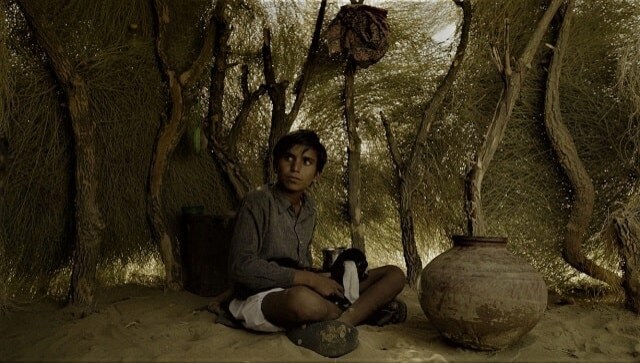
Still from Pushpendra Singh's wonderful film Pearl of the Desert, 2019, about a Manganiar boy musician called Moti

The Dharamshala International Film Festival went online this year, making its thoughtfully curated mix of features, documentaries and short films available to anyone in India with a screen and an internet connection, offering both season tickets and a daily Binge pass. Sunday, 8 November, is the last day of this year's festival. I've picked out five unusual films worth the price of admission:

Pearl of the Desert, 2019

Documentary | Rajasthani | 1 hour 22 mins

A boy is walking home with a group of other boys, all wearing that familiar dull blue shirt that is the uniform of countless government schools across India. Suddenly he falls behind, telling the rest to go ahead. “You do this every day!” complains another boy in the group. But they carry on, and the boy settles himself on a crooked tree trunk and begins to sing. As the rich, rugged notes emerge from his throat, the desert seems to spring to life. In case the sound doesn't thrill you, the filmmaker catches a black buck leaping up at the sound of Moti's voice. Then another. Animals seem to respond to the beauty of Moti's music, evoking mythical depictions of cattle gathering to listen to the flute-playing Krishna.

It is the sort of coded, powerfully cinematic image that makes Pushpendra Singh's hybrid documentary on the Manganiars such a layered, resonant piece of filmmaking. Time and again the film reminds us, without a word, that we live in a country of remarkable admixture: a country in which Muslim musicians have for centuries been the appointed bards to the upper caste Hindus of the Thar Desert.

It is something to listen to these men singing the praises of their Hindu patrons: enumerating the heroic exploits of their ancestors, laying out their genealogies, mourning the departure of their daughters — all in words profoundly redolent of the desert. If one song describes the carriage of the camel, another pays tribute to the dusky beauty of the lover in the courtyard, while one particularly stunning verse asks the stubborn lover to come back home, saying, “I have written you a carnival, at least now return”.

Whether the occasion is a birth or a marriage or any other celebration, the Manganiars are always called upon. They sing songs to the goddesses their patrons worship, and they also sing songs to the pirs of the Thar desert. The film closes with a group of Manganiar men harvesting cluster beans, singing in joyful unison a song that invokes Allah. In one of the film's reenacted scenes, Moti's grandfather is asked to relate the community's history — he connects them with Parashuram, with stories about asking for necklaces (maangan, haar), and their name to the Sanskrit word “mangal”, meaning auspicious.

Whenever the increasingly misguided votaries of Hinduism insist that their vengeful politics of purity is the only defense of Indian tradition, it is worthwhile bringing up the Manganiars — for this, too, is our tradition. One we must now fight to keep alive.

Dharamshala International Film Festival 2020 From Pearl of the Desert to Yalda five mustwatch picks
Still from the delightful Gaza Mon Amour, 2020

Gaza Mon Amour, 2020

Fiction Feature | Arabic | 1 hour 27 mins

Set in the small, densely populated Palestinian territory of Gaza, this film about an ageing fisherman who decides he has had enough of singledom is a quiet delight just for the stellar performances by Salim Daw as the externally crotchety but secretly romantic Issa and Hiam Abbas as the serious-faced widowed seamstress whom Issa finally gathers the courage to court after a naked ancient statue lands in his fishing net — that feels like a sign. Atmospherics are provided by the rundown location, where checkpoints, power cuts and bombings are the norm — as is the fact that many of the younger people want to escape to Europe even via the dangerous illegal route. Directed by Tarzan Nasser and Arab Nasser, this gently comic romance comes to DIFF after a premiere at this year's Venice Film Festival and the NETPAC award for best Asian film at Toronto.

Dharamshala International Film Festival 2020 From Pearl of the Desert to Yalda five mustwatch picks
Still from the documentary Influence, 2020, a film about the dangerous directions in which advertising and PR have taken us

Influence, 2020

Documentary | English | 1 hour 45 mins

Tim Bell was a British advertising man who went from being part of the founding team of Saatchi & Saatchi to Margaret Thatcher's campaign manager, his “Labour's Not Working” hoardings held responsible, among other things, for the decimation of the British Labour Party in that election. Diana Neille and Richard Polak's ambitious documentary portrait of Bell unpacks the rise and fall of a morally dubious man who created and ran the world's most influential political consultancy for decades. Bell Pottinger's clients ranged from the Chilean dictator Pinochet to South African Presidents FW De Klerk and Jacob Zuma. He was hired by the Pentagon to create a flood of propaganda videos in post-Saddam Iraq and by the Gupta Brothers to stir up racial violence in South Africa using hired bots to tweet and post on #whitemonopolycapital.

The film's watchability is aided by its incorporation of an interview with an aged Bell, who died in the summer of 2019 — perhaps precisely because Bell gives away so little, even as he has supposedly decided to tell his story. But its true impact lies in using Bell's life to trace the transformation that characterises our era perhaps more than any other: the dangerous transformation of advertising and marketing from an “art form into a science — and in many respects, into a workable weapon”. Those words belong to Nigel Oakes, an ex-Saatchi & Saatchi man now infamous as the founder of the SCL group, the parent company for Cambridge Analytica. The untrammelled rise of “strategic communication”, alongside social media, is the story of our times, altering political outcomes across the globe for several decades, and now scarily part of our present in India. In Oakes' words, what was once “just democracy” is now a “controlled democracy, maybe available to the highest bidder.”

Dharamshala International Film Festival 2020 From Pearl of the Desert to Yalda five mustwatch picks
Still from the gripping Yalda, 2019: Iranian realities filtered through the drama of a reality TV show

Yalda, 2019

Fiction Feature | Farsi | 1 hour 39 mins

Winner of the World Cinema Grand Jury Prize (Dramatic) at the Sundance Film Festival this February, Massoud Bakhshi's film Yalda, A Night for Forgiveness is a gripping drama that manages to reveal a great deal about the contradictions and hypocrisies of present-day Iran. The film unfolds on the set of a TV show called 'Joy of Forgiveness', during which a woman convicted for killing her husband might receive a pardon from her husband's daughter — and thus be saved from the death penalty.

Bakhshi based his fictitious show on a real show called Mah-e-Asal that aired daily on Iranian television during the month of Ramadan from 2007 to 2018, and does wonders by alternating between the scripted reality we see on TV and the real drama taking place off-camera. The story of why the 20-something Maryam Komijani married her late father's 65-year-old employer and became pregnant with his child brings into view not how skewed Iranian law is against women — the permissibility of 'temporary marriage', the greater claims of sons over family property — but also the deep fault lines of class in Iranian society. Dominant social morality and the law may see Maryam a certain way, but it is hard to look away from the alternative picture the film shows us.

Ghar Ka Pata, 2020

Documentary | Hindi, Kashmiri, English | 1 hour 7 mins

The filmmaker's search for the home she left at six is the basis of a personal essay about a very political place. Madhulika Jalali's family home was a traditional house in the neighbourhood of Rainawari in Srinagar, among the areas in the city that was home to the Kashmiri Pandit community. Like thousands of other Pandit families, Jalali's Hindu parents found themselves forced to leave the valley by the events of the early 1990s, when militancy in Kashmir took a dangerously communal turn. Like the others, they were never to return. The film makes this tragic political-communal context visible through a very personal keyhole. As if to compensate for her own lack of memory, Jalali tries to find an image of the house she can't see in her mind. When her own family albums are exhausted, the search leads her to cousins and relatives — and eventually to Srinagar.

Dharamshala International Film Festival 2020 From Pearl of the Desert to Yalda five mustwatch picks
Poster for Madhulika Jalali's moving personal documentary Ghar Ka Pata, 2020

The film splices these journeys with Jalali's two elder sisters reminiscing, about the house but also about the traumatic nights leading up to their departure, when proclamations of violence made from the neighbourhood mosques made their father dig out his hunting rifle — but eventually take his close Muslim friend's advice to leave.

Her parents, like most adults Jalali speaks to, remain reticent. But those who were younger then, seem happy to speak. Jalai's sisters talk about how happy and peaceful their childhoods had been in the Srinagar of the1980s: the fruit trees in their garden, the snow they used to try to make into ice cream, the neighbourhood shop from which they bought dahi, the walking route they'd try to take home to get their hands on any festive meetha chaawal being distributed. But even within this gently nostalgic past, one can see the inevitable seeds of the future. In one remarkable anecdote, one of the sisters recalls how in those months that Doordarshan telecast Ramanand Sagar's version of the Ramayana, Hindu and Muslim children alike used to come out onto the streets of their neighbourhood with homemade bows and arrows, taking aim with a "Jai Shree Ram".

Jalali doesn't dwell on it, or on anything really. Her film has a lightness that sometimes feels surprising. Is sorrow filtered through time and distance and forgetting still sorrow? Perhaps the answer is, sometimes.

Published on Firstpost, 8 Nov 2020.

6 October 2020

Out of syllabus

My Mirror column, the second in a series on films about doctors:

Ek Doctor Ki Maut
's questions about the life of science seem even more urgent three decades later, in the year of the coronavirus


The sharpest revelation in Ek Doctor Ki Maut comes sheathed in a conversation that's almost funny. A reputed Kolkata paper has just published the news that the film's titular protagonist, Dr Dipankar Roy (Pankaj Kapur), has created a vaccine for leprosy. The report also mentions that one of the interesting possible side-effects of the new vaccine might be to reverse female sterility. The news causes a stir: Dr Arijit (Vijayendra Ghatge), who is Dipankar's classmate and childhood friend, receives a visit from a senior gynaecologist called Dr Ramanand (Vasant Choudhury). Settling into a chair in Dr Arijit's chamber, Dr Ramanand launches into a tirade against what he considers Dr Dipankar's audacious bluff. How can an ordinary MBBS, a doctor in a government hospital with no private practice or fancy degree – like Ramanand or Arijit – have invented a world-altering vaccine? But Ramanand's suspicions about Dipankar reach their crescendo when he turns to Arijit, volume dropping slightly to convey his absolute horror: “Jaante ho, woh gaana gaata hai?

An unperturbed Arijit responds first with humour: “Yes, and with a harmonium, too!” But when Ramanand continues to look appalled, he shifts tack, listing great scientists with artistic hobbies: Einstein played the violin, Satyen Bose the esraj, while Dr Homi Bhabha painted. Ramanand is far from convinced. He displays shock that Arijit would equate Dipankar with such certified geniuses – and in the film, that's where the conversation ends.

But the exchange seems to me to encapsulate a great deal about the crisis of education in India, a malaise inextricably entwined with the social and political mess we find ourselves in, 30 years after. What do I mean? Let me draw out the connections. Dr Ramanand, the man who decides to bring Dipankar down, is a reputed gynaecologist, which might lead one to believe he is a man of science. At the very least, as a medical expert, one might expect him to have a professional investment in health. But his reaction to a vaccine that might save millions is not enthusiasm, or even a sceptical intellectual engagement. Rather than the marvellous possibility of medical advancement, he responds only to the source of that advancement. And in his mind, Dipankar ticks none of the boxes by which our system measures achievement: exams, marks, degrees – all ways to fetch a higher price in a marketplace of status.

Ramanand's scorn for Dipankar's musicality further establishes the hierarchical nature of this social-educational marketplace. Sinha doesn't spell it out, but doctors, engineers and now MBAs see themselves tied for top spot in a modern Indian educational caste system – with the arts at the bottom. A doctor interested in music is either miscegenation or proof that he isn't really deserving of his place at the top.

In this stultifying celebration of mediocrity, there is no space for genuine questioning. The film suggests two possible directions in which such an instrumental system can push a seeker of knowledge. He might find his way out of the morass early: so where Arijit set his mind to achieving a first class, Dipankar barely passed. “Kehta thha, syllabus ki kitaabon mein kya rakha hai yaar? Syllabus ke baahar ki duniya hi toh anjaani hai, aur anjaani cheezein hi toh interesting hoti hain.” But too questioning a seeker might also be pushed to the margins, treated not just with suspicion but disbelief, humiliated by those the status quo serves. So when the research Dipankar has conducted in his barebones home-made lab attracts international attention, his health ministry boss does all he can to scotch it, from actively stymying foreign inquiries to transferring Dipankar to a remote rural area.

Pankaj Kapur brings to his turn as Dipankar a vivid passion for his work, both its intellectual joys and its grand scope for social improvement. It's worth noting that the director, cinematic giant Tapan Sinha, studied physics at Patna University and later earned an MSc from Rajabazar Science College, Calcutta, while his son Anindya Sinha is a primatologist at NIAS in Bengaluru, with degrees in botany and cytogenetics. The film features a science-loving journalist called Amulya (a very young Irrfan Khan), who has a PhD but realises he isn't cut out for research and can better serve science by bringing it to public notice – a proxy for the filmmaker? Amulya's journalism, however, cuts both ways, bringing Dipankar acclaim, but also accusations of sensationalism – and already, in 1990, Sinha shows us an editor unwilling to go against the government because “Akhbaar vigyapan pe chaltein hai, vaigyaanik pe nahi”.

Although globalisation and the internet have increased access to information, doing science in India today is possibly more, not less, impeded by political pressures. Ek Doctor Ki Maut remains a memorable film about the scientific life, and it's powerfully resonant in 2020. In one memorable scene, Dipankar tells his long-suffering supportive wife Seema (Shabana Azmi) that the stars often seem to him to berate humans, wasting our time fighting each other on our little planet. “Insaan hone ka itna ghuroor, itna ghamand. Insaan ka dimaag, insaan ki buddhi kitna kucch jaanti hai hamaare baare mein?” In these last 30 years, humans have only to have grown in our hubris, our attempts to harness nature creating forms of resistance we can barely understand.

As we grapple with a new virus, can we start to imagine a science whose questions serve the universe, rather than  instrumental answers that supppsedly serve the human race? Our current goals may just cut the planet short.

The medical missionary

My Mirror column, the first in a series on films about doctors:

V Shantaram’s 1946 film about the legendary Dr Dwarkanath Kotnis sheds an odd light on the contemporary India-China moment and our pandemic year

2020 has been a year of medical heroism. It might be a good time to remember a heroic doctor from a very different period in the history of India and the world: Dr Dwarkanath Kotnis, whose valiant medical service in Communist China from 1938 to 1942 is still enshrined in that country's public memory. On August 28, even as Chinese and Indian soldiers faced off in a border conflict that remains far from being resolved, it was reported that a statue of Dr Kotnis was to be unveiled outside a medical school in North China named after him: the Shijiazhuang Ke Dihua Medical Science Secondary Specialised School. (‘Ke Dihua’ is Kotnis’s Chinese name.)

Kotnis is not often remembered in contemporary India, but barely four years after his death, his life and work were made the subject of a film by the great Indian director V Shantaram. Free on YouTube as well as available to stream on one subscription-based platform for world cinema, Dr Kotnis Ki Amar Kahani makes for interesting viewing for many reasons.

Released in 1946, a year before independence, Shantaram’s film commemorates Kotnis's as the ideal nationalist life: a life led – and lost – in the service of the nation. As one of the rousing patriotic songs from the film’s rather wonderful lilting soundtrack put it: “Jaan dene ka hi naam hai zindagi (Giving up your life is what living is really about)”. A film called The Immortal Tale of Dr Kotnis was clearly not shying away from either myth-making or propaganda.

What is fascinating to me, though, is that Kotnis’s nationalism is presented as what leads the youthful doctor to another country, where he helped their war effort. Heeding a Congress leader’s call for Indians to come to China’s aid during the Second Sino-Japanese War (Mao Zedong had apparently made such a request of Jawaharlal Nehru), the young graduate from Mumbai’s Seth GS Medical College decided to join a five-member medical mission to China in 1938. Watching Shantaram’s film in 2020, it is impossible not to be struck by the way Indian nationalism in the 1940s could be so naturally folded into an internationalist milieu of cooperation between what were then two poor Asian countries in a still-colonised world. (Some villains do exist: fittingly for a post-Second World War Indian film, it’s the Japanese, who are called ‘shaitan’ but shown as buffoons, in the almost classic tradition of the war movie.)

Scripted by the great KA Abbas, Dr Kotnis opens with the handsome young doctor (played by Shantaram himself) returning from Mumbai to announce to his shocked parents that he has just pledged to serve in China. His ageing father, caught off-guard while proudly displaying the clinic he’d had made for young Dwarka in their hometown of Solapur, has a teary turnaround. It’s a remarkable propagandist scene, where Shantaram and Abbas take the figure of the obedient son and finesse the resonant Indian idea of filial duty into duty to the motherland. The sacrifice is dual, because Dwarka’s father too must give up his ‘budhaape ki laathi’. The Hindi phrase about children as the support of one’s old age is propped up by an actual laathi that Dwarka presents to his father – which falls symbolically from the old man’s hand as his son boards the ship to China. The dramatic foreboding has a reason: the father will die without seeing his son again, and Dwarka will never return.

Shantaram cast himself as Kotnis, and the actress Jayashree – who had become his second wife in 1941 – as Kotnis’s assistant Qing Lan (pronounced Ching Lan), whom he married and had a son with. The relationship between them is tenderly depicted, though it doffs its hat quite obviously to both nationalist propaganda and Hindi film romance. For instance, Qing Lan first meets the good doctor disguised as a boy, and there must be some singing and dancing before love can be declared. But it is striking for a mainstream Indian film in the 1940s to have a foreign, Chinese, heroine, who wears trousers and a shirt all through (except a sweetly comic interlude when she attempts to wear a sari during their wedding) and is as deeply devoted to her work as her husband is to his. It helps that Vasant Desai’s lively, memorable soundtrack is so superbly integrated into the narrative: I loved Jayashree’s ‘Main hoon nanhi nayi dulhan’, though it is clearly not a traditional song sung by Chinese brides, and one of the film’s enduring images for me is the sight of the good doctor watching lovingly as his pregnant Chinese wife sings a rousing song to lead the Red Army to its next destination: “Ghulam nahi tu, josh mein aa / Yeh desh hai tere, hosh mein aa”.

The Chinese-Indian relationship and the internationalist iteration of patriotism apart, the film is remarkable for the way that the medical profession is celebrated. Dr Kotnis’s heroism is no less integral to the national war effort than the Red Army general whose camp he joins – he is captured by the Japanese, endangers his own life to create a vaccine for a plague that breaks out among the Chinese population, and succumbs to epilepsy, but after having saved the general from certain death of his bullet wounds. An internationalist nationalism that talks about saving lives, rather than merely laying down one’s own or killing one's enemies: that's propaganda almost worth having.

Published in Mumbai Mirror, 20 Sep 2020

8 June 2020

Book Review: Lost in translation

This review of a new book on Sahir Ludhianvi and his poetry was commissioned much before the lockdown. It finally appeared in print this week, in India Today magazine's now-restored Leisure Section.


Sahir Ludhianvi was among India’s most talented Urdu poets. After joining the film industry in 1950, he also became one of the most popular. If you’ve grown up with Hindi film music, you’re likely to know many of Sahir’s poems, even if you don’t know they’re his. You might know the multi-religious “Allah tero naam, ishwar tero naam, Sabko sanmati de bhagwaan” from Hum Dono or the critical-nostalgic “Yeh mahalon yeh takhton yeh taajon ki duniya” from Pyaasa. You might have sung one of his immortal love songs, from the irresistible “Yeh raat yeh chaandni phir kahan” (Jaal, 1952) or the wistful “Chalo ik baar phir se ajnabi ban jaaye hum dono” (Gumraah, 1963), all the way to “Kabhi kabhi mere dil mein khayaal aata hai”, an early Sahir poem around which Yash Chopra crafted his 1976 romantic classic Kabhie Kabhie. Nearly 40 years after his death, it is high time that Sahir was attentively translated, analysed, studied.

But Surinder Deol’s Sahir: A Literary Portrait does not deserve to bask in the late lyricist’s reflected glory. Deol, who left India in 1983 to work at the World Bank in Washington, DC, now lives in Maryland. Other than his most recent book, The Urdu Ghazal: A Gift of India’s Composite Culture, he has previously published a novel, a collection of poems and a book-length rendering of Ghalib’s poetry into what he calls “American free verse” (The Treasure, 2014). I have not read these other books. But Deol’s translations of Sahir are lacklustre at best and often distressingly unpoetic. He is painfully literal, and even then, not always accurate. “Sard jhonkon se bhadakte hain badan mein shole,/ Jaan legi yeh barsaat kareeb aa jao” becomes, in Deol’s inexplicable rendition, “Cold flames, hot flames engulf my body,/ This downpour will end my life./ Come up to me!” Meanwhile the crisp simplicity of “Chalo phir aaj usi bewafaa ki baat karein” gets stretched into a torturous “Today, let us talk once again/ about the graceful one/ who lacked constancy”.

In his preface, Prof. Gopi Chand Narang, former president of the Sahitya Akademi, whose book on Ghalib Deol translated in 2017, proclaims Deol’s translations to be “effortless”. But translating Ludhianvi is no easy ride. Deol at least seems to recognise that when he mentions reading Pablo Neruda in English and Coleman Barks’ renditions of Rumi. But these inspirations notwithstanding, Deol remains preoccupied with the dictionary meanings of Sahir’s Urdu usage, with little sense of what sounds poetic in English. So we get a book strewn with such lines as “It is just a demand of my wreckings” or “I want an answer/ from the foggy spoilers/ of my wishes and dreams”.

Deol is no literary scholar: his comments on individual poems are banal and unsatisfying. He is no biographer either, merely compiling a few snippets into an introduction. If you’re looking for a Sahir Ludhianvi biography to read, Akshay Manwani’s The People’s Poet (2014) is still your best bet.

Published in India Today, 6 June 2020.

22 March 2020

A Wizard of Song

My Mirror column:

Sahir Ludhianvi, whose 99th birthday it is today, brought remarkable sophistication to the Hindi film lyric, yet never lost the simplicity of the popular. The first of a two-part column.


A collage of Sahir Ludhianvi's letters, poetry and photographs recovered from a scrap shop in Juhu by archivist Shivendra Singh Dungarpur in 2019.
Sometime in 1937, a young man who had just taken his matriculation examination in Ludhiana read the words of the poet Mohammad Iqbal bemoaning the loss of the 19th century poet Daagh Dehlvi, and found in them the pen-name by which he would be known forever. The words were these: “Is chaman mein honge paida bulbul-e-shiraz bhi,/ Sainkdon sahir bhi honge, sahib-e-ijaaz bhi... /Hubahu kheenchega lekin ishq ki tasveer kaun?/ Uth gaya nawak fagan, maarega dil pe teer kaun?” [“There will be many nightingales born in this garden/ Countless magicians, men who work miracles as well... But who will sketch such a vivid portrait of love, Who will enchant the heart, now that the marksman is gone?”]

Young Abdul Hayee decided that he would henceforth be ‘Sahir’, and in the well-worn tradition of Urdu poets, he took the town of his birth as the second part of his name.
Akshay Manwani’s book on Sahir Ludhianvi, from which the above anecdote is taken, cites the poet’s reasons for this decision from Naresh Kumar Shaad’s ‘Sahir Ke Saath Ek Shaam’ – “Since I never had much of an opinion about my poetry and always considered myself one amongst several poets, the word “sahir” and its use in the poem immediately caught my attention and I chose it as my takhallus”.

The story seems to me to reveal a great deal about Sahir, his personality and his politics. In drawing his pen-name from the words of one great Urdu poet about another, Sahir placed himself squarely within a grand literary tradition. And calling himself a magician was a lofty claim to make. Yet he simultaneously undercut the claim to uniqueness, because Iqbal had spoken of “sainkdon sahir”. That self-deprecation suggests a political position: a man who holds that poets, too, are a class: a class of those who do magic with words. It is also an early glimpse of a man who could make himself immortal with a song about being a poet of the moment. “Main pal do pal ka shayar hoon, pal do pal meri kahaani hai”, picturised on Amitabh Bachchan’s poet hero in Yash Chopra’s ‘Kabhie Kabhie’, became one of Sahir’s most popularly sung lyrics: “Kal aur aayenge naghmon ki khilti kaliyan chunnewale,/ Mujhse behtar kehnewale, tumse behtar sunnewale,/ Kal koi mujhko yaad kare, kyun koi mujhko yaad kare?/Masroof zamana mere liye, kyon vaqt apna barbaad kare? [Tomorrow there will be more who can pick buds that bloom into songs/ Speakers better than me, Listeners better than you,/ Tomorrow if someone remembers me, why would someone remember me,/ The future will be too busy to waste its time on me.”

There was something of the romantic hero about Sahir, and very occasionally, that quality seeped through into the films that used his verse. That this happened even in an industry that rarely gives writers their due speaks to the power of Sahir’s words as much as his persona, his close – if often fraught – relationships with colleagues. Much before Kabhi Kabhie – a film whose very title comes from a poem from Sahir’s hugely successful book ‘Talkhiyan’ that director Yash Chopra had read as a young man in Jalandhar – there was ‘Pyaasa’, in which Guru Dutt’s hero Vijay is a young poet who goes from youthful romantic idealism to bitter disillusionment with the world around him. Sahir’s own trajectory as a Progressive poet – his critique of feudalism and capitalism, his attacks on social hypocrisy, especially around prostitution – gave Vijay his poetic voice.
Sahir’s songs for ‘Pyaasa’ also displayed his unrivalled range. “Jaane woh kaise log thhe jinke pyaar ko pyaar mila” is an anthem to unrequited love that could make anyone feel sorry for themselves. “Jinhe naaz hai Hind pe woh kahan hain” and “Yeh duniya agar mil bhi jaaye toh kya hai” are two of the most trenchantly critical songs ever written for the Indian screen. But ‘Pyaasa’ also contains the immortal “Sar jo tera chakraye”, a tel maalish song which manages to be socially sharp, and “Aaj sajan mohe ang laga le”, a love song in the form of a Vaishnava lyric, allowing us to see the sex worker Gulab’s (Waheeda Rehman) longing for Vijay as Radha’s for Krishna.

There were many things that made Sahir Ludhianvi unusual, and certainly this was true of the songs he sometimes put into the mouths of female characters. Poetry everywhere, and Urdu poetry especially, is filled to the brim with paeans to the physical beauty of women, and Sahir wrote many such love lyrics, often sung by Mohammad Rafi.

But only Sahir could make the heroine sing in praise of the hero’s beauty. So Vyjayanthimala could sing with perfectly believable abandon about Dilip Kumar’s hair “Ude jab jab zulfein teri,/ Kunwaariyon ka dil machle, jind meriye”. Or Reena Roy could describe herself as lost in Rakesh Roshan’s eyes in ‘Dhanwan’ (1981): “Yeh aankhein dekh kar hum/ Saari duniya bhool jaate hain,/ Inhein paane ki dhun mein/ Har tamanna bhool jaate hain”

Published in Mumbai Mirror, 8 Mar 2020. (Second part follows.)

8 September 2019

Abhishek Majumdar: Theatre Interview

A two-part interview with the multi-talented Abhishek Majumdar, published on Firstpost in August:

At 38, Abhishek Majumdar is one of India's most exciting playwright-directors. An alumnus of the London International School of Performing Arts (LISPA), Majumdar grew up in a Bengali family in Delhi. For the last decade he has been based out of Bengaluru. The Indian Ensemble, which he co-founded in 2009 and ran until 2018 with his friend and colleague Sandeep Shikhar, has produced some of the most interesting Indian plays of recent years: the Kashmir trilogy of Rizwan, Djinns of Eidgah and Gasha, the 10th century philosophical-political drama Muktidham, and the Allahabad-set Kaumudi, which is both a tribute to Mohan Rakesh and a complex engagement with the epic heroes Ekalavya and Abhimanyu.

His plays have been published by Oberon Press, UK, and translated into multiple languages from Marathi to Czech. His play Djinns of Eidgah was staged by Jaipur's Jawahar Kala Kendra this January and at Mumbai's Prithvi Theatre earlier in August. Another production of Djinns by the Bread Theatre and Film Company of Cambridge is currently being staged at the Edinburgh Fringe until 18 August.

In this interview, he speaks about theatrical form and content, the politics of language in India, and his many interests beyond the stage.

Muktidham, written and directed by Majumdar
The first time I heard of your work wasn't a play; it was at Lekhana, in Bengaluru in 2013/14, where you read a Hindi short story. Do you still write short stories, or things other than plays?
I do, but I don't share them with the world. They're not necessarily about personal subjects, but the act of writing a short story is for me very personal. I like to keep it for my friends and family. I have consciously never published my stories. I compose music sometimes, for other people, for other plays, sometimes for professional musicians. I also paint a little bit. That helps me in scenography, but mainly I paint for myself.
Coming back to the short stories, there is a series called Lakdi ke Makaan, which I have been working on, about women who live in the villages of Shimla (my aunt lives in Shimla). Someday it might become a monologue by an actor. But right now only about 10 people in this world know that I write stories.

Your short stories are in Hindi, but would it be true to say that you wrote plays in English earlier, and now write plays in Hindi?
I write in three languages: Bangla, Hindi and English. My first play, an adaptation of Sunil Gangopadhyay's novel Pratidwandi, was in Bangla. Later I wrote Dweepa in Bangla, but it has only been performed in Kannada.

I'm currently writing an adaptation of Shakuntalam, that's in Hindi. I recently wrote a satire about Communist history, which hasn't been produced as yet, called Dialectical Materialism Aur Anya Vilupt Jaanwar. That's in Hindi, although it starts in Calcutta at the time of collapse of the Berlin Wall, and then goes back to Karl Marx and Adam Smith at the Garden of Eden. I'm still working on that play, but strangely it's been translated into Czech and won an award in Prague. [laughs]

Translations of my plays are happening/have happened into Gujarati, Kannada, Marathi, French. Rizvan got translated from Urdu to Bangla, because there is a show in Bangladesh.

All my work internationally is in English. I write those plays in English whose natural language would not be Hindi or Bangla. So for example, Pah-la, which was staged at the Royal Court Theatre in London last year, is set in Tibet; that I wrote in English. I have another recent play, Batin, set in Medina on the two nights between the Prophet's death and his burial. It's about what happens when the word of God is not understood by everyone in the same way. The natural language of Batin would be Arabic. So that's in English. An early play of mine, Harlesden High Street, was in English. But now I don't produce any work in India in English.

So there has been a move towards Hindi?
Directorially, yes. Five years ago our company did make work in English. I consciously stopped. For two reasons. One, English is the only language in India where knowing the language is enough. In any other language, you also have to know how to act. Frankly, I find far fewer options for actors in English than in Hindi or Bangla or Kannada.
Secondly, an Indian audience watches Hindi or Bangla theatre differently than English. Their bodies change. Because theatre is fundamentally a community thing, you watch it with people. And when you get the third layer of the language — the language that you may have not gone to school in, but the language in which you make fun of people — that is the right language for that stage.
For example, if you read [Girish] Karnad in Hindi, that works much better than reading it in English (though some of the English translations are fantastic).
In India, my rehearsal room is also much more alive when I'm rehearsing in an Indian language. I am directing a play in New York in English, but there my actors' natural language is English. The contract of language is three-way: between the maker, the actor who is performing and the audience. [The play] has to be in the most suitable language for all three, not just for one.

Have you directed a play in a language you don't understand?
Yes, Kannada, which I follow, but don't speak. And I've done a play in London 10 years ago, which was seven vignettes: one in Hebrew, one in Cantonese, one in Arabic...

And that wasn't a problem?
No. Direction-wise, then it was less of a problem. Perhaps now it would be more of a problem. I was a drama school student then, more interested in form. Now I've gotten more interested in meaning.

Tell me more about your interest in form.
Essentially, a play is composing form over time. It's a bit like the work of an architect. One is always thinking about structure. And I've been an avid mathematics student, interested in pattern, shape, geometry, topography. Every play is a problem with multiple solutions.


Give me an example?
I'll give you two examples. For Muktidham, the problem was how do you write a play which from inside is European, but from outside is in the Indian epic format. Structurally, it's not a Greek play with three acts and five plot points; it is cyclical, there is a sense of elaboration. But the scene-work inside the play is not in the epic format: nothing is sung, for instance.

What is very Kathakali about it is that from the interval to the next scene, there is a big jump. We believe that time lapse for two reasons. One, because we believe there is a wall — the wall behind which the Buddhist king is standing. We never see it, but we believe it, and so we assume a certain urgency to everything else. Which is a very Kathakali thing to do. You know — “Duryodhana is coming”, but the scene only has Draupadi and the brothers. The other thing is that although you move forward in time, but the eclipse is stuck. It's nothing, really, it's one profab light on a disc! But it allows us, I think, to continuously imagine suffocation.
In Kaumudi, the challenge I set myself was linguistic: to write a play which used both the language of Aashaadh Ka Ek Din and Adhe Adhure [two classic Mohan Rakesh plays, one set in the time of Kalidasa, one in the 20th century]. So there is the play, and there is the play within the play. And there's a third language the characters use when they are playful, which is similar to Pandavani.

So each of your plays is a research project. Literary, anthropological, historical.
Yes. But art is about memory. It's about how you remember your research. That's the difference between researching and writing a paper, and researching and writing a play. A play has to go through oneself.  It can't be just your thesis — it's got to be your observation of life, your sense of taste, your politics, what you want to say.
But for me, if something doesn't have a hard problem to solve, it doesn't interest me. I can watch plays which are not very complex, I can watch anything live. But to work on an idea for two years of my life, it has to be intellectually complex.
PART II 

Is there one idea that each play starts with?
The theatre is all about confluence. For an idea to become a play, seemingly different things must stick together. Like in Kaumudi, you have a father and son, who mirror Ekalavya and Abhimanyu. The father is going blind, and there is a theatre inside a theatre. These could be four different plays. But I am fond of density, that's my thing. Though that is also one of the criticisms of my plays.

 Playwright-director Abhishek Majumdar on theatre as confluence, its future in India, and directing a film
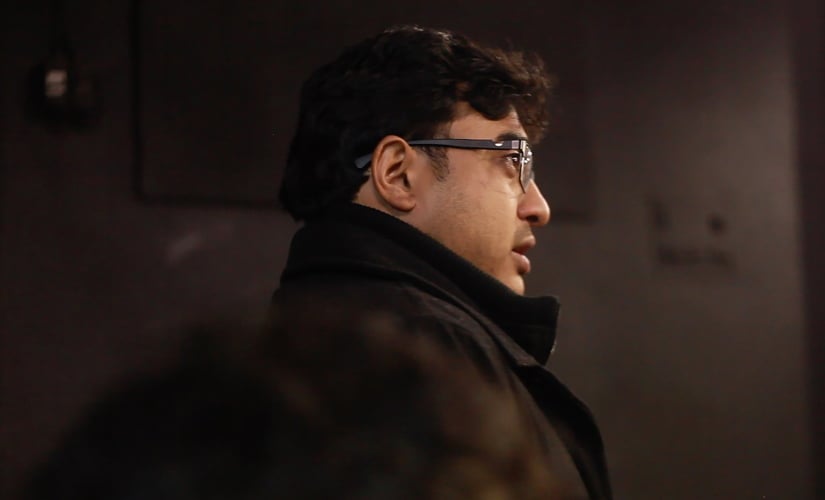
Abhishek Majumdar

Density leads us nicely to my next question. You work in Hindi, in a moment when there's increasing criticism of the elitism of English. But you also work in theatre. Do you ever think about reaching out to larger audiences?
I have a lot of confidence in the theatre. If a play is worth anything, it will outlive at least one generation. And over time, plays have large audiences with a much deeper level of engagement. So I think the idea of audience is a more complex matrix than just the number of people right now — it's also about density, how many, where. 
The paradox of our time is that in this political moment, you want to make work because it feels urgent. Which is of course necessary, in the face of what is going on. But at the same time there are so many philosophical problems in the humanities and sciences which are completely worth looking at. Is an entire generation of artists only going to look at Hindutva? Maybe it has to, but we also need deviations.
Having said that, I make theatre because I like every dimension of it. I love the craft of it, the art of it, the coming together of people to do it it, the teams that we build, having that audience live, reaching out, going to small towns, going to big cities. While closing Muktidham, we had a moment where Sandeep Shikhar's daughter Sanchi, who I have seen being being born, was sharing a room with Ram Kissar, who does our make-up, who has worked with BV Karanth since he was 20. This is possible in the theatre, because of the nature of its form. It's not like everybody has to be trained in one dance form. It is rough, rugged, it is mixed, it reflects the streets of your town. The street has an old man and a young woman, so the green room must have that. And that is for me the reaching out of the theatre.

But are you often accosted by the question of whether you want to direct a film? Or turn your plays into films?
Suman Mukhopadhay, I call him Lal Da, has won a major award to make a film out of Djinns of Eidgah. I am not a big fan of cinema, though I will direct a film at some point. What I am interested in is directing concerts. I grew up travelling a lot with Indian Ocean, and that gave me the idea that there is a dramaturgy to concerts. A couple of bands have asked me. Susmit [Sen] also asked, but I've looked up to him for so many years, I can't direct him! He will have no problem, but I will have a problem. But now I'm thinking of a concert of sound designers, as opposed to musicians.
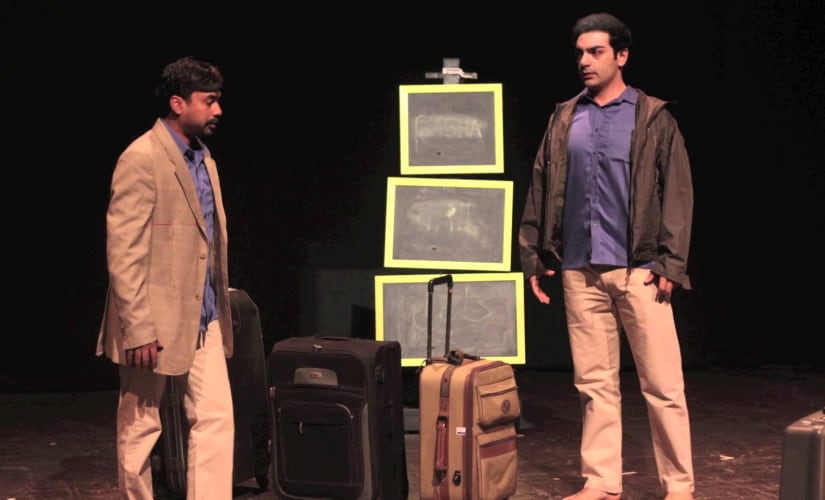
Djinns of Eidgah, by Abhishek Majumdar
A still from Majumdar's Djinns of Eidgah

Would you write the music for such a concert yourself?
Some of it. Right now I compose mostly for plays. I took music for granted, because I grew up with Hindustani music classes in my house, and my mother playing the piano every evening and singing Rabindrasangeet. I can use Bengali notation, Swaralipi, which is often used on the piano.

How do you see the state of theatre in India? Are there exciting things happening?
I think art and science need a lot more government support. These things are important for human beings to exist, and they can't be market driven. This emphasis on the commercial, treating ticket sales as the parameter of existence, as if without it you're not speaking to the people: that's a cop-out for not thinking deeply about what the human race needs.
Individually a lot of exciting stuff is happening, from solo performances to technological things. What in Europe is called 'site-specific theatre' has been happening in India in Prahallada Naatak for a thousand years. Going to the proscenium is a new thing for us. But now, the urban Indian is coming back from the West with the idea that only what's being made there is work.
As a person who teaches in a university, I straddle some of these worlds. For the last five years, I teach playwriting at the NYU campus in Abu Dhabi for a semester every year. I have never had two students in the same class from the same country.

How many students in a class?
Eight to eleven, from India, but also Jordan, Palestine, Latin America, the African countries. And the challenge is that they all need to find specific solutions to their postcolonial situations. We are much closer in the arts and sciences to Bangladesh or Algeria than to New York or London. But we have started thinking of the world as a ladder. That's not helpful at all. Yes, there are great things to learn from a cultural exchange of that sort. But just as the first world person is always operating out of a particular context, it is also important for us to operate out of our context.
I was telling a student the other day that if you want to know where you are making art, you have to ask yourself two questions. One, if about 10 to 12 percent of a country's GDP is spent on arts, then public support for the arts in say, Germany, is about 300 percent that of India. Second, you need to be conscious of historical imperative. It is lowest on Broadway, in New York, which is farthest from colonisation. You can make anything, it basically has to sell tickets. And it is highest in the Gaza strip, because right now, as you're making that play, you are colonised.
Gasha1 825
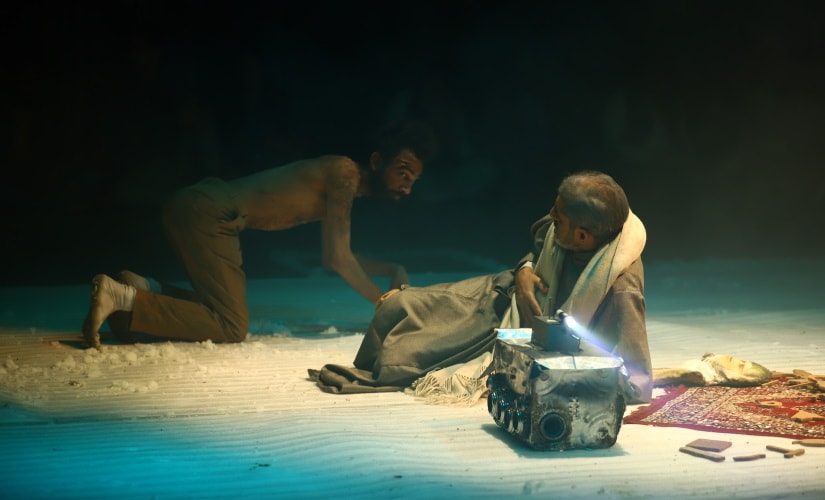
A still from Gasha, written by Irawati Karnik and directed by Abhishek Majumdar

Why is your idea of historical imperative limited to the experience of colonisation?
Yes, I'm being simplistic, in order to find an axis that works globally. There are other axes not directly related to colonisation. Within India, how many plays do we see with lower caste women as characters? Nothing, compared to the many with upper caste men.

You mentioned that developing a Dalit dramaturgy is one of the things you're excited about.
Yes. After we moved on from Indian Ensemble, Sandeep Shikhar and I started a new theatre company along with  Vivek Madan. It's called the Bhasha Centre, and our main focus are at the moment is to work with Dalit texts and Dalit writers, from Daya Pawar and Limhale on Dalit aesthetics to published Dalit autobiographies and the work of lok shahirs. It might not be a literature that already exists. We're collaborating on a version of Kisaan that will open at Prithvi Theatre in March 2020. Iravati Karnik is writing it, drawing on Prithiviraj Kapoor's original play Kisaan together with Daya Pawar's Baluta.

Any other ongoing projects you'd like to flag?
There's Tathagat, a street play we did in collaboration with Jan Natya Manch, which played in Mumbai from 9 to 14 August. There's a version of Eidgah ke Jinnat with Jawahar Kala Kendra, Jaipur, with many Rajasthani actors. Djinns of Eidgah is also being staged at the Edinburgh Fringe Festival this month, by Ananya Mishra and the Bread Theatre Company, formed by a lot of non-white Cambridge University students.

As someone who works in London and New York as well as in Bengaluru and Bangladesh, it is important to me to know how much time I work where. I am not making work in England in order to give up my work in India; that's not going to happen. But last year we were touring in Uttar Pradesh and sleeping in trains, and just after that I spent a month in New York. And that is absolutely fine in the theatre. But as time gets limited, it becomes important to choose, to measure.
I like that we have come back to the mathematics. Thank you, Abhishek.

Published in Firstpost in two parts, 19 and 20 August 2019.

2 March 2019

Singing from the soul?

My Mirror column:

Gully Boy movingly fictionalises the lives of two real-life Mumbai rappers, but its insistence on authenticity masks as many contradictions as its characters 


In the opening scene of Gully Boy, the film’s protagonist Muraad (Ranveer Singh) is roped into stealing a car by his friend Moeen. It’s clear that Muraad isn’t too comfortable doing this, and yet he goes along for the ride, literally. The scene manages to do several things with superb economy. It marks, first and foremost, the thin line between the legal and illegal that these young men must straddle, a lakshman rekha where the temptations of stepping over are much greater than any benefits that might accrue from staying within. It also returns us to the risky lives of poor young Muslim men in Mumbai, exactly thirty years after Saeed Mirza’s Salim Langde Pe Mat Ro (1989), evoking an updated version of that youthful urban swag but avoiding the sense of real danger. Specifically, though, Zoya Akhtar’s achievement in the scene is to show us what really matters to Muraad: when the stolen car’s stereo starts playing some generic rap, he mocks the lyrics showing off girls and gaadis. Whoever listens to such “nakli rap” must be a “nakli aadmi”, the boys giggle, and in their heads the stealing of the car is now more than ok.

Given that Akhtar’s consummately crafted film is, after all, an appropriation of the lives and work of real-life Mumbai rappers Naezy and Divine, there is something audacious about Gully Boy’s frontal claim to authenticity. The unspoken message, in this scene and throughout the film, is that Muraad is asli, the real thingSome of the most affecting lines in the film are built to bolster this truth-claim: “Teri kahani tere ko nahi bolni toh main kae ko boloon? (If you don’t want to tell your story, why should I tell it?)” MC Sher asks Muraad when he says he’s afraid to actually perform the poem he has written. Or later, before a crucial rap battle, when Muraad seems dejected by his poverty and what he sees as his lack of exposure, Sher tells him, “Tere paas kya hai tu woh dekh (What you have, you look at that)”.

Of course, this is tied to the idea of hip-hop as an autobiographical form, whose discomfiting of its audience draws on the authentic experience and unexpurgated language of African Americans from inner city backgrounds. As Sher tells Muraad in response to his “Comfortable nahi hoon main (I’m not comfortable)”, “Bhai duniya mein sab comfortable hote toh rap kaun banata? (If everyone in the world was comfortable, who would make rap?)”.

And yet Gully Boy itself shows us otherwise. Rap, like any other art form trying to succeed under conditions of late capitalism, must become comfortable receiving the patronage of the comfortably-off. So while the film shows how rap is enabled by the democratising possibilities of the internet, it also acknowledges that the music industry continues to have gatekeepers. Money matters, as does the influence of what Moeen once cuttingly refers to as “the English-talking gang”. A crucial character here is Sky (Kalki Koechlin), who is Indian but studies music in the US, with enough university funding to enable a posher studio set-up than anything Muraad and Sher can imagine. 

There is some symbolic power that Indian rappers can draw from hiphop’s international linkages. But while the film invites us to smirk along with Muraad when he shocks an American tourist by coolly reciting lyrics by the famous rapper on the tourist’s T-shirt, the fact is that Muraad actually lives in a Dharavi jhuggi that’s on the American’s Mumbai slum tour.

But what the film also offers is a clear-eyed vision of how no-one can be a single “asli” self, simply because social and economic and cultural pressures force most of us into inhabiting multiple universes. Muraad must cover over his distaste for his chauffeur father’s decision to marry a much younger second wife, literally playing his own soundtrack on his headphones to block out the traditional shehnai music whose maudlinness feels like a comment on his mother’s (Amruta Subhash) misery. Muraad’s long-time girlfriend Safina (Alia Bhatt) might want to be her authentic self with her loving but conservative father and mother, but she knows that telling them the truth about her desires will only result in them being scotched. So she keeps Muraad’s number on her phone labelled as “Mrs Ahmad” and uses the excuse of imaginary medical deliveries to sneak out and meet him.

Safina and Muraad’s perfectly choreographed romantic assignations, clandestinely conducted in the city’s most public places – trains, buses, bridges – are among the film’s unerring joys. As is the emotional landscape of their relationship, especially in the tear-inducing moment where Muraad explains her shaping influence on him to Sky: “Safina ke bina meri jindagi aisi jaise bachpan ke bina hi bada ho gaya (My life without Safina would be as if I’d just grown up without a childhood).”

Safina is both the aspiring doctor for whom career comes first and the girlfriend reckless enough to risk a police case to keep her man; the headscarf-wearing Muslim daughter and the girl rubbing rouge onto her cheeks on a railway platform. Muraad moves from being the white-shirted employee who must keep his mouth shut to the fit guy with two top buttons open, pouring his angst into a microphone. Like many films about artistic aspiration, Gully Boy seems certain that only one of these selves is the real one, the one worth celebrating. But perhaps it is the very fact of acknowledging multiple selves that keeps us asli