Showing posts with label sex work. Show all posts

13 January 2021

Drives with a View - III

My Mumbai Mirror column:

Continuing our series on films about cabbies, we look at why Paul Schrader and Martin Scorsese's 1976 creation, Travis Bickle, seems so eerily prescient today

Halfway through Martin Scorsese's 1976 neo-noir classic Taxi Driver, we hear a campaign speech from a US Presidential candidate. “Walt Whitman, the great American poet, said, ‘I am the man, I suffered, I was there’,” intones the fictitious Charles Palantine. “No more will we fight the wars of the few through the hearts of the many....” Palantine's words, like most dialogue in Paul Schrader's much-mythified script, speak to -- as well as for -- the film's cabdriver hero, Robert De Niro in a career-making performance as the disturbed Vietnam veteran Travis Bickle.


Unlike Palantine and Bickle, Whitman was real. His poem 'Heroes' -- appropriately chosen by Schrader – was written in the voice of the soldier-as-everyman. “Agonies are one of my changes of garments./ I do not ask the wounded person how he feels, I myself become the wounded person,/ My hurts turn livid upon me as I lean on a cane and observe...


Other than this, Schrader's script isn't what one might call poetic. Taxi Driver is a New York film through and through, capturing the city in all its brutal, wry, laconic glory. Unlike many taxi drivers previously discussed in this column series, a cab ride with Travis Bickle rarely involves hearing his voice. Much of Scorsese's masterful tension is based on shots of De Niro's drawn, suspicious face framed in the rearview mirror as he listens to his fellow citizens in the seat behind him – and judges them harshly.


As a cab driver, Bickle is the perfect witness to the world around him. But he does not wish to be a mere witness. He sees the city as “an open sewer full of filth and scum”, a mess that needs to be cleaned up. The post-60s and pre-Giuliani New York of the film is riding high on a wave of freely available sex and drugs, and our hero wishes someone would rein it in. He wants to save it from itself. In one memorable scene, the wannabe Presidential candidate rides Bickle's taxi. When Bickle recognises him, he tells Palantine the city's dirt/immorality needs to be “flushed down the toilet” by whoever comes to power.


“Let me tell you something,” Palantine says earlier, “I have learnt more about America from travelling in taxicabs than in all the limos in the country.” The surround-sound of the campaign lets the film unfold against the backdrop of Palantine's catch-all slogan ‘We are the people’. 


Watching Taxi Driver in 2020 feels strangely prescient: Bickle appears as an early representation of a figure that has come to dominate post-Trump American political discourse; the White everyman who thinks of the country as having gone to the dogs and himself as the morally-superior saviour. As Bickle becomes increasingly unhinged, his monologues in the mirror – bookended by the famous “You talking to me?” line – refer to himself as a hero in the making: “a man who would not take it any more... someone who stood up against the filth”.


Travis Bickle is, in fact, a precursor to much else in the American nightmare of the late 20th and early 21st century – a mentally ill man gripped by perpetual insomnia; whose sense of anomie and aimlessness leads him to gun violence. If politicians don't seem to want to 'clean up' society, he'll do it himself. But the subtext of what Bickle thinks needs to be 'fixed' is both racist and male chauvinist (though not uncomplicatedly). Meeting a White passenger who wants to murder the wife cheating on him with a “nigger” is followed by Bickle acquiring weapons – from a preppie, White, gun dealer who chooses Bickle over “a jungle bunny in Harlem” because he only deals “high-quality goods to the right people”. Bickle first uses the gun on a Black man who's amateurishly robbing his local cornershop. In one of the film's grimmest scenes, the unfazed Italian shop-owner waves Bickle off and says he'll take care of it. He then takes an iron rod to the thief's body, shouting “The fifth motherfucker this year!”

Another remarkable subplot reveals Bickle's deeply-conflicted relationship with sex and women. The same man who complains about the city's filth – this is a Central New York full of sex shows and prostitution – takes his pristine, almost prissy, date to watch a faux-instructional Swedish porn film. When she proceeds to shut him out afterwards, his interior monologue becomes bizarre and incel-ish: “I realise now how much she's just like the others, cold and distant. And many people are like that. Women for sure. They're like a union.”


The other subplot about sex is Bickle's violent rescuing of Jodie Foster's underage sex worker – a plotline echoed in Schrader's self-directed film Hardcore (1979), in which a young girl runs away from a religious suburban family to become a porn actress, and goes back home in a strangely unconvincing last scene, like Foster's Iris.


What is truly disturbing about Taxi Driver's end, though, is that he is feted for murder. Violence, when committed against 'immoral' people, it seems, makes you a hero. That once-fictional battlefield seems eerily closer to today's reality.

 Published in Mumbai Mirror, 27 Dec 2020.

Drives with a view - II

My Mirror column:

Two Iranian films -  Jafar Panahi's 2015 Taxi Tehran and Abbas Kiarostami's 2002 Ten - use the taxi ride as a space for confession, comment and confrontation.

Early in Jafar Panahi’s 2015 Iranian docufiction Taxi Tehran, two passengers in a taxi get into an argument about the death penalty. “If they hang two people, the others would see,” says the man in favour. The woman argues against, saying that people mustn’t be hanged for such minor crimes committed out of need. “After China, we have the most executions in the world,” she points out. The more coherently the woman argues, though, the more rudely the man jeers at her. “You don't know jackshit,” he says at one point, accusing her of living in a world of fiction because she is a teacher – someone who he thinks reads too many books and spends her days with children.

Children in post-revolutionary Iranian cinema, of course, have been the chosen carriers of filmic truth – especially in Panahi’s own film career, right from his 1995 debut The White Balloon and his 1997 feature The Mirror (which shares with Taxi Tehran the docufiction device of having an actor engage in conversations with real people). Taxi Tehran also contains a precociously sharp child – the director’s niece, who films everything on her mobile camera. Between showing us the articulate female passenger and the whipsmart little girl, it’s more than clear that Panahi intends us to laugh at the man’s words.

But the car is, in Taxi Tehran, very much a space of dialogue; a place where unusual exchanges can take place. Taxi Tehran was the third film Panahi shot illegally after the Iranian state banned him from making films, and it won him the Silver Bear at the 2015 Berlin Film Festival. In the film Panahi turns his vehicle into a faux-taxi, picking up strangers, family members and acquaintances from all over the city and dropping them off at their destinations. Except we learn soon enough that some of these exchanges are staged – and in the finest Panahi tradition, it’s often difficult to say which ones.

The film is strewn with references to the ubiquity of the camera in our lives. From the niece who wants to make a film in a month and has already recorded a real-life crisis in the lives of some acquaintances, to the neighbour who brings Panahi footage from a security camera to describe something terrible that happened to him, to the state placing a political prisoner's visiting mother in a room with cameras, life seems increasingly something that unfolds on screen rather than off it.

But Taxi Tehran feels like an update on an older Iranian film which was also set entirely inside a car driven by one person – Abbas Kiarostami's Ten (2002). In the unforgettable first segment of that Palm d'Or-nominated film, a young boy shouts at his divorced mother for a long length of time as she drives him through the city. We don’t see the driver – played by the actress Mania Akbari – for the first few minutes, instead experiencing the claustrophobia inside the car build with the child’s terrifyingly adult remarks. “That makes three sentences and they’re all rubbish,” he shouts, or “I can't live with you because you are a selfish woman,” or “You'll never know how to talk and you’ll never be anything” - all of which make it seem like he is ventriloquising his father, from whom she has got a divorce. The boy constantly instructs his mother to “say it calmly” or “don't shout in the street”, while himself plugging his ears against her voice and yelling louder to drown her out.

Like in Taxi Tehran and in the two films about taxis that I discussed last week (World Taxi and Night on Earth), the car in Ten is an unspoken site of confession. Or sometimes, a refuge. When the driver’s seven-year-old complains that she starts talking as soon as they get in the car, she retorts unselfconsciously that there’s no privacy at home – the home she shares with the new husband she's so happy to have acquired.

Driving around the city seems to allow for long, frank exchanges, even with women passengers she doesn't know well. A sex worker whose face we never see insists that wives are also in a kind of trade with their husbands. “You’re the wholesalers, we’re the retailers,” she scoffs. Another woman who has lost a fiancĂ© to a rival contender talks of another kind of exchange, the one we conduct with God. “Before, praying seemed ridiculous,” she says softly. “I used to say, you pray to force God to give you things.” But both she and the car’s driver now find themselves deriving a semblance of peace from their visits to a mausoleum.

If the content of Ten’s conversations reveals a society politically and legally skewed against woman, the form, too, has something to offer. Male drivers often block Akbari’s path, she has to keep demanding right of way. So there’s some quiet courage to be drawn from the penultimate segment in which her young son returns, and inquires about first and fifth gears. If he thinks his mother can teach him about driving, perhaps that’s not a bad start.

Published in Mumbai Mirror, 13 Dec 2020.

2 August 2020

Book Review: The Dark Hours

I reviewed the new translation of a 97-year-old Bengali book, for India Today magazine.

A 1923 bhadralok account of Calcutta's seamy side is sociological and voyeuristic by turns.

In 1842, chief magistrate J.H. Patton drew up an elaborate plan to rid Calcutta of crime. Splitting the city geographically into upper, middle and lower divisions, Patton appointed 300 constables to the police in each. Their daytime duties were not unexpected, “preventing breaches of the peace, arresting persons against whom a hue and cry has been raised, ...drunk and disorderly persons and fakeers, and others making an obscene and disgusting exposure of their persons...” But at night, the constables were instructed to “on no account allow any person to pass along the streets or highways with a bundle, box or package after nightfall, without stopping him and examining the contents of his load...”. Night, it seemed, made everyone a suspect. The just-arrived rural migrant was to be treated as a potential burglar, or, at the very least, immoral. The city after dark was by definition illicit, a place of danger and debauchery.

In 1923, a well-known writer of Bangla detective fiction and children’s literature set out to map that city in words. Eighty years after Patton’s attempted clean-up, Calcutta had only grown in size, complexity and criminality. While claiming literary inspiration from Kaliprasanna Sinha’s irreverent 1862 urban classic Hutum Penchar Naksha, Hemendra Kumar Roy also insisted that his eyewitness account of the city’s seamier side would warn “[f]athers of young boys and girls where and what the real dangers are”. But the fact that Roy published Raater Kolkata under a pseudonym suggests he knew how his “adult male audience” would read it.

Recently translated into English by Rajat Chaudhuri as Calcutta Nights, Raater Kolkata is fascinating as a document of the 20th century city, but also for the tightrope it walks between salacious gossip and moral censure. The level of detail varies, from pure urban legend (e.g. women “from the western or north western part of the country” being sexually serviced by hired men in empty houses “on the banks of the Ganga, in the Barabazar area”) to descriptions that seem to draw on long observation.

Prostitution, for instance, is subdivided by race, class and location, from the Chowringhee hackney carriages that “take you to a white-skinned beauty”, to Jorabagan streets in winter, where poor sex workers stand “when the pye-dogs have also vanished”. The bhadralok in Roy clearly takes pride in his first-person exploits: entering an opium den in old Chinatown, escaping a police raid on a Mechhobazar goondas’ den, watching two sanyasinis fight it out at the Nimtola burning ghat. But it is in his descriptions of urban commingling, Durga Puja processions, or the theatre, that the anxieties of the upper caste male truly come to the fore. This is a book to be read as a sociological comment as much on the city as on its author.

Published in India Today, 1 Aug 2020.

30 September 2018

Sisters under their skins

My Mirror column:

Last week’s release Love Sonia, Tabrez Noorani’s cinematic exposĂ© of India’s role in the international sex trade, makes for an interesting juxtaposition to Tikli and Laxmi Bomb.


The two women at the heart of Tikli and Laxmi Bomb, which I wrote about last week, differ in age, background, language, priorities — but are united by a common fate and an understanding of what they’re up against. It is after Putul and Laxmi begin to trust each other that they can forge a larger sisterhood of sex workers. Writer-director Aditya Kripalani’s programmatic zeal can feel cinematically clunky, but his core political premise is irreproachable: the world is run by men and women can only resist if they come together.

Kripalani’s film wants us to recognise sex work as a form of labour, currently carried out under drastically unfair and unsafe working conditions. His dream is a sex workers’ revolution: a krantikari sisterhood that offers both a safety net and entrepreneurial improvements.


At first sight, Tabrez Noorani’s Love Sonia, released last Friday, seems to share Kripalani’s themes: sex work and sisterhood. But it approaches prostitution from the opposite end. Rather than adult women who are making a choice (albeit in straitened circumstances), Love Sonia is concerned with the trafficking of children and young women into the national and international sex trade. In another contrast to Tikli and Laxmi Bomb, the sisters in Love Sonia are biological ones — and the film is about their wrenching separation rather than their coming together. In a plot that underlines Noorani’s focus on unfreedom, an indebted farmer somewhere in the Mumbai hinterland sells Preeti, the fairer of his teenaged daughters, into the flesh trade. The other daughter, Sonia (an affecting Mrunal Thakur), tries desperately to trace her. When that fails, she follows Preeti to Mumbai, but ends up a prisoner in a brothel herself.

The brothels of Mumbai have long been the site of both tragedy and villainy in Hindi cinema, and the Love Sonia version is just as depressing as what we’ve seen before. The claustrophobic small rooms, the blue painted doors, the flimsy partitions, the very young faces with painted red lips all evoke Mary Ellen Marks’ Falkland Road images from the 1970s. But with Sonia’s first cowering view of it, as she slinks past half-naked bodies heaving in dank rooms, Noorani turns this world into something almost biblically sinful, a latter-day Sodom and Gomorrah. This vision of the brothel is underscored when one of its long-time inhabitants, the slightly unstable Rashmi (Freida Pinto), tells Sonia her family would have done her “kriya-karam” (her last rites) long ago. “Ab toh bas iss narak ka maja le le (Now you may as well enjoy the pleasures of this hell),” Rashmi says.

Hell has its gatekeepers. In an update of sorts on Sadashiv Amrapurkar’s legendary Maharani in Mahesh Bhatt’s 1991 Sadak, we have Manoj Bajpayee as the brothel owner Faisal, a terrifying presence who swings between quiet cajoling and violent, abusive rage. There is a pattern to Noorani’s male characters. Whether it is the girls’ father (Adil Hussain) at the family level, the village level patriarch Dada Thakur (Anupam Kher in a nicely underplayed but supremely creepy performance), or Faisal as the self-appointed father-figure of the brothel, each of these men claims to be shielding women from what lies beyond. “Baahar yeh jo jaanwar type ki duniya hai, kaun bacha raha hai tujhe usse (Who do you think is saving you from the beasts that make up the world outside)?” Faisal once yells at Sonia. But in fact these men are themselves the source of danger, their protectiveness a mere front for exploitation.

But let us return to sisterhood — and the pressures upon it. What lights up Sonia’s journey is her love for the sister she’s always taken care of. But we also see the dark shadow cast by competition. The widely accepted idea that Preeti is prettier affects Sonia’s belief in her own attractiveness. In one harrowing scene, the spectre of jealousy becomes a wall between the sisters.

Even more complicated are the teenaged Sonia’s relationships with older women in the brothel. The madam Madhuri (Richa Chaddha in a fine performance) and Rashmi both try to win Sonia’s trust, even as they collude with Faisal to break her spirit. But the strings they try to pull also reveal their own status as puppets. Sex is the only bribe they can offer; their seductiveness is a weapon of the weak. Noorani’s is a tragic vision of how women operate in a world so totally governed by men.

The saddest comment Love Sonia makes on the sisterhood theme, though, is when it shows us how women judge each other by the standards men have set. When Rashmi tries to position herself as a surrogate sister, a stand-in for the absent Preeti, Sonia is appalled that her innocent sibling might be equated with a woman she clearly sees as ‘fallen’. “Tumhare jaise bilkul nahi hai woh,” she cries. The madonna and the whore are tragically real stereotypes — even among sex workers.

Some might argue that Noorani ends on a more hopeful note than that. Indeed, some broken bonds between women are revived, and some transformative new ones forged. And yet, it is hard not to read the tragic ends of specific female characters in terms of that disturbingly familiar Hindi movie trope: the fallen woman might atone for her sins, but she would never escape her fate.


Published in Mumbai Mirror, 23 Sep 2018.

Mean Streets

My Mirror column:

A promising film about sex workers strives to be bleakly documentary while also taking the revolutionary road — and loses its way.


Aditya Kripalani’s film Tikli and Laxmi Bomb, currently streaming on Netflix, has many promising things about it. Based on Kripalani’s own 2015 book, the plot revolves around a group of Mumbai-based sex workers who come together to carry out what they call a ‘revolution against men’ — not by stopping the work they do, but by eliminating the middlemen who control their business.

Just by giving centre stage to a group of sex workers, Kripalani turns away from the long-standing cinematic tradition in which the prostitute/ tawaif/ dancing girl could really only be one of two things: a heartless two-timing vamp, or the golden-hearted receptacle of the hero’s pity and desire. Other than Shyam Benegal’s still unsurpassed Mandi, in which the occupants of a brothel find ways of dealing with the ire of ‘respectable’ society, even Hindi cinema’s non-titillating attempts to give the sex worker a voice have never been able to do without a ‘good guy’, a hero through whose eyes we might view these women sympathetically.


Whether it be Guru Dutt’s idealistic poet ‘accepting’ Waheeda Rehman’s Gulab in Pyaasa, Chandramukhi in all the versions of Devdas, or Rekha in Umrao Jaan, all the way down to Rahul Bose’s encounter with the streetwalker Kareena Kapoor in Chameli and Aamir Khan’s police inspector Shekhawat falling for Rosie (Kareena again) in Talaash, the sex worker has been a figure of romantic fantasy. Her existence on the Hindi film screen has remained about being fascinating to men — if not sexually, then as an object of curiosity.

So it is valuable that Kripalani makes the film’s pivotal relationship one between two women. Putul AKA Tikli (Chitrangada Chakraborty) is young and new to Mumbai’s streets, showing up on the scene with enough spark to reignite the fortyish Laxmi’s (Vibhavari Deshpande) fading hopes. Some of the ways in which the contrast between them is gestured to are perhaps too obvious, like Putul’s high heels, tight jeans and glamorously open hair versus Laxmi’s unchangingly loose, dark-coloured collared shirts at work and aunty-style nighties to sleep in. But both actresses are wonderful, bringing to life both the initial friction between the jaded, no-nonsense Laxmi and the fun-loving, talkative Tikli and their gradual path to friendship.

The fact that Kripalani’s film does not adopt a male point of view is reinforced by having women in many of the technical positions: art direction, cinematography, assistant direction, costume design and editing. It presents these women as sexual beings when they present themselves that way — when Tikli sashays down a hotel corridor, or when Shari lehraos a sari aanchal. When and if the camera dehumanises a woman, it is done very obviously through the eyes of a leering man.

“Andhera apna dost hai,” Laxmi tells Tikli early on, and the film is indeed shot in various degrees of darkness 
— in alleys, parks, seedy bars, even seedier living rooms and the interiors of cars — punctuated occasionally by neon lighting, as in AT’s auto which ferries the women to work. Something about Laxmi’s harshly tube-lit cubby hole of a room, with almost no furniture and a fading Prabhat Studio poster on the roughly plastered wall, reminded me of the rented rooms in which the dancers lived in Mira Nair’s affecting 1985 documentary India Cabaret.


The bareness of the locations and the handheld, almost jerky, camerawork underline the bareness and rootlessness of these lives. And the style does work, to the extent that the film shows us sex work as the unglamorous drudgery — the work — that it is. It also allows us to move from watching these women treat the police station casually, as a place they’re so used to that they can sit around after a ‘raid’ boredly taking selfies, to being suddenly jolted into the exploitative violence of this ‘workplace’. The normalisation of sex work as labour is matched by the normalisation of its potential violence.

But there is a strange disjuncture between this documentary realism and the heroic, almost epic narrative of the war that the ‘Tikli and Laxmi Gang’ sets out to wage against patriarchy. That melodramatic, almost filmi register appears particularly in the characterisation of Putul and Laxmi: in their tragic backstories, their action sequences, their grandiose plans. There is a Rang de Basanti reference in the dialogue that makes a wink-wink acknowledgement of this aspect, but the film remains tonally disjointed.


The very first scene had shown us Laxmi (Deshpande) waking up to find that the wrist she’d tried to slit at night has only bled painfully, without resulting in her death. “Failure even at suicide,” she mutters in disgust, placing the scene somewhere between tragedy and farce. Sadly, the film never quite figures out which it wants to be.


Published in Mumbai Mirror, 16 Sep 2018.

20 March 2017

Singing the Bawdy Electric

My Mirror column:

A lavani dance performance and a film about American burlesque offer sparkling, subversive ways to think about women’s sexual freedom.

The incomparable Shakuntala Nagarkar during a Sangeet Bari performance

Judith Stein, ex-burlesque dancer, dresses up for a return to the stage

Recently, Delhi's Studio Safdar, an unusual performance space that also includes a second-hand bookshop and a cafe, hosted something rarely seen outside of Maharashtra: a performance of (and about) lavani. The result of Bhushan Khorgaonkar and Savitri Medhatul's years of careful research and enthusiastic engagement with the folk dance form, the show draws its name, Sangeet Bari, from the traditional theatres in which lavani troupes perform turn by turn (thus ‘bari’). It is from the same tradition that Sangeet Bari draws its prize performers: the winsome Akanksha Kadam and the incomparable Shakuntalabai Nagarkar, affectionately known as Shakubai.

Lavani is known as an erotically charged dance form, but the songs make space for irreverent commentary on anything from marriage to the current hot-button topic of the day (think demonetisation, or elections). The lavani dancer embraces unapologetically the pleasures of the body, while never forgetting that what fires up those physical connections is often the mind. Watching Shakubai, in her nine-yard sari and jewellery, move effortlessly from the seductive to the comic and back again, is a treat and an education. Flirtatiousness – of both banter and gesture -- is raised to an art form. One marvels at how Shakubai's feet measure the ground in perfectly calculated strides; how not just her face and hands, but every quivering muscle in her back expresses the chosen emotion; and how expertly her eyes scan the room, selecting a man to cajole, challenge, or mock-disdainfully reject.

This seduction routine – and you can tell that it is in many ways a routine – is integral to the performance of lavani. And yet somehow Shakubai's practised ease is also full of improvisational energy, each eye caught in the audience an invitation to create a spontaneous new moment of intimacy. And although the songs are written by men to be performed for an audience of men, these women of lavani display a frank, joyful embrace of their own sexuality.

Women taking an open-faced pleasure in the erotics of their own selves was also the most delightful aspect of a documentary I saw last week, as it closed the 13th Asian Women's Film Festival, organised in Delhi by the indefatigable India chapter of the International Association of Women in Radio and Television. League of Exotique Dancers (2015), directed for Canadian television by Rama Rau, profiles eight ageing ex-burlesque dancers on the eve of their return to the stage – often after three decades or more – as part of Las Vegas' remarkable Burlesque Hall of Fame. Having worked for decades in what is considered (and perhaps was) – like lavani -- an industry created by men for the pleasure of men, you might be forgiven for imagining that these women would seem embittered, angry or at the very least, exploited. Instead, Toni Elling, Holiday O'Hara, Kitty Navidad, Judith Stein and the others all emerge as unbelievably badass women, with stunning clarity not just about the milieu they agreed to be part of, but also about what their work meant to them.

Each woman's journey was different. For Navidad and Elling, the move into burlesque was partially because of the frustratingly low-paid, boring assembly-line jobs their gender and class had equipped them for. Once on stage, though, they enjoyed themselves. “All those years I had worked as a waitress, a telephone operator, you know? But I found myself on stage, and I know who I am now,” says the Detroit-born Elling, among the first black women to be a burlesque dancer.

For O'Hara, who had spent her childhood as the nerdy 'ugly' girl damaged by self-doubt about her attractiveness, being publicly admired for her sexual, sensual identity was liberating. “With dance I got to recreate myself. It allowed me the opportunity to reclaim my body. And that healed my mind, too.” Meanwhile Judith Stein, whose feminist friends disapproved of her becoming an erotic dancer, has no doubt that her choice empowered her. “Feminism [for us] wasn't about not shaving your legs. Feminism was about shaving your legs and working in a bar and working as a 'sex object' and knowing that you were. And not trading your soul and your pussy for a wedding ring,” says Stein, unflinching.

The theme of financial independence comes up repeatedly. But equally significant is these women's aura of sexual confidence. “I refuse to believe the men were in charge here,” says O'Hara. “No-one's there to BS you. You're BS-ing them,” says another dancer. “Being a stripper, or being a sex trade worker, that has been the job... open to women through the ages. The belly dancer, the flamenco dancer... it was about being sexual, being able to be comfortably display their sexuality. And that's strong,” says Stein.

Sexuality, the film persuades us, is as legitimate a part of a woman's identity as her mathematical skills, or her talent for answering phone calls. And given that the world is what it is, why should using one's erotic skills – and indeed, developing them more fully to give pleasure to one’s self – not be something to celebrate? The body is not everything. But we have insisted for far too long that it ought to be nothing.


Published in Mumbai Mirror, 17 Mar 2017.

9 May 2016

Twins from a Temple Town

My Mirror column for 8 May 2016:

Two recent Marathi films use a very similar set of ingredients to create different portraits of Pandharpur.


Films with a sense of place are always a joy. I recently watched two Marathi films — Ringan and Elizabeth Ekadashi — set in the pilgrim town of Pandharpur. Like much recent Marathi cinema, following in the footsteps of Iranian cinema in particular and neo-realist cinema in general, both featured child actors in central roles. 


Elizabeth Ekadashi, directed by Paresh Mokashi (whose earlier Harishchandrachi Factory was India's entry to the Oscars that year), was 2014's National Award winner for Best Children's Film. The plot combines a children's adventure story with a heartwarming moral lesson: a schoolgoing brother-sister pair from Pandharpur (Shrirang Mahajan and Sayali Bhandarkavathekar) decide to set up a stall during Ashadhi Ekadashi (the height of pilgrim season). Their plan is to earn a bit of money, defying their single mother's strict instructions — but only to help her repay a debt. 

Elizabeth Ekadashi opens with the ritual bathing of the idol in a Pandharpur temple, intercut with the equally tender bathing of a bicycle. The bicycle, it turns out, is called Elizabeth — the children's most treasured possession, not just because it reminds them of their late father, from whom it was a gift, but because it allows them access to the town in a way they could not have had without it. Mokashi's film uses the children's natural energy to help develop a lively sense of space —mapping the back terrace of their neighbour's house which offers them a secret escape route, following the kids as they sprint through the web of narrow lanes, allowing us to experience the swelling crowds and festive madness through their dazzled eyes, all the while emphasising the smallness of a town in which a child can barely avoid being recognized. 

That town, as the film shows irrefutably, is pivoted around the temple to Lord Vitthala, an avatar of Vishnu. Yet apart from naming his child-hero Dnyanesh, after the thirteenth century saint associated with Pandharpur, Mokashi steers largely clear of the religious aspect of his locale. Dnyanesh, in fact, sings kirtans in praise of science, anointing Newton and Einstein as gods. 


Makarand Mane's debut feature Ringan (The Quest), which is this year's National Award winner for Best Marathi film, is very different in its emphasis. A farmer, aging before his time, makes the journey to Pandharpur with his little boy because three successive years of drought have driven them to bankruptcy. The premise itself suggests the hope of divine intervention. "The one we're going to visit now, he will certainly help us," says the farmer to his tired, irritable son, who just wants to turn around and go back home. 

But their time in Pandharpur starts badly. In a plot twist clearly inspired by De Sica's neorealist classic Bicycle Thieves, a man steals the scooter, cellphone and money that are literally the duo's last possessions. The police are unhelpful, and father and son end up in the beggars' queue outside the temple. Here Mane's film, in contrast to Mokashi's, directly raises the question of belief, by placing the distressed farmer in conversation first with a spiritual figure on the ghats, and then in a bitter monologue addressed to a old stone statue of Vitthala that he finds lying on the street. 

Mane's ethical landscape is a little too heavily underlined, but his canvas is painted with a deliberate beauty. As long as things are going badly, the camera pans the dusty browns of Maharashtra's drought-ridden regions, coming to rest on the rough stone walls, the drab khaki uniforms, crusty ground and dry bhakri. A change is his characters' fortunes is visually marked by colour - literally heaps of gulaal: scarlet, pink, vermilion - and by the soothing, quenching sight of water. 

Ringan's silent moments are affecting, but its overarching message is cloying. Bicycle Thieves inspires the climax, too — the poor man pushed to the brink of disaster being tempted into abandoning his honesty, and his tragic fall from good faith being witnessed by his little son. There is little newness here, but Mane achieves something special with his actors — the lined face of Shashank Shende, which relaxes into a grin only when he sees one on the face of the adorable curly-haired Abdu (Sahil Joshi). 

There is a bicycle in Ringan, too — a gift to little Abdu from his father. As in Elizabeth Ekadashi, the bicycle allows the child to explore the town, and us to see it through his bewildered eyes. 

Children and bicycles, an adult with an unpaid debt, a posse of pilgrims and the temptation of easy money — the building blocks of Mokashi and Mane's films are strikingly similar. Even the sex workers of Pandharpur appear in both, seen through the eyes of children. If Mokashi makes a gently subversive joke about the way they're usually treated, Mane creates a more convoluted plot-line that involves Abdu's uncomprehending quest for his dead mother. That, too, is the quest of the film's title. I only wish its resolution had been less mawkish.

Published in Mumbai Mirror, 8 May 2016.

9 September 2014

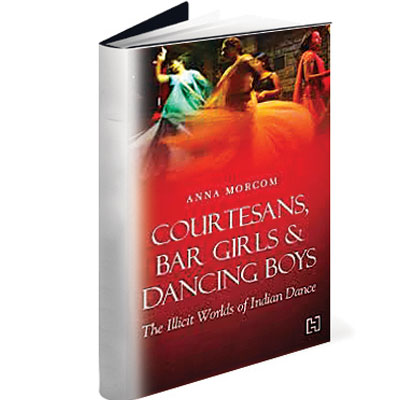
Book Review: Courtesans, Bar Girls and Dancing Boys: The Illicit Worlds of Indian Dance

Courtesans, Bar Girls and Dancing Boys:
The Illicit Worlds of Indian Dance.
By Anna Morcom. 298 pp. Hachette, 2014.
In Kamal Amrohi’s Pakeezah (1971), a nobleman enters a train compartment and becomes entranced by the beauty of a sleeping woman’s uncovered feet. He leaves her a note that says: “Aapke pair dekhe, bahut haseen hain. Inhen zameen pe mat utaariyega, maile ho jayenge.” That poetic injunction, telling the beloved that she is too ethereal to descend to earth, has become cinematic shorthand for nazaakat, for the delicacy of old-world romance. But it is also a metaphorical message to the tawaif, whose very profession involves placing her feet on the ground. The dancing girl is being told that dancing defiles her.

The social history of Indian dance has been hugely defined by that idea of defilement, and Anna Morcom’s book, Courtesans, Bar Girls and Dancing Boys: The Illicit Worlds of Indian Dance, is the first rigorous academic investigation into how this history informs our present. Morcom shows how dance and dancers in India are located in a grid of class, caste and gender, a grid whose traditional moorings have been realigned but not erased by modernity. 


The Indian performing arts, she argues, emerged in a patriarchal framework where the dynamics of power and sexuality were inseparable from those of social status — men never perform for women, nor high status women for lower status men. Those who performed were lower in status than their audience: in terms of gender (by being female, or being effeminate males) and often also caste. Dancing in public, particularly, has long been treated as a coded signifier of sexual availability — even if, as in most instances, the male audience’s sexual access to the performer’s body remained theoretical.

An ethnomusicologist by training, Morcom’s rich combination of archival research and ethnographic fieldwork is especially valuable in a field satiated with opinions but starved for real research. The book’s first chapter is historical, describing how the Indian performing arts were transformed by a combination of Victorian morality and nationalist reform. In what are known as the Anti-Nautch campaigns, colonial administrators and nationalists came together in their distaste for what they saw as feudal sexual mores. The discourse of social reform was used to stigmatise devadasis and tawaifs, their identity as skilled cultural practitioners subsumed by their perceived sexual dangerousness. 

In a remarkable double move, the marginalisation of these women paved the way for upper caste/upper class women to enter the “reformed” performing arts (from which the earlier dynamic of transgressive sexuality was now carefully erased). If women from tawaif/devadasi backgrounds wished to perform in public, they had to first perform respectability, by abandoning the mujra, moving out of the kotha and, ideally, marrying — thus converting themselves from “Bai” into “Begum”, or “Devi”.

This part of the story is perhaps familiar. But Morcom’s real revelation is that “nautch” did not disappear. “Rather" [she writes], "it went underground, involving far more prostitution, less ‘choice’ and a lower status for the women involved”. It is this process that ended up creating the “illicit worlds” of the book’s title.

The first such illicit milieu that Morcom explores is that of hereditary female performers, the majority of whom belong to a set of interrelated tribes or communities collectively identified by the term “Bhatu”. Drawing on colonial ethnographers like William Crooke and her own interviews in Tonk, Sultanpur and Pune, Morcom discusses some of the better-known Bhatu communities: Nats, Kanjars, Bedias, Kolhatis and Deredars/Gandharvas. Very briefly, she asks some crucial questions of each, such as whether the men were also performers, whether the community does other kinds of work too, and the extent to which dance as a livelihood has given way to sex work.

This is the background for what is one of the book’s most important arguments, laid out in a later chapter on dance bars: that the vast majority of Mumbai’s estimated 75,000 bar girls in 2005 were Bhatus of one sort or another, and that the campaign against Mumbai’s dance bars thus “represented a continuation of the history of exclusion of these hereditary performing communities from a livelihood and identity of dance.” Given the powerful discursive similarities — the appeal to rights and the “liberation” of women on one hand, and protection of “morality” and “Indian culture” on the other — as well as the actual continuity in the communities targeted, Morcom argues that the pro-ban movement needs to be examined as “Anti-Nautch II”.  

Further, for most of these women from communities such as Nat, where performing arts had ceased to be a livelihood since Independence, “dancing in bars had been a form of rehabilitation from sex work”. Crucially, Morcom points out that even English-language journalists and writers critical of the ban were content to produce narratives of women having been “driven to dance”, sometimes in conjunction with bargirls who, Morcom suggests, knew that a simplistic “majboori” narrative would get them more sympathy than the truth. In sum, even the well-intentioned continue to display a blindness to this complex, chequered history.

The other “illicit world of dance” Morcom addresses is even less acknowledged: that of dance performances by transgender males or female impersonators. Men dance as female in all sorts of non-elite traditional contexts — Nautanki, Ramlila, wedding shows and wedding processions, launda naach/Bidesiya in Bihar, and all-male Lavani performances called Binbaikacha Lavani. Some only perform femininity when dancing, but many others identify as kothis, and dance is an important part of this transgressive sexual identity. Morcom’s detailed accounts of kothis open up a new space for discussion of how performance and sexuality can be linked, though again, as with dancing women, cross-dressed male performers are not necessarily providers of sexual services.

The one “non-illicit” chapter is about the rise of Bollywood dance as a middle class activity that can even be proclaimed as a profession. Morcom persuasively contrasts this new public legitimacy with the continued illegitimacy and shame that haunts the bargirls. Yet, she sees some hope for wider attitudinal change in the middle class woman’s ability to perform Bollywood dances without stigma.

This is an ambitious book. The writing — especially the introduction — occasionally feels repetitive, clunky in an academic way. But thankfully Morcom rarely uses theory as a crutch. Her arguments are thoughtful and emerge organically from her fascinating material. Though the book’s vast and varied canvas can often make it feel like several separate books, Morcom has done an enormous service by bringing these worlds to notice. Most importantly, she has given us a lens through which we must begin to connect the highly visible forms of Indian public culture — whether the classical arts or Bollywood — with these profoundly invisibilised ones.

A truncated version of this review was published in the Asian Age.

24 June 2014

Bought on and Sold on Mutton Street

Bought and sold on Mutton Street
My Mirror column last Sunday:

Our columnist takes a historical detour through the antique pleasures of Pila House.

Last Monday I went to Mutton Street. I had spent a week in Mumbai, setting up 'work' meetings that were really an excuse to wander the city as a happy, giddy tourist of the Delhi variety. But one item on my Bombay agenda remained - a trip to Chor Bazaar: several streets' worth of dusty antiques. 

But at Mumbai Central, cab drivers seemed mystified by my desire to go to Chor Bazaar. Then, gently but firmly, one deposited me on a road lined with hardware shops, saying this was Chor Bazaar and I better find this Mutton Street myself.


I did. Having burrowed into uncarry-able and unaffordable mountains of old things, I settled not unhappily on two 1970s print advertisements. The genuinely non-sleazy shop man took me to an ATM on his scooter, past an old theatre showing a Mithun film with brilliant hand-painted poster. Only on my way out did I realise what I had walked down was called Patthe Bapurao Marg. That was when it finally clicked. I'd been walking on Falkland Road.


From dates.sites, (a must-have compendium for film nerds and Mumbai fans, published by the Cinema City project), I knew that Patthe Bapurao was born a Brahmin, named Shridhar Krishnaji Kulkarni, underwent caste conversion in order to work in tamasha and married a Mahar dancer called Pawala. Among the other impressive acts to his name is a visit to Ambedkar in 1927, when, “flanked by two women dancers dressed in finery”, Bapurao offered to contribute the proceedings of eight Tamasha shows to the Mahar Satyagraha Fund, a campaign for the entry of Dalits into temples. Ambedkar rejected the offer on moral grounds.


Bapurao died in poverty in 1941. In 1950, the Marathi director/actor Raja Nene made a highly successful biopic. As one of the central arteries of what was for many years Mumbai's entertainment district, Pila House, it seems only fitting that Falkland Road was renamed Patthe Bapurao Marg. 

Here's the entry in dates.sites: “Pila House-hybridisation of Play House-a cluster of theatres staging Parsi theatre plays and Tamasha performances - bordered on the east by red light area of Kamathipura (named after the Telugu-speaking community of masons), and on the west by migrant courtesans and other entertainment artists at Congress House (named after the office of the Congress Party nearby-is at its peak at the turn of the century.”


While the theatres – the 'play houses' set up in the 1800s - gave the area its name, Falkland Road's association with an even older form of entertainment dates back to the 1700s. That was when brothels first emerged in the area, catering to soldiers.

In an essay called 'F**kland Road' (in another Project Cinema City volume), Bishakha Datta makes the connection explicit. She cites the background note of a (proposed) Union of Entertainment Workers of India that refers to the Arthashastra placing courtesans and sex workers alongside actors, dancers, musicians and bards. The note continues: “It is common knowledge that... sex...work is a form of intimate entertaining communication, involving some very subtle and complex combinations of gesture, language, play and relaxation.”


This is, of course, true - though the argument might find few takers in the hypocritical modern world, where even bar dancers are refused their rights as workers.

But even if the cinema-sex equivalence is unlikely to fly with most people, Pila House has plied generations of (mostly) male, (mostly) migrant clients with both. Built before cinema existed, the 'play houses' are some of the last theatres still projecting film prints. They have specialisations, too: Nishat shows Bhojpuri blockbusters, New Roshan devotes itself to Mithun, Silver to sex films.


There was a time when the brothels of Kamathipura not only lived next to cinema, but in Bombay's cinematic imaginary. Realistic depiction was never the point. Even Gulzar's Mausam, or Sudhir Mishra's Chameli can only be called 'good efforts'. But the girls in the cages of Falkland Road were a legendary sight – when I interviewed her a couple of years ago, Deepti Naval described, with alternate shudders of excitement and distaste, her trip in the 80s to see them. Naval ended up spending half the night in a Nepali sex worker's room, and the experience inspired a performance years later.


Naval got me thinking: has any mainstream Hindi film ever let a girl from a “good family” meet a prostitute? Well, very recently. But of course Kangana Ranaut must travel all the way to Amsterdam to hang with an Indian sex worker, and make the startling discovery that she's not an alien. 

Ironically, just before Queen, Ranaut played a Kamathipura sex worker called Rajjo in a bizarrely retro film called Rajjo, where the token 'contemporary' event is the brothel torn down by an evil consortium of politicians and builders to build a mall. Small industries have indeed replaced most Kamathipura brothels, with owners cutting their losses and leaving as the buildings they rented become prized real estate.


Whether Kareena was a convincing sex worker or not, at least Reema Kagti shot Talaash in Kamathipura. Rajjo chose to spend 5 crores 'recreating' Pila House on a four-acre-plot in Borivali.


Perhaps the last two films about Kamathipura -- one acts as if the place is already gone, and the other is a ghost movie. No Rani could ever show up to meet a Rajjo. 
In Falkland Road, there may soon be no more sex workers to meet. Not even the ghosts of them.


6 January 2009

Book Review: AIDS Sutra

A book review, for Biblio:  

 
AIDS Sutra: Untold Stories from India.
Edited by Negar Akhavi; with a Foreword by Amartya Sen.

Photographs by Prashant Panjiar.
 
Random House India, New Delhi, in collaboration with Avahan, the India AIDS initiative of the Bill & Melinda Gates Foundation, 2008, 340 pp., Rs 395. ISBN 978-81-8400-039-9
 
An anthology should be, by definition, varied, but rarely does one come across one whose various parts complement each other with such Ă©lan. Aids Sutra contains pieces by sixteen writers of different ages and persuasions, each focusing on a different aspect of the HIV-AIDS epidemic and often, a different part of the country. So, for example, we have Jaspreet Singh’s quietly gutwrenching visit to a Delhi home for children with HIV, Sunil Gangopadhyay’s engaging take on Sonagachhi, replete with anecdotes both historical and autobiographical, Siddhartha Deb’s bleak but superb account of the conditions in which Manipur’s young people take to drugs, or Mukul Kesavan’s thoughtful elucidation of the world of Bangalore’s kothis.

Styles, too, vary enormously. CS Lakshmi’s ‘At Stake, The Body’ chooses anonymity as a haven for the voices of sex workers she inscribes with a kind of collective economy, while Nikita Lalwani’s ‘Mister X Versus Hospital Y’, whose very subject is the right to confidentiality, is anchored around a life story disclosed in a single conversation. In a book such as this, where much of the writing is based on specifically arranged encounters between the authors and the people they’re describing, observations need to be particularly fine-grained, and many of the authors recognize the need to abandon the conceit of objectivity. But there are those who cling to the illusion of old-style ethnography (or old-style documentary) – the narrator as a fly on the wall, seemingly observing people and place without recogiszing how his presence contributes to the nature of the scene, or alters it. William Dalrymple is one of those whose style gives away nothing of himself. The first two pages of his essay on devadasis, ‘The Daughters of Yellama’, for instance, form a stream of dialogue: first one woman speaks, then the other. There is precisely one sentence spoken by the author. But they are responding to some invisible third party. It is as if an interview had been transcribed without the questions asked.

In stark contrast is the piece by Shobhaa De, who takes it upon herself to describe, in admirably frank detail, her response to the discovery that her “children’s driver”, Shankar, had AIDS. She is frank, first of all, in admitting that she knew very little about a man who had worked for her for several years – and how normalized this ‘not knowing’ is for upper middle class people. “People who work in our homes, and who are an integral part of our lives, become almost invisible – their presence reduced to an almost shadowy figure at which we shout daily orders. ‘Go here. Get that. Be back on time… So you need leave? Again? Didn’t you just take a day off last fortnight? Why does there seem to be a weekly emergency in your village? How many times do your cousins die?’ All this is said briskly, everybody is so damn busy, so preoccupied. There are a thousand things to do. Who on earth looks up to notice boils on their driver’s scalp?” She is equally honest in admitting that the discovery forced her to confront a host of inner demons: “I imagined all kinds of unpleasant things. He must have got the virus from visiting prostitutes after this wife left him. Maybe he was gay, and had multiple relationships? Had he tricked his wife into marrying him? …Where was my liberal self when I needed it most?”

Vikram Seth also tells a quasi-personal story, of a poem he once wrote in the voice of a man dying of AIDS. But apart from gesturing to the way in which the fearful voice of the poem’s narrator echoes the ill-informed, panic-stricken reaction Seth remembers from California in the 1980s, the piece remains disappointingly slight – and impersonal. His account of reactions from readers then is interesting for the historical light it casts on the life of the disease. But Seth is so tightly focused on trying – and failing – to reconstruct the moment of the poem’s writing that he refuses the opportunity to meditate on wider questions, personal or political.

Siddharth Dhanvant Shanghvi, like De and Seth, elects to tell a story whose origin lies in past personal experience, though in Shanghvi’s case it is not, strictly speaking, his own. ‘Hello Darling’, about a flamboyantly gay filmmaker called Murad, doesn’t do too bad a job of recreating the not-so-far-away world of 90s Bombay, in which Murad’s slick first film about homosexuality was enough to give him “a patina of notoriety” and a lot of press. But his asides about American “bug parties”, or discrimination against HIV positive patients in India – seem tacked on, and even Murad’s story never quite achieves the “darkly nostalgic” tone Shanghvi aims for. Perhaps the problem is Shanghvi’s amateurish prose, teetering perpetually on the brink of purple: “…the greatness he aspired to was one elusive eel. Unable to deal with fate’s tumult, Murad fled to New York… to live his life on high tilt – artistically, independently, hedonistically”, or worse, “Having given filmmaking his best shot, and failing nonetheless, the dark music of HIV played in the background as the echo of salvation”. What does emerge without a doubt, though, is that the stigma – and resultant secrecy – that surrounds HIV cuts across class: a publicly homosexual, glamorous, Page Three figure feels as compelled to keep his positive status secret as a middle-aged Marathi chauffeur.

The most rewarding pieces in the book are those where research is woven into a personal narrative, one that makes visible the layers through which perception is filtered. One such is Amit Chaudhuri’s careful account of the HIV wings of Bombay’s hospitals, and the doctors who run them. Chaudhuri is, as always, simultaneously reflective and detached. His memories of younger days may inform his experience of the city, but with Chaudhuri, memory is not nostalgia. His estimation of Bombay is clear-eyed (and at this moment when the city is the subject of so much impassioned prose, especially welcome): “As I walked with streams of happy people on Perry and Carter Roads, I sensed again this city’s reserves of optimism, which makes it unique among the world’s cities: but was reminded, too, from my own life here, of what I’d forgotten – its infantilism, its susceptibility to charm and excitement, a susceptibility that, in the early 21st century, has its own unforgiving momentum.”

Also clear-eyed is Chaudhuri’s unraveling of the various registers within which the history of AIDS treatment unfolded: partial information from abroad, professional rivalries, increasing but ill-informed media attention, issues of prejudice, sexual morality and secrecy. And at every juncture, he is attentive to the crucial question of class. For instance, visiting hospitals like GT (Gokuldas Tejpal) and JJ (Jamsetjee Jeejeebhoy) for the first time, Chaudhuri recognizes that his “not knowing” such landmarks must be placed in the context of a classed urban geography, in which public hospitals do not need to figure for ‘people like us’. More importantly, within the hospital, class matters. Though it may no longer affect access to Anti Retroviral Treatment (ART) (JJ Hospital became the first to offer free ART in 2004, and others have followed), knowledge of and attitudes to healthcare have much to do with levels of class and education. Chaudhuri correctly points out that ART is “incomplete but, as of now, indispensable knowledge [that] partially removes HIV from the hysteria that surrounded it in the eighties and nineties”, but deaths continue to occur even among those who are diagnosed in time, often because working class patients stop the treatment when symptoms recede.

Class and social background are also important variables in Sonia Faleiro’s hard-hitting portrayal of the complex relationship between sex workers and the police. Faleiro’s piece is significant for its twin insights – first, that the police’s relationship with sex workers is not merely one of law enforcement, but of regular economic and sexual exploitation, and second, that it will not do to paint all policemen as agents of evil: they themselves are cogs in a larger, deeply flawed system. “Policemen’s attitudes mirror that (sic) of the society from which they are drawn. If the average policeman comes from a small town or village where people generally equate sex work with promiscuity, disease, and lawlessness, then he will, unless his training teaches him otherwise, carry those sentiments to work. What makes this mirror image dangerous is that the police have the power to act on their bias.” While this means that there are a large number of policemen like Madhav Rao, who tells Faleiro that sex workers are meant to be beaten, chased away (giving her the title of her piece, ‘Maarne ka, bhagane ka’), it does not preclude the possibility of there being others like Ram Naik, for whom the sex workers of the neighbourhood he patrols are the women he knows best.

Kiran Desai’s account of the Kalavanthalu women – a subcaste of “hereditary courtesans and temple dancers famous for their elegant beauty” – breezily builds up an image of a “normal” Andhra village, only to tear it down : “I notice an overabundance of beds”. Her sure-footed descriptions, of brothels with all the stuffiness of a middle class home, and others that are no more than hovels, are interspersed with statistics, local proverbs and all-female banter, expertly but gently rendered: ““And who likes the sex? Any of you girls?” And immediately they all jump on one woman… yelling, “She! She! She! She does!”

There are other pieces well worth reading that I haven’t mentioned for lack of space, and a measured introduction by Amartya Sen that deals with much more than the economics of HIV. The book also contains some exceptional -- albeit badly printed -- photographs by Prashant Panjiar, adding yet another layer to what is already a generous, nuanced introduction to one of the most complex issues of our time.

Published in Biblio: A Review of Books
Vol. XIII, Nos. 11 & 12, Nov - Dec 2008

To see this article as it originally appeared, with photographs, go here.