My Mirror column:
The second part of my year-end list of my favourite Indian films from 2016.
Carrying on from last week's column: here are six more films that I particularly enjoyed last year.
In no particular order, they are:
The second part of my year-end list of my favourite Indian films from 2016.
Carrying on from last week's column: here are six more films that I particularly enjoyed last year.
In no particular order, they are:

6. Waiting – In Anu Menon's affecting hospital drama, two unlikely people are brought together by the shared frustration of having a loved one beyond their reach. Naseeruddin Shah is reliably good as Shiv, an ageing professor who is the epitome of softspoken rationality — except when he's not. But it is Kalki Koechlin as Tara who surprises. As a sharp young woman suddenly faced with the potential loss of the man she has just married, Tara's yo-yoing between anger, vulnerability and sassiness is at the film's heart. Shot in an upscale Kochi hospital that somehow lends itself to cinematographer Neha Parti Matiyani's clean lines and bright close-ups, Waiting serves up grief and angst without letting go of humour. (I particularly enjoyed the mild comic relief served up by Rajeev Ravindranathan as the too-helpful colleague).

7. Sairat – Among the frequenters of film festivals, there are still many who cannot but view the slow-mo set pieces and addictive songs of Nagraj Manjule's hugely successful film as somehow a betrayal of the hopes he sparked with his 2014 debut Fandry. But if Fandry's placing of its dreamy-eyed child hero in an unremittingly realist cinematic milieu earned it critical acclaim, Sairat's astute, sparkly retelling of the same tale —a cross-caste romance in a rural Maharashtra educational setting — won not just fame for its actors, huge profits and massive audiences, but an unimaginable level of exposure for both Marathi cinema and the film's difficult subject. Manjule gloriously subverts India's grim social reality with our love for filmi romance — and vice versa. A film not to be missed.

8. Chauthi Koot – Gurvinder Singh's arresting adaptation of two short stories by Waryam Singh Sandhu offers us a tense, sometimes sinister Punjab that's almost unrecognizable as the one regularly celebrated in Bollywood's song-filled sarson-da-sagas. But though the stories he adapts are set during the 1980s militancy and their central themes — gun-toting men intent on silencing a harmless dog, or train conductors unwilling to take people of a certain community on board — are certainly 'political', Singh's rendering of them is anything but heavy-handed. Trained under the late experimental filmmaker Mani Kaul, Singh is much less invested in plot or narrative resolution than he is in the atmospheric, painstaking exploration of a place and people — and of cinema itself. A film which will reward the attentive viewer.
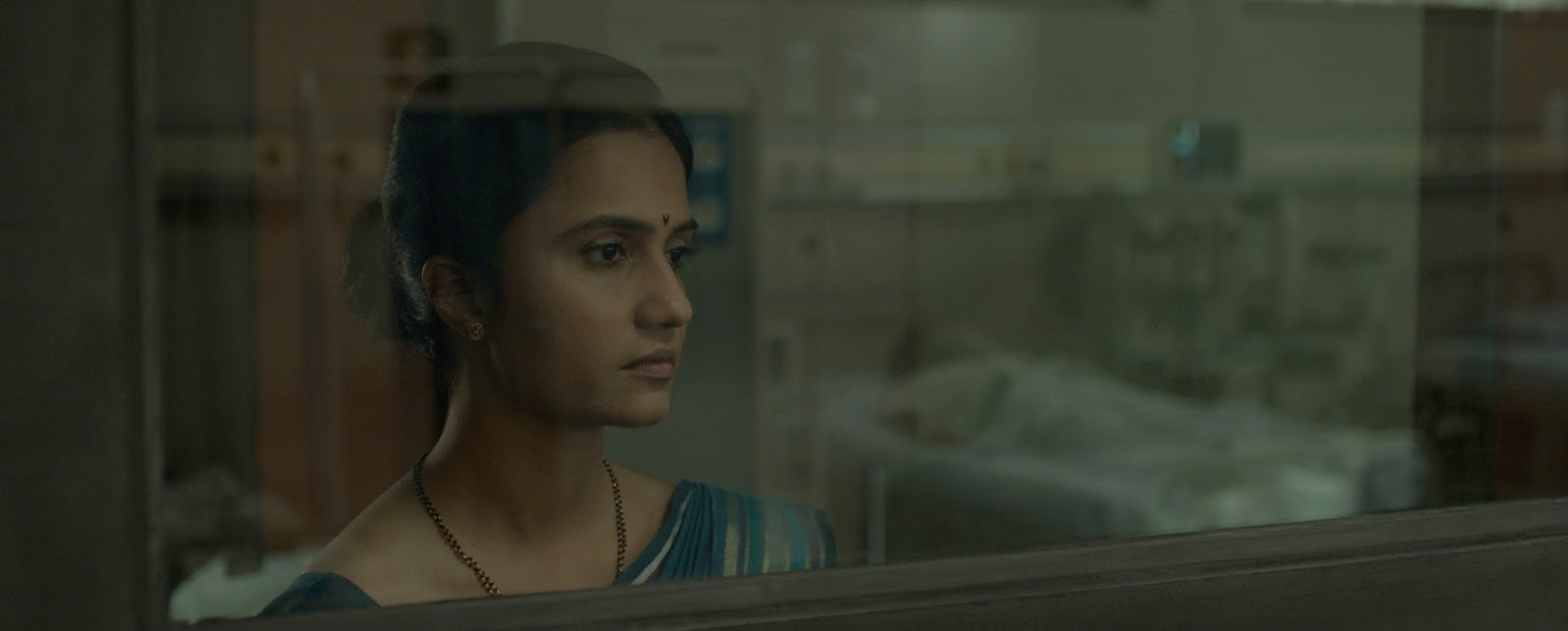
9. Island City – A tonally ambitious film which pitches itself somewhere between sly humour and a pessimistic take on late capitalism, debut director Ruchika Oberoi's triptych of tales about people and machines can feel quite trippy at times. Each segment is anchored in a fine performance. In the first, Vinay Pathak puts in an eerily convincing turn as the obedient corporate slave sent unwittingly on a dangerous path. The second has Amruta Subhash walking a thin line between relief and guilt as a housewife whose oppressive husband's hospitalisation finally frees her to live her own life — and sublimate her desires in a fictional ideal man. The imagined ideal man reappears in the third segment, this time not via the television, but through letters received by Tannishtha Chatterjee's lonely worker. An occasional sliver of abruptness notwithstanding, Oberoi crafts a darkly acerbic comment on our increasingly alienated lives that's well worth watching.

10. Kapoor and Sons: The dysfunctional family is practically an indie staple in the West, but in Indian cinema it is still a rare enough occurrence to make Shakun Batra's film seem remarkable. While nowhere near as devastating as say, Kanu Behl's Titli (2015), Kapoor and Sons manages to take more risks with what it serves up as family foibles than similar recent films like Dil Dhadakne Do, Shandaar and Khoobsurat. Batra's ability to juggle the buried resentments and the goofy jokes is further buoyed by a truly superb ensemble cast: Rajat Kapoor and Ratna Pathak Shah outstripping the youngsters (Sidharth Malhotra, Fawad Khan and Alia Bhatt), and themselves being a little bit overtaken by the infectiously cheerful Rishi Kapoor as the family's indefatigable raunchy patriarch.

11. Thithi: A great deal of worldwide acclaim has come the way of this remarkable film, and all of it is justified. Set and shot in the very particular landscape of rural Karnataka, Raam Reddy and screenwriter Ere Gowda's delightful debut combines an observational documentary style with a fairly large involved set of characters (who are almost all played by non-actors from the region). Things may appear to be unfolding with all the natural ease of everyday life — but make no mistake, this is a carefully thought-through portrait of family and community, age and youth, freedom and responsibility, death and life. Don't let some imagined notion of rural Karnataka or a reluctance to engage with subtitles put you off it.
Published in Mumbai Mirror, 22 Jan 2017.