Showing posts with label anthropology (sort of). Show all posts

28 June 2021

Saving the tiger and wildlife will take more than a few Shernis

My TOI Plus column:

The man-animal conflict in India is a complex, burgeoning problem, and one that is left unaddressed both by our national forest policy and by our mainstream politics
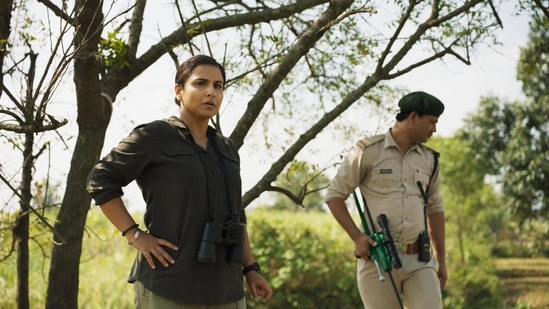
 

https://images.hindustantimes.com/img/2021/06/17/550x309/vidya_balan_sherni_1623932168804_1623932179349.jpg
Vidya Balan plays an ethical Indian forest service officer in Sherni (2021)

Amit Masurkar's new film Sherni has some things in common with his award-winning 2017 film Newton -- the central Indian jungle setting, the town-bred government official working against the odds in an unfamiliar setting, and unlikely collaborations among people striving towards something larger than themselves. The plot in one sentence: When a tigress named T2 starts to attack villagers in the vicinity of a Protected Forest area, an idealistic new forest officer named Vidya Vincent (Vidya Balan) struggles to prevent more human deaths, while also keeping her thoughtless, corrupt bosses from letting a self-appointed hunting hero kill the tigress.

Where Newton tackled the state of Indian democracy with pitch-dark humour and a sometimes-manic edge, Sherni approaches the tragic impasse of environmental conservation with enthusiastic sincerity, tempered by something akin to haplessness.

Perhaps that is inevitable, given that the man-animal conflict in India is a complex, burgeoning problem, and one whose roots are left unaddressed both by our national forest policy and by our mainstream politics.

To try and summarise a complicated history: India spent the first 25 years after Independence wooing parties of tiger-hunting foreign tourists, getting them to pay for the privilege of what sahibs and maharajas had always done. A 1964 New York Times article reported 15 government-approved jungle camps (up from only three in 1954) that organised these expensive shikar holidays, complete with “clean, tasty Western-style food” and liquor. “It is estimated that 3,000 tigers roam the forests, and they are multiplying fast enough to support the present shooting rate of about 300 a year,” the NYT declared.

That proved catastrophically untrue, and in 1972, the government did an about-turn. According to a 2017 article by the Kumaon-based butterfly expert Peter Smetacek, a group of hunters and naturalists had petitioned for a three-year break from tiger hunting to let populations recover, but in response Indira Gandhi's government promulgated the Wildlife Protection Act, under which hunting of any species was banned permanently.

Smetacek, like some others, has questioned the wisdom of this wholesale outlawing of hunting. For one, it made it illegal for farmers to protect their hard-earned crops from incursions by wild boar, monkeys, porcupines, nilgai, bears or birds without permission from a forest officer, pitting locals against the animal world they had cohabited with, while leaving them at the mercy of a corrupt state.

Also, if hunting was strictly regulated instead of being banned, allowing permit-based hunting of animals whose populations were growing too large, we would actually have records of animal populations besides the tiger -- and in fact be able to track and respond better to their declining numbers. That suggestion, outlandish and violent as it may sound to those who of us brought up in a sanitised modernity alienated from the ways of the wild, may be just the starting point we need to rethink the simplistic, often counterproductive legal regimes that have failed in practice to protect our forests.

Few Indian films before Sherni have engaged with this difficult terrain. In Anay Tarnekar's brilliant 2016 short The Kill, a poor adivasi man's deep, reverential knowledge of the jungle and the tiger goes from being a useless, non-monetisable asset to the only thing he can sell – but at a terrible cost.

In 1994, Sai Paranjpye made the sweet, well-intentioned, Chipko-inspired feature Papeeha, where her daughter Winnie Paranjpye played an anthropologist representing the tribal perspective on living in and off and with the forest, cast alongside a forest officer hero (Milind Gunaji) and a series of corrupt forest officer villains who run clandestine logging businesses.

A year earlier, in 1993, Pradip Krishen had made a film called Electric Moon (scripted by his then-partner Arundhati Roy), which takes a more sideways, ironic look at the situation. The film's central protagonists are a family of fading Indian royals who run a wildlife resort catering to foreign tourists, selling tiger hunting as an Orientalist fantasy, while responding to the new Hindi-speaking forest officer (Naseeruddin Shah) with snobbish class outrage. The humour is spot-on, as is the context: many Indian princely families who had once pursued hunting, often in forests that were part of their own territories, did indeed make this transition to being conservationists. It was a mixed metamorphosis that allowed them to retain their privileged relationship to the wild -- sometimes speaking legitimately from a place of knowledge, and sometimes just bending the rules for themselves.

The other film Sherni made me think of is Bhuvan Shome, Mrinal Sen's 1969 New Wave classic. Sen's film isn't intended as a realist comment on anything, certainly not on Indian wildlife policy. Yet, at its centre, is a man on a hunting expedition, who ends up not killing a single duck – and handing over the single one he brings down to a young girl he has become fond of.

Utpal Dutt sets out to hunt birds in Mrinal Sen's New Wave classic, Bhuvan Shome (1969)

Further, Sen's marvellous lightness of touch achieves much more than what that narrative outline suggests. Utpal Dutt, acting the grand hunter with his sola topi and rifle, is actually a tragicomic figure. The anglicised Bengali bureaucrat out of his depth in the Gujarati rural desert landscape represents not just bureaucratic mechanisation and urban dessication, but also a State totally disconnected from ordinary people's lives.

The low-level chai-paani bribes that Bhuvan Shome so sternly polices, and Mrinal Sen treats with comic indulgence, are still not the primary enemy. Nor is the biggest enemy the still-surviving big game hunter, who is given a little too much play in Sherni, perhaps understandably because a film needs a villain.

The problem is that out-of-touch State. Under cover of 'development', that State now cuts secret deals to give away our rivers and mines and forests to big men. It postures as a protector, but its grand diktats only cut off the deep, pre-modern, symbiotic relationships on which our forests managed to thrive for generations -- leaving both people and nature vulnerable to the worst kind of short-sighted profit motive. We cannot conserve our wildlife – or any heritage, actually – if we continue to treat those who live beside it as errant, trespassing children, rather than as dignified, proud, well-paid stakeholders.

Humans and animals have lived together before. We could do so again. But the task needs both intellect and courage.

Published in TOI Plus, Sun 27 Jun, 2021

5 April 2021

Book Review: What would human history look like if told through our relationships with animals?

Simon Barnes’s ‘The History of the World in 100 Animals’ is a unique way of looking back – and around.

What would human history look like if told through our relationships with  animals?If you have the slightest curiosity about the millions of species with which we share the planet, Simon Barnes’s delightful new book will satisfy and whet it in equal measure. Picking out a hundred from these millions (a selection that ranges from gorillas to earthworms), Barnes provides a crisp, evocative history of each creature – and even better, of humanity’s relationship to it: real and symbolic.

Lions, for instance, have been part of human life from the dawn of our species, he writes, drawing evocatively on a pair of footprints from Tanzania’s Laetoli Gorge, possibly made by some adult hominid parent escorting a child to safety some 3.6 million years ago.

If the lion is our most ancient enemy, it is also humanity’s most admired symbol of masculine courage. Courageous warriors and kings have long been compared to lions, but have also spent a lot of time killing them. Lion-hunting became a mark of human courage, of our conquest of nature – and as we devised better and better weapons, while also just wiping out their natural habitat, lions began to disappear from more and more parts of the world. “The retreat of lions is the story of the advance of humanity,” writes Barnes, and it doesn’t seem an exaggeration.

If lions exemplify our changing relationship with the wildest part of nature – ie, fear, conquest and now increasingly expiation, then the house cat might be seen as the embodiment of its opposite – the domestication of the natural world. Barnes makes the commonsensical argument that as human societies became settled and agricultural, cats kept rodents from the stores of grain – but having once been a cat owner, he also brings in the ineffable pleasure humans derive from scratching a cat between the ears and having it purr in contentment. Cats were useful, yes, but they were also company. “Thus human civilisation advanced to the sound of the purring cat.”

Occasionally Eurocentric

Some of Barnes’s choices of species are more particular, connected to a specific discovery or episode in human history. For example, an early chapter is devoted to the existence of four different kinds of mockingbirds in the Galapagos Islands, apparently crucial in nudging Charles Darwin towards the world-changing argument about evolution that he eventually published in On the Origin of Species (1859). Another dips into the incredible and tragic history of the American bison, succinctly explaining both how that single species helped sustain Native American civilisation and how its near-total extermination was crucial to the founding of the settler-colonial economy that formed modern USA. Yet another takes on the Oriental rat flea, responsible for several world-historical outbreaks of bubonic plague.

But this is among many instances where Barnes comes across as rather obviously Eurocentric. The Justinian Plague of the sixth century AD, named for the Byzantine emperor Justinian I, and the heavily mythologised Black Death of medieval Europe get vastly greater attention from him than the much more recent Third Plague Pandemic, which he merely describes as having “killed 12 million people in India and China” between the 1850s and 1960. This seems particularly strange for a book published in the midst of Covid-19. 

Even a cursory reading of Wikipedia reveals the Third Plague Pandemic to be a world-historical outbreak in more ways than one – starting in a poor mining community in Yunnan in the 1850s, reaching cities like Canton and Hong Kong in the late 19th century, and travelling from those port cities via the trade routes to India, where British colonial regulations to control the plague – widely seen as repressive and culturally intrusive – became the focus of nationalist agitation and violence.

Barnes’s chapter on cattle, while it does a fine job of pointing out how deeply many human cultures identify beef-eating as the embodiment of plenty, wraps up the Hindu exception in a single sentence about McDonald’s not serving beefburgers in India. His chapter on the pig feels like a cursory dip rather than the immersive essay owed to an animal so painstakingly forbidden and deeply abhorred by several world religions. But for Barnes, even the Revolt of 1857 having been triggered by the use of pig and beef fat on cartridges elicits only wry British understatement: “The strength of feeling about pork is startling”. He mentions the pig toilet in India, but only Goa, not the North-East.

Perhaps it’s only to be expected. The gaps in Barnes’s exposure can sometimes unwittingly reduce vast swathes of humanity into insignificance in his version of “the World”, but he does vastly better than most Western authors might. He plays to his strengths – and as a well-read, well-travelled ex-journalist (he was Chief Sports Writer at The Times until 2014), those are many.

The author of fourteen books, Barnes has a great eye and ear for detail, and his understanding of the natural world draws on the best of English literature, from John Donne on the elephant (“The only harmless great thing”) to Coleridge on the albatross, from Kipling on cats to Orwell on pigs. And his book does range far and wide, his choices unaffected by the size of the animal, the extent of its terrain, or the length of time it influenced the course of human history.

Myths and reality

Sometimes a category is supremely general, as in the chapter on cattle. Sometimes it is necessarily specific: he has individual chapters on the house fly, the tstese fly and the fruit fly, as well as on the pigeon/dove, the (extinct) passenger pigeon and the pink pigeon. Either way, Barnes is always good for peeling away the pervasive myths with which humans like to surround the animal species.

He tells us, for instance, that the insatiable flesh-eating piranha is a myth – more remarkably, a myth invented by Amazonian locals in 1913 for the benefit of the then-American President Theodore Roosevelt, who had arrived there on a hunting expedition. The locals apparently filled a netted-off stretch of river with piranhas left unfed for weeks, creating a stressed, hungry, overcrowded population of piranhas that then obligingly devoured a cow lowered into the water, to Roosevelt’s everlasting awe.

A lifelong hunter, Theodore “Teddy” Roosevelt was also responsible for a reverse sort of mythmaking – the fantasy figure of the cuddly, cute, quasi-human bear. In 1902, he refused to shoot a black bear already cornered by dogs and beaten with clubs. The incident became a Washington Post cartoon, with Roosevelt portrayed as a “hunter of mercy”, writes Barnes, and a subsequently smaller and cuter version of the bear then became enshrined in the children’s toy we call a teddy bear.

But what brings the book alive is not Barnes’s ability to cheerily condense reams of information, note the inevitable ironies of our mythical versions of most animals, patiently address persistent factual misconceptions, or sound the alarm, yet again, about the need for humans to recognise how we’re endangering other species and thus potentially destroying the planet. It is the enchantment he clearly experiences in the presence of the natural world, not just in flesh and blood (as when instinctively standing stock-still when confronted by a lion he had woken up by mistake in the African jungle), but also in the mind. 

In the midst of a chapter on the nightingale, for instance, we suddenly hear about him hearing the wind whistle through two hollow bones on a breezy day in Zambia and feeling like he had invented music “or at least recapitulated that moment in human history, quite by chance.” There is clearly much about our relationship to animals that we need to fix pronto – but magic always works better than mourning.

Published in Scroll, 20 Feb 2021. 


29 March 2021

The freedom of the spirit, dead or alive

My Mumbai Mirror column:

An unexpected death opens up surprising new directions for life in Umesh Bist's deftly-balanced new film.

Umesh Bist's new film may ride on the suggestion of quirky lightness – even the title, Pagglait, is an affectionate UP word for madcap -- but at its heart lies an absence. At the simplest level, the absence is of a person. A young man called Aastik, sole earning member of a joint family of five, has suddenly died -- leaving his parents bereft, his young wife widowed and all of them in financial trouble. The secondary form of absence, around which Bist really builds his narrative, is the absence of love. Aastik's wife of five months (the talented Sanya Malhotra) can't seem to grieve her loss. Is she just in shock? Or did she feel nothing for her late husband? Worse, did he feel nothing for her?

To build a film around this dual vacuum is a difficult task, but Bist pulls it off. Right from the very first shot -- a cycle-rickshaw driver shifting his weight from one buttock to another as he transports a heavy load of mattresses – the film balances a gentle, languorous gaze with mild, deadpan humour. He gets perfectly right, for instance, the air of melancholia in a house where a death has occurred -- the dark room, hushed voices and sombre faces. But he also catches the whiff of absurdity that is attached to conventional mourning: Having to field calls from relatives whose names you don't even remember, or the excessive weeping on the part of people who consider themselves close. The widowed daughter-in-law is expected to have cried herself into a stupor, but all she can think of is whether she can get a Pepsi instead of chai. The obligatory forms of mourning death can make a simple desire for continued life seem oddly obscene. But is it? That train of thought culminates in a memorable sequence where the eating of golgappas is intercut with the dead man's last rites.

These tonal shifts aren't easy, and Bist adds additional plot twists that offer a window into the dead man's secret life. (I won't go into them here, but suffice it to say that they touch on both love and money.)


Pagglait is also a fine addition to the growing body of Hindi films set in the north Indian small town, with a keen sense of familial dysfunction. Endowed with a stellar ensemble cast that includes Raghuvir Yadav, Sheeba Chaddha and Ashutosh Rana, the film catches much that's dire about the middle class extended family. This is less a world of angry recriminations than petty jealousies and long-held grudges. If the men judge each other for (the lack of) monetary success, the women compete in the domain of husbands and children. And while the women might have had to kowtow to men most of their lives, their words can drip with scorn. The barbs are quietly delivered, but go straight for the jugular. “Jo cheez khud ke paas nahi hoti, woh doosre ke paas bhi acchi nahi lagti [What one doesn't have oneself doesn't look good even when someone else has it],” says a husband-adoring sister-in-law to another who appears to be separated. “Pajaame se naada nikala nahi jaata, baatein badi-badi [Can't take the drawstring out of a pair of pyjamas, but talking big anyway],” a wife scoffs at her husband.
While the older adults conduct these hoary old battles, the younger lot are forging new arenas. There are plenty of indications of Bist's optimism. The widowed Sandhya's best friend, who quietly shows up to stay for the 13 days of mourning, is a young Muslim woman; the late husband's younger brother is happy to take English lessons from his bhabhi; the feisty 14-year-old girl visiting from out of town easily lords it over her 13-year-old male cousin. Even in relationships between women, the conventional path of jealousy and competition is sought to be replaced by the potential for understanding. There are no villains and vamps here, only people doing the best they can under the circumstances.

Pagglait works interestingly as a companion piece to the 2019 film Aise Hee, the marvellous feature debut from the writer-director Kislay (he goes by a single name) which won awards at MAMI and Busan, among other festivals. Both films are about women for whom the event of widowhood comes as unexpected liberation – not something they've yearned for, perhaps, but a vista that suddenly opens up before them. Whether you've been married for 52 years or five months, it seems, the absence of a man can sometimes be the only way for women to realise who they are.


Published in Mumbai Mirror, 28 Mar 2021.

14 March 2021

Filming the forest and why our relationship with it is complicated

My Mirror column:

The jungle still sustains millions in India. What does indie cinema make of the conflict that takes place when modernity vies for their minds and hearts?

Radhika Apte and Girish Kulkarni in the fine short film The Kill (2016), dir. Anay Tarnekar

I have spent the last week in a village near Panna Tiger Reserve in Madhya Pradesh. Living with a local Gond family in a rural homestay that abuts the forest, I've had some occasion to contemplate not just the differences between city and village, but between village and jungle. The human move from hunting and gathering to cultivation, ie, from the nomadic life to the settled, agricultural one, is usually seen as an advancement for the species, and urban life is perceived as a step up from the rural. In this view of the world, the index of human development is the extent of our conquest of nature.

The idea that human beings could live in sync with the natural world, could choose to depend on the wilderness, seems either romantic or revolutionary. Of course, you might say that the key word here is 'choose' -- when humans are forced to live at nature's mercy, it can often mean fear and suffering.

That sense of mystery and majesty is what still makes the forest such a powerful place. For thousands who live on the forest's edge, or in tiny parcels of land carved out of the wilderness through the labour of generations, the jungle can simultaneously be worthy of worship – and something they are trying to separate themselves from. Being 'jungli' has never been respectable in the eyes of mainstream society, but most such communities' lives are still tied to the forest, not just economically but culturally as well.

Given how strong the jungle's hold is over large numbers of Indians, IT has featured rather minimally in our cinema. Pradip Krishen's under-watched Electric Moon (1992), written in collaboration with Krishen's then-partner Arundhati Roy, took a swipe at the entire Indian wildlife set-up. Set in a fictitious Indian national park, it featured a family of Anglicised ex-royals who successfully sell foreign tourists a package of Oriental tradition and ferocious wildlife, both half-fiction. 

A still from Pradip Krishen's acerbic comedy Electric Moon (1992), set in a wildlife resort
 
The next Indian indie I can recall that was set in a wildlife reserve is Ashvin Kumar's stilted 2009 feature The Forest. Despite its grave flaws, I mention it here because it unconsciously mirrors modern urban civilisation's deeply-conflicted relationship with the jungle. An urban couple (Nandana Dev Sen and Ankur Vikal) arrive in a jungle for some quality time, only to encounter the wife's belligerent ex-boyfriend (Javed Jaffery, playing a cop) -- and a vengeful, man-eating leopard. Kumar's direction hinges on portraying the jungle as a place of menace: Spiders preying on insects, haunted temples, a weird saadhvi, and a leopard that really has it in for humans. But this jungli B-grade horror movie comes with a 'Save the Leopard' postscript: The leopard in question turned maneater when injured by a poacher.

I didn't mind Kumar's idea of the jungle as bringing out the city men's masculine competitiveness, testing their testosterone, as it were. “We can go out tonight, if you want, hunting-shunting, yaar,” proposes Jaffery to his ex-rival Vikal. “Centuries of instinct right here, in your balls.” More interesting is Vikal's opening voiceover, suggesting something supernatural about the forest: “I have come to believe we were summoned. That we answered some primeval call. And that nothing that happened that night was either chance or coincidence.”

Kumar's film doesn't deliver on that promise of enchantment. But entering the jungle can often suspend one's sense of modern-day reality, a feeling most clearly embodied in animals whose raw physical presence can still reduce human beings to our most elemental fears. Anay Tarnekar's taut short fiction, The Kill (2016) captures it spectacularly.

Currently available on a streaming platform for curated arthouse and classic cinema, The Kill casts the adept Marathi actor Girish Kulkarni as a poor adivasi man called Gopal who spends his nights gambling away his wife's meagre earnings -- and his days following a tiger. Tarnekar successfully captures not just the feel of the jungle and the great beast's leisurely, loping gait, but the grave, hushed awe with which Gopal treats him. And yet there is also an intimacy there. “Balasaheb,” scoffs his wife (Radhika Apte), referring to her husband's name for the tiger. “What is he, your uncle?” But a statue of a tiger finds place in the family shrine.

The film does not mention it, but the tiger (and sometimes also the leopard) has long been revered as a deity by communities that share a landscape with it. The people of the Sunderbans, the mangrove-covered islands that are home to the largest population of tigers in South Asia, believe in a greedy, man-eating deity called Dokkhin Rai, who is half-Brahmin sage, half tiger-demon. In the North East, the Garos wear a necklace of tiger claws for protection, while the Mishmis see the tiger as their brother. In the forests of western India (where Tarnekar's film is set), the tiger is worshipped by many adivasi communities under the name Waghoba or Waghjai or Wagheshwar, with many beliefs and rituals believed to protect both humans and their livestock. In the Gond home from which I write this column, the domestic shrine has no tiger god – but the man of the house, an ex-forest guard, keeps the tiger as a totem on his motorbike.

But as modernity beckons, it often asks people to sacrifice their old gods. Tarnekar's film ends in tragedy. The death of one's gods is a kind of death, too.

Published in Mumbai Mirror, 7 Mar 2021.

22 February 2021

An India viewed through French eyes

My Mumbai Mirror column:

For screenwriter Jean-Claude Carrière, who died on February 8, adapting the Mahabharata was both a way to enter Indian culture -- and to look at it from the outside.

"Writing for film is filming," Jean-Claude Carrière used to tell his screenwriting students. "You have to know that what you write, is not written to be published. It is written to be forgotten and to be transformed into something else. Into another kind of matter. [That is] absolutely essential."

The legendary French screenwriter, who died on February 8 at 89, exemplified the art of collaboration so necessary when writing for cinema. Over a wide-ranging career, he worked with some of the finest directors of the 20th century, from the masterfully comic Jacques Tati (who originally hired Carrière to novelise his films), to the surrealist Luis Buñuel (with whom he wrote six memorable films, including Belle De Jour and The Discreet Charm of the Bourgeoisie), Louis Malle and Jacques Deray, the master of thrillers (their La Piscine was recently remade by Luca Guadagnino as A Bigger Splash). His ability to think with - sometimes within – other minds gave him a rare talent for reworking the literary greats: He adapted Günter Grass and Marcel Proust for Volker Schlöndorff, Dostoevsky for Andrezj Wajda, Edmond Rostand's Cyrano De Bergerac for Jean-Paul Rappeneau and Milan Kundera for Philip Kaufman.

But he was most famous, certainly in India, for having adapted the Mahabharata.

Even by Carrière's standards, the epic may have provided him with his most ambitious project. An idea that grew out of a chance conversation with the maverick British theatre guru Peter Brook, turning the twelve-volume Sanskrit poem into a nine-hour-long French play became, for Carrière, much more than a job. I've never seen Brook's play, first staged in Paris in the 1980s, and I confess that the 3.5-hour English film version felt impossible to enter when it was shown to me as a young student. It is on YouTube now, and it remains hard to get past the odd mishmash of 'Indianness' sought to be evoked by Rabindra Sangeet, cave-like temples lit with diyas and a comically masked Ganesha - or the international actors speaking in English. But whatever one might think of the aesthetics and politics of the thing, its makers clearly took it seriously. 

None more so than Carrière, it became clear to me this week, when I finally read his Big Bhishma in Madras: In Search of the Mahabharata with Peter Brook. First published in French in 1997, it is a stunning little book about his journey into India and the epic. Part-travelogue, part-diary, and illustrated with Carrière's quirky sketches, it was delightfully translated into English in 2001 by Aruna Vasudev (herself an iconic Delhi figure who edited the Asian film magazine of my youth, Cinemaya, and founded the film festival that became Osians' Cinefan).

If you've grown up in India, you know the Mahabharata. Or you think you do, when all you likely know are the barest bones of the most capacious story ever told. Something similar is true of India: We live in our own little corners of it, hemmed in by walls of class, caste, language and religion, and imagine that what we're clutching in the dark is the whole elephant. Sometimes it takes an outsider to cast fresh light on a thing - and Carrière is that outsider.  

Like an ignorant but sharp child, he sees things an insider would ignore – and paints them with the lightest touch. Cows seen in the darkness of Delhi's avenues are "like pale ghosts"; a Calcutta hotel is "a British masquerade". He observes our turns of phrase, our ways of being. Meeting Rukmini Arundale, he talks of how in India the word "beautiful" seems reserved for women over 50, "a quality that is acquired". In Purulia, the actors return from the fields and are made up for Chhau, and as "the peasant becomes a god," his co-villagers treat him more respectfully.

Of course his references are Western, often Orientalist, the modern European's view of the past: The Meenakshi temple "possesses and swallows up the city...it is Babylon dreamt up by Cecil B. De Mille and directed by an Indian"; a Kerala meal served to them by an army of servants, supervised by a white-haired man in a lungi "could easily be a patrician home in ancient Rome".

But Carrière's vision is vivid and free. His glimpses of our dance, music and theatre, while preliminary, often catch something essential. At a dhrupad rendition at the Dagar brothers' home, "among all the instruments of music, the human voice reigns supreme. And one understands why". Bharatanatyam dancers seem to him to return over and over to the earth - which he perceives as the opposite of ballet, whose movements seem always poised for flight. 

There is also that rare thing, especially in the Westerner in India: Self-reflexiveness. And with that comes clarity. "Tradition here is very strong, with an energy that is constantly renewed...We cannot hope for anything to equal it. In the West we will, on the contrary, present an unknown story. Therein lies the danger of exoticism, of picturesqueness...".

Whether Carrière successfully avoided that danger, I don't know. But he manages, as always, to ask the sharp question. "On the other hand, in India, this all-powerful and omnipresent tradition must have a paralysing effect on contemporary expression. And even beyond that: To continue a tradition does it not mean, in a way, that the order of things is good as it is, that the caste system is excellent and nothing must be touched?" As he says quietly, "It is at least worth thinking about." 

Published in Mumbai Mirror, 21 Feb 2021.

7 January 2021

Book Review: Desire and Despoliation

A book review for Firstpost:

A recent English translation brings Shivani's 1978 novel 'Bhairavi' to new readers

Bhairavi: The Runaway begins in medias res, with the protagonist slowly coming back to consciousness in a room she does not recognise, surrounded by strangers whose presence terrifies her. An “old hag” with a man's dhoti wrapped around “her enormous stomach” and her bare breasts are “covered in blood-red sandalwood paste”; a younger woman with a face “as black as that of an African”; an ash-smeared naked sadhu with bloodshot eyes and half-grey, half golden dreadlocks — these are characters that might throw anyone off. Certainly our heroine Chandan, a conventionally pretty, fair young woman whom we are to understand is 'from a good family', is scared as well as repelled.

Chandan's experience has the sensory overload of a nightmare: the semi-nakedness of those around her, the stale smell of chewing tobacco on the sanyasin's breath, the cave-like room filled with smoke, and occupied by rudraksha beads, marijuana chillums, a skull or two, and a live pet snake. And yet, what begins as a petrifying glimpse of otherness soon starts to feel arresting, even beautiful. Maya Didi has a sagging but once voluptuous body and a radiant face that “must have ensnared many men in its youth”; the “black girl” Charan has a laugh that “lit up her whole face”'; the guru's “divine face” is “like a light tearing into a room”. This ability to stay with what was initially frightening, to allow one's gaze to be transformed — perhaps this was the gift Shivani's writing gave her readers.

Shivani was the pen name under which the writer Gaura Pant wrote from the 1960s to the 1990s, her fiction often first appearing in serialised form in Hindi magazines. Bhairavi was her fourth novel, published in instalments in Saptahik Hindustan and then as a book in 1978. Shivani was hugely popular, but as far as I am aware, only some of her short stories have hitherto been translated into English: Trust and other stories (Calcutta, Writers Workshop, 1985); Krishnakali and other stories (Trans. by Masooma Ali, Rupa & Co., 1995) and Apradhini: Women Without Men (Trans. by Ira Pande, HarperCollins, 2011). (Ira Pande is Shivani's daughter, who has also written a deeply personal biography of her mother called Diddi, 2005). Priyanka Sarkar, Bhairavi's English translator, suggests in her introduction that the reason Shivani wasn't as feted as her contemporaries because “she was seen as a writer of 'love stories' and not a chronicler of society”. Other than Bhairavi, I have only ever read Apradhini, but based on what I know about the Indian, specifically Hindi, literary universe, I'd extend Sarkar's point even further. Shivani was probably not feted by the Hindi establishment precisely because she was popular, particularly popular with women — and not with literary-minded ones.

Reading Bhairavi: The Runaway revealed the possible reasons for that vast popularity. First, the story is fast-paced. Second, the central characters are all women. Men, whether fathers, husbands, lovers or sons, are often absent, and when they do appear, they're fairly one-dimensional figures whose sole purpose seems to be to drive the plot forward. Third, there's a racy, almost overripe quality to the narrative — a sort of Indian Gothic that combines two of this country's abiding concerns: mothers worrying about their daughters, and a deep-rooted fascination with ascetics.

What brings these two disparate threads together? A preoccupation with sex and sexuality — all the more powerful for being almost unspoken.

So on the one hand, we are told the backstory of Chandan, which is linked to the further backstory of her mother Rajrajeshwari — both revolving around the need to keep young women's sexuality in check, lest they lose their prized virginity and become unmarriageable. On the other hand we are plunged into the world of the Aghori ascetic, seeing through Chandan's eyes this storied space of Shiv-bhakt sadhus whose austerities, like those of other sects with an affinity to Tantrism, involve rituals that would be considered shocking by most ordinary Hindus. The 'ideal' Aghori embraces what others consider taboo — living off the cremation ground, drinking not only liquor but urine, consuming not just flesh but human corpses, and having intercourse with a female partner who is preferably infertile — the withholding of semen and the non-reproductiveness of the act being crucial. As the anthropologist Jonathan Parry argues in his classic study Death in Banaras, the Aghori route to siddhi (supernatural powers) not just allows meat-eating and intoxicants and sex, but makes them the very stuff of their sadhana (ritual practice).“For the tantrics, that which binds you — desire — is also what will set you free,” writes Madhavi Menon in her delightful book Infinite Variety: A History of Desire in India.

Bhairavi offers the fascinated lay reader a glimpse of this tabooed universe, but Shivani was no anthropologist, and her Aghoris don't stick to the rules. Yes, the guru and his prime disciple Maya Didi do wander the cremation ground in search of enlightenment, seeking to attain mastery over life by surrounding themselves with death. But Shivani's narrative cannot go the whole hog. She makes their relationship non-sexual — or rather, unconsummated: Charan describes seeing them once at the cremation ground, “sitting across each other like a snake couple”, with Maya saying to the guru: “You are my only Shiva, Guru, and I am your Shiva Shakti”. Somehow, by keeping any actual sex out of it, Shivani manages to turn the relationship into something filled with sexual-romantic energy, even danger: a classic double bind that would be recognisable to all her readers.

Meanwhile, in the ordinary world, marriage continues to rule the roost, offering the only legitimate space for sexuality — if you're very lucky, some happiness is a possibility. But even marriage cannot protect women from the constant fear of sexual despoliation: Bhairavi has not one but two moments when (the fear of) rape becomes the motor of the plot. A woman can go from the grihasth (domestic) universe to the world of supposed renunciates, Shivani suggests implicitly, but she won't ever be free of this fear — if not on her own behalf, then on behalf of younger women. That's a bleak thought: one can only hope it's a little less true in 2020 than it was in 1978.

Bhairavi: The Runaway | By Shivani | Translated by Priyanka Sarkar

Simon and Schuster/Yoda Press, 2020 | 139 pages

This review was published in Firstpost, 27 Nov 2020.


23 November 2020

In Vino Veritas -- II

My Mirror column:

In Sanal Kumar Sasidharan's An Off-Day Game (2015), a drunken day unmasks a society intoxicated with its own sense of power.

Four men gather for a day of drinking in Sanal Kumar Sasidharan's harrowing An Off-Day Game (Ozhivudivasathe Kali, 2015).

Last week's column on The Mosquito Philosophy was about what truths might emerge when a group of men get together to drink. This week, too, my subject is a film about an all-male drinking session – An Off-Day Game (Ozhivudivasathe Kali) directed by Sanal Kumar Sasidharan. Sasidharan is best known outside Kerala for his internationally award-winning film Sexy Durga (2017); An Off-Day Game won him the 2015 Kerala State Film Award for Best Film and is currently streaming on two platforms.

and is currently streaming on two platforms.

Read more at:
https://mumbaimirror.indiatimes.com/opinion/columnists/trisha-gupta/in-vino-veritas-ii/articleshow/79345533.cms??utm_source=contentofinterest&utm_medium=text&utm_campaign=cppst

The film is adapted from Unni R's Malayalam short story 'Holiday Fun', available in J Devika's wonderful English translation as part of the collection One Hell of a Lover (Westland 2019). Barely nine pages long, Unni's tale begins with a reference to Boccaccio's 14th century Italian classic in which seven women and three men gather in a remote villa to escape the plague-stricken city of Florence - an interesting aside in a pandemic year. “They were like refugees from the plague in The Decameron,” writes Unni. “Only, they were escaping the monotony of work, the four of them... gathered in Room No 70 of Nandavanam Lodge, that Sunday, as usual, around a bottle of liquor.”

Unlike Unni, though, Sasidharan does not launch straight into the action. Instead, as he would do two years later in Sexy Durga, he begins his film with a semi-documentary prelude: footage from a real-life by-election in Kerala, where we see red Communist flags challenged by a rising wave of saffron BJP ones. We also see a Kathakali dance performance as part of the election campaign: this is a state where art and politics are allowed to cross-fertilise each other. It is from the assembled crowd at a rally that the camera first picks out two of our protagonists, following them as they join the other two at a little bend in a stream: a picturesque spot for daytime drinking. Another man driving by is tempted to join them, and a plan is made for another drunken assignation on Election Day.

The electoral backdrop serves Sasidharan well, allowing the film to fit in both India's official dry day rules, that bar the sale of liquor on polling days, and the simultaneously ubiquitous unofficial fact that liquor changes hands during almost all Indian elections: as a bribe, or more categorically in exchange for votes. It also works beautifully as a way of working up to the conversations between his characters – and to the 'game' of the film's title, in which four players pick chits labelled 'King', “Minister', 'Police' and 'Thief', and the one who's picked 'Police' must then guess who the 'Thief' is.

But plenty happens before the game unfolds. Unni's story has an early paragraph laying out the quality of the men's weekends in Nandavanam Lodge: “The usual criticism of the government, the rant about bedroom squabbles, the description of the body of the young girl one brushed against in the street or on the bus...”. Among Sasidharan's achievements is the way he takes this bare-bones description and gives it flesh, adding dialogue, characters and subplots that make his film into the terrific, terrifying slow-burn watch that it is. There is no woman actually present in Unni's scenario, for instance -- but Geetha in An Off-Day Game is crucial. Right from the moment that the men arrive at the lodge, she is the cynosure of all eyes, and not in a good way. She tries her hardest to just do her job: preparing a meal for her boss's visitors. But being the sole woman in a remote location with an increasingly drunken group of men, as we will see, isn't quite conducive to just doing one's job.

The relationship of each character to their 'job' is, at a deeper level altogether, the subject of Sasidharan's film. Much before the 'game' plots each man into a 'professional' role, the film has begun the perspicacious process of observing how even within a circle of friends, every man is supremely conscious of social status – his own and that of the others. “The kind of places this Brahmin fellow digs out,” says one man as they approach the lodge. “He always howls when he sees the jungle,” says another. What may have felt like gentle ribbing turns darker and darker as the film proceeds, especially as everyone presses first the woman and then Dasa into unwanted tasks. “You need me to pluck a jackfruit and now kill a rooster,” says Dasa.

As befitting a film set in Kerala, politics is the matrix of all things – the idea of democracy, for instance, is the context for a sharp argument about the man-woman relationship, and an anecdotal history of Emergency for a discussion of the 'duties' of citizens: “the cops did cops' job, the scavengers did scavengers' job, the army men did army jobs...”. Caste, or its modern-day version, serves an authoritarian society perfectly: no-one is meant to challenge their socially-ordained roles.

Some of Sasidharan's long scenes are pure genius, and the long takes and the stunning forest soundscape create an atmosphere of menace that is unerring in both its sense of beauty and danger.

The 'game' may feel a little contrived, but the conversational fluidity the film achieves is astounding. Under the influence of alcohol, everything is laid bare. In vino veritas.

This is the second part of a two-part column. The first part is here.

Published in Mumbai Mirror, 22 Nov 2020.


19 October 2020

How to treat a doctor

My Mirror column: 

As part of the ongoing series about doctors in our cinema, a look at humanitarianism and humility in Hrishikesh Mukherjee's earliest film about a doctor: Anuradha (1960)

Leela Naidu and Balraj Sahni in a still from Anuradha (1960)

Almost exactly twenty years before Bemisal, which I wrote about last week, Hrishikesh Mukherjee directed another film about a doctor. Unlike Bemisal, Anuradha (1960) was about a good doctor, a great doctor, with a humanitarian vision to match his mastery of his profession. Balraj Sahni's Dr. Nirmal Chaudhury is the sort of medical man that Vinod Mehra's reformed avatar tries to become in Bemisal: deeply committed, cycling through his remote rural area, treating zamindar and poor alike – or rather, treating them differently, because he does not charge impoverished patients. Asked where the doctor is to be found, a local responds: “Doctor wahin hoga jahan gandagi hogi, jahan makkhiyan bhinhina rahi hongi, jahan 15-20 mareez baithe khaaen-khaaen kar rahe honge... [A doctor is found where there is dirt, flies buzzing around, and 15-20 patients sitting around coughing...]”

But Mukherjee's concerns in this film are more personal. Sahni's Nirmal is a lovely man who falls for Leela Naidu's Anuradha Roy, a well-off young woman who is not just beautiful but artistically talented, singing and choreographing her own performances (the film's delightful music is by the late Pt. Ravi Shankar). Having wooed and married her, however, Nirmal and she move to the village, and he becomes the classic workaholic husband: out of the house most of the time and preoccupied even when in. 

Sachin Bhowmick's script uses the figure of the distracted doctor to indicate a man who always has bigger things on his mind. Small details suggest this from the start: even when Nirmal is courting Anuradha, he almost misses the start of her show. Where could he be, wonders Anuradha's brother. “Doctors are always late,” says the woman he's with. That line presages what is to come: Leela Naidu's disappointed face as her husband fails to pay her the slightest bit of attention, or even keep his word about the rare promise of time together.

Nirmal is no fool. His passion for medical science apart, he has enough emotional intelligence to notice other men's connection or disconnection from their wives – but apparently not his own. Nirmal's patients include one man who is mocked because he acts out his wife's every illness, his body mimicking the symptoms that his mind so empathises with. (The man who does the mocking is the bus conductor for whom ignoring his wife is mardaangi: even if she throws the kitchen tongs at him.) Another patient never notices that his wife is ill until it is too late, and Nirmal berates him:“If you can't take care of her, why marry?”. But his blindness to his wife's malady is an unspoken analogy for Nirmal's own obliviousness to what ails Anuradha.

What, in fact, does ail Anuradha? Naidu, never much of an actress, with her stilted Hindi delivery, relies on her expressive eyes to portray the profound emptiness of the woman who has lost her music and with it, her identity -- gaining a marriage that offers her none of the companionship it seemed to promise. Her tiredness in the scene in which Sahni returns hours later than promised and goes straight to his home laboratory, intending to spend the rest of the night looking for a cure for a local water-borne infection, presages another put-upon wife's (Shabana Azmi) sorrow and bafflement and frustration with her preoccupied doctor husband (Pankaj Kapur) in Tapan Sinha's Ek Doctor Ki Maut (1990).

The problem, both films seem to suggest, isn't so much the drudgery, which might have been the same for any other woman in any other comparable household. It is the exhaustion that comes from cooking and cleaning and taking care of a man who is entirely oblivious to your presence – and yet expects everything to be in perfect order, so that he can carry out his duties without a hitch. The fact that these duties happen to be to humanity at large helps hide what is equally true – that they serve the doctors' own sense of self. That these blissfully patriarchal husbands happen to be good doctors, I'd argue, is meant to underline their indomitable egos, the unshakeable sense of higher purpose that tars their wives' completely legitimate domestic desires as petty and ungrateful and limited.

These men may start by loving a talented woman as an equal, but the woman inevitably finds herself reduced to being a doctor's wife. Even at the very end of Anuradha, when Mukherjee inserts a nascent women's rights speech -- about the good doctor's sadhana and tapasya being nothing compared to the devotion and penance of “our wives, our mothers, our daughters” -- that speech must come from a senior doctor (Nasir Husain). In Bemisal two decades later, Vinod Mehra's cockily unethical gynaecologist learns his lesson only from his doctor best friend (Amitabh Bachchan). Apparently, it needs a doctor to teach another doctor anything – especially humility.

Published in Mumbai Mirror, 18 Oct 2020.

6 October 2020

Out of syllabus

My Mirror column, the second in a series on films about doctors:

Ek Doctor Ki Maut
's questions about the life of science seem even more urgent three decades later, in the year of the coronavirus


The sharpest revelation in Ek Doctor Ki Maut comes sheathed in a conversation that's almost funny. A reputed Kolkata paper has just published the news that the film's titular protagonist, Dr Dipankar Roy (Pankaj Kapur), has created a vaccine for leprosy. The report also mentions that one of the interesting possible side-effects of the new vaccine might be to reverse female sterility. The news causes a stir: Dr Arijit (Vijayendra Ghatge), who is Dipankar's classmate and childhood friend, receives a visit from a senior gynaecologist called Dr Ramanand (Vasant Choudhury). Settling into a chair in Dr Arijit's chamber, Dr Ramanand launches into a tirade against what he considers Dr Dipankar's audacious bluff. How can an ordinary MBBS, a doctor in a government hospital with no private practice or fancy degree – like Ramanand or Arijit – have invented a world-altering vaccine? But Ramanand's suspicions about Dipankar reach their crescendo when he turns to Arijit, volume dropping slightly to convey his absolute horror: “Jaante ho, woh gaana gaata hai?

An unperturbed Arijit responds first with humour: “Yes, and with a harmonium, too!” But when Ramanand continues to look appalled, he shifts tack, listing great scientists with artistic hobbies: Einstein played the violin, Satyen Bose the esraj, while Dr Homi Bhabha painted. Ramanand is far from convinced. He displays shock that Arijit would equate Dipankar with such certified geniuses – and in the film, that's where the conversation ends.

But the exchange seems to me to encapsulate a great deal about the crisis of education in India, a malaise inextricably entwined with the social and political mess we find ourselves in, 30 years after. What do I mean? Let me draw out the connections. Dr Ramanand, the man who decides to bring Dipankar down, is a reputed gynaecologist, which might lead one to believe he is a man of science. At the very least, as a medical expert, one might expect him to have a professional investment in health. But his reaction to a vaccine that might save millions is not enthusiasm, or even a sceptical intellectual engagement. Rather than the marvellous possibility of medical advancement, he responds only to the source of that advancement. And in his mind, Dipankar ticks none of the boxes by which our system measures achievement: exams, marks, degrees – all ways to fetch a higher price in a marketplace of status.

Ramanand's scorn for Dipankar's musicality further establishes the hierarchical nature of this social-educational marketplace. Sinha doesn't spell it out, but doctors, engineers and now MBAs see themselves tied for top spot in a modern Indian educational caste system – with the arts at the bottom. A doctor interested in music is either miscegenation or proof that he isn't really deserving of his place at the top.

In this stultifying celebration of mediocrity, there is no space for genuine questioning. The film suggests two possible directions in which such an instrumental system can push a seeker of knowledge. He might find his way out of the morass early: so where Arijit set his mind to achieving a first class, Dipankar barely passed. “Kehta thha, syllabus ki kitaabon mein kya rakha hai yaar? Syllabus ke baahar ki duniya hi toh anjaani hai, aur anjaani cheezein hi toh interesting hoti hain.” But too questioning a seeker might also be pushed to the margins, treated not just with suspicion but disbelief, humiliated by those the status quo serves. So when the research Dipankar has conducted in his barebones home-made lab attracts international attention, his health ministry boss does all he can to scotch it, from actively stymying foreign inquiries to transferring Dipankar to a remote rural area.

Pankaj Kapur brings to his turn as Dipankar a vivid passion for his work, both its intellectual joys and its grand scope for social improvement. It's worth noting that the director, cinematic giant Tapan Sinha, studied physics at Patna University and later earned an MSc from Rajabazar Science College, Calcutta, while his son Anindya Sinha is a primatologist at NIAS in Bengaluru, with degrees in botany and cytogenetics. The film features a science-loving journalist called Amulya (a very young Irrfan Khan), who has a PhD but realises he isn't cut out for research and can better serve science by bringing it to public notice – a proxy for the filmmaker? Amulya's journalism, however, cuts both ways, bringing Dipankar acclaim, but also accusations of sensationalism – and already, in 1990, Sinha shows us an editor unwilling to go against the government because “Akhbaar vigyapan pe chaltein hai, vaigyaanik pe nahi”.

Although globalisation and the internet have increased access to information, doing science in India today is possibly more, not less, impeded by political pressures. Ek Doctor Ki Maut remains a memorable film about the scientific life, and it's powerfully resonant in 2020. In one memorable scene, Dipankar tells his long-suffering supportive wife Seema (Shabana Azmi) that the stars often seem to him to berate humans, wasting our time fighting each other on our little planet. “Insaan hone ka itna ghuroor, itna ghamand. Insaan ka dimaag, insaan ki buddhi kitna kucch jaanti hai hamaare baare mein?” In these last 30 years, humans have only to have grown in our hubris, our attempts to harness nature creating forms of resistance we can barely understand.

As we grapple with a new virus, can we start to imagine a science whose questions serve the universe, rather than  instrumental answers that supppsedly serve the human race? Our current goals may just cut the planet short.

20 September 2020

Shelf Life -- Dr Jekyll and Mr Hyde: Measuring Civilisation

Shelf Life is a monthly column I write on clothes in books.

In RL Stevenson’s Dr Jekyll and Mr Hyde and Alberto Manguel's Stevenson Under the Palm Trees, clothing makes us human

Banner: Poster for a theatrical adaptation of Strange Case of Dr Jekyll and Mr Hyde.

When a literary character becomes part of the language, you know that the writer – that strange solitary creature delivering into print the outpourings of her mind – has caught something in the zeitgeist that needed expressing. 'Strange Case of Dr Jekyll and Mr. Hyde', thought up by Robert Louis Stevenson when Longman's Magazine requested a ghost story for their 1885 Christmas Special, first gained popularity as a “shilling shocker” or “penny dreadful”, a novel of crime or violence sold cheaply. Soon it seemed the Victorian parable par excellence – the respectable Dr Jekyll whose secret sinful side walks the streets as the evil Mr. Hyde was a fitting fictional allegory for an era of repressed feeling. But the “Jekyll and Hyde” idea acquired much wider resonance, the temptation of immorality striking a chord with anyone who has ever hidden a part of themselves from society, or suppressed their transgressive desires.

Book covers of RL Stevenson’s Strange Case of Dr Jekyll and Mr Hyde over the years.

Stevenson's writing may seem long-winded to the 21st century reader, but it is spare, offering detailed descriptions only when necessary to his narrative – the feel of the neighbourhood in which Hyde is first seen, the spatial arrangements of Dr Jekyll's house. Since we never hear of Dr Jekyll's clothes, we assume they were appropriate for a Victorian gentleman of the sort Dr Henry Jekyll, M.D., D.C.L., L.L.D., F.R.S. undoubtedly was. But when the book's narrator, the doctor's old friend and lawyer Mr Utterson, is called upon to break into his laboratory, the “still twitching” body he finds there is “dressed in clothes far too large for him, clothes of the doctor's bigness”. Another eyewitness account describes Hyde's clothes as being “of rich and sober fabric” but “enormously too large for him in every measurement—the trousers hanging on his legs and rolled up to keep them from the ground, the waist of the coat below his haunches, and the collar sprawling wide upon his shoulders.” The effect, says Dr Lanyon, “would have made an ordinary person laughable” – but here the sense of evil makes laughter impossible.

Integral to Stevenson's tale is the idea of Dr Jekyll, described by his butler as “a tall, fine build of a man”, shrinking into a dwarf-like creature when he sheds his good qualities. The Jekyll and Hyde story influenced many future narratives of duality, the most popular of which might be the Incredible Hulk, a favourite Marvel Comics superhero. Writer-editor Stan Lee, who first created the Hulk in 1962, says he was inspired by Stevenson's story alongside Mary Shelley's Frankenstein's monster. Like the violent Mr. Hyde, the Hulk is an animalistic alter ego who takes shape when a respectable man of science – Jekyll, Bruce Banner – is overwhelmed by uncontrollable emotions. But instead of becoming smaller, the Hulk turns into a giant, his muscular green body ripping the mousy Banner's ordinary clothes to shreds.

Cover, The Incredible Hulk #1 Marvel Comics (May, 1962).

What is common to these visions of the hero's metamorphosis into something not quite human, though, is that his clothes no longer fit him. And shedding one's clothes is, in some ineffable way, to drop the veneer that keeps one human.

The writing of Jekyll and Hyde has been the subject of its own mythology. Stevenson wrote it while convalescing in the British seaside town of Bournemouth. In one version, it originated as a nightmare. Some have spoken of a first draft that Stevenson burnt after his wife Fanny said his story had “missed the allegory”, while his stepson Lloyd Osbourne has described him as coming downstairs in a fever to read half a first draft aloud. His later biographers have claimed he wrote it under the influence of cocaine, or a fungus called ergot.

Whatever the truth of these narratives, Stevenson certainly led an interesting life. Having fallen in love with Fanny – an American woman ten years older than him, with three children – in 1875, he travelled with her before and after their marriage in 1880. Stevenson and Fanny and their children travelled the South Seas for three years before settling down in 1890 on a plot of 400 acres he bought on a Samoan island, taking the native name Tusitala – 'Teller of Tales'. This was where he died in 1894. 

A book cover for the superbly inventive, deceptively simple Stevenson Under The Palm Trees.

The writer Alberto Manguel has crafted Stevenson's last Samoan years into a stunning little novella called Stevenson Under the Palm Trees (2002), mixing the known biographical facts with a disturbing reimagining that is perhaps a fitting tribute to Stevenson's own fevered mind – in particular, to Jekyll and Hyde. And here again, clothes come to the forefront. The nakedness of the Samoans is repeatedly contrasted to the buttoned-up world of Stevenson's Scottish childhood, his mother's stiff, lace-edged dresses to the sun-soaked softness of the Samoan matrons. Stevenson is well-loved in Samoa, his public persona perfectly at peace with the islanders' own comfort in their skin. But is it possible, asks Manguel's haunting story, that a lovely young girl's barely covered body arouses his basest instincts? Has the idea of nakedness seeped into our minds so deeply as 'uncivilised' that we dehumanise those without clothes? By making clothes the measure of civilisation, it is our gaze that reveals itself as bestial.

Published in The Voice of Fashion, 17 Sep 2020

5 September 2020

Shelf Life: Run of the Mill

The July edition of my 'Shelf Life' column on clothes viewed through the prism of literature, for the website 'The Voice of Fashion':

A reading of literary works set in and around the Industrial Revolution which remain relevant today, showing that no technological innovation is by itself any guarantee of social betterment

 Power loom weaving in a cotton mill in Lancashire England, ca. 1835. Engraving with modern watercolour. (Shutterstock)

As any school textbook will tell you, the Industrial Revolution began in Britain in the mid-1700s. Production became increasingly mechanised, accelerating a process of economic change that altered the very character of society. What the textbooks don't stress enough is how much of the technological innovation that drove the Industrial Revolution was in textiles. John Kay's flying shuttle, patented 1733, allowed wider cloth to be woven faster. The greater demand for yarn was met by James Hargreaves's 1764 spinning jenny, where one person could work many spindles, and Richard Arkwright’s 1769 water frame, with spindles operated by water rather than manually. Both were supplanted by Samuel Crompton's 1779 spinning mule, which spun thread strong enough for Britain to finally start producing cheap calico cloth. Then came Edmund Cartwright's vertical power loom in 1785.

Combined with Britain's colonial status, these innovations meant that by the 1830s, 85 per cent of the world's raw cotton was being processed in the mills of Lancashire. Manchester and the surrounding mill towns began to draw researchers and writers concerned about the new working class. Benjamin Disraeli, later Britain's Prime Minister, wrote a novel called Sybil, or the Two Nations (1845), in which an upper class character travels to the industrial north to see working class conditions. The popular Victorian novelist Elizabeth Gaskell set her first book Mary Barton (1848) in Manchester: a romance between her working class heroine and a mill-owner's son. In Gaskell's North and South (1854), we see workers’ troubles and early strikes through the eyes of a heroine who clashes with a cotton mill owner, only to eventually marry him.

Real-life romance in the mill town could sometimes expand on the novelist's imagination.

Friedrich Engels, born into a German textile dynasty that had made its fortune from linen yard bleaching, mechanised lace-making and silk ribbon manufacture, came to Manchester because his father had a thread factory there. Expected to learn the textile business, Engels instead produced The Condition of the Working Class in England (1845), establishing in horrific detail how early industrialisation had actually worsened workers' lives. Low wages and terrible living conditions led to much higher mortality from disease in Manchester than in the surrounding countryside. Karl Marx's reading of the book helped forge the intellectual partnership of a lifetime – and Marx and Engels' critique of capitalism.

But Manchester is also where Engels forged a long-term partnership with Mary Burns, then a worker in his father's factory. Rachel Holmes' delightful 2014 biography of Marx's daughter, the feminist and trade unionist Eleanor Marx, describes Mary Burns' role in Engels' life as “directive and Socratic”: “Engels took Mary to bed; Mary took Engels to the tenements and to the heart of the Irish immigrant community of Manchester... [explaining] the conditions of factory and domestic workers.”

Among the sharpest fictional takes on the textile industry came almost a century later, in 1951, when Roger MacDougall's superb play, The Man in the White Suit, was turned into a Ealing Studio comedy by his cousin Alexander McKendrick. Starring the great British actor Alec Guinness, The Man in the White Suit is a cynical comedy, with its cynicism extending all the way across capitalist society.

The film opens with a younger textile mill owner called Michael Corland romancing Daphne, the daughter of an older and richer mill owner called Birnley, with purely monetary desires. Guinness plays Sidney Stratton, a misunderstood scientific genius who takes yard jobs in one textile mill after another so that he can stealthily use the labs. When Sidney devises an artificial fabric that will last forever and repels dirt, Daphne convinces her father to test it. But when word gets out, the mill-owners gang up to prevent what they see as a calamity for business. “The spinning jenny and the mechanical loom increased output,” says one captain of industry. “This'll finish it!”

Sidney somehow escapes their clutches and is trying to reach the newspapers, but is stopped by his old worker friends: the unions, too, are dead against a fabric whose production has an inbuilt time limit. Even these socialist workers, aware enough to describe themselves as “flotsam floating on the high tide of profit”, cannot actually imagine a world beyond the short-term goals of capitalist production. If obsolescence is not built into the things workers produce, then things will last forever; demand will dry up – and so will jobs.

A still from The Man in the White Suit, an Ealing Studio adaptation of Roger MacDougall's play

The Man in the White Suit is even more relevant today, when late capitalism's need to artificially inflate demand ensures greater inbuilt obsolescence. It is more so because technological innovation is constantly being thrown at us as a panacea, without enough attention paid to the politics that surrounds that technology: think, in post-2014 India, of the discourse around the digital, in relation to demonetisation, lockdown relief or Covid-tracking apps.

Just as with the textile industry at the beginning of the Industrial Revolution, technological innovation is not by itself any guarantee of social betterment. Who has access to that technology, who controls it, and to whose benefit – that is what determines whether it is good for the human race: whether, in fact, technology will mean progress.

Published on The Voice of Fashion, 16 July 2020.

The faults in our stars - I

My Mumbai Mirror column: the first of a two-part column.

What can Indian Matchmaking -- and other recent takes on the arranging of marriages -- teach us about ourselves? 

A still from A Suitable Girl, the 2017 documentary made by Smriti Mundhra, who has directed Indian Matchmaking

It's been exactly a month since the reality show Indian Matchmaking (IM) took social media by storm. Indian-centric content, even when it's on international streaming platforms, rarely attracts non-desi audiences. IM broke through. Several non-Indian friends and acquaintances on my Facebook and Twitter timelines seemed as hooked to watching matchmaker Sima Taparia from Mumbai attempt to find suitable marital partners for her clients in India and the diaspora -- deploying not only her own social knowledge and networks, but also a battery of face readers, astrologers and life coaches. That realisation, that the rest of the world was watching 'us' with a mix of horror and fascination, was probably what resulted in Indian viewers displaying so much anxiety about the show's portrayal of realities that no Indian can be unaware of. The most obvious of these social facts is that marriage in India remains first and foremost a kinship alliance between families, and that therefore what must be 'matched' -- much before any individual preferences come into play -- is the caste and socio-economic background of the two people concerned. A second social fact: the patriarchal, patrilocal norms of North Indian upper caste society mean that the girl must be the one who leaves her family for her husband's home – by extension, leaving her existing life for a new one. As Taparia puts in early in the show, “In India, there is marriage and there is love marriage.”

Taparia, with her lines about fate and the alignment of the stars, has become an easy-to-mock target, the subject of many a Sima Aunty meme -- while at least two of the women she fails to find matches for, the Houston-based Aparna and the Delhi-based Ankita, have emerged as underdog heroines, being increasingly interviewed and feted for holding firm against Taparia and another matchmaker called Geeta, who labelled them “inflexible” and “negative”.

Watching the show, though, I felt like Taparia's clients were really a bit of a double act. The India-based families were all from traditional North Indian business communities, like Taparia herself, and seemed within her sociological comfort zone -- while the US-based diasporic candidates represented a much wider spectrum of professions and backgrounds – Guyanese, Sikh, Sindhi and Tamil Americans from Houston to Chicago, including lawyers, a motivational speaker and writer, a dance trainer, even a public school teacher.

Naturally, these two sets of clients had very different requirements and expectations. Someone like Akshay, the younger scion of a Mumbai-based business family who was only marrying because of his mother's insistence that 25 was way past marital age, may have mouthed a few platitudes about wanting a mental match with his partner, but anyone who watches the show can tell that any prospective wife for him would first have to meet his mother's requirements – in order to be able to effectively replicate her. Taparia's job in this scenario is finding a suitable daughter-in-law to fit into a large business-oriented joint family – which is a rather different requirement from finding someone who fits the psychological and professional expectations of an independent mid-career professional like Aparna.

As Taparia says early on, “In India you have to see the caste, the height, the age, and the horoscope.” How the system usually works is expressed in a rather revealing sentence from the father of one candidate: “Pradhyuman ki dedh sal ke andar dedh sau file aa chuki hai”. The subtitles call them “offers”, but the way Pradhyuman's father puts it -- “Pradhyuman has received 150 files in one and a half years” -- really tells you what Indian matchmaking usually feels like: a bureaucratic process, no less competitive and standardised than a job application. It's Taparia, in fact, who tries to bring a new personal touch into this database-driven arranged marriage scenario. But it isn't easy to get rid of the old.

Indian Matchmaking's director Smriti Mundhra (daughter of the late Jag Mundhra, who alternated between US-based exploitation films and women-centric Indian films like Kamla and Bawander) has known Sima Taparia for some years now, and has filmed her in more vulnerable circumstances. In her 2017 documentary debut A Suitable Girl, made over seven years, Mundhra tracked Taparia's real-life quest for a groom for her own daughter Ritu. An MBA whom we watch engage in a spontaneous appreciation of the merits of Macro versus Micro Economics with another female client of her mother's, Ritu is often silent on camera while her mother speaks avidly of her marriage. But she also speaks candidly to the filmmaker about knowing that she must marry soon. She does reject many candidates before agreeing to wed Aditya, who apart from meeting her parents' economic and caste criteria, has an MBA like herself and “is witty”.

The second young woman in A Suitable Girl is Dipti Admane, who works as a pre-primary school teacher. Touching 30, her inability to find a suitable match despite years of scouring the newspaper matrimonials has propelled her and her parents to the edge of depression. Commentators on Indian Matchmaking have singled out Nadia and Vinay's first-date discovery of a shared dislike of ketchup as a flimsy hook upon which to hang a potential relationship. The 'boy' who comes to see Dipti remains utterly silent while his mother makes sure Dipti can run a house and calls her job “good time-pass”. But all an excited Dipti marks after their departure is that he likes sweet lime juice -- like she does -- and that his birthday is the same as hers.

The second part of this column will appear next week.

Published in Mumbai Mirror, 16 Aug 2020