Showing posts with label environment. Show all posts

28 June 2021

Saving the tiger and wildlife will take more than a few Shernis

My TOI Plus column:

The man-animal conflict in India is a complex, burgeoning problem, and one that is left unaddressed both by our national forest policy and by our mainstream politics
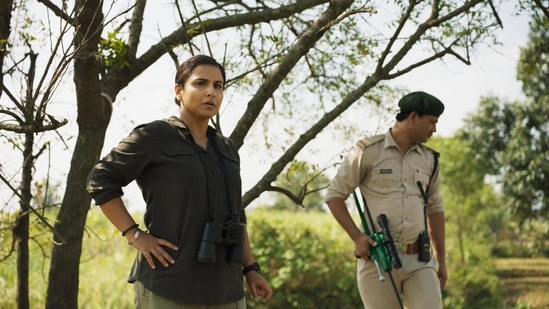
 

https://images.hindustantimes.com/img/2021/06/17/550x309/vidya_balan_sherni_1623932168804_1623932179349.jpg
Vidya Balan plays an ethical Indian forest service officer in Sherni (2021)

Amit Masurkar's new film Sherni has some things in common with his award-winning 2017 film Newton -- the central Indian jungle setting, the town-bred government official working against the odds in an unfamiliar setting, and unlikely collaborations among people striving towards something larger than themselves. The plot in one sentence: When a tigress named T2 starts to attack villagers in the vicinity of a Protected Forest area, an idealistic new forest officer named Vidya Vincent (Vidya Balan) struggles to prevent more human deaths, while also keeping her thoughtless, corrupt bosses from letting a self-appointed hunting hero kill the tigress.

Where Newton tackled the state of Indian democracy with pitch-dark humour and a sometimes-manic edge, Sherni approaches the tragic impasse of environmental conservation with enthusiastic sincerity, tempered by something akin to haplessness.

Perhaps that is inevitable, given that the man-animal conflict in India is a complex, burgeoning problem, and one whose roots are left unaddressed both by our national forest policy and by our mainstream politics.

To try and summarise a complicated history: India spent the first 25 years after Independence wooing parties of tiger-hunting foreign tourists, getting them to pay for the privilege of what sahibs and maharajas had always done. A 1964 New York Times article reported 15 government-approved jungle camps (up from only three in 1954) that organised these expensive shikar holidays, complete with “clean, tasty Western-style food” and liquor. “It is estimated that 3,000 tigers roam the forests, and they are multiplying fast enough to support the present shooting rate of about 300 a year,” the NYT declared.

That proved catastrophically untrue, and in 1972, the government did an about-turn. According to a 2017 article by the Kumaon-based butterfly expert Peter Smetacek, a group of hunters and naturalists had petitioned for a three-year break from tiger hunting to let populations recover, but in response Indira Gandhi's government promulgated the Wildlife Protection Act, under which hunting of any species was banned permanently.

Smetacek, like some others, has questioned the wisdom of this wholesale outlawing of hunting. For one, it made it illegal for farmers to protect their hard-earned crops from incursions by wild boar, monkeys, porcupines, nilgai, bears or birds without permission from a forest officer, pitting locals against the animal world they had cohabited with, while leaving them at the mercy of a corrupt state.

Also, if hunting was strictly regulated instead of being banned, allowing permit-based hunting of animals whose populations were growing too large, we would actually have records of animal populations besides the tiger -- and in fact be able to track and respond better to their declining numbers. That suggestion, outlandish and violent as it may sound to those who of us brought up in a sanitised modernity alienated from the ways of the wild, may be just the starting point we need to rethink the simplistic, often counterproductive legal regimes that have failed in practice to protect our forests.

Few Indian films before Sherni have engaged with this difficult terrain. In Anay Tarnekar's brilliant 2016 short The Kill, a poor adivasi man's deep, reverential knowledge of the jungle and the tiger goes from being a useless, non-monetisable asset to the only thing he can sell – but at a terrible cost.

In 1994, Sai Paranjpye made the sweet, well-intentioned, Chipko-inspired feature Papeeha, where her daughter Winnie Paranjpye played an anthropologist representing the tribal perspective on living in and off and with the forest, cast alongside a forest officer hero (Milind Gunaji) and a series of corrupt forest officer villains who run clandestine logging businesses.

A year earlier, in 1993, Pradip Krishen had made a film called Electric Moon (scripted by his then-partner Arundhati Roy), which takes a more sideways, ironic look at the situation. The film's central protagonists are a family of fading Indian royals who run a wildlife resort catering to foreign tourists, selling tiger hunting as an Orientalist fantasy, while responding to the new Hindi-speaking forest officer (Naseeruddin Shah) with snobbish class outrage. The humour is spot-on, as is the context: many Indian princely families who had once pursued hunting, often in forests that were part of their own territories, did indeed make this transition to being conservationists. It was a mixed metamorphosis that allowed them to retain their privileged relationship to the wild -- sometimes speaking legitimately from a place of knowledge, and sometimes just bending the rules for themselves.

The other film Sherni made me think of is Bhuvan Shome, Mrinal Sen's 1969 New Wave classic. Sen's film isn't intended as a realist comment on anything, certainly not on Indian wildlife policy. Yet, at its centre, is a man on a hunting expedition, who ends up not killing a single duck – and handing over the single one he brings down to a young girl he has become fond of.

Utpal Dutt sets out to hunt birds in Mrinal Sen's New Wave classic, Bhuvan Shome (1969)

Further, Sen's marvellous lightness of touch achieves much more than what that narrative outline suggests. Utpal Dutt, acting the grand hunter with his sola topi and rifle, is actually a tragicomic figure. The anglicised Bengali bureaucrat out of his depth in the Gujarati rural desert landscape represents not just bureaucratic mechanisation and urban dessication, but also a State totally disconnected from ordinary people's lives.

The low-level chai-paani bribes that Bhuvan Shome so sternly polices, and Mrinal Sen treats with comic indulgence, are still not the primary enemy. Nor is the biggest enemy the still-surviving big game hunter, who is given a little too much play in Sherni, perhaps understandably because a film needs a villain.

The problem is that out-of-touch State. Under cover of 'development', that State now cuts secret deals to give away our rivers and mines and forests to big men. It postures as a protector, but its grand diktats only cut off the deep, pre-modern, symbiotic relationships on which our forests managed to thrive for generations -- leaving both people and nature vulnerable to the worst kind of short-sighted profit motive. We cannot conserve our wildlife – or any heritage, actually – if we continue to treat those who live beside it as errant, trespassing children, rather than as dignified, proud, well-paid stakeholders.

Humans and animals have lived together before. We could do so again. But the task needs both intellect and courage.

Published in TOI Plus, Sun 27 Jun, 2021

5 April 2021

Book Review: What would human history look like if told through our relationships with animals?

Simon Barnes’s ‘The History of the World in 100 Animals’ is a unique way of looking back – and around.

What would human history look like if told through our relationships with  animals?If you have the slightest curiosity about the millions of species with which we share the planet, Simon Barnes’s delightful new book will satisfy and whet it in equal measure. Picking out a hundred from these millions (a selection that ranges from gorillas to earthworms), Barnes provides a crisp, evocative history of each creature – and even better, of humanity’s relationship to it: real and symbolic.

Lions, for instance, have been part of human life from the dawn of our species, he writes, drawing evocatively on a pair of footprints from Tanzania’s Laetoli Gorge, possibly made by some adult hominid parent escorting a child to safety some 3.6 million years ago.

If the lion is our most ancient enemy, it is also humanity’s most admired symbol of masculine courage. Courageous warriors and kings have long been compared to lions, but have also spent a lot of time killing them. Lion-hunting became a mark of human courage, of our conquest of nature – and as we devised better and better weapons, while also just wiping out their natural habitat, lions began to disappear from more and more parts of the world. “The retreat of lions is the story of the advance of humanity,” writes Barnes, and it doesn’t seem an exaggeration.

If lions exemplify our changing relationship with the wildest part of nature – ie, fear, conquest and now increasingly expiation, then the house cat might be seen as the embodiment of its opposite – the domestication of the natural world. Barnes makes the commonsensical argument that as human societies became settled and agricultural, cats kept rodents from the stores of grain – but having once been a cat owner, he also brings in the ineffable pleasure humans derive from scratching a cat between the ears and having it purr in contentment. Cats were useful, yes, but they were also company. “Thus human civilisation advanced to the sound of the purring cat.”

Occasionally Eurocentric

Some of Barnes’s choices of species are more particular, connected to a specific discovery or episode in human history. For example, an early chapter is devoted to the existence of four different kinds of mockingbirds in the Galapagos Islands, apparently crucial in nudging Charles Darwin towards the world-changing argument about evolution that he eventually published in On the Origin of Species (1859). Another dips into the incredible and tragic history of the American bison, succinctly explaining both how that single species helped sustain Native American civilisation and how its near-total extermination was crucial to the founding of the settler-colonial economy that formed modern USA. Yet another takes on the Oriental rat flea, responsible for several world-historical outbreaks of bubonic plague.

But this is among many instances where Barnes comes across as rather obviously Eurocentric. The Justinian Plague of the sixth century AD, named for the Byzantine emperor Justinian I, and the heavily mythologised Black Death of medieval Europe get vastly greater attention from him than the much more recent Third Plague Pandemic, which he merely describes as having “killed 12 million people in India and China” between the 1850s and 1960. This seems particularly strange for a book published in the midst of Covid-19. 

Even a cursory reading of Wikipedia reveals the Third Plague Pandemic to be a world-historical outbreak in more ways than one – starting in a poor mining community in Yunnan in the 1850s, reaching cities like Canton and Hong Kong in the late 19th century, and travelling from those port cities via the trade routes to India, where British colonial regulations to control the plague – widely seen as repressive and culturally intrusive – became the focus of nationalist agitation and violence.

Barnes’s chapter on cattle, while it does a fine job of pointing out how deeply many human cultures identify beef-eating as the embodiment of plenty, wraps up the Hindu exception in a single sentence about McDonald’s not serving beefburgers in India. His chapter on the pig feels like a cursory dip rather than the immersive essay owed to an animal so painstakingly forbidden and deeply abhorred by several world religions. But for Barnes, even the Revolt of 1857 having been triggered by the use of pig and beef fat on cartridges elicits only wry British understatement: “The strength of feeling about pork is startling”. He mentions the pig toilet in India, but only Goa, not the North-East.

Perhaps it’s only to be expected. The gaps in Barnes’s exposure can sometimes unwittingly reduce vast swathes of humanity into insignificance in his version of “the World”, but he does vastly better than most Western authors might. He plays to his strengths – and as a well-read, well-travelled ex-journalist (he was Chief Sports Writer at The Times until 2014), those are many.

The author of fourteen books, Barnes has a great eye and ear for detail, and his understanding of the natural world draws on the best of English literature, from John Donne on the elephant (“The only harmless great thing”) to Coleridge on the albatross, from Kipling on cats to Orwell on pigs. And his book does range far and wide, his choices unaffected by the size of the animal, the extent of its terrain, or the length of time it influenced the course of human history.

Myths and reality

Sometimes a category is supremely general, as in the chapter on cattle. Sometimes it is necessarily specific: he has individual chapters on the house fly, the tstese fly and the fruit fly, as well as on the pigeon/dove, the (extinct) passenger pigeon and the pink pigeon. Either way, Barnes is always good for peeling away the pervasive myths with which humans like to surround the animal species.

He tells us, for instance, that the insatiable flesh-eating piranha is a myth – more remarkably, a myth invented by Amazonian locals in 1913 for the benefit of the then-American President Theodore Roosevelt, who had arrived there on a hunting expedition. The locals apparently filled a netted-off stretch of river with piranhas left unfed for weeks, creating a stressed, hungry, overcrowded population of piranhas that then obligingly devoured a cow lowered into the water, to Roosevelt’s everlasting awe.

A lifelong hunter, Theodore “Teddy” Roosevelt was also responsible for a reverse sort of mythmaking – the fantasy figure of the cuddly, cute, quasi-human bear. In 1902, he refused to shoot a black bear already cornered by dogs and beaten with clubs. The incident became a Washington Post cartoon, with Roosevelt portrayed as a “hunter of mercy”, writes Barnes, and a subsequently smaller and cuter version of the bear then became enshrined in the children’s toy we call a teddy bear.

But what brings the book alive is not Barnes’s ability to cheerily condense reams of information, note the inevitable ironies of our mythical versions of most animals, patiently address persistent factual misconceptions, or sound the alarm, yet again, about the need for humans to recognise how we’re endangering other species and thus potentially destroying the planet. It is the enchantment he clearly experiences in the presence of the natural world, not just in flesh and blood (as when instinctively standing stock-still when confronted by a lion he had woken up by mistake in the African jungle), but also in the mind. 

In the midst of a chapter on the nightingale, for instance, we suddenly hear about him hearing the wind whistle through two hollow bones on a breezy day in Zambia and feeling like he had invented music “or at least recapitulated that moment in human history, quite by chance.” There is clearly much about our relationship to animals that we need to fix pronto – but magic always works better than mourning.

Published in Scroll, 20 Feb 2021. 


20 November 2020

Short of nothing

My Mirror column for Sun 8 Nov:

Among the hundred-odd films screening till tonight in the online edition of the Dharamshala International Film Festival are a variety of accomplished shorts – Indian, foreign, fiction, documentary, animation.

Aditi Bhande's devastating Ghaziabad-set short film Did You Do It? traces one building's waste as it leaches into the surroundings

There are many exceptional films in this year's Dharamshala International Film Festival, but this column focuses on the shorts: films under 30 minutes. Some of the ones I really liked include:

1) Sudhamayee -- Megha Acharya's observational film is composed of family vignettes that may seem artless, but speak volumes. The film starts with a woman describing how she ended up becoming the primary caregiver for her father: her brother declared he was “scared of hospitals” and couldn't “bear to see those things.” “As if, we like seeing those tubes. We don't,” he voice trails off. There is a momentary lull in the conversation, as though the two women are absorbing these facts of life: the ugliness and pain of hospitals, but also the easily declared inability of so many men to perform the labour that surrounds illness and death. Or any domestic labour at all. As if on cue, a man emerges from the bedroom, retreating when he sees the women. The women, in turn, immediately rise with their plates - the man's entry is a sign that time for real conversation is over, and everyday labour must resume now. Again, later, when the couple discuss the woman's promotion sending her elsewhere, she knows she cannot. The man remains, as always, oblivious.

Sudarshan Suresh's brilliant 17-minute fiction is a chilling comment on who loses and who gains from the spectre of "love jihad"
 
2) Mizaru -- A young couple in a Mumbai park become a target for a group of unemployed men, but no-one comes to their aid. It is the sort of incident that is stiflingly familiar to any young person who has ever conducted a romance in India. By zoning in on it in film, Mizaru makes us question what we apparently don't in life: what have the couple done to deserve this treatment? Ah, they have displayed physical affection for each other. And since anything sexual in India is automatically shameful, they can be publicly humiliated by a bunch of louts. As self-appointed guardians of Hindu morality, the men feel entitled to bully them in every possible way. We live in a country in which the villains are confident that their actions will find support from society (the members of a laughter club in the park) and the state (the cops who show up and seem quite happy to have been delivered up some easy victims). Shot in one remarkable fluid take, Sudarshan Suresh's 17 min fiction is a searing indictment of everything that is wrong with India.

3) Did You Do It? -- This disturbing, largely dialogue-less film manages to be somehow programmatic and a mood piece. It begins with a characteristically North Indian dust-storm. The strange menacing half-light, the distant flocks of birds, the persistent slapping sound of the rain may have no diegetic purpose, but the aandhi is dark, slow and harrowing, just like the journey the film sets out to trace: a single day's worth of garbage emerging from an apartment complex in Ghaziabad and leaching inexorably back into our water, earth, air.

Aditi Bhande's Did You Do It? forces us to look at the processes we Indians so expertly turn away from in reality: the unsegregated dumping of garbage, the rising mountains of plastic, the barefoot young workers who do the irreplaceable work of clearing our surroundings, the stinking lorries, the overflowing landfills, and the ridiculous vision of middle class citizens in denial, marching against the municipality. Winner of the Best Editing award for Student Documentary at the Dadasaheb Phalke Film Festival 2020, Bhande is remarkably adept at delivering the facts as a quiet punch to the gut. “The water here has high levels of iron, nitrate, fluoride and aluminium,” reads a subtitle, going on to enumerate the diseases caused by such minerals in water, the depleting ground water levels, the pumping of semi-treated water back into the Hindon river. On screen, water continues to flow down the drain.

Vividly shot, with superb sound, the film constantly unravels our increasingly delusional expectations from nature and the natural. The deceptively attractive rushing sound of water takes us not a river but to the swirling pool of the sewage plant; the green piles of bhindi look poisonously greener in the unearthly tubelit glow of the street market. This film made me restart my lapsed composting bin. It might be the wake-up call you need, too.

Other shorts at DIFF that deserve more than a mention: Stray Dogs Come Out at Night, in which we meet a Pakistani sex worker; Irani Bag, a clever 8-minute essay on the purpose women's bags serve in post-revolutionary Iranian cinema; Anonymous, which movingly maps the stark realities of the Indian construction site; and the stunningly animated dystopia of Wade, in which a group of human scavengers navigate a flooded future Kolkata.

If you think an immersive film necessarily means an hour and half of plotted drama, try these out.

Published in Mumbai Mirror, 8 Nov 2020.

24 March 2020

Not Just Company Ltd.

A piece I did for India Today in February:

Indian art created for the East India Company is a revelation in both content and style.


By the late 18th century, Indian artists found it increasingly difficult to earn a living from the declining centres of the Mughal court or its successors. Meanwhile, they began receiving commissions from patrons affiliated to the East India Company. The art these painters created for expatriates has never received its due.

As the sun set on the British empire, these were no longer displayed proudly in the UK, nor studied much in a newly independent India. In 2014, when art historian B.N. Goswamy picked out 101 images for his Spirit of Indian Painting, only one was a Company commission.

The very name ‘Company School’ betrays its emphasis on the colonial patrons “while excluding any reference (even geographical) to the artists who created beautiful works of art”, notes art historian Henry Noltie, whose essay on 18th and early 19th century Indian botanical drawings is part of a superb new volume called Forgotten Masters: Indian Painting for the East India Company, published alongside the first exhibition of Company-commissioned Indian art, on at the Wallace Collection in London till April 19, 2020. The show and the book have both been put together by author and historian William Dalrymple, whose interest in early colonialism has sustained a literary career, from White Mughals (2002) to his most recent, The Anarchy (2019). 


Sumptuously produced yet scholarly, Forgotten Masters features a hundred masterworks by artists like Bhawani Das, Sita Ram, Shaikh Zain ud-Din of Patna, Shaikh Amir of Karraya, Yellapah of Vellore, and Ghulam Ali Khan of Delhi. As the names show, ‘Company School’ artists were from different communities and may have trained in the Mughal, Maratha, Pahari, Punjabi, Tamil or Telugu traditions. Their subjects, too, were varied—botany, architecture, but also daily life, festivals, modes of transport and, crucially, ordinary people.

The Impey Children in Their Nursery,
by Shaikh Zain ud-din, C 1780 (Courtesy: Private Collection)

Since previous Indian courtly art was dominated by rulers, durbars and deities, Mildred Archer argues that this documentation of the Indian natural and social world “democratised Indian painting”. Many ordinary Indians appear, from dancing girls to servants of the new colonial household, palanquin bearers, the huge staff assembled for ‘The Impey Children in their Nursery’, or Shaikh Amir’s portraits of Indian grooms with the sahib’s dogs, horses and children. Nature had interested some Indian rulers, like Jahangir, but none appointed artists to document a personal zoo, as Justice Elijah and Lady Impey did in Calcutta. These gorgeous botanically accurate renditions of yams, palms or other plants by Manu Lall, Vishnupersaud and others; Shaikh Zain ud-Din’s birds or Haludar’s studies of macaques, gibbons or sloth bears for the surgeon Francis Buchanan-Hamilton, were new for India. 

Unlike the thick jewelled tones and decorative settings prized by Mughal and other Indian traditions, these images of soldiers, pujaris or city panoramas were often watercolours on white laid paper from England, with the surrounding area left empty. 

Cheetah, by Shaikh Zain ud-Din, for the Impey Album.

In Forgotten Masters, we see the European patron’s eyes turning the Indian miniaturist’s brush to the service of architectural and anthropological precision, for a brief glorious period before photography made these skills superfluous. These works should be celebrated as Indian, but also serve as a reminder that modernity in India began as colonial modernity.

Published in India Today, 28 Feb 2020.

3 November 2019

The Pearly Gates

My Mirror column:

An octogenarian Uttarakhandi farmer offers up an unusual model of the good life in an inspiring new documentary called Moti Bagh.

 
“In two minds am I this year,
To till or keep fallow my soil?”

The old man's tinny voice wafts out over a visual of his feet, loose inside his dusty leather shoes. A mynah hops alongside, perhaps waiting for the insects that will be dislodged as two brown cows drag the wooden plough through the field that Vidyadutt Sharma is clearly not leaving fallow. 

“Almost seven times a day/ the monkeys my fields do visit,
And the wild boars—they at night are my visitors.
Crows, parrots and their kin my fruits enjoy,
While jackals and porcupines await their turn.”

Back under the wooden roof of his own balcony, Sharma, 83, ends his little self-composed ditty, his hands performing a little hopeless flourish to go with the words:
“These animals it is beyond me to understand --
Earlier 50-50 was the arrangement,
But this year a full share they want.”

Then the camera pans out into the valley, and a langur turns to look at us from a distant treetop, its fur brilliantly white against the hillside's verdant green. Between the song, the cows, the mynah and the langur, we instantly get a sense of a universe shared with other creatures, of what it might be like to live off the land in Pauri, a district in the hill state of Uttarakhand.

Nirmal Chander's 59.23 minute documentary Moti Bagh, in which this scene appears, has been described as being about the struggle of a farmer in a remote Indian village. That isn't untrue, but neither does it do justice to Moti Bagh, which is as gentle, quirky and determined as its octogenarian protagonist. Vidyadutt Sharma, who happens to be Chander's uncle, first began to farm the consolidated farm for which the film is named in 1966. He had had other jobs – as a survey expert in the Uttar Pradesh government (a position from which he resigned at age 28), and later as the manager of a government school in Mundeshwar, during which time he went on a hunger strike to pressure the government into keeping its word on granting it high school status (It is now an inter-college.)

Sharma's educational and professional background might be considered by most people to be at odds with his choice of vocation: farming. But in many ways, that is what Moti Bagh is about: one man's realization that getting a formal education need not automatically translate to an office job. For Sharma, nurturing the land is both philosophy and praxis. “Bade bade granth likhna bahut aasaan hai, lekin tamaatar ka daana uga ke dikhaye koi (It's easy to write big books, but let's see someone grow a tomato seed),” he says. Sharma's dry wit somehow cohabits perfectly with his deep sense of belief. “Physical work has a special importance,” he says later, while carrying a pitcher of water up to his house. “Even if you don't get tangible results from it at the end of the day, you're sure to get a deep sleep!”

Chander's film is an affectionate portrait of Sharma as well as a cinematic glimpse of the socio- economic context of Pauri which makes him such an outlier. That context is the large-scale migration out of Uttarakhand – especially of educated upper castes -- into urban areas in the plains, leaving thousands of villages empty and much fertile land uncultivated. “The new generation is afraid of physical labour. They want to live purely off intellectual labour,” says Sharma. And earlier, perspicaciously, “The producer has become a consumer. We shall suffer the consequences of that...”

Nepali migrants, like Ram Singh and his family who work on Sharma's land, have replaced local farmers as agricultural labour, and the film points to the resulting tensions: jealousy and discrimination from locals, and the instability of devoting their lives to a land that they might well be ejected from.

Moti Bagh won first prize for Best Long Documentary at the International Documentary and Short Film Festival of Kerala (shared with Pankaj Rishi Kumar's Janani's Juliet), and the filmmakers have been claiming that this counts as a "nomination to the Oscars". The film recently received media attention because the Uttarakhand Chief Minister mentioned this with pride -- which is interesting not just because it is untrue, but also because the film is, as much as anything, an indictment of political corruption and the lack of political will (on such matters as forest fires, government school closures and land consolidation, which Sharma argues would help farmers to cultivate more efficiently and to stave off animal depredations).

Watching Vidyadutt Sharma shooing monkeys away from his orchards, I was reminded of another old man in total synch with a difficult environment: the crabby old shepherd of the atmospheric fiction feature The Gold-Laden Sheep and the Sacred Mountain (2018). Moti Bagh also brings to mind another film funded by PSBT: Rintu Thomas and Sushmit Ghosh's deeply inspiring 2012 documentary Timbakt. Timbaktu is a farming collective in Anantapur, Andhra Pradesh, which has weaned a large area away from chemical pesticides and mono-cropping into sustainable, organic agriculture, thus also helping restore the surrounding forest. (Timbaktu is available on Youtube.)

At the end of the documentary, Chander asks Sharma a grave question: what will become of Moti Bagh once he is gone. “That's not for me to worry about!” says Sharma, starting to laugh delightedly. “Let others worry about that!” Unlike Timbaktu, Moti Bagh isn't a movement. But sometimes all it takes to start one is one man with an infectious grin – and a willingness to be the odd one out.  


10 August 2019

Acrobats of the Upper Canopy

Don’t be fooled by the name or the sharp canines, the endangered lion-tailed macaque
is a shy, fruit-eating primate that inhabits the upper canopy of the rainforests of the Western
Ghats.
Slug: Narr
Don’t be fooled by the name or the sharp canines, the endangered lion-tailed macaque
is a shy, fruit-eating primate that inhabits the upper canopy of the rainforests of the Western
Ghats.

Slug: Narr
Reporting and researching this piece was a joy, though it also made me tragically aware of how we're ruining the earth for other creatures. It's my first piece for the nature and environment website Roundglass Sustain (please click link for all the superb pictures). 

Don't be fooled by the name or the sharp canines, the endangered lion-tailed macaque is a shy, fruit-eating primate that inhabits the upper canopy of the rainforests of the Western Ghats.

It was April 2014, and I was in the Western Ghats to meet an endangered primate. We drove on, the way the man had pointed, our gazes fixed on the tangled canopy. There! A group of monkeys with black faces, black bodies, and light facial hair. But Erinjery chuckled. This wasn’t the monkey we wanted. The Nilgiri langur we’d met has glossy black fur and a striking mane, similar enough to be confused with the monkey we were looking for. But what distinguishes our chosen primate is its shorter, tufted tail.

Fewer than 4,000 lion-tailed macaques — locally known as simhavaala or singavaal kurangu, literally ‘lion-tailed monkey’ — exist in the wild. They are, Erinjery informs me, divided into approximately 47 subpopulations across at least seven locations in the Western Ghats. These wet evergreen forests are also home to an impressive array of endemic plant and animal life, including over a dozen mammals found nowhere else in the world. The lion-tailed macaque, fondly abbreviated to LTM, is one of those: so perfectly adapted to these forests that conservationists are convinced it can function as an umbrella species. Protect it and you protect the whole forest ecosystem.

And it needs protection. The Ghats run about 1,600 km from north to south, but according to the research of wildlife biologist Dr. Ajith Kumar, forests now cover only about 25 percent of the slopes. The British began felling as early as the late 19th century to create cardamom, coffee and tea plantations. Agriculture, dams and human settlement have only speeded up the depletion. Since about 2004, though, Nelliyampathy’s macaques have benefited from an unusual land use shift: at least three plantations have been reclaimed by the state forest department and begun a slow return to wilderness. By Erinjery’s estimate, Nelliyampathy in 2014 had some 200 lion-tailed macaques living in 14 groups, making it one of the best places to see LTMs in a somewhat natural environment. But LTMs in the wild are shy. As soon as they spied us, they would move deeper into the jungle.

******

Usually found climbing and leaping through trees some 60 to 100 feet tall, the LTM leads its arboreal life with a lithe grace that belies the astounding height of its acrobatics. Its style is poise, not display. It barely ever descends to the ground even for water, managing on fruit sap and dew.

Unlike the Nilgiri langur, whose whooping ‘hoo hoo hoo’ calls are among the most frequent sounds of the jungle, it rarely makes much noise, devoting most of its energy to the search for food. The only thing you might hear as it travels through the upper canopy is a gentle ‘coo’, helping keep the group together.

When Erinjery and I finally found the LTMs, a silent feast was in progress. A group of about 40 was scattered across a clump of jackfruit trees on either side of the road. A large oblong fruit, fibrous yellow inside and ribbed green outside, the jackfruit originated in these forests. So it makes sense that it is one of the favourite foods of the LTMs, the oldest of the Western Ghat macaques. But the jackfruit is the largest tree-borne fruit in the world, weighing up to 36 kilos, while LTMs are among the world’s smaller macaques, reaching a head-body length of only 16 to 24 inches and an adult weight between 2 and 10 kilos. It’s quite a sight to watch: an LTM balancing itself between two branches, using its forelimbs like arms to immobilize a jackfruit larger than itself, then tearing into it with sharp front teeth. I even saw a sub-adult carry one away to eat in peace, climbing with its back limbs while holding the fruit with the front two and its teeth.

Like other primates, LTMs have forward-facing eyes and excellent vision, as well as opposable thumbs dexterous enough to manipulate fruits. Other than jackfruit, they eat figs, spiny green wild durian, elephant apples, and mangoes, supplementing this frugivorous diet with insects: caterpillars, spiders, cicadas and mantises picked off leaves. A juvenile LTM is likely to spend more time foraging for invertebrates than a grown one. Like human children, they need more protein.

Also like human babies, LTMs take time to grow up. The more common bonnet macaque, often found in close proximity to the LTM, has a similar lifespan, of about 20 years. But while a bonnet macaque starts reproducing at age 3 and gives birth every year thereafter, an LTM female is, on average, 6.6 years old when she first gives birth — the oldest among all macaques. And she will have only two or three infants in her lifetime.

LTMs usually live in groups of about 20, with a single dominant male. Where do the other males go? The answer is a fascinating one. While adult females remain in the group they were born into, an adult male LTM must migrate when it turns five or six, and enter another group to mate. An anti-incest rule!

******

Nelliyampathy’s 736 sq. km. of fragmented forest has begun to redevelop the connectivity needed for LTM males to migrate. But a full third of the world’s LTMs now live in privately-owned forest patches crisscrossed by plantations and human settlements. For every LTM in Nelliyampathy, there is at least one living in Valparai, 130 km away. There, I watched in disbelief as two male LTMs ambled across a busy road to investigate a heap of trashed plastic plates for leftover rice and dal. Returning to our jeep, I found another macaque peering out of it cartoonishly, as if to say, “What guys? No food?”

But the state of LTMs in Valparai was no joke.

Like Nelliyampathy, Valparai began as a colonial plantation area. Today, though surrounded by the protected forests of Anamalai Tiger Reserve, Valparai is a much larger urban settlement. Also, unlike the shady half-jungles of coffee and cardamom that play host to LTMs in Nelliyampathy, Valparai is dominated by tea estates, whose greater tree-clearance amplifies the habitat fragmentation that is the biggest long-term threat to these macaques.

Two of the largest Valparai groups, comprising 160-odd LTMs, are living a strange new life: isolated from other groups, hemmed in by human habitation, spending 30-40 percent of their time on the ground instead of the four percent normal for the species, and consuming new foods.

In Valparai, it is tragically common to see LTMs by the roadside, making an easy breakfast off local cultivars like the guava. When a car stops, a daring male can get a still easier snack. I saw three different monkeys show up for their fix of fried, salty processed food.

Ananda Kumar, a scientist at the Nature Conservation Foundation (NCF) in Valparai, suspects that growing construction and tourist traffic has increased human-animal interaction, changing LTM behaviour and causing conflict and roadkill. To help, Kumar and his team had built fire-proof canvas bridges to link the tree canopies on opposite sides of the busiest roads, and hired two staffers to track these two groups daily. Between 10 a.m. and 5 p.m., they held up placards telling drivers to ‘Go Slow’ and tried to persuade day trippers — many from a rising tribe of amateur photographers — not to feed the monkeys.

These are emergency measures. Long-term conservation needs plantation owners to work with the NCF. Restoring forest fragments and planting connecting tree corridors across a nude expanse of tea bushes would help create a self-sustaining habitat, in which migrating males from one LTM group can find a mate in another.

The growing number of LTMs in Valparai can appear a good thing, especially since hunting remains a threat elsewhere. But the larger group has 120 individuals, more than six times the size of an average group in the wild. Both groups have become multi-male, and Mysore-based primatologist Mewa Singh says the biological effects of the inbreeding “will only show themselves in several generations.” And given radically altered diets and exposure to human diseases, a ballooning population could suddenly crash.

What I’d learned about the lion-tailed macaque in the wild was that they were almost entirely arboreal, uni-male societies, dependent on the fruits of the rainforest and its connected canopies. In Valparai, all of this had changed. But unlike bonnet macaques and rhesus macaques, known to commonly snatch food and act aggressively with humans, the LTM’s forced engagement with the human world has not yet changed their essential temperament. As one of the placard-holding NCF trackers said, “Sometimes they come and touch us gently on the shoulder. They’re soft-type animals. If you don’t disturb them, they don’t disturb you.”

I can only wonder how much further we intend to push them.


24 June 2019

Book Review: Heat (Vekkai)

I reviewed a modern Tamil classic now in English translation, for Scroll.
Poomani's vivid 1982 novel Heat, translated by N. Kalyan Raman, is about a boy on the run, and the gap between law and justice. 
Poomani, the name by which generations of Tamil readers have known the writer P Manickavasagam, published Vekkai in 1982. It was his second novel, unfolding in a subaltern rural Tamil landscape, like his first, Piragu.The two books together established Poomani, then in his mid-thirties, as a new star in the Tamil literary firmament.

A thirtieth anniversary edition of Vekkai was brought out in 2012, acknowledging its status as a modernist Tamil classic. In 2014, Poomani won the Sahitya Akademi award for his magnum opus Angyadi, a historical novel set in the late 19th century (for which he researched the Nadar community in Madurai and Tirunelveli with the aid of a two-year grant from the India Foundation for the Arts).
Despite Poomani’s undisputed stature in the Tamil world of letters, it has taken nearly four decades since his literary debut for his first two novels to be available in English. An English translation of Piragu is being brought out later in 2019 by Chennai-based Emerald Publishers, while Vekkai was recently published as Heat, in N Kalyan Raman’s spare yet vivid translation.
Here is how Heat opens:
“Chidambaram had only planned to hack off the man’s right arm.
He was aiming for the shoulder, but instead the sickle had sliced through the upper arm, its sharp tip entering the ribs. The severed arm had dropped near his feet. He kicked it away, grabbed the sickle and fled. As he ran, he heard the man’s scream rise and fade like the final cry of a goat in a butcher’s yard.”
It is a grisly way to begin a tale. But it does not quite portend the tone of what is to come. Little about Poomani’s novel is predictable. Neither his characters nor the events he describes have predetermined outlines that might be fillable with a broad brush. People, relationships, histories are built up slowly, with small, deftly drawn strokes that make for the finest sort of shading. So the 15-year-old protagonist may have killed a man, but he is not a killer.
Chidambaram’s father Paramasivam, whom he calls Ayya, may lose control of himself whenever he drinks, but that does not tar him as an alcoholic. The narrative may begin with a murder, but it is neither a mystery or a thriller or a police procedural. Much of Heat unfolds in flashback, and read backwards, it might be seen as a revenge saga: I’m waiting to see if this is how it will be interpreted by Tamil film director Vetri Maaran, of AadukalamVisaranai and Vada Chennai fame, who is adapting it into a film.
The nuance I flag seems to me crucial not just to Poomani’s storytelling, but to his worldview. For instance, Chidambaram is indeed a fugitive: he is running from the law. But what the book reveals, over conversations present and past, is that it is not so easy to slot him under that common phrase: a “fugitive from justice”. Poomani is centrally concerned with the difference between law and justice. The enmity between our protagonists and the murdered man, Vadakkuraan, stems from Vadakkuraan’s avaricious desire for their land, and the cycle of violence he starts. The law, it seems, will never punish him – so Chidambaram decides to.
We have, of course, developed an extended tradition of popular cinema in India that is concerned with this gap between the legal and the moral – in Hindi cinema, for instance, that trajectory has only grown sharper from Awaara (1951) to Deewar (1975) to Raman Raghav (2016). I imagine Vekkai,published in1982, was an early fictional instance of such open criticism of the police. “[E]very policeman is allowed to keep a weapon tucked behind his arse and one more in front, long with a round club in his hand,” complains Paramasivam to his brother-in-law. “But we are not allowed to carry weapons... if we do the same thing, it’s a crime.”
At another point, he warns Chidambaram to beware police corruption, based on class and caste loyalties and actual bribes, “The police may not come after us today. But if our enemy gives them money, they’ll come running like hound dogs. So many atrocities take place in our courts. The law is what the rich people lay down.”
Poomani doesn’t wish to make this about caste, but he makes it clear enough that the systemic violence stems from the astounding inequity at the foundation of our social structure. Families like Chidambaram’s are resisting a long history of socio-economic oppression. A third of the way through the novel, we realise that the father, Paramasivam, committed a crime that sent him to jail in his youth – and that, too, was in retaliation for unwarranted, long-term oppression. “The rich guys couldn’t stomach the fact that we were farming our own piece of land.”
The novel also details other forms of informal justice, which might use the law strategically – “A good man from that village gave evidence” – or remain outside it entirely, like the cotton-thieving ganglord Muthaiah, whose men “will never step inside land that belongs to a poor man”, and who is a respected mediator of local disputes.
The other way in which to read Heat is as a palpably experiential journey into the Tamil countryside. This is a world in which cash crops like cotton and sorghum are beginning to be grown, and a ginning factory figures prominently, but which is also still brimful of wild plants and trees and animals whose ways a fifteen year old boy knows well enough to live off: the sour-bitter taste of a guduchi vine, the joys of cactus fruit, a rabbit killed by a vulture. And these are supplemented by cultivated pickings: sugarcane, sweet tubers left buried in a field, padaneer collected in toddy tappers’ pots which the boy climbs for.
And yet, even as a fugitive, Chidambaram is never purely utilitarian. Whether it is making a garland of kurandi flowers to put around the neck of a temple horse, crafting a hammock out of roots and palm leaf mats, or just admiring the skill of men hunting and skinning a snake, he wanders through his ordinary world with an unerring eye for its beauty. Seeing through his eyes might make you see it, too.
Published in Scroll, 22 Jun 2019.

10 March 2019

Flight into the wild

My Mirror column:

An evocative new film melds classic Western motifs with a vision of the Chambal wilderness, using a gang of 1970s dacoits to ask existential questions


A group of armed men arrive in a village to commit a robbery. They are on foot, their leader using a megaphone to announce who they are (“Je baaghi Maan Singh ko gang haigo”), why they are here, and what they would like the locals to do (the women and children to go indoors, the men to stay where they are). Then they walk into a wedding, round up the guests, and slide into a bag the several glittering gold sets laid out by the local jeweller for his daughter’s dowry. When the father of the bride starts to sink to the ground, Maan Singh sits the tubby little man down and announces that no jewels are to be taken off the bride’s body. Then, with impeccable gravity, he makes his incredulous deputy Vakila (Ranvir Shorey) hand over 101 rupees to the weeping girl.

This scene from Abhishek Chaubey’s Sonchiriya contains much tongue-in-cheek humour: the procession of dacoits that mimics an electoral campaign, the wedding gift delivered earnestly while looting. And Manoj Bajpayee, playing another ‘Maan Singh’ 25 years after his career-inaugurating performance in Bandit Queen, revels in creating characters who can keep us guessing. But Chaubey and his screenwriter Sudeep Sharma (they last collaborated on Udta Punjab) are also using the scene to communicate something that lies at the core of their film: that dakus have a dharam.

That thought isn’t, of course, something spectacularly new. Our memories may have been addled by Sholay overkill, but the uber-villainous Gabbar Singh is really not typical of how dacoits have been popularly seen in India. Pre-colonial bandits like Sultana Daku were immortalised in folk songs and nautankis, and that tradition carried on into Hindi cinema, too: think of Dilip Kumar in Ganga Jamuna (1961), or Sunil Dutt in Mother India (1957) or the underwatched Mujhe Jeene Do (1963). The historical dacoit on whose life Sonchiriya builds its fictional tale, one Malkhan Singh, was one of the last of these admired baaghis, a hero in Chambal because of certain moral codes. As described recently by photographer Prashant Panjiar, who spent some months photographing him for a book in the early 1980s, “he wouldn’t drink or let his men drink, he was a champion of the poor and made temples, and his gang wouldn’t misbehave with women”. More recently, Tigmanshu Dhulia’s superb biopic of Paan Singh Tomar told the stranger-than-fiction tale of a man who is driven to the army by poverty, becomes a great sportsman, and then pushed by humiliation to turn against the state he once represented.

Sonchiriya, though, is more invested than Paan Singh Tomar in paying cinematic tribute to some of the classic tropes of the Western: most obviously, the revenge narrative with a wronged man in pursuit of others, and the damsels-in-distress who must be rescued along the way. What I found exciting, though, is that these fictional characters and tropes inhabit a fully realised Indian universe that feels sociologically and linguistically bang-on. The cyclical Gujjar-Thakur battles of the Chambal region, and the historical entry of the Mallahs, once a caste of boatmen, into the gang wars; an arid rural landscape whose harsh dusty expanses feel part of its unforgiving poverty; a feudal world where women are merely the currency of male honour, set off against a heartfelt belief in local goddess shrines: all these the film evokes, if sometimes only glancingly.

It is gloriously shot and lit, with set-pieces that range from a shootout on a lamp-lit Diwali night to a woman singing on a boat on the Chambal river, evoking an almost mythical sense of heroes in exile. The ravines are put to great strategic effect in the action scenes, but also help to make Maan Singh and his not-so-merry men appear like the lone survivors of a disappearing world. Mostly we see the men walking tall on the outcrops (a heroic sort of framing which, to be fair, the filmmaker makes self-conscious reference in another scene featuring the lighting of a beedi); it is only when we first encounter a woman that the camera lowers itself into a gorge.

That scene, in which Bhumi Pednekar’s Indumati pulls down her ghoonghat before aiming a gun at the strange men who have appeared above, was one of many that drew informed sniggers from a largely male audience in a South Delhi multiplex. “Jeth lage hai uska,” went the snarky response in this case, gesturing to the fact that North Indian upper caste women veil themselves before their husband’s elder brothers. Earlier, when the youthful Thakur ‘hero’ Lakhna (played, interestingly, by Sushant Singh Rajput), steps back in fear at something he sees, a voice from the back said loudly: “Ghabra gayo?”. “Rajput hai,” sniggered his companion. 

Not all the laughter was sociological: when a brilliant delivery of “Bhaiyon aur behenon” by Manoj Bajpayee lifted the film out of its Emergency era setting, the whole hall erupted in chuckles. But Chaubey’s humour can be too dark for his audience: when the final familial crisis unfolded under a sign for ‘Parivar Niyojan’, I might have been the only one laughing.

I have mixed feelings about the film’s use of little girls as symbols of curse and benediction. But it is in turning the landscape into a symbolic terrain that Sonchiriya achieves something haunting. Varun Grover’s lyrics for ‘Saanp Khavega’ use snakes, mice and vultures to conjure a bloody cycle of life, in which each species will meet its match. If the maggoty snake at the film's start foretells death, a fortuitous escape from a gharial is a sign of long life. But like the golden bird of the title, the Great Indian Bustard, freedom in the ravines is both threatened and elusive.

17 July 2018

Delhi can't afford to lose a single tree

The very character of the city might change forever. 


A grand old peepal in Netaji Nagar, Delhi. July 2018. (Photo credit: Trisha Gupta)

In the first week of July, soon after Delhi received its first official monsoon rain for 2018, I went for a night walk in Sanjay Van. The air was heavy with moisture, and the light of the full moon came filtered through a sky even hazier than Delhi's usual. The oppressive humidity mattered little as we made our way into the undergrowth, listening for nilgai, watching in horrified fascination as a spider on its giant cobweb gift-wrapped its supper before our eyes. What made the walk such an incredible experience was the feeling that we were within blinking distance of the lights of Vasant Kunj and JNU, and yet very much in the wild. If we had any doubts, as we clambered up onto the 11th century wall of Lalkot, two packs of jackals in the distance began an impromptu howling match.

Sanjay Van forms the core of the South-Central Ridge, a 626-hectare tract that's one of Delhi's remaining chunks of urban forest. That classification can seem confusing, because the Delhi Development Authority (DDA) which controls the area, seems to conflate the cultivated greenery of parks and gardens with forests: over the years, the authorities have even planted several non-native species that are merely ornamental, like succulents, cacti or champa trees. They have cleared spaces around the rocky outcrops, as if to encourage picnics; built a gigantic look-out tower, a machaan for viewing wildlife – and then laid out a lawn around it.

It struck me later that this apparent inability to distinguish between jungle and garden might have a deeper implication. It might, in fact, have a slightly sinister connection to the claim, last made in the State of Forests Report of 2017, that Delhi's forest cover is increasing. “Despite several infrastructural projects and large scale construction taking place in Delhi, the Forest and Tree Cover of Delhi has been increasing on a sustained basis from 22 Sq. Km. (1.48%) in 1993 to 299.77 Sq. Km. (20.22%) in 2015,” the Delhi government's Forest Department states.

But the government pats itself on the back, adding that “The Hon’ble Prime Minister has also complemented Delhi on its rising green cover over the years,” even though the same report makes clear that Delhi has lost about 0.2 sq km of very dense forest and 0.9 sq km of moderately dense forest since 2015. The stated “increase” is an eyewash, a sleight of hand achieved by changing the mode of calculation of forest cover in 1999, such that scrubland, plantations and orchards now count alongside legally notified forest areas as part of forest cover.

***

This is the sort of institutionalised skullduggery in keeping with the horror that the Central government authorised more recently: cutting down thousands of trees in the heart of South Delhi. A Rs 32,835 crore plan for the redevelopment of seven Delhi neighbourhoods -- all some form of “government colony” -- approved by the Centre in July 2016, turned out to have been granted permission to fell over 16,000 full-grown trees.
Each of these neighbourhoods, from Sarojini Nagar to Srinivaspuri, have been traditionally characterised by two-storeyed housing surrounded by generous open spaces and shade-giving trees, even if plot sizes, invariably, are calibrated to match the occupants’ status in government. Going by the 3-D images on the corrugated high walls currently surrounding these areas, this profoundly familiar urban form will soon be a thing of the past.

In Sarojini Nagar, Nauroji Nagar and Netaji Nagar, for instance, a total housing stock of 8,087 government-owned flats will be replaced by 15,510 flats. To finance the cost of construction, the NBCC gets to build and auction 8,00,000 square metres of commercial real estate in these prime central locations. As environmental activists, academics and policy-makers have pointed out, this redevelopment will not just 'densify' these localities, but put a great deal of pressure on civic infrastructure intended for far smaller populations.

It would also alter the character of large parts of Delhi. The citizens’ movement that came into the public eye three weeks earlier as 'Delhi Trees SOS' has brought people together not just to hold placards but to hug trees in Sarojini Nagar. Some have put together skits and musical performances about the role of trees in the city's life and as a bulwark in our losing battle against air pollution. Others have initiated a 'tree census' that they hope might place the state’s claims under scrutiny.

It is true that these -- that we -- protesting South Delhi citizens have a disproportionate voice in the national media and social media, because they are English-speaking and upper-class, and have the privilege of airing their objections to the press because so many of them -- us -- are journalists. Of course we should ideally be fighting to protect trees from thoughtless developers all across the country, not just in what we consider our backyards. (The Goa government, for instance, recently approached the National Green Tribunal for permission to cut 55,000 trees for the construction of a second airport in North Goa: activists allege the real number of threatened trees is 90,000.)

None of this, however, excuses apathy or mockery of the protests currently underway in Delhi. As Ramachandra Guha and Madhav Gadgil wrote in their now-classic book Ecology And Equity: The Use and Abuse of Nature In Contemporary India, there are structural reasons why bureaucratic regulators and their political masters are bound to fail our forests: “with no rewards for honest performance as custodians, and no punishment for misappropriation of the resource base, the regulators stand only to gain from profligacy – except, occasionally, when a major misdemeanour comes to light and they are exposed to adverse publicity.” Adverse publicity in Delhi has shown results: a Delhi Court bench stayed tree-cutting until July 26, and on July 7, the Delhi government revoked its tree-felling permissions to NBCC.

In Netaji Nagar last Sunday evening, I joined a friend and eight strangers in an ongoing tree census. At the end of a muggy hour and half, having gazed up into and measured the girths of a glorious neem, two shahtoots, two amaltases, a pilkhan, a possible tumri and a massive peepal, I emerged from my chosen census gali to find an even grander peepal standing sentinel over the remarkably peaceful chauraha. The local presswali, who had ironed clothes under it for fifty years, said it was planted by a “panditji” (who also happened to be a Class Four government employee). Stuffed with pictures of Hindu gods, it continues to be worshipped by locals. But it was also hung with green chadars from an adjacent Sufi shrine. That's just one of the 2276 trees we might yet save from the NBCC. It's enough to make anyone a tree-hugger.

Trisha Gupta is an independent writer and critic. She writes a weekly column on Indian cinema for the Mumbai Mirror, and other pieces on films, books, art, photography and the city for other publications. She blogs at Chhotahazri.

Published on the website Brown Paper Bag, 13 July 2018.

1 July 2018

Hot, Pink: What The Magenta Line Is Like

I took my first ride on Delhi's newest and shiniest Metro line, thanks to Brown Paper Bag.


The man who boards at Janakpuri West has two bags: one a black laptop backpack, the other an off-white jhola. He plonks them down, props them against each other, and takes a relieved swig of some virulently orange drink. I squint at the bottle as best I can without being obvious; I'm almost sure it's called “Daiquiri.” Then my view is obscured by a man who sits down right next to me, as if he needs an anchor in the gleaming sea of empty seats. I sit for two minutes, then move to the end of the row.

It is 5.30 on a Monday evening, and I am on the newest stretch of the Delhi Metro. Running from Janakpuri West to Botanical Garden, the Magenta Line is the latest addition to the network inaugurated on Christmas day almost sixteen years ago. I remember how it felt to take the Red Line from Tis Hazari to Shahdara in that last week of 2002: families pooling at the bottom of the escalators, their nervous excitement adding to the festivity, as if the city were prepping for a picnic. Those air-conditioned trains gliding in and out of stations without so much as a whistle were, for many Delhi inhabitants, our first excursion into technological modernity.

The Delhi Metro rider of 2018 is a much more seasoned creature: edging past others to get into lifts where there are no escalators, alert to which side the train doors will open, perfectly comfortable telling an errant male rider to leave the women's compartment. Technological sophistication has reached new levels. The new line connects to IGI Terminal 1, making it a much cheaper way to catch a domestic flight than the underused and overpriced Airport Express Line, which takes Rs 60 from New Delhi Railway Station to T3. The speed at which we whoosh out of the long tunnel between Palam and Sadar Bazaar Cantonment makes a Mahipalpur bus on the road below look like it's dawdling. I must confess to a momentary anxiety: the Magenta line is, after all, driverless. No one else seems concerned in the slightest.

Yet a new route can still lead to some confusion, and curiosity. A woman in a mismatched churidar-kurta gets on at Kalkaji Mandir, where the Magenta Line connects to the Violet Line via a long covered walkway. As the train crosses Nehru Enclave, something strikes her. She looks up, searching for the familiar band with a blinking light marking where we are. It isn't there. Instead there's a new square screen, on which the current station's name appears and disappears. All very fancy, but much less stable than the printed line map. Finally she turns to the balding man two seats away from her, “Excuse me, yeh Munirka jayegi?” He shakes his head for no. She clucks in some consternation, and stays standing all the way to the next stop.

The Daiquiri drinker, meanwhile, is swaying contentedly to his headphones when he gets a call. He laughs sheepishly into his cellphone: “Maine nayi line li thhi, socha dekhoon kaisi hai. Thhoda aur time lagega, haan...”. He isn't the only one out on a joyride: the North Eastern family from Dabri Mor turns their chubby baby's face up against the glass each time we emerge into the daylight, the view successfully distracting him from trying to chew on his father's wallet.

At Dashrathpuri station, an ad for a pimple-removal cream (Acne to Flawless Face) seemed to presage the five young women of acne-prone age who got on, standing in a little security huddle close to the door, as if they're afraid to miss their stop. At RK Puram, home of mid-level bureaucrats, is another demographically appropriate advertisement. 'Hair Transplant Now Easy On Your Pocket', it reads, above an photograph of a man's head, bald but for the hair spelling out the letters 'EMI'.

The train continues on its way, a microcosm of the city. IIT Delhi (where a controversy is raging about the station being sponsored by the coaching institute FIITJEE) yields some laptop-wielding young men. Before Hauz Khas, two women move to the door as if in unison, their differences of age and style erased as they pat their hair into shape, twins in the Metro looking-glass.

Hauz Khas is the interchange for the Yellow Line, and the train fills up, emptying again by the time we cross Greater Kailash and through the orderly expanse of Jamia: the MA Ansari Auditorium, the Urdu Department. The India Art Fair will finally have its own station: Okhla NSIC.

The industrial wasteland of Okhla gives way to some of Delhi's last surviving open spaces. As we cross what's left of the Yamuna, a fetid smell creeps into the train. Past Kalindi Kunj, the old floodplain is parcelled into neat little vegetable patches. But the green cover is deceptive. The canal runs poison. At Okhla Bird Sanctuary, I look into the haze, trying to spot a single sign of avian life. None. Then a sparrow cheeps, right next to me. It's the ringtone of the man getting out. I stay on the train. You never know -- there might be birds at Botanical Garden.


Trisha Gupta is an independent writer and critic. She writes a weekly column on Indian cinema for the Mumbai Mirror, and other pieces on films, books, art, photography and the city for other publications. She blogs at Chhotahazri.