Hindi: chhoti haziri, vulg. hazri, 'little breakfast'; refreshment taken in the early morning, before or after the morning exercise. (Hobson-Jobson: A Glossary of Colloquial Anglo-Indian Words and Phrases, 1994 [1886])
Showing posts with label Rituparno Ghosh. Show all posts
Showing posts with label Rituparno Ghosh. Show all posts
Do you drink tea? If you're Indian and your answer is no, you're probably (a) from one of those lucky parts of the country that grows coffee; (b) ridiculously young, with enough spare cash for the coffee chains; (c) a champion of milk who thinks tea is an artificial stimulant (and makes you dark); or (d) a freak healthy type who favours aloe vera juice or something equally odd.
Because despite Montek Singh Ahluwalia failing to declare tea our national drink in 2012 (apparently the coffee manufacturers objected), India is the world's largest tea-drinking nation. It was also the largest tea-producing one, until China recently outstripped us. Though that is perhaps as it should be: it was to break the Chinese monopoly on tea production that the British, already becoming a country of tea-drinkers, first introduced the plant on a commercial scale in Assam (and later North Bengal and the Western Ghats). Remarkably for something first grown here in the 1820s, and initially intended only for export, tea is today our most consumed beverage. An ORG study in 2012 said 83% Indian households drink tea. According to the Cambridge World History of Food, 70% of India's immense crop is now consumed locally, with Indians averaging half a cup of tea daily on per capita basis.
The half-cup of tea might just be an Indian speciality, anointed in some parts of the country with its own memorable name: cutting chai. Elsewhere in India, that three-sips-worth of hot, sweet, concentrated brown liquid might not have a name, but it's the usual amount — unlike the British working class, which drinks its tea in a large mug, most of India favours the small glass tumbler.
"Tea is Swadeshi."
Poster made for the Indian Tea Market
Expansion Board, 1947.
The brown sahibs who first learnt to drink tea from colonial Englishmen adopted the upper class ceremony. The cost of full-leaf tea and its accoutrements kept tea out of reach for much of the populace — all Lipton print advertisements as late as the 1940s show a proper bone china tea service. The democratisation of tea in India only really dates to the mid-20th century, when aggressive marketing achieved the symbolic transition from "imperial brew" to "swadeshi", and the Crushed, Torn and Curled (CTC) technology made it possible to make more cups of strong tea from less leaf.
The late Rituparno Ghosh, adapting Tagore's novel Chokher Bali to the screen, had much fun with the depiction of tea-drinking as a memsahebi innovation. Aishwarya Rai's young widow Binodini intrigues and then woos the household's more conservative older women — with tea. The cleverness of Ghosh's touch lay in evoking the sensuous pleasure of an elaborate afternoon tea ritual, associating it with the guilty secret it was for a 19th century Hindu widow to enjoy anything at all.
Today depriving someone of tea might be popularly understood as something of a human rights violation. In September 2013, when a sub-inspector in Kolhapur arrested a man called Vijay Patil for "drinking tea in a suspicious manner", the Bombay High Court, was not impressed. Mr Justice Gautam Patel's ruling, as reported in the media, was a marvellously eloquent paean to tea: "We were unaware that the law required anyone to give an explanation for having tea, whether in the morning, noon or night. One might take tea in a variety of ways, not all of them always elegant or delicate, some of them perhaps even noisy. But we know of no way to drink tea 'suspiciously'."
Jyoti Dogra's brilliant solo theatre performance Notes on Chai, which I recently watched in Delhi, is ostensibly about that "variety of ways" in which we might take our tea. Dogra has suggested in interviews that tea was a way of approaching the everyday; that differences in tea-drinking habits are indicative of class, cultural origins, social status. And it is true that Dogra's character sketches — the old Punjabi lady so endearingly proud of her Lahore college degree who will endure no water in her tea; the government clerk for whom tea-break means stopping mid-sentence, like an automaton; the woman who insists on pressing Malaysian green tea and favours upon a reluctant acquaintance — are about those things.
But Dogra does herself injustice. The people she brings to life do mention tea. Sometimes they return to tea over and over. But their talk is not really of tea. It is of time, and of the self. For the old person with not much to do, tea is a filler of time. For the body looping through unalterable cycles of work, it is "me-time" that makes the daily grind bearable. And yet it is a ritual pause, as sharply demarcated and routinised as labour. For the woman whose life is lived at the "suggestions" of her father and husband, to drink her morning cup of tea in the balcony — and to refuse to wake her husband until she's finished — is her single act of everyday resistance. "Mujhe subah ki chai milti hai balkoney mein, toh phir main sab kucch lightly leti hoon." Tea is the assurance that things are running as they always do. But just below the surface of Dogra's performance is a profound, disturbing unease: will things never run any other way? Does tea simmer so we stay calm?
I wasn't quite done with Mahanagar. An essay on women, work and lakshman rekhas, published in the Asian Age, here:
Satyajit Ray's original artwork for Mahanagar
Satyajit Ray's Mahanagar (The Big City), which released exactly half a century ago, in September 1963, is about a Calcutta housewife who steps out to work for the first time, and the tumult that this causes in her middle class family. The film is built around the central character of Arati, played to perfection by Madhabi Mukherjee in her first Ray film; she would go on to star in Charulata the year after.
Arati is very much the assured housewife, but she has never held a job before. Nothing in her experience has prepared her for this particular form of adulthood. On the momentous morning of Arati first going to work, when her husband Subrata laughs at how clammy her hands are, she says, “It's happened once before. On the day of our marriage.” On the same morning, when Subrata and Arati are eating, Ray underlines his point. Subrata's younger sister (Jaya Bhaduri making a wonderful bespectacled debut), fondly fanning the couple, points out they've never eaten together after the ritual feast of their wedding day – until now. The scene foreshadows what the film is poised to explore: how Arati's new engagement with the wider world might reshape her marriage, turning ritual parity into real partnership.
Because Subrata, while forced by straitened circumstances to encourage his wife to work, is still in denial about the permanence of the changes to come. “What's the point?” he teases his sister about studying so hard for an exam. “You'll grow up and have to push cooking pots around. Like your boudi.” The 14-year-old makes some reply about having domestic science as a subject in school. We don't quite know what to think: is cooking's new scientific status reflective of changing social attitudes to women's work? Or is it just a dressing-up to delude women into carrying on with hard domestic labour?
Certainly, Ray does not yet visualise a future in which women might not run the home. All three generations of women in his film take pride in cooking. The mother-in-law looks thrilled when her son knowingly insists that she cook the fish curry. Arati acquiesces with a smile, confident that her own cooking is not being berated. For the young sister-in-law, too, adulthood means being trusted to cook a meal. The joint family back-up makes Arati's absence possible: as her husband says, it's not as if Pintoo won't get bathed on time.
Off-stage, seemingly beyond the arena occupied by primary middle class actors, is another kind of working woman: the maid. Her pay is discussed, as is the need to keep her on. But we never see nor hear her. We hear her being addressed, but she is not granted the privilege of a name, only the demeaning appellation 'jhee'. That silence is not incidental. It prefigures a world 50 years into the future, in which a million Aratis go to work only by leaving their homes and children in the care of the still nameless, faceless maid. But we have still not got to the point of wondering who the maid leaves her children with.
There is another kind of woman in Mahanagar: the Westernised woman. Here Ray refuses easy binaries. He forges unexpected connections. And he quietly places the curiosity and openness of Arati's friendship with her Anglo-Indian colleague Edith against their boss Mukherjee, whose prejudices are clearly distasteful to Ray. Mukherjee is the kind of man whose cosmopolitan veneer has failed to alter an older mindset: he will help a stranger from his hometown (“Apni-o Pabnar, ami-o Pabnar”), but won't even hear out the firingi girl he assumes is amoral.
Ray ended Mahanagar on a remarkably upbeat note. The in-laws see the error of their ways, and the image of husband and wife walking off side by side, as equals, is not far from the idealistic-romantic ending of a Shree 420 or a Pyaasa -- though Arati and Subrata walk into the city, not away from it. As they melt into the urban crowd, the camera pans suggestively up to the street lamp.
Rituparno Ghosh's Dahan (1997), made in less optimistic times, burrows down a dark tunnel at the fraught heart of middle class life. Dahan's powerful comment on the unfreedom of women feels, if anything, stronger in 2013. The father-in-law does not come round. The husband does not half-jokingly call himself “bhayanak conservative, like my father”. It is the young wife, Romita (Rituparna Sengupta), who ribs her husband about not letting her buy a skirt and blaming it on his parents. You’re the one who’s conservative, not them, she says. And the husband, instead of laughing at himself as in Mahanagar, implodes in anger. The city in Dahan is more threatening than Mahanagar's respectable white-collar world, but so is the home. Romita is not doing anything so outre as wearing a skirt, but a sari and a husband are no shield against molestation on the street. And marriage is no shield against rape at home. When Arati steps out from behind a clothes-line to join her husband, Ray evokes (with characteristic lightness) her breaking of a lakshman-rekha. But Romita's balcony is the boundary of her prison. When she breaks out, she must leave alone.
Violence is not just a sign of terrible times. It is also a sign of growing resistance. The parity so tentatively offered to the middle class woman in Mahanagar is now demanded as a right. But clearly the world will not give us that right without a fight. We must wrest safe homes from the city, and the city from our safe-keepers. Oh, and the jhee? She still remains invisible.
(My previous piece on Mahanagar -- for the Sunday Guardian -- is here. And more on Rituparno Ghosh's films here and here. Also an old op-ed on women in the Hindi film city, here.)
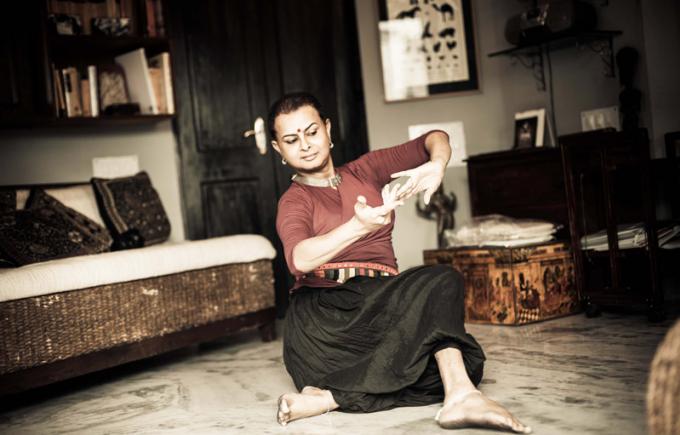
SINCE RITUPARNO GHOSH’S DEATH from a cardiac arrest on 30 May, at the age of 49, there has been an outpouring of tributes, befitting someone who was arguably Bengal’s most widely known contemporary film icon. With his passing, we have lost not just a talented and prolific director, but also a rare public figure willing and able to depict—and in recent years, embody—the fraughtness of our sexual selves. Ghosh started to make a calculated change in his physical appearance about five years ago, shaving his head, taking hormones and adopting a new wardrobe that made him look increasingly androgynous. In recent years, in his cinematic output, too, he became preoccupied with questions of gender identity, though more as an actor and writer than as a director. Following his death, his filmography has been characterised as a progression from some sort of closeted bhadralok-ness to sexual liberation, but this seems to overlook what his oeuvre, as a whole, tells us. I would suggest that Ghosh’s cinema was always a kind of poetry of the interior, attending closely to the inner spaces of the home, and of the heart. The intimate chamber dramas he specialised in were closely observed portraits of the Bengali middle class at home, and sex and sexuality were integral to that picture right from the start.
His films, shot largely indoors and built up through conversations, were sometimes dismissed as uncinematic: it was often argued that they were like filmed plays. But the frequently enclosed nature of his canvas seems to me to have been Ghosh’s strength: under the sustained attention of his gaze, the finest of faultlines could come into view—and very occasionally, be bridged. His dialogue—Ghosh was rare among contemporary Indian directors for having scripted all his films—was immaculately attentive to the gradations of age, class and education, to the tensions and insecurities created by disparate backgrounds, even within the same household. It was no accident that so many of his narratives played themselves out within the space of the home.
Houses, and the conflicted relationships women have with them, are a recurring theme in Ghosh’s work, as I have mentioned in another article. He once described his breakthrough film, Unishe April, as being inspired partly by watching Ray’s Jalsaghar and drawing on the zamindar’s relationship with his crumbling mansion to create his ageing dancer’s relationship with a house full of memories. In future films, whether it was his imagining of the 19th-early 20th century Bengali universe—Chokher Bali, Antarmahal, Noukadubi—or his recreation of contemporary women’s lives—Dahan, Bariwali, Asukh, Utsab, Raincoat, Dosar, Khela, Shubho Mahurat—he remained remarkably sensitive to the pushes and pulls of the household. Ghosh understood, better than any Indian filmmaker I can think of, both the desire for domesticity and its capacity for suffocation. Whether it was the present-day housewife in a crumpled sari stuck in a house crammed with furniture, as in Raincoat, or the 19th century bhadramahila for whom leaving the house without an escort, even in a private carriage, was forbidden, Ghosh constantly forced his audience to experience domestic space as his female characters did. And he was unafraid to depart from the letter of a text for what he felt was its spirit. “[Tagore’s] novel ended with the widow Binodini going to live in Banaras, devoid of all desire,” he said to me in 2008, speaking of Chokher Bali. “My film emphasised her independence—the letter Binodini writes when she leaves talks of her own desh, which should be read not as country, but as space or domain.” If Binodini’s farewell letter speaks of her past actions as driven by a desire for setting up a home, it also gestures to a future in which her home will be the whole country, the whole wide world, whose existence she has finally caught a glimpse of by leaving Calcutta. Remarkably, Bengali contains a word that can mean both ‘home’ and ‘world’—‘sansar’, pronounced ‘shongshaar’. Dahan, set in the mid-1990s, paints an even more astute picture of the ambivalence of home: how the menace of the outside world can turn a woman’s shongshaar into a prison, containing possibilities for violence that are harder to thwart. A young woman, recently married, is molested and almost gang-raped on a city street. She manages to escape, only to discover that the safety of her marital home is a dangerous illusion. His acute attentiveness to the meanings of home—the lines that mark inside and outside, but also the lines that divide people within it—made Ghosh a master of the chamber piece.
Yet his sensibility was nothing if not steeped in cinema. There was his strong sense of attachment to the work of Satyajit Ray, whom he described as his mentor, waving factual challengers aside with the remark that a sense of mentorship could be created by watching his films. He was also inspired by the popular Bengali cinema of the 1950s and 1960s—his films have sometimes been compared to those of Ajay Kar, Tarun Majumdar and Tapan Sinha, commercially successful filmakers whom he described as being as “realist too”. (Ghosh once said that Unishe April might contain “a shadow” of Kar’s Saat Paake Bandha.) He had a degree of fondness also for popular Hindi cinema, an openness rare for a Bengali filmmaker whose work was most definitely bracketed as ‘intellectual’. “Maybe I can’t make all kinds of cinema, but I’m open to all kinds of cinema. I would watch a Rock On or a Taare Zameen Par with as much passion as anything else,” he said to me in 2008.
Ghosh’s films partook of the variety of the Indian film universe and reflected it in myriad ways. For instance, ‘Urge’, Ghosh’s shortest fiction film (not counted in his 19 features), is a tongue-in-cheek look at the place of Bombay in the popular Indian imagination. One of 11 short films that made up the ensemble production Mumbai Cutting, ‘Urge’ was made in 2008 and shown in a few festivals, but never commercially released. The short is one of the best things about Mumbai Cutting. Its humour owes a lot to the self-referential treatment—the family is straight out of a melodramatic television serial, and the Stardust-reading police inspector’s style of detective-giri clearly draws on his consumption of Bombay cinema. Ghosh was able, even in the space of some 20-odd minutes, to provide a wry, distilled sense of how the mythic version of Bombay feeds off the real—and vice versa.
In Titli (The First Monsoon Day, 2002), another kind of cinematic myth is explored and exploded as Ghosh looks at a teenager’s fascination with a Bollywood film star. Given the destructive possibilities of teenage star obsession, this could be considered a tame family version. Titli, played by Konkona Sen Sharma, is as gentle and dreamy a besotted teenager as you could imagine, cutting out each new picture of her beloved hero Rohit Roy with quiet gum-chewing determination, writing him letters and waiting for replies, and wondering with endearing seriousness whether her parents would object very much to getting a film star for a son-in-law.
But it is not only at the level of plot that Titli deals with the lure of cinema. Ghosh knows his audience well, and he plays on our fascination with the actual world of film stars by embedding aspects of it on screen. He casts a real-life mother-daughter pair, Aparna Sen and Konkona, at a time when Bengali curiosity about the latter’s potential as an actress was very high, and yet does not make them play themselves—Aparna’s character, Urmila, is a housewife who has nothing to do with the cinema. Ghosh inserts into the film snatches of conversation that seem perfectly natural between Urmila and Titli, but also pick up on the film-going public’s innate tendency to compare star children to their parents. My friend Sandip thinks it’s incredible that a mother as beautiful as you had a daughter like me, Titli says guilelessly to Urmila, to which Urmila responds in a protective motherly fashion, “Eto sundar mishti meye amar” (Such a sweet, pretty daughter I have). There is also the near-perfect casting of Mithun Chakraborty as Rohit Roy, with the character’s life story drawing judiciously on aspects of Chakraborty’s own biography—his growing up in poverty in a refugee colony, his unusual status as a Bengali hero who made it big in Bombay films.
There is more. Early in the film, as the mother and daughter drive from their tea estate home to pick up the father—the estate manager—from the airport, the film finds occasion for Urmila to reminisce about the era of Aradhana (1969), the hero Rajesh Khanna’s crazy popularity with girls like herself, and her father’s stern disapproval of the whole business. Ghosh makes this moment work at multiple levels: he flags the theme of star crushes, complete with historical context; he tangentially reminds his Bengali audience of an older generation’s professed distaste for popular Hindi cinema; and he simultaneously provides its more willing members with a treat by playing ‘Mere Sapnon ki Rani’ in its original setting, on the drive to Darjeeling. As the opening bars are heard on the car stereo, the Darjeeling toy train of the original song comes into view, and the delight on Urmila’s face mirrors our own.
But Titli is as much about the power of a star persona as it is about the swiftness with which hero worship can give way to disappointment, the recognition of frailty. One could read Titli as Ray’s Nayak redone by splitting the Sharmila Tagore character into a mother and daughter. One could, arguably, also see it as a mature reworking of the premise of another Ray film, Kapurush, in which an old lover suddenly appears in the life of a woman now living a quiet remote life with her tea planter husband. Of course, Ray’s tale is rather more dramatic, and the well-meaning Dipankar De in Titli is nowhere near as coarse as Haradhan Bandhopadhyay in Kapurush—even if he does fall asleep as soon as his wife starts to read a favourite poem out loud.
In Shubho Mahurat, the film fan’s fascination with the star is taken to another level, by marshalling the obsessiveness of fandom in the service of solving a murder mystery. And having one real-life movie star of yesteryears play the fan of another—Rakhee Gulzar, cast against type as a homebound, spinsterish Bengali Miss Marple, plays a longtime admirer of Sharmila Tagore, cast as a version of herself—provides another level of deliciousness for Indian movie fans.
Building that sort of on-screen relationship between actors who share an off-screen history was one of Ghosh’s favourite cinematic ploys. He played constantly on the Bengali audience’s cinematic associations, creating with finesse the frisson that comes from rubbing the real against the reel. In Shubho Mahurat, an early scene has Sharmila Tagore (playing heroine-turned-NRI-producer Padmini Chowdhury) posing for a photograph with Soumitra Chatterjee (her co-star in several Ray films, playing himself). Then she turns to Subhendu Chatterjee, who starred with her and Soumitra in Ray’s 1970 classic Aranyer Din Ratri (Days and Nights in the Forest), and the three take a moment to remember comic actor Robi Ghosh, an unforgettable member of the original Aranyer party who had—in real life—recently passed away. Ghosh’s joyful cinephilia is not satisfied until he gets fellow filmmaker Goutam Ghose to show up in an unannounced cameo, taking the still camera out of the photographer’s hands to take the picture himself—a little in-joke about the fact that Ghose was then making a sequel to Aranyer Din Ratri called Abar Aranye (In the Forest, Again, 2003).
Cinematic memory also finds place in Utsab (The Festival, 2000), where the antiquity of the ancestral Bengali home is now supplemented by the history of cinema. “These family ornaments were used in Satyajit Ray’s film Devi,” says the young video-camera-armed visiting nephew Joy, bestowing upon the heirlooms a new kind of historicity. Later in the same film there is a laughing reference to the fact that Mamata Shankar’s character, Joy’s middle-aged aunt Parul, was almost cast in a Ray film in her youth. (Just days before writing this piece, I heard a very similar story from a friend about how his aunt, then a young theatre actor, was cast in Nayak, and how she was forced to leave because her father, whom Ray had cast in a small role, decided he objected to a scene with alcohol in it and elected to walk out of the film—with his daughter. The role eventually went to Sharmila Tagore.) These are the sorts of memories that are treasured and repeated down the generations in culturally inclined Bengali families—and Ghosh had a firm grip on the pulse of that demographic. Born to painter parents, and a Jadavpur University student (although he studied economics, not literature), he was, after all, a part of it.
In several other films, though, he showed himself capable of taking a sharper, more unforgiving look at the business of filmmaking—a clear-eyed insider to the industry giving us a peek into what he could see. In the superbly realised Bariwali (The Lady of the House, 2000), for instance, an unscrupulous director (Chiranjeet Chakraborty) takes advantage of a middle-aged single woman’s inchoate romantic fantasies, not just renting her large old zamindar badi for a period film shoot, but also using it to house his heroine. The older woman is persuaded to let the constituents of her everyday life be turned into free props for the set and eventually, even to act in a small scene. That vision of the sheltered, soft-voiced Banalata (a superb Kirron Kher) opening up like a flower for this glib stranger she has fallen a little in love with, her befuddlement at finding herself performing for the camera the alta-and-sindoor-wearing married woman she has never been able to perform in real life, is a truly memorable one. To add another layer, of course, the film-within-the-film is Chokher Bali, with its 19th-century plot about the hapless widow who must watch her married friend revel in the worldly pleasures she is denied. (The theme of forced celibacy is also a crucial link between Bariwali and Chokher Bali, which Ghosh was himself to film three years later, in 2003.)
An interest in performance, in the way the camera can chance upon and amplify our innermost feelings, often made an appearance in his work. In Bariwali itself, there is a scene where Roopa Ganguly, playing the actress who is playing Binodini, works herself up into weeping for a scene, but then simply cannot seem to stop—some plug has been pulled, the floodgates are now open. The people watching—the film director Dipankar and Banalata—seem to wince inwardly; we all know instinctively that her crying is real.
The worlds of theatre and cinema (and advertising, in which Ghosh worked before he made his first film, Hirer Angti) are a fixture in his films, and he returns again and again to the way in which the performative can inform the real. Unishe April (1994) casts Aparna Sen as a famous dancer. The Last Lear (2007), a plodding self-indulgent hulk of a film, centres around an ageing actor who wishes to approximate reality so much that it costs him his life. Abohomaan (The Eternal, 2010) is a rather pretentious take on the idea of a muse—it is the story of a film director who replaces his ageing wife with a much younger actress whom the wife herself has coached to be more like her. There is group theatre in Dosar, Asukh’s heroine (Debashree Roy) is an actress and Shubho Mahurat, of course, revolves around a film shoot. Khela is another clear-eyed look at a film crew, with a director who happily ‘kidnaps’ a child he wants to cast in his film. The child is the one who comes up with the idea, but for an adult to go along with it seems bizarre and thoughtless, suggesting an obsessive devotion to craft that excludes any basic sense of caution, right or wrong. It is a premise that could have made for a thriller, or been an adventure from a child’s perspective. But Ghosh adds to that one-line premise an additional emotional layer—the director (Prosenjit) is estranged from his wife (Manisha Koirala) partly because he refuses to entertain her desire to have a child. The khela (play) of the film’s title is the mock-kidnapping, but also the mock-performance of fatherhood.
But my favourite Rituparno Ghosh moment of speculation on film’s relationship with reality is a scene in Utsab. The family reunion is over, and the three members left in the old house gather to watch Joy’s home video full of vignettes from the Pujo gathering. We look so happy in this video, says one of them, it doesn’t look at all like the tense time I remember it as. All the tension has been edited out. Or is it that we only remember the bad bits, and in fact it was as happy a time as any other? Suddenly it is no longer clear which is the fiction—what the film documents, or what our memories choose to focus on.
Memory can be as selective as cinema. An obituary published in Mint after Rituparno Ghosh’s death sought to divide up his career into three parts: an early phase of “relationship dramas” exploring Bengali middle class aspirations and desires, followed by “a second phase of bilingual dramas featuring Hindi movie celebrities as star vehicles” and a third in which he was “openly pushing the envelope on the representation of sexuality on the screen by playing gay or transsexual characters in movies directed by him and his peers.” This three-part trajectory is a little too neat. It’s not clear, first of all, where Ghosh’s period films—Chokher Bali (2003), Antarmahal (2005) and Noukadubi (2010)—are meant to fit. Even if the first two are placed in the ‘Hindi movie celebrities’ category, Noukadubi was made in the so-called third phase—yet it does not deal with gay or bisexual characters, and stars only Bengali actors. Second, there’s the fact that Ghosh’s concern with the Bengali middle class was by no means limited to the supposed first phase of his career. Between Antarmahal (2005) and The Last Lear (2007), he made Dosar (2006), in which the accidental death of a lover exposes the hidden cracks in a husband-wife relationship: a Bengali ‘relationship drama’ made with Bengali actors.
And Khela (2008), Abohoman (2010) and the unreleased satire Sunglass (2011) are all recent films set very much in a Bengali middle class milieu: they cannot be described either as Bollywood star vehicles or as gay/transgender films. It is also important to remember that while Ghosh may have gained national media's attention for casting an Aishwarya Rai (ChokherBali and Raincoat) or an Amitabh Bachchan (The Last Lear), his mainstay throughout his career continued to be Bengali actors—acknowledged art cinema names like Aparna Sen and Soumitra Chatterjee, but also commercially successful Tollywood stars like Rituparna Sengupta and Prosenjit, from both of whom he drew several marvellous career-altering performances.
Rather than seeking to break up Ghosh’s oeuvre into strictly segregated phases, it might be more fruitful to look at his work as a whole. Doing so would also complicate the easy linear narrative of Ghosh’s early “respectful conformity” changing to “blatant transgressiveness”, created by the same obituary.
It seems to me, for instance, that the relationship between the real and the make-believe is a thread through much of Ghosh’s career. The idea of performance as transformative is something he took on board as early as Bariwali and Titli, sustained through the creative muddle of The Last Lear, Khela, Abohoman and Shob Charitro Kalponik, and then placed on a queer plane in Chitrangada and Arekti Premer Golpo (Just Another Love Story, 2010). Both Khela and Abohoman, as I have mentioned, have as protagonists film directors whose personal lives are irrevocably altered by their artistic obsessions. And while it is incontrovertible that Ghosh’s last directorial release, Chitrangada (2012), in which he gave himself the lead role, as well as his turns as an actor and writer—in Kaushik Ganguly’s Arekti Premer Golpo and Sanjoy Nag’s Memories in March (2011)—placed queerness centrestage in a way that was both striking and important, it is fascinating that Rudra in Chitrangada is a choreographer and dancer, while Abhiroop in Arekti PremerGolpo is a transgender documentary filmmaker, making a film on the real-life jatra actor Chapal Bhaduri, who was known for portraying female roles on stage. Here, sexuality might be seen as simply one aspect of the performance of self—and of the imaging of the other. On the other hand, given the bhadralok audience he was wooing, there was a brilliant courageousness about his depiction of sex—never just gesturing to it coyly or dressing it up as epic romance, but letting it be a messy, real thing that could spill over the bounds of social propriety (Bariwali, Utsab), complicate the most secure relationships (Dahan), or be the glue that binds the most insecure ones (Utsab).
That courage did not quite carry over from the heterosexual relationships to the homosexual ones. Aveek Sen has argued in the Telegraph that Ghosh’s latter-day queer films wished they “did not exist from the waist down”—homosexuality was acceptable to the Bengali middle class “as long as its story is told as the unhappy and hyper-aesthetic tale of a woman trapped in the body of a man.” It is possible, of course, that he might have gathered greater courage as the years went by, with the growing acceptance of his audiences. It is certainly worth noting that in the three queer narratives he was a part of—Chitrangada, Memories in March and Arekti Premer Golpo—the contemporary action unfolds within a Bengali middle class set-up. Non-heterosexual desire enters the bhadralok milieu, demanding its place affectingly within a familiar Ghosh world of filial, familial and heterosexual ties. Perhaps with time, he might even have begun to queer his Tagorean tributes and his heterosexual romances—imagine a Chokher Bali, for instance, that drew out the homo-erotic undertones of the friendship between Mahendra and Bihari. Sadly, we will never know.