Showing posts with label Jangpura. Show all posts

10 November 2020

Art For the Binge-Watcher

A quick wrap of the current art scene for India Today magazine:

Virtual platforms are breaking the barriers of social distancing with new ways of exhibiting art

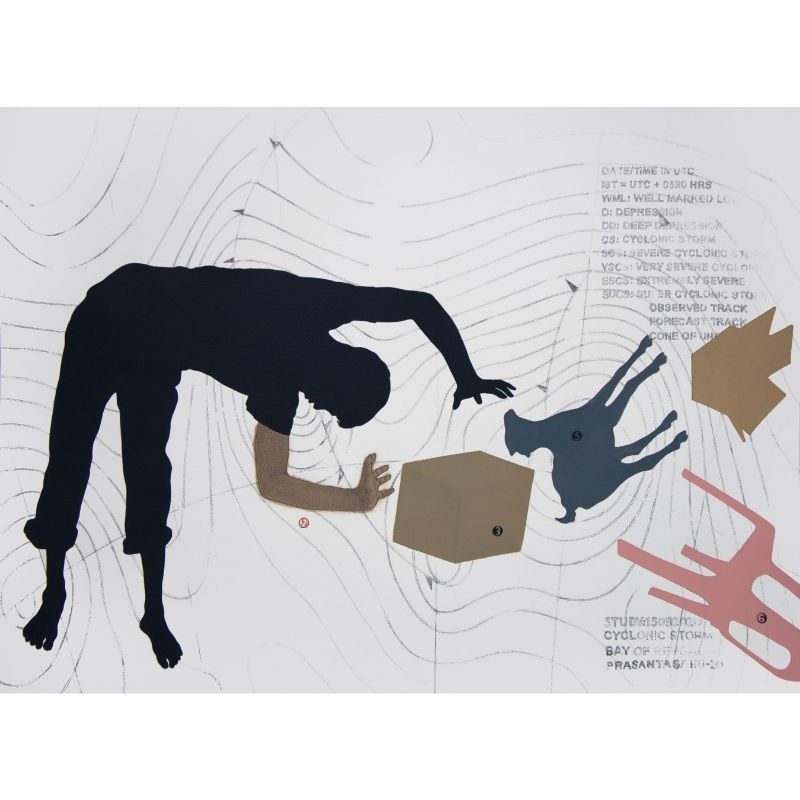
'The Half Of It', a painting from Nityan Unnikrishnan's upcoming solo show, It Is Getting Louder,
opening on Nov 13, 2020 at Chatterjee and Lal Gallery, Mumbai

You might think that visual artists have had it better than most during the Covid-propelled lockdown, and you would be right. Most artists work alone, and display only needs to shift from the clean white 3D cube of the art gallery to the 2D rectangle of the digital screen. So even as the lockdown left a series of shuttered shows in its wake, many galleries rose to the challenge. One exciting development has been In Touch, a digital platform created collaboratively by galleries across India (Artintouch.in/).


Edition 4 of In Touch, which runs till November 10, includes Rustom Siodia’s little-seen 1920s and ’30s watercolours on the Chatterjee and Lal site, Kanu Gandhi’s astonishingly intimate photographs of the Mahatma on PhotoInk, Dhruvi Acharya’s arresting pandemic-inspired work at Nature Morte, and Buddhadev Mukherjee’s marvellously humorous human figures, playful studies in scale, at Mirchandani + Steinruecke. Chemould Prescott Road is showing Lavanya Mani’s ‘Game of Chance’, mixing science with miracles and omens in a manner perfect for a pandemic year. In ‘Miraculous Sights 2’, a town floats into the sea aboard a ship, which itself hovers over the scaly back of a submarine creature. In the hypnotic ‘Portents’, a gigantic red flower opens a bleeding glass eye to a world buffeted by strange animal-headed comets.

In Touch’s on-screen display is effective: you can see a chosen artwork as it might look on a wall (with a virtual chair for scale) and zoom in. I wish, though, that more galleries had done what Gallery Espace has with Manjunath Kamath’s dream-like pastiches, to identify sections of each work for higher-resolution reproduction. It feels like a privilege to have his strange, vivid imagination enlargeable on one’s private screen: a pile of books in flames as an elephant grazes placidly in a field outside, a television splashing into a bathtub, an angel approaching a Mumbai taxi, or a giraffe a buffet.

Others, too, have made efforts online. The Kiran Nadar Museum of Art has a superb virtual tour. Kolkata’s CIMA has a new website. The uncertainty of recent months seems to have pushed the artistic process into the foreground. Mumbai’s Tarq Gallery is presenting Garima Gupta’s notes and sketches from the Southeast Asian wildlife trade, “unarchived fragments of a conflict that is pushing us into a war with the very world we inhabit”. Nature Morte offers up a downloadable colouring book by Acharya, while Kolkata’s Emami Gallery has devised a virtual flipbook. The flipbook is a great format both for Prasanta Sahu’s Suburban Shadows (see below) and Aroh, a group show that came out of Emami’s open call for lockdown work by young artists (I particularly liked Arindam Sinha’s ‘Marking’, Arpita Akhanda’s ‘Hung Up On the Past’ and Jahnavi Khemka’s ‘Lockdown 1’). Finally, the digital crossing of geographical limits allowed us to view, sitting in India, 35 sketches from the late great modernist Ram Kumar’s 1960s and ’70s notebooks on Art Basel’s Online Viewing Rooms.

But while the hushed silences and ‘no touching’ rules of the gallery may feel only a step away from the literal untouchability of a virtual display, an aura still clings to the work of art in the era of digital reproduction. Three of the five shows to look out for this month, at DAG and Art Heritage Galleries in Delhi, and at Chatterjee and Lal in Mumbai, are open for offline visitors.
From Prasanta Sahu's ongoing show 'Suburban Shadows', online on the website of Emami Art Gallery, Kolkata

ART RESTART: Five art events to keep an eye out for

Nityan Unnikrishnan’s solo show It is Getting Louder, showing at Mumbai’s Chatterjee and Lal gallery from November 13 to January 2, feels very much like India right now. The acrylic images on khadi spill over with people: reading, eating, dreaming, waiting. The other set of the images, graphite on muslin or bamboo fibre paper, are abstract, filled with black and white forms which could be anything: masts, mountains, plants, porcupines. All that unites them is their jaggedness.

Art Heritage Gallery, Delhi, together with Kolkata’s Seagull Foundation, is showing The Self Portrait, a show of early and rare woodblock prints, sketches and watercolours by the late K.G. Subramanyan, who died in 2016, aged 92. They aren’t all depictions of the artist: watch out for ‘Jangpura Women’ (1950), and many striking untitled linocuts and litho prints of seated women. Open by appointment till December 15.

DAG’s The World Will Go On, on view online since October 25, will be open to visitors at The Claridges, Delhi, between November 2 and 12. Highlights include a 1980 Raza, an M.F. Husain Hanuman, Nandalal Bose’s ‘Diwali’, and one of Krishen Khanna’s bandwalla images.

Prasanta Sahu’s Suburban Shadows, on the Emami Gallery website till November 30, visibilises the links between rural and urban through his studies of food and farming: a lettuce in a shopping cart, vegetables sprouting from human limbs, a bhindi as skeleton, shadows of the labouring body.

Five Million Incidents, a set of public art interventions funded by the Goethe Institute, has been reconceptualised in digital form. Visit Goethe.de/ins/in/en/ver.cfm to join the imaginary chatroom of Ranjana Dave’s Age Sex Location, add to Sultana Zana’s Fieldness, a collaborative digital archive of time spent in nature in the city, or log in to play Shraddha Borawake’s virtual game Chaat Meets... A New World Order on November 7.

 Published in India Today magazine, 8 Nov 2020. (Two separate links)

16 October 2012

An Insider's View: Richard Bartholomew's writings on Indian art

Richard Bartholomew, as a compilation of his writings reveals, was an art critic who didn’t let his friendships with the top artists of his time suppress his voice


(Written for Open magazine)


A Burmese émigré who had arrived in India in 1942, Richard Bartholomew entered the literary-cultural scene when studying English literature at St Stephen’s College, and then as a teacher of English at Delhi’s Modern School from 1951 to 1958. A poet and a photographer himself, he started writing and publishing as an art critic in 1955. From the late 1950s until his tragic and sudden death from a stroke in 1985, Bartholomew’s was the most important critical voice on the Delhi art scene, and he among the most important art critics in India. From 1977 till 1985, he took on, in addition, the onerous task of institution building as secretary of the Lalit Kala Akademi.

And yet, until 2009, when his son Pablo Bartholomew, himself a photographer, put his photographs together in a show and a book called The Critic’s Eye, Richard Bartholomew’s was not a name I knew. The Art Critic, self-published by Pablo after a difficult, muddled, often painful process that ended up taking 27 years (and which he gives partial voice to in a remarkably honest afterword), finally brings to a contemporary readership a definitive collection of Richard Bartholomew’s critical writings. Voluminous at roughly 200,000 words (edited down from the original 300,000), this is an ‘art book’ like no other.

Opinionated, often provocative, but always thoughtful, Bartholomew’s writing has the rare virtue of combining the survey and the 
longue durée with a marvellous immediacy, giving the present-day reader a privileged sense of modern Indian art ‘as it happened’.

The liveliness of his prose is also based on his ability to straddle worlds: while treating art with all the seriousness of a national mission, he constantly strives to translate what is essentially high culture into something that ordinary people—middle and upper middle-class readers of The Indian Express or The Times of India or Thought magazine—ought to be able to connect with, enjoy, and even if possible own. Sample: ‘The best thing about… ‘Graphic Workshop 1974’, organized in Baroda, is that each print has been brought out in a small edition of 50… [enabling work to be priced] at Rs 50 which is the price of a whiskey bottle or a cotton sari.’

It is a sensibility that can only have come from a critic who was on familiar, if not intimate, terms with many players in the art world—and yet wrote about it not for the coffee-table book or the rarefied academic volume but for the educated layperson. And also, perhaps, only from an art world still un-feted (and un-buffeted) by the market; Richard’s writing, writes Geeta Kapur, ‘matured on a typewriter in modest dwellings that neighboured the artists’ equally modest studio-apartments’.

Bartholomew himself saw his role with fierce clarity. ‘The critic who wishes to be articulate must be prepared to discuss reviews with artists; he must be at home in the artist’s studio and he must be an integral part of the art movement. If there is no art movement, he must try to foster one,’ he wrote in 
Cultural Forum in 1959. ‘It is imperative that he should have the respect of three institutions: (1) the public; (2) the artist; (3) the editor. This triple test disqualifies many for the vocation of criticism, for criticism is a supreme test of integrity.’

The book provides ample evidence that Richard held himself to these standards. He was close to several of the painters he wrote about—Ram Kumar, whom Richard and his wife Rati (then Batra) befriended at St Stephen’s College; Kanwal Krishna, having taught alongside him at Modern School (where Geeta Kapur first encountered the two of them as teachers and whose art room Krishna ‘treated for all the world like an artist’s atelier and evening hub’), and his wife, the artist and printmaker Devyani Krishna; A Ramachandran, who remembers Richard and Rati arriving at his barsati door to invite him and wife for dinner at their place, also in Jangpura; MF Husain; and Satish Gujral. And yet these are artists whose work received Richard’s most scrupulous honesty. Sample three statements on Husain’s paintings: in 1961 Richard can write, ‘As my acquaintance with Husain grows I begin to marvel at his virtuosity. Husain is a careless painter often; he is a facile painter sometimes; but Husain is a painter with a carefully selected repertoire, always.’ In 1965, he can write, ‘The 23 Husain drawings in this exhibition are good drawing-room pieces.’ And in a long essay on Husain published in a 1972 volume, he can make the following marvellous observation: ‘Men put so much energy into words, even if they do not believe all that is said. Husain puts that energy into paint.’


The integrity that Bartholomew brought to his work drew reactions in kind from the artists themselves. Here is Richard writing about Satish Gujral: ‘And when I criticised him for the want of finesse and conviction in the lettering and the slogans of his terracotta pieces of 1969-70, he had the heart and the good sense to take it in his stride, though it hurt. “A man doesn’t do what he has succeeded in doing all the time,” [he said].’


He draws analogies and references from far afield, from literature and poetry most of all, but also in vivid prose, from the natural and cultural environment of his adoptive country. Here he is on Raza’s Indian palette: ‘His colours are those of the Banaras brocade, the Gujarati manuscript, the blazing intensity of the Indian summer with its glory of the gulmohur and the laburnum.’ Reading Richard’s writing, in fact, one has not the slightest sense of the outsider’s trepidation, or desire not to offend.

On the contrary, one is pleasantly surprised by the forthright way in which he broaches, for instance, such presumably sensitive subjects as Bengali dominance. In a 1959 piece called ‘Art in the Shadow of Official Patronage’, he took the Lalit Kala Akademi to task for several things, including its institution of a tripartite division of art submissions for a prize into ‘oriental, academic-realistic, and modern’. ‘Manifestly this is a move to provide sanction to the decadent and dying Bengal School, for which Mr Barada Ukil, the Secretary, and Mr DP Roy Chowdhury, the Chairman, must necessarily have much sentimental attachment… it is pertinent to point out that three centres of art instruction in this country are being managed by Bengali artists, by Mr BC Sanyal in Delhi, Mr Bishwanath Mukerji in Hyderabad, and by Mr Chintamani Kar in Calcutta. The Curator of the National Gallery of Modern Art, Mr Pradosh Das Gupta, is also a Bengali. For better or for worse, there is the influence of Bengalis at the top official places in Indian art today. The general ambivalence, therefore, is understandable.’

And yet, there is no slanderous gossip here, no personal slurs. What there is is a deep-rooted, not always rational, distaste for the ‘nostalgia’ and ‘romanticism’ of the Bengal School. But even this avowed critical disdain for nostalgia and romanticism is never allowed to swamp his instinctively positive response to a body of work. About Amrita Sher-Gil, for example, he writes with empathy rather than dismissal: ‘The pensively stanced figures of the countryside in a Sher-Gil painting breathe a romanticism that is born of the regret that these things were passing away.’


It is impossible to do justice to this vast volume in a short review. But suffice it to say that Bartholomew is attentive to the smallest detail in a work of art, writing passionately about colour and light and form, the stroke that creates the hunch of a back—while never shying away from the big picture questions that you almost rarely hear asked anymore: Is modern Indian art merely imitative of Western art? What does its Indianness consist of? What is the role of State patronage? You may or may not agree with his answers, but it is more than sufficient pleasure to discover so fine an interlocutor—and one you did not know existed.

Published in Open magazine, 20 Oct 2012.

25 August 2008

The Romance of the Single Screen

The demolition of Chanakya Cinema, December, 2008. Designed by PN Mathur (Photo courtesy Ram Rahman's blog)

My first memories of watching films in Delhi are rather hazy. I remember watching Masoom and crying, and being taken to see a film in which Rishi Kapoor sang a qawwali. If I really dredge the depths of my memory, the image that floats up is from when I was about five – an expedition with my father, to watch a ‘children’s film’. What I remember is not something from the film (it must have been in English, which I barely understood at the time), but the morning sun, a crowd of people and a poster with a picture of a girl and a dog, propped up at the entrance to a hall that I am convinced was Chanakya. The year was probably 1982.

Chanakya remained centrestage in my movie-going life through the 1990s, though Priya provided stiff competition. School expeditions to Priya were where a whole generation of girls were weaned into expressions of undying love by Whitney Houston in The Bodyguard. (The Terminator probably didn’t do as much damage to the boys.)

Last winter, I happened to be in Delhi when the NDMC managed to wrest control of Chanakya from its long-term leaseholders and decided that it would be demolished to make way for a mall-cum-multiplex. “Last day, last show at Chanakya!” said the city supplements. A friend and I showed up to say our farewells. We weren’t the only ones. Tickets were sold out. A huge crowd surrounded the hall – strangers smiling at each other, middle-aged men swapping memories with twenty-somethings. We finally bought tickets in black. Going out with a bang, I remember saying, with a tinge of something like pride.

But going, all the same. Most of the halls that people remember from the seventies and eighties have either gone, or shrunk: from the great, hulking, comfortable beasts they once were into unrecognizable glossy creatures with tinsel wings that shimmer in the night. I was young enough to celebrate the transformation, once: in my first year at college, I woke up at seven on a Sunday and braved a full-scale Delhi stampede to get a free ticket to the first-ever show at the city’s first-ever multiplex – PVR Saket, where once had been Anupam. But I didn’t quite realize then the shape of things to come. Within a few years, the multiplexes increased in number as well as clout. They managed, for example, to get rid of the clause that had required them to sell a small percentage of tickets at low prices (in PVR Saket in 1997, any seat in the first two rows was a joyful Rs 7).

I left Delhi soon after. When I came back, Alankar, my mother’s old favourite from long-ago Defence Colony days, had become 3Cs and Eros, where I had watched many an evening (while casting sidelong glances at the “morning show” posters) had disappeared. Where the hall had been was nothing but a crater – and the name. Like thousands of others, I mention Eros every time I give directions to Jangpura, where I now live. It strikes me that Eros is but one name in the vast geography of a city marked by absent cinema halls. Think of the hundreds of times you’ve jumped into an auto and pronounced tersely, “Savitri”, or perhaps, “Kamal ke paas”, or “Archana-wale road par”, with no need to say another word. Sometimes I wonder if the ease of that communication, that common language of the city, evokes an earlier time when cinemas were spaces that the middle class shared – if sometimes grudgingly – with the working masses. Everyone knew the difference between Regal and Rivoli and Odeon and Plaza, even if they were all in Connaught Place. In contrast, there is something untranslatable, incommunicable, about the difference between Citywalk and Square One – both are merely “Saket wale naye mall”. One reason why the autowala thinks they’re indistinguishable might be that he will never see the inside of either. But perhaps the real reason is that they are no different.

My nostalgia for the old halls isn’t blind – they were (and the survivors still are) cavernous, often dirty and predominantly male. Seediness came with the territory. You didn’t need to be bunking school or watching an A-rated movie to feel transgressive: if you were female, just being in a cinema alone was enough. The first time I went to watch a film alone was during IFFI 1996. I caught a bus from college to Sheila to see Sai Paranjpe’s Papiha, and bought a front stall ticket. It was an innocuous, feel-good tale about a forest officer amid tribals – but I will never forget the rousing reception I got from the men around me when the lights came on. Another memorable time I took a cousin and an unsuspecting French friend to watch a Govinda film at Stadium Cinema. The hall had clearly seen better days, but we were intrepid, and the tickets were Rs 20. It was only when a worried-looking ticket checker set about finding us seats with his flashlight that we realized a) that only a third of the seats were unbroken, and b) that there no other women in the audience, let alone foreign ones.

Multiplexes, for all their cookie-cutter aesthetics and ridiculously overpriced snacks, probably do make life easier for women who can afford them. But most single-screen cinemas in Delhi seem to be going the Stadium way: interesting variations include Imperial in Paharganj, which now fills up every night by showing 80s multistarrers for twenty bucks a ticket, and Moti in Daryaganj, which has tied its fortunes to the rising Bhojpuri tide. Some few have managed to survive the transformative years without losing their identities completely – one model is that of Priya, which keeps afloat because it’s part of the PVR family. But another model is Delite, now divided into Delite and Delite Diamond, its wooden panelling and illuminated, jewel-like ceiling clearly a labour of love for its owners. The neebu pani and samosas and photos of Dilip Kumar visiting the hall in its older avatar make people describe it as retro. Yet the place is as far from being a museum as possible, with the crowds rolling in every night. Clearly there is a space for something that’s beyond the multiplex – why aren’t there more people seeking to fill it?

Published in Time Out Delhi Vol 2 Issue 8 (July 11-24, 2008)