Showing posts with label Uday Prakash. Show all posts

9 May 2015

Why English Matters

How translation from Indian languages to English is giving regional literature a dedicated new readership, turning linguistic rivals into potential allies

“Tamil was a major factor for my fame within Tamil Nadu; but it was only after the translation in English that Salma rose to different heights,” says the Tamil poet and novelist Salma, whose Irandam Jamangalin Kathai, about the world of women in a Tamil Muslim community, was published in Lakshmi Holmström’s translation as The Hour Past Midnight. The novel was longlisted for the DSC Prize in 2011, and sold over 3,000 copies (roughly 5,000 in Tamil, says her publisher, Kannan Sundaram of Kalachuvadu). Shamsur Rahman Faruqi may have long been the brightest star of the Urdu literary world, but to the Indian reader in English, he really only appeared on the horizon with the publication of The Mirror of Beauty(2013), his own translation of his magnum opus Kai Chand Thay Sar- e-Aasmaan (2006). KR Meera’s Aarachar might have won coveted Malayalam honours like the Vayalar, Odakkuzhal and Kerala Sahitya Akademi awards, and sold close to 50,000 copies—but it was only with its translation into English as Hangwoman (2014), that the book entered literary conversation outside of Kerala, applauded for its startlingly ambitious take on life, death, sex and the media through the eyes of a young Kolkata woman appointed executioner, and for J Devika’s effervescent translation. And so it goes.

Many regional language writers have only received national recognition late in their lives, because of translation into English. “Before the award, I was known as ‘a leading writer from Kerala’... When I won the Crossword Book Award in 1999, the press qualified me as ‘a leading Indian writer’,” says M Mukundan (Crossword website), whose Kesavan’s Lamentations won in the translation category in 2006. This is, of course, testament to an unfair linguistic landscape where English has an easier claim on the national. But it warrants greater scrutiny. If, as Marathi writer Bhalchandra Nemade and Indian English novelist Aatish Taseer would have it, English has squeezed the life out of Indian languages —“English is encroaching upon the innocence of children,” Nemade said, in an interview on Scroll; ‘How English Ruined Indian Literature’ is the title of Taseer’s New York Times opinion piece—why does English publishing seem more enthusiastic than ever in directing the many streams of that literature towards us, in translation? If this were a pessimistic critical theory paper, one might argue that the very impulse towards translation is preservationist, and things can only be preserved when they’re dead. But however seductive this idea of embalming might be, literature in the other Indian languages seems anything but corpse-like. And yet, being translated into English seems to afford writers in even the most thriving of these literary languages—Bangla, Malayalam, Hindi, Urdu, Marathi—a new lease of life.

Writer KR Meera, whose Malayalam novel Aarachar was translated to great success as Hangwoman
Because those of us who live in India but read only in English have grown dead to these languages; translation is the jadui kathi, the magic wand through which we might awake to their pleasures. English has turned us into Sleeping Beauties, and now only English can rouse us. And because whatever Nemade might wish for, neither our history nor the market allow for a clean separation between English and regional language cultures. A dedicated and growing community of Indian readers in English—while not exactly huge yet—is keen to read regional language literature (and read about it), while Indian language readers are often influenced by the ‘buzz’ English can create around authors.

Translation lists at HarperCollins India and Penguin Books India have certainly increased both in number and variety over the last five years. Penguin brought out 22 translations in 2013, 20 in 2014, and has 23 on the 2015 publication schedule. “We now publish an average of 20 titles in translation: five contemporary fiction titles and 15 classics (a mix of fiction, drama, poetry, memoir),” says Penguin’s managing editor R Sivapriya, who heads its translations list. “The numbers must have been half that in 2012.” Minakshi Thakur, who heads the same list at Harper, concurs: “We used to do five to six titles, this year onwards we’ll have 10 to 12. Earlier most publishers would only do classics, but we want to work with writers who are working now; [build] a list of future classics.” Penguin’s recent successes include a book as contemporary as Sachin Kundalkar’s 2006 Marathi novel Cobalt Blue, which sold over 2,000 copies in Jerry Pinto’s 2013 translation, and one as grand and dastan-like as The Mirror of Beauty, which sold 5,000 copies in 1,000-page hardback.

At the more academic end of the spectrum, too, the translation list at Oxford University Press has seen 10 percent annual growth since 2009. It now stands at 125 titles from 18 languages, including less-represented literatures like Dogri (Shailender Singh’s Hashiye Par (For a Tree to Grow) and Tamil Dalit writing like Cho. Dharman’s Koogai: The Owl (translated by Vasantha Surya). But this is still a niche readership, and the slow rate of growth makes publishing solely translations unsustainable. The independent Katha Books, which pioneered translations from the Indian languages, has shifted its focus to translations of children’s books.

                                                   +++

In a country as multilingual as India, translation has often been the only medium for a Malayalee reader to read the work of a Bengali writer, or an Oriya reader to discover a Kashmiri poet. Most readers in each of these linguistic communities have historically read translations in their mother tongue. Perhaps literary flows, even then, were somewhat unidirectional: I can’t keep track of the Biharis and Malayalees I know whose literarily-inclined parents grew up reading Sarat Chandra Chatterjee and Tagore in Hindi and Malayalam translations respectively, but I would be hard put to name any Bengali readers who read Hindi or Malayalam writers (they did read Russian and English classics in Bangla). But as the Indian upper middle classes have grown more monolingual, reading almost entirely in English, it is mainstream English publishers who must take on the task of bringing a multifarious Indian literature to these readers. In SR Faruqi’s words, the rising readership for English translations is attributable to “the growth, in geometrical proportions, of Indians who... sadly enough, have no real claim to any other language”.
Sankar, author of the Bangla bestseller Chowringhee, which has also done extremely well in English translation.
Sometimes an older translation in another language still serves as a route to English. Khushwant Singh and Vikram Seth had both read Sankar’s Bangla bestseller Chowringhee in a Hindi translation, and their admiration for this chronicle of life at a 50s Calcutta hotel was partially responsible for Penguin’s agreeing to publish Arunava Sinha’s English translation, according to both Sankar and Sinha. Today, while Hindi remains an important link language between readers in North India and writers elsewhere, at least some Hindi publishers’ decisions about translations may be routed through English. Aditi Maheshwari, translations head at the Hindi publishing house Vani Prakashan, stresses Vani’s commitment to translating directly from the original language, whether it be Herta Müller’s German or KS Sethumadhavan’s Malayalam. But it is hard to deny the role of English (publishing and media) in foregrounding a potentially translatable writer, such as Tamil’s Perumal Murugan.

Many Indian language writers cannot but recognise the unfortunately disproportional power English wields, knowing the only way to deal with it is to make it work for them, as much as possible. But writers from languages with a strong critical culture and a large literary readership can often experience a gulf between that vibrancy of exchange and their reception in English.
Chandrakanta, whose acclaimed Hindi novel Ailan Gali Zinda Hai was
shortlisted for the 2012 DSC Prize in translation, as A Street in Srinagar


“Within Hindi, there’s a rich conversation my work and I are part of, though not without its politics and prejudices,” says Hindi writer Geetanjali Shree. “English took me to other forums [but I soon saw the] lag between the interest in English in translation and English in original.” Her 2001 novel Tirohit appears in Rahul Soni’s attentive translation as The Roof Beneath Their Feet (HarperCollins, 2013). “Some 60 people have done research on my books [before any translation], colleges have held discussions. For Katha Satisar (2005), I got ten Hindi literary prizes, including the Vyas Samman and Mahatma Gandhi Samman,” agrees the Hindi writer Chandrakanta, author of this acclaimed historical take on Kashmiri Hindus, which Zubaan publishes later this year as A Saga of Satisar. Her intimate account of life in a Srinagar neighbourhood, Ailan Galli Zinda Hai (1986), was shortlisted for the 2012 DSC Prize as Zubaan’s translation, A Street in Srinagar, but has not even sold 2,000 copies. “How is it possible that a novel that has been recognised, does not sell? Perhaps Satisar will do better.”
While Hindi’s literary universe, for example, was (and is) perfectly able to provide a launching pad for a serious writer such as herself, Shree concedes that its “being older” means it “has still to update its training in events, awards, markets”. Yet vastly more copies are sold of a successful book in most Indian languages than in English. Benyamin’s novel Aadujeevitham, a spare, arresting account of one man’s brutal experience as a labourer in the Gulf, sold over one lakh copies across a hundred editions in Malayalam, according to its author. Translated lucidly into English by Joseph Koippally as Goat Days, the book is also one of Penguin’s greatest successes— but with 10,000 copies. Even Chowringhee, with over 30,000 copies sold in English, barely compares with the 100,000 copies its author ascribes to Bengali sales (not counting the huge pirated edition sales in Bangladesh, as he reminds me). And while Hangwoman gave Aarachar and its author a new visibility, only 2,000 hardback English copies have sold till date. Of course, any comparison of sales figures must acknowledge that English books are priced much higher.

“I hope we help the writers with their ambitions, I think we do, but not as much as they deserve,” says Sivapriya. “It requires enormous effort to train the gaze of the English reader on them.” Thakur agrees, admitting, “It is still a struggle to sell out 3,000 copies of most titles”, but adding, “That’s the case with most original English [literary] fiction too.” Bhima: Lone Warrior, Gita Krishnankutty’s 2013 translation of Randamoozham, Malayalam giant MT Vasudevan Nair’s classic telling of the Mahabharata from Bhima’s perspective, has sold 6,000 copies, she says. “The epic still sells, retellings do well in our market. Translate anything [to do with] Satyajit Ray and it’ll do very well. [Take] our 14 Stories project, stories by various writers that Ray made into films—that’s the kind of book which goes on to backlist well.”

Controversy of any kind works wonders for sales, in any language. Taslima Nasreen’s Lajja, banned in Bangladesh and inciting death threats, is one of Penguin’s highest selling translations, with 30,000 copies sold till date. And in a bitter irony, Murugan’s novel One Part Woman, which became the focus of a moral censorship campaign that forced the author to give up writing, has sold nearly 10,000 copies. The independent publisher Zubaan Books sold almost 7,000 copies of Urvashi Butalia’s translation of Baby Halder’s candid memoir of life as a domestic servant, A Life Less Ordinary. Penguin’s other successes from before 2012 are all 20th century classics in their original languages: Shrilal Shukla’s Raag Darbari, Manto’s Bitter Fruit, Tagore’s stories and poems, Bhisham Sahni’s Tamas.

                                                   +++

Often, however, English’s ripple effect bears little connection to sales. Meera’s Yellow is the Colour of Longing (2011) was long-listed for the Frank O’Connor prize and short-listed for the Crossword award, but did not sell beyond the first print run of 2,000. Being translated, however, brought Meera national exposure, with glowing reviews across the English media and speaking engagements at literature festivals, from Jaipur to Chandigarh, Odisha to Goa, held on a scale that most regional literatures cannot yet muster funds for. The publicity that an English translation receives sometimes triggers fresh interest in the original linguistic community. “If a book is awarded nationally or internationally, it gets more attention [from local readers],” says Benyamin.

Meera and Benyamin both believe the English media covers literature more than Malayalam, and Benyamin, like Sankar, thinks reviews in English are fairer. “A Malayalee reader would believe a bookshop owner more than a critic,” says Benyamin. “English reviews were well-researched and positive, maybe because my book was already famous.”

“Through English, I rediscovered my Bengali readers,” agrees Sankar, long dismissed as middlebrow by Bengali critics. “I never had any good reviews [in Bangla. But] some Bengali readers think, if it’s translated by Penguin, and getting rave reviews in London, maybe they should read it.”

For writer Uday Prakash, English translation has helped lift his work out of what he sees as Hindi’s insular, non-risk- taking, institutionally corrupt world, and made it part of ‘world literature’. “When I wrote Peeli Chattri Wali Ladki, I was attacked and abused in the Hindi world. But Jason Grunebaum’s English translation, The Girl with the Golden Parasol, got me to Penguin and then to Yale University Press.”
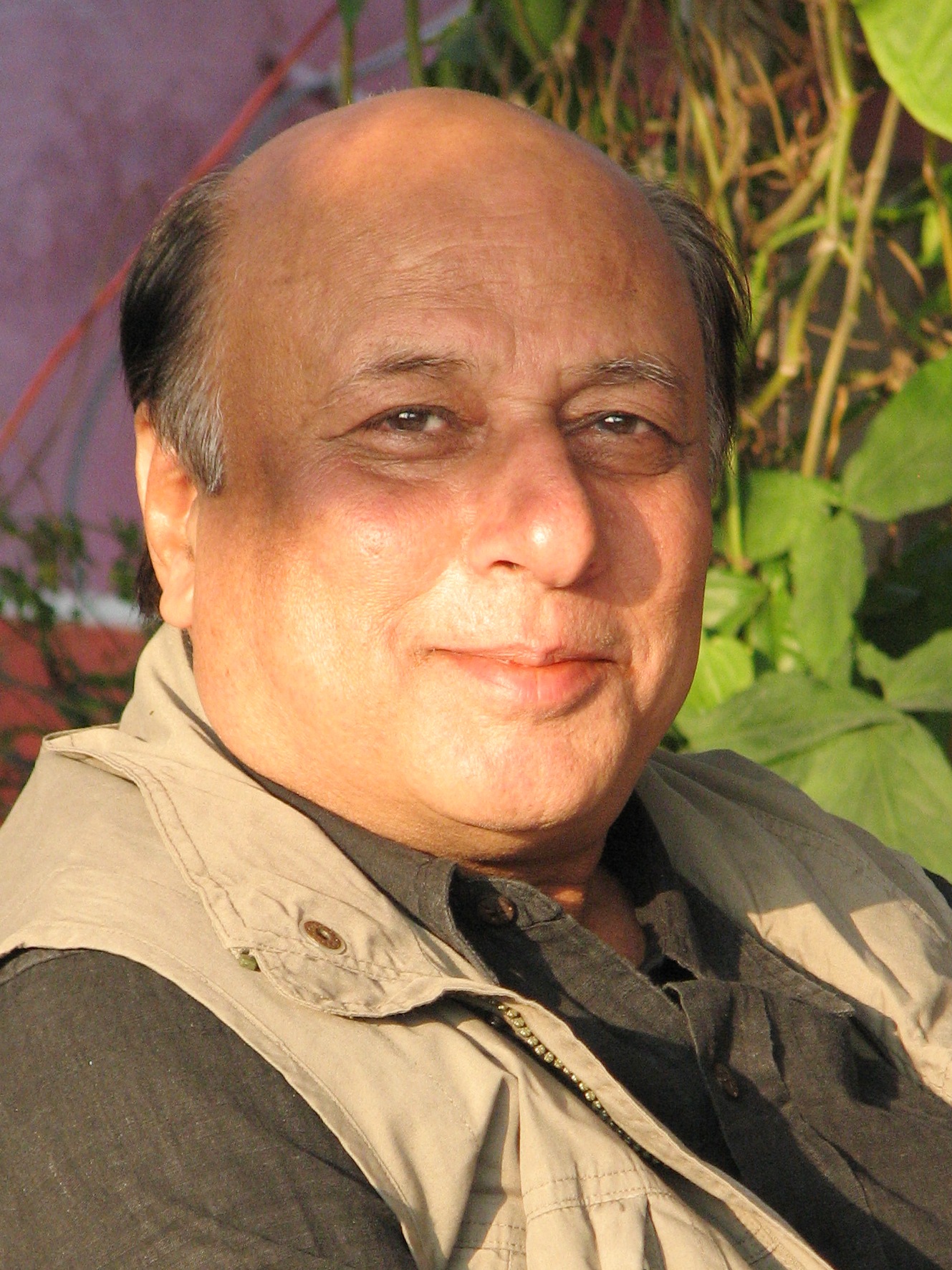
Hindi writer Uday Prakash, whose provocative books
have had many different translators over the years,
from Jai Ratan to Jason Grunebaum
Yet English translation is no panacea. Much depends on quality, the publisher’s interest and distribution channels. “Older translations of my work, like Jai Ratan’s [one of India’s most prolific translators], were targeted at an Indian English reader, and could not travel abroad. Jason is young, and a fiction writer himself; his translation reflects how language in America has changed,” Prakash adds.

English translation does not guarantee exposure. Although she gained an Indian English readership as early as 2000, after academic Nita Kumar translated her 1997 novel Mai into English for Kali For Women, Geetanjali Shree insists that her writing continues to be routed through Hindi. “Serious readers of my works, such as Annie Montaut, Alessandra Consolaro, Vasudha Dalmia and Francesca Orsini are advanced scholars keen to promote Hindi literature in the West. I am known in Russia and Poland because of Hindi!”

Certainly, Euro-American academic networks have been crucial in spreading regional Indian literature, providing the focused language training and university presses needed to support high-quality literary translation. Hindi departments in the USA, for instance, have produced such wonderful translators as Grunebaum and Daisy Rockwell, who has translated the late Hindi writer Upendranath Ashk.

But how far have translations to English travelled? Over the five years that the DSC Prize has been awarded at the Jaipur Literature Festival, only six out of the 29 shortlisted titles have been translations (UR Ananthamurthy’s Bharathipura and A Street in Srinagar in 2011, Uday Prakash’s The Walls of Delhi in 2013, Anand’s Book of Destruction and Goat Days in 2014 andThe Mirror of Beauty in 2015). None has won yet.

All of this is not to ignore that several regional language cultures inhabit positions of superiority with regard to some others: think of Hindi with regard to Urdu, or at a very different angle, to Bhojpuri. English may not be able to speak to this (though it has brought Dalit writers like P Sivakami, Urmila Pawar and Ajay Navaria some welcome attention). But it seems to me difficult to stand either with Nemade, denying that this collective landscape has been forever altered by a flood called English, or with Taseer—taking a position higher and safer than everyone else, and then bemoaning the flood. Bilinguality—reading in at least one Indian language besides English—is one way to withstand the waters. But translation, even in English, if we do more of it and better—while acknowledging that the ground is not level—can let the monolingual reader into several languages. For many of us, it might be the most feasible way to grow some roots.


(Published in Open magazine this week, under another title.)

15 February 2015

Book Review: Nebulous Narratives


She Will Build Him A City
Raj Kamal Jha
Rs. 599
Bloomsbury, 2015.
In the Jan-Feb 2015 issue of Biblio, I reviewed the latest Delhi novel:

Raj Kamal Jha's new novel is not an easy read. The prose is often lyrical, and the images vivid and strange, like dreams. But there are all sorts of factors that make this book difficult to enter into, and perhaps even to think of as a novel. For one, its structure is deliberately elliptical, starting somewhere in the middle and looping back and forth in wayward whorls. Then there's the fact that the central characters are deprived of proper names: we must learn to live with them under the annoyingly precious titles of 'Man', 'Woman' and 'Child'. Each chapter in the book is devoted to the world of one of these characters, with a subtitle – for instance, 'Man: Highway Mynahs', Woman: Lecture Notes', or 'Child: Traffic Signal'. If there is a chapter that doesn't feature any of the three, it comes with the tag 'Meanwhile'. (The 'Meanwhile' chapters are my favourite parts of the book, perhaps because it felt as if the author had freed me from the pressure to connect them up to a central narrative.) Given the number of characters and sub-narratives we're dealing with, of course, it's not quite clear whether there is a central one. And Jha's propensity for surreal flights of fancy – sometimes in the authorial voice, sometimes his characters' – doesn't make comprehension any easier. I would have described the book as a jigsaw puzzle—except that having reached the end, I'm still not certain that I've pieced it together.

Still, I shall attempt to provide what hazy outline I can. 'Woman' is the only character to speak in the first person, addressing not us but her absent daughter (who goes from being a breathless “eight years nine years old” to a taciturn young woman with a secret). 'Child', in true Dickensian style, is a baby left at the doorstep of an orphanage and named Orphan. The book's epigraph is from Oliver Twist, so one assumes this is homage. Orphan does not speak. The updated Dickensian cast of Orphan's carers starts off as the most convincing thing in the book (and they have real names, too). There's the poor trainee nurse Kalyani Das, the publicity-hungry orphanage director Mr. Rajat Sharma, the memorable media-anchor turned potential-adoptive-mother Priscilla Thomas. But I stopped going along when a street dog called Bhow joins the list, speaking like a human being. And later we must meet a ghost-like old lady called Violets Rose (her name is an anagram of 'Love Stories') who lives inside a multiplex, and after she takes charge of Child, it becomes unclear if Child is real, or a composite figment of different people's desires.

Finally, there's 'Man', who is introduced to us in this somewhat theatrical fashion: “He is going to kill and he is going to die. That's all we know for now, let's see what happens in between.” The “all we know” suggests a narrative contract into which the author-narrator wishes to bind us – except since he knows full well what's going to happen, and we (readers) don't, it feels rather precious.

Even so, Man is arguably the book's most arresting, because most shocking, figure. We first meet him on the Delhi Metro, making his way from Rajiv Chowk to Gurgaon, which Jha insists on calling New City. (Again, it's not quite clear what's achieved by mixing the named and unnamed: there is practically nothing about New City that wouldn't be true of Gurgaon. But more on that later.) Within less than a page of meeting him, we have been inserted into Man's disturbing, often inchoate fantasy world: “The station is crowded, he closes his eyes, sees everyone naked and bruised... He feels an erection coming. He opens his eyes, his heart aches, and a drowsy numbness pains, John Keats.”

Over the next few pages, Man quotes Gieve Patel at us, reminisces poetically about a barium sulphate examination he underwent as a child, and describes the horrific Diwali murder of a dog, carried out by him and his friends. For the rest of the book, every time Man appears, the sense of menace is palpable. When he takes a street child ('Balloon Girl') and her mother back to his impossibly plush home in 'Apartment Complex, New City', we remain on tenterhooks, waiting for the violence we are sure will follow. But Jha will not fulfil that voyeuristic desire/fear so easily; instead he gives us a succession of sequences where it is never quite clear what is really happening and what is inside someone's head. The book thus steers clear of graphic violence. But it often seems in danger of aestheticizing it.

She Will Build Him A City comes with front-cover (Neel Mukherjee) and back-cover (Jeet Thayil) recommendations that describe it as revelatory about the “New India”. Certainly, the text is spiked with moments that are meant to reveal the yawning abyss between the rich and the poor, like a game played by the four young dog-killers, where they put the price of everything they see in brackets: “Arsh flicks his cellphone (Rs. 41,245), records the explosion, its aftermath.” Or later, describing the situation outside Man's apartment: “There are six security guards huddled at the gate, forced to wear long-sleeved shirts and ties in this heat. Two are from Bihar, the other four from Uttar Pradesh, all leaving behind fathers with cancer, mothers with TB, wives with uterine cysts, children who have dropped out of school, all waiting for Rs. 4,000 to come every month.” And all sorts of underprivileged people get their five minutes of fame, labelled with capitalised names by Jha, as if they were some strange sea creatures that have floated up out of the depths: 'Bandage Baby', 'Mortuary Man', 'Taxi Driver', 'Driver'.

In contrast to these gimmicky, flash-like glimpses into the heads of Others, our access to Man's interiority is total. The main thing we need to know about Man is that he's rich. He is so rich that he orders Chinese takeaway from the Leela. But the great sign of his absolute separation from the masses is his near-pathological inability to deal with the heat and dust and grime they must inhabit. Whole passages are devoted to his desire for freezing air-conditioning, his olfactory sensitivities, his compelling of unwitting future victims to scrub and clean and deodorise themselves. (And yet, we are also expected to believe that he “loves the Metro from the bottom of his heart”, so much so that on some nights, he deliberately abandons his car and takes it, despite the fact that people in it smell “like rotting vegetables, bread and bananas gone bad”.)

For a book so invested in newness, and in the depiction of the new, it is odd that what Jha's 'Man' most reminds me of is a figure of Victorian lineage. It was 19th century London that produced the powerful myth of the really well-to-do man who went out into the city anonymously and committed unspeakable sexual, sadistic crimes against poor women and children. If WT Stead's journalistic expose, 'The Maiden Tribute of Modern Babylon', reworked the Minotaur myth to paint London as a modern-day Labyrinth in which thousands of “the daughters of the people” were “served up” nightly “as dainty morsels to minister to the passions of the rich”, the sensationalist speculative coverage of the Jack the Ripper murders a few years later cemented this vision: the purveyor of unnatural lust who preyed on the poor. This anonymous elite villain took fictional form in RL Stevenson's Dr. Jekyll and Mr. Hyde – Stevenson wrote the book in the summer of 1885, soon after his friend WE Henley had eagerly forwarded him the instalments of the 'Maiden Tribute'.

The subliminal basis of Jha's book (both the Man and Child sections) doesn't seem that different from the one that emerged from that Victorian melange of tabloid melodrama and urban danger: a city in which the rich feed on the poor. And metaphorically accurate though it might be, somehow the execution of the idea left me dissatisfied. Neither the experimental quality of Man's grisly hallucinations nor Child's surreal surroundings could keep the central theme from feeling hackneyed. Similar effects have been achieved with much greater success by others, in the specific context of Delhi, the Hindi writer Uday Prakash's 'Dilli ki Deewar' and 'Mangosil' come to mind.

The Woman sections of the narrative feel fresher, evoking both her long-ago marriage and her relationship with her daughter with all the power of memory. Rendered mostly as incidents and conversations sharply recalled, there is plenty here that captures the irrational sweetness and bitterness of childhood joys and fears. Jha seems genuinely interested in children. Other than Woman's daughter, he gives us short but fascinating portraits of the lives of two very different eleven-year-olds, both old beyond their years: a boy whose extraordinary sensitivity reverses our pervasive fear of a new generation stunted by technology, and a girl whose responsibilities to family and work have forced her to stifle her own childish desires.

Jha's book adds itself to the growing list of volumes 'about' the Indian city, and especially, in recent years, Delhi. But what Jha attempts here with Delhi has been done much better with Bombay in Altaf Tyrewala's No God in Sight (2005): a slim, sparkling little novel that Kiran Nagarkar described as “an unsettling relay race, in which the baton is passed on from one character to another... till you come full circle.” It is clear that Jha's aim, too, was for his million little pieces to make up the shape of the city. But while there are plenty of 'scenes' that work, the whole does not cohere. Many elements, and the connections between them, remain indistinct and fuzzy. What we end up with is not a planet, but a nebula straining to be one.

17 December 2012

Talking walls: Translator Jason Grunebaum on Uday Prakash

An edited version of this interview was published in Time Out Delhi.
 
A sweeper’s life changes when he finds money stowed away in the wall of a Saket gym; a man in a Madhya Pradesh village finds he’s been robbed of his identity; a child in Jahangirpuri says uncannily grown-up things as his head gets bigger and bigger. These are some of the memorable characters who populate the surreal pages of Uday Prakash’s The Walls of Delhi, recently shortlisted for the DSC Prize for South Asian Literature (the winner will be announced at the Jaipur Literature Festival next year). Prakash’s is the third translated work to have been shortlisted over the last three years, and the only one this year. Should a translated work win the prize, the award is split equally between translator and the author, giving equal recognition to both arts. Translator Jason Grunebaum spoke to Trisha Gupta about a wider readership for Hindi literature, the power of translations and the acerbic voice of Uday Prakash.

The Walls of Delhi is the second translation of Uday Prakash’s work you’ve brought out – the first was The Girl with the Golden Parasol, in 2010. How did you become a Hindi translator, and what drew you to the work of Uday Prakash? 

I'm a fiction writer, and I learned Hindi, so it always seemed natural to translate. I began in college—I translated some Premchand stories. And I worked as an interpreter in Jammu & Kashmir in the 90s. After I left humanitarian work to pursue an MFA in fiction, I wanted to find a contemporary Hindi voice to translate. I'd heard of Uday Prakash as a poet. But I’ll never forget the day I found a copy of his Tirich story collection and began reading ‘Paul Gomra and his Motor Scooter’ (‘Paul Gomra ka Scooter’). I fell in love right from the first paragraph: the tone, the urgency, the relevance, the deft storytelling, unexpected characters, and, perhaps above all, the humour. As I read more of his stories, I also found his narrative modes—the way he told his stories, with their delightful meanderings and authorial intrusions—extremely innovative and inventive in ways quite different than prose I’d come across by South Asian writers writing in English.    


Why did you begin with Peeli Chhatri Wali Ladki?
The great translator Michael Henry Heim once said that the litmus test of whether a work of literature ought to be translated is if you think it’s a crime that it's not available in translation. I concluded it was a crime for the English-reading world not to have access to the urgent voice of ‘The Girl with the Golden Parasol’.

The stories in The Walls of Delhi – ‘Dilli ki Deewar’, ‘Mohanlal’ and ‘Mangosil’–
 originally appeared in separate collections. What made you bring the three together?

I had translated ‘The Walls of Delhi’ for a wonderful anthology edited by Hirsh Sawhney called Delhi Noir, though because of space limitations the story had to be cut significantly. Uday had asked me to translate ‘Mohandas’, which had just come out the first time I met Uday, and ‘Mangosil’ as well. Once I had these three stories side by side—really two novellas and a long short story—I thought that they could work very well together in one volume: the two city stories and one village story show the range of Uday's world and work, while all three stories are unified by the sense of a system stacked mightily against each of the protagonists. A single volume containing essentially three novellas is not something many publishers would consider, but luckily Terri-ann White of UWA Press in Australia immediately saw how well the book worked, and took a chance on it—one that’s paid off with the reviews in the Australian press, and now with the DSC Prize shortlisting. 

Uday Prakash wrote ‘Dilli ki Deewar’ as part of Dattatreya ke Dukh, whose darkly funny takes on 21st century Delhi were united by a quietly cynical, desultory sutradhar called Vinayak Dattatreya. And there’s a first person narrator in both Mohanlal and Mangosil (the latter is even a freelance Hindi writer). Are these narratorial voices autobiographical? 

To some extent, absolutely. Uday toiled for years and years as a freelance journalist and filmmaker to support himself as a Hindi writer—no cushy academic posts for him, a decided outsider from the literary establishment—and it wasn't an easy life at all. To that extent, Vinayak Dattatreya is based on autobiography. But I would also say these ‘authorial intrusions’ aren’t simply a nod to Uday’s own life: they’re part of the urgency, play, and formal innovation in the stories.    

The English publishing market in India is a busy, fast-growing one, but translations from other Indian languages are still few and far between. Why is that, and what do you think publishers ought to be doing more/better?

It's a huge and tragic problem throughout the English-reading world, actually. About two-thirds of the books published each year in Germany comes from translated literature; in contrast, in the US, in a good year, the figure is about three per cent. The reasons are complicated, but essentially publishers view translations as an even greater risk to take in a market already heavily squeezed—they also have to pay both the author and translator. And yes, there is a lack of good translators: in the end, translating is really a labor of love, with few prospects for good pay or recognition. But since a translation can only be as good as the translator, I would suggest that if publishers were serious about attracting better translators, they need to pay them more.

Books only really get one shot to be translated, and it's heartbreaking to see wonderful works in Hindi represented poorly by a mediocre translation. Translating is not just a technical job; translating is writing. Publishers need to strengthen efforts to find new voices in Hindi and other Indian languages to translate, and promote and make a commitment to these writers as they would any others. Often it’s during periods when a large number of works are brought into a literary culture via translation that a literary culture can really blossom: English-language readers always need ‘news from abroad’— even if the ‘abroad’ might still be the same country.

Is there a Western readership for contemporary Indian-language literature in translation? What has been the response to Uday Prakash’s books?

Very positive. In Australia, particularly, The Walls of Delhi received several in-depth, positive reviews. There is a considerable readership to be had, despite so few such works making it to the West (72 works of Hindi prose were published in English translation from 2000-12, all but one in India). Devotees of South Asian literature in English will be, I'm sure, quite excited to discover voices like Uday’s that bring news of an India they don't even suspect exist—a world wildly different from one populated with overripe mangos.

How tied is this Western readership to the university-based teaching of Indian languages: the University of Chicago where you are a Hindi instructor, or the University of Australia, whose press published The Walls of Delhi?

I would say that the university functions as the place where the necessary deep language training and hands-on practice with the craft of literary translation occurs. And, absolutely, university presses have historically been the ones most consistently publishing high-quality literary translations.   

With more mainstream publishers, the overpowering tendency seems to be to play it safe: most translations that come out are of books already considered classics in their own languages. You’ve chosen to translate a writer who is utterly current, whose work is even now ruffling feathers among the Hindi-reading public. How does this contemporaneity, this live socio-political debate, affect the fate of a translation (or doesn’t it)?

Yes, you’re right about why publishers re-publish ‘classics’. Also, they’re often in the public domain, and so there’s no need to pay for rights: it’s cheaper. And who can resist the latest retranslation of Rangbhoomi or Anna Karenina? Unfortunately, it's a zero-sum game on the bookshelves at bookshops: for every retranslation, there’s one less new translation. I realize they have to play it safe some of the time, but any publisher worth his salt needs to take risks, too. We have found good homes for Uday's work, and luckily I still think there are plenty of excellent publishers who take risks on the controversial. Reading and translating and publishing can and should still be a little dangerous, even in a free society.  

Uday Prakash’s work often uses forms of address that frame his reader as Indian – references to the corruption of the country, to specific political events, to the Page Three phenomenon, for instance. How does this sort of exhortation, to an imagined community that reads the same newspapers, work with a non-Indian reader?

I’m always keenly aware of audience: who’s reading the English version? Is it someone in the US or Australia, or India or Pakistan? Hopefully there will be readers in all these countries and more. Translation is about enlarging the conversation of literature, and as a translator, I try to make sure no reader is left out. So if there are important details or local references that a non-Indian reader might not be expected to understand, and if the context doesn’t provide enough of a clue, I’ll try to gloss the item within the text as unobtrusively as I can. I avoid footnotes and glossaries, partly because they weren't in the original and suggest more academic than literary writing, and partly because I don’t like the way they divide the readers into those-who-know and those-who-don’t. The challenge for me is to achieve a text that won’t leave a non-Indian reader scratching his or her heard, while at the same time not seeming too “pre-chewed” to the Indian reader. I call upon Americanisms as needed, and have drawn upon phrases and cadences from Indian English when appropriate. What I seek is a creative hybridization, that rewrites Uday’s Hindi into an English that realizes the voice, originality, and vitality of his prose.


What, according to you, is the most difficult thing to do when you’re translating from Hindi to English?

This is a difficult question! A translation is really a series of challenges. It’s never really done: there’s always the nagging feeling that a better choice could have been made, a different strategy adopted. (And this nagging feeling is quite different than the one I get when I read something I’ve written directly in English.)

There are many things about Hindi-to-English translation that are particularly challenging. Let me give you an example from my current work with my colleague Ulrike Stark – we’re translating Manzoor Ahtesham’s novel The Tale of the Missing Man (Dastan-e Lapata). How does one reproduce in English an effect that’s analogous to Hindi’s various lexical registers: Sanskrit- versus Perso-Arabic-derived words, particularly when the use of different registers is an important stylistic feature? You’ll have to read the book to find out how we solved the problem!

As someone invested both in Hindi and English, how do you view the publishing scene in India in both languages? Is it hard to bridge the deeply divided worlds of English and Hindi, or does being an outsider make it easier?

Looking at it from the outside, it’s pretty clear that English publishing is booming in India, and it’s been great to see traditionally English-language publishers like Penguin India start a Hindi list. Big Hindi publishers like Rajkamal and Vani continue to publish in Hindi, though a quick comparison of list prices between the Hindi and English publishing world shows you where the divide lies. I think that more of the big publishing houses would probably like to publish more in Hindi and other regional languages, but I think the problem for them has been how to price the books.

And yes, I think it has been easier for me to be an outsider when it comes to taking part in both the Hindi and English literary worlds. My Hindi self has its allegiance with the writers I translate because I love their work, my English self likes the English writers I like, and in the end I feel privileged to have access to both worlds, and lucky that I might be able to contribute to some small degree to bridge the two. But I reserve my greatest respect for those who are truly and deeply conversant with both literary spheres. As you said, the two are deeply divided, and there ought to be more points of overlap. Clearly, translation can play a critical role—and how translations are perceived is also crucial.     

Are you and/or Uday Prakash planning to attend the Jaipur Literature Festival this year? What impact, if any, do you think the DSC Prize will have on the world of Hindi literature and Hindi literature in translation?

I’ve heard only great things from friends and writers who’ve attended it in the past, and I’m excited to say that both Uday and I will be attending this year. It’ll be my first time. Over the three years of the DSC Prize, it’s been heartening to see three works from Hindi make the longlists. My hope is that publishers will make an even stronger commitment to seek out and publish translations of important Hindi literature, both new and old, and that the right authors and right translators are able to find one another in the process. 

3 December 2012

Post Facto - Found in Translation: Manto’s Bombay and Uday Prakash’s Delhi

My column for the Sunday Guardian this fortnight:

This has been a week of reading in translation: first Saadat Hasan Manto's Bombay Stories, translated by Matt Reeck and Aftab Ahmad, and then Uday Prakash's The Walls of Delhi, translated by Jason Grunebaum. Manto wrote in the '30s, '40s and '50s, and Uday Prakash in the last two decades, but the English translations are brand new. Bombay Stories came out last month from Random House India, and The Walls of Delhi will be out in January from Hachette India (I read an Australian edition, which has just been shortlisted for the DSC Prize).

Translation is a strange and wonderful thing. A book rewritten in another language is like a person given the gift of new life: a new name, a new look, new turns of phrase — and hopefully new admirers. Sometimes the makeover can feel radical. Both these books bring together pieces that have never been published alongside before, giving the authors' work a new form, and — for me — suddenly placing them in potential conversation.

{
Prakash’s bitingly satirical takes on contemporary Indian life and literary culture, while not exactly subject to censorship like Manto, have often brought down upon him the ire of the Hindi establishment.
Bombay Stories unites all Manto's fiction set in Bombay, while The Walls of Delhi puts the eponymous long short story next to two novellas, 'Mangosil' and 'Mohandas'. The translators' focus on Manto's richly animated depictions of a particular urban milieu allows a different Manto to emerge than the Partition-heavy figure that has been the staple of Manto publications in English. (The one exception to this is the deliciously irreverent filmi Manto of Stars from Another Sky, Penguin's translation of Ganje Farishte.) The book also, as Reeck observes, "represents the first and best literary evidence of Bombay's emergence as the modern city we now recognise it to be", a publishing back-flip that finally enables Manto to take his legitimate place at the head of that now extensive sub-genre of Indian writing which Reeck designates as 'Bombay fiction'. This world, populated by "prostitutes, pimps, writers, film stars, musicians, the debauched, the rich", is one that Manto seems to have inhabited with ease.

As a writer of 'lowlife' fictions, in Salman Rushdie's description, Manto may share something with Hindi writer Uday Prakash, whose sharp-angled tours of post-globalisation Delhi are often routed through the city's poorest quarters. Also, Prakash's bitingly satirical takes on contemporary Indian life and literary culture, while not exactly subject to censorship like Manto, have often brought down upon him the ire of the Hindi establishment.

The Hindi story 'Dilli ki Deewar' originally appeared as part of Dattatreya ke Dukh (the title would translate as 'The Woes of Dattatreya'). There, this tale (of a sweeper called Ramnivas whose life changes when he finds a stash of money in a wall) was one among many pieces ranging from a paragraph to 40-odd pages, with the narrator Vinayak Dattatreya as unifying factor. A composite of middle class types—honest government servant, unsuccessful Hindi poet, benevolent colony uncle, lowly research scholar—Dattatreya is bemused, long-suffering. Told in his voice, these riffs on life in Delhi at the start of the 21st century have a familiar conversational quality that cushions us a little from their darkness.

A very different effect is achieved in The Walls of Delhi, with its three fully-realised narratives where the odds are stacked heavily against the protagonists. The quirkiness of Dattatreya's voice is somewhat overwhelmed by the epic sweep of Mohandas's tale of unrelenting caste and class injustice in an MP village (beautifully formulated as identity theft), and by the even more surreal 'Mangosil', in which a fifty-year-old couple in a Jahangirpuri hovel have a baby whose head gets larger and larger, endangering his life even as he gets more and more thoughtfully adult. Rather than the darkly comic, musing tone I remember from the Hindi, what The Walls of Delhi produces a powerfully despairing sense of a flawed system that creates dreamworlds but dashes hopes against the wall again and again. These lives can only come to tragic ends.

Another trait that Uday Prakash and Manto share is the authorial intrusion. Manto, of course, was ahead of his time when he included an eponymous Manto character or made sly self-reflexive references to writing. Prakash's authorial interventions are more forceful, less ambiguous, often bringing in his take on political news, or locating himself in the story as a full fledged character. But even more than the 'I', what's really striking is his use of 'you'. That direct address — "If you want to get lucky, come to Delhi right away — it's not far at all. Forget about being a millionaire; coming to Delhi is the only way left to scrape by." — conjures up a imagined community of readers who share both newspapers and hopes. How does that address work outside India?

Micro-decisions a translator makes can transform characters. Ramnivas and Sushma going to see a film at "the Alpana" instead of at Alpana Cinema changes them, as does Sushma's mother calling her "honey". And the girl from Pydhoni seems altogether cooler playing 'Why, You Fool, Are You Always Falling in Love' from her 'Untouchable Girl' record, instead of 'Kise Karataa Murakh Pyaar Pyaar Pyaar Teraa Kaun Hai' from Achhut Kanya.

Some of this may seem unavoidable, an attempt to make these worlds more recognisable to the imagined reader in English. But if she is to be truly inserted into Uday Prakash's imagined community of readers (or Manto's), the real reader of translations must work a little harder.


30 September 2008

Buzzkill: Dattatreya ke Dukh

(The second instalment of a Time Out column about books set in Delhi)

Dattatreya ke Dukh
Vani Prakashan, Rs 80.
“In Delhi these days, there is a steadily increasing number of people who only meet those people who are of some use to them. Vinayak Dattatreya had stopped meeting such people ages ago, because such people were quite useless to him.” This wry bit of commentary is among the deceptively gentle fragments that make up the Hindi language Dattatreya ke Dukh (The Woes of Dattatreya), Uday Prakash’s marvellous collection of snatches of life in Delhi at the start of the 21st century. Vinayak Dattatreya is a kind of composite of several middle class types, ranging from honest government servant to unsuccessful Hindi poet, benevolent c’lony uncle to lowly research scholar. Through all these avatars, however, he remains bemused, long-suffering and usually impoverished.

Vinayak’s pigheaded idealism casts the world around him into relief. He’s a sort of literary Everyman, simultaneously desultory hero and rambling sutradhar, guiding us through Delhis middling and low. One of the most vivid of these is the sarkari office, a place of pettiness and entrenched hierarchy, where the most ordinary act of humanity, the smallest nonconformist gesture, can make the needle of suspicion turn upon one. In a world where the sahabs are meant never to rise from their desks (unless greeting a social superior), Vinayak insists on courting controversy by strolling down to the pan shop for a cigarette, sometimes even inviting passing colleagues to share a cup of dhaba tea.

His strongest objection is to the buzzer: “He did not think it was right, as a human being, that a harsh mechanical sound produced by the pressing of a lifeless plastic button should result in the arrival at his desk of another flesh-and-blood human being, huffing and puffing.” Having thus aroused suspicion all around, Vinayak is accused of writing a newspaper column by one Antaryami Khairnar that has been exposing corruption and nepotism in his department. The “proof” is a money order that arrives at his official address in Khairnar’s name. Having failed to establish his innocence, Vinayak writes in his diary, “I am not Antaryami Khairnar. But I have no evidence of this truth.” He concludes, “Those things of which there is material evidence in the world are usually untrue.

In another tale, entitled 'Dilli ki Deewar', Vinayak meets a safai karmchari from Samaipur Badli who has found a wall stuffed with black money in a Saket gym. Ramniwas’s adventures open up a post-globalisation Delhi still crisscrossed by Blue Line buses, in which an auto rickshaw ride through Karol Bagh propels its sawaaris into a dream-world of luxury and wish-fulfilment. But in Vinayak’s world, the premonition of doom is never far away. Lies and liars can walk tall, if they don’t shy away from the limelight, while unacceptable truths must stay in the dark. It is through his eyes that we see Delhi’s literary-politico-cultural establishment for the surreal thing that it is, and find the entrance to an invisible tunnel through which “another citizenry”, an unending line of the deaf, dumb and diseased, is spreading slowly out below the city’s surface. Dattatreya has its flaws: it rambles, and it rants too much. But it shows you that the route to a ruthless realism often lies by way of the imaginary.

(All quotations above are translated from the Hindi by Trisha Gupta.)

Time Out Delhi Vol 2, Issue 13, Sep 19 - Oct 2, 2008. 

Update: 'Dilli ki Deewar' is one of three Uday Prakash stories in a new translation by Jason Grunebaum entitled The Walls of Delhi that has been shortlisted for the DSC Prize 2013.