4 January 2024

Book Review: Anuja Chauhan's 'Club You To Death'

Decided to update the blog in the new year, with pieces I've written in the interim. This is a book review I did for Scroll in 2021 and hadn't put up here. Some of you might still find it of interest, especially since ACP Bhavani Singh's career continues with Anuja Chauhan's more recent book, The Fast and the Dead (Oct 2023).

                                                                                   -----

Anuja Chauhan’s new novel may be a whodunnit, but its people are its pleasure, as usual

In ‘Club You To Death’, the popular writer with a perfect ear for conversation uses crime as a vehicle to portray the ‘beautiful people’ of Delhi society.

Early in Those Pricey Thakur Girls, Anuja Chauhan’s thoroughly enjoyable novel set in 1980s Delhi, there’s a scene where the retired Justice LN Thakur and family pile into the khandaani Ambassador to see off their daughter Debjani aka Dabbu for her first day as a newsreader at DeshDarpan (an obvious fictional stand-in for Doordarshan). Chauhan’s latest book, set in present-day Delhi, opens with a charming display of similar familial intimacy, squabbling but deeply affectionate: the retired Brigadier Balbir Dogra and family, four generations “stuffed into a rattling, eight-year-old Maruti Swift”, head off to play Tambola.

The similarities don’t end there. In Thakur Girls, Debjani’s glamorous job (DD newsreaders were then the acme of fashion) had the family dhobi excited to iron her sari and the Bengali Market chaatwala refusing to charge for golguppas because he had seen “Baby” on TV. In Club You To Death, the fetching young lawyer Akash “Kashi” Dogra is flaunted proudly as a customer by his Nizamuddin street barber, plays cards with the drivers parked under his house and chats affably about politics with old security guards who call him Kashi Baba.

The feudal quotient is a smidgeon less – it is 2021, after all – and Chauhan has moved a teeny tiny bit leftward in the transition from Hailey Road to Nizamuddin, making her new protagonist a jhuggi-defending lawyer. But Kashi enjoys much the same cosy relationship with the world as Dabbu did. He’s just woke enough to express some discomfort with it.

The privileged insiders

With his rented shared barsati and JNU-trained activist-architect girlfriend, Kashi Dogra may think he’s stepped away from privilege. And maybe he has travelled some distance from studying at the Doon School and dating a rich industrialist’s daughter. But Chauhan is too smart a writer to let even her likeable hero rest on such self-congratulatory laurels. When Kashi judges someone for having made up a new name and identity, Chauhan is quick to have another character reflect privately “that it is only people with great privilege who can afford to think like this”.

In this obliviousness, ironically, Kashi is following in his father’s footsteps. Brigadier Dogra belongs to that class of people that’s more than comfortably off, with their children attending the best schools (often the same schools they themselves went to), swinging the best jobs (sporting the old school tie does no harm) and generally getting a much better shot at success than 99% of the rest of the population. But they remain convinced they’re not the elite, because – as Brigadier Dogra splutters “Elite people go to five-stars and seven-stars”.

The Dogras? They go to the club.

Anuja Chauhan’s heroes and heroines have always come from the tiny sub-section of India that’s privileged enough to measure its privilege in memberships rather than money. So it’s perfectly fitting that her new novel is set in an institution emblematic of that class: a club that sounds a lot like the Delhi Gymkhana, dealing with a political milieu that sounds a lot like the present.

Speaking the language

As always, Chauhan knows her characters inside-out, turning out pitch-perfect comic set-pieces where pretty much everyone comes in for some needling, from pompous military heroes to poor little rich girls from The Vasant Valley School. But almost everyone also gets a degree of understanding. It helps that Chauhan is adept at dialogue, rendering each character in a suitably Englished version of their specific Hindi-mixed lingo, endowed with just a little extra colour and cusswords.

“It’s my own fault! I was the one who had bete-ka-bukhaar, and kept hankering for a son in spite of having such lovely daughters!” says a posh Punjabi mother berating her loser of a son. “I wanted to tell him ki listen, behenchod, we have a huge-ass CSR wing and we do a lot!” rants an heiress defending herself against the charge of being rich and oblivious. “Banerjee, apne saand ko baandh [Tie up that bull of yours],” says the friendly male who’s text-warning a woman about her boyfriend’s seductive ex.

Ever the old advertising hand, Chauhan constantly ups the linguistic absurdity quotient in delicious little ways: old Brigadier Dogra insisting on calling his wife Mala-D; a line of sculpted semi-precious stone lingams being called Shiv-Bling, or a potential scandal involving an army hero getting hashtagged as “Fauji nikla Mauji! Hawji Hawji!”

The perfect outsider
In a gleeful departure from her previous work, though, Club You To Death serves up murder as the main course – of course, with a breathy little romance to make the medicine go down. The setting offers plenty of scope for political intrigue, classist snark and just plain gossip, and Chauhan sets to work with relish, plotting the crime onto all its possible social and cultural axes. For starters, the murder is committed on the day of the club elections, one of those sorts of events that occupies mindspace in a proportion inversely related to the power at stake.

The rival candidates, both insiders, seem equally keen on winning. But could either – the retired military hero or the classy female entrepreneur – really want the job enough to kill for it? Or is the murderer just trying to pin the blame on one of them?

Second, there’s the victim, with his own secrets. Was the dead Zumba instructor a self-made Robin Hood, or a devious social climber? Was he playing his rich clients, or were they playing him?

And finally, there’s the wider socio-political context: such unsavoury news doesn’t bode well for a club already in the bad books of Delhi’s new rulers (not least for its connections to the old ones). As new rivalries and old secrets tumble out of the DTC closet, the citadel of Lutyens’ Delhi privilege begins to seem rather doddering and vulnerable. It’s a clever trick – especially when we wonder if it’s just true.

Either way, having crafted this perfect insider atmosphere, Chauhan places the case (and us) in the hands of the perfect outsider. A policeman who’s upper caste and English-speaking but not quite Club Class, ACP Bhavani Singh is somehow observant enough to imagine other people’s compulsions, be they of caste, class, gender or something else. Instead of the Singham-variety cop “who makes the criminals piss their pants”, Bhavani makes “all the crooks leap up grinning, and ask him how his granddaughters are.”

Stolidly incorruptible, staunchly non-violent and persuasively gender-sensitive, the old Delhi Police officer feels even more like a form of wish-fulfilment than Chauhan’s dishy romantic heroes. So, of course, we dearly want to believe he might exist. Much of the pleasure of Club You To Death comes from watching the amicable old policeman piece the case together quietly, his “little grey cells” keen enough not to draw attention to himself.

Under the radar, as Chauhan well knows, is the best way to fly.

Published in Scroll, 10 April 2021.

30 October 2022

The Pain of Others: a short review essay on Somnath Hore

Somnath Hore was a great artist of collective hope and hardship, but his abiding legacy is to make us feel each human tragedy as our own.

(My India Today review of a Somnath Hore retrospective 'Birth of a White Rose', held at the Kiran Nader Museum of Art in the summer of 2022. To see some images from the exhibition, click here.)


What makes someone become an artist? Somnath Hore, who would have been 101 this summer, was first moved to draw in December 1942 by a moment of violence: the Japanese bombing of a village called Patia in what is now Bangladesh. Hore was then a B.Sc. student at City College in Calcutta, but World War II evacuation had forced him to return to his Chittagong home. The ghastly sight of Patia’s dead and wounded seemed to demand recording in some way, and it was images to which the young man turned.

In Calcutta, he had begun to design posters for the Communist Party, but it was Chittagong that really put Hore on his political and artistic path. Two things happened in 1943: the Bengal famine began, and Hore met Chittaprosad. Six years Hore’s senior and also from Chittagong, Chittaprosad was already a prolific artist documenting the lives of Bengal’s rural poor. As a man-made colonial tragedy killed millions around them, Chittaprosad encouraged Hore to draw portraits of the hungry, sick and dying. “From morning to evening I used to accompany him on his rounds,” Hore wrote later. “He initiated me into directly sketching the people I saw on streets and hospitals.”

In 1945, Hore enrolled for formal art training at the Government College of Art and Craft. In 1946, the Communist party sent him off to Tebhaga in North Bengal, where he created a diary-like documentation of the massive peasant protests. It was a tumultuous decade, moving between politics and art while having to make a living by teaching school students art. When the government again banned the Communist party, he went underground. It was not until 1957-58 that Hore got his diploma, and left Calcutta and politics to become a lecturer at the future Delhi College of Art.

The show at Delhi’s Kiran Nadar Museum of Art is superb; its gravitas undimmed by ill-advised curatorial versifying: sample “He witnessed as a child a world not so fair,/ Disparities between rich and poor had no compare....” 

It’s clear that Hore experimented with form and material through his six decades of art-making. It’s also clear how much his lifelong sensibility was sculpted by the tragic events of his youth. Over and over, you see him depict the suffering human body. Until the 1950s, he also depicts the magical charge of hope produced when these same bodies come together—to plant seeds, flags, ideas. But the stunning realism of the early woodcuts and linocuts gives way to abstraction, and a greater economy of the line. His figures are all concave stomachs, stick-like limbs and begging hands. 

They transition into the jagged, torn, blistered bodies of his bronze phase (animals, too, show effects of violence), and an almost meditative late style, using pulped paper. Here the lacerated body is conceived as texture rather than as line: white on white, paper scored, torn and moulded back into paper. The pain of others remained, forever, under his skin.  

(Birth of a White Rose is on at the Kiran Nadar Museum of Art, Delhi, until June 30, 2022.

3 October 2022

Making Waves at MoMA

A short essay I wrote for India Today on a festival of contemporary Indian cinema at New York's Museum of Modern Art (MoMA) in 2022. 


'Making Waves: A New Generation of Indian Independent Filmmakers' is the largest Indian festival at MoMA since 2009, and is intended to showcase small-budget but artistically ambitious and accomplished films 


(CLICK THE IMAGE TO ENLARGE) 

Published in India Today, 19 Sep 2022.

9 August 2021

Do you know who wrote your favourite film?

My TOI Plus/ Mumbai Mirror column for Sun 25 July:

Writers barely get the credit they deserve — a new book on women screenwriters in Bollywood illuminates a hazy corner of the glittering silver screen

Screenwriter Herman J Mankiewicz ('Mank') and director Orson Welles, whose real-life collaboration and battle over writing credit for Citizen Kane is the subject of David Fincher's 2020 film Mank.

“Film is thought of as a director’s medium,” the great Billy Wilder once said, “because the director creates the end product that appears on the screen. It’s that stupid auteur theory again, that the director is the author of the film. But what does the director shoot — the telephone book?”

Wilder, a Jew who managed to escape Nazi Germany for the US in 1933, became famous as the director of Hollywood classics as various as Sunset BoulevardSome Like It Hot and The Apartment. It’s no surprise, though, that he started as a screenwriter, his films forever filled with unforgettable characters and memorable lines.

The full version of the Wilder quote above ends with a sentence that dates him (perhaps even more than his mention of the telephone directory): “Writers became much more important when sound came in, but they’ve had to put up a valiant fight to get the credit they deserve.”

Cinema has now been around for over a century, and the first ‘talking picture’ was The Jazz Singer in 1927 — but most screenwriters still don’t get the credit they deserve, even when the film is a grand success. 
Last year, in a rare reframing of film history, David Fincher — known for directing The Fight ClubZodiacThe Social Network and Gone Girl, himself as much an auteur as Hollywood has ever had — devoted a whole film to a screenwriter who had to fight for credit for what’s often listed as the greatest American movie of all time – Citizen Kane (1941).

Until Fincher’s Mank (2020), most people who had heard of Citizen Kane (CK) saw it as a film ‘made’ by Orson Welles — not ‘written by Herman Mankiewicz’. Of course, Welles will remain a legend, as he should. But at least a larger cross-section of film-goers now know something about the sharp ex-New Yorker who first created the story of a newspaper magnate rising to power by manipulating public opinion during a war.

Within the smaller community of film nerds, the story of how Welles and Mankiewicz came together — and fell apart — in the making of CK has been talked about for much longer. Around CK’s release in 1941, the director and the screenwriter became embroiled in an ugly battle, with Welles eventually giving Mank shared credit for the Oscar-winning screenplay. In 1971, the influential film critic Pauline Kael wrote a 50,000 word essay foregrounding Mankiewicz’s script contribution as much greater than Welles’ — but Kael’s take, too, has since been challenged, drawing on the many drafts of the CK script in the archive.

The relationship between screenwriter and director need not always be this conflicted. The creative collaboration between them is often the bedrock of great filmmaking, with people sometimes establishing working partnerships that last for years. And yet, as film lovers or enthusiasts, we know far too little about the writers responsible even for what we might consider our favourite films.

Scripting Bollywood: Published by Women Unlimited, New Delhi, 2021. 300pp. 
Anubha Yadav’s stellar new book Scripting Bollywood: Candid Conversations with Women Who Write Hindi Cinema (Women Unlimited, 2021) is a great step in the right direction. The lacuna she addresses is two-fold. One, the writer’s job in Indian cinema has been even more invisibilised than in other film industries, for many reasons, discussed at length in my 2011 longform piece "Death by Dialogue". A primary one, as the screenwriter Anjum Rajabali rues (in his Foreword to Yadav’s book) is that” filmmakers as well as audiences in India treated cinema as an extension of pre-existing narrative performing art forms”, like tamasha, sangeet natak and Urdu theatre, so for decades, the best we had by way of a script was the director breaking down the story into incidents and getting dialogue written for the characters. More often than not, Hindi cinema was created on the studio floor, with the writer or writers being drafted into a highly informal set of collaborations, where someone might or might not be credited for ‘story’ and a writer was credited at best for dialogues, often because those had to be written in Hindustani/Hindi, which was often not the director’s mother tongue.

Now add to this already non-formalised working milieu, where the contributions of writers are barely documented, the possibility that that writer is a woman — and imagine how much power or influence she might be able to wield. That is the second reason why Yadav’s book is so important — she addresses a gap in the archive that we have barely begun to sketch the contours of.  

Yadav’s suggestive first chapter draws on new scholarly research as well as doing some independent detective work to open up the historical conversation about the women whose names we do know: Fatma Begum (who was also the mother of India’s first talking star Zubeida), Jaddan Bai (also the mother of Nargis), the utterly fascinating Protima Dasgupta (who collaborated with her sister-in-law Begum Para, making her a star) and the slightly better known Ismat Chughtai (who collaborated with her husband Shahid Latif). All these women performed multiple roles, often creating their own film companies with family members to try and achieve greater creative control.

The rest of Yadav’s book is devoted to long, thoughtful conversations with 14 contemporary female screenwriters, from veterans like Shama Zaidi — associated with such classics as Garm HavaShatranj Ke KhilariUmrao Jaan and a host of Shyam Benegal films — and Kamna Chandra (Prem RogChandni) all the way down to Juhi Chaturvedi (Vicky DonorPikuOctober and Gulabo Sitabo). Collectively, these writers represent the whole gamut of what might be called Hindi cinema, and sometimes extend beyond it — like Zaidi’s work with Satyajit Ray, or the younger writers branching into web series, like Sanyuktha Chawla Shaikh’s work on Delhi Crime, or Devika Bhagat’s on Four More Shots Please.

Almost every interview is studded with insights into not just each individual’s working process, but also the multiple ways in which films get made. Urmi Juvekar talks about the power of listening to the script (after it is written) to give it final shape, while Sooni Taraporewala talks of learning through the process of doing commissioned work (Salaam BombaySuch A Long JourneyAmbedkar).

The nature of each collaboration is different, too — while Zaidi has worked primarily with three filmmakers, Muzaffar Ali, Shyam Benegal and her husband MS Sathyu, Chaturvedi’s work thus far has been with the director Shoojit Sircar. Sabrina Dhawan, who wrote Mira Nair’s Monsoon Wedding, has also been an integral part of many Vishal Bhardwaj films. Reading Dhawan’s account of how she rewrote Vidya Balan’s character Krishna in Ishqiya to be the one that was playing the two men (rather than merely responding to them as in the draft Bhardwaj and Abhishek Chaubey brought her), or Urmi Juvekar’s candid but careful account of working with Dibakar Banerjee for four films before Detective Byomkesh Bakshy! ended their collaboration, even the most sceptical film-goer might start to pay a little more attention to screenwriters.

The story of Mank is instructive about the inevitable push and pull of the writer-director relationship. David Fincher was the one who read Kael’s essay and suggested Mank as a protagonist to his ex-journalist father Jack Fincher. But in a 2020 interview, David described his father’s first draft as “an anti-auteurist take” and “kind of a takedown of Welles”. “What the script really needed to talk about was the notion of enforced collaboration…" Fincher told the interviewer.

A writer is unlikely to get her idea on film without a director, but most directors need a script to work from, too. And so the process of collaboration carries on: complicated, sometimes fraught, but almost always indispensable to the making of cinema.

12 July 2021

Dilip Kumar exemplified an idea of India we've lost

My Mirror/TOI Plus column dedicated to the actor Dilip Kumar, who passed on this week:

Born in Peshawar and brought to Bombay, he was the true child of a country that revelled in its linguistic and regional variety, rather than craving to homogenise it.

Like the country it claims to represent, the public culture of Bollywood has a tendency towards hagiography. We like to anoint heroes, inflating even their minor talents into grand achievements, and painting an unrealistically spotless picture of their greatness. Bhakti leaves no room for considered evaluation of a person’s strengths and flaws, or even for placing someone in the context of his time, looking at how he may have responded to his professional and historical milieu. It is as if we have never got our heads around the relationship between the individual and society: Either the individual’s achievements are credited entirely to his being from x community or y institution, or else he is pronounced sui generis in some unbelievable way.

The actorly legend of Dilip Kumar is no different. The stories of his dedication abound - of his being a ‘method actor’ before Marlon Brando, or learning to play the sitar in reality from Ustad Abdul Halim Jaffar Khan for the 1960 film Kohinoor, or refusing the role that eventually went to Omar Sharif in Lawrence of Arabia. Some of these narratives say less about Dilip Kumar than about the Indian desire to lay claim to an actor who was the equal, nay superior, of anyone Hollywood could throw at us.

That path of global comparison, though, feels to me like a red herring - not because Dilip Kumar was not a fine actor, but because the style he developed was so specifically Indian. He may have been understated, using a mixture of gently caustic dialogues and brooding silences and dropping his booming voice to a whisper in the throes of love or pain, but there was never any doubting the intense ebb and flow of emotion under that surface. Dilip Kumar was drama – just conducted with dignity.

Still, it is true that he was among the first Indian leading men to step away from our previously theatrical histrionics – and I mean theatrical here quite literally; the exaggerated gestures and loud oratory were characteristic of the spectacular Parsi Urdu theatre, from which early Bombay cinema emerged. Actors like Motilal and Ashok Kumar were his predecessors in this change. Ashok Kumar, in fact, was the first actor he met at Bombay Talkies, telling him to “just do what you would do in the situation if you were really in it” – and young Yousuf took the big star’s naturalistic instructions to heart.

Despite a rocky start with the lost 1944 film Jwar Bhata (in which the outspoken FilmIndia critic Baburao Patel called him “the new anaemic hero” whose “appearance on the screen creates both laughter and disappointment”), by 1947, Dilip Kumar had made the screen his own.   

But to me, what made Dilip Sahab a true legend (and he was always called Dilip Kumar Sahab, making the PM’s condolence tweet calling him “Dilip Kumar ji” sound strangely off) was not his acting, or even his perfectionist attention to detail, or even his undeniable mastery of both voice and language. Though that last quality was shaping, both of him and the film industry he strode like a colossus for decades. Born in Peshawar in 1922 and brought to Bombay as a toddler by his fruit-merchant father, Dilip Kumar was a true child of that polyglot city -- and of an India that revelled in its regional and linguistic variety rather than craving to homogenise it.

Other than his renowned flair for Urdu (he told a young Tom Alter that the secret of good acting was “sher-o-shairi”), he was fluent in Hindi/Hindustani, Pashto, Punjabi, Marathi, English, Bengali, Gujarati, Hindko, Persian and the Awadhi and Bhojpuri dialects. You can watch the words roll off his tongue in old YouTube interviews, or read the many remembrances in which he made people feel deeply at home by speaking, literally, in their language. For 10 years from 1960 on, a special train ran annually from Bombay to Poona on which people bought tickets for the sheer pleasure of travelling with Dilip Kumar – but it seemed he took enormous joy in it too, talking to people in Tamil, Telugu, Konkani and all of the languages mentioned above. 

Which brings me back to the qualities that really seem to define Dilip Kumar: His warmth and integrity and feeling for people, across the bounds of religion and background and age. You didn’t need to know him personally to be able to see the strength of his relationships. It is enough, for instance, to read Rishi Kapoor talk about his father Raj Kapoor’s lifelong camaraderie with “Yousuf Uncle” - extending from their shared Pashto-speaking childhood to the superb playing-off of their personas in the hit love triangle Andaaz (1949), through the many schemes they hatched to raise funds for national causes, all the way to Dilip Kumar addressing an unconscious Raj Kapoor in his hospital bed just before Kapoor passed away in 1988 – as filmi as it gets, and yet real and deeply felt.

It is enough, also, to watch Dilip Kumar reach out, mid-speech on stage and hold the hand of the much younger Shah Rukh Khan, turning what might have been just another filmi commemoration into something memorable and intergenerational and true. Or Dharmendra, visiting for his birthday a few years ago, clasping his hands with a fraternal love you could not stage – or cradling the late thespian’s head after his death, tweeting “Maalik mere pyaare bhai ko Jannat naseeb kare”.

Dilip Kumar came of an age in a film industry that was, as anthropologist William Mazzarella points out, then in a rare period of organic synch with the nation-state. If filmmakers between the ’30s and early ’60s seemed to voice the hope and popular enthusiasm of the new nation, the nation could also see itself in the cinema. In 1955, the chair of a Sangeet Natak Akademi seminar could welcome Prime Minister Nehru as “the Director of one of the greatest films in history – the film of New India’s destiny…”.

Dilip Kumar was a great admirer of Nehru, whom he called Panditji, like so many of his generation. In his memoir, he speaks fondly of Nehru singling him out on a rare visit to a film set, and in later years, giving his 1961 film Ganga Jumna a hearing against decisions by Nehru’s own information and broadcasting minister BV Keskar. Screenwriter Salim Khan, writing at the end of Dilip Sahab’s memoir, makes the fascinating argument that the legendary pauses in his dialogue delivery were modelled on Nehru’s Hindi speeches, where the pauses were because he was translating from English in his head.

In 1962, Nehru only had to say the word for Dilip Kumar to agree to campaign for the Congress Party, for the great VK Krishna Menon. Kumar later served for a year as Sheriff of Bombay and as a nominated INC member to the Rajya Sabha from Maharashtra from 2000 to 2006. This was also a man whom Pakistan had awarded the Nishan-e-Imtiaz, leading Shiv Sena leader Bal Thackeray to cast public aspersions on his nationalism. And yet Dilip Kumar’s book makes a point of mentioning not only his hurt, but also the Thackerays’ later invitations to him and his wife Saira Banu.

In his grace and his depth of feeling, for India and the cross-subcontinental culture he spoke for, Yousuf Khan had few equals. Dilip Kumar exemplified an era, and his life and character seem to sum up what was best about it. He could only have emerged in a time and a place where we believed in stitching things together – not tearing them apart. Long may his memory live.

Published in TOI Plus/Mumbai Mirror, 10 July 2021.

28 June 2021

Saving the tiger and wildlife will take more than a few Shernis

My TOI Plus column:

The man-animal conflict in India is a complex, burgeoning problem, and one that is left unaddressed both by our national forest policy and by our mainstream politics


https://images.hindustantimes.com/img/2021/06/17/550x309/vidya_balan_sherni_1623932168804_1623932179349.jpg
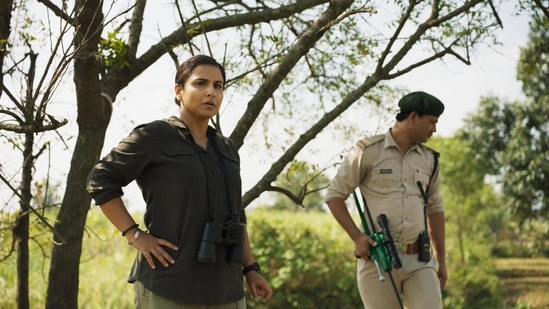
Vidya Balan plays an ethical Indian forest service officer in Sherni (2021)

Amit Masurkar's new film Sherni has some things in common with his award-winning 2017 film Newton -- the central Indian jungle setting, the town-bred government official working against the odds in an unfamiliar setting, and unlikely collaborations among people striving towards something larger than themselves. The plot in one sentence: When a tigress named T2 starts to attack villagers in the vicinity of a Protected Forest area, an idealistic new forest officer named Vidya Vincent (Vidya Balan) struggles to prevent more human deaths, while also keeping her thoughtless, corrupt bosses from letting a self-appointed hunting hero kill the tigress.

Where Newton tackled the state of Indian democracy with pitch-dark humour and a sometimes-manic edge, Sherni approaches the tragic impasse of environmental conservation with enthusiastic sincerity, tempered by something akin to haplessness.

Perhaps that is inevitable, given that the man-animal conflict in India is a complex, burgeoning problem, and one whose roots are left unaddressed both by our national forest policy and by our mainstream politics.

To try and summarise a complicated history: India spent the first 25 years after Independence wooing parties of tiger-hunting foreign tourists, getting them to pay for the privilege of what sahibs and maharajas had always done. A 1964 New York Times article reported 15 government-approved jungle camps (up from only three in 1954) that organised these expensive shikar holidays, complete with “clean, tasty Western-style food” and liquor. “It is estimated that 3,000 tigers roam the forests, and they are multiplying fast enough to support the present shooting rate of about 300 a year,” the NYT declared.

That proved catastrophically untrue, and in 1972, the government did an about-turn. According to a 2017 article by the Kumaon-based butterfly expert Peter Smetacek, a group of hunters and naturalists had petitioned for a three-year break from tiger hunting to let populations recover, but in response Indira Gandhi's government promulgated the Wildlife Protection Act, under which hunting of any species was banned permanently.

Smetacek, like some others, has questioned the wisdom of this wholesale outlawing of hunting. For one, it made it illegal for farmers to protect their hard-earned crops from incursions by wild boar, monkeys, porcupines, nilgai, bears or birds without permission from a forest officer, pitting locals against the animal world they had cohabited with, while leaving them at the mercy of a corrupt state.

Also, if hunting was strictly regulated instead of being banned, allowing permit-based hunting of animals whose populations were growing too large, we would actually have records of animal populations besides the tiger -- and in fact be able to track and respond better to their declining numbers. That suggestion, outlandish and violent as it may sound to those who of us brought up in a sanitised modernity alienated from the ways of the wild, may be just the starting point we need to rethink the simplistic, often counterproductive legal regimes that have failed in practice to protect our forests.

Few Indian films before Sherni have engaged with this difficult terrain. In Anay Tarnekar's brilliant 2016 short The Kill, a poor adivasi man's deep, reverential knowledge of the jungle and the tiger goes from being a useless, non-monetisable asset to the only thing he can sell – but at a terrible cost.

In 1994, Sai Paranjpye made the sweet, well-intentioned, Chipko-inspired feature Papeeha, where her daughter Winnie Paranjpye played an anthropologist representing the tribal perspective on living in and off and with the forest, cast alongside a forest officer hero (Milind Gunaji) and a series of corrupt forest officer villains who run clandestine logging businesses.

A year earlier, in 1993, Pradip Krishen had made a film called Electric Moon (scripted by his then-partner Arundhati Roy), which takes a more sideways, ironic look at the situation. The film's central protagonists are a family of fading Indian royals who run a wildlife resort catering to foreign tourists, selling tiger hunting as an Orientalist fantasy, while responding to the new Hindi-speaking forest officer (Naseeruddin Shah) with snobbish class outrage. The humour is spot-on, as is the context: many Indian princely families who had once pursued hunting, often in forests that were part of their own territories, did indeed make this transition to being conservationists. It was a mixed metamorphosis that allowed them to retain their privileged relationship to the wild -- sometimes speaking legitimately from a place of knowledge, and sometimes just bending the rules for themselves.

The other film Sherni made me think of is Bhuvan Shome, Mrinal Sen's 1969 New Wave classic. Sen's film isn't intended as a realist comment on anything, certainly not on Indian wildlife policy. Yet, at its centre, is a man on a hunting expedition, who ends up not killing a single duck – and handing over the single one he brings down to a young girl he has become fond of.

Utpal Dutt sets out to hunt birds in Mrinal Sen's New Wave classic, Bhuvan Shome (1969)

Further, Sen's marvellous lightness of touch achieves much more than what that narrative outline suggests. Utpal Dutt, acting the grand hunter with his sola topi and rifle, is actually a tragicomic figure. The anglicised Bengali bureaucrat out of his depth in the Gujarati rural desert landscape represents not just bureaucratic mechanisation and urban dessication, but also a State totally disconnected from ordinary people's lives.

The low-level chai-paani bribes that Bhuvan Shome so sternly polices, and Mrinal Sen treats with comic indulgence, are still not the primary enemy. Nor is the biggest enemy the still-surviving big game hunter, who is given a little too much play in Sherni, perhaps understandably because a film needs a villain.

The problem is that out-of-touch State. Under cover of 'development', that State now cuts secret deals to give away our rivers and mines and forests to big men. It postures as a protector, but its grand diktats only cut off the deep, pre-modern, symbiotic relationships on which our forests managed to thrive for generations -- leaving both people and nature vulnerable to the worst kind of short-sighted profit motive. We cannot conserve our wildlife – or any heritage, actually – if we continue to treat those who live beside it as errant, trespassing children, rather than as dignified, proud, well-paid stakeholders.

Humans and animals have lived together before. We could do so again. But the task needs both intellect and courage.

Published in TOI Plus, Sun 27 Jun, 2021