21 November 2009

Bring On The Dancing Girls

An essay published in Tehelka magazine in November 2009.

The figure of the tawaif continues to haunt popular culture, but what sent the real ones into obscurity?
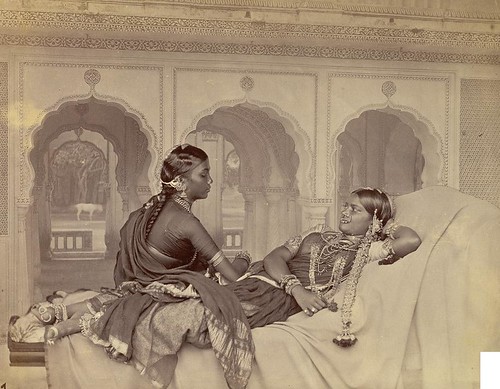

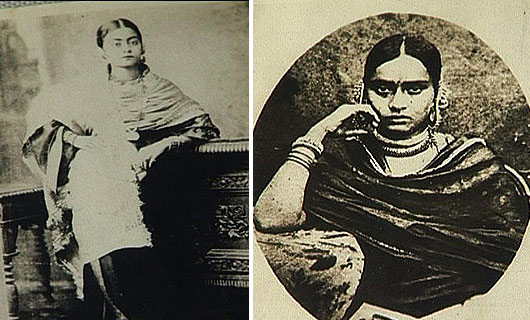
From Umrao Jaan to Pakeezah to Chandramukhi, the figure of the tawaif has been a figure of fascination in the popular South Asian imagination: the bejewelled, sensuous dancing girl with a golden voice – and almost always, a golden heart. To our Hindi-film-overloaded eyes, therefore, it may seem strange for an instant to look upon the black and white images of women who populate The Other Song, Saba Dewan’s film about tawaifs, looking out of the frame at us with a gravitas we do not expect.

But the gravitas is ephemeral. In one revealing moment, the camera pans an old album, with the moving finger on screen stopping at a pleasantly plump face. The grainy voice of an old sarangi player says, “Yeh Rasoolan Bai hain.” The filmmaker asks, “Kya yeh hamesha itne saade kapde pehentin thi? (Did she always wear such plain clothes?)” The reply is brusque and quietly ironic: “Mujra naach toh karna nahi tha. (Well, she wasn’t going to dance the mujra.)”

Rasoolan Bai gave up the mujra – the expressive, sometimes suggestive kathak-based dance that accompanied the tawaif ’s music – in 1948. At the same time that she moved out of her kotha and into a gali ka makaan in Banaras, the woman whose aching songs were perhaps India’s most famous renditions of the thumri stopped performing in her own city. The timing is remarkable. As India and Pakistan entered independent nationhood, the thumri was taken out of the kotha. A musical genre whose very form — intimate, expressive, always sung in a first-person female voice — had emerged from the courtesan’s salon, had, in order to survive in the bright light of modernity, to move into the concert hall, the radio station, the cinema. And in order to be heard in this new world, the tawaif herself had to become a ganewali or – in even more Sanskritised form – a gayika.

The most famous of such successful metamorphoses is that of Akhtari Bai Faizabadi into Begum Akhtar. The courtesan who had achieved fame in her teens became a respectably married lady, even giving up her singing career for years, “only to emerge into the public domain transformed into a national symbol iconic of the courtly musical culture which had shaped her,” writes scholar Regula Qureshi. But the nation exacted its toll. In order to be the voice of a new India, Akhtari Bai had to live a double life – her newfound respectable status was dependent on dissociating herself from every shred of her past, while the power she had over her audience, what independent scholar and historian Saleem Kidwai calls “chemistry”, derived in large measure from that very past.


Saba Dewan’s fascinating film, The Other Song, derives its name from a similar instance of doubling, of a repressed erotic self. Told by a respected Banarasi musician called Shivkumar Shastri that Rasoolan Bai had once recorded a different version of her famous Bhairavi thumri “Lagat karejwa mein chot (My heart is wounded)”, Dewan set out in search of the lesser-known variation. As she asks musician after musician (and later, tawaif after tawaif) if they’ve ever heard the version that goes, “Lagat jobanwa mein chot (My breasts are wounded)”, without success, we begin to see glimpses of a hidden world, a world whose frank sexuality and often joyful bawdiness were pushed deep below the surface, often by its own practitioners. Song after song turns out to have had its lyrics altered to suit ‘respectable’ tastes – from soibe (sleep) to jaibe (go), choli (blouse) to odhni (veil).

The tawaifs of North India (like South India’s devadasis) came from hereditary performing communities. According to historian Katherine Butler Brown, the term tawaif was first used to describe communities of female singers and dancers in Dargah Quli Khan’s Muraqqa’-i-Dehli (1739-41). But it was not until the early 19th century that it became a catch-all term. Even then, Brown argues, before 1857 there was always a distinction made “between elite tawaifs who were highly cultured, highly refined, models of etiquette and masters of performance genres, who might only have had a single sexual patron in their lifetime; and tawaifs who were less talented, less well trained, and thus more dependent on sex work”

BUT AFTER 1857, when British Crown Law came into effect throughout India, all tawaifs were criminalised alongside common prostitutes, with court judgements stating that singing and dancing were ‘vestigial’ activities while their real income came from prostitution. Meanwhile, the rising middle class, “influenced by Victorian values and empowered by colonial law, increasingly dismissed the tawaif as immoral and decadent, and began various moves to ‘rescue’ Hindustani music from them,” says Brown. The campaign for a national music — cleansed of its associations with tawaifs and Muslim musicians — aimed to make it appropriate for middle class women. In a stunning double move, the very processes that enabled ‘respectable’ women to come out of purdah worked to invisibilise the highly skilled, often highly educated, women who had been ‘in public’ all along: the tawaif.

With the decline of the feudal patronage that had sustained the kotha and its arts, many tawaifs explored other options. All India Radio (AIR) in its early days was almost entirely dependent on the ganewalis, as were recording companies: it was tawaifs like Gauhar Jan who were the first gramophone superstars. But in the early 2000s, a skilled singer like Saira Begum (one of the women from tawaif backgrounds that Dewan shot with) gets a recording slot at AIR in Banaras because of a zealous Italian pupil, only to be humiliated with a ‘musical theory’ examination she cannot possibly pass.

As the new guardians of music locked it up and shut the door, women from tawaif backgrounds entered first the theatre company, and later, the movies. “Cinema becomes a part of tawaif history, documenting tawaifi arts we’d never get to see – and also providing a way for the tawaif to reinvent herself,” says Kidwai. “And this reinvention was both on screen and off it. If Hema Malini in Sharafat wears plumes and a tiara to do a mujra, one can’t complain of inauthenticity: many real tawaifs like Siddheshwari learnt to sing in English – even if it was Twinkle Twinkle Little Star!” The tawaif’s remaking of self, as Kidwai points out, could take more radical forms: such as in the case of Nargis, whose mother Jaddan Bai prepared her for a cinematic career by teaching her everything except how to sing. The stardom of Nargis – the ganewali’s daughter divorced from the gana – demonstrated one route by which the tawaif could make it in the modern world. (It is tempting to conclude that this was the necessary obverse of the rise of the playback singer – the disembodied female voice who retained respectability by never being seen on screen.)

Cinema, though, isn’t an accessible career for most women. The two other films in Saba Dewan’s trilogy address more subterranean worlds of female performance. Delhi-Mumbai-Delhi (D-M-D) centres on Riya, who dances in a bar in Mumbai but is from Delhi, while Naach is about girls who dance to Bollywood numbers on massive, rickety stages in the town of Sonpur, between Muzaffarpur and Patna, during the annual cattle fair. For Dewan, the differences between these categories of women outweigh any similarities. Her D-M-D protagonist Riya, from an ordinary working class background, may have gained confidence and decision-making power within her family, but she remains wage labour. “The tawaif was much more her own mistress: the owner of the space, the person who paid the accompanists,” says Dewan.

Whether we like it or not, though, the tawaif remains the imagined reference point. “There is an attempt to recreate the mujra past, mediated via Hindi films,” acknowledges Dewan. “In Bombay bars, the girls wear so-called Indian costume – ghaghra choli, partly because it’s easier to get license for ‘Indian dance’, but also because it fits the audience’s appetite. The man there wants to imagine Rekha dancing for him, at least.” Even the filmic bar dancer draws on the pure tawaif of the 1970s Hindi movie: Tabu in Chandni Bar must remain chaste while working in a bar, just like Asha Parekh in the kotha of Main Tulsi Tere Aangan Ki.

But the relationship between bar dancers and tawaifs runs deeper. Ethnomusicologist Anna Morcom estimates that 80-90 percent of Mumbai bar dancers, “by informal accounts”, are hereditary professional performers from tribes like the Deredar, Nat, Bedia and Kanjar. They have also been the target of a moral campaign eerily similar to the Anti-Nautch campaigns of a century ago. In 2005, a ban on dancing in Mumbai bars made 75,000 such women redundant. It is still in force.

In early 20th century India, it was dance that seemed to lie at the root of moral opprobrium. The tawaif gave up the mujra to acquire respectability as a concert singer or actress. But in a newly-globalised India where ‘Bollywood dance’ is now a legitimitised ‘cool’ activity for the urban middle classes – think NRI/urban weddings, Shiamak Davar classes, TV shows like Boogie Woogie and Nach Baliye, feeding back into films like Dilli-6 or Rab Ne Bana Di Jodi – how does dance re-acquire its immoral connotations when performed by women in bars? That is a new double standard that will take longer to resolve.

From Tehelka Magazine, Vol 6, Issue 44, Dated November 07, 2009

15 November 2009

Rabbit In Wonderland: Paresh Kamdar's Khargosh


Paresh Kamdar’s stunningly evocative film Khargosh (2008) is set in what seems like the perfect small town, all quiet sloping streets, serene riverside idylls and fields of golden wheat. As if in a painting, the bleached whites and dull browns of a dusty north Indian summer are set off by accents of red: crimson flags flutter atop a crumbling stone temple, a rusty lamp juts out from a wall, a scarlet dupatta floats down into a whitewashed school building. But Kamdar is quick to dispel any illusions one might have about accessing some picture-perfect slice of Indian reality. “The school and the ghat are in Maheshwar, on the Narmada; the house is in Vidisha, 45 km from Bhopal; the forest is Borivili National Park – and the dark staircase? That’s a set!” he says gleefully.

The 52-year-old Kamdar has always enjoyed subverting expectations. As the eldest child of a Gujarati family that had lived in Kolkata for five generations, it was assumed he would do a B.Com and join the khandani business. Instead, the teenaged Kamdar accompanied his Bengali landlord, a cameraman, to the sets of Uttam Kumar films. Starting out by holding the star’s cigarettes while he shot his scenes, he grew increasingly fascinated with the world of cinema. “The elevated status of art in Kolkata, especially for a Gujju with none of this in his background, gave it an aspirational quality,” says Kamdar. Bored with college and out to irritate his father, he joined a German class. He was soon part of a young arty circle, doing plays and dreaming of cinema. It was in the Max Mueller Bhavan canteen that he heard of the Film and Television Institute (FTII), and joined to study editing in 1983. “Kitabein toh padh hi rakhi thi, about editing being about sculpting time and all that,” grins Kamdar. “Plus I thought haath ka kaam hai, at least I won’t go hungry.”

After FTII, Kamdar worked as an editor with filmmakers like Nandan Kudhyadi and Kumar Shahani (he won the 1994 National Award for editing Kudhyadi’s Rasayatra, about vocalist Mallikarjun Mansur). He made “unexciting” documentaries for three years, so as to travel in Maharashtra and Madhya Pradesh. His first film, Tunnu ki Tina (1996), a black comedy about a lower middle class Mumbai family “trapped between entrenched orthodoxies and new consumerist fantasies”, was funded by the National Film Development Corporation (NFDC). “But NFDC wouldn’t screen it, so I made a VHS copy and started showing it to critics,” says Kamdar. A screening at Delhi’s India International Centre led Cinemaya editor Aruna Vasudev to push for a premiere at the Berlin Film Festival.

Tunnu’s black humour was continued in Sirf Tumhari (1998), a short about the fantastic secret escapades of a middle class housewife. A long funding crunch, interspersed with teaching, ended with Johnny Johnny Yes Papa (2008), a neorealist film about an unworldly father and a worldly son. But it is with Khargosh that Kamdar has finally been able to make the film he wanted to make, where the narrative – a 10-year-old boy becoming a go-between for two lovers – is secondary. “I wanted to achieve a certain rhythm, a certain sound, an imagery that would create a particular cinematic experience,” says Kamdar. “It’s not realist. It’s subjectively unreal. But I was sure it had an audience.”

Of the three awards Kamdar walked away with at Osian’s Cinefan, it’s the Audience Award he treasures most. This is just a start.

From Tehelka Magazine, Vol 6, Issue 45 Dated November 14, 2009

The New Dadaist


Published in Tehelka magazine:

India's entry to the 2010 Oscars is a charming portrait of the father of Indian films. 

That cinema in India owes a great deal to one Dadasaheb Phalke, most of us are dimly aware. The Indian Government’s award for “lifetime contribution to cinema” is named after him. But very few people in Phalke’s film-mad country know more about the man. So when Marathi playwright and theatre director Paresh Mokashi read Bapu Vatave’s biography of Phalke in 2005, he decided it was a story waiting to be told. And since it was Phalke, it had to be told on screen, not on stage.

Harishchandrachi Factory tells how Phalke came to make his (and India’s) first feature film, Raja Harishchandra (1913), giving us a Phalke more charmingly eccentric than we could ever have imagined for ourselves. “But he had to have been that,” says Mokashi. “Imagine, as a Sanskrit pandit’s son in the 1890s, going off to the JJ School of Art, setting up a photo studio, or apprenticing with a German magician!”

The 40-year-old Mokashi, with a string of immensely successful plays behind him (Mukkam Post Bombilwadi [2003] ran for 460 shows), is known for his vivid brand of sharp, situational comedy. “To treat a serious subject with humour is no joke,” he says, deadpan. So in his film serious things happen, but are handled with a lightness that evokes Chaplin and Jacques Tati, as well as Shankar Nag’s televisation of RK Narayan’s Malgudi Days. We laugh, but there’s a sense that we could cry instead. Our first glimpse of Phalke is in a black top hat, doing magic for a delighted bunch of kids – only to do a real-life disappearing trick as an irate debtor arrives. His return home to a grieving wife and neighbours creates foreboding – before we realise they’re mourning a cupboard he’s sold to fund his new obsession. Even his temporary blindness in 1912 is not allowed to remain tragic: as Phalke lies there with eyes bandaged, someone says with mock gravity, “Your eyes will get cured – what shall we do about your mind?”

Before the success of Harishchandrachi Factory – it’s won awards in Maharashtra, Tamil Nadu and Kerala, and is India’s entry for the Oscars – someone might have asked Mokashi that question. Starting as an actor with Pune’s Theatre Academy, he spent years adapting a Berlin-based realist children’s theatre movement called GRIPS to the Maharashtrian context. He then moved to Mumbai and struggled until 1999, when playwright Ramu Ramanathan and Sanjana Kapoor insisted he stage one of his plays at the Prithvi Festival. In 2005, having become a bankable theatre name, Mokashi decided to make a film. Suddenly, funding dried up.

“A Marathi film with no stars, no songs: I don’t blame them!” says Mokashi, who mortgaged his ancestral home to fund the film, Phalke-style. His cast and crew (all theatre people) swear by him. Disagreements happened – when he decided to use a still frame, or when he urged his actors to underplay scenes they saw as “dramatic” – but Mokashi stood firm. Vibhawari Deshpande, who plays Phalke’s wife Saraswati, describes Mokashi as “scientific, sensitive without being emotional, and totally sure of himself.” Sounds like Phalke.

From Tehelka Magazine, Vol 6, Issue 45 Dated November 14, 2009

25 October 2009

The Reluctant Diamond: Konkona Sen Sharma

A profile I did for Tehelka

Konkona Sen Sharma may be cast again and again as the small-town girl seeking the bright lights, but in real life she has been the one pushing stardom away.


Several people walking past Kolkata’s Little Russell Street at 3pm on a Thursday slowed down to look at the striking young woman standing outside the New Kenilworth Hotel. Partly because her maroon silk sari wasn’t quite midweek afternoon wear, but also because it took them a moment to recognise the face beneath the heavy ’70s makeup and bouffant hairdo as Konkona Sen Sharma, Indian cinema’s favourite girl-next-door.

Konkona herself, taking a short break from the shooting of her mother Aparna Sen’s new film Iti Mrinalini, was characteristically unselfconscious. She might have been more comfortable in her usual loose kurta and capris, but the greasepaint is part of her life now, and she takes its irritations with the same unfussy equanimity as she does the accolades that have come her way since 2001, when she debuted in the Bengali feature called Ek Je Achhe Kanya (The Girl). But she hasn’t always been this calm about the process of acting in a film. “When I started out, I’d work myself up about why I was wearing this, or saying that... I was embarrassed about the whole thing.” Today, some 25 films down, she’s unruffled. “If I have to do something, I do it. I’ve become more detached, which is a more constructive attitude to work.”

Konkona’s relationship with the film industry has always been ambivalent. Having grown up with a mother who was both an extremely popular actress and an acclaimed director, she never thought of the movies as glamorous. At close quarters, they seemed to involve hard work, long hours and a certain professional instability. But there was simultaneously a fascination with cinema: being captivated by the Moscow Film Festival at nine, playing “directing games” with her mother at 12. Konkona was four when she played a little boy in a Bengali film called Indira (1983) and nine when mother Aparna Sen cast her in Picnic (1989). “She was so natural,” Aparna remembers. “Shabana [Azmi] said, ‘If you think she’s going to be anything but an actress, you can think again.” At 15, she played a ‘teenage stepmother’ in Amodini (1994), directed by her grandfather Chidananda Dasgupta, film critic and longtime friend of Satyajit Ray. But the more her mother suggested she think about acting seriously, the more she resisted. “When Ma and all said I was a good actress, I didn’t think they were being objective. And anyway, I have a tendency not to do what people tell me to do,” she laughs.

It was only in college, while doing her BA in English, that she discovered that acting could be fun. “I did plays with ShakeSoc [the St. Stephen’s College Shakespeare Society] and enjoyed myself hugely.” Then came Subroto Sen’s offer to play the psychotic teenage protagonist in his Ek Je Achhe Kanya. “I did it as a lark, I never really thought about it getting released and having an impact on my life. I’ve never thought that far ahead – I still don’t,” confesses Konkona. She shot for the film in the summer vacations (“St. Stephen’s was very strict about attendance”) and went back to college in Delhi. Meanwhile, the film had “become a hit and all”, and family friend Rituparno Ghosh, who had been “threatening to make a film with me for a long time” decided to cast her in Titli (2002). “That was very much a home production, with Ritu mama directing, Ma acting. It felt more like a holiday,” remembers Konkona.

The turning point came with Mr. and Mrs. Iyer (2002), written and directed by her mother. Aparna decided she would like her to play the central character of a young Tamilian housewife whose prejudices are forced to battle her humanity during a communal riot. Konkona was reluctant (suggesting that her mother cast a “real South Indian” instead) but Aparna made it into a project for her. “She sent me off to Chennai as a research assistant of sorts, to translate some dialogues and find out about costumes.” Konkona returned from Chennai completely immersed in the milieu and the character, and ended up enjoying the shoot. But she still wasn’t sure this was it. “I kept thinking I had to get a proper job, I’d look at the classifieds…” she trails off. “Then I won the National Award [for Best Actress]. After that, it wasn’t so easy to shift. I was getting offered interesting films: Amu, Page Three. And I’d never had another burning ambition. I didn’t really know how to do anything else.”

Konkona is grateful to acting for having given her a sense of purpose, but she seems to constantly guard against it taking over her sense of self. “It can be mindnumbingly boring,” she points out. “You’re just a live prop: someone else gives you your lines, tells you what to do, lights your face.” But films clearly fascinate her – she was once accepted into an undergraduate film studies programme at New York University (“but I didn’t get a scholarship and it was too expensive”), and in 2005 she directed a short film about two Kolkata pickpockets, called Naamkoron. She dismisses a question about whether she wants to be a director. “That’s like saying I want to be a novelist, it doesn’t work like that. If it has to happen, it’ll happen.” If holding a megaphone and telling people what to do holds no appeal for her, nor does putting on makeup to strut for the camera. What she finds interesting is how acting changes one’s relationship with one’s body, with the self. “I’m not a public speaker, I can be very shy. But if I can hide behind a camera, or behind a character, I’m fine.”

Childhood friend Padmini Ray Murray remembers her as “a mopheaded shy little thing” but “with big brown curious eyes… and a remarkable innocence”. When told that Padmini’s heart surgeon father “removed the heart” in order to operate, the 11-year-old Koko apparently said, “But if he takes out their heart, can they still love people?” “She stayed a child for a long time,” says Padmini, who laughingly describes Koko as “a late bloomer” in the sex and romance department, with long childhood crushes that remained unvoiced for years. “She still retains a childlike quality, a sense of wonder. But alongside it is a certain wisdom.” Aparna remembers Koko at seven, complaining that a friend was constantly borrowing and dirtying her favourite socks. “Why don’t you just give the socks to her,” suggested Aparna. “But if I do that, she’ll know I’m angry,” said the teary Koko. “And are friends more important or socks?”

At 29, Konkona is still as certain that what’s most important to her are the people in her life. Her mother, of course, has been a shaping influence, often pushing her in productive directions she hadn’t quite figured out for herself. Her father, science writer and journalist Mukul Sharma, created a sparkling childhood full of games and guitars and car trips. Her sister, Kamalini (Dona), is eight years older and was a second mother figure, especially after Aparna and Mukul separated. Konkona was seven. “But I’d rather have happy parents who’re apart than unhappy ones who’re together.” She’s now great friends with both her father and her stepfather, Kalyan Ray, who’s an English professor in a US college.

“For me, life is really about shared experiences,” she says with disarming simplicity. It’s a strange combination: an absolute honesty that somehow manages to steer clear of intensity; an uncomplicated, childlike sweetness that’s never cloying. “Even if she’s playing an intense character, she’s never terribly in earnest. That gives her a lightness of touch,” says Aparna. “But there’s no titillation in her acting. She never plays to the gallery.” Unlike her image, Konkona is rarely serious. The Hindi films that have brought her most into the public eye – Page Three, Laga Chunari Mein Daag, Life in a Metro, Wake Up Sid – have consistently portrayed her as the sincere small-town girl in the big city. “People cast her in Plain Jane roles, but I think she can be extremely sexy,” says Subroto Sen, who directed her in Ek Je Achhe Kanya. “It is a bit boring to constantly play earnest characters,” says Konkona. “I’ve done other kinds: in Mixed Doubles, or Dosar, for example, but they’re rarely watched.” Konkona herself is clear that her most challenging roles are in her mother’s films: Mr. and Mrs. Iyer, 15 Park Avenue and now Iti Mrinalini, where she plays a 1970s and 80s Bengali actress. “Mrinalini’s manner cannot be as direct as mine today. It’s a challenge, because I’ve always had a resistance to playing characters who’re coy or helpless or docile: these emotions are alien to me.”

Konkona's forthrightness seems difficult to preserve in the Mumbai film world, where appearances must be kept up and occasional social games played. But she seems to have settled nicely into her new Mumbai life. She and boyfriend Ranvir Shorey — with whom she seems very much in love — have bought a flat in Goregaon. They spend their free time watching films they like, or hanging out with friends. “The only industry people I’m friends with are Sandhya Mridul and Tara Sharma [her Page Three co-stars] and Rajat Kapur, Vinay Pathak and gang,” she says. “Anyway, I don’t miss places that much. Wherever I live becomes Cal for me: I’m constantly telling people, ‘When you come to Cal’ while meaning Bombay!” It’s a vibe she carries with her wherever she goes – like her puchka spices from Kolkata’s Vivekananda Park and the Madhuban paan masala to which she’s “totally addicted” – quietly, gently, without the slightest fuss, but with an unmistakeable stubbornness.

Published in Tehelka Magazine, Vol 6, Issue 43, Dated October 31, 2009

11 October 2009

The Aesthete

‘WHEN I WAS YOUNG, I HAD A VISION OF KRISHNA IN WHICH HE SAID TO ME, “JASRAJ, WHATEVER YOU SING REACHES ME FASTER”’

PANDIT JASRAJ
Age: 79

Profession: Hindustani classical vocalist, doyen of the Mewati gharana

Secret mode of doing riyaz: Switching on the television (on mute), laying out a game of solitaire on the bed, and then sitting down to sing

AMONG INDIA’s seniormost classical musicians, Pandit Jasraj may seem a venerable figure. He certainly seems to assume that role in public, raising both hands in a gesture of blessing as he strides onto stage. But Jasraj is keen to dispel such a notion. “People think I’m trying to be a sadhu or something, but it’s not that. That mudra is meant to signify an embrace of the god inside everyone. And I adopted it unconsciously.”

Jasraj attributes much of his calm and the power of his music to his unshakeable faith. “As a young man, I was a Hanuman bhakt,” he says. Now, it is Krishna to whom he feels deeply connected. There is certainly something Krishna-like about the man – a combination of playfulness and serenity that is appealing youthful. “Beauty is a form of the divine. A lovely young woman is like a half-blossomed flower. Sundarta ka aankhon se raspaan karna (letting the eyes soak in beauty) – that keeps one young.” Immaculately turnedout in public, Jasraj insists he is “bachelor-like” in private. “In my bedroom, I throw my clothes everywhere,” he chuckles. He admits classical musicians take time to deal with change. “But badlaav is life. Only that which adapts is alive,” he says. “I’m lucky my voice has changed very little with age. Yes, I can’t perform the miracles of my younger days, but I didn’t know then the karaamaats I do now.”

From Tehelka Magazine, Vol 6, Issue 37, Dated September 19, 2009

The Viewfinder: Shyam Benegal

A short profile for Tehelka's 'Elixir of Life' issue in 2009.

SHYAM BENEGAL

Age: 75

Profession: Award-winning filmmaker credited with introducing ‘middle cinema’ in India

Secret worry: A young well-to-do generation that functions without a sense of history

SHYAM BENEGAL’s model old person is a contemporary of his mother-in-law’s. “She’s wonderful. She’s 93 and she travels entirely by herself, flying to California to see her son and then Europe to visit friends. She can discuss the latest movie, she loves gossip,” he says with genuine admiration. “You don’t have to make a special effort to include her in the conversation. That is how one would want to be.” But Benegal, who turns 75 this December, is realistic. “It’s not something given to everyone. So many things are not in your hands, just physically. But we human beings are blessed with one thing – optimism.”

“When you’re young, you certainly don’t see older people and think of yourself as them. Intimations of mortality are constantly there – it’s romantic and dramatic [to think of death]. But ageing is something people block their minds against,” he smiles. “Even now, I don’t see myself as ageing – only as adding years to my life. It’s only when one attempts to leap across a puddle that one suddenly feels, uh-oh, it’s not happening like it used to.” He blames his ulcers on a cavalier attitude when he was younger (“you know, who needs breakfast, and so on”), one he has since abandoned for a practical understanding of what he needs to avoid to stay healthy. Within limits, of course. “I still enjoy my drink and savour my food. I want to try out a new restaurant as much as the next person.”

A champion swimmer in his days at Hyderabad’s Nizam College, Benegal once captained his state team. Nowadays, he’s rueful about not exercising as much as he thinks he should. He tries to go for a walk daily, at the Mahalaxmi Race Course when he’s in Mumbai and in Lodhi Gardens when he’s in Delhi to attend the Rajya Sabha (he’s a nominated MP). But what really keeps Benegal fighting fit is cinema. After the success of last year’s superb Welcome to Sajjanpur, he’s now ready with Well Done Abba, “a political satire” inspired by two short stories (‘Narsaiyyan Ki Bavdi’ by Jeelani Bano and ‘Phulwa Ka Pul’ by Sanjeev). Well Done Abba has just travelled to the Montreal Film Festival, and releases in October. More than that, he’s excited about new filmmakers like Anurag Kashyap and Vishal Bhardwaj, and young writers like Ali Sethi.

“There are still so many books to read, movies to see,” he says. “Where’s the time to think about time?”

From Tehelka Magazine, Vol 6, Issue 37, Dated September 19, 2009