26 August 2008

Film Review: Mumbai Cutting

Bombay Eleven

Read the Tehelka piece here. And the longer version below.

Bombay has always been the metropolis of choice for Hindi cinema. As any self-respecting Indian film-goer could tell you, when watching a Hindi film, if the locale was urban, it was safe to assume that it was Bombay. Strangely, though, films set in Bombay weren’t always interested in the specificity of the city. Film scholar M. Madhava Prasad suggests that this may have been because ‘Bambai’ was always invoked in opposition to the village, as “the generic metropolitan other”. While other cities were too specific, Bombay somehow managed to be “Bombay plus The City”. But having to bear this burden of symbolic city-ness meant that it was only in the 1970s, with a film like Deewar, that Bombay came into its own on screen, with identifiable locales, language and street culture.

Since then, of course, there’s been no looking back. The fetishization of “Bambaiya” speech, specifically through films set in the underworld, has been the cinematic obsession of our times. The gritty realist gangster flick created by Ram Gopal Varma continues to thrive, while giving rise to comic riffs that play on our underworld fascination, like the Munnabhai films. Varma and his Factory have also been responsible for a series of tributes to Bombay as the city of cinematic dreams: Rangeela, Mast, Main Madhuri Dixit Banna Chahti Hoon, Naach. More recently, films like Life in a Metro have sought to rediscover a “middle class” Mumbai of office romance and failing marriages.

Mumbai Cutting makes this showcasing of Mumbai a self-conscious venture. Produced by Niyati Shah of White Cloud Films, the film consists of eleven shorts, with Mumbai as the common thread. Several films seek to capture something quintessentially Bombay by recourse to public hangouts: bars, cafes, clubs. Ayush Raina’s Bombay High revolves around the kind of seedy neighbourhood bar that probably doesn’t exist in any other Indian city – where small time gangsters share space with an after-office group that includes women. The only thing identifiably Bombay about Jahnu Barua’s badly-named Anjane Dost is an Irani Café that’s seems meant to serve as both locale and premise: but surely the meeting between strangers can happen in any city, anywhere in the world? Then we have Rahul Dholakia’s stylishly-shot Bombay Mumbai Same Shit, with Jimmy Shergill as a rich brat whose nocturnal wanderings weave the nightclub and the pavement together.

The two women directors, Revathi and Ruchi Narain, place women at the centre of their narratives. In Revathi’s tightly-edited Parcel, Mumbai appears as a series of insurmountable hurdles to a Bangladeshi woman en route to the Middle East – Sonali Kulkarni in a stellar performance. Narain’s quirky, part-animated Jo Palti Nahi Woh Rickshaw Kya shows an NRI woman’s relationship to Mumbai’s pleasures – and dangers – as mediated by auto-rickshaw rides.

Despite the genuine effort to depict different locations and social classes, several shorts end up recycling Mumbai clichés – mafia, the monsoon and local trains – without doing much with them. Sudhir Mishra’s The Ball has a child witness the gang murder of a man during an evening cricket match. Shot predictably in the thick of the city’s Muslim neighbourhoods (under the JJ flyover, going towards Bhendi Bazaar), the film never transcends its gimmicky opening. Manish Jha’s And it Rained, about two people brought together by the Mumbai monsoon is ambitiously dialogue-less, depending instead on Euphoria’s Jiya jaye na track, but ends up feeling like a music video. Kundan Shah’s Hero (also without dialogue) does better with its take on the daily battle to get on the local train: Deepak Dobriyal (of Omkara fame) plays the flagging commuter with an exaggerated Buster Keatonesque comic automaton-like quality that nearly works.

But for the large majority of Hindi film buffs, Bombay is not a lived space whose traffic lights and nakabandis we negotiate every day. It’s the mythical Bombay of mafia dons and glamorous starlets that we’ve seen on screen all our lives. So while some of these latter shorts are extremely watchable, the two that really succeed are the ones that set out, self-consciously, to play with the Bombay of popular lore and filmic memory.

The first is Anurag Kashyap’s Pramod Bhai 23, which does a brilliant job of showing you this mythical Bombay as it lives in the mind and heart of a 12-year-old juvenile delinquent. Mushtaq lives in a world defined by knowing someone who knows someone who knows Chhota Rajan, a world marked by traffic light encounters with a lady in dark glasses who’s definitely “Karan Arjun ki Ma”. The second is Rituparno Ghosh’s Urge, a gentle tongue-in-cheek look at Bombay’s place in the popular Indian imagination. The humour owes a lot to the self-referential treatment – the family seems straight out of a TV serial (clues are provided: the mother whines about having to give up her “last two serials”), and the Stardust-reading police inspector is clearly inspired to play detective by watching Bombay films. It is this ability to view the city bifocally, to see how the mythical Bombay feeds off the real one (and vice versa) that makes Mumbai Cutting a true benchmark in the long line of Mumbai films.

(An edited version of this article appeared in Tehelka Magazine, Vol 5, Issue 34, Dated Aug 30, 2008)

25 August 2008

Living Image: Old Delhi in literature

An essay for Time Out Delhi, on changing literary depictions of Shahjahanbad over the last century:
Photograph by Abhinandita Mathur
“Anything about which one knows that one soon will not have it around becomes an image,” wrote Walter Benjamin. While Shahjahanbad is nowhere near disappearing from the face of the earth, the death of its spirit has been much lamented in twentieth century writing, and there is no doubt that much of the throbbing, pulsating life that coursed through the city’s veins at the start of the century no longer exists, except in memory.

The creation of New Delhi in 1931 relegated Shahjahan’s once-magnificent city to the status of “Old” Delhi, which came to be perceived increasingly through the developmental lenses of “congestion” and sanitation rather than as an organic settlement with its own vision of what a city is. But even as political power and cultural patronage moved bag and baggage to New Delhi’s tree-lined avenues, the bustling galis and kuchas of the walled city – and the quieter bungalows of the Civil Lines – became for many a writer, a window into a “more authentic” Delhi.

Among the earliest twentieth century literary attempts to document the disappearing life of the walled city was Ahmed Ali’s Twilight in Delhi (1940). Set in the period 1911-1919, Twilight draws on a fund of memory to fill out a portrait of life in Delhi in loving ethnographic detail: the pigeon-flyers and the kite-fighters, the kababchis and the kulfi-sellers, the beggars and the healers, the poets and the qawwals. It is a love song to a dying world – a world that may have been feudal, flawed and untenable, but whose ideals one still cherished, whose purity one admired, and whose once-incandescent beauty was not easily forgotten.

Certainly, for someone who helped found the Progressive Writers’ Movement, Ali displays very little enthusiasm for the transformations of modernity. Instead, we read of the “grating noise” of trams, of engine smoke blackening the evening sky, of Chandni Chowk being disfigured by the demolition of the central causeway and the cutting down of shade-giving peepal trees, and most painful of all, the death of the old culture: “The richness of life had been looted and despoiled by the foreigners, and vulgarity and cheapness had taken its place. That relation which had existed between society and its poets and members was destroyed”.

Glimpses of a similarly conflicted relationship with a once-glorious but colonised past and a decolonized but forever corrupted, inauthentic, present appear in Anita Desai’s Clear Light of Day (1980). Moving between a 1970s present and a 1940s past, Desai’s allusions to “Old Delhi decadence” conjure up a contrasting vision of New Delhi as a place “where things happen”. But Desai allows for no easy choices. Hyder Ali and Raja, who represent Old Delhi, with their poetic flourishes and delusions of grandeur, are treated with as much ambivalence (“verses that… had thrilled her then with their Persian glamour”) as the diplomat Bakul’s smug efficiency (“smoothed” by “the bland oil of self-confidence”).

Desai’s Old Delhi, interestingly, is not the walled city but the Civil Lines, a European enclave of sprawling colonial bungalows to which upper-class Indian families started moving in the 1910s and 1920s. The Civil Lines of Clear Light, however, is a much lonelier place than the one remembered by Sheila Dhar (Raga’n Josh: Stories from a Musical Life, 1995), whose barrister grandfather spearheaded just such a move of her Mathur Kayastha extended family, from “the congested lanes of Chailpuri in the old city” to the “spacious and elegant” houses whose new Anglicized lifestyle awed relatives visiting from the walled city. “It was noted with envy and admiration that breakfast in these households consisted of eggs, toast and jam, instead of vegetable bhujia with paratha, and that even the women had begun to use spoons, though only little ones, to eat.”

And yet, for all the billiards, bridge and Scotch whisky that had replaced chess, ganjifa and keora sharbat, Dhar’s sparkling memoir of her 1940s childhood reveals many connections to an older style of Delhi life. The ustads who first taught Dhar classical music came from the walled city – Mohan Baba from Neel Katra, Bundu Khan from Suiwalan – and family outings were planned as if from Sheher – “walks by the Jamuna, trips to the Qudsia Gardens, picnics at Okhla in the mango season”.

By the 1950s, however, the separation between the old city and the new was complete. Madhusudan, the narrator of Mohan Rakesh’s seminal 1961 novel, Andhere Band Kamre (translated as Lingering Shadows [1993]), rents a room in Qassabpura, but spends his waking hours in Connaught Place, wondering whether he will ever live in the style of his friends Harbans and Nilima, in their Hanuman Road bungalow “with paintings on the walls”. For Thakurain, his landlady, Connaught Place is a distant “outing” – she excitedly remembers having gone there once, “on Independence Day with Thakur Saheb.”

In one of the book’s most devastating scenes, Madhusudan writes a newspaper feature on “the streets of Delhi” whose mention of Qassabpura’s dilapidated houses results in the Municipal Committee threatening to pull down Thakurain’s home. Old Delhi was no longer about poetry and music, or even delusions of grandeur – it was a dirty, congested, “breeding ground for epidemics”, full of houses of “the sort that should be condemned!” Rakesh’s novel coincided with the 1962 Delhi Master Plan’s schemes for “decongesting” Shahjahanbad and its declaration as a notified slum.

Even nostalgia, if it existed, now served as an excuse for demolition. Jagmohan followed up his Rebuilding Shahjahanbad (1975) with his infamous attempt to “clear” sections of the old city during the Emergency. It was not until the 1990s, with William Dalrymple’s City of Djinns (1993) and Krishna Sobti’s magisterial Dil-o-Danish (1993) that Old Delhi began its slow return journey to being a site of history and romance, leading to an increasing interest in it as “heritage”.

It remains to be seen what writers in the 21st century will make of a city that must now negotiate a path between preserving havelis and thriving trade, a path that will hopefully allow for both cycle-rickshaws and the Metro.

Published in Time Out Delhi Vol 2 Issue 4 (Jan 25 - Feb 7, 2008)

The Romance of the Single Screen

The demolition of Chanakya Cinema, December, 2008. Designed by PN Mathur (Photo courtesy Ram Rahman's blog)

My first memories of watching films in Delhi are rather hazy. I remember watching Masoom and crying, and being taken to see a film in which Rishi Kapoor sang a qawwali. If I really dredge the depths of my memory, the image that floats up is from when I was about five – an expedition with my father, to watch a ‘children’s film’. What I remember is not something from the film (it must have been in English, which I barely understood at the time), but the morning sun, a crowd of people and a poster with a picture of a girl and a dog, propped up at the entrance to a hall that I am convinced was Chanakya. The year was probably 1982.

Chanakya remained centrestage in my movie-going life through the 1990s, though Priya provided stiff competition. School expeditions to Priya were where a whole generation of girls were weaned into expressions of undying love by Whitney Houston in The Bodyguard. (The Terminator probably didn’t do as much damage to the boys.)

Last winter, I happened to be in Delhi when the NDMC managed to wrest control of Chanakya from its long-term leaseholders and decided that it would be demolished to make way for a mall-cum-multiplex. “Last day, last show at Chanakya!” said the city supplements. A friend and I showed up to say our farewells. We weren’t the only ones. Tickets were sold out. A huge crowd surrounded the hall – strangers smiling at each other, middle-aged men swapping memories with twenty-somethings. We finally bought tickets in black. Going out with a bang, I remember saying, with a tinge of something like pride.

But going, all the same. Most of the halls that people remember from the seventies and eighties have either gone, or shrunk: from the great, hulking, comfortable beasts they once were into unrecognizable glossy creatures with tinsel wings that shimmer in the night. I was young enough to celebrate the transformation, once: in my first year at college, I woke up at seven on a Sunday and braved a full-scale Delhi stampede to get a free ticket to the first-ever show at the city’s first-ever multiplex – PVR Saket, where once had been Anupam. But I didn’t quite realize then the shape of things to come. Within a few years, the multiplexes increased in number as well as clout. They managed, for example, to get rid of the clause that had required them to sell a small percentage of tickets at low prices (in PVR Saket in 1997, any seat in the first two rows was a joyful Rs 7).

I left Delhi soon after. When I came back, Alankar, my mother’s old favourite from long-ago Defence Colony days, had become 3Cs and Eros, where I had watched many an evening (while casting sidelong glances at the “morning show” posters) had disappeared. Where the hall had been was nothing but a crater – and the name. Like thousands of others, I mention Eros every time I give directions to Jangpura, where I now live. It strikes me that Eros is but one name in the vast geography of a city marked by absent cinema halls. Think of the hundreds of times you’ve jumped into an auto and pronounced tersely, “Savitri”, or perhaps, “Kamal ke paas”, or “Archana-wale road par”, with no need to say another word. Sometimes I wonder if the ease of that communication, that common language of the city, evokes an earlier time when cinemas were spaces that the middle class shared – if sometimes grudgingly – with the working masses. Everyone knew the difference between Regal and Rivoli and Odeon and Plaza, even if they were all in Connaught Place. In contrast, there is something untranslatable, incommunicable, about the difference between Citywalk and Square One – both are merely “Saket wale naye mall”. One reason why the autowala thinks they’re indistinguishable might be that he will never see the inside of either. But perhaps the real reason is that they are no different.

My nostalgia for the old halls isn’t blind – they were (and the survivors still are) cavernous, often dirty and predominantly male. Seediness came with the territory. You didn’t need to be bunking school or watching an A-rated movie to feel transgressive: if you were female, just being in a cinema alone was enough. The first time I went to watch a film alone was during IFFI 1996. I caught a bus from college to Sheila to see Sai Paranjpe’s Papiha, and bought a front stall ticket. It was an innocuous, feel-good tale about a forest officer amid tribals – but I will never forget the rousing reception I got from the men around me when the lights came on. Another memorable time I took a cousin and an unsuspecting French friend to watch a Govinda film at Stadium Cinema. The hall had clearly seen better days, but we were intrepid, and the tickets were Rs 20. It was only when a worried-looking ticket checker set about finding us seats with his flashlight that we realized a) that only a third of the seats were unbroken, and b) that there no other women in the audience, let alone foreign ones.

Multiplexes, for all their cookie-cutter aesthetics and ridiculously overpriced snacks, probably do make life easier for women who can afford them. But most single-screen cinemas in Delhi seem to be going the Stadium way: interesting variations include Imperial in Paharganj, which now fills up every night by showing 80s multistarrers for twenty bucks a ticket, and Moti in Daryaganj, which has tied its fortunes to the rising Bhojpuri tide. Some few have managed to survive the transformative years without losing their identities completely – one model is that of Priya, which keeps afloat because it’s part of the PVR family. But another model is Delite, now divided into Delite and Delite Diamond, its wooden panelling and illuminated, jewel-like ceiling clearly a labour of love for its owners. The neebu pani and samosas and photos of Dilip Kumar visiting the hall in its older avatar make people describe it as retro. Yet the place is as far from being a museum as possible, with the crowds rolling in every night. Clearly there is a space for something that’s beyond the multiplex – why aren’t there more people seeking to fill it?

Published in Time Out Delhi Vol 2 Issue 8 (July 11-24, 2008)

17 August 2008

Sham-e-Awadh: Book Review


Author : Ed by Veena Talwar Oldenburg
Publisher : Penguin
Cost : Indian Rupees 395

Most readers probably expect exactly what this anthology of writings about Lucknow delivers. There are tales of nawabi delicacy and decadence, accounts of British depradations and melancholy twentieth century laments on the decline of everything – architecture, music, dance, language, manners – that had once made the city famous as the repository of cultural refinement. Yet, Sham-e-Awadh leaves you with a feeling of dissatisfaction.

Perhaps the problem with the book is precisely this failure to depart from expectations. Piece after piece goes down the same well-trodden paths, as if what can be said or thought about Lucknow is circumscribed by some pre-existing narrative outline. This is particularly true of the attempts to sum up what has happened to Lucknow in the twentieth century. Veena Talwar Oldenburg herself never seems to look at the present city except to look for survivors from its gentler past. Neither Mrinal Pande’s take on the new political culture forged by Mayawati and Mulayam Singh Yadav, nor Nasima Aziz’s description of the grand double wedding of the sons of magnate Subroto Roy manage to go beyond evoking the predictable shock-and-awe to actually tell us something we don’t already know.

Oldenburg’s elegiac proclivities make the historical sections much more substantial – the eminently readable extract from Flora Annie Steel’s 1897 novel (On The Face of the Waters, set in 1850s Lucknow) is a revelation, as is Carla Petievich’s all-too-brief glimpse into the sexier, more colloquial side of Urdu poetry, rekhti. There are several individual portraits that provide revealing insights into the city – especially Michael Edwardes’ affecting little account of Hazrat Mahal (“the Rebel Begum”), and Saleem Kidwai on Begum Akhtar’s complex relationship with Lucknow.

But even here, the book seems incomplete, since Oldenburg uses her editorial privilege to give us not one but two of her own accounts of Nawabi Lucknow and chooses to include nothing at all from Abdul Halim Sharar, who spent his childhood in the Lucknow of Wajid Ali Shah and produced an account of the city’s life and culture that is unrivalled in its detail. Trisha Gupta

Published in Time Out Delhi and Time Out Mumbai, 2007

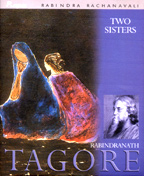
Book Review: Two Sisters

Two Sisters
Rabindranath Tagore
Rupa & Co, Rs. 95

This tale of two very different sisters, published in 1933, is one of Tagore’s last novels. The elder sister, Sarmila, is a type who appears often in Tagore’s literary universe – the grihini, or housewife, in whose seemingly prosaic world lies the possibility of poetry. The younger sister, Urmi, is more attractive, but also flightier – she embodies the new educated woman. Sarmila is devoted to her husband Sasanka, and when she falls ill, calls in her sister to help keep her household in running order.

The novel proceeds to unravel the complex web of desire and guilt created by Urmi’s arrival, while providing an effortless portrait of an Anglicised, Bengali world where “the pursuit of medical science” vies for attention with tennis matches and sitar classes. Simultaneously, psychological character study and sharply ironic social commentary, Dui Bon is written with an enviable surety of touch, always perceptive and never heavy-handed.

Krishna Kripalani’s translation, Two Sisters, was first published in 1943, two years after the author’s death, and has been reissued by Rupa as part of their Rabindra Rachanavali series. Many Tagore translations are now old enough to be in the public domain, enabling these paperback editions to be made available very reasonably: Mashi & Other Stories, for example, is priced at Rs 95, and Dak-ghar (The Post Office), Tagore’s richly symbolic play about an imaginative and lonely boy, at Rs 50.

The reader might object to the clumsily literal, old-fashioned English of the translation (“…she was afraid lest Sasanka should again after his bath get engrossed in work and Urmi’s day be rendered fruitless for want of his leisure”), but that would be quibbling, at these prices. In fact, this literal quality pushes the reader to imagine the Bengali that lies just below the surface, occasionally breaking through to reveal its presence – and that, as the German theorist Walter Benjamin famously said, is what translation should always strive to do.

Published in Time Out Delhi, 2007

14 August 2008

Remembering the Revolt

On its 150th anniversary, I map the trajectory of the Revolt of 1857 in Delhi. (A piece written for Time Out Delhi, in May 2007)

Mosque Picket, Delhi. Felice Beato, albumen print, photographer’s ref D3, 1858-59, 253 x 304 mm. This Mosque was strategically at a vital position, approximately the centre of the Ridge, thereby covering the most vulnerable segment of the British camp. The complete absence of human life suggests that the photograph was taken after September 14th 1857, when the Mosque was abandoned.
If you know where to look, it’s easy to find the Chauburja Mosque. Hemmed in by a veritable forest of greenery, just inside an iron fence that sets that section of the northern Ridge apart from the Delhi University Campus, it’s like a surprise present that declares itself by being gift-wrapped. What’s harder to do is to recognise it as the same place as the one in the picture above. The Chauburja dates back to either 1354 or 1373, the reign of Firuz Shah Tughlaq. Lucy Peck, an expert on Delhi’s monuments, suggests that it was originally a square tomb and was only later converted into a mosque with “plain late-Mughal decorations”. But for any viewer in the know, the real impact of this image is inseparable from its status as a “Mutiny photograph”.

Felice Beato’s photograph of the Chauburja was taken during the photographer’s now-legendary visit to India in 1858 to document “the Mutiny”. It now lives out a quiet afterlife, along with several such remarkable images, in the archive of the Alkazi Foundation. The caption for this picture (as provided by the Foundation) reads, “Mosque Picket: This Mosque was strategically at a vital position, approximately the centre of the Ridge, thereby covering the most vulnerable segment of the British camp. The complete absence of human life suggests that the photograph was taken after September 14th 1857, when the Mosque was abandoned.”

In Beato’s image, the mosque still has three of its four burjes (domes), though a few cannon holes seem to bear witness to its role in the recent violent events. But what gives the image its sense of utter desolation is not so much the cannon holes, or even the plaster and stone facing that has fallen away in patches, throwing open to the elements the structure’s inner core of rubble – though these are part of it. It is the total isolation of the structure; the way it emerges, solitary and clearly unused, out of a largely barren rocky landscape.

Beato arrived in India straight from the Crimean War, where he had been engaged, along with Roger Fenton, in the creation of some of the first photographic images of an ongoing war. Images that were something like a precursor to the “live footage” that, at the beginning of the twenty first century, we have come to both greedily expect and cynically disregard. As far as the 1857 uprising was concerned, however, Beato arrived too late to be able to actually capture the events as they took place. Not easily dissuaded, he went from Lucknow to Delhi to Kanpur, in each place assiduously “setting the scene” so that he could recreate something of the immediacy of history as it happened. Beato’s most famous image, ‘Interior of the Sikanderbagh after the Slaughter of 2000 Rebels” is a stunning instance of this procedure – he actually ordered the exhumation of half-buried corpses so that he could pose the skeletal remains in the courtyard of Sikanderbagh. The photograph that resulted clearly achieved something of Beato’s desired effect – it was later wrongly captioned in London, suggesting that it had been taken on the very day of the assault in Sikanderbagh.

But the four human figures in the foreground of the mosque look anything but spontaneous. They appear, in fact, laboriously positioned (and how long they must have had to remain still, in those days of long exposure photography) – deliberately inserted into the picture to provide human scale as well as to depict some of the natives, now suitably subdued. The two turbaned men in the front look up at the mosque with what? Admiration? Awe? Or simply indifference? We cannot see their expressions. Beato’s carefully composed image successfully incorporates the now-docile natives – but it cannot so easily determine what the natives see.

                                                            ***

It is impossible, today, to view the mosque from the position of the two men in Beato’s picture. For one thing, if you get that distance away from the structure, you will probably be standing outside the fence that separates the now park-like Ridge area from the road. For another, it is surrounded by shady trees, whose branches hang low over the single remaining dome and occasionally swing dangerously close to your head as a large female monkey swoops down to gather up her unprotected infant. Monkeys, in fact, own the masjid. There is a whole colony of them that seems to live here, whooping and chattering and clambering all over it. And there are many more, all along the path that leads from the Chauburja to the Flagstaff Tower, picking the lice from each other’s heads with an uncannily human look of concentration. The atmosphere is simultaneously junglee and domestic.

It is hard to believe that this fenced-in park, with its odd combination of leafy greenery and tarred pathways, families of monkeys and families of evening walkers – many of whom carry stout sticks to ward off the unwanted attentions of said simians – is the same stretch of the Delhi Ridge which historian Percival Spear described as “bare, a stony furnace in the hot weather, and a mirror of heat for civilians and soldiers on either side.” It becomes a little easier to imagine if you read Lucy Peck, who points out that the Ridge in the nineteenth century was covered in nothing more than low scrub – afforestation began only in the twentieth century.

Flagstaff Tower, Delhi. Felice Beato, albumen print, 1858-9, 254 x 304 mm. The Delhi Ridge lies between Flagstaff Tower and Hindu Rao’s House. European survivors of the Delhi massacres assembled in the Tower in May 1857. The building still exists, and has not altered in appearance since this photograph was taken. It is now within the campus of Delhi University, close to the Vice-Chancellor’s residence.
The low-level, sparse vegetation was also the reason why this high point of the Ridge was a perfect site to locate a signal tower, which is what the Flagstaff originally was. High visibility apart, Spear argues that the Flagstaff, firmly planted at the top of the most difficult terrain in the region, was a concrete symbol of British determination to remain in possession of Delhi. The reason why the tower was one of Beato’s chosen sites, however, was the fact that during the course of the fateful day of May 11, 1857, it had become the gathering point for all the British families that had managed to escape with their lives from the cantonment and Civil Lines.

“The single interior room of the tower was only 18 feet in diameter, windowless and stuffy at the best of times; at the height of the hot season it was like an oven,” writes William Dalrymple in his detailed account of the day’s events. Many of the women massed inside were sent up a suffocating interior staircase, and several fainted, partly from lack of air and partly from the shock of the news that their husbands, brothers or sons had been killed. The young Florence Wagentrieber, one of those present, later described the scene, “There was not a tree near the tower to shelter it from the hot sun… the heat was unbearable, and the children were stripped of every garment.” Eventually, realizing (as Dalrymple puts it) that “this isolated tower was quite indefensible, and that to mass the women and children in such a spot was to invite a further and much larger massacre than that which had already taken place within the walls of the city,” and shocked by the appearance of a creaking bullock cart filled with the bodies of British officers who had been killed earlier that morning, the gathered crowd piled into whatever carriages they had and set off on the Grand Trunk Road towards or Panipat, Karnal and Ambala.

The British returned to the Ridge a month later, after defeating the rebel troops at the battle of Badli on June 8. The troops started to march from their camp at Alipore, 8 miles north of Delhi, at 1am. According to Zahir Dehalvi, an attendant to Bahadur Shah Zafar who was watching from the city walls, “When the English reached the cantonments, they saw that all the entrenchments were completely quiet. So they went up and occupied these posts, burnt the rebel camps and turned the abandoned cannon towards the city.” By 5pm that evening, the Ridge was in British hands. But they soon realized that though their intention was to besiege the city (and they had partly succeeded), they were now themselves besieged.

Not having the numbers to actually capture the city, the British had no option but to remain where they were and “somehow to cling on and endure whatever the rebels threw at them until such time as relief came.” Apart from the daily bombardment from the city, conditions on the Ridge were terrible – water was scarce, sewage arrangements minimal, and the rotting corpses of men and animals led to an epidemic of flies. Charles John Griffiths wrote of the lack of shelter from the unrelenting heat, so that many of the troops “died from apoplexy and sunstroke, their faces turning quite black in a couple of minutes.”

As you look around Flagstaff Tower today, at the neatly-planted rows of trees in every direction, it seems only natural to wonder whether the 1912 Town Planning Committee’s decision to thus domesticate the Ridge had something to do with the traumatic four months the British spent camped in the inhospitable, treeless expanse that it then was.

                                                       * * *

Within the city, too, the months of June, July and August 1857 were a miserable time. Unlike the British, who at least had an unceasing supply of food and provisions, and were in a position to pay good prices for them, the citizens of Delhi suffered greatly from shortages. The large numbers of troops now massed in the city greatly increased the demand for foodstuffs and other goods, but their salaries were irregular and insufficient. As a result, there were constant complaints of civilians being looted by bands of soldiers, often based on the convenient belief that the citizen concerned, who had supplies of money or food, was a British sympathizer. For the mercantile class, both Muslim and Hindu, wrote Percival Spear, “the whole period was a long nightmare of forced loans, extortions and domiciliary visits, of insult and indignity… (while) the clerical class, mainly Hindu, tinctured with the new learning and British sympathies, lived in fear of denunciation as ‘friends of the English’.”

On the morning of September 11, the British marched down from the Ridge and advanced on the city in four separate columns. The Kashmiri Gate was the site of the first successful breach in the city walls, and thus became the emblem of the British takeover of Delhi. In November 1857, Governor-General Canning offered “a tribute of admiration and thanks to the brave soldiers… who accomplished the desperate task”. But the commemorative plaque that currently stands outside the gate was placed there by Lord Napier, the then Commander in Chief of the forces, a full twenty years afterwards, in 1876. It is not clear why the inscription took so long to come up, or why it was set up in 1876. Historian Nayanjot Lahiri has recently suggested that it may have been occasioned by the visit of the Prince of Wales to Delhi in January 1876, or more likely, as part of the preparations for the first Imperial Assemblage, which was also held in the city in 1877.

The Kashmiri Gate, Delhi. Samuel Bourne. Albumen print, photographer’s ref 1357, 1865, 231 x 292 mm. The Kashmiri Gate was built in 1835 by Major Robert Smith. In early 1857, it was made into a double gateway. The epic assault on Delhi began from this quarter in September 1857, and the Gateway became an iconic image of British victory over the ‘rebel’ forces.

The Imperial Assemblage of 1877 – a grand gathering of British officers and Indian princes to celebrate the fact of Queen Victoria having taken the title Empress of India in 1876 – marked some important shifts in British policy towards the city. The beautiful Zinat-ul-Masjid and the Fatehpuri Masjid at the western end of Chandni Chowk, which the British had turned into barracks and a bakery, respectively, in the immediate aftermath of 1856 as a way of punishing the citizenry (especially the Muslim citizenry who were seen as being predominantly responsible for the Revolt) were re-opened for public worship during the Assemblage. Together with the Jama Masjid, which had been re-opened for worship in 1862, however, the mosques were only handed back to the Muslim community on the condition that they would be maintained “in good repair”.

The irony of the British stipulating conditions for the upkeep of mosques that they had, only two decades ago, nearly destroyed and then used to house Sikh soldiers or rented to Hindu and Jain merchants as shop premises, was surely not lost upon the locals. But the British policy on the mosques needs to be seen not as merely outrageous, but as symbolic of a much wider shift, from destruction to conservation. The very fact that the Jama Masjid, or any of the other symbols of past Mughal grandeur, was not entirely demolished after the Revolt; that it remained to be photographed by someone like Samuel Bourne, came to be, for colonial viewers of these photographs, a sign of British generosity, of the colonisers’ inherent “civilisedness”.

Samuel Bourne, albumen print, 1865, 210 x 294 mm.
This view shows the desolate surroundings of the Jama Masjid. In the immediate aftermath of the Uprising, the Jama Masjid was almost destroyed as a mark of Imperial supremacy. The building was eventually desecrated by the British soldiers billeted there, and the prayer halls were used as stables for cavalry horses.
We are not an inherently memorializing people. We do not have a plaque at Kashmiri Gate declaring that it was, after the Revolt, the route through which thousands of Delhi’s citizens – “women who had never seen the outside of their zenana walls” – were stripped of all their money and jewels as they sought to flee the city. We have no signs that might tell you that the Jama Masjid was once, in that summer of 1857, the site for the massing of freelance jihadi fighters from places like Hissar and Tonk, or that the standard of jihad set up in the Masjid by one Maulvi Muhammad Sayyid was ordered to be taken down by Zafar that same day, to put an end to “such a display of fanaticism.” Or that in the immediate aftermath of 1857, there was a full-fledged campaign calling for its destruction. “There are several mosques in the city most beautiful to look at. But I should like to see them all destroyed,” wrote the soldier Hugh Chichester to his father. “The rascally brutes desecrated our churches and graveyards and I do not think we should have any regard for their stinking religion.” Some of the city’s loveliest mosques, like the Akbarabadi Masjid, and several grand palaces were actually levelled. The destruction of the others, and indeed of much of the city, was only prevented by the intervention of John Lawrence.

Looking at the Jama Masjid today, you’re unlikely to think about British “generosity”. Perhaps that amnesia is only natural, a measure of how happily distant that time is for us. But Bourne’s image, with the desolation of the open space forcibly cleared for 70 yards around the mosque, should at least serve to remind us of how close we came to not having it at all.

Published in Time Out Delhi, Vol 1 Issue 4, May 2007