27 January 2010

New Delhi: Making of a Capital - Book Review

A thoughtful visual history of the people who dreamt up New Delhi


NEW DELHI: MAKING OF A CAPITAL
Malavika Singh & Rudrangshu Mukherjee
Lustre/Roli
240 pp; Rs 1,975

The seeds of this lovingly-produced book were sown one day in 2001 when Pramod Kapoor, publisher of Roli Books and self-confessed “sepia junkie”, stumbled upon a box of glass negatives containing “some of the most amazing aerial images… of the partially-built Parliament House, North and South Block, and Rashtrapati Bhavan” in the archives of the Royal Institute of British Architects (RIBA). After more research, Kapoor enlisted the services of two writers with impeccable credentials. Historian Rudrangshu Mukherjee described the transfer of capital from Calcutta to Delhi, while Seminar publisher Malvika Singh provided an eminently readable account of the building of the new city, not just summarising architectural debates but describing the colourful, often squabbling personalities who were part of them. The well-known tale of the original friendship and later quarrel between Edwin Lutyens and Herbert Baker, for example, is retold with rare empathy and brought to a fitting conclusion by Baker’s moving obituary for his estranged friend when he died in England many years later.

We also meet lesser-known figures like Henry Vaughan Lanchester, an architect who failed to get the contract for New Delhi. Lanchester’s plans reveal the Delhi that was not to be: an architectural link between the new city and the old, to lessen the “alienation of the people from the… colonial power”; the incorporation of the Yamuna into the plan; an embrace of Delhi’s older historic structures. Ironically, Lanchester later became Hardinge’s sounding board for Lutyens’ ideas. But his radical ideas, like having curving streets rather than Lutyens’ right-angled avenues (which, he pointed out, would simply act as tunnels for the hot, dry summer winds) lost out.

What makes the book unique are the historical documents it reproduces. Competing architectural plans and articles from British newspapers produce a narrative that runs parallel to the new text. One is amazed at the detail in which The Times engaged with the building of New Delhi – listing the tehsils that made up the enclave and which quarries the stone would come from.

The photographic narrative, too, is often at a counterpoint to the text. Despite Lutyens coming off in the text as brash and white-supremacist (“even my ultra-wide sympathy with them [Indians] cannot admit them on the same plane as myself), his idiosyncratic chandeliers for the children’s nursery cannot but charm. And while the text doesn’t overtly take on the project’s imperial nature, an unsaid critique is embedded in the photographs: men mowing a bungalow lawn with bullocks, a chandelier bigger than its cleaner. Most telling of all are the book’s last images, from a film shot on August 15, 1947: people thronging Rashtrapati Bhavan – a democratic vision of New Delhi that has never been seen before or since.

From Tehelka Magazine, Vol 6, Issue 40, Dated October 10, 2009

Sujit Saraf: "Indians are cutthroat. [But] people in India are merely reacting to their environment, just as people abroad are."

THE CONFESSION OF SULTANA DAKU
Sujit Saraf
Penguin India
296 pp; Rs 399

Sujit Saraf, 39, is a space scientist who has worked at NASA. He is also the author of The Peacock Throne (2007). Saraf was schooled in Darjeeling and Delhi and studied engineering at IIT Delhi and the University of California, Berkeley. He lives in Palo Alto with his American wife and their two children. He spoke to Trisha Gupta about Indians, politics and his new novel, The Confession of Sultana Daku.

You once said in an interview that people in Delhi may not be conscious of it, but just being a Dilliwala gives you a sense of relevance, even if you’re just a speck in the larger scheme of things.

I’ve lived in Delhi for seven years – school, IIT and later when I was teaching. But I am not a Dilliwala. I grew up in a small town, and Delhi was the first big city that I ever saw. And like every other country bumpkin, when I first arrived in Delhi, I was certainly very conscious of the fact that this was the capital of India – and the Prime Minister, the Parliament – these are within a mile of you. There is this certain air of power that non-Dilliwallas associate with Dilliwalas. And Dilliwalas don’t care. They take it for granted. And a certain arrogance creeps into their attitude or their speech, which they may not know the reason for – but I think it has something to do with being in the capital.

Would you say both your books are about people trying to acquire power?


Since I have spent a lot of time in India and a lot of time abroad, I am very conscious of how aggressive and cutthroat Indians are. How in any line for a bus, say, they will cut across and find a seat. I, of course, grew up in that environment, so I myself would do that. Then, after I had lived abroad for a few years, I became soft. (laughs) I’d come back to India and I’d be shocked. I’d be horrified, and I’d be contemptuous – ki kaise log hain. Then over the years, it hit me that people in India are merely reacting to their environment, just as people abroad are. Because there are ten people and five seats, they behave in this manner. The moment you double the number of seats or halve the number of people, this behaviour will change. Because I have seen similar behaviour in the most rarefied Western environments, when faced with a temporary shortage. That’s what The Peacock Throne was about – people in a society where the pie is very small, and people are doing what they can to get by, and to get a bigger piece of the pie. It was about the exercise of power in India where everyone is trying to exercise power over everyone else – to the extent possible. Of course, birth, wealth, luck and looks aid some people. But my villains are not people I dislike, and I have no heroes. My villains are victims too, and my victims are villains, when they get an opportunity. In The Peacock Throne, my people were small-time power-brokers, councillors in Chandni Chowk, MLAs, perhaps MPs: people who are concerned with the pursuit of petty power. That was the life they knew how to lead. Even the Bangladeshi boy abandoned by his parents – someone whom you would certainly consider a victim – does what he can to oppress, given the opportunity. He is a victim only because he hasn’t yet found a victim of his own. And the same goes for oppressors – they become vistims when someone more powerful comes along. It was, in my opinion, an amoral novel, not an immoral one. Of course, my characters do what would be considered immoral things. But when I first show a prostitute, she is beating the hell out of a customer. While the madam of the brothel isn’t exactly powerful – she is a victim too… so I was neither sympathizing with my victims not condemning my villains.

Unfortunately most reviewers seem to think that there are no good people in this novel, there is no place for romance, for tender relationships. They seemed to think, here’s this guy who lives in sunny California and this is his way of saying, ‘Look at this screwed up place. But in reality I thought what I was saying was, ‘Look at these people behaving how all human beings would, in similar circumstances’.

And with The Confession of Sultana Daku, did you set out to write a political book?

Now, anything written about three people is political. To that extent I suppose this is political, too. But one comment I do make in this novel – simply by not making it – is about nationalism. Sultana lived through the period from 1919 to 1924. Those are periods of political ferment: particularly the period of non-cooperation. So you would imagine that there would be a lot of talk of India versus the British. But there isn’t. There is a lot of talk of bhantu versus bania versus thakur, with the white man fully accepted as the natural master. Which in my opinion was the attitude of the vast majority of Indians. Sure, there were politically conscious Indians, and Gandhi had his educated followers, but the vast majority of people who followed him did so for the wrong reasons: they felt he could cure them by touching them, and so on.

Sultana’s enemies are not white people, they are banias and thakurs. Freddy is not, for Sultana, not a white colonial oppressor, he is simply a policeman trying to capture a daku – whose victims are thakurs and banias – other Indians. Also, he may have been sustaining an empire which is colonial, but this is not about a white man oppressing black or brown people. Of course towards the end of the novel, Sultana gives a speech to Freddy Young saying, ‘I am doing Gandhi’s work’. You are not meant to believe him entirely, of course.

But we have with the advantage of hindsight, projected nationalism onto that age. Inspite of the mass mobilization that Gandhi carried out, only a few million Indians truly understood the idea of an “India” in the 1920s. There is, in Sultana’s world, no such thing as India, there is no United Provinces – his country is Rohilkhand, which as far as he is concerned, should be ruled by bhantus – not banias and not thakurs and not even Gandhi. In the end, Sultana says to Freddy, after Gandhiji has kicked you out, we, bhantus, will kick Gandhiji out – because he is a bania. While white people are rulers, they are fully acceptable. Towards the end of the novel, Sultana even tells him, ‘I can talk to you like this, I cannot talk to a bania or thakur – they are enemies’.

How did you zero in on Sultana as a character?


While researching another novel, I came across two stray references to a daku named Sultana, who terrorised banias and thakurs, and was hanged. And when he was captured, Freddy Young was jeered by shopkeepers and by people, ki Sultana ko pakad liya. Within some ten years of his death, some three nautankis about him came into being. And in those he became a patriotic Robin Hood figure, while Freddy Young – who was an extremely competent police officer – became a colonialist oppressor. He appears as a fat white fool constantly saying, “Aur whiskey lao”. He was responsible for some 100 murders and rapes, and they recovered some 1.5 lakhs of property from his camp in 1924. So he was a ferocious daku. But in the nautankis, he is transformed into a golden-hearted guy who steals from the rich and gives to the poor. This fascinated me.

Why did you choose to write this novel as a first person narrative?

I didn’t want to have him be this fictitious Robin Hood, but nor did I want to paint an entirely unsympathetic character. So I had him tell his own story in the hope that he would come across as a sympathetic character.

Every human being, if you look deeply enough at his life, has extenuating circumstances. Or at least something that’ll soften the ferocity of his crime. In Sultana’s case, the extenuating circumstance is that he is a poor bhantu. Sultana was born in a jail and taught by everything in his background that he is a thief. Since 1871, the government passed a Criminal Tribes Act, who now number 25 million (2.5 crore) and designated them criminals. There is a passage in the novel where his grandfather tells him that all these gora sahibs come all the way from vilayat just to put you in jail? It was a cultural thing, but the British government institutionalised it.

Of course he is a chor – he may say he is a patriot – but I don’t want you to think too badly of him. And when I tell you a full story, you are more likely to sympathise with me. But his story is full of lies, exaggerations, and contradictions. He is full of the idea of bhantu blood, for example – but in the end he says, ‘Perhaps I am not so different from a bania’.

Although I am very conscious that my readers are much more likely to believe Samuel Pearce than Sultana: because you [the reader] are much more like Samuel Pearce culturally, than Sultana. You speak English, for one thing. But I didn’t want to make Pearce into a modern liberal. So of course, you don’t share Pearce’s prejudices, the prejudices of his age: like when he says there is no way a bhantu can be reformed, because there is crime in his blood. But when Sultana talks of how bullets went through him, miracles like that, you will dismiss him. The emotion that you are meant to sympathise with is Sultana’s – but the facts, mostly, are Pearce’s.

A biographical question: how do you reconcile your two careers? When did you start writing fiction?

Well, I have been thinking of myself as a novelist for many years. The world didn’t agree. I wrote a novel called Limbo in 1990, when I was still a student at IIT. I graduated in 1991. The novel was eventually published in 1994. It was your standard autobiographical book – it has a little boy growing up, that’s me. I wrote a very large number of books, some complete, some not. My computer is full of manuscripts in various stages of progress!

Basically, my official life pays the bills. If they paid me to be a novelist, I would be a novelist full-time…

You write novels in English, but plays in Hindi. Why?


Yes, that is true. So here’s the deal. I have always had deep misgivings about Indian writing in English, especially with the idea of an Indian novel with characters who would in real life be speaking in some other language having to speak in English (though I grew up reading the Rushdies and Amitav Ghoshes and so on, and admired them) So in Sultana’s case, for example, I devised this character, Pearce, who is transcribing Sultana’s words. It was a contrivance to avoid having Sultana speaking directly to us in English. At other times, one just writes dialogue in English and asks the reader to assume that this is spoken in Hindi. Hopefully if I use simple enough language and throw in a few Indian idioms, then you can convince yourself that actually, he is speaking in Hindi and the conversation is being reported to you in English. But in a play, when you have the characters actually having to mouth dialogues in English – the suspension of disbelief required is too much. Though my last two plays have been set where I live, so they have been in English.

So it’s not about your different relationships with these two languages?

I am reasonably fluent in Hindi, though perhaps a little more fluent in English. But it is not a matter of not knowing the Hindi word for something. The question is, does such a word even exist? A word that may be in common use in English may have a Hindi equivalent so arcane that even Hindi speakers don’t really use it. A dictionary word, if you know what I mean. So then I end up using a phrase, rather than the word – even if I know it.

I have actually written more in Hindi than in English. I’ve written novels in Hindi, too. I am not primarily an English writer or anything. It’s just that there is no Hindi literary market that I know of. There is a market for Manoj Pocket Books, cheesy romances, soft porn kind of stuff – an extension of Grihashobha, recipes for tarah tarah ke pakvaan, Bunai Visheshank and so on… But I can’t imagine a market for serious literature – like Sultana Daku, it’s a book I intend seriously. It’s not a frivolous thing.

Have you ever actually approached a Hindi publisher?

I have contacted Rajkamal once, about publishing a collection of my Hindi plays. They showed some mild interest, and then they didn’t. The conversation petered out.

Does your theatre company (in California) perform your plays?
Well, yes. Mostly we perform plays written by me. Though I once commissioned someone to stage one of the Sultana nautankis for my group: an expert on nautanki.

It is not a sophisticated genre. The presentation is atrocious. And it’s not theatrical, even. They just stand and sing. But the music is beautiful. When a nautanki person reads the script, he or she can tell how – in what meter (and associated tune) – certain sections need to be sung. It has non-musical portions, too: vahan likha hoga 'vartalap'.

And I believe in the 1920s and 1930s, the nautanki was extremely popular in the region where Sultana lived – though it was called saangeet, or swaang. And the most popular saangeet was called Nautanki Shehzadi, which I have Sultana watch in my novel. That particular saangeet became so popular that the entire genre became called Nautanki. But it is a genre full of comic relief. It is not meant to be taken seriously in terms of plot. It is innocent of nuance. (laughs)

But there must have been something that appealed to you about the nautankis, enough to make you want to stage one?

Well, like Sultana says at one point in the book, ‘What I have told you about my life that is what people will remember’. And whatever people remember becomes the truth. What is history? There may be police records that show otherwise, but if those who remembered Sultana saw him as a sweet Robin Hood, then that’s it. So I liked those nautankis because they represent that kind of truth about Sultana.

From Tehelka Magazine, Vol 6, Issue 48 Dated December 05, 2009

The Word Caravan

No longer a footnote, the Jaipur literary festival grows, tries different voices and spawns others, says TRISHA GUPTA

THE JAIPUR Literature Festival, whose fifth instalment runs from January 21 to 25, started as a three-day literary appendage to the Virasat Foundation’s Jaipur Heritage Festival in 2006. “There were just 16 authors reading then,” laughs Namita Gokhale, one of the Festival Directors. “We invited 18, but two didn’t show up.” By 2009, there were over 140 writers participating, and 12,000 in the audience, spread over five days and 50-odd parallel sessions. This year, there will be more than 150 writers, including such literary stars as Nobel Laureate Wole Soyinka, Hanif Kureishi, Geoff Dyer and Vikram Chandra.

Gokhale admits that some of those who’ve seen the festival grow are nostalgic for the initial phase when there was only one session at a time, held in the Durbar Hall of the charming Diggi Palace, with pigeons flying in and out. But that feeling of intimacy, of having stumbled upon a secret, came at the cost of being relatively unknown, and having very limited contact with the immediate surroundings. By its fourth year, 2009, the festival felt much less like a visiting satellite from some alien planet that had landed in Jaipur for a few days. According to the organisers, 30 percent of 2009 festival visitors were from abroad and 30 percent from Indian metropolises, but local attendees from Jaipur – from journalists and housewives to the poetry-reading government servant and surprisingly attentive hordes of school and college students – made up a whopping 40 percent.

While the festival is largely Anglophone, there is some attempt to represent India’s vibrant regional literary cultures, not just catering to Jaipur audiences with sessions in Hindi and Rajasthani but also bringing on, say, a Nalini Jamila, her fluid Malayalam sentences instantaneously rendered into English by K Satchidanandan and Paul Zacharia. “I think there was some suspicion in the beginning because bhasha writers are quick to feel slighted. And the playing field is not even, let us admit,” said Gokhale. “But I think now bhasha writers are enthusiastic about it. And international writers who come also feel that it’s the festival’s multivocal, multiphonic nature that gives it a unique flavour.”

But if someone like Tash Aw, Taiwan-born and London- based author of the acclaimed The Harmony Silk Factory, loves Jaipur, “because the majority of the public is Indian [unlike] other literary festivals in Asia, which seem tailored to expats”, the festival has its critics. While for Gokhale the fact that that “you can see these people offstage, so to speak – Vikram Seth looking for a chair, or Nandita Das queueing up for dinner”– underlines the festival’s “democratic surroundings”, there are those who think of Jaipur as another link in the cocktail circuit, “full of high-fliers”, tainted by the culture of celebrity that surrounds us.

ONE SUCH group of people has, in fact, initiated an alternative literary festival in Kerala this year which hopes to become “the obverse” of Jaipur. Being held for the first time on January 8 and 9, the Kochi Letters International Festival 2010 (LIFE) seeks to “raise book lovers from the level of consumers to that of participants in thinking”. Featuring talks by thinkers like Marxist economist Prabhat Patnaik, cultural theorist Slavoj Zizek and a host of Kerala-based intellectuals, the non-fiction centred Kochi LIFE sees itself as a reaction to the “compulsory, compulsive media of today”, says organiser Sashi Kumar. With two such different festivals in the space of a month, the literary scene in India seems spoilt for choice.

From Tehelka Magazine, Vol 7, Issue 02, Dated January 16, 2010

21 November 2009

Bring On The Dancing Girls

An essay published in Tehelka magazine in November 2009.

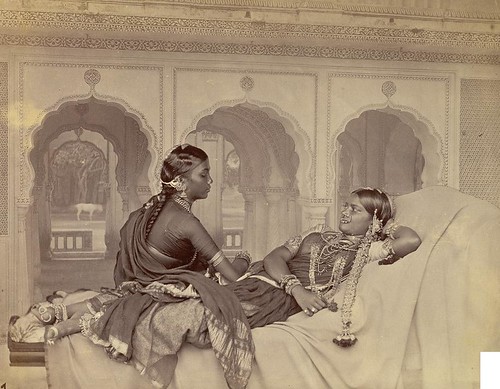
The figure of the tawaif continues to haunt popular culture, but what sent the real ones into obscurity?


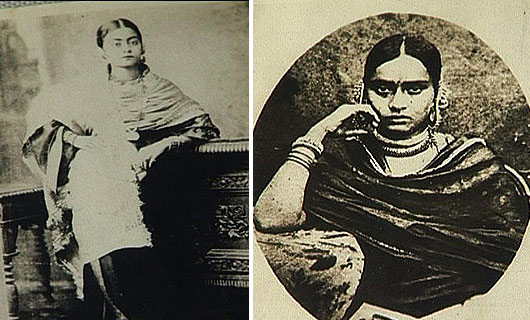
From Umrao Jaan to Pakeezah to Chandramukhi, the figure of the tawaif has been a figure of fascination in the popular South Asian imagination: the bejewelled, sensuous dancing girl with a golden voice – and almost always, a golden heart. To our Hindi-film-overloaded eyes, therefore, it may seem strange for an instant to look upon the black and white images of women who populate The Other Song, Saba Dewan’s film about tawaifs, looking out of the frame at us with a gravitas we do not expect.

But the gravitas is ephemeral. In one revealing moment, the camera pans an old album, with the moving finger on screen stopping at a pleasantly plump face. The grainy voice of an old sarangi player says, “Yeh Rasoolan Bai hain.” The filmmaker asks, “Kya yeh hamesha itne saade kapde pehentin thi? (Did she always wear such plain clothes?)” The reply is brusque and quietly ironic: “Mujra naach toh karna nahi tha. (Well, she wasn’t going to dance the mujra.)”

Rasoolan Bai gave up the mujra – the expressive, sometimes suggestive kathak-based dance that accompanied the tawaif ’s music – in 1948. At the same time that she moved out of her kotha and into a gali ka makaan in Banaras, the woman whose aching songs were perhaps India’s most famous renditions of the thumri stopped performing in her own city. The timing is remarkable. As India and Pakistan entered independent nationhood, the thumri was taken out of the kotha. A musical genre whose very form — intimate, expressive, always sung in a first-person female voice — had emerged from the courtesan’s salon, had, in order to survive in the bright light of modernity, to move into the concert hall, the radio station, the cinema. And in order to be heard in this new world, the tawaif herself had to become a ganewali or – in even more Sanskritised form – a gayika.

The most famous of such successful metamorphoses is that of Akhtari Bai Faizabadi into Begum Akhtar. The courtesan who had achieved fame in her teens became a respectably married lady, even giving up her singing career for years, “only to emerge into the public domain transformed into a national symbol iconic of the courtly musical culture which had shaped her,” writes scholar Regula Qureshi. But the nation exacted its toll. In order to be the voice of a new India, Akhtari Bai had to live a double life – her newfound respectable status was dependent on dissociating herself from every shred of her past, while the power she had over her audience, what independent scholar and historian Saleem Kidwai calls “chemistry”, derived in large measure from that very past.


Saba Dewan’s fascinating film, The Other Song, derives its name from a similar instance of doubling, of a repressed erotic self. Told by a respected Banarasi musician called Shivkumar Shastri that Rasoolan Bai had once recorded a different version of her famous Bhairavi thumri “Lagat karejwa mein chot (My heart is wounded)”, Dewan set out in search of the lesser-known variation. As she asks musician after musician (and later, tawaif after tawaif) if they’ve ever heard the version that goes, “Lagat jobanwa mein chot (My breasts are wounded)”, without success, we begin to see glimpses of a hidden world, a world whose frank sexuality and often joyful bawdiness were pushed deep below the surface, often by its own practitioners. Song after song turns out to have had its lyrics altered to suit ‘respectable’ tastes – from soibe (sleep) to jaibe (go), choli (blouse) to odhni (veil).

The tawaifs of North India (like South India’s devadasis) came from hereditary performing communities. According to historian Katherine Butler Brown, the term tawaif was first used to describe communities of female singers and dancers in Dargah Quli Khan’s Muraqqa’-i-Dehli (1739-41). But it was not until the early 19th century that it became a catch-all term. Even then, Brown argues, before 1857 there was always a distinction made “between elite tawaifs who were highly cultured, highly refined, models of etiquette and masters of performance genres, who might only have had a single sexual patron in their lifetime; and tawaifs who were less talented, less well trained, and thus more dependent on sex work”

BUT AFTER 1857, when British Crown Law came into effect throughout India, all tawaifs were criminalised alongside common prostitutes, with court judgements stating that singing and dancing were ‘vestigial’ activities while their real income came from prostitution. Meanwhile, the rising middle class, “influenced by Victorian values and empowered by colonial law, increasingly dismissed the tawaif as immoral and decadent, and began various moves to ‘rescue’ Hindustani music from them,” says Brown. The campaign for a national music — cleansed of its associations with tawaifs and Muslim musicians — aimed to make it appropriate for middle class women. In a stunning double move, the very processes that enabled ‘respectable’ women to come out of purdah worked to invisibilise the highly skilled, often highly educated, women who had been ‘in public’ all along: the tawaif.

With the decline of the feudal patronage that had sustained the kotha and its arts, many tawaifs explored other options. All India Radio (AIR) in its early days was almost entirely dependent on the ganewalis, as were recording companies: it was tawaifs like Gauhar Jan who were the first gramophone superstars. But in the early 2000s, a skilled singer like Saira Begum (one of the women from tawaif backgrounds that Dewan shot with) gets a recording slot at AIR in Banaras because of a zealous Italian pupil, only to be humiliated with a ‘musical theory’ examination she cannot possibly pass.

As the new guardians of music locked it up and shut the door, women from tawaif backgrounds entered first the theatre company, and later, the movies. “Cinema becomes a part of tawaif history, documenting tawaifi arts we’d never get to see – and also providing a way for the tawaif to reinvent herself,” says Kidwai. “And this reinvention was both on screen and off it. If Hema Malini in Sharafat wears plumes and a tiara to do a mujra, one can’t complain of inauthenticity: many real tawaifs like Siddheshwari learnt to sing in English – even if it was Twinkle Twinkle Little Star!” The tawaif’s remaking of self, as Kidwai points out, could take more radical forms: such as in the case of Nargis, whose mother Jaddan Bai prepared her for a cinematic career by teaching her everything except how to sing. The stardom of Nargis – the ganewali’s daughter divorced from the gana – demonstrated one route by which the tawaif could make it in the modern world. (It is tempting to conclude that this was the necessary obverse of the rise of the playback singer – the disembodied female voice who retained respectability by never being seen on screen.)

Cinema, though, isn’t an accessible career for most women. The two other films in Saba Dewan’s trilogy address more subterranean worlds of female performance. Delhi-Mumbai-Delhi (D-M-D) centres on Riya, who dances in a bar in Mumbai but is from Delhi, while Naach is about girls who dance to Bollywood numbers on massive, rickety stages in the town of Sonpur, between Muzaffarpur and Patna, during the annual cattle fair. For Dewan, the differences between these categories of women outweigh any similarities. Her D-M-D protagonist Riya, from an ordinary working class background, may have gained confidence and decision-making power within her family, but she remains wage labour. “The tawaif was much more her own mistress: the owner of the space, the person who paid the accompanists,” says Dewan.

Whether we like it or not, though, the tawaif remains the imagined reference point. “There is an attempt to recreate the mujra past, mediated via Hindi films,” acknowledges Dewan. “In Bombay bars, the girls wear so-called Indian costume – ghaghra choli, partly because it’s easier to get license for ‘Indian dance’, but also because it fits the audience’s appetite. The man there wants to imagine Rekha dancing for him, at least.” Even the filmic bar dancer draws on the pure tawaif of the 1970s Hindi movie: Tabu in Chandni Bar must remain chaste while working in a bar, just like Asha Parekh in the kotha of Main Tulsi Tere Aangan Ki.

But the relationship between bar dancers and tawaifs runs deeper. Ethnomusicologist Anna Morcom estimates that 80-90 percent of Mumbai bar dancers, “by informal accounts”, are hereditary professional performers from tribes like the Deredar, Nat, Bedia and Kanjar. They have also been the target of a moral campaign eerily similar to the Anti-Nautch campaigns of a century ago. In 2005, a ban on dancing in Mumbai bars made 75,000 such women redundant. It is still in force.

In early 20th century India, it was dance that seemed to lie at the root of moral opprobrium. The tawaif gave up the mujra to acquire respectability as a concert singer or actress. But in a newly-globalised India where ‘Bollywood dance’ is now a legitimitised ‘cool’ activity for the urban middle classes – think NRI/urban weddings, Shiamak Davar classes, TV shows like Boogie Woogie and Nach Baliye, feeding back into films like Dilli-6 or Rab Ne Bana Di Jodi – how does dance re-acquire its immoral connotations when performed by women in bars? That is a new double standard that will take longer to resolve.

From Tehelka Magazine, Vol 6, Issue 44, Dated November 07, 2009

15 November 2009

Rabbit In Wonderland: Paresh Kamdar's Khargosh


Paresh Kamdar’s stunningly evocative film Khargosh (2008) is set in what seems like the perfect small town, all quiet sloping streets, serene riverside idylls and fields of golden wheat. As if in a painting, the bleached whites and dull browns of a dusty north Indian summer are set off by accents of red: crimson flags flutter atop a crumbling stone temple, a rusty lamp juts out from a wall, a scarlet dupatta floats down into a whitewashed school building. But Kamdar is quick to dispel any illusions one might have about accessing some picture-perfect slice of Indian reality. “The school and the ghat are in Maheshwar, on the Narmada; the house is in Vidisha, 45 km from Bhopal; the forest is Borivili National Park – and the dark staircase? That’s a set!” he says gleefully.

The 52-year-old Kamdar has always enjoyed subverting expectations. As the eldest child of a Gujarati family that had lived in Kolkata for five generations, it was assumed he would do a B.Com and join the khandani business. Instead, the teenaged Kamdar accompanied his Bengali landlord, a cameraman, to the sets of Uttam Kumar films. Starting out by holding the star’s cigarettes while he shot his scenes, he grew increasingly fascinated with the world of cinema. “The elevated status of art in Kolkata, especially for a Gujju with none of this in his background, gave it an aspirational quality,” says Kamdar. Bored with college and out to irritate his father, he joined a German class. He was soon part of a young arty circle, doing plays and dreaming of cinema. It was in the Max Mueller Bhavan canteen that he heard of the Film and Television Institute (FTII), and joined to study editing in 1983. “Kitabein toh padh hi rakhi thi, about editing being about sculpting time and all that,” grins Kamdar. “Plus I thought haath ka kaam hai, at least I won’t go hungry.”

After FTII, Kamdar worked as an editor with filmmakers like Nandan Kudhyadi and Kumar Shahani (he won the 1994 National Award for editing Kudhyadi’s Rasayatra, about vocalist Mallikarjun Mansur). He made “unexciting” documentaries for three years, so as to travel in Maharashtra and Madhya Pradesh. His first film, Tunnu ki Tina (1996), a black comedy about a lower middle class Mumbai family “trapped between entrenched orthodoxies and new consumerist fantasies”, was funded by the National Film Development Corporation (NFDC). “But NFDC wouldn’t screen it, so I made a VHS copy and started showing it to critics,” says Kamdar. A screening at Delhi’s India International Centre led Cinemaya editor Aruna Vasudev to push for a premiere at the Berlin Film Festival.

Tunnu’s black humour was continued in Sirf Tumhari (1998), a short about the fantastic secret escapades of a middle class housewife. A long funding crunch, interspersed with teaching, ended with Johnny Johnny Yes Papa (2008), a neorealist film about an unworldly father and a worldly son. But it is with Khargosh that Kamdar has finally been able to make the film he wanted to make, where the narrative – a 10-year-old boy becoming a go-between for two lovers – is secondary. “I wanted to achieve a certain rhythm, a certain sound, an imagery that would create a particular cinematic experience,” says Kamdar. “It’s not realist. It’s subjectively unreal. But I was sure it had an audience.”

Of the three awards Kamdar walked away with at Osian’s Cinefan, it’s the Audience Award he treasures most. This is just a start.

From Tehelka Magazine, Vol 6, Issue 45 Dated November 14, 2009

The New Dadaist


Published in Tehelka magazine:

India's entry to the 2010 Oscars is a charming portrait of the father of Indian films. 

That cinema in India owes a great deal to one Dadasaheb Phalke, most of us are dimly aware. The Indian Government’s award for “lifetime contribution to cinema” is named after him. But very few people in Phalke’s film-mad country know more about the man. So when Marathi playwright and theatre director Paresh Mokashi read Bapu Vatave’s biography of Phalke in 2005, he decided it was a story waiting to be told. And since it was Phalke, it had to be told on screen, not on stage.

Harishchandrachi Factory tells how Phalke came to make his (and India’s) first feature film, Raja Harishchandra (1913), giving us a Phalke more charmingly eccentric than we could ever have imagined for ourselves. “But he had to have been that,” says Mokashi. “Imagine, as a Sanskrit pandit’s son in the 1890s, going off to the JJ School of Art, setting up a photo studio, or apprenticing with a German magician!”

The 40-year-old Mokashi, with a string of immensely successful plays behind him (Mukkam Post Bombilwadi [2003] ran for 460 shows), is known for his vivid brand of sharp, situational comedy. “To treat a serious subject with humour is no joke,” he says, deadpan. So in his film serious things happen, but are handled with a lightness that evokes Chaplin and Jacques Tati, as well as Shankar Nag’s televisation of RK Narayan’s Malgudi Days. We laugh, but there’s a sense that we could cry instead. Our first glimpse of Phalke is in a black top hat, doing magic for a delighted bunch of kids – only to do a real-life disappearing trick as an irate debtor arrives. His return home to a grieving wife and neighbours creates foreboding – before we realise they’re mourning a cupboard he’s sold to fund his new obsession. Even his temporary blindness in 1912 is not allowed to remain tragic: as Phalke lies there with eyes bandaged, someone says with mock gravity, “Your eyes will get cured – what shall we do about your mind?”

Before the success of Harishchandrachi Factory – it’s won awards in Maharashtra, Tamil Nadu and Kerala, and is India’s entry for the Oscars – someone might have asked Mokashi that question. Starting as an actor with Pune’s Theatre Academy, he spent years adapting a Berlin-based realist children’s theatre movement called GRIPS to the Maharashtrian context. He then moved to Mumbai and struggled until 1999, when playwright Ramu Ramanathan and Sanjana Kapoor insisted he stage one of his plays at the Prithvi Festival. In 2005, having become a bankable theatre name, Mokashi decided to make a film. Suddenly, funding dried up.

“A Marathi film with no stars, no songs: I don’t blame them!” says Mokashi, who mortgaged his ancestral home to fund the film, Phalke-style. His cast and crew (all theatre people) swear by him. Disagreements happened – when he decided to use a still frame, or when he urged his actors to underplay scenes they saw as “dramatic” – but Mokashi stood firm. Vibhawari Deshpande, who plays Phalke’s wife Saraswati, describes Mokashi as “scientific, sensitive without being emotional, and totally sure of himself.” Sounds like Phalke.

From Tehelka Magazine, Vol 6, Issue 45 Dated November 14, 2009