4 July 2013

Post Facto - The Marrying Kind: Domestic portraits from east and west

From this fortnight's Sunday Guardian column:
"We tend to talk informally about other people's marriages and to disparage our own talk as gossip. But gossip may be the beginning of moral inquiry, the low end of the platonic ladder which leads us to self-understanding. We are desperate for information about how other people live because we want to know how to live ourselves..." It was with this remarkable train of thought that Phyllis Rose set in motion her absorbing examination of the private lives of five 19th century couples — Parallel Lives: Five Victorian Marriages (1983). Her motives were partly feminist — scrutinising the balance of power and equality within each relationship — and partly literary. 'Literary' not just because at least one half of each couple is a writer — Jane Welsh and Thomas Carlyle, Effie Gray and John Ruskin, Harriet Taylor and John Stuart Mill, Catherine Hogarth and Charles Dickens, George Eliot and George Henry Lewes — but in the wider sense that the act of living involves imposing a narrative form onto our experience. Marriage — and Rose was concerned with the long-term nature of these partnerships, not their legal status — was thus fascinating to the biographer-critic, because it takes the same life experience and gives us two (often contrasting) narratives of it. 
So Ruskin is able to see his failure to consummate his marriage as a choice, and his wife's desire for company as wilful and petty — while Effie sees him as strange and cold, brutal in his refusal to accommodate her normal human desires. Dickens' marriage provides a different sort of example, in which Dickens' own narrative changes. In the early years, Dickens was thrilled with being married: his household was arranged for him, the distraction of romantic entanglements was curbed, he could focus wholly on work – and children seemed only to make him happy. "He enjoyed himself as a family man, the centre of a growing circle of devoted people. He took satisfaction in how well he was able to provide for them." It was only after 15 years that Dickens decided that his wife and he were absolutely mismatched. The amiability and willingness to go along that had made Catherine a perfectly adequate partner now appeared to him as supine acquiescence. He transferred onto her all his dissatisfaction with the marriage, even — in a bizarre but recognisable pattern — the responsibility for her continuing pregnancies."
This column continues on the Sunday Guardian site. Read all of it here.

24 June 2013

Post Facto - Gastro-gallivanting: Culinary capers in Calcutta

My Sunday Guardian column this fortnight:


Dacres lane, Calcutta
n Calcutta in June, you invariably sleep to the sound of rain. Having thumped and clattered its way through the night, it arrives at a civilised pitter-patter by morning. But by then it has already succeeded in waking you up.
The fitfulness of such a morning can be compensated for — as can most things in Calcutta — by food. In this case, by an early expedition to Bentinck Street for the traditional Chinese breakfast, which members of the city's longstanding Chinese community produce and sell by a street corner, at the mouth of a lane called Chhata Gulley. At 7am, the wide stretch of the street around Poddar Court is occupied by a series of fish and vegetable sellers. Displayed on plastic sheets on the ground are the many varieties of summer gourds that grow in Bengal — potol, dhondhol, lau, jhinge, chichinge, uchhe, korola — and the even greater varieties of leafy vegetables — kolmi shag, notay shag, lal shag, palon shag. Amid this proliferation of raw stuffs, we nearly miss the breakfast stalls. Their number has diminished to about five, of which only one makes what to me seemed the highlight: large vats of soup, one with meatballs that seem substantially made of pork, and one with fishballs. A thirty-something woman, with features that are an appealing mixture of Bengali and Chinese, sits on a low seat on the pavement, her skirt hiked up to her knees so she can sit comfortably, spooning out the soup. Two generous-sized meat or fish balls are spooned into each bowl of soup. A sprinkling of chopped spring onions and your 30 rupee breakfast is ready. The fishballs are firm and springy (and thankfully not too fishy), while the meatballs are a little fattier but very tasty. The soup itself is mild, yet flavourful and full-bodied in the way that only good stock can make it: not quite as thin as broth, but neither subjected to the ignominy of thickening with cornflour. Refills of the soupy liquid are free, but we decide to get another meatball each. There are also fish and prawn shuimai, which are not too bad in terms of the thinness of their wrappers, but aren't prettily finished: they make for rather dumpy dumplings.
They ought to have been supplemented by what I have hitherto eaten in Chinese restaurants in both Delhi and New York as 'bao', but what everyone in Calcutta seems to know as 'pao' — large, soft steamed buns stuffed with a sweet and spicy pork or chicken filling. But there were none that morning. There was one (Indian) woman with a small board that advertised them among her wares, but she didn't have any. Instead she offered us chicken momos, which we didn't venture to try — not even to figure out whether they were actually shuimai being sold as momos, which would be an odd reversal of a practice frequent in mid-range Delhi restaurants.
eanwhile in Lake Gardens, the middle class South Calcutta neighbourhood in which my mother's family has lived for years, the superb hot shingaras made by a one-man-show called Swapan da now vie in the local popularity charts with a highly-regarded new momo-stall. "There are a whole lot of northeastern students who have moved into our neighbourhood," said my aunt by way of explanation.
{
The city has always been a place of mixture and substitution, and food is its most active laboratory.
Another afternoon we found ourselves on Dacres Lane, in the office district of Esplanade, where lunchtime sees a flood of low- and mid-level office workers arrive for a piping hot meal. On offer is the now quintessential list of sinful Calcutta snacks whose origins lie in the fusion of British food with the Bengali love of deep frying — fish chop, fish fry, mutton and chicken cutlet. But what Dacres Lane is really famous for is a hot plateful of stew — chicken or mutton in mild gravy, with a couple of carrots and a big piece of potato, served with two hunks of bread to sop it all up. There is something quite remarkable about the fact that something as recognisably European in origin is a street food in Calcutta, available for fifty rupees. "Our food has pepper, not red chilli powder," said the friendly Bubai, frontman at the popular Chitto'r Dokaan. And yet their chops and cutlets are always served with a very Indian accompaniment — slices of raw onion and a fiery chutney of some sort, or else the super-pungent Bengali mustard sauce known as kashundi.
The city has always been a place of mixture and substitution, and food is its most active laboratory. As we stood around our small table on Bentinck Street, eating hot spoonfuls of soup, our companions were a group of Manipuri students and two little local Chinese children. The little boy downed his soup somewhat angrily and then wandered around with his head butting out, like a bull looking for something to knock down. The little girl, his elder sister, had rejected the boring Chinese items on offer in favour of a large plate of kochuri and aloor-dom.

6 June 2013

Actor, auteur and the bhadralok’s fearless agent provocateur: Rituparno Ghosh

An obituary I wrote for the Sunday Guardian:

Rituparno Ghosh’s films might have been derided by some as “middle-class”, but he was exceptional in the sensitivity and attentiveness with which he depicted domesticity, relationships and gender politics, writes Trisha Gupta
TRISHA GUPTA  1st Jun 2013
Rituparno Ghosh with Deepti Naval in a still from Memories of March
ituparno Ghosh's cinematic oeuvre — he made a remarkable 19 features and one short in a career of 21 years, as well as totting up four acting credits – was never credited with greatness. Serious film aficionados, in Bengal and outside, were in any case unwilling to grant that label easily to any Bengali filmmaker after the end of the Ray-Ghatak-Sen era. Also, his films, at least until the mid-2000s, were perceived as being middle class, and thus somehow automatically middlebrow. Later, of course, there was his so-called "lobh" (greed) for Bollywood, casting Aishwarya Rai in Chokher Bali, Abhishek Bacchan in Antarmahal, Amitabh in The Last Lear and even Bipasha in Shob Charitro Kalpanik, a fact which made his artistic credentials suspect (with some reason), while giving him unprecedented leverage in the national media. There was also the additional criticism that his films weren't 'cinematic', that they seemed like 'filmed plays'. In a telephone interview I did with him in 2008, he responded to this criticism with typical fair-mindedness: neither delusional nor self-deprecatory, outspoken but not defensive. "People have this simplistic idea that if you shoot outdoors it becomes cinema, and if you stay indoors, it's a play. By that criteria, only Kurosawa is cinema, not Bergman. I'm not saying I'm Bergman, or that Raincoat is great cinema, but I do find it a little undemocratic to not acknowledge my kind of cinema as an equally legitimate form."
Thinking about his films now, I feel as if the closed-door chamber dramas, the 'talky' films set in middle-class Bengali milieus that he made with such consummate ease, share more with television than theatre. Rituparno never actually made films for television (though he hosted two popular chat shows on Bengali channels: Ebong Rituparno on ETV Bangla and later Ghosh and Company on Star Jalsha), and in fact the one thing his films have been credited with is bringing back middle class Bengali audiences to theatres in an era when the lowbrow kitsch on offer had driven them away. But unlike a lot of filmmakers, Rituparno never turned his nose up at the television format. In the 2008 interview with me, he spoke twice of being grateful to Doordarshan, crediting its wide-ranging Hindi and Bangla programming for his not having grown up "judgemental about cinema", and for opening up Ray's repertoire to him in a way that it had not been available before.
But it seems to me that television for Rituparno was not just about access to cinema, but about a viewing experience, a sensibility. In a recent interview, he has said "television facilitates a more intimate viewing, and a more intimate connection with the characters". It was watching Jalsaghar on television that foregrounded for him the decaying zamindar's relationship to his mansion, and became the kernel that led to Unishe April's central focus on an ageing dancer (Aparna Sen) and her house. (The daughter (Debashree Roy) "came much later", and though the film was read as an adaptation of Bergman's Autumn Sonata, Rituparno always said he had not watched it then and never managed to watch it later because "a sort of mental block developed".)
{
The truly remarkable thing about Rituparno's films for me has always been his ability to create layers of empathy, to see why people are where they are, and not to mock them for it.
It was no accident that so many of Ghosh's films unfold within the four walls of a house. The large zamindari mansion appears over and over, a crumbling hard-to-maintain remnant in Bariwali (The Lady of the House), a just-surviving symbolic thing that might still come in useful by being mortgaged in Utsab (The Festival), a stifling patriarchal space in its supposed glory days in Antarmahal. But the space of the home is something he was attentive to in every film, and attentive in a way that few men are: the gulf between the interior and the exterior, the joys of domesticity as well as its possibility for suffocation — these are themes that Ghosh seemed effortlessly to understand and gravitate to. Perhaps they came to him along with the women he created on screen, whose relationships to space he was able to delineate with such precision and sensitivity. I think of Rituparna Sengupta's Romi in Dahan, discovering to her dismay how vast the social distance was between her Anglophone parental home in Sunny Park and her in-laws' home on Golf Club Road, finding that one "accident" means that she is no longer to go beyond her balcony, that her right to the city has been taken away. Or of Mamata Shankar in Utsab, listening anxiously for the sounds of conversation between her son and her niece, constantly watching out for the casual slide into intimacy that the secret spaces of the ancestral house she knows can enable. Or even Aishwarya Rai in Raincoat, somehow managing to be half-convincing as the stuck-at-home housewife, with Rituparno's ever-attentive detailing — a bra-strap peeking out from Rai's sari blouse — creating the sense of somehow domestic deshabille.
s a filmmaker in India today, Rituparno was remarkable for having written every single one of his films (barring the few that he adapted from Tagore – Chokher Bali, the rather lovelyNoukadubi, or from other people's novels, like Dahan), and for me it was his writing, his ability to capture conversation – especially conversations between women, unfailingly attentive to the nuances of generation, class and educational divides — that made the best of his films such a joy.
Several obituaries now have described Rituparno as having travelled from respectful conformism to blatant transgressiveness, and certainly in recent years, he made a deliberate attempt to open up the questions of gender and sexuality that he had allowed to remain dormant earlier, not just as a filmmaker (Chitrangada) and actor (Aar Ekti Premer Golpo, Memories in March) but also in his stunning personal appearances in female attire. These films often seemed self-indulgent, especially because one knew he was playing some version of himself, but perhaps it was a phase he had to work through. But sex had always been a presence in his films, challenging a deep-rooted Bengali middle class hypocrisy where sex and money must never be mentioned, though everyone knows they're operating everything behind the scenes. Sex as negotiation tactic (Dahan), as patriarchal imposition (Antarmahal), as youthful frisson or remembered yearning or security (Utsab), sex as bridge or breakdown (Dosar), even sex as thoughtless indiscriminate surrender to your body: sex in Rituparno's films was never "just sex". And yet it was not soppily covered over by romance, it was allowed to be messy and dangerous and spilling beyond the boundaries of propriety. The presence of real sex — even if heterosexual — made his films non-conformist long before this last phase.
The truly remarkable thing about Rituparno's films for me has always been his ability to create layers of empathy, to see why people are where they are, and not to mock them for it. Even a Dahan, with its clear narrative contrast between different kinds of women, cannot become in Rituparno's hands a linear, liberation narrative like Dor. There is a lucid call for the pleasures of going it alone, but there is also an understanding that everyone makes compromises, and that sometimes compromises are the only way to live and love.
His non-judgemental style could extend even to crime. "In an ordinary detective story, it is the hunter and the hunted – there's no relationship between them except of wit," he once said. "But how can you be so unemotional about a person you are practically obsessed with?" For long my favourite Rituparno film was Shubho Mahurat, an Agatha Christie adaptation with a superbly twinkly Rakhee as a Bengali Miss Marple. I'm glad there's a Byomkesh Bakshi film to look forward to.

27 May 2013

Post Facto - The festive commons: Celebrating community in ‘gated’ Delhi

Last fortnight's Sunday Guardian column:


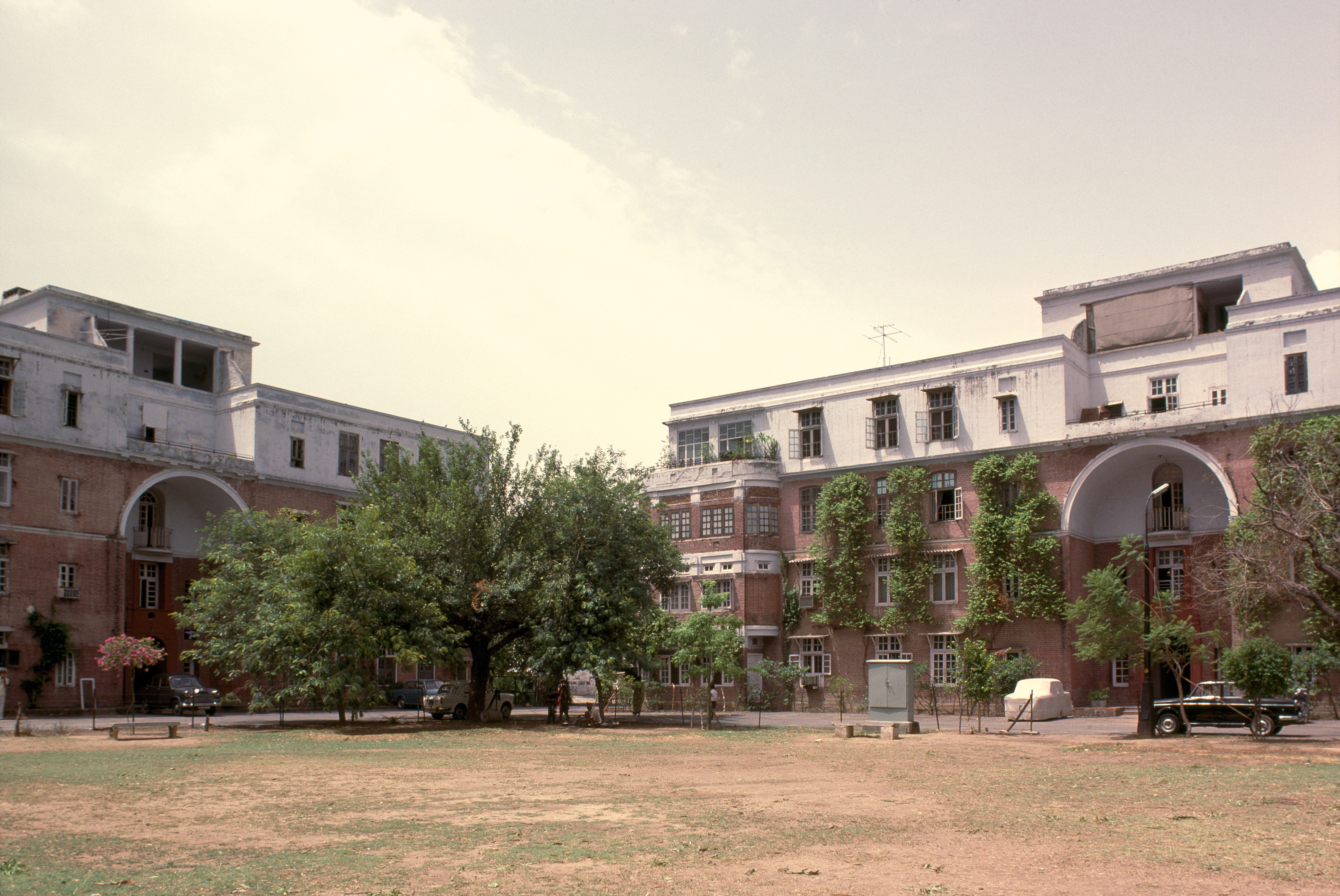
A view of Sujan Singh Park

Last month, the good folks at The Attic organised a marvellous week of evening events under the rubric of a Baisakhi festival. The most incredible thing about these events was that they were held outdoors, on a small stage that had been erected in the 'park' part of Sujan Singh Park. Built by Sir Sobha Singh, who was the primary contractor for the building of New Delhi (and the father of Khushwant Singh), Sujan Singh Park is among the loveliest neighbourhoods in Delhi. The buildings are set around a tidy little quadrangular park, their tall red brick facades and double-storey entry arches an elegant container for the spacious old high-ceilinged apartments within.
Listening to Madan Gopal Singh sing of Heer and Ranjha in this milieu was marvellous, especially because Singh never just sings — he annotates each section of the Punjabi love legend he sings with inimitable commentary that is always deeply informed and often very funny, in his characteristic poker-faced way. "This is a badhai, which as you know means 'You increase my happiness by becoming happy with me.'" Or later, "Heer and Ranjha only think of consummating their relationship on the day that she is married to another man. This is typically Punjabi. But they don't manage it. And this, too, is typically Punjabi."
But what made it even rarer was the sense it managed to conjure up of public-spirited participation. When we arrived at 6pm, there were rows of chairs laid out on the lawn, and some mattresses closer to the stage. At the back was a small counter with a supply of tomato and cucumber sandwiches, cups of hot chai and the tastiest, most gingery gur pare I have ever eaten. The music and the snacks were both free. (I took three gur pare with my tea, and by the time I went back to get a second helping, they had all — unsurprisingly — been consumed.) The introduction before the music was enjoyable, too. The compere half-laughingly referred to a taxi driver called Lucky who told her that his grandfather had told him there were no love stories in the Punjab, because all lovers simply died. Then a lady called Reena Nanda came on, because her mother was from Jhang, where Heer was from. After the music, the audience was urged to go and take a look at the small display that had been put together of photos of the tomb of Heer and Ranjha. When we walked up to the images, there was an old baba sitting there, who'd apparently been informally invited by one of the organisers who'd met him somewhere. The baba blessed us with a puff of smoke from a chillum.
I was so charmed by the whole thing that I decided I had to come back for another event before the festival ended. That turned out to be even more fun. Madan Bala Sindhu and her troupe were presenting folk songs from Punjab. They sang songs for every occasion you could think of, from bidaai songs that bid farewell to a daughter after her marriage, to children's songs of play. The highlight for me was a song that mimicked a quarrel between a woman and a nosy neighbour who insists on knowing who her male visitor is. Sindhu's company, sadly, has a solitary adult man to sing all the male parts, but it has an assemblage of wonderfully robust-voiced women and rather game teens, who acted as baraatis and even as fake bride and grooms to give the wedding songs something of a ring of authenticity.
The performance ended with a series of appropriately festive Baisakhi numbers, and space was cleared to let audience members join the troupe in an impromptu dance. And as if that wasn't enough by way of participatory festivities, a hot langar meal of dal, roti and gobi ki sabzi followed, with youthful Sujan Singh Park-ers ladling out food to people who had sat down in neat rows on the grass.
It was an event that seemed beautifully rooted in a community and neighbourhood, while being remarkably open to the enthusiastic outsider. The only other times in Delhi that I've attended things that have a similar feel are Durga Puja gatherings — though only the smaller pujos still retain something of a sense of locality — and a Ramlila I went to in Mehrauli last year, where people in the audience seemed to know the people on stage. Both those sorts of communities, interestingly, are created around a religious event, and it is worth thinking about whether that immanent religiosity excludes any sorts of people — while of course drawing in many. The Attic's Baisakhi Festival, while it adopts the Sikh practice of langar, also happily brings in a pir to bless people. It was very much about the culture of Punjab, but it seemed to welcome the rest of Delhi in with open arms. In a city in which the word 'gated' has come to be the most commonly used one ahead of the word 'community', one feels extraordinarily grateful for evenings like these.
Published in the Sunday Guardian.

23 May 2013

Life's Little Ironies: the stories of Upendranath Ashk

Hats and Doctors: by Upendranath Ashk 
Translated by Daisy Rockwell 
Penguin, 240 pages, Rs 299
A review-cum-interview I did for Mint Lounge:

Upendranath Ashk (1910-96) is one of Hindi literature’s biggest names, a writer whose oeuvre spanned over a hundred volumes of fiction, poetry, memoir, criticism and translation. Hats And Doctorsoffers the English reader the first proper glimpse of Ashk’s very particular sensibility: profound yet light-hearted, satirical yet deeply engaged.

He unravels the ironies of his protagonists’ lives with a wry humour: sharp as a scalpel, yet somehow understated. In some stories, likeWho Can Trust a Man?, this is achieved through a glancing narratorial style: People are bereaved, remarry, undergo all kinds of tumult, seemingly without great emotional labour. In others, like In the Insane Asylum, wryness emerges from tragedy.

These stories range as widely across 1940s-1960s India as Ashk himself did, from the Bombay film industry to Kashmir, and across the north Indian towns he knew well: Delhi, Lucknow, Jalandhar, Allahabad.

The milieus are delightfully detailed: if Brown Sahibs gives us a marvellously credible sociology of Allahabad’s rickshaw pullers and its bureaucrats, the title story contrasts the ills of Lucknow’s allopaths and homoeopaths.
Upendranath Ashk. Photo courtesy: Neelabh

Excerpts from an interview with Daisy Rockwell, Ashk’s translator and biographer:


How did you come to be interested in Ashk’s writing?
In graduate school at The University of Chicago, I did a lot of reading on Hindi novelists. One writer compared Ashk’s novels to (Marcel) Proust’s Remembrance of Things Past. This intrigued me and I ended up writing my PhD thesis on Ashk’s six-volume novel cycle Girti Divarein(Falling Walls). There are indeed many similarities with Proust, but Ashk never actually read his novels.
You wrote a biography of Ashk for Katha Books in 2005. Tell us a little about Ashk’s early life.
Upendranath Ashk: A Critical Biography was based on my PhD thesis. Ashk was born Upendranath Sharma, the second of six sons in a Saraswat Brahmin family in Jalandhar. His father, a station master, was an alcoholic with a violent temper. Girti Divarein is semi-autobiographical, and there are many riveting passages about the impact of Ashk’s father’s violence on the family.
Ashk has said that his father wanted his sons to grow up to be the best at whatever they chose to do. He was just as intent that they learn English and Sanskrit well as he was that they become first-class pehelwans (wrestlers). Ashk and his Bhai Sahib, who became a dentist, failed miserably at this second task, but some of the other brothers did become top-notch pehelwans. After college, Ashk escaped his family, and what he saw as the provinciality of Jalandhar, to make a start for himself as a writer in Lahore.
You met Ashk in the last years of his life. What was it like?
It was terrifying. He was very ill, but quite sharp. I think he believed that researchers should come armed with lists of numbered questions. I had in mind a more organic process of discovery which he didn’t really understand. He wanted me to come to see him every morning to ask these questions that didn’t really exist. His family thought these daily visits were not good for his health, and I’m sure they were right, but his word was still law in the house. So I’d spend the afternoons coming up with new questions, dreading what the morning’s session might bring. Sometimes he would berate me and send me away. There was no knowing what would happen.
It’s fascinating that Ashk started by writing in Punjabi and then Urdu, before shifting to Hindi. Was the choice a difficult one? What did it mean for him as a writer, and for the Hindi-Urdu divide in general?... [INTERVIEW CONTINUES]
Read the whole of my interview with Daisy Rockwell on the Mint site, here.

13 May 2013

Film Review: Gippi


It really is a bit hard to believe that Gippi is a Karan Johar production. No, it’s not surprising that the first Bollywood film about 14-year-olds comes from the man who arguably first imported the American high school fantasy – a la Archie Comics’ Riverdale – into our cinema, with Kuch Kuch Hota Hai in 1998, and also gave us last October’s updated version: Student of the Year.

What’s surprising is that unlike the perfectly-coiffed glossy creatures masquerading as schoolkids in Johar’s films, his production of Sonam Nair’s Gippi has a school that actually seems like a school, and kids who mostly look and behave like kids. Most surprising of all is its heroine. Admittedly, the plump child (who might have something to do with Johar’s own past, if his interviews are to be believed) has figured occasionally in his oeuvre: but either he grows up to be Hrithik Roshan, as in Kabhi Khushi Kabhie Gham, or he’s relegated to being the nerdy nice boy who’s still sadly single eight years after school, as in SOTY. It’s pretty remarkable, then, that Nair’s directorial debut not just allows its plump protagonist to be the film’s heroine, but actually celebrates her refusal to be made over.

The plot is uncomplicated but the things it deals with are refreshingly new on the Hindi film screen. Gurpreet Kaur, better known as Gippi, is a regular 14-year-old with regular issues, stemming mostly – but not only – from her slightly more-than-regular weight. Her school uniform’s grown too tight for her over the summer, she feels fat and unattractive and a bit of a klutz.

Add to all this the problems of puberty: growing breasts, getting your period, acquiring a bra – and falling in love. But what makes everything worse is that whenever Gippi has an embarrassing moment – her chair tipping over or her buttons popping open or her chemistry experiment blowing up in her face – her Little Miss Perfect classmate Shamira is waiting around the corner, ready to rub it in. And then Gippi finds herself competing for school elections against Shamira…

What’s ironic is that Shamira – the slim, high-achieving, fashionable rich girl – is really a version of the heroine in a Kuch Kuch or SOTY. Except that instead of being a Poor Little Rich Girl that we’re supposed to sympathise with, Shamira’s version of Little Miss Perfect is here cast as nastiness personified. Perhaps it shouldn’t be surprising, then, that Jayati Modi’s rather-too-shrill attempts to bring Shamira’s excessive villainy to life are responsible for the falsest notes in the film: especially her cruel outburst against Gippi at the party.

The only time Shamira seems somewhat believable is during the climax, when the film decides to turn around and give us an insight into the pains it takes to maintain her self-anointed heroine status. “I haven’t eaten ice cream for three months,” she declares in a hilarious self-pity speech. “Even my goddamn socks have to be perfect!”

But if Shamira is a cardboard cutout, Gippi and her friends are endearingly recognizable – even if they’re types...

My review of Gippi continues. Read the whole review here, on Firstpost.