The second instalment of my TVOF column Shelf Life, in which I look at literature through the prism of clothing.
From coveted possession to unfulfilled desire, jewellery has had a starring role in fictional women’s lives.
There is something brilliantly non-functional about jewellery. Clothes, no matter how attractive, always also serve to protect our bodies from heat and cold, rain and sun. Jewellery, in contrast, is so wholly useless that that fact has been enshrined in the English language: it is, by its very nature, ornamental.
Or is it?
Humans have a way of imbuing the things we make with meaning, and jewellery seems right at the top of the symbolic value heap. We will never know exactly what the 46,000-year-old kangaroo bone nose ornament found in Australia in 2016 meant to its prehistoric wearers, or what powers were attributed to the 75,000-year-old shell beads discovered in South Africa's Blombos Caves in 2004. What we do know is that we've travelled some distance from those likely gender-neutral beginnings.
As societies grew more complex, jewellery increasingly became something women wore. That gendered cultural history runs alongside a socio-economic one, in which women are pushed increasingly out of the public sphere into the domestic, private sphere of unpaid labour. In a world in which upper- and middle-class women didn’t have their own money (and were not allowed to earn it), jewellery was often the only financially valuable item a woman possessed—something that could be exchanged for money, provide a woman security when the patriarchal family did not.
Sudha Koul’s The Tiger Ladies, an elegiac memoir of growing up in Kashmir, describes how Kashmiri Pandit weddings involved fathers giving their daughters solid gold ear ornaments called dejahor, so long that they hung “all the way down to their nipples”. Appalled at her as-yet-unpierced upper earlobes, Koul’s grandmother (Dhanna) hopes she might yet restore her modern grandchild to the way of tradition by explaining the socio-economic purpose of jewellery: “When women needed money, or when their daughters got married, they would cut off one dejahor, sell it, and make two of the other one. The size was the same, but it was hollow inside and no one would know that they had troubles.”
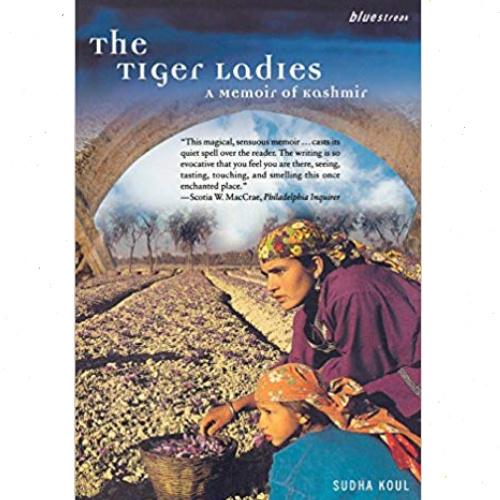 |
| The Tiger Ladies by Sudha Koul |
Dhanna’s ear ornaments remained solid till the end; it was her husband's Lahore University gold medal that was melted down to make ornaments for their daughters (“The fact that he stood first was enough—they knew it and everyone else knew it”). But few marriages are as well-adjusted, few households as equitable. And where there is familial strife, jewellery is frequently at its centre. Late 19th to mid-20th century Bengali literature is filled with women (especially widowed old aunts) guarding their jewellery from rapacious relatives: from Leela Majumdar’s children’s classic Padi Pishir Barmi Baksho (Aunt Padi’s Burmese Box, also a 1972 film by Arundhati Devi) to Shirshendu Mukhopadhyay’s Goynar Baksho (made into a 2013 film by Aparna Sen).
Hearts Made of Stone
The woman obsessed with protecting her jewels appeared in a much darker register in Rabindranath Tagore’s 1898 story Manihara, translated as The Lost Jewels. The horrific vision that ends Tagore’s tale—and Satyajit Ray’s film version, since it forms part of Ray’s 1961 triptych Teen Kanya—is the wife as a ghostly skeleton, whose “bones glistened with gold and diamond ornaments”.
The female ghost who preys on unsuspecting men is an old folktale trope from Kashmir to Japan. But Tagore is no simplistic misogynist. The narrator of Tagore’s tale pours scorn on Phani Bhushan for belonging to a “new race of men”, so without “a trace of masculine barbarity” that he “was quite incapable of saying bluntly to his wife, “Dear, I’m in need of money, bring out your jewels.” But he has also told us how things came to this pass: because the misguided Phani Bhushan demanded nothing from Mani Malika—he only gave, and “imagined that by giving, he would receive”. “The wife had no particular fault, yet the husband was not happy. And so he went on pouring diamond and pearl jewellery into the cavity of her heart, thereby filling her iron safe but leaving her heart as empty as ever.”
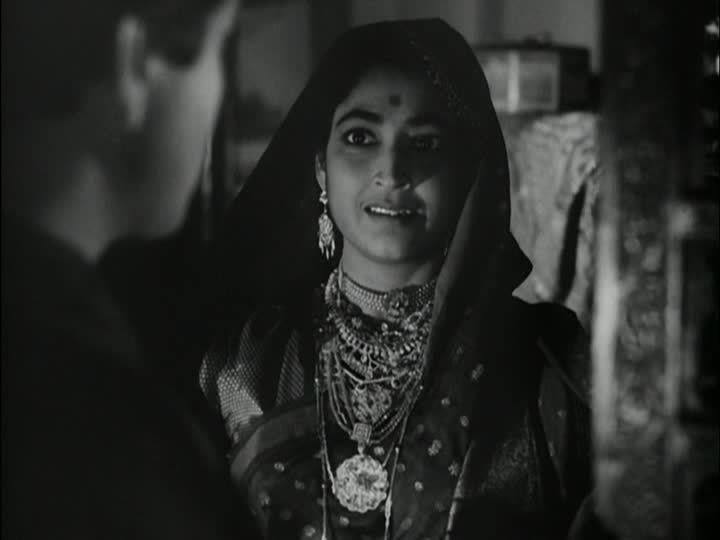 |
| A still from the film adaptation of Tagore's story Manihara, which is part of Satyajit Ray’s 1961 triptych Teen Kanya |
Not Quite a Girl’s Best Friend
In two famous European stories, jewels are used to pillory women's desires for other lives, other loves. If The Earrings of Madame De is about its married heroine's fickleness, Guy de Maupassant’s famous 1884 story, The Necklace is a brutal tale of comeuppance for a pretty woman who wallows in self-pity because she has “no dresses, no jewels, nothing; and these were the only things she loved.” The necklace she borrows for one grand party becomes a lifelong noose around her neck—and her loving husband's.
Indian fiction seems to have been more forgiving of the unhappy wife, perhaps because it contains few loving husbands. To end on a classic example, think of the tragically neglected Choto Ma of Bimal Mitra’s Saheb Bibi Golam, who became Meena Kumari’s Chhoti Bahu in Guru Dutt’s classic 1962 film. Half-mad with loneliness, she accosts her dissolute zamindar husband, asking what she should do while he is entertained by his tawaif mistress. His response cruelly suggests the dispensability of both her jewels and her feelings. “Gehne banwao, gehne tudwao,” he sneers. “Get jewellery melted, get new jewellery made.”
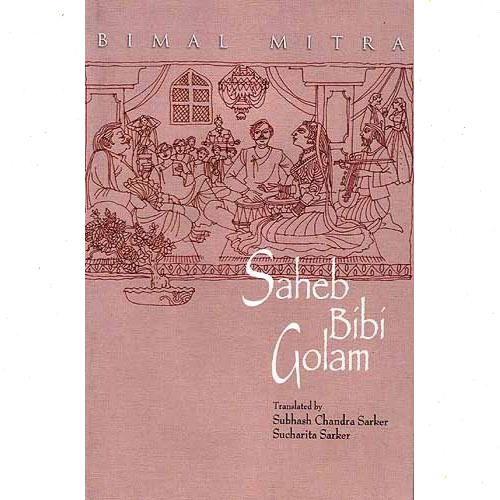 |
An English translation of Bimal Mitra's Bangla classic, Saheb Bibi Golam
|
Perhaps, in the end, that is what makes jewellery such a powerful fictional symbol. It stands in for money, and somehow that means people keep trying to make it stand in for love.
Published in The Voice of Fashion, 6 Aug 2019.