5 May 2014

Not Papered Over

Not papered over
40 years old today, Kora Kagaz remains a powerful portrait of cracks in a marriage.

Sometime last week I stumbled upon Kora Kagaz playing on TV. So unusual did the film feel - powerfully emotional yet largely shorn of melodrama; a serious subject dealt with seriously, yet far from being a studied 'art' film - that I watched straight through till the end. It turns out that Kora Kagaz released on 4 May, 1974 - exactly 40 years ago today. In an industry that still invariably prefers its films to end at the mandap, it remains a rare portrait of the attrition of a marriage.

Some truly great films have been made about troubled marriages: John Cassavettes' astonishing, brutal masterpiece A Woman Under the Influence released the same year as KK, Ingmar Bergman's superb Scenes from a Marriage a year before that, in 1973. More recently, Ryan Gosling and Michelle Williams brought such searing honesty to their marital breakdown that Blue Valentine (2010) was painfully hard to watch.

In contrast, Kora Kagaz was pitched at a mainstream Indian audience, for whom separation and divorce was taboo. In some ways, that balancing act is what makes it interesting. It is a grown-up film, one which doesn't shy away from depicting sharp words or ego clashes, or the passive-aggressive behaviour of one partner that keeps resentment simmering in the other, waiting to boil over in a terrible tragic denouement. And yet it was No 22 at the 1974 box office and won a National Award for "Feature film with mass appeal, wholesome entertainment and aesthetic value". Kalyanji-Anandji got a Filmfare Award for its music, and Jaya Bhaduri's understated, affecting performance won her the second of three Filmfare Best Actress awards.

Like Abhimaan (1973), also starring Bhaduri in a narrative about marital breakdown, the film's central conflict stems from the husband's prickly sense of self-respect, or - depending on how you look at it - his profound insecurity, aided by a childish uncommunicativeness. KK was a remake of the iconic Bengali film Saat Pake Bandha (1963), itself adapted from Ashutosh Mukhopadhyay's novel. (Mukhopadhyay's work was popular with Bengali directors, and three got remade in Hindi: Charachar as Safar, Deep Jwele Jaye as Khamoshi and Ami Se O Sakha as Bemisaal) As Archana, Bhaduri had a tough act to follow: Suchitra Sen's impeccable depiction of the heroine's transition from disbelief to anger to hurt - and hurtfulness won her Best Actress at the Moscow Film Festival. Unlike the irreducibly glamorous Sen, however, Bhaduri played the role in a lower key, replacing Sen's hint of arrogance with a quieter, stubborn air of waiting it out.

Of course, Kora Kagaz, like SPB before it, makes it quite clear that it is the woman for whom a marital breakdown feels life-altering. So though Archana's separation from Sukhendu/Sukesh is followed by a First Class First MA and a teaching job, her heart is not in it: she would much rather be having her own children than teaching those of others. An older colleague might congratulate Sukhendu/Sukesh on having a high-achieving student for a wife, but the film makes clear she must be a wife first.

Within this social world, it is Archana who is expected to make adjustments, she who's seen as having failed to save her marriage. Genuinely concerned though she seems, Pishi/Phuphi, the widowed old aunt who urges Archana to be the calm-headed one if her husband isn't, can sound to our ears like a sexist busybody. For she recognises the errors of her nephew's ways, but barring once, she does not chide him - instead, she appeals to his wife's better sense. Because, of course, men don't have any.

At one level, you could say KK doesn't depart from the female character types of countless Hindi films. In this schema, Archana would be the bade baap ki good-looking beti used to having her way, her mother the shrewish wife dominating the helpless, good-hearted husband, and Phuphi the sacrificing mother figure who suffers in silence. But KK doesn't quite fit that bill, because its characters aren't ever that black and white: the young bahu is really quite adjusting, the mother who keeps putting her son-in-law down with references to his salary doesn't actually wish him ill, and Phuphi does occasionally speak up and take decisions.

The changes from the Bengali to the Hindi version are telling. KK does away with the Rajasthan-Banaras honeymoon, so appropriately integral to the Bengali marital romance. The Hindi version also contains more efforts at reconciliation: Archana rushes to the station to find Phuphi first, and only then confronts Sukesh; Sukesh tries to visit Archana but is turned away by her brother. And unlike in SPB, where a "mutual separation" is first mentioned by Archana (and greeted with shock by Sukhendu), in KK it is Archana's brother who initiates the process.

On the other hand, KK does not have Sukhendu's colleague blame Archana for "wasting a life", as SPB did. But perhaps that is only because the Hindi version does not allow for any 'wasted' lives. Where SPB ended with Archana vowing herself to a life of solitude, Kora Kagaz lets the estranged couple re-unite at that most romantic of cinematic locations: the railway waiting room. Before you judge that re-written ending as a cop-out, let me say this: would you really rather have your heroine spend a solitary lifetime 'atoning' for her 'bhool', or have a happy ending in which the man takes his fair share of the blame before reaching out to re-build a relationship? Sometimes, just sometimes, Hindi cinema can surprise you.

Published as my Mumbai Mirror column yesterday.

29 April 2014

It's all about English-vinglish

Last Sunday's Mumbai Mirror column:

In its zeal to appear aspirational, Bollywood has stopped adapting stories from regional languages.

With 2 States, four of Chetan Bhagat's five novels have now been adapted into films in Hindi, a language in which they were not written. That fact must mean something. The question is - what? 

Barring the first - 2008's abysmal Hello, based on One Night @ The Call Centre, which is apparently due for a sequel called Hello 2 in 2014 - the other three films have done well for themselves. Raj Kumar Hirani turned Five Point Someone into Three Idiots, among Bollywood's highest grossing films ever. The 3 Mistakes of My Life was adapted into last year's much-talked-about Kai Po Che. And 2 States, starring Arjun Kapoor and Alia Bhatt as Bhagat and his wife, is doing fine, too. 

Bhagat has made a career - an admirably self-propelled one -- out of easy-to-read, consciously non-literary novels that have won him vast readership. Each of his books - priced deliberately low -- has sold close to a million copies, making him an unprecedented phenomenon in Indian English publishing. Most of Bhagat's admirers are people who wouldn't otherwise call themselves readers: they might find literary English daunting, or simply prefer television or movies. The author Amitabha Bagchi once said he had met people who'd read only two English novels, Anurag Mathur's The Inscrutable Americans and Chetan Bhagat's Five Point Someone. 

Given the stupendous popularity of Bhagat's books, the fact that Bollywood has zoomed in on them is probably not surprising. But is there more to Bollywood's choices than that commercial calculation? 

A recent article in The Guardian describes Bhagat's characters as "emerging twenty-something urbanites trying to better themselves in the callcentres and academies of a liberalising India, while mixing freely with the opposite sex for the first time." (Note also The Guardian's convenient equating of call-centre workers with those who attend India's IITs and IIMs.) 

In the same article, Bhagat says his readers "may speak in English but they don't think in English" and he uses their sort of Indian English ("a bit funny, because they are using Hindi grammar") for his dialogue, "because it has to sound real". But while his readers may well, as Bhagat says, include the man who frisks him at the airport, "constables, drivers, the class of people you would never associate with reading an English book," his books, at least so far, have not been about them. 

It seems quite clear to me that Bhagat is doing here what he loves to say he does: bridging a gap. But he bridges that gap between his characters and his readers not by creating dialogue that sounds the way his readers might speak, but by doing something quite different: writing dialogue that sounds like his readers might aspire to sound. In The 3 Mistakes of My Life, for example, his characters use a slangy, American-inflected English that certainly doesn't "sound real" for Amdavadi locals outside of IIM. "Screw that, you were out of form, man," says Omi to Ishaan; "F**k your statistics, man," says Ishaan to Govind. 

Perhaps one reason why Bhagat's books are such a Bollywood favourite (other than the instinct to go with the tried-and-tested) is precisely the socio-economic aspiration they represent. The aspiration to read in English is tied to the aspiration to be of a certain class, to have a certain kind of exposure to the world. By reading a Bhagat book, you can enter the ostensibly English-speaking elite world of IITs and IIMs, without having to wade through any high-faluting literariness. By watching a Bhagat film, you can go one better - you can enter that English-speaking world, via Hindi. 

Perhaps that is also what explains the strange fact that all the contemporary Hindi film adaptations you can think of are of novels or short stories written in English. Karan Johar has bought the rights to Amish Tripathi's The Immortals of Meluha. The more adventurous directors, too, have stuck to English. Vishal Bhardwaj moved on from Shakespeare to Ruskin Bond, adapting two of Bond's short stories into The Blue Umbrella and Saat Khoon Maaf. Ajay Bahl adapted Mohan Sikka's story 'The Railway Aunty' into the noir BA Pass. Anurag Kashyap has gone the non-fiction route, using S Hussain Zaidi's book as the basis of Black Friday and now historian Gyan Prakash's book Mumbai Fables for Bombay Velvet. 

Of course, the other really simple reason for this is that most contemporary Hindi filmmakers, like the rest of the metropolitan elite, don't read books in any language except English. Our ability to engage with Hindi or Bengali or any regional language is fast becoming limited to the oral. So the only Hindi texts that get adapted by Bollywood are films. So we remake Agneepath, we remake Chashme Buddoor, we remake Don. Actually, when you think about the classic films we're particularly intent on cannibalising, they're often adaptations of books - Umrao Jaan was based on Mirza Hadi Ruswa's Urdu novel, Sahib Bibi aur Ghulam on Bimal Mitra's Bengali novel, Devdas on Sarat Chandra Chattopadhyay's novel, also in Bengali. 

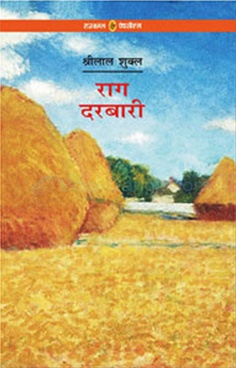
Now, apparently, no-one in script-starved Bollywood even dreams of adapting from Hindi or Bengali or any other language, neither classic nor contemporary. My own reading of Hindi literature is almost nothing, but even I know that a Raag Darbari, a Dil-o-Daanish or a 'Dilli ki Deewar' (by Shrilal Shukla, Krishna Sobti and Uday Prakash respectively) is crying out for adaptation. But wait, their subjects are too rural, too dated, or too poor for Bollywood. We'll simply have to wait until Chetan Bhagat finishes his rural India book.

Published in the Mumbai Mirror.

27 April 2014

Picture This: Different Tyrannies

Nisha Pahuja's new documentary tracks young women through two Indias: a beauty pageant and a Hindutva camp. (This month's BLInk column.)
Durga Vahini camp leader Prachi Trivedi addresses a group of girls

Nisha Pahuja’s documentary The World Before Her, slotted for a 25 April release by PVR, will now hit cinemas only in June. The delay is a pity, because the film helps lay out the choices before Indian women, in ways that no party has articulated, but that form our everyday political matrix. Some would say, correctly, that Pahuja maps two extremes, and that most women stand somewhere in the middle. But TWBH presents the poles through real, believable, often conflicted characters, making their worlds come alive.


On one side is Prachi Trivedi, 24, a sturdy Durga Vahini activist whom we first see twirling a baton. Prachi’s opening voiceover is both a warning and a plea: “Egyptians, Romans, they are history now. It’s going to happen with us. So we are trying to save ourselves... Our country is becoming modern. But our past is our roots. We cannot forget our roots.” The other side is represented by Ruhi Singh, 19, a Jaipur girl with her heart set on the Miss India crown. “A lot of people think that if you let women get modern and educated, you’ll lose your culture...” says Ruhi. “But I don’t agree. As much as I love and respect my culture ... I want freedom.”


The Durga Vahini (DV) is the women’s youth wing of the Vishwa Hindu Parishad. Pahuja says she is the first filmmaker to be allowed into a DV camp. We watch as Malaben Rawal, DV’s national president, ties Aishwarya Rai, Miss World, skimpy clothes and Lux sabun into a scathing narrative about Westernisation and videshi corporations. We see young girls pushed to their physical limits by the camp’s shaaririk module; we see them go from giggly to exhilarated by learning to fire a gun; we watch them shout slogans in defense of the Hindu rashtra, against imaginary Muslim and Christian enemies. Earlier, Prachi’s father Hemant Trivedi literally demonises these communities, inserting them into a tweaked Hindu iconography: “Muslims with their beard and caps even look like rakshasas, don’t they? And Christians, they come with their hands folded, like Pootana (a demoness). But like Pootana, the milk they offer is poisoned.”


Meanwhile, at the Miss India pageant preparations, another kind of remaking is in full swing. A female trainer teaches young women to catwalk: “Chin parallel, elbows front, back straight. It hurts? It looks fab.” A cosmetic physician blandly urges a chin extension surgery because the “three parts of the face” need to be “equal”. The men are even more brazen about the fact that they’re making and packaging a product. One Bombay Times photo-op has the aspirants line up in uniform: tight blue jeans and a thin white t-shirt, which a man rips and re-ties to reveal maximum bosom. Another time, they parade with faces veiled so that the pageant director can rate their legs without distraction.


Miss India contestants wait around before a practice swimsuit round 
At first, Prachi seems to speak for the old world, where women have no agency, and Ruhi for the new, where we are ostensibly free. But it quickly becomes clear that both these worlds are responses to modernity. The battle, as always, is being fought on the bodies of women — and our freedom is as elusive on either side.
Each side feels like a factory, where women are sought to be shaped into pre-given forms — forms of use to militant religious nationalism, or forms that might enter themselves smoothly into the capitalist commodity machine. But Pahuja’s painstaking interviews reveal that the factories do not only spit out the well-oiled clones they might want. Ankita Shorey wins third place in the Miss India pageant, but she knows that “achieving her dreams” comes at the cost of objectification. Prachi remains terrifyingly loyal to the Hindutva vision — even as she recognises that the ideology she wishes to make a career of declares that women should not have careers.
The rhetoric throws up constant contradictions. Amid all the enforced thrusting-out of butts and boobs, it isn’t too persuasive to hear ex-Miss India Pooja Malhotra insist that the pageant isn’t only about “external beauty”. The DV atmosphere is one of near-machismo: when a girl fumbles over a gun, the teacher jeers: “Are you planning to chop onions all your life?” Yet marriage is a woman’s only future: one DV leader mocks male-female equality even as she proclaims that girls must be married by 18, because by 25 they would be “too mature to control”.
Pahuja’s talent for juxtaposition gives the film great texture. The DV girls giggling over their saffron sashes as being Miss-India-like; the uniformity of the beauty pageant eerily echoing DV’s drills; both Ruhi and Prachi calling themselves ‘products’ that must fulfil their parents’ expectations.
The film’s juxtapositions reach their acme with female foeticide — and it is also here that any equivalence between the film’s two worlds must be abandoned. We learn that Pooja Malhotra’s mother walked out of her marriage to keep her baby daughter alive. Soon after, Prachi tells us that she cannot really be angry with her father for curtailing her ambitions, because after all, he let her live. Malhotra’s love of her mother is stronger for knowing the battles she fought, but she does not carry around the burden of perpetual gratitude. But if Prachi’s world were to be our future, all women would be forever beholden to men — for their very lives. Crushed under such a weight, what other battles could we possibly hope to fight?
Published in BLInk, Hindu Business Line's Saturday paper.

25 April 2014

Post Facto - The Long Dark Tea-time of the Indian Soul

Vintage tea ad suggests tea instead of alcohol.
From my Sunday Guardian column:
Do you drink tea? If you're Indian and your answer is no, you're probably (a) from one of those lucky parts of the country that grows coffee; (b) ridiculously young, with enough spare cash for the coffee chains; (c) a champion of milk who thinks tea is an artificial stimulant (and makes you dark); or (d) a freak healthy type who favours aloe vera juice or something equally odd.
Because despite Montek Singh Ahluwalia failing to declare tea our national drink in 2012 (apparently the coffee manufacturers objected), India is the world's largest tea-drinking nation. It was also the largest tea-producing one, until China recently outstripped us. Though that is perhaps as it should be: it was to break the Chinese monopoly on tea production that the British, already becoming a country of tea-drinkers, first introduced the plant on a commercial scale in Assam (and later North Bengal and the Western Ghats). Remarkably for something first grown here in the 1820s, and initially intended only for export, tea is today our most consumed beverage. An ORG study in 2012 said 83% Indian households drink tea. According to the Cambridge World History of Food, 70% of India's immense crop is now consumed locally, with Indians averaging half a cup of tea daily on per capita basis.
The half-cup of tea might just be an Indian speciality, anointed in some parts of the country with its own memorable name: cutting chai. Elsewhere in India, that three-sips-worth of hot, sweet, concentrated brown liquid might not have a name, but it's the usual amount — unlike the British working class, which drinks its tea in a large mug, most of India favours the small glass tumbler.
"Tea is Swadeshi." 
Poster made for the Indian Tea Market 
Expansion Board, 1947.

The brown sahibs who first learnt to drink tea from colonial Englishmen adopted the upper class ceremony. The cost of full-leaf tea and its accoutrements kept tea out of reach for much of the populace — all Lipton print advertisements as late as the 1940s show a proper bone china tea service. The democratisation of tea in India only really dates to the mid-20th century, when aggressive marketing achieved the symbolic transition from "imperial brew" to "swadeshi", and the Crushed, Torn and Curled (CTC) technology made it possible to make more cups of strong tea from less leaf.
The late Rituparno Ghosh, adapting Tagore's novel Chokher Bali to the screen, had much fun with the depiction of tea-drinking as a memsahebi innovation. Aishwarya Rai's young widow Binodini intrigues and then woos the household's more conservative older women — with tea. The cleverness of Ghosh's touch lay in evoking the sensuous pleasure of an elaborate afternoon tea ritual, associating it with the guilty secret it was for a 19th century Hindu widow to enjoy anything at all.
Today depriving someone of tea might be popularly understood as something of a human rights violation. In September 2013, when a sub-inspector in Kolhapur arrested a man called Vijay Patil for "drinking tea in a suspicious manner", the Bombay High Court, was not impressed. Mr Justice Gautam Patel's ruling, as reported in the media, was a marvellously eloquent paean to tea: "We were unaware that the law required anyone to give an explanation for having tea, whether in the morning, noon or night. One might take tea in a variety of ways, not all of them always elegant or delicate, some of them perhaps even noisy. But we know of no way to drink tea 'suspiciously'."
Jyoti Dogra's brilliant solo theatre performance Notes on Chai, which I recently watched in Delhi, is ostensibly about that "variety of ways" in which we might take our tea. Dogra has suggested in interviews that tea was a way of approaching the everyday; that differences in tea-drinking habits are indicative of class, cultural origins, social status. And it is true that Dogra's character sketches — the old Punjabi lady so endearingly proud of her Lahore college degree who will endure no water in her tea; the government clerk for whom tea-break means stopping mid-sentence, like an automaton; the woman who insists on pressing Malaysian green tea and favours upon a reluctant acquaintance — are about those things.
But Dogra does herself injustice. The people she brings to life do mention tea. Sometimes they return to tea over and over. But their talk is not really of tea. It is of time, and of the self. For the old person with not much to do, tea is a filler of time. For the body looping through unalterable cycles of work, it is "me-time" that makes the daily grind bearable. And yet it is a ritual pause, as sharply demarcated and routinised as labour. For the woman whose life is lived at the "suggestions" of her father and husband, to drink her morning cup of tea in the balcony — and to refuse to wake her husband until she's finished — is her single act of everyday resistance. "Mujhe subah ki chai milti hai balkoney mein, toh phir main sab kucch lightly leti hoon." Tea is the assurance that things are running as they always do. But just below the surface of Dogra's performance is a profound, disturbing unease: will things never run any other way? Does tea simmer so we stay calm?
Published in the Sunday Guardian, 20th April, 2014.

20 April 2014

States of the Heart

My Mirror column:

The Punjabi-TamBrahm cross-connection has a long comic lineage in Hindi cinema

The protagonists of 2 States – Chetan Bhagat's apparently autobiographical novel in English, and the Hindi film adaptation of it that released last Friday – are an IIT-trained engineer from Delhi and an Economics topper from Chennai. They meet and fall in love in the hallowed precincts of India's Most Wanted educational institution, IIM Ahmedabad. They're wonderfully forthright about their attraction for each other, and it's fun to see them act on their attraction without coyness or melodrama.

But Krish Malhotra and Ananya Swaminathan's tale of modern love is properly traditional at heart. Cementing their relationship means marriage, and marriage, it seems, means making their families fall in love. This is easier said than done, because the Malhotras and the Swaminathans belong not to two states, but seemingly to two different planets. The Punjabi mother insists – contrary to all evidence – that the 'Madrasan' is a dark chudail out to phansao her gora-chitta son, while the Carnatic-loving TamBrahm parents think the Punjabis are terribly uncultured. The Punjabis count cars and toss around dowry amounts, while the TamBrahms tot up the number of US-based engineers in the family. The arrows of parochial prejudice are aimed, but not sharply enough. And there's no real takedown of the prejudices either. There are occasional moments when you see what things look might like from the other side – such as when our misnamed hero (have you ever heard of a Delhi Punjabi called Krish?) remarks that 'South Indian' homes look like they've been burgled, with the thieves having left only the sofa behind because they didn't like it. Even here, though, the opportunity is missed to even things out: we never see how stiflingly crowded a middle class Punjabi home might look to the visiting Ananya.

Though not quite as common as the rich-poor love story, and never quite as epic as love across religious lines, the cross-regional romance has enjoyed some space on the Hindi screen. And the Tamil-Punjabi cross-connection seems to be a particular favourite of the genre. Just last year, we had Shahrukh Khan and Deepika Padukone strike up a relationship aboard Chennai Express, and in 2011, there was the inglorious Ra-One, where Kareena's Sonia is married to Shahrukh's Shekhar Subramaniam, who displays his deep Tam-ness by eating his spaghetti with curd. But the most well-known example is probably K. Balachander's 1981 classic Ek Duje Ke Liye, in which Kamal Haasan's TamBrahm boy and Rati Agnihotri's Punjabi girl fall in love as neighbours in Goa.

The Tamilians in Hindi movies must, it seems, be Brahmin. The only innocuous reason for this that I can think of is that filmmakers are keen on staging a veg versus non-veg culinary clash. Ek Duje Ke Liye, for example, opened with Haasan's father praying in his garden when the neighbours' eggshells land in his cupped palms. (Interestingly, Balachander first directed the same script in Telugu, about a Tamil boy and a Telugu girl. But I haven't seen Maro Charitra (1978), so I don't know if Haasan's Vasu is TamBrahm in the original.)

The TamBrahm father and the Punjabi mother in Ek Duje Ke Liye spend a lot of time standing around trading culinary -- and linguistic -- insults. All that seems to remain of those middle class quarrels about garbage, rasois and food smells by the time we get to 2 States is a single awkward scene where Mrs. Malhotra (Amrita Singh) makes the mistake of offering five-star-hotel chicken to be frostily refused by Mrs. Swaminathan (Revathi). Class, apparently, is not the issue. But in fact when Krish admonishes his mother for suggesting that Ananya's Sunsilk job might mean free shampoo supplies, it is by telling her not to display her middle-class-ness. And much of the plot revolves around the idea that only Punjabis are brash enough to demand and receive dowry.

The most enjoyable TamBrahm-Punjabi romance I know of is also the oldest: Mohan Segal's New Delhi (1954), starring Kishore Kumar and Vyjanthimala. Kishore Kumar plays a young man from Ludhiana who pretends to be Tamilian because everyone in the multicultural national capital wants to rent only to a tenant from their own community. The film quietly extends the community question beyond the problems of one single couple – the divide of biraadari plagues the rental market as much as the office. Also, while TamBrahms may be invested in singing and dancing, and its Bengali may be a painter, the film refuses to give those stereotypes any sting in the tail.

But New Delhi makes few claims to realism either – neither the bharat-natyam-dancing Janaki nor her Tamil-speaking father can apparently see through Anand Khanna's rather thin disguise as Anand Kumaraswamy. Later Janaki herself successfully masquerades as Punjabi, trading in her flower veni for a parandi and her bharatnatyam for bhangra. It's as if these external markers are all that matter.

The film is an unapologetic comedy, it offers no grand critical commentary on the vexed subject of identity. But there's a minor character in the film whose business involves passing off vanaspati as pure ghee. He is shown carefully filling it in tins from Porbander or Mathura, and he offers us this wonderful aside: “It's the labels that matter, who cares about the stuff inside?” I have yet to hear a more gently ironic comment on community identity.
 

15 April 2014

Cheers to the Drunken Song

My Mumbai Mirror column from last Sunday.


Hema Malini offers a faux-apology for (faux-)drunkenness to an outraged Sanjeev Kumar. Seeta Aur Geeta, 1972.
There was the pretend-drunk heroine, usually meant to drive the hero away for some complicated reason, but also every so often, to trick the villain. Of the second kind, I give you Mumtaz singing 'Do ghoont mujhe bhi pila de sharaabi, dekh phir hota hai kya' as she keeps the sharabi hanging on. My favourite of the first variety is probably Hema again, in Seeta aur Geeta, swaying unreasonably to 'Haan ji haan, maine sharaab pi hai'.

The drunken song is one of the oldest and most popular leitmotifs of Hindi cinema. Despite this venerable status, our fondness for the genre remains somewhat under-acknowledged. 

Like the substance whose effects it documents, perhaps it's something of a guilty secret. Compared to the Holi song, or the rain song, say, situational song genres that are regularly commemorated in the compilations of music companies and internet websites, there seem to be no instantly playable lists of drunken songs. 

And yet, at least from Devdas onwards, the unhappy-in-love drunken hero has been such a staple of our films that the 'liquor bottle' was a permanently available prop in the photo studios of Indian small towns, where countless young men sought to have themselves enshrined in a pose they recognised and admired from countless films. 

A classic image of this sort from the 1970s and 1980s archive of Studio Suhag in Nagda, Madhya Pradesh, appeared in visual anthropologist Christopher Pinney's recent book Artisan Camera. The young man in question leans his head on his arm, his abstracted gaze turned away both from the half-full tumbler in his hand and the bottle full of coloured water. What Pinney somewhat quaintly describes as the "daru-wala" image is instantly recognisable to us - we see in our mind's eye the maudlin Dilip Kumar in 'Shaam-e-gham ki kasam', or perhaps the Dev Anand in the Tere Ghar ke Saamne classic where Nutan twinkles at our hero out of his whiskey glass. 

Whether it's melancholy or musing, the drunken Hindi film song comes out of an older tradition of Persian and Urdu poetry about drinking. Sometimes you can see a direct lyrical connection. The gentle protestations of the ghazal made famous by Ghulam Ali, 'Hungama hai kyon barpa, thodi so toh pi li hai' seem to lead to the more boisterously comic Namak Halaal song forever associated with Amitabh Bachchan: 'Thodi si jo pi li hai, chori toh nahi ki hai'. 

From Ghalib and Mir right down to Amitabh's father Harivansh Rai Bachchan, the subcontinent's poets sang unapologetic paeans to alcohol, whether as an enhancer of experience or a unifier of men: "Bair badhate mandir-masjid, mel karaati madhushala". Hindi films have always been more unforgiving. Casual drunkenness is allowed only to villains -- and Christians. 

From Keshto Mukherjee's immortal sozzled chauffeur in Chupke Chupke and Prem Nath as the Goan Catholic Braganza in Bobby to Om Prakash as the Anglo-Indian railway driver in Julie, the stereotype continues to appear till as recently as Abhay Deol's Christian fiance's dad in Socha Na Tha. But I can't think of many songs in this category, barring Pran in the memorable 'Phir na kehna Michael daru pi kay danga karta hai'. The mainstream Hindi film (Hindu) man, though, has usually needed an excuse to drink - and more often than not, that excuse is a woman. 

But what of the women themselves? The vamp could drink freely, and some of the loveliest drunken ladies' numbers we've had have been picturised on the woman singing in the bar: O Nigahe-mastana; Dil jale toh jale, gham pale toh pale (Taxi Driver, 1954); Piya tu ab tu aaja (Caravan, 1972). Few respectable Hindi film heroines, until very recently, could be seen to imbibe of their own free will. So you had any number of devices that helped achieve the frisson of the drunken heroine. 


There was mistaken imbibing, that could make the heroine happily flirtatious - think of Asha Bhonsle's 'Maine toh paani piya thha' in Keemat (1973), sung for an unrecognisably young Rekha, who drank Rajendar Nath's gin instead of water, or Lata's 'Jane kya pilaya tune' for Hema Malini in Jugnu, who consumed a drink spiked by Prem Chopra for Dharmendra. 

In an age when there were strict codes for heroines and vamps, one might suggest that the female double role was a way in which the heroine could lay partial claim to both terrains. So Hema in Seeta aur Geeta, and later Sridevi in Chaalbaaz ('Kisi ke haath na aayegi yeh ladki'), could take a walk on the wild side, while keeping one foot in the sundar, susheel, domestic camp. 

To extend that speculation about the double role even further, I give you Raat Aur Din (1957), Nargis's last film, in which she played a respectable sari-clad housewife who leads a schizophrenic double life. The same Baruna Varma who is revolted by cigarette smoke and the smell of brandy on her breath transforms by night into a glamorous, clingy-dress-wearing woman called - wait for it -- Peggy. It is as Peggy that Nargis gives us two lovely drunken songs: 'Dil ki girah khol do' and 'Na chhedo kal ke afsaane'. 

With a film history like that, it seems truly celebration-worthy that Queen has raised what was a terrific vamp song in Anhonee (1973) to the status of an Everywoman anthem. May the hungama never end.