11 May 2015

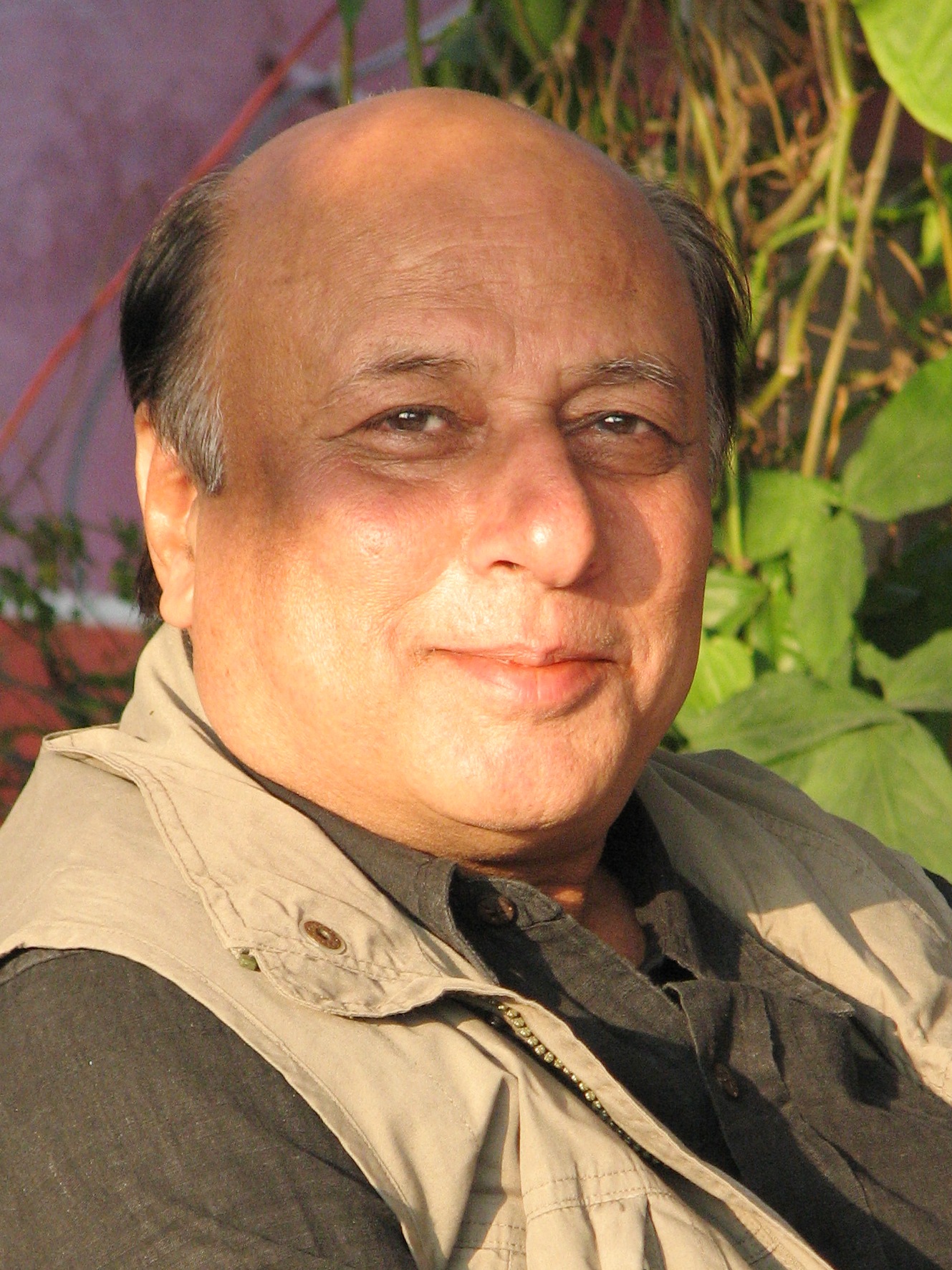
Interview: Is fiction-writer Siddharth Chowdhury creating a new literary form?

An interview with one of my favourite contemporary writers, the inimitable Siddharth Chowdhury, for Scroll:

‘I see my individual books as part of one big novel that I am working towards.’
Siddharth Chowdhury's first published book was a short story collection called Diksha at St. Martins (Srishti, 2002). Some characters who first appeared in those stories, like Ritwik Ray and Mira Verma, went on to play starring roles in his next book, the brilliantly unpredictable Patna Roughcut (Picador, 2005). 

Chowdhury's next novel Day Scholar (2010) saw a shift of setting from 1980s Patna to 1990s Delhi, with a new narrator called Hriday Thakur opening up a deeply male world of Bihari hostellers who live on the fringes of Delhi University and in the terrifying shadow of Zorawar Singh Shokeen, political broker and property dealer—and their landlord. 

His most recent book, The Patna Manual of Style (2015), is a set of interlinked stories that returns us to Hriday's world a few years after Day Scholar with Chowdhury's usual comic acuity.

Chowdhury's fiction combines a joyful political incorrectness with deep affection for the characters who populate his world, the idealist, the eccentric and the downright dubious. He is possibly a combination of these things himself. He is also quietly holding out against the onslaught of everything 21st century publishing tells writers they should do to gain readers: Facebook, Twitter, book launches and litfests. We agreed on an email interview, but he prefers to write by hand, and so I received his handwritten (photocopied) responses by courier. A couple of follow-up questions were answered on SMS.
Both your recurring protagonists Ritwik Ray and Hriday Thakur share their Bengali-from-Patna past, their Delhi University present and their writerly ambitions with you. What's easy and what's difficult about using autobiographical material?

The trajectory of my novels and stories is autobiographical. But autobiography can only be a take-off point for the imagination to soar, I feel. So 90% of my fiction is pure storytelling. Fiction is the only medium through which I engage with the world. So a lot of other elements—politics, social commentary, various axes to grind—seep into the fiction as I go about stringing the reader and myself along. In the first draft I rarely have a clue where the story would take me. By the second draft things become clearer.
The difficult thing is when readers start imagining that all of it is autobiographical. But I have realized over the years that, too, gives pleasure to some readers.

In The Patna Manual of Style, Zakir Hussain College and Delhi University's English departments are populated with professors who teach at these places in real life, some thinly disguised, and some named. You once said that your parents in Patna tell people who ask that your books are “out of print”. How have friends and acquaintances who have read your books responded to becoming characters in them?

My friends and family rarely become characters in my fiction. Once in a while I would introduce a real person to establish locale or atmosphere, and more often than not it is meant as a tribute. So it is with my teachers in Zakir, like Lima Kanungo and Anuradha Marwah, or Vikram Seth or Sujit Mukherjee when I talk about publishing in 'Death of a Proofreader'. I never introduce a real person in my stories to spite them. Using real people or institutions also imparts a sense of hyper-reality and leavens the more fabulist elements in my fiction.

The wishes of my parents have now actually come true. Both Diksha at St. Martins [his first short story collection] and Patna Roughcut are out of print. Day Scholar will be, too, if Picador doesn't bring out a paperback soon.

How do you name your characters?

Very carefully. I collect names. I like names with a bit of vajan, as they say in Patna. With the right name half of your work is done. It is like casting in movies. Sometimes I feel I could have been another Lynn Stalmaster.

Your characters often live inside books and films, from Javed “would have been a friend of Ghalib's” Siddiqui in the first story in Diksha at St. Martin's (2002) to Ritwik Ray in Patna Roughcut kissing Mira Verma “how James Dean had kissed Natalie Wood in Rebel Without a Cause”. This carries on into The Patna Manual of Style: Hriday's girlfriend from Dhanbad (named Charulata, like the Satyajit Ray film) reminds him of Supriya Chowdhury in Meghe Dhaka Tara (a Ritwik Ghatak film); a Patna girl is named Sophia after Sophia Loren in Marriage, Italian Style and haunted by the film all her life; even Jishnu da, importer of blondes, expresses his angst by reciting the poetry of Ramdhari Singh 'Dinkar'. Other characters write imaginary books -- Lawrence Lytton-Mobray's Purulia-set detective stories, Anjali Singh Nalwa's Tarn Taran, or my favourite, Ritwik Ray's Mao for the Misbegotten – but are described as reviewed in real journals, like EPW and Biblio. Is this all just your own fiction-haunted mind writ large, or do you really know a lot of people like this?

Well, I do know a lot of people who want to write, or to act or to direct movies, but have chosen to do something else for a living. Of course most of them have artistic ambitions without the requisite talent. But it is a good thing. I don't mock it. I like writers and write about their world. It is an abiding theme. So to me an unpublished writer is as important as a published one.

Ramdhari Singh 'Dinkar' is a Patna speciality, and I, like many others of my generation, can quote him in chunks. It is like Pushkin and the Russians.

I know how hard it is to write a halfway-decent poem or a story, so writers would always have my compassion. But in the end, it is all fiction, the wisp of blue smoke curling away from my mind.

What books have been your strongest influences? And anything you read lately that you were struck by?

Well, Philip Roth, Hemingway, Arthur Miller, the early Naipaul, Salinger, Jack Kerouac have been significant influences. Lately I have enjoyed The Lowland by Jhumpa Lahiri a lot.

What do you re-read?

I re-read the collected stories of John Cheever, the first 49 stories of Hemingway, parts of Anna Karenina and A Sportsman's Sketches by Turgenev once in a while.

Your books have always declared your cinephilia. Do you have favourite filmmakers, or genres, or eras? Would you ever write a film script? And important side question: did world cinema trivia really impress Patna girls?

Satyajit Ray, Ritwik Ghatak and Saeed Mirza have been huge influences. I also like the early stylish Godard, Sam Peckinpah, Billy Wilder and John Ford. I love cinema across genres. Also I can sit through anything by Scorsese, Tarantino and Woody Allen. I am sure I have missed out on twenty other names. If there is a special preference, it would be American cinema of the 1970s. Those magnificent
Easy Riders and Raging Bulls.

No, I wouldn't write a screenplay, as cinema is a collaborative medium, and I am a lone wolf by inclination and training.

My experience is that the easiest way to lose a girl's attention is to talk to her of world cinema or literature. But then I rarely meet the right kind of girls.

Ah, that question was inspired by the narrator in your long-ago story 'A Scene from Class Struggle in Patna' who says his movie trivia is good only for quizzing and impressing girls. But that will teach me to stop imagining that all your narrators are autobiographical!

Moving on: your characters – even the exceptionally literate, film-society-going ones – inhabit a world that's often violent, sometimes sleazy. Did you ever fear your readers might be repelled?

Some readers are always going to be repelled by the world I portray. Many are also bored stiff. But there is a tiny minority which will sit through anything that I write. God bless them.

One of the things that has always made your writing stand out for me, at least within Indian English fiction, is how frankly you deal with the presence of caste – its networks, stereotypes, battles – and the presence of sex. “A woman who shouts "Jai Mata Di" or "yes please", or better still, "aur tani jor se" in throes of sexual congress, is worth pages of description of the furniture in the bedroom,” as you once put it. Did/does this unfetteredness come easily to you?

No, the unfetteredness does not come easily. It shouldn't either. As starlets in India traditionally say, they would wear a bikini if the role demands it, so it is with me. I will do the swimsuit round if the role demands it. Otherwise I am a wallflower by nature. As for caste, it really can't be avoided if you are writing fiction in India.

Is Delhi a kind of exile from Patna, for your characters? And for you? Do you feel part of a Bihari cultural diaspora?

In some ways, yes, it is kind of like an exile. But then I do Delhi also. I seriously started to write only when I came to Delhi University.

Do you hang out with other writers? Do you discuss your writing with anyone while it's happening?

I am afraid I don't hang out much. I do not have the time. My first reader is usually my wife. Sometimes I do share my finished work with Pankaj Mishra and Amitava Kumar. Pankaj especially has been a great support over the years.

You don't do the litfest circuit. Do readers ever write to you? Any interesting responses?

Sometimes I do get emails. Mostly of hate, but once in a while of love, too. In Chandigarh, at the only literary festival that I have attended, I was accosted by two ladies who said that they had come all the way from Canada to meet me. Turns out they wanted to meet Siddharth Chowdhury the painter. Talk about taking a wrong turn.

You have a day job in a publishing house. What does your work day look like? Does the publishing life intersect with the writerly life?

I think my day job as a publisher certainly enriches my writing. I get to read a lot of stuff I wouldn't normally pick up otherwise.

I believe you do all your writing by hand. How does the rewriting and editing happen?

I usually write the first three drafts of all my stories or sections in a novel by hand. With yellow Staedtler pencil on small spiral bound notebooks which I carry everywhere in my satchel. The fourth draft is usually typed out by my wife when she finds time. Afterwards I tinker with it for months on the computer, mostly working on the timing. For instance, the two stories that book-end
Patna Manual, 'The Importer of Blondes' took over two years to write, 'Death of a Proofreader' close to a year.

You've published two story collections and two novels. But Patna Roughcut, for instance, though called a novel, is as much a series of episodes about overlapping characters, as The Patna Manual of Style, called 'Stories'. If publishing didn't need these categories, would you describe your books differently?

I see Patna Roughcut, Day Scholar and The Patna Manual of Style as part of one big novel that I am working towards. In that sense it is unfinished. Readers can read it in any way they want. As individual stories or short novels which are part of a larger whole. As long as they get it, it is fine by me. Labels are anyway only a marketing tool. I am meanwhile working on a long story about Sudama Pathak of Patna Roughcut, called 'The Prince of Patna'.

Published in Scroll.

Picture This: Remembering Rififi

My column for BL Ink this month:

Jules Dassin’s Rififi (1955) might or might not be the best film noir I have ever seen, but it’s likely the most subversive.


Exactly 60 years ago, on May 10, 1955, the eighth Cannes Film Festival awarded Best Director to Jules Dassin for the festival’s opening film Du Rififi Chez les Hommes, known in English as simply Rififi. Released in France in April 1955, Rififi had already snagged Dassin a two-part interview at the iconic magazine Cahiers du Cinema. The interviewers were Francois Truffaut and Claude Chabrol, future giants of the French New Wave, both then in their early twenties. Truffaut, then forging a reputation as a notoriously unforgiving film critic, also gave Rififi a rave review: “[O]ut of the worst crime novel I have ever read, Jules Dassin has made the best film noir I have ever seen.”
The novel was by popular French writer Auguste le Breton, an orphan who frequented the low-life bars and gambling dens of Montmartre, that form Rififi’s atmospheric setting. Dassin wasn’t a fan; among other things, he thought it was racist (his screenplay did away with the dark-skinned Arab and North African rival gangsters). But he would have been a fool to refuse: despite having tasted success in Hollywood with Brute Force (1947), The Naked City (1948) and Thieves’ Highway (1949), he had been blacklisted by the House of Un-American Activities (HUAC) while making Night and the City (1950) and hadn’t managed to make a film in five years despite a move to France.
So the Cannes award wasn’t just good for Dassin’s career, but also a French slap in the face of Hollywood. The jury that year had five Frenchmen, plus one man each from Spain, USA, UK, Italy, Switzerland and the USSR (no women, naturally), and despite his French-sounding name, Dassin was very much an American, born in Connecticut to Russian Jewish immigrants. Interestingly, Dassin shared his prize with Soviet director Sergei Vasilyev, for Heroes of Shipka, about the Russo-Turkish War of 1877-1878.
I haven’t seen Shipka, but I imagine it shares little with Rififi, which is a supremely stylish film about a gang of thieves. But then Cannes wasn’t awarding Dassin for subject; the cutting edge of the French film establishment was excited about a certain Expressionistically-lit, dark, urban cinema coming out of Hollywood, and this film was a sophisticated example of it — in French. A few months after Rififi, two French critics, Raymond Borde and Etienne Chaumeton, came out with the first book-length attempt to define the style: A Panorama of American Film Noir, 1941-53.
The characteristics of noir remain legendarily hard to agree upon, though critic Roger Ebert made a rather fun list of criteria in 1995, including “#2 A movie which at no time misleads you into thinking there is going to be a happy ending” and “#4 Cigarettes. Everybody in film noir is always smoking, as if to say, ‘On top of everything else, I’ve been assigned to get through three packs today.’” Rififi certainly ticks those boxes. At the film’s nervous, throbbing centre is a hood called Tony, whom we first meet losing the last of his money in a poker game, coughing as he lights yet another cigarette. The room is so dark that when Tony makes a phone call and we cut to the home of his protege Jo, it comes as a shock that it’s actually morning. The casting is perfect: Jean Servais, who plays Tony, has a pale, drawn face that makes perfect sense when you learn that he was a recovering alcoholic.
When Dassin’s characters aren’t huddled indoors in some basement or bar, they’re walking the wet Paris streets. The occasional neon-lit advertising is all for liquor brands: Cognac Martell, Haig Scotch Whiskey, Dubonnet. Only the final sequence swaps shadowy silences for a crazy, careening drive beyond the city, brilliantly juxtaposing a man’s desperate speeding with a child’s blithe enjoyment of it.
Rififi is a superb example of why films noir are often the best city flicks: to plan on rupturing the urban order, you need to know it inside-out first. The gang’s prep involves noting what time of morning the salesgirl arrives at work, when the florist makes his deliveries, when the policeman does his rounds. In one great scene, Tony walks Jo along the avenue on which their targeted jewellery store stands — it’s Mappin & Webb — making him recite the details of the shop fronts they pass, without looking up.
But if this is noir, it subverts its own rules. The women may look like femme fatales (one of them, Mado, even gets involved with a rival gangster while Tony is in prison), but they aren’t scheming or duplicitous. The men come off much worse. They beat up their girlfriends and infantilise their wives. Tony’s violence towards Mado is extreme, another gang member Mario keeps shutting the door on his smiling partner, calling her ‘pet’ and telling her to ‘run along’ and go to bed, and the film’s denouement reiterates how the women suffer the consequences of something they had no part in planning.

The ubiquitous machismo of this noirish world is also, to my eyes, undercut by the manner in which Dassin presents the half-hour heist at the film’s centre. I have rarely seen a group of men on screen conduct themselves in so wonderfully silent, unobtrusive a fashion, for so long. Wordless, invisibilised labour is something that women are traditionally socialised into; men, only if they are servants or slaves.

Which leads us to the last thing that makes Rififi’s heist so remarkable. The delicate, unspoken synchronisation makes the heist feel performative, akin to a dance, or a circus act. But Dassin’s two aesthetic decisions, of silence and of slowness, making it feel like real time (of course, it isn’t really) changes what we know to be a theft, an undeserving short-cut to riches, into something profoundly like work. Rififi was banned in many places because the police said it was a demonstration to potential criminals. But it is this that makes it truly subversive.
Published in the Hindu Business Line.

9 May 2015

Why English Matters

How translation from Indian languages to English is giving regional literature a dedicated new readership, turning linguistic rivals into potential allies

“Tamil was a major factor for my fame within Tamil Nadu; but it was only after the translation in English that Salma rose to different heights,” says the Tamil poet and novelist Salma, whose Irandam Jamangalin Kathai, about the world of women in a Tamil Muslim community, was published in Lakshmi Holmström’s translation as The Hour Past Midnight. The novel was longlisted for the DSC Prize in 2011, and sold over 3,000 copies (roughly 5,000 in Tamil, says her publisher, Kannan Sundaram of Kalachuvadu). Shamsur Rahman Faruqi may have long been the brightest star of the Urdu literary world, but to the Indian reader in English, he really only appeared on the horizon with the publication of The Mirror of Beauty(2013), his own translation of his magnum opus Kai Chand Thay Sar- e-Aasmaan (2006). KR Meera’s Aarachar might have won coveted Malayalam honours like the Vayalar, Odakkuzhal and Kerala Sahitya Akademi awards, and sold close to 50,000 copies—but it was only with its translation into English as Hangwoman (2014), that the book entered literary conversation outside of Kerala, applauded for its startlingly ambitious take on life, death, sex and the media through the eyes of a young Kolkata woman appointed executioner, and for J Devika’s effervescent translation. And so it goes.

Many regional language writers have only received national recognition late in their lives, because of translation into English. “Before the award, I was known as ‘a leading writer from Kerala’... When I won the Crossword Book Award in 1999, the press qualified me as ‘a leading Indian writer’,” says M Mukundan (Crossword website), whose Kesavan’s Lamentations won in the translation category in 2006. This is, of course, testament to an unfair linguistic landscape where English has an easier claim on the national. But it warrants greater scrutiny. If, as Marathi writer Bhalchandra Nemade and Indian English novelist Aatish Taseer would have it, English has squeezed the life out of Indian languages —“English is encroaching upon the innocence of children,” Nemade said, in an interview on Scroll; ‘How English Ruined Indian Literature’ is the title of Taseer’s New York Times opinion piece—why does English publishing seem more enthusiastic than ever in directing the many streams of that literature towards us, in translation? If this were a pessimistic critical theory paper, one might argue that the very impulse towards translation is preservationist, and things can only be preserved when they’re dead. But however seductive this idea of embalming might be, literature in the other Indian languages seems anything but corpse-like. And yet, being translated into English seems to afford writers in even the most thriving of these literary languages—Bangla, Malayalam, Hindi, Urdu, Marathi—a new lease of life.

Writer KR Meera, whose Malayalam novel Aarachar was translated to great success as Hangwoman
Because those of us who live in India but read only in English have grown dead to these languages; translation is the jadui kathi, the magic wand through which we might awake to their pleasures. English has turned us into Sleeping Beauties, and now only English can rouse us. And because whatever Nemade might wish for, neither our history nor the market allow for a clean separation between English and regional language cultures. A dedicated and growing community of Indian readers in English—while not exactly huge yet—is keen to read regional language literature (and read about it), while Indian language readers are often influenced by the ‘buzz’ English can create around authors.

Translation lists at HarperCollins India and Penguin Books India have certainly increased both in number and variety over the last five years. Penguin brought out 22 translations in 2013, 20 in 2014, and has 23 on the 2015 publication schedule. “We now publish an average of 20 titles in translation: five contemporary fiction titles and 15 classics (a mix of fiction, drama, poetry, memoir),” says Penguin’s managing editor R Sivapriya, who heads its translations list. “The numbers must have been half that in 2012.” Minakshi Thakur, who heads the same list at Harper, concurs: “We used to do five to six titles, this year onwards we’ll have 10 to 12. Earlier most publishers would only do classics, but we want to work with writers who are working now; [build] a list of future classics.” Penguin’s recent successes include a book as contemporary as Sachin Kundalkar’s 2006 Marathi novel Cobalt Blue, which sold over 2,000 copies in Jerry Pinto’s 2013 translation, and one as grand and dastan-like as The Mirror of Beauty, which sold 5,000 copies in 1,000-page hardback.

At the more academic end of the spectrum, too, the translation list at Oxford University Press has seen 10 percent annual growth since 2009. It now stands at 125 titles from 18 languages, including less-represented literatures like Dogri (Shailender Singh’s Hashiye Par (For a Tree to Grow) and Tamil Dalit writing like Cho. Dharman’s Koogai: The Owl (translated by Vasantha Surya). But this is still a niche readership, and the slow rate of growth makes publishing solely translations unsustainable. The independent Katha Books, which pioneered translations from the Indian languages, has shifted its focus to translations of children’s books.

                                                   +++

In a country as multilingual as India, translation has often been the only medium for a Malayalee reader to read the work of a Bengali writer, or an Oriya reader to discover a Kashmiri poet. Most readers in each of these linguistic communities have historically read translations in their mother tongue. Perhaps literary flows, even then, were somewhat unidirectional: I can’t keep track of the Biharis and Malayalees I know whose literarily-inclined parents grew up reading Sarat Chandra Chatterjee and Tagore in Hindi and Malayalam translations respectively, but I would be hard put to name any Bengali readers who read Hindi or Malayalam writers (they did read Russian and English classics in Bangla). But as the Indian upper middle classes have grown more monolingual, reading almost entirely in English, it is mainstream English publishers who must take on the task of bringing a multifarious Indian literature to these readers. In SR Faruqi’s words, the rising readership for English translations is attributable to “the growth, in geometrical proportions, of Indians who... sadly enough, have no real claim to any other language”.
Sankar, author of the Bangla bestseller Chowringhee, which has also done extremely well in English translation.
Sometimes an older translation in another language still serves as a route to English. Khushwant Singh and Vikram Seth had both read Sankar’s Bangla bestseller Chowringhee in a Hindi translation, and their admiration for this chronicle of life at a 50s Calcutta hotel was partially responsible for Penguin’s agreeing to publish Arunava Sinha’s English translation, according to both Sankar and Sinha. Today, while Hindi remains an important link language between readers in North India and writers elsewhere, at least some Hindi publishers’ decisions about translations may be routed through English. Aditi Maheshwari, translations head at the Hindi publishing house Vani Prakashan, stresses Vani’s commitment to translating directly from the original language, whether it be Herta Müller’s German or KS Sethumadhavan’s Malayalam. But it is hard to deny the role of English (publishing and media) in foregrounding a potentially translatable writer, such as Tamil’s Perumal Murugan.

Many Indian language writers cannot but recognise the unfortunately disproportional power English wields, knowing the only way to deal with it is to make it work for them, as much as possible. But writers from languages with a strong critical culture and a large literary readership can often experience a gulf between that vibrancy of exchange and their reception in English.
Chandrakanta, whose acclaimed Hindi novel Ailan Gali Zinda Hai was
shortlisted for the 2012 DSC Prize in translation, as A Street in Srinagar


“Within Hindi, there’s a rich conversation my work and I are part of, though not without its politics and prejudices,” says Hindi writer Geetanjali Shree. “English took me to other forums [but I soon saw the] lag between the interest in English in translation and English in original.” Her 2001 novel Tirohit appears in Rahul Soni’s attentive translation as The Roof Beneath Their Feet (HarperCollins, 2013). “Some 60 people have done research on my books [before any translation], colleges have held discussions. For Katha Satisar (2005), I got ten Hindi literary prizes, including the Vyas Samman and Mahatma Gandhi Samman,” agrees the Hindi writer Chandrakanta, author of this acclaimed historical take on Kashmiri Hindus, which Zubaan publishes later this year as A Saga of Satisar. Her intimate account of life in a Srinagar neighbourhood, Ailan Galli Zinda Hai (1986), was shortlisted for the 2012 DSC Prize as Zubaan’s translation, A Street in Srinagar, but has not even sold 2,000 copies. “How is it possible that a novel that has been recognised, does not sell? Perhaps Satisar will do better.”
While Hindi’s literary universe, for example, was (and is) perfectly able to provide a launching pad for a serious writer such as herself, Shree concedes that its “being older” means it “has still to update its training in events, awards, markets”. Yet vastly more copies are sold of a successful book in most Indian languages than in English. Benyamin’s novel Aadujeevitham, a spare, arresting account of one man’s brutal experience as a labourer in the Gulf, sold over one lakh copies across a hundred editions in Malayalam, according to its author. Translated lucidly into English by Joseph Koippally as Goat Days, the book is also one of Penguin’s greatest successes— but with 10,000 copies. Even Chowringhee, with over 30,000 copies sold in English, barely compares with the 100,000 copies its author ascribes to Bengali sales (not counting the huge pirated edition sales in Bangladesh, as he reminds me). And while Hangwoman gave Aarachar and its author a new visibility, only 2,000 hardback English copies have sold till date. Of course, any comparison of sales figures must acknowledge that English books are priced much higher.

“I hope we help the writers with their ambitions, I think we do, but not as much as they deserve,” says Sivapriya. “It requires enormous effort to train the gaze of the English reader on them.” Thakur agrees, admitting, “It is still a struggle to sell out 3,000 copies of most titles”, but adding, “That’s the case with most original English [literary] fiction too.” Bhima: Lone Warrior, Gita Krishnankutty’s 2013 translation of Randamoozham, Malayalam giant MT Vasudevan Nair’s classic telling of the Mahabharata from Bhima’s perspective, has sold 6,000 copies, she says. “The epic still sells, retellings do well in our market. Translate anything [to do with] Satyajit Ray and it’ll do very well. [Take] our 14 Stories project, stories by various writers that Ray made into films—that’s the kind of book which goes on to backlist well.”

Controversy of any kind works wonders for sales, in any language. Taslima Nasreen’s Lajja, banned in Bangladesh and inciting death threats, is one of Penguin’s highest selling translations, with 30,000 copies sold till date. And in a bitter irony, Murugan’s novel One Part Woman, which became the focus of a moral censorship campaign that forced the author to give up writing, has sold nearly 10,000 copies. The independent publisher Zubaan Books sold almost 7,000 copies of Urvashi Butalia’s translation of Baby Halder’s candid memoir of life as a domestic servant, A Life Less Ordinary. Penguin’s other successes from before 2012 are all 20th century classics in their original languages: Shrilal Shukla’s Raag Darbari, Manto’s Bitter Fruit, Tagore’s stories and poems, Bhisham Sahni’s Tamas.

                                                   +++

Often, however, English’s ripple effect bears little connection to sales. Meera’s Yellow is the Colour of Longing (2011) was long-listed for the Frank O’Connor prize and short-listed for the Crossword award, but did not sell beyond the first print run of 2,000. Being translated, however, brought Meera national exposure, with glowing reviews across the English media and speaking engagements at literature festivals, from Jaipur to Chandigarh, Odisha to Goa, held on a scale that most regional literatures cannot yet muster funds for. The publicity that an English translation receives sometimes triggers fresh interest in the original linguistic community. “If a book is awarded nationally or internationally, it gets more attention [from local readers],” says Benyamin.

Meera and Benyamin both believe the English media covers literature more than Malayalam, and Benyamin, like Sankar, thinks reviews in English are fairer. “A Malayalee reader would believe a bookshop owner more than a critic,” says Benyamin. “English reviews were well-researched and positive, maybe because my book was already famous.”

“Through English, I rediscovered my Bengali readers,” agrees Sankar, long dismissed as middlebrow by Bengali critics. “I never had any good reviews [in Bangla. But] some Bengali readers think, if it’s translated by Penguin, and getting rave reviews in London, maybe they should read it.”

For writer Uday Prakash, English translation has helped lift his work out of what he sees as Hindi’s insular, non-risk- taking, institutionally corrupt world, and made it part of ‘world literature’. “When I wrote Peeli Chattri Wali Ladki, I was attacked and abused in the Hindi world. But Jason Grunebaum’s English translation, The Girl with the Golden Parasol, got me to Penguin and then to Yale University Press.”

Hindi writer Uday Prakash, whose provocative books
have had many different translators over the years,
from Jai Ratan to Jason Grunebaum
Yet English translation is no panacea. Much depends on quality, the publisher’s interest and distribution channels. “Older translations of my work, like Jai Ratan’s [one of India’s most prolific translators], were targeted at an Indian English reader, and could not travel abroad. Jason is young, and a fiction writer himself; his translation reflects how language in America has changed,” Prakash adds.

English translation does not guarantee exposure. Although she gained an Indian English readership as early as 2000, after academic Nita Kumar translated her 1997 novel Mai into English for Kali For Women, Geetanjali Shree insists that her writing continues to be routed through Hindi. “Serious readers of my works, such as Annie Montaut, Alessandra Consolaro, Vasudha Dalmia and Francesca Orsini are advanced scholars keen to promote Hindi literature in the West. I am known in Russia and Poland because of Hindi!”

Certainly, Euro-American academic networks have been crucial in spreading regional Indian literature, providing the focused language training and university presses needed to support high-quality literary translation. Hindi departments in the USA, for instance, have produced such wonderful translators as Grunebaum and Daisy Rockwell, who has translated the late Hindi writer Upendranath Ashk.

But how far have translations to English travelled? Over the five years that the DSC Prize has been awarded at the Jaipur Literature Festival, only six out of the 29 shortlisted titles have been translations (UR Ananthamurthy’s Bharathipura and A Street in Srinagar in 2011, Uday Prakash’s The Walls of Delhi in 2013, Anand’s Book of Destruction and Goat Days in 2014 andThe Mirror of Beauty in 2015). None has won yet.

All of this is not to ignore that several regional language cultures inhabit positions of superiority with regard to some others: think of Hindi with regard to Urdu, or at a very different angle, to Bhojpuri. English may not be able to speak to this (though it has brought Dalit writers like P Sivakami, Urmila Pawar and Ajay Navaria some welcome attention). But it seems to me difficult to stand either with Nemade, denying that this collective landscape has been forever altered by a flood called English, or with Taseer—taking a position higher and safer than everyone else, and then bemoaning the flood. Bilinguality—reading in at least one Indian language besides English—is one way to withstand the waters. But translation, even in English, if we do more of it and better—while acknowledging that the ground is not level—can let the monolingual reader into several languages. For many of us, it might be the most feasible way to grow some roots.


(Published in Open magazine this week, under another title.)

5 May 2015

Speaking in Tongues

My Mirror column for 3 May, 2015: 

Why are we so resistant to subtitled films, instead of pouring our efforts into improving their quality and reach?


Mani Ratnam's film, O Kadhal Kanmani, was released in Delhi with subtitles.
Most people, when asked if they read translated books, are likely to say no. Yet, anyone who grew up reading in English has probably read Hans Christian Andersen (originally Danish) and the Brothers Grimm (originally German). They're quite likely to know Heidi and The Swiss Family Robinson - both Swiss-German classics, one from 1880, the other 1812 - not to mention Alexandre Dumas's The Three Musketeers (serialised 1844), and Antoine de Saint-Exupery's The Little Prince (1943), both from French. And The Adventures of Pinocchio, first published in Italian in 1883. And those who grew up in 1980s India are certain to have encountered books from the USSR (hands up, everyone who knows Dunno and his friends, or Baba Yaga the witch and Vasilisa the Beautiful!). 

And these are just the most obvious examples. Given how much of what we read as children was translated, how have we managed, as adults, to nurse a grudge against translated books? Who came up with the depressing notion that they're somehow "good for us" (read: no fun)? It's not an easy question, and there could be many answers. Maybe children are, despite appearances, more open to the unfamiliar than adults? Maybe children's books have less dense description, or simply less text, so translations are easier? 


Whatever the reason for most people's reluctance, it carries over to movies. Most people greet with utter shock the idea of watching a film in a language they don't speak. Or at least think of it as enormously hard work (repeat: no fun). Last month, two perfectly sensible, widely-read people responded to my recommendation of Court with a dubious "But it's in Marathi, no? Accha, it's subtitled?" Also last month, a Tamil gentleman seated next to us during a screening of O Kadhal Kanmani practically fell out of his chair upon learning that we did not speak Tamil. But that was precisely why I was so glad when Mani Ratnam's latest film, which my Twitter and Facebook couldn't seem to stop discussing, released in Delhi with subtitles: how often I've missed a big Tamil release because Delhi theatres ran an unsubtitled version. 


So yes, I don't watch a film if I have no way of knowing what the characters say. In that sense, I totally disagree with someone like Rakeysh Omprakash Mehra, who once dismissed my question about the impact of English on the making of Hindi cinema by declaring that cinema "transcends language". I think language matters in cinema, just as it does in life. But just as in life, while you might not want to live forever in a place where you don't know the language, surely you can't let that stop you from travelling to new places? I've always been an anti-dubber (I hate the weird sense of cultural overlay: the invariably overdone intonations, the mismatched accents - perhaps this is how some people think of translation). But I'm a subtitled film fan. 


I see subtitles as giving me access to a world I wouldn't otherwise enter - but like a polite, well-spoken guide, providing commentary unobtrusively, not drowning out the voices of the locals. If you know the original language, of course, subtitles will always be unsatisfying: like my Tamil-speaking friend who spent the interval telling me how OKK's subtitles were doing no justice to the romantic banter. And because subtitling is often done on a tight budget, many films eat up their characters' words, like that lazy interpreter who speaks one sentence to the speaker's four. (Even the otherwise exemplarily subtitled Court labelled some perfectly intelligible policewomen talking in Hindi as "Indistinct Chatter".) 


The writer and filmmaker Nasreen Munni Kabir, veteran subtitler of some 600 Hindi films (into English and French), is one of the few who've managed to not just specialise in subtitling but be credited for it. She told me that BBC's Channel Four, with which she works, re-subtitles every Hindi film it screens, because the existing ones are usually so dreadful. Another sort of creative response to bad subtitles is that of Bollywood blogger Beth Watkins, who runs a joyously crowdsourced tumblr called "Paagal Subtitles": recent prizewinning entries include "According to the post-modem report" (Holiday, 2014) and "I am surrounded by duckheads" (Mardaani, 2014). 


Watch enough subtitled films and you will swiftly acquire the art of reading while also taking in the image. The only time I'm distracted by subtitles is when I don't need them, or they're in a language I don't know. But there can be unexpected pay-offs: two episodes' worth of House of Cards with French subtitles taught me more conversational French than a semester at Alliance Francaise. 


Of course, as with anything language-related in India, there's the usual elephant in the room: subtitles are only ever provided in English. I have never seen subtitles in any other Indian language -- whether it be for regional language cinema on Doordarshan (or more recently, on Lok Sabha TV), any film festival screening from Kolkata to Trivandrum, or the rare commercial release with subtitles, like OKK or Court, or the much-discussed subtitling of the "Urdu-heavy" Dedh Ishqiya in cities like Bangalore. Although I've long been pleasantly surprised by the varied audience at the International Film Festival of Kerala (and was appalled at Adoor Gopalakrishnan's desire to screen IFFK registrants for knowledge of English), Kerala's level of English-literateness does not extend to most of India. I cannot but agree with film critic Mihir Pandya's long standing suggestion that the government should fund the subtitling of all National Award-winning films each year, into all major languages. That would be a start. How else, really, will we ever listen to each other, outside the tiny echo-chamber of English?

26 April 2015

Living by the loom: Shyam Benegal's Susman

My column in Mumbai Mirror today: 

Shyam Benegal's Susman offers a portrait of the handloom weaver's predicament, sadly relevant even today.

Om Puri and Shabana Azmi, in Susman (1987)

At one point in Shyam Benegal's Susman (1987), two ikat weavers are walking back from a meeting with an agent and a city-based buyer. “Why didn't you ask the buyer for an advance?” says the younger brother Laxmayya (Annu Kapoor). “Apne munh se paisa maang ke kaahe apne ko chhota banayein? (Should I have demeaned myself by asking for money with my own mouth?)” responds the elder brother Ramulu (Om Puri). “Would have been better not to take the order.”

Susman is one of Shyam Benegal's less-watched films. It is part of his clutch of issue-defined films commissioned by government bodies or cooperatives. It has its limitations: Benegal's regular stable of 'alternative' actors can feel a little too starry. Watching Shabana Azmi and Om Puri and Pankaj Kapur play impoverished Pochampally weavers speaking in Dakkhani, can feel like a stretch – Azmi, in particular, looks and acts far too urbane. But Benegal has always had the ability to craft fictions that offer a nuanced, thoughtful picture of the situation he has chosen to depict, and Susman is a good example.

It is a film that deserves to be watched this week, as the central government contemplates a policy shift that might endanger the very existence of the handloom weaving sector. Scroll.in reported on Friday that “the Ministry of Textiles is looking into a memorandum submitted by power loom owners to ease provisions in the Handloom Reservation Act of 1985 that allow only handloom weavers to make certain textile products.” Over the years, the 22 handloom-only items originally listed by the Act has already been reduced to 11. Also, it is well-known that power loom weavers manufacture these reserved products, passing them off as handloom. Further de-reservation is likely to price handloom goods out of the market, and threaten the survival of what is the world's most stunningly diverse, skilled range of hand-crafted textiles.

Benegal seeks to draw in the middle class viewer with a display of handloom weaves, each sari covering the screen as we hear the unmistakeable voice of Neena Gupta applaud the particular finesse of each to a less-knowledgeable but terribly opinionated man. When we finally cut away from the saris to Gupta, she turns out to be a designer called Mandira: the handloom sari-wearing, big-bindi-ed figure we all know, directing some sort of sari-based fashion show.

Mandira is hard to please, and when she clicks her tongue at some of the work that master weaver Narasimha (Kulbhushan Kharbanda) brings her from Pochampally, Narasimha suggests that she explain her demands to the weavers herself. So it is that our English-speaking designer, accompanied by her even more English-speaking boyfriend, Jayant Kripalani, encounters Ramulu and his household.

It is after this slightly ham-handed beginning that the film comes into its own. Benegal cleverly uses the household's particular situation as illustrative of a larger socio-economic reality. In Ramulu's perfectionism as a craftsman, in his inability to bargain with agents, in his silent resentment of his situation but his fatalistic approach to dealing with it, we see the tragic predicament of the handloom weaver who doesn't have a head for the market. And while Ramulu is profoundly attached to the work he does, he displays what little realism he has in refusing to let his little son sit at the loom.

Because the financial pressures upon him are such that Ramulu has begun to see his attachment to his work as a form of bondage. “Ukhaad ke phenk doonga isko ek din. Yeh kargha nahi jail hai jail. Ismein bandh karke daal diya hum ko,” shouts Om Puri in one moving scene. And as we watch him, framed behind the long horizontal bar of his loom, it feels as if he is indeed boxed into a corner of the world. 

“Roti deti so cheez ko aisa nahi bolte (Don't say such things about the thing that feeds you),” says his wife Gouramma (Azmi) worriedly. But the film makes clear that weaving is failing to fill stomachs. The cooperative societies set up to save weavers from the clutches of agents and touts have quickly been corrupted from within, beholden to the powerful. Big orders don't come to the co-op because they require deposition of advance monies, funds the co-op can't risk. The co-op secretary loans the Society's supply of silk thread to Narasimha on the sly, and is bribed to sell off discounted saris in bulk to Laxmayya, who intends to resell them in Hyderabad and set up as an agent.

Through Ramulu's prospective son-in-law Nageshwar, we also see the new workspaces created by the powerloom. The village of individual homes in which weavers work at their own pace, often in conjunction with other family members, is replaced by a cramped all-male factory space, and the regular thak-thak of the handloom by the raging sound of the powerloom. In the factory, warns Nageshwar, a man cannot leave his machine. Benegal doesn't say it, but it's clear why: because the machine isn't his any more. It owns him, rather than the other way around.

But while Benegal's leanings are apparent, he is clear-eyed about how unsustainable handloom has become for even its most skilled practitioners. The tragic irony of a weaver having to steal thread in order to weave a silk sari for a daughter's wedding is a powerful one, one which recurs in Priyadarshan's Tamil film Kanchivaram (2008). Kripalani's computer-type boyfriend also represents the view against handloom, demanding of Mandira how long the artificial “sahara” of government loans and the “sentimentality” of people like her will keep it alive.

The film manages to end on an upbeat note. But the government's answers to these questions, asked nearly twenty years ago, remain as tragically short-sighted as ever. Handloom can thrive and grow, if we only do right by it. As Ashoke Chatterjee, ex-head of the Crafts Council of India, asked recently: “Why are powerloom lobbyists so eager for their fabric to appear handmade if demand is falling?”

24 April 2015

Extra-legal understanding

My Mumbai Mirror column last Sunday: 

Chaitanya Tamhane's debut film Court is a devastating, elegant indictment of our collective present.


If you're a Hindi film viewer, you've been watching the lives of heroes unspool in courtrooms forever. One of my earliest cinematic memories is of Awara, whose high melodrama involves pitting the judge (Prithviraj Kapoor, also the father) against the accused (Raj Kapoor, also the son), with the daughter/lover (Nargis) mediating between them as lawyer. Awara used the court as real and metaphorical stage for a debate that went beyond a particular crime to the social pressures that create "criminals". Basu Chatterjee's Ek Ruka Hua Faisla, a remake of Sidney Lumet's Twelve Angry Men, couldn't be more different in tone, but its interest in tracking a jury's arguments is, like Awara's, concerned with how the social impinges on the legal. ERHF may seem gritty compared to Awara, but Chatterjee's realism clearly didn't stretch very far: jury trials were abolished in India soon after 1959's Nanavati trial, so a 1986 film about one undercuts the plot's very premise.

But then real-life courtrooms have never had much impact on Hindi movie ones. Hundreds of films, with their "mere kaabil dost" and "kanoon jazbaat nahi, saboot dekhta hai", have wrung eloquent oratory and dramatic suspense out of the dry deliberations and incessant waiting that make up the everyday reality of the Indian courtroom. Of course, there are exceptions; I can think of two recent films that have captured the farcicality of the legal process. Feroz Abbas Khan's slightly dated but pitch-black satire Dekh Tamasha Dekh (2014) showed an investigation into whether a poor man killed in an accident was Hindu or Muslim, having the court deliberate, among other things, on the existence of a river. Subhash Gupta's Jolly LLB (2013) took a smalltime lawyer's big ambitions as the basis for a funny but deep-down cynical take on how the law really works.

Chaitanya Tamhane's superb debut, Court, shares something with the films I've just mentioned. Like them, it is cinematically invested in the theatre of the courtroom, as well as with how the social cannot be divorced from the legal in practice. And yet Court is unlike any other film you've seen - or are ever likely to see. The case Tamhane takes as his take-off point is certainly the stuff of farce: a lok shahir, a folk singer called Narayan Kamble, is charged with abetment to suicide because the police decide that a sewage worker who died on the job was actually following an exhortation made in a song written and sung by the accused. But Tamhane's genius lies in taking the ridiculous and treating it seriously, so that what creeps up on you is much more powerful than if it were farce. Nothing is exaggerated to elicit a reaction. Nothing is played for laughs. So calm, unhurried and deliberate is Tamhane's embrace of his location and his characters that one is persuaded, right from beginning to end, that what one is watching is real.

But - and I cannot stress this enough - Court is no documentary. What Tamhane has done is to assemble a team experienced in documentary - editor Rikhav Desai, cinematographer Mrinal Desai, sound designer Anita Kushwaha - and put their clearly immense talent to use in the service of an immaculately-crafted fiction. Right from the start, when we see Kamble (played by real-life social activist Vira Sathidar) emerge from a tuition class he teaches, walk across a courtyard, catch a bus and arrive at the "Wadgaon Massacre Cultural Protest Meet" to perform his songs, the film combines the wide-angled observational approach of documentary with the unwavering narrative focus of fiction. Visually, too, this is true. These initial scenes, like those in the courtroom later, are clearly informed by a sense of the city as live theatre, but even in the widest of shots, and sometimes at a great distance, the camera picks out the sprightly old man in his grey beard and peach kurta.

The Dalit shahir's songs are sharply critical of the political and economic milieu, but while letting us hear some wonderful lines involving large malls and our "Great Fall", Tamhane's film refuses to ride piggyback on this causticity. Its chosen tone is more deceptively gentle. Understanding what happens in the courtroom involves following its principal protagonists outside of it. So we follow Kamble's defence lawyer Vinay Vora to the fancy supermarket in which he does his solitary shopping, and the prosecution lawyer Nutan home on the local train discussing the unaffordability of olive oil. And so on.

These journeys may seem random, but they aren't. Taken together, they constitute Court's astute intervention in that age-old debate about how the law relates to the socio-cultural world within which it is practiced. And here Tamhane reveals a finely-honed sense of both the tragic and the absurd, delivered without comment. The well-off Vora can't speak to a child in a poor, working class area without "Excuse me" and "Thank you". When he suffers public humiliation, we see him weep; but almost immediately after, getting a facial. The judge who refused to hear the case of one poor Mercy Fernandes, because she wore "sleeveless" to court, takes his vacation in a family resort where everyone descends fully clothed into the swimming pool. The widow of the sanitation worker who went unprotected into manholes encounters a safety belt for the first time in Vora's car. Long after the film ends, you will think about how these worlds, kept so starkly apart by barriers of class, language and prejudice, cannot but stare uncomprehendingly at each other when they collide in the courtroom.