Showing posts with label Shoojit Sircar. Show all posts

28 June 2020

Minding the Gap: Thoughts on Gulabo Sitabo

My Mirror column:


Gulabo Sitabo mines what remains of old Lucknow for visual atmospherics and banter, but both its laughter and its nostalgia come at a cost

A screenshot from the film Gulabo Sitabo (2020)
Twenty minutes into Gulabo Sitabo, the film's septuagenarian protagonist Mirza Chunnan Nawab (Amitabh Bachchan with a prosthetic nose, a cotton-puff beard and a bent back) makes his creaky way up to the room that his rent-witholding tenant Baankey Rastogi (Ayushmann Khurrana) shares with an otherwise all-female household. The family is prepared. The youngest sister lies down immediately, another places a white bandage on her forehead, the third stands by gravely. The mother emerges on cue with an empty atta tin, while Baankey holds up an old blender they could sell to buy food. It's a fine performance, and even the suspicious Mirza is fooled. As he turns to leave, though, a loud ping breaks the melodramatic silence. It's the microwave with the family's actual dinner.

Things are not quite what they seem.

That gap between appearance and reality is the recurring motif of Shoojit Sircar's new film – and not always a consciously adopted one. At first glance, Juhi Chaturvedi's script appears to concern itself with an old nawabi Lucknow, centred on a decaying but still impressive old haveli and its khandaani Muslim inhabitants. But that Lucknow, of inherited feudal grandeur and flowery late-Mughal culture, has been in the grip of slow stasis since at least the mid-1800s, when the British exiled its beloved ruler Wajid Ali Shah, he of the brilliant shairi and thumri and kathak -- not just a connoisseur of the arts but an actual artist. What little survived of that culture through a century under the British has crumbled to nothing in the 70 years since independence. And so the characters that Chaturvedi and Sircar prop up as representatives of that past cannot live up to our imagination of it.

We may want crabby old Mirza and his 94-year-old wife, Fatima Begum (the inimitable Farrukh Jaffar, Bollywood's resident Sharp-Tongued Old Lady from Peepli Live to Photograph) to be all quiet gentility and noblesse oblige. But given that their sole resource is a building they don't have the money to repair, why is it surprising that they are instead skinflint, petty creatures -- one handing out coins as if they mean something, and the other actually exchanging them for tenners?

Amitabh Bachchan as Mirza sells off pilfered odds and ends in a scene from Gulabo Sitabo
Right from the start, the film's constant refrain is that Mirza is laalchi (greedy) and miserly. But there's something pathetic about a man who spends every day trying to redeem paltry rents from ever-dodging tenants, money he doesn't even control when he gets it. It is clearly because he has no money that he is reduced to thievery. So limited is his experience of cash that even calculating the sum of 30,000 rupees is difficult for him – and when the chaatwala pronounces the amount, Mirza falls over in shock. A much larger sum, later in the film, is entirely beyond his comprehension.

Yes, he speaks rather hopefully of the Begum's impending death (and Sircar and Chaturvedi milk every drop of humour from Bachchan's goggle-eyed shock when she recovers from every physical setback). Yes, he confesses to having married the Begum essentially for her haveli. But he has also stayed married to a woman a decade and a half his senior, and looked after her and her house as best he could, receiving little for his pains, his younger and ghar-jamaai status keeping him at semi-attendant level.

Thinking of Mirza as a villain, even a comic villain, or as a greedy heartless sort, seems to me to miss the wood for the trees. And as the film proceeded, it became increasingly clear to me what that wood is -- a whole city full of people on the make, using whatever they can to climb that one rung up the ladder that might insulate them from the vagaries of fortune in the economically vulnerable, socially depleted, politically compromised world that is present-day Lucknow. The small-time lawyer (Brijendra Kala) who thinks he can make a deal on Fatima Manzil with the local mafioso builder, the Department of Archaeology official (Vijay Raaz) who wants to get it declared heritage property, Baankey's girlfriend who ditches him for a richer match, or his sharp younger sister Guddo (Srishti Srivastava), perfectly matter-of-fact about sleeping with a useful contact – they're all in it for what they can get. Strangely, none of them get labelled greedy. 

Waning Moons, a recent PSBT documentary watchable on Vimeo, features two real-life Nawabi descendants, Mirza Nasir Abbas Maliki and his sister Naaz, who describe their father as having lost all their money because of his “seedhapa” (straightness). Naaz, who was never really sent to school, describes an actual haveli roof collapse that destroyed many antiques. But somehow, those selling their antiques for a pittance are greedy -- not those who re-sell them at massive mark-ups?

It is not just the chandeliers of Fatima Manzil that are disappearing. The city that held them up is gone, too. Even the overblown nazaakat that 1950s and 60s Hindi cinema capitalised on -- in Lucknow-set Muslim socials like HS Rawail's Mere Mehboob (1963), poetic romances like Mohammed Sadiq's Chaudhavin ka Chand (1960) or joyfully bantering ones like Subodh Mukherjee's marvellous Paying Guest (1957) – has long disappeared, leaving a shell in its stead.

Abhishek Chaubey's Dedh Ishqiya (2014) played the perfect double game with that fact, creating a dark comedy that seemed to cater to our fantasy of gorgeously-dressed, poetry-spouting old-world romance, only to ruthlessly undercut it. Let it be noted that Gulabo Sitabo's ostensibly gentle comedy about an old Muslim Lucknow, with its gratitude to the Uttar Pradesh Police, UP's Minister of State for Minority Welfare and the ex-Vice President of the BJP's Youth Wing, comes to us in the midst of a pandemic during which Muslims have been constantly attacked by both media and the government. Nostalgia and mockery combine well, not just on screen.


13 May 2015

Slice of life, served warm

My Mumbai Mirror column last Sunday: 

Caught between too much Bengali-ness and too little, Shoojit Sircar's 'Piku' mines dysfunction for gentle comedy.


By the time you read this, you would have heard and watched the PR machinery grinding away for days, anointing director Shoojit Sircar as the new Hrishikesh Mukherjee. While this is only a symptom of how desperate we are for labels (and maybe of how much we secretly miss 'Hrishi Da'), Sircar has done something that counts as a rather fun tribute to Mukherjee. He's taken Bachchan's original quick-tempered, reserved 30-year-old Bhaskar Banerjee of Anand (1971), and aged him into the crabbily eccentric, garrulous 70-year-old Bhaskor Banerjee of Piku. More amusingly, the hypochondria of richer patients like Asit Sen's Seth Chandranath, that so annoyed Bachchan as a young doctor in Anand, has now become his own. The new old Bhaskor, nursing his boxful of homeopathic tablets as close as his now-generous paunch, lives in Delhi's Chittaranjan Park and spells his first name with a deliberately underlined Bengali 'o'. (That 'o' is a sign for you to wonder: did Amitabh Bachchan make a better Bengali when he wasn't trying so hard to play one?)

This is Sircar's second cinematic take on Dilli Bangalis. The first, Vicky Donor (2012), which still remains his finest film by far, had Ayushman Khurrana's persistent Lajpat Punjabi boy woo Yami Gautam's gently dignified Ashima Roy, resulting in wedding negotiations that bring out each community's most ungenerous view of the other: superior, killjoy Bengalis believe they're being forced to deal with moonhphat money-minded Punjabis -- and vice versa. But despite Sircar's penchant for broad stereotype, his affection for his characters shone through, as it does in Piku.

Here, Sircar seems to suggest that Padukone is a Delhi girl, her Bengaliness expressed as culture and not as language—note the scene where she dismisses a potential suitor for not having watched any Ray films. But even if she were cast as a Hauz Khas Enclave girl instead of a Chittaranjan Park one, Padukone's Bangaliyana would be too little, and Bachchan's too much. Still, despite Bachchan's overdone accent, I didn't completely cringe at the jaanishes that occasionally punctuate the father-daughter conversations. And drawing my half-Bengali self up to the full height of its limited authority, I shall vouch for the joyful appropriateness of both the Bangla song references: the playfully romantic Hemanta-Sandhya Mukherjee song from the Uttam Kumar-Suchitra Sen classic Saptapadi (1961) 'Ei Poth Jodi Na Shesh Hoye' ['What if this road were to never end'], which Bhaskor breaks into on their already interminable road journey, and Manna Dey's cheerful 'Jeebone ki paabo na, bhulecchi shey bhabona' ['What I won't find in life, I've stopped thinking about that'] to which a tipsy Bhaskor shakes a leg in much the spirit of Soumitra Chatterjee's original twist in the 1969 film Teen Bhuboner Paarey.

But the Bengaliness in Piku is at its best when least remarked upon: such as the fact that 'Piku' is what Padukone's character is known by, not just to family and friends, but pretty much to everyone. Colleagues and cowering taxi drivers alike call her Piku Madam, anointing with respectable publicness what would otherwise be *just* a nickname. There is probably a long and impressive bhalo naam, but it's so long and impressive that no-one ever uses it. I also loved the non-underlined way in which Sircar uses a ridiculous battle over a knife: it was about an old man's stubbornness, but it was also a gentle suggestion that what Hindi belt masculinity might consider a way of keeping safe (having a weapon in the car) is, to the Bengali bhadralok, a source of clear and present danger.

Another aspect of Bengaliness that the film quietly demonstrates is the family conversation as argument, with people quite happy to cut across each other and squabble joyfully over pointless things. (I must mention here that Moushumi Chatterjee, as Piku's aunt Chhobi Mashi, is an absolute gem. I've thoroughly enjoyed getting to know this grown-up, un-coy version of the actress in two wonderful Aparna Sen films, The Japanese Wife and Goynar Baksho, and I'm waiting for Hindi cinema to give her a truly meaty role to sink her teeth into.)

What's best about Piku, though, is not its droll Bengaliness, or its unending succession of alimentary conversations (which are not half as bad as I expected, and even contain some useful homespun wisdom on bowel-clearing from Irrfan Khan's fantastically wry Rana). It is the film's affecting ability to draw out our complicated feelings about our parents—the frustration at their embarrassing quirks, the reversal of positions that becomes inevitable as they age, and the fierce protectiveness with which we guard them from the criticisms of others. Piku's combination of annoyance and amusement, of being weighed down and standing tall alone, will strike a chord with every middle-aged person who's taken care of an irritable parent (often a parent irritable at having to be taken care of).

There is also the un-heavy-handed, thoroughly endearing way the film deals with the subject of ageing and death. Irrfan, playing a taxi company owner who ends up driving Bhaskor, Piku and their Man Friday Budhan (the servants in this film could do with a separate column) to Calcutta, gets some of the best lines: “Tapak gaye toh Banaras jaisi koi jagah nahin,” he announces as they drive past the city Hindus consider the holiest place to die. But to see how to meet death with a twinkle in your eye, you have to see the film. Perhaps it is an Anand homage, after all.

25 August 2013

Film review: Madras Cafe

My review of Madras Cafe is up:


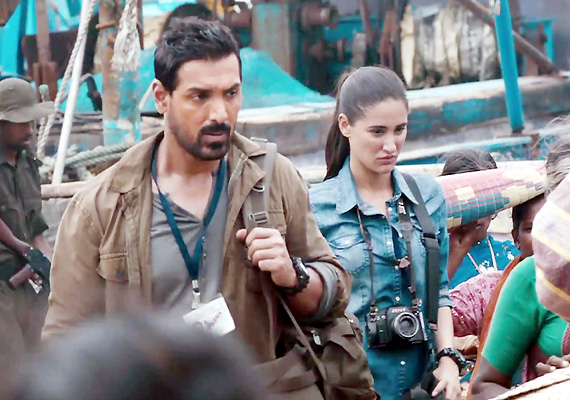
"In the first frames of Shoojit Sircar’s new film Madras CafĂ©, we are somewhere in Sri Lanka, where armed men in trucks make their way through a stunning green landscape. They kill a busload of people in cold blood, singling out the last remaining child in a striking act of brutality. Cut to Kasauli, India, in 1993, with the whirr of a helicopter being used to transition between past and present. A man with an unkempt beard wakes with a start from his black-and-white nightmares of those same events, only to hear on television the announcement that the Sri Lankan president has been assassinated. It’s a good, taut beginning, especially for a thriller that will unfold in flashback.

But unfortunately, our hero – for it is John Abraham under that beard – has other plans for the audience. He goes and buys himself a believable half-bottle of rum, arrives drunkenly at Kasauli’s old Anglican church and starts – in time-honoured filmi fashion – to tell his life story to the priest."

Read the full review on the Firstpost site, here.

21 April 2012

Film Review: Vicky Donor


Vicky Donor is that rare thing: a laugh-out-loud Hindi movie that has both irreverence and soul. Screenwriter Juhi Chaturvedi and director Shoojit Sircar have taken a hush-hush subject that most people would tiptoe around, and placed it bang at the centre of a film that’s both hilariously funny and wonderfully honest – without ever feeling sleazy.

The plot is as follows. Vicky Arora, 25, lives with his widowed mother Dolly and his grandmother Biji in a small house in the very middle class neighbourhood of Lajpat Nagar IV. He seems like a nice boy, but he doesn’t have a job and isn’t trying terribly hard to look for one either. He seems more-or-less content to spend his days mall-hopping and playing cricket in the park with his buddies, while effectively living off his mother’s earnings from the beauty parlour she runs downstairs. Enter Dr Baldev Chadda, who runs a fertility treatment clinic and sperm bank in Daryaganj, and is always on the lookout for sperm donors who can come to the aid of his stressed-out, “insecured and highly ambitious” clients. Chadda spies Vicky when he’s in the process of fobbing off his pet white Spitz on someone (because it failed to bark at a thief), and decides at first sight that this is the man to solve his current crisis of ‘quality sperm’. “Shakal dekh ke bande ka sperm pehchaan jaata hoon,” as he says to the bewildered Vicky. So begins Chadda’s long and hilarious campaign to convince the reluctant Vicky that donating sperm is neither funny nor obscene, but simply a natural thing that he can do – and earn good money doing.

Chaturvedi’s hilarious dialogue for Dr Chadda is absolutely spot-on, from assuring Vicky that sperm donation “is an ancient science” to telling him that he’ll be doing a social service. But it’s the brilliant Annu Kapoor who breathes life into this amalgam of bizarre Aryan race purity theories and sheer dogged business sense, turning him into a character who’s as familiar as he is memorable. Ayushmann Khurana, a television star and ex-IPL anchor making his filmic debut here, is a complete natural as Vicky, combining the requisite Dilli macho bluster with an artless vulnerability that has thankfully little drama about it.

In fact, Vicky Donor steers clear of high drama for most of its running time. The relationship between Vicky’s rum-swigging mother (the superb Dolly Ahluwalia) and eccentric old grandmother (Kamlesh Gill), for example, brings to life a daughter-in-law–mother-in-law dynamic that’s often hilarious while staying refreshingly honest: “Hangover jitta banda kucch bhi keh jaanda hai (When one has a hangover, one can say anything at all),” says a drunkenly apologetic Beeji in advance for being crabby in the morning.


Even Vicky’s persistent wooing of pretty bank employee Ashima (debutante Yami Gautam) stays light and frothy almost all the way through, even with the romance culminating in the inevitable over-the-top Bengali-Punjabi family face-off. The caricatures that Vicky’s mother and Ashima’s father (veteran theatre actor Jayanta Das) respectively draw of the ‘other’ community are broad and predictable – loud, uncultured Punjabis who flaunt their money, versus miserly monkey-cap-wearing Bengalis who don’t know how to have a good time – but the sharply-scripted wedding negotiation scene seems entirely believable. And by the time you’ve gotten to the end of their happily tipsy wedding, you’re really not likely to complain.

The post-interval section is somewhat less fun, mostly because the filmmakers up their drama quotient as they propel us towards a fuzzy feelgood climax. But the emotional twist in the tale – which I’m not going to give away here (other than to tell you that Chaturvedi wanted to call her film Phool Khilein Hain Gulshan Gulshan) – does give everyone a chance to display their acting chops. Gautam turns a tad too screechy (and then perhaps a little too maudlin), but Khurrana acquits himself marvelously, as do Ahluwalia and Gill.
It’s also worth mentioning that Vicky Donor is a Delhi film, though like with everything else about it, it wears its city-ness lightly. It doesn’t make too big a deal of its locations – the Daryaganj clinic with its slightly dodgy associations, the Lajpat Nagar terrace across which Beeji quarrels incessantly with the bitchy neighbour ‘Pepsi Aunty’, or Dr. Chadda’s terrace with its too-good-to-be-true view of the Jama Masjid – but each of them is nicely captured. And the dialogue is a pitch-perfect rendition of Dilli-Punjabi-speak, studded with English words in exactly the right places: “Gents ko samjhein aisi ladies bhagwan ne banai kitthe hai? (Where has God made the sorts of ladies who will understand gents?)

Vicky Donor shares with last week’s Bittoo Boss a likeable debutante hero, a script that’s almost wholly in Punjabi and a desire to address a serious topic with a light and frothy touch. Unlike Bittoo Boss, though, Shoojit Sircar’s second directorial outing (after 2005’s watchable Kashmir-shot romance Yahaan, in which Minissha Lamba made her suitably coy debut) the emotional-moral core of Vicky Donor never feels like a politically correct add-on. Sure, it doesn’t cling very hard to the possibility that there might actually be people who don’t need children to feel ‘complete’, and neither does it want to argue too aggressively against the desire for biological children rather than adopted ones – but then every film must pick its battles. Vicky Donor has picked one, and fights it most disarmingly.

Published in Firstpost.